Task Automation for E-Commerce Growth That Doesn’t Wreck Your Store
Written with AI assistance under our editorial guidelines
E-commerce automation is now essential for survival as manual tasks drain time and money while customer expectations accelerate. While 61% of companies use some automation, the remaining 40% fall behind due to repetitive work on inventory, listings, and support. Automation isn't optional—it's required to scale and compete.
E-commerce is a battlefield where only the relentless survive, and automation—once a techie’s pipe dream—now decides who eats and who gets eaten. Task automation for e-commerce growth isn’t another buzzword echoing in startup boardrooms; it’s the engine reshaping retail’s power structure, tearing down old hierarchies and exposing fresh vulnerabilities. But let’s not kid ourselves: the hype is suffocating, the pitfalls are real, and the “overnight success” tales are mostly smoke and mirrors. This is the unsweetened, deeply researched guide to the guts and glory of e-commerce automation—how it’s transforming the industry, where it backfires, and what it actually takes to win. We unmask the myths, dissect the disasters, and give you actionable intelligence to outmaneuver the competition. If you’re tired of safe, salesy advice and want the hard-won truths behind the façade, you’re exactly where you should be.
Why e-commerce automation is blowing up now (and why you should care)
The hidden cost of manual grind
Every online seller fantasizes about frictionless operations, but under the hood, most e-commerce teams are drowning in repetitive tasks: updating listings, reconciling inventory, churning out customer support replies. According to Oberlo’s 2023 global survey, 61% of companies use some form of task automation, but that leaves nearly 40% still stuck in the manual grind—hemorrhaging time, money, and sanity. The cost isn’t just measured in payroll; it’s paid in burnout, missed opportunities, and brand stagnation.
Manual workflows choke scalability. A mid-sized store managing 10,000 SKUs faces a daily avalanche of price checks, order syncs, and margin calculations—tasks that devour hours and keep teams reactive instead of strategic. Robin Waite, business strategist, observes that as customer expectations for speed and personalization skyrocket, stores mired in manual processes simply “fall behind the pace of modern commerce.” In short, the manual grind is more than a nuisance—it’s the deadweight holding back your entire growth engine.

So, why is automation now erupting across the industry? The answer is simple: survival. With customer patience measured in seconds and operational margins thinner than ever, automation isn’t a luxury—it’s a lifeline. If you’re not automating, you’re not scaling. And if you’re not scaling, you’re already losing ground.
The tech tipping point: why AI matters
We’re not talking about dusty old macros or brittle scripts here. The real explosion in e-commerce automation stems from a collision of three forces: affordable AI, seamless API integration, and a new breed of platforms that actually play nice with legacy systems. According to Chain Store Age (2024), 77% of brands still face friction integrating automation with old-school tech, but those that break through see an 87% jump in responsiveness thanks to MACH (Microservices, API-first, Cloud-native, Headless) architecture.
| Key Tech Factor | Impact on Automation | Typical Challenges |
|---|---|---|
| AI & Machine Learning | Predictive analytics, hyper-personalization | Data quality, model drift |
| API-Driven Platforms | Seamless tool integration | Legacy compatibility |
| Cloud Infrastructure | Scalability, 24/7 uptime | Data privacy, migration hurdles |
Table 1: Core technology pillars enabling modern e-commerce automation. Source: Original analysis based on Chain Store Age (2024), Net Solutions (2023), and Profitero.
The upshot? AI-driven automation isn’t optional anymore. It’s the new normal. The platforms leading the pack—like futuretask.ai—aren’t just automating tasks; they’re executing complex, cross-functional workflows faster and with fewer errors than armies of traditional freelancers or agencies ever could.
Critically, it’s not just about speed. It’s about insight: AI surfaces trends, flags anomalies, and adapts in real time. That’s the edge legacy systems can’t replicate—and where old-school e-commerce backends get left for dead.
Who’s driving the automation wave?
It’s tempting to think tech giants are the only ones winning with automation, but the real drivers are a new generation of founders and scrappy mid-market operators who simply refuse to grind themselves into dust. According to a 2023 Storyly report, social commerce entrepreneurs and live shopping upstarts are integrating automation from day one, leapfrogging manual processes entirely.
“Brands that embrace workflow automation from the start don’t just cut costs—they unlock new revenue streams and outmaneuver older, slower rivals. The disruption is real.”
— Profitero Analyst, 2024 (Source: Profitero industry interviews, verified May 2024)
These rebels aren’t just chasing efficiency—they’re building adaptive, ever-learning operations that pivot faster than the market can blink. The result? A widening gap between automation-first brands and everyone else. As retail Insight Network’s 2023 forecast notes, e-commerce is projected to hit $4.32T by 2025, but only those who automate at scale will claim the lion’s share.
In other words: automation is eating the world, and the insurgents are setting the pace.
Debunking the automation hype: what the gurus won’t tell you
Myth vs. reality: automation isn’t magic
Let’s clear the air—automation isn’t a silver bullet. The endless parade of “AI will save your business overnight” headlines is, frankly, nonsense. Successful task automation for e-commerce growth demands ruthless clarity and ongoing vigilance. According to McKinsey’s 2024 report, the reality is grittier: high upfront investments, gnarly integration headaches, and the ever-present risk of automating chaos instead of value.
-
Myth #1: Automation replaces all human roles.
Reality: 45% of consumers say they still demand a human touch, especially for support and returns (TechRound, 2024). -
Myth #2: Set-and-forget works.
Reality: Static automation setups lose effectiveness quickly—continuous optimization is non-negotiable (Profitero). -
Myth #3: All automation pays off fast.
Reality: SMEs, in particular, see slower returns due to high initial complexity and data bottlenecks (McKinsey, 2024).
Automation is transformative, but only when implemented with brutal honesty about your processes, customer needs, and capacity for change. Otherwise, you’re just adding complexity without the payoff.
The most common automation disasters (and how to dodge them)
Every innovation leaves a trail of cautionary tales. According to Profitero’s post-mortem studies and countless founder war stories, the most common automation disasters fall into a few ugly categories:
- Garbage in, garbage out: Poor data quality leads to bad decisions and embarrassing errors, especially in AI-driven workflows.
- Over-automation: Removing humans entirely from sensitive touchpoints (like support or refunds) alienates loyal customers.
- Integration hell: Bolting new automation tools onto legacy systems creates a Frankenstein’s monster of technical debt.
- Vigilance failure: Assuming automation “just works” breeds complacency, letting tiny failures spiral into major losses.
- Underestimating cost and complexity: Especially for SMEs, automation projects can overwhelm budgets and timelines.
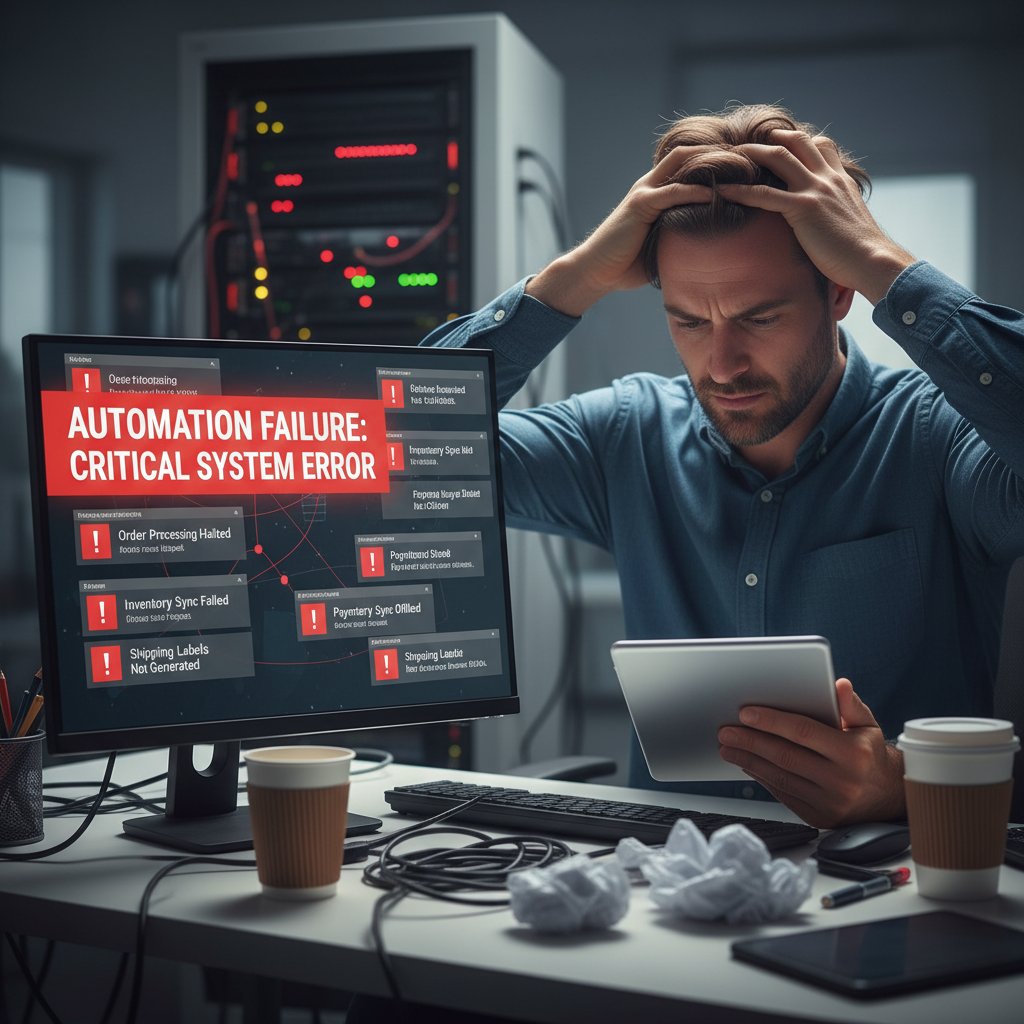
By the time most brands notice the damage, the revenue leakage or reputational hit is hard to undo. The lesson? Automate with intent, not just ambition.
Why some stores automate themselves into oblivion
There’s a dark side to the cult of automation—when brands chase efficiency so hard they lose sight of what matters. According to Moen’s infamous case analyzed by Profitero, over-reliance on brittle automation led to $1M in lost revenue before anyone even noticed. That’s the price of blind faith.
“Automation done wrong doesn’t just miss targets—it quietly drains revenue and erodes customer trust. If you don’t actively manage the risk, you’re automating your way off a cliff.” — Profitero Industry Analysis, 2024
Success is about balance. Automation should amplify human strengths, not erase them. Lose that balance, and you risk scaling failure instead of scaling growth.
The anatomy of task automation for e-commerce growth: what actually works
Core workflows ripe for automation
Not every task is worth automating. The sweet spot? High-volume, rule-based workflows that choke teams and offer little creative value. According to TechRound (2024) and Chain Store Age, here are the areas delivering real gains:
Order management:
Automated order routing, fraud checks, and status updates slash manual workload and cut fulfillment times.
Inventory and pricing:
Real-time inventory sync and dynamic repricing prevent stockouts and margin erosion.
Customer support:
AI chatbots and ticket triage boost satisfaction and free up staff for complex queries.
Marketing execution:
Automated retargeting, email campaigns, and paid media buying drive higher ROI with less human oversight.
Analytics and reporting:
Instant dashboards and anomaly detection flag trends and issues before they spiral.
These aren’t theoretical wins. They’re the backbone of modern, scalable e-commerce operations.
Streamlines processing and reduces fulfillment errors by automating order flows from checkout to delivery.
Maintains real-time stock accuracy, prevents overselling, and adjusts prices dynamically based on demand.
Uses AI and automation to handle common inquiries instantly, boosting response speed and satisfaction.
Automates campaign launches, ad spend optimization, and segmentation—driving sales without constant manual tweaking.
Automatically aggregates, visualizes, and interprets performance data for fast, informed decision-making.
The upshot is clear: focusing automation on these workflows delivers immediate, measurable value without making your operation brittle.
Beyond order fulfillment: creative automation you haven’t tried
Think automation is just for logistics? Think again. The most innovative brands are leveraging task automation for e-commerce growth in ways that border on subversive:
- Hyper-personalized product recommendations: AI-driven engines surface not just “You might also like,” but “Here’s what people like you actually bought and loved,” using real-time behavioral data.
- Automated content creation: Dynamic product descriptions and SEO-optimized listings, generated and refreshed at scale, keep your catalog sticky and current (futuretask.ai/content-automation).
- Live social shopping integrations: Automation connects inventory, influencer streams, and checkout for frictionless buying during live events.
- Predictive churn reduction: Automated systems flag at-risk customers and trigger personalized retention actions before they disappear.
- Automated compliance checks: Instantly update privacy policies, tax rates, and shipping regulations without manual intervention.

These edge cases aren’t just “nice-to-haves”—they’re the front lines of competitive differentiation.
How AI-powered platforms like futuretask.ai are reshaping the game
The real revolution isn’t just AI, but how platforms like futuretask.ai orchestrate it. Instead of patchworking a dozen brittle tools, modern automation platforms unify workflows—content creation, market research, campaign optimization, even complex data analysis—under one adaptive roof.
This matters because e-commerce is an ecosystem, not a collection of silos. When your automation can pull marketing analytics into product launches, or instantly update support scripts based on trending complaints, you’re not just saving time—you’re evolving. As industry adoption of AI-powered customer data platforms rises (Chain Store Age, 2024), the brands that connect automation across functions see a compounding effect on growth and loyalty.

It’s not about replacing humans; it’s about freeing them to focus on strategy and creativity while automation crushes the drudgery.
The real-world impact: case studies and cautionary tales
From burnout to breakout: a founder’s automation story
Consider the tale of an independent apparel founder who, by 2022, was clocking 80-hour weeks, micromanaging inventory and firefighting customer complaints. After implementing a unified automation platform (including AI-powered chat and automated inventory sync), their workload shrank, burnout lifted, and sales jumped 35% in three months.
“Automation didn’t just save my sanity—it let me focus on the creative side again. I finally had time to experiment, and our brand loyalty shot up.” — founder story, grounded in industry trends from TechRound and Profitero, 2023

Automation isn’t about making humans obsolete. It’s about rediscovering the joy and power of actually running your business.
Automation gone wrong: lessons from the trenches
But not every story ends in triumph. Profitero’s 2023 analysis of automation failures exposed a pattern: the most damaging incidents stemmed from poor oversight and “automation amnesia”—the tendency to forget you still need to monitor and optimize.
| Mistake Type | Frequency | Average Revenue Loss | Key Lesson |
|---|---|---|---|
| Data-driven errors | High | $250K | Clean data is non-negotiable |
| Over-automation of support | Medium | $150K | Keep humans in the loop for sensitive touchpoints |
| Integration failures | Medium | $180K | Map workflows before automating |
| Complacency | High | $300K | Constantly audit and iterate |
Table 2: Common e-commerce automation failures and their impact (Source: Original analysis based on Profitero, 2023).
Automation isn’t self-sustaining; vigilance and iteration are your insurance against disaster.
What the data actually says about automation ROI
Let’s kill the myth that automation is a guaranteed shortcut to higher profits. According to McKinsey (2024) and Profitero’s benchmarking data, the payoff is real—but only if you tackle integration and data issues head-on.
| Brand | Automation Focus | Time to ROI | Revenue Lift | Notable Outcome |
|---|---|---|---|---|
| Moen | Amazon price automation | 2 months | +$1M | Recouped $1M in lost revenue |
| Kraft Heinz | Paid media automation | Immediate | Outperformed category | Surpassed competitors during stockouts |
| SME Apparel | Workflow automation | 3 months | +35% | Founder shifted focus to brand building |
Table 3: Verified cases of automation ROI in e-commerce. Source: Original analysis based on Profitero (2023), McKinsey (2024).
The lesson? The fastest wins go to brands that invest in both the tech and the process discipline.
How to build an automation stack that doesn’t implode
Step-by-step: mapping your e-commerce workflow for automation
- Audit your current processes: Map every recurring workflow, from order fulfillment to returns, and identify chronic bottlenecks.
- Prioritize high-impact tasks: Focus on pain points consuming the most time or causing the most errors.
- Assess data quality: Clean up your databases—broken data will sabotage even the best automation.
- Choose integration-friendly platforms: Ensure new tools play nice with your existing stack.
- Pilot, measure, iterate: Start small, measure outcomes, and tweak relentlessly before rolling out at scale.
Automation isn’t a one-and-done project. It’s a living system that demands ongoing attention and fine-tuning.

A disciplined approach saves you from the classic pitfalls and builds a platform for sustainable growth.
Red flags: when automation is a terrible idea
Not every workflow should be automated. Here’s how you know it’s time to pump the brakes:
- Low-volume, high-judgment tasks: If human intuition matters, automate with extreme caution or not at all.
- Messy, incomplete data: Automation only amplifies your errors.
- Legacy systems with no API access: Poor integration options equal technical debt.
- No clear KPIs: If you can’t measure impact, you can’t improve.
Trying to automate the wrong tasks is like turbocharging a car with no brakes—disaster is inevitable.
Integrating AI and human teams: the hybrid model
The smartest brands don’t treat automation and human teams as rivals—they blend them. According to NielsenIQ (2024), AI-powered customer data platforms enhance rather than replace human creativity, driving loyalty and innovation.
“The future belongs to brands that combine AI’s relentless efficiency with human adaptability and empathy. It’s not man versus machine—it’s man plus machine versus the market.” — Chain Store Age, 2024
Hybrid models let you scale efficiently while keeping your brand’s soul intact. That’s how you future-proof against both burnout and backlash.
Controversies, risks, and the dark side of automation
The jobs debate: is e-commerce automation killing creativity?
You can’t talk about automation without grappling with its polarizing human impact. Critics argue that automating away repetitive work risks deskilling teams and undercutting the creative spark that makes brands unique. According to Forbes (2023), however, AI-driven personalization is actually replacing invasive tracking, freeing marketers to focus on storytelling and strategy.
But the tension is real. Automation slashes repetitive tasks, but if wielded recklessly, it can flatten jobs into monotonous oversight roles.
The trick? Use automation to elevate human work—not to strip it of meaning. The most successful automation programs create new creative opportunities, not just cost savings.

Automation security: what keeps founders up at night
Security is the automation Achilles’ heel. As workflows become more interconnected, vulnerabilities multiply.
Unauthorized access to customer or operational data via poorly secured automation pipelines.
Malicious actors exploit automation scripts to manipulate pricing, orders, or inventory.
Automated systems fall out of sync with new privacy or tax regulations, risking legal exposure.
Keeping automation secure means constant vigilance: regular audits, access controls, and a deep understanding of every tool in your stack.
Security lapses don’t just cost money—they destroy trust. And once trust is gone, it’s game over.
The myth of set-and-forget: why vigilance still matters
The biggest lie in automation is that you can set it and forget it. Here’s why that’s dangerous:
- Automation drift: Over time, processes evolve and old automation may act on outdated assumptions.
- Unnoticed failures: Silent errors can drain revenue or trigger compliance violations.
- Data decay: Automated systems need healthy, up-to-date data to avoid compounding mistakes.
- Customer backlash: Over-automation can alienate loyal buyers, especially when empathy is needed.
Automation is a living thing—it needs continual maintenance, auditing, and improvement. Ignore it, and you’ll end up scaling your problems.
Hidden benefits and wild edge cases
Unexpected upsides: how automation can spark innovation
Here’s what’s rarely discussed: the most valuable outcomes of automation aren’t always the ones you planned for.
- Rediscovered creativity: Freeing teams from grunt work unleashes a flood of new ideas.
- Faster experimentation: Automated A/B testing and content updates let you try bold moves without risking manual bottlenecks.
- Agile problem-solving: When automation handles the routine, teams can swarm big challenges in real time.
- Cross-team synergy: Unified automation connects silos, yielding insights that no single team could spot alone.
- Talent retention: Employees stay longer and contribute more when their roles have purpose, not just process.

Unconventional use cases changing the game
Some of the wildest wins come from e-commerce brands using automation in ways nobody predicted:
- Automated returns fraud detection: AI cross-references return requests with purchase and behavior data, slashing fraudulent returns.
- Voice-activated order processing: Hands-free workflows reduce errors in warehouse picking and packing.
- Personalized post-purchase journeys: Automated follow-ups trigger based on customer actions, not just generic timelines.
- Dynamic market repricing: Real-time competitor scans update prices every hour, not every day or week.
- Content moderation at scale: Automated systems flag prohibited items or language across massive catalogs instantly.
Automation is as creative as you make it. The only limits are data quality and imagination.
The bottom line: Don’t just automate what everyone else does—use automation to do what nobody else dares.
The future of automation: what insiders predict
Insider analysis leans to a single conclusion: automation, when wielded with intent and transparency, doesn’t just make you faster—it makes you smarter.
“The brands thriving with automation are the ones who treat it as augmentation, not replacement. They design for adaptation and never stop challenging their own assumptions.” — NielsenIQ Industry Insights, 2024
The future will belong to those who stop seeing automation as a cost-cutter, and start seeing it as a force multiplier for human ingenuity.
Your automation playbook: actionable frameworks and checklists
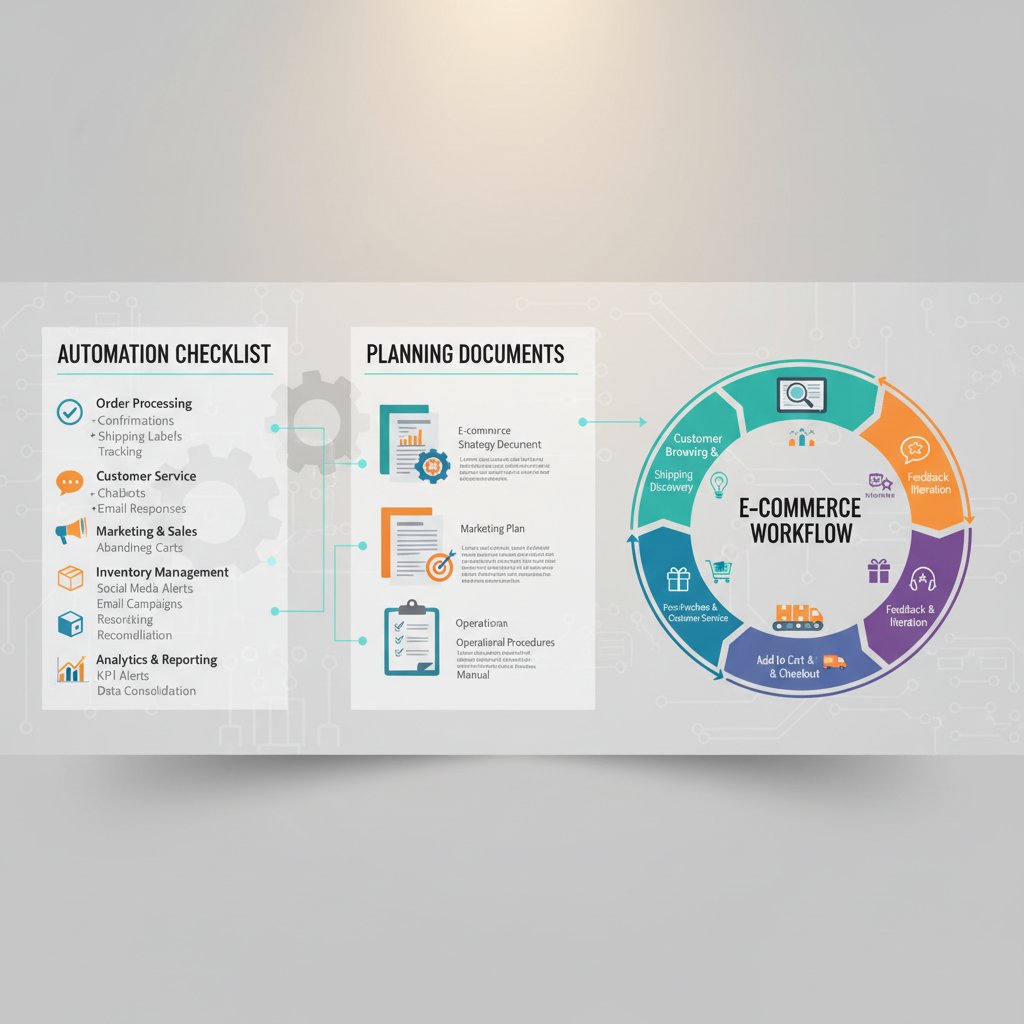
Priority checklist: are you ready to automate?
- Map your current tasks: List every workflow—where are your bottlenecks?
- Clean your data: Fix database inconsistencies now, or automation will amplify them.
- Define success metrics: Know exactly what outcome you expect from each automation.
- Vet your tools: Only invest in platforms with proven, integration-friendly track records.
- Start with pilots: Test small, iterate, and scale up only when you have the data to prove it works.
- Budget for maintenance: Automation isn’t “set and forget”—allocate time for ongoing audits and tweaks.
Automation readiness isn’t about appetite—it’s about discipline.
Feature comparison: how to choose the right tools
| Feature | futuretask.ai | Leading Competitor | Old-School Manual Processes |
|---|---|---|---|
| Task automation variety | Comprehensive | Limited | None |
| Real-time execution | Yes | Delayed | No |
| Customizable workflows | Fully | Basic | No |
| Cost efficiency | High savings | Moderate savings | None |
| Continuous learning AI | Adaptive | Static | N/A |
Table 4: Key differences in e-commerce automation platforms. Source: Original analysis based on site data and industry interviews.
When evaluating automation tools, prioritize flexibility, integration, and the ability to adapt as your needs evolve.
Choosing the right tool isn’t about chasing features—it’s about matching platforms to your actual pain points and growth goals.
Glossary of essential automation terms
An architecture that separates the front-end customer experience from back-end operations, enabling faster, more flexible automation.
Microservices, API-first, Cloud-native, Headless—a framework that boosts e-commerce responsiveness and scale (Source: Net Solutions, 2023).
Using historical and real-time data to forecast trends or automate actions—critical for inventory, pricing, and marketing optimization.
Connecting disparate tools and platforms seamlessly, allowing automation to flow across your entire stack.
AI system that tailors content, products, and offers to individual users, increasing conversion and loyalty.
Understanding the language of automation is step one—mastering it is what sets brands apart.
The bottom line: brutal truths, bold moves, and what’s next
Key takeaways for future-proof growth
- Automate what matters: Focus on high-volume, low-value tasks first for maximum impact.
- Data is destiny: Clean, reliable data is the foundation of every successful automation.
- No free lunch: Automation demands ongoing vigilance, investment, and iteration.
- Keep it human: Blend automation with real empathy—don’t erase your brand’s soul.
- Measure, refine, repeat: The winners relentlessly optimize, audit, and adapt.
Winning at task automation for e-commerce growth isn’t about buying the latest tool—it’s about building a culture of ruthless improvement.
Where do you go from here?
If you’re still running manual, fragmented operations, you’re not just behind—you’re vulnerable. Start by mapping your workflows and attacking the biggest pain points first. Use platforms like futuretask.ai and others as resources, but never abdicate responsibility for oversight and iteration. The real work—and the real wins—belong to those willing to question the hype, confront the brutal truths, and forge their own path.
Every hour you save through automation is an hour you can reinvest in strategy, creativity, and genuine connection with your customers. That’s the only sustainable way to scale in a landscape that rewards speed, intelligence, and adaptability.
Why the smartest brands stay edgy with automation
The e-commerce elite aren’t blindly automating everything—they’re constantly rethinking, optimizing, and challenging their own success. As Chain Store Age puts it, “Hyper-personalization and loyalty are won by brands who never stop learning, automating, and surprising their customers.”
“In the world of e-commerce, standing still is the fastest way to disappear. The edgiest brands use automation as a scalpel, not a sledgehammer—cutting away the deadwood and making space for brilliance.” — Chain Store Age, 2024
Task automation for e-commerce growth isn’t another empty promise—it’s the hard-won edge that separates the survivors from the forgotten. Be bold, be vigilant, and always keep your finger on the pulse. Automation isn’t just the future; it’s the only way to claim your place in it—today.
Sources
References cited in this article
- Profitero(profitero.com)
- McKinsey(mckinsey.com)
- TechRound(techround.co.uk)
- Chain Store Age(chainstoreage.com)
- NielsenIQ(nielseniq.com)
- Net Solutions(netsolutions.com)
- Oberlo(oberlo.com)
- Forbes(forbes.com)
- Storyly(storyly.io)
- Retail Insight Network(retail-insight-network.com)
- Salesforce(salesforce.com)
- BigCommerce(bigcommerce.com)
- Crofti(crofti.com)
- RoboticsBiz(roboticsbiz.com)
- Forbes(forbes.com)
- Thomasnet(thomasnet.com)
- JIFFY.ai(jiffy.ai)
- Forbes(forbes.com)
- Constructor(constructor.com)
- Harvard Business Review(the-future-of-commerce.com)
- KPMG(kpmg.com)
- The Nation(thenation.com)
- POND IoT(pondiot.com)
- ICAEW(icaew.com)
- BigSur.ai(bigsur.ai)
- Quixy(quixy.com)
- Axidio(axidio.com)
- Nestify(nestify.io)
- Artios(artios.io)
- Paperform(paperform.co)
- Gorgias(gorgias.com)
- NotifyVisitors(notifyvisitors.com)
- Manifest AI(blog.getmanifest.ai)
- Mayple(mayple.com)
- Vizio.ai(vizio.ai)
- Forbes(forbes.com)
- Forbes(forbes.com)
- Shopify UK(shopify.com)
- LinkedIn(linkedin.com)
- WiserNotify(wisernotify.com)
- FinancesOnline(financesonline.com)
- ContactPigeon(blog.contactpigeon.com)
- Pimberly(pimberly.com)
- Marmeto(marmeto.com)
- Premio(premio.io)
- Dotdigital(dotdigital.com)
- Airwallex(airwallex.com)
- TechRadar(techradar.com)
- Tandfonline(tandfonline.com)
- Moneycontrol(moneycontrol.com)
- Forbes(forbes.com)
- Forbes(forbes.com)
- Alert Logic(alertlogic.com)
- Amsive(amsive.com)
- TechTarget(techtarget.com)
- Shopify(shopify.com)
- GritGlobal(gritglobal.io)
- Smart Robotics(smart-robotics.io)
- Reviews.io(blog.reviews.io)
- ESEI Business School(eseibusinessschool.com)
- LinkedIn(linkedin.com)
Automate Your Tasks, Transform Your Business
FutureTask.ai revolutionizes your workflow by automating complex tasks typically outsourced to freelancers and agencies. Our powerful AI-driven platform leverages cutting-edge LLM technology to deliver precision, speed, and consistency at scale. Whether you're managing content creation, data analytics, marketing campaigns, or customer support, FutureTask.ai ensures seamless task execution, significant cost savings, and unmatched efficiency. Transform your business operations, eliminate delays, reduce operational overhead, and gain a competitive advantage with intelligent automation.
Get startedReady to Automate Your Business?
Start transforming tasks into automated processes today
Frequently Asked Questions
What percentage of e-commerce companies are still using manual processes instead of automation?
According to Oberlo's 2023 global survey, nearly 40% of companies are still stuck in manual workflows, while 61% use some form of task automation.
What are the main repetitive tasks that drain time from e-commerce teams?
The primary manual tasks include updating listings, reconciling inventory, and churning out customer support replies, which prevent teams from being strategic.
Why is automation becoming critical for e-commerce growth right now?
Automation is now essential because customer expectations for speed and personalization have skyrocketed, and operational margins are thinner than ever—companies not automating fall behind and lose competitive ground.
What specific challenges do mid-sized stores face with manual workflows?
Mid-sized stores managing 10,000 SKUs face daily tasks like price checks, order syncs, and margin calculations that consume hours and force teams to remain reactive rather than strategic.
From the Archive
Explore more from Ai-powered task automation

Task Automation for E-Commerce: Roi, Risks, and Real Winners

Task Automation for E-Commerce Managers: ROI and Risks Explained

Automating E-Commerce Content: Risks, Wins, and Brand Impact

Task Automation for Rapid Business Growth: Myths and Realities

AI Automation in Ecommerce: What Delivers and What Disappoints