


AI-Based Productivity Solutions in 2026: Payoff, Risks, and Human Reality
Written with AI assistance under our editorial guidelines
By 2025, AI-driven productivity tools reshape workflows and save billions in labor costs, yet deliver mixed results. While promising automation breakthroughs, these solutions create new challenges including job anxieties, data security risks, and software compatibility issues. Success depends fundamentally on thoughtful human implementation rather than assuming AI alone solves productivity problems.
It’s the middle of a Tuesday, and your task list is multiplying like rabbits on caffeine. The inbox pings, projects pile up, and that “one simple automation” you tried to set up last week has triggered a workflow apocalypse. Sound familiar? Welcome to the world of ai-based productivity solutions—a domain that’s supposed to rescue us from chaos but often delivers a mixed bag of miracles and mayhem. In 2025, these AI-powered tools aren’t just another trend—they’re reshaping the way work gets done, how we measure value, and what it means to be productive. But peel back the glossy marketing, and you’ll find raw truths, bold wins, and some ugly realities that most guides won’t dare mention. Whether you’re a startup founder, a marketing director, or just trying to keep your head above digital water, this guide dives into the heart of AI productivity: the breakthroughs, the breakdowns, and the human drama in between. Get ready for brutal honesty, surprising stats, and real-world insights—because before you automate, you deserve the whole story.
Why everyone’s talking about ai-based productivity solutions (and what they get wrong)
The rise, the hype, and the backlash
The last two years have seen the term “AI productivity” slapped on everything from email sorting apps to enterprise workflow juggernauts. Industry giants trumpet AI as the silver bullet for inefficiency, touting promises of reduced labor costs and lightning-fast execution. According to the World Economic Forum, AI-driven automation is expected to save $1.2 trillion in annual labor costs by 2025—a jaw-dropping number that has every CEO’s attention. But with the hype comes skepticism. Employees whisper about job security, managers fret over data leaks, and IT teams scramble to untangle incompatible software webs.

One product manager at a major fintech described the early days of AI adoption as “like flying a jet with zero training—exciting, terrifying, and sometimes catastrophic.” Yet the allure remains: AI promises to transform the grind, freeing us from the mundane and letting creativity reign. The reality? Sometimes you get the miracle—other times, just more noise.
“AI isn’t magic. It’s a tool. And like any tool, it can be used brilliantly—or badly. The difference is always about the human choices behind it.” — Dr. Eva Chen, Lead AI Strategist, World Economic Forum, 2025
Are we actually getting more productive—or just busier?
If you scan your Slack channels or check the trending business hashtags, you’d think humanity just discovered a productivity utopia. But dig deeper, and the numbers paint a more complicated picture. While generative AI tools have boosted content creation speed by up to 59%, research from The Business Dive suggests actual productivity gains depend on how—and where—these tools are deployed.
| Metric | Traditional Workflow | AI-Enhanced Workflow | Change (%) |
|---|---|---|---|
| Average content creation time | 3 hours | 1.2 hours | -59% |
| Error correction/QA cycle | 2 cycles | 1 cycle | -50% |
| Employee reported “busywork” hours | 6 hours/week | 4.5 hours/week | -25% |
| Perceived productivity | 68% | 76% | +8% |
Table 1: Impact of ai-based productivity solutions on workflow metrics (Source: Nielsen Norman Group, 2024)
Yet, as these tools proliferate, some users report feeling more overwhelmed than ever—drowning in notifications, juggling a dozen AI tools, and losing track of what actually matters. Productivity isn’t just about speed; it’s about creating space for deep work, clarity, and meaningful results.
The promise vs. the reality: what users really experience
The grand narrative is that AI will liberate us from drudgery. But what happens on the front lines is… less cinematic.
- Many teams struggle to integrate AI with legacy systems, causing workflow breakdowns and frustration.
- Not every task is ripe for automation—creative problem-solving, nuanced negotiations, and ethical judgment still demand human oversight.
- The deluge of new AI apps leads to “tool fatigue,” making it harder to discern which solutions actually drive value.
- Data privacy and compliance headaches are real and persistent—especially for regulated industries.
- Skill gaps limit productivity gains; without proper training, employees can’t leverage AI’s full potential.
The truth? AI-based productivity solutions are powerful, but they’re not a panacea. Their impact depends on context, culture, and how thoughtfully they’re implemented.
Decoding the technology: how ai-based productivity solutions actually work
From macros to large language models: a timeline
Before ChatGPT and its kin rose to fame, automation meant clunky macros and brittle scripts. Today’s AIs—powered by large language models (LLMs) and sophisticated machine learning—can execute complex, contextual tasks once thought safe from automation.
- Macros and scripts (pre-2015): Simple, rule-based automations for spreadsheets and email.
- Bot platforms (2015–2018): Chatbots and digital assistants emerge, handling routine queries.
- Cloud-based automation (2018–2021): Tools like Zapier and IFTTT connect software, automating cross-app workflows.
- AI-powered task automation (2022–2024): LLMs and advanced AI platforms (like futuretask.ai) deliver nuanced, multi-step task execution.
- Personalized AI workflows (2024–2025): Customizable, adaptive systems that learn user preferences and business context.
| Era | Dominant Tech | Typical Use Case | Limitations |
|---|---|---|---|
| Pre-2015 | Macros/Scripts | Spreadsheet automation | Rigid, error-prone |
| 2015–2018 | Chatbots/Bot kits | FAQs, scheduling | Shallow interaction |
| 2018–2021 | Workflow Connectors | App integration | Limited intelligence |
| 2022–2024 | LLMs/Smart AI | Content, analytics | Data privacy, complexity |
| 2024–2025 | Adaptive AI Suites | End-to-end automation | Integration challenges |
Table 2: Evolution of ai-based productivity solutions — Source: Original analysis based on Nielsen Norman Group, 2024, Webex, 2025
The role of data, algorithms, and automation
At the heart of every AI productivity tool is a ruthless trinity: data, algorithms, and automation logic. Data feeds the algorithms—think emails, documents, CRM records. Algorithms (machine learning, deep learning, natural language processing) crunch this data, identifying patterns, predicting needs, and generating outputs. Automation then executes actions—be it drafting a report or triaging a support ticket.

The catch? Each layer introduces its own risks. Poor data quality means poor predictions. Biased algorithms amplify existing inequities. Automation gone wrong can escalate errors—fast. And every step is a potential privacy minefield.
Jargon decoded: key terms and what they really mean
A software platform or tool that uses artificial intelligence, such as machine learning or natural language processing, to automate or enhance complex business tasks beyond simple rule-based scripts.
An AI model that creates new content—text, images, or audio—by learning from large datasets. Used for rapid content creation, summarization, and ideation.
A deep learning algorithm trained on massive text corpora to understand and generate human-like language. Powers tools like ChatGPT, transforming how businesses automate communications and reporting.
The delegation of repetitive or complex tasks to software, reducing manual intervention. Modern AI automation expands this to nuanced, variable tasks.
Operations split across physical offices and remote setups, requiring AI solutions that adapt to diverse environments.
The safeguarding of sensitive business and customer data during collection, processing, and automation—an unresolved minefield for many AI adopters.
In short, these buzzwords conceal a simple truth: AI doesn’t replace business sense. It only amplifies whatever logic—or chaos—you feed it.
Myths, misconceptions, and the dark side of ai-based productivity
Why ‘AI will replace your job’ is a lazy myth
The narrative is seductive: robots swoop in, humans are out. But reality punches holes in that cliché. While AI-based productivity solutions have automated vast swaths of mundane work, research from the World Economic Forum shows that most companies use AI to augment, not replace, existing jobs. Roles evolve, responsibilities shift—but the need for human oversight, judgment, and creativity is resilient.
"The future isn't about man versus machine. It's about collaboration—using AI to elevate what people do best." — Prof. Lina Morales, Future of Work Institute, World Economic Forum, 2025
It’s not that jobs vanish overnight—they mutate, demanding new skills and mindsets. The danger isn’t obsolescence; it’s irrelevance for those who stop learning.
When automation fails: horror stories and hidden risks
Not even the shiniest AI is immune to disaster. Here’s what keeps CIOs awake at night:
- Workflow breakdowns: Incompatible software can break mission-critical processes, causing productivity sinkholes instead of gains.
- Data breaches: Automation can expose sensitive data if privacy safeguards aren’t watertight.
- Algorithmic bias: AI trained on skewed data can perpetuate discrimination, leading to compliance nightmares.
- Over-automation: Blindly automating tasks without critical evaluation results in errors scaling at speed—sometimes crashing entire departments.
- Employee burnout: Tool overload can increase stress and erode morale, even as “productivity” metrics rise.

These stories aren’t rare—they’re the dark side of unchecked automation. According to verified statistics from The Business Dive, integration challenges and compliance failures are top reasons AI rollouts flop.
The invisible labor behind ‘fully automated’ solutions
Despite the “set it and forget it” sales pitch, every AI solution still relies on hidden human labor. Data cleaning, prompt engineering, and ongoing monitoring keep systems running—and the more advanced the AI, the more skilled the required oversight.
| Task | Human Role | AI Role | Comments |
|---|---|---|---|
| Data preparation | Essential | Minimal | Clean, label, structure data |
| Workflow configuration | High | Moderate | Mapping, testing scenarios |
| Ongoing QA & monitoring | Frequent | Automated alerts | Humans validate edge cases |
| Customer interactions | Hybrid | Automated first | Escalation to humans as needed |
| Error correction | Manual | Suggestive | AI flags, humans resolve |
Table 3: The split of human vs. AI labor in automated productivity solutions. Source: Original analysis based on The Business Dive, 2024, Webex, 2025
The bottom line: AI doesn’t eliminate work—it shifts it. Ignore this, and your “fully automated” dream quickly unravels.
Inside the revolution: real-world case studies (wins and disasters)
Where ai-based productivity solutions shine (and flop)
Case studies reveal the messy, glorious reality of AI productivity. In e-commerce, automating product description and SEO content increased organic traffic by 40%, while slashing content costs by half. Financial services used AI to automate report generation, saving 30% in analyst hours and boosting accuracy. Yet, in another firm, a poorly integrated chatbot mishandled customer queries, triggering a PR crisis and scrambling support teams.
| Industry | AI Use Case | Outcome |
|---|---|---|
| E-commerce | Automated content generation | +40% traffic, -50% content costs |
| Finance | Financial report automation | -30% analyst hours, higher accuracy |
| Healthcare | Patient comms automation | -35% admin workload, higher satisfaction |
| Marketing | Campaign optimization | +25% conversions, cuts in execution time |
| Customer Service | Chatbot automation (failed) | Negative PR, support scramble |
Table 4: Real-world outcomes of ai-based productivity solutions (Source: Original analysis based on Webex, 2025)

Stories from the trenches: users, skeptics, and unexpected outcomes
For every bold win, there’s a cautionary tale. A marketing director at a mid-size agency described how switching to AI saved weeks of campaign planning, but also revealed gaps in junior staff skills. “We realized our people were great at clicking buttons, but weak on strategy. AI forced us to re-train—and rethink what skills actually matter.”
"The tools are brilliant, but nobody warns you about the culture shock. Suddenly, soft skills and adaptability are worth more than technical know-how." — Marketing Director, Anonymous Interview, The Business Dive, 2024
How futuretask.ai is changing the game
Platforms like futuretask.ai are rewriting the playbook. By automating complex tasks previously handled by freelancers and agencies—content writing, market research, analytics—they empower businesses to scale without ballooning costs or timelines. What sets them apart isn’t just raw automation, but the ability to adapt to unique workflows, integrate seamlessly, and deliver consistent results, even as the environment shifts.

The economics of automation: who saves, who loses, and what it really costs
Comparing ai-based solutions, freelancers, and agencies
Cost-cutting is the headline, but the true economic story is more layered. AI-based productivity tools offer dramatic savings compared to hiring external talent—but up-front investment, integration, and ongoing oversight aren’t free.
| Service Model | Avg. Monthly Cost | Speed of Delivery | Quality Consistency | Scalability | Customization |
|---|---|---|---|---|---|
| AI-based solutions | Low–Moderate | Fast | High | High | High |
| Freelancers | Moderate–High | Variable | Variable | Limited | Moderate |
| Agencies | High | Slow–Moderate | High | Moderate | High |
Table 5: Comparing cost and value of productivity solutions. Source: Original analysis based on Webex, 2025, World Economic Forum, 2025
Hidden fees, sunk time, and ROI nobody talks about
Don’t let the “automate everything” pitch blind you to real costs:
- Integration headaches: Adapting AI to your stack can consume weeks of IT effort.
- Training and change management: New tools mean new skills—and resistance from teams.
- Compliance and data privacy: Noncompliance risks fines (and reputation hits).
- Tool fatigue: Juggling too many apps reduces focus, not costs.
- Delayed ROI: Savings may only emerge months after rollout, especially for complex transitions.
Unpacking the economics means more than just slashing headcount—it’s about understanding where value is created, lost, or redefined.
Long-term impacts: jobs, skills, and workplace culture
Automation’s ripple effects extend far beyond the budget sheet. Roles morph, skills become obsolete or newly essential, and cultures shift. Companies that prioritize communication, upskilling, and human-AI collaboration report higher satisfaction and retention. Those that neglect change management? Churn, confusion, and talent drain.

The upshot: the organizations that thrive are those that treat AI as a partnership, not a replacement.
How to actually implement ai-based productivity solutions (without wrecking your workflow)
Step-by-step guide: getting started without the hype
Rolling out AI productivity tools is less about glitz—and more about grit.
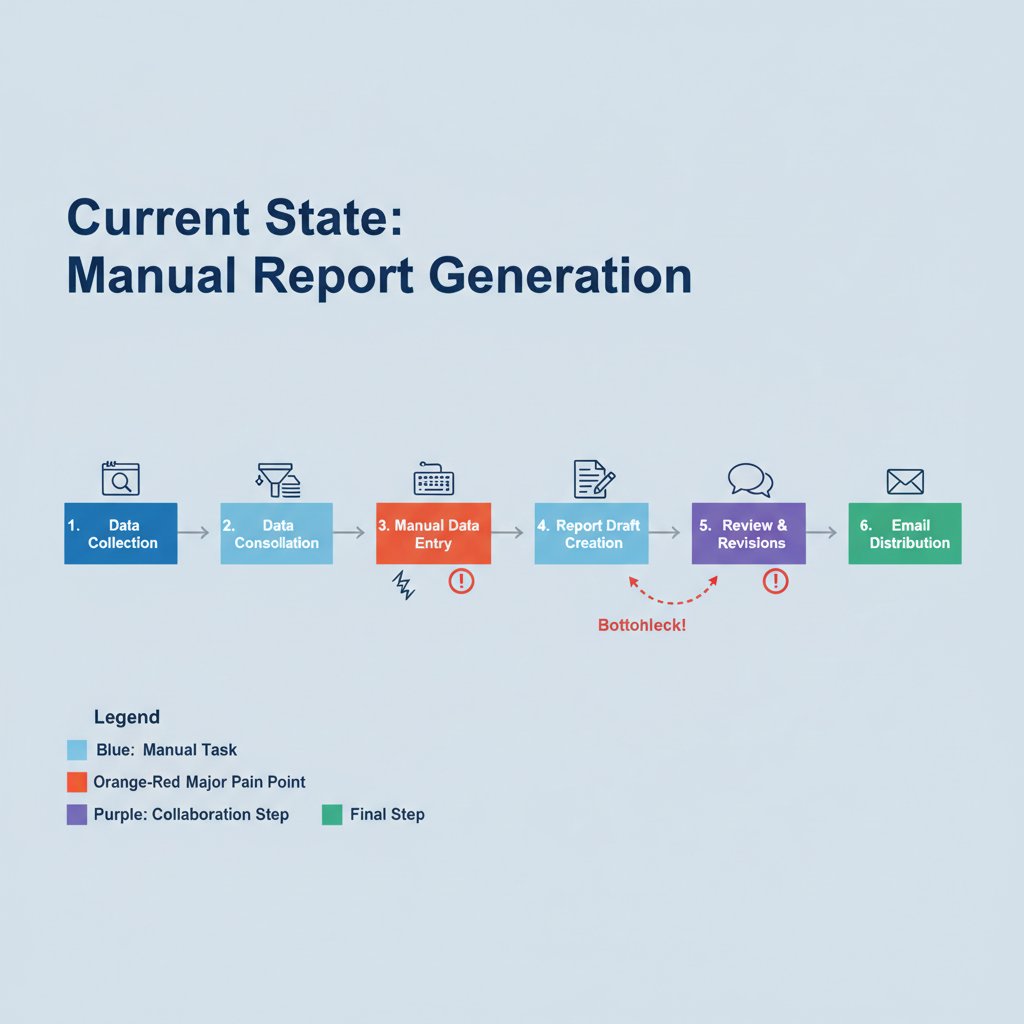
- Assess your workflow: Identify bottlenecks, repetitive tasks, and critical processes ripe for automation.
- Choose the right tool: Research platforms (like futuretask.ai) that fit your business size, tech stack, and compliance needs.
- Plan integration: Map how the tool will fit into (not disrupt) existing processes; involve IT and end-users early.
- Pilot and train: Start with a small, manageable pilot. Train users on both the tech and new ways of working.
- Monitor, measure, adapt: Set clear metrics for success. Collect feedback, monitor errors, and iterate as you go.
Red flags and pitfalls to watch out for
Even the best-intentioned rollouts can derail. Watch for:
- Lack of executive buy-in leading to underfunded, unsupported initiatives.
- Over-automation—automating tasks that are better left human.
- Poorly defined metrics—without clear goals, it's impossible to measure success or failure.
- Ignoring employee training—skill gaps rapidly erode ROI.
- Data silos and privacy oversights—risking compliance disasters.
Dodging these pitfalls isn’t just smart—it’s survival.
Checklist: is your team ready for automation?
- Do you have a clear map of existing workflows and pain points?
- Are key stakeholders (IT, compliance, end-users) involved from day one?
- Is there a training plan to upskill employees for new AI tools?
- Have you defined measurable KPIs for automation success?
- Do you have a process for monitoring, feedback, and iteration post-launch?
If you can’t answer “yes” to each, pause before you push “go.”
Expert insights: what leading voices say about ai-based productivity
Contrarian takes that might change your mind
Not every expert is an AI evangelist. Some caution that the productivity “gains” are often overhyped, with real-world benefits muted by integration woes and cultural resistance.
“AI amplifies both the good and the bad in your workflow. If your processes are broken, automation just multiplies the chaos.” — Dr. Shira Patel, Productivity Researcher, Nielsen Norman Group, 2024
Sometimes, doing less—smarter—is more productive than automating everything in sight.
What the data really shows in 2025
Let’s strip away the buzzwords and look at the numbers.
| Metric | AI-Driven Teams | Traditional Teams |
|---|---|---|
| Reported time savings | 32% | 0% |
| Employee engagement | 74% | 62% |
| Error reduction | 48% | 10% |
| Satisfaction with tools | 81% | 57% |
Table 6: Measurable impacts of ai-based productivity tools (Source: Nielsen Norman Group, 2024)
The verdict? When implemented with care, AI solutions deliver. But the gap between “AI-ready” and “AI-wary” teams is real.
Emerging best practices from the front lines
- Focus on augmenting, not replacing—AI should free humans for high-value work, not just cut costs.
- Prioritize data quality—garbage in, garbage out.
- Build cross-functional teams—IT, compliance, and end-users must all have a seat at the table.
- Train continuously—skills must evolve alongside technology.
- Iterate—treat automation as an ongoing journey, not a one-time event.
Beyond the buzzwords: unconventional uses and future frontiers
Surprising industries where AI is making waves
Think AI is just for tech or finance? Think again. In fields as diverse as agriculture, logistics, and even creative arts, AI-based productivity solutions are unlocking new forms of value. From automating crop monitoring to orchestrating global supply chains, the reach of intelligent automation is stunning.

Unconventional hacks: creative productivity workflows
- Pair AI-driven data analysis with human “gut” checks for strategic planning—best of both worlds.
- Use generative AI to brainstorm campaign ideas, then vet them through multidisciplinary workshops.
- Automate reporting, but personalize summaries with human context before sharing.
- Leverage AI scheduling tools, but maintain manual override for high-stakes meetings.
- Crowdsource FAQs with chatbots, then use human agents for edge cases.
These hacks blend automation with judgment—delivering impact where it matters most.
What’s next? The future of ai-based task automation
The forefront isn’t about replacing people—it’s about making teams bionic. As AI gets smarter and more adaptable, its true power lies in augmenting human strengths, not mimicking them. Platforms like futuretask.ai exemplify this shift, transforming organizations from reactive to proactive, from overwhelmed to optimized.

Conclusion: the real risks, rewards, and what to do next
Owning your automation journey (not the other way around)
To thrive with AI-based productivity solutions, resist the urge to chase hype. Instead:
- Audit your real needs—ignore the “one size fits all” pitch.
- Select tools that align with your unique workflows—don’t force fit.
- Invest in training, not just tech—people are your real advantage.
- Set clear, measurable goals—and revise them as you learn.
- Build feedback loops—iterate, adapt, and never stop questioning.
Key takeaways: what no one else tells you
- AI-based productivity solutions are powerful—but only as smart as your implementation.
- The biggest ROI comes from augmenting, not replacing, human expertise.
- Tool sprawl and integration failures can sabotage gains—curate your stack wisely.
- Data privacy, compliance, and training are non-negotiable.
- Human oversight and adaptability are the ultimate competitive edge.
Final thought: will you lead—or get left behind?
The truth isn’t always pretty, but it’s yours to own. AI-based productivity solutions can transform chaos into clarity—if you approach them with eyes wide open. In the end, the work doesn’t vanish; it evolves. The winners won’t be those who automate the most, but those who automate the smartest. Don’t just survive the AI revolution—drive it.

Sources
References cited in this article
- Webex: The AI Productivity Tools Shaping 2025(blog.webex.com)
- World Economic Forum: GenAI delivers short-term wins and long-term transformation(weforum.org)
- Nielsen Norman Group: AI Productivity Statistics(thebusinessdive.com)
- SUCCESS(success.com)
- CNBC: Corporations looking at gen AI as a productivity tool are making a mistake(cnbc.com)
- MIT Sloan Management Review: Want AI-Driven Productivity? Redesign Work(sloanreview.mit.edu)
- NN/g: AI Improves Employee Productivity by 66%(nngroup.com)
- Business Insider: Duolingo Drama Underscores AI Hype Backlash(businessinsider.com)
- Forbes: The Rise Of AI Resentment At Work(forbes.com)
- World Economic Forum: Life after the hype(weforum.org)
- St. Louis Fed: Impact of Generative AI on Work Productivity(stlouisfed.org)
- IBM: AI Productivity(ibm.com)
- DigitalOcean: 23 AI Productivity Tools(digitalocean.com)
- Gartner: 6 AI Myths Debunked(gartner.com)
- ILO: Invisible Labor Behind AI(ilo.org)
- Forrester: Misguided Fear Of AI And Automation(forrester.com)
- ZDNet: Humans often to blame for automation horror stories(zdnet.com)
- Oxford Internet Institute: The Invisible Labor Behind AI(oii.ox.ac.uk)
- Calls9: Generative AI Case Studies(calls9.com)
- MIT News: Economics of AI(news.mit.edu)
- Brookings: Impact on Workers, Jobs, and Wages(brookings.edu)
- Buzzpathy: 15 AI Tools for Freelancers in 2025(buzzpathy.com)
- Upwork: Best AI Tools for Freelancers(upwork.com)
- McKinsey: AI in the Workplace 2025(mckinsey.com)
- World Economic Forum: Future of Jobs 2025(weforum.org)
- MoreProductiveWithAI: Implementing AI Tools in Your Workflow(moreproductivewithai.com)
- Microsoft: AI Productivity Tips for Business(microsoft.com)
- Lumenalta: AI Readiness Checklist 2025(lumenalta.com)
- Zendesk: AI Readiness Checklist(zendesk.com)
Automate Your Tasks, Transform Your Business
FutureTask.ai revolutionizes your workflow by automating complex tasks typically outsourced to freelancers and agencies. Our powerful AI-driven platform leverages cutting-edge LLM technology to deliver precision, speed, and consistency at scale. Whether you're managing content creation, data analytics, marketing campaigns, or customer support, FutureTask.ai ensures seamless task execution, significant cost savings, and unmatched efficiency. Transform your business operations, eliminate delays, reduce operational overhead, and gain a competitive advantage with intelligent automation.
Get startedReady to Automate Your Business?
Start transforming tasks into automated processes today
Frequently Asked Questions
How much money is AI-driven automation expected to save in labor costs by 2025?
According to the World Economic Forum, AI-driven automation is expected to save $1.2 trillion in annual labor costs by 2025.
What are some common concerns employees and managers have about AI productivity solutions?
Employees are concerned about job security, managers worry about data leaks, and IT teams struggle with incompatible software integrations when implementing AI productivity solutions.
What does the article suggest about whether AI is truly a 'silver bullet' for productivity problems?
The article suggests that while AI is marketed as a silver bullet for inefficiency, the reality is mixed—sometimes delivering miracles but often creating additional noise and challenges. According to the article, AI's effectiveness depends on human choices rather than being inherently magical.
What does the article claim most productivity guides won't mention about AI solutions?
The article states that most guides won't mention the 'raw truths, bold wins, and some ugly realities' behind AI productivity solutions, and aims to provide 'brutal honesty' about breakthroughs, breakdowns, and human challenges involved.
From the Archive
Explore more from Ai-powered task automation

AI Task Management Software in 2026: Gains and Pitfalls

How AI-Powered Workforce Management Automation Is Reshaping Organizations

Automate Tasks for Enhanced Productivity Without Burning Out

How to Automate Productivity Without Sacrificing Creativity

AI Task Automation Tools: How Work Is Changing in 2025
