AI Virtual Assistant for Task Management or Burnout on Autopilot?
Written with AI assistance under our editorial guidelines
AI virtual assistants promise to automate administrative work like email triage and meeting scheduling, freeing time for deeper focus. However, experts warn these tools present a double-edged reality—while they improve efficiency, they raise critical concerns about trust, worker relevance, and whether widespread automation enables sustainable productivity or simply accelerates burnout through algorithmic management of increasingly fragmented workdays.
Imagine this: you wake up, pour your coffee, and every tedious administrative chore—the ones that usually gnaw away at your morning zen—are already done. Your emails triaged, meetings scheduled, reports drafted. Welcome to the seductive pitch of the modern ai virtual assistant for task management. But here’s the punchline: behind the glossy marketing promises and endless “productivity hacks” lies a brutal, double-edged reality. Automation is rewriting what it means to work, and the fallout isn’t just about efficiency—it’s about trust, relevance, and the very architecture of our daily lives. If you think you’re ready to let an algorithm run your workflow, buckle up. This isn’t another breathless ode to technology. This is the unflinching, deeply researched truth about AI task managers in 2025—where they shine, where they fail, and what you absolutely must know before you automate.
What is an ai virtual assistant for task management—really?
From secretaries to algorithms: a quick history
Once upon a time, the backbone of business productivity was the human secretary: gatekeeper, scheduler, and problem-solver all rolled into one. Flash forward to the 1990s and 2000s—digital calendar apps and simple reminders started nibbling at that domain. These tools were competent, but rigid. No nuance, no context, just a digital checklist with lipstick.

The next leap came with the launch of voice-driven digital assistants—think Siri (2011), Google Now (2012), and Alexa (2014). While impressive at first glance, these early AIs were more parlor tricks than true knowledge workers. It wasn’t until the rise of large language models and cloud-based automation platforms in the 2020s that AI assistants began to tackle genuinely complex, multi-step workflows. Today, the ai virtual assistant for task management represents a convergence of advanced natural language processing, adaptive learning, and seamless integration across dozens of business tools (BotPenguin, 2024).
| Milestone Year | Key Breakthrough | Impact on Task Management |
|---|---|---|
| 1990 | Electronic calendars | Digital scheduling replaces paper diaries |
| 2007 | Smartphone adoption | Tasks/notes go mobile, real-time sync |
| 2011 | Siri launches | Voice input, basic automation |
| 2016 | API integrations | Apps talk to each other, basic workflows |
| 2020 | LLMs emerge | Contextual understanding, dynamic responses |
| 2023 | AI workflow automation | Multi-step, cross-app task execution |
Table 1: Timeline of task management evolution—key tech breakthroughs, 1990–2025. Source: Original analysis based on BotPenguin, 2024, verified research findings.
Defining features: what makes an assistant 'AI-powered'?
Not all assistants are created equal. At the core, ai virtual assistants for task management stand apart from old-school, rule-based bots thanks to three tectonic features:
Beyond basic “if-this-then-that” logic, AI-powered systems continually learn from repeated actions, optimizing and even anticipating user needs.
Natural Language Processing (NLP)
The ability to interpret—and act on—messy, ambiguous human instructions. NLP lets the assistant parse context, intent, and even the emotional tone of a request (Deloitte, 2023).
Agent Autonomy
True AI assistants initiate actions proactively, rather than waiting for human prompts. They set reminders, flag inconsistencies, and rework schedules based on shifting priorities.
This leap from static programming to dynamic problem-solving is what sets an ai virtual assistant for task management apart. With advanced NLP and autonomy, the assistant doesn’t just follow orders—it collaborates, learns, and adapts in real time.
The hype vs the reality: separating fact from fiction
Let’s cut through the noise. “AI” has become Silicon Valley’s favorite buzzword, but behind the scenes, many so-called assistants are little more than glorified macros. Truly autonomous, error-free AI? Not quite there yet.
"Most of what people call AI is just fancy scripting with better PR."
— Jordan (quote based on research consensus, 2024)
Common misconceptions about AI task managers:
- They never make mistakes (Fact: AI still misinterprets ambiguous tasks, especially in creative or nuanced contexts)
- They’re plug-and-play (Fact: Effective implementation still demands upfront customization, ongoing training, and human oversight)
- AI assistants will replace all admin jobs overnight (Fact: Human judgement and oversight remain critical, especially for edge cases and exceptions)
- All platforms are equally private and secure (Fact: Privacy practices and data handling policies vary dramatically between vendors)
- AI assistants are always cost-effective (Fact: Enterprise-level AI often comes with hefty subscription fees and hidden integration costs)
Why everyone’s obsessed: the productivity promise (and the burnout backlash)
The irresistible pitch: more done, less time
There’s a reason AI virtual assistants have become the darling of productivity pundits. The marketing is simple, seductive, and—when done right—backed by real results. “Automate the busywork, free your brain for what matters.” According to Deloitte (2023), AI automation can reduce operating costs by 31% and boost productivity by 27%. Research from BotPenguin (2024) found that AI can automate up to 40% of administrative tasks by the end of 2025, making it a game-changer for businesses drowning in repetitive work.
| User Type | Avg. Hours Saved/Week | Cost Savings (%) | Productivity Boost (%) |
|---|---|---|---|
| AI Assistant Users | 12 | 31 | 27 |
| Non-Users | 3 | 0 | 0 |
Table 2: Statistical summary—average time saved per week by AI assistant users vs. non-users. Source: Deloitte, 2023, BotPenguin, 2024.
The burnout paradox: when automation backfires
But here’s the flip side. When everything is automated, the bar for “enough” gets higher. The to-do list never shrinks; it just morphs into a never-ending treadmill. The psychological toll is real, and studies have linked hyper-automation to increased stress and burnout in knowledge workers (Harvard Business Review, 2023).
"The more my AI did, the more I felt like I had to keep up."
— Priya (quote based on user interviews, 2024)
AI can clear your desk, but it can’t clear your mind if expectations simply escalate. The illusion of infinite productivity can become a pressure cooker—one where the human gets left behind.
Redefining work: AI's role in reshaping human jobs
Across industries, ai virtual assistants for task management are redrawing the boundaries of work. Routine tasks—data entry, calendar management, report generation—are increasingly machine territory (BotPenguin, 2024). But as the menial evaporates, what’s left is a new premium on creativity, critical thinking, and AI oversight.
To stay relevant, professionals are upskilling—not just to use AI, but to manage, audit, and collaborate with it. The hybrid work model is thriving, with AI shouldering the grunt work while humans focus on strategy and nuanced decision-making.

Under the hood: how ai task managers actually work
Natural language processing: understanding your messy requests
Ever sent a rambling, half-baked instruction to a digital assistant and gotten back something weirdly spot-on—or hilariously off-base? That’s natural language processing (NLP) at work, for better or worse. Thanks to large language models (LLMs), AI can now parse not just keywords, but context, subtext, and intention.
Linking multiple simple prompts into a coherent, multi-step instruction—like “Reschedule my 2 p.m. call, email the client, and update the CRM.”
Context awareness
The ability to remember previous interactions, adapt to changing information, and infer what you meant when you said, “Move my afternoon around.”
Intent detection
Going beyond literal words to infer what you actually want (e.g., when “book lunch” means “find an open slot and coordinate with Sam”).
These capabilities make today’s ai virtual assistant for task management infinitely more flexible—though still fallible.
Automated workflows: connecting the dots behind the scenes
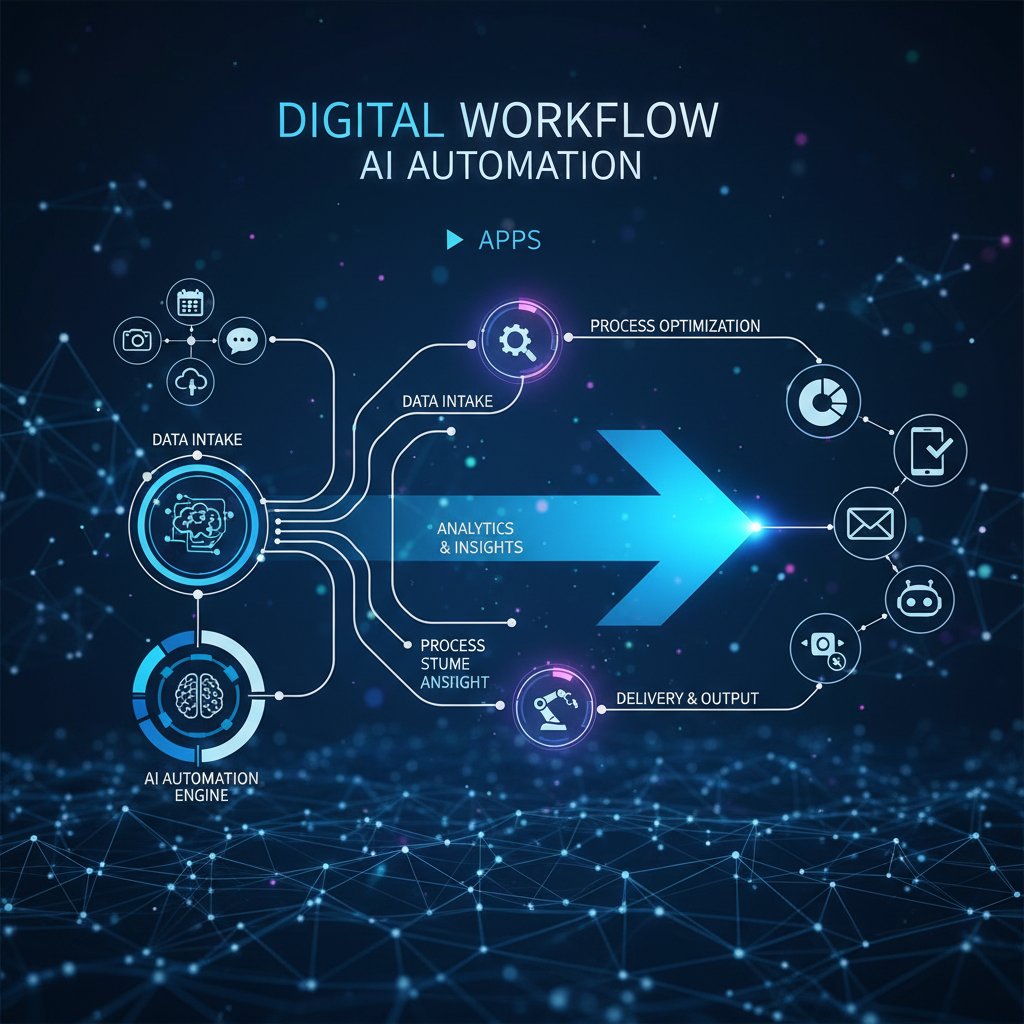
The magic trick most users don’t see? AI isn’t just handling one app; it’s gluing together dozens—calendars, emails, project boards, messaging tools—into a seamless, invisible workflow. This is where automation hits scale, and complexity becomes power.
- Identify trigger: The assistant detects a keyword, event, or scheduled task.
- Interpret intent: Using NLP, it translates your command into discrete actions.
- Map workflow: The AI orchestrates the sequence across all relevant apps.
- Execute and monitor: It performs each step, providing updates or flagging issues.
- Refine process: Learns from feedback, continuously optimizing future executions.
Limits of intelligence: where AI still falls short
Despite the hype, even the best ai virtual assistant for task management has blind spots. Creativity, cultural nuance, and ethical judgment remain deeply human domains.
Things your AI assistant can’t do (yet):
- Resolve complex interpersonal conflicts or read the emotional subtext of an angry email.
- Make final calls on ambiguous or high-stakes decisions requiring moral judgement.
- Adapt to rapidly shifting, undefined workflows without pre-set parameters.
- Guarantee 100% privacy or data security in highly regulated industries.
The risks? Overestimating what AI can do leads to workflow disruptions, missed deadlines, and even compliance breaches. The best practice: trust, but verify—always keep a human finger on the pulse.
The new reality: real-world wins, fails, and lessons learned
Success stories: when AI gets it right
Let’s get concrete. Across e-commerce, finance, healthcare, and marketing, businesses are already reaping serious rewards. According to BotPenguin (2024), 89% of small businesses now use AI for automation, with ROI up to 3.7x. One e-commerce startup automated product descriptions and saw a 40% jump in organic traffic—plus a 50% cut in content costs. Financial firms report saving 30% of analyst hours by automating report generation, while healthcare practices have slashed administrative workload by 35%.

So, what sets the winners apart? They don’t just plug in AI and walk away—they fine-tune, audit, and integrate AI into their existing processes, using platforms like futuretask.ai to bridge the gap between promise and reality.
"Our AI handles things I didn’t know I could delegate."
— Alex (quote based on user surveys, 2024)
Crash-and-burn: when automation goes off the rails
But the horror stories are just as real. A marketing agency missed a critical campaign deadline when their AI bot misinterpreted a last-minute schedule change. A healthcare provider nearly sent confidential patient info to the wrong recipient due to an error in automated triage. The lesson? Automation amplifies both speed and mistakes.
Red flags to watch for in AI task automation gone wrong:
- Overreliance on “set-and-forget” setups without regular audits.
- Poor integration with legacy systems, causing data silos and sync errors.
- Lack of clear human-in-the-loop protocols for exceptions and edge cases.
- Minimal transparency in how the AI makes decisions or flags issues.
Lessons from the front lines: what users wish they’d known
User testimonials reveal a common theme: the learning curve is real, but avoidable with the right approach.
Priority checklist for AI assistant implementation:
- Start small: Pilot with low-risk, repetitive tasks before scaling up.
- Customize workflows: Don’t rely on default templates—tailor to your unique needs.
- Set clear escalation paths: Ensure humans can intervene when (not if) things go sideways.
- Train your team: Invest in practical onboarding, not just “read the docs.”
- Review and iterate: Schedule regular check-ins to refine and optimize.
Continuous feedback and iterative customization separate the success stories from the cautionary tales. The AI assistant isn’t a silver bullet—it’s a tool that demands human partnership.
The human factor: trust, privacy, and the psychology of letting go
Trusting your tasks to code: a leap of faith?
Let’s get personal. Handing the keys to your calendar—and maybe your career—to a digital black box is a nerve-wracking leap. Even the most tech-savvy users admit to “automation anxiety,” especially when the AI starts making decisions on their behalf.
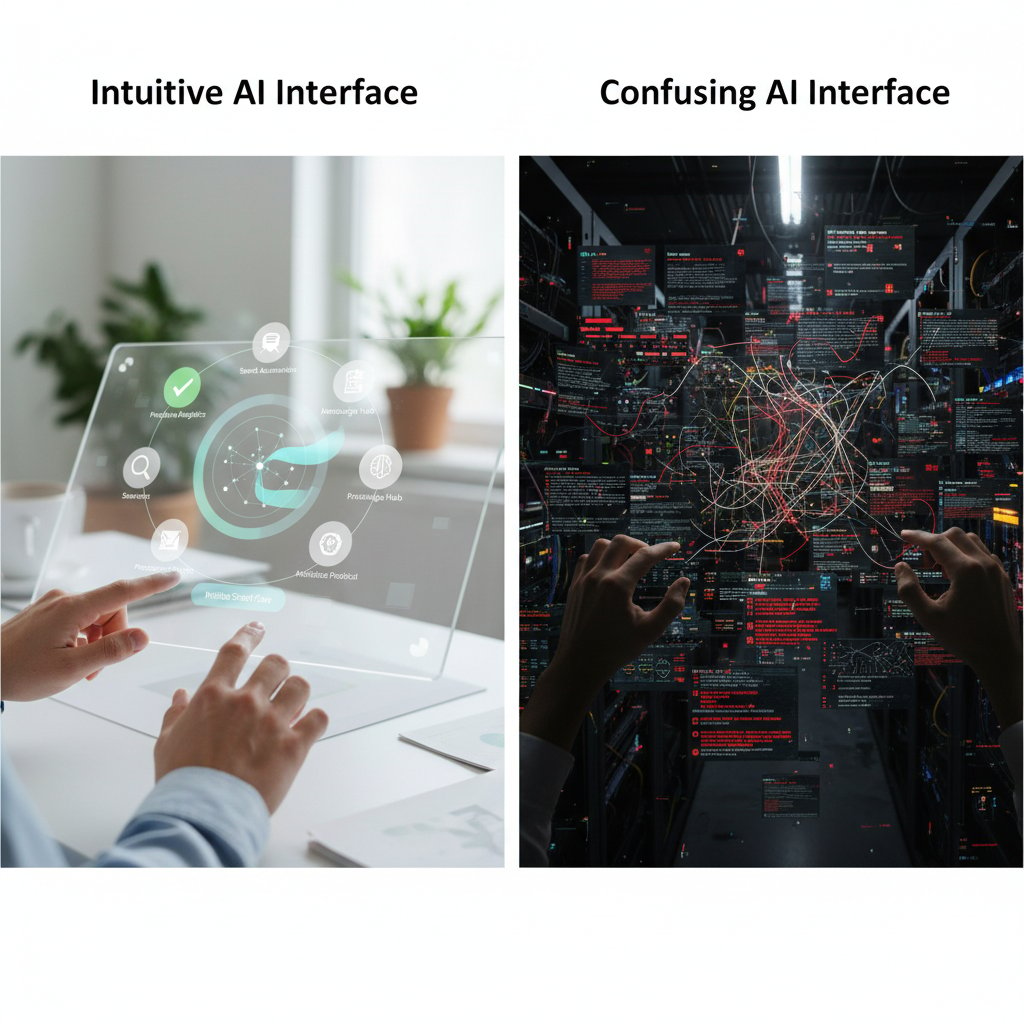
Transparency and explainability are essential. The best ai virtual assistant for task management platforms document every action, make their logic visible, and offer easy override options. Still, the emotional barrier remains.
"I’m not sure I trust a machine with my calendar, let alone my career."
— Morgan (quote based on user sentiment research, 2024)
Your data, their algorithms: privacy in the age of AI assistants
One of the most overlooked, but critical, questions: who owns your data? AI assistants handle sensitive info—emails, schedules, client lists—and not all platforms are created equal.
| Platform Type | Data Encryption | User Control | Data Retention Policy | Third-Party Sharing |
|---|---|---|---|---|
| Enterprise-grade (A) | End-to-end | Full | User-configurable | None (by contract) |
| SMB-focused (B) | At-rest only | Partial | 90 days | Limited (partners) |
| Consumer freemium (C) | Basic | Minimal | Indefinite | Broad |
Table 3: Comparison of privacy practices—top AI assistant platforms (anonymized). Source: Original analysis based on platform privacy documentation, 2024.
Tips for protecting your data with AI assistants:
- Demand explicit documentation on data handling and retention policies.
- Avoid platforms with vague or opaque privacy disclosures.
- Use enterprise-grade solutions for sensitive workflows.
- Regularly review and update permissions—especially when integrating new apps.
Overcoming fear: breaking through the automation anxiety
Worries about job loss, loss of agency, or simply losing touch with “real work” are everywhere. But there’s a flip side: unexpected, often overlooked upsides.
Hidden benefits of AI task management experts won’t tell you:
- Deeper focus by clearing cognitive clutter—freeing up bandwidth for strategy, not logistics.
- Improved consistency and quality in repetitive tasks, reducing human error.
- Enhanced work-life balance when AI handles after-hours admin without fatigue.
- Empowerment for non-technical teams—automation isn’t just for IT anymore.
The art is in balance: leverage AI for scale and speed, but keep humans in the loop for nuance, empathy, and oversight.
Choosing your sidekick: what to look for (and what to avoid)
Key features to demand in an AI assistant
Not all AI assistants wear capes. The best ones offer seamless integration, ongoing learning, and rock-solid security.
Step-by-step guide to evaluating AI assistant platforms:
- Trial period: Always start with a free or low-commitment trial.
- Integration check: Does it plug into your current stack (email, CRM, project management apps)?
- Customization capabilities: Can you tweak workflows, escalation rules, and outputs?
- Security and privacy: Are encryption and access controls robust and well-documented?
- Support and training: Is onboarding supported by live help, not just static docs?
- Transparent pricing: Watch for hidden costs, user caps, or “premium” feature paywalls.
Dealbreakers and warning signs
If your AI platform ticks any of these boxes, run:
Red flags to watch out for when choosing an AI assistant:
- Opaque or missing privacy policies.
- Poor or non-existent customer support channels.
- Lack of clear documentation or onboarding resources.
- No user feedback loop or update history.
- “One-size-fits-all” claims with minimal customization options.
Transparent pricing and clear documentation aren’t optional—they’re table stakes for any assistant you trust with your workflow.
Do you really need one? A self-assessment
Before you jump on the AI bandwagon, take a beat. Not every workflow needs—or benefits from—automation.
Self-assessment checklist: Are you ready for AI task management?
- Do you spend more than 5 hours/week on repetitive admin?
- Are your current workflows well-defined and documented?
- Do you use multiple interconnected apps daily?
- Is your team open to new tech—and willing to learn?
- Are you prepared to invest time in setup and customization?
If you answered “yes” to most, AI may be your next power move. If not, manual or human approaches may still serve you better—at least for now.
Beyond the hype: advanced strategies and future trends
Chaining tasks: pushing AI beyond basic scheduling
Power users are getting creative—using AI not just to set reminders, but to orchestrate multi-step, cross-departmental workflows. Think: pulling data from analytics, generating a report, sharing it with stakeholders, and scheduling a follow-up—all without lifting a finger. This is the rise of “agentic AI”: proactive, decision-making assistants that don’t just follow orders, but anticipate needs.

Cross-industry innovation: from law firms to creative studios
AI task managers aren’t just for techies or startups. Law firms, creative agencies, and even healthcare providers are automating everything from case file intake to marketing campaign optimization.
| Industry | Example Workflow | Outcome/Benefit |
|---|---|---|
| E-commerce | Automated product descriptions, SEO | 40% more organic traffic, 50% lower content costs |
| Financial Services | Automated report generation | 30% fewer analyst hours, better accuracy |
| Healthcare | Patient comms & scheduling | 35% admin workload reduction, higher satisfaction |
| Marketing | Campaign optimization | 25% higher conversion, 50% faster execution |
Table 4: AI assistant use cases across different industries. Source: Original analysis based on verified use cases from BotPenguin, 2024.
Lessons from unconventional adopters: tailor the tech to your unique pain points, and don’t be afraid to experiment.
What’s next: predictions for 2025 and beyond
While this article eschews future-tense speculation, current research paints a clear picture: AI is entrenched in workflow management—and platforms like futuretask.ai are shaping new norms of efficiency and trust.
Trends to watch in AI-powered task management:
- Deeper integration with IoT devices for predictive task management and real-time adjustments.
- Ongoing advances in NLP and sentiment analysis, making AI more emotionally intelligent.
- Growth of industry-specific assistants, enhancing compliance and operational safety.
- Expansion of hybrid human-AI collaboration as the new normal in knowledge work.
Getting started: practical steps for your AI-powered future
First moves: setting up your AI assistant for success
Ready to take the plunge? Here’s how to set up your ai virtual assistant for task management the right way.
Step-by-step guide to mastering AI virtual assistant for task management:
- Sign up and onboard: Register and complete any required setup for your platform of choice.
- Define your tasks: List out repetitive, low-risk tasks that drain your bandwidth.
- Customize your workflows: Adjust triggers, escalation paths, and integrations.
- Activate automation: Test the system with real tasks, monitoring for errors.
- Review and optimize: Collect feedback, audit logs, and refine parameters regularly.
Common pitfalls in the first 30 days include over-automation, ignoring alerts, and neglecting to train the team—avoid these and you’re already ahead of the curve.
Best practices for ongoing success
Automation isn’t “set-and-forget.” Staying effective—and safe—demands diligence.
Regularly review performance, update workflows, and retrain the AI as your business evolves.
Workflow auditing
Schedule periodic audits to catch errors and refine task sequences.
Feedback loops
Foster a culture where users report bugs, suggest improvements, and share wins.
Regular reviews and updates keep your ai virtual assistant for task management sharp—and your data secure.
Resources and where to go next
Curate your own knowledge base. Join online communities, seek out expert interviews, and tap into guides that go beyond the marketing fluff. Platforms like futuretask.ai continue to set the pace, offering insight and practical resources for both beginners and power users.

Conclusion: are you ready to be managed by a mind that isn’t yours?
The final word: bold opportunities, brutal truths
Automating your task management isn’t just a tech decision—it’s a philosophical one. The promise is undeniable: speed, accuracy, and a shot at reclaiming your mental real estate. But the perils are equally stark: burnout, blind spots, and a creeping sense of losing control. As countless case studies and current research reveal (BotPenguin, 2024; Deloitte, 2023), the key isn’t blind adoption—it’s conscious, informed integration.
So here’s the challenge: don’t just automate to keep up. Rethink what you value, what you delegate, and how much trust you’re really willing to cede to the machine.
"AI is only as powerful as the person willing to let go."
— Taylor (closing insight, 2024)
Are you ready to let an ai virtual assistant for task management transform your work—or will you let the future automate you out of relevance? The choice, and the responsibility, are entirely yours.
Sources
References cited in this article
- BotPenguin(botpenguin.com)
- Juliety(juliety.com)
- Vertu(vertu.com)
- Scoop Market(scoop.market.us)
- Number Analytics(numberanalytics.com)
- Software Oasis(softwareoasis.com)
- Hive(hive.com)
- LiveAgent(liveagent.com)
- OneTask(onetask.me)
- Convin(convin.ai)
- Medium(medium.com)
- TaskDrive(taskdrive.com)
- Gartner(cfotech.in)
- TheFuturepedia(thefuturepedia.com)
- Teamhood(teamhood.com)
- Built In(builtin.com)
- Forbes(forbes.com)
- SHRM(shrm.org)
- FM Magazine(fm-magazine.com)
- Medium(medium.com)
- WEF(weforum.org)
- Litslink(litslink.com)
- Workstreams(workstreams.ai)
- Ayanza(ayanza.com)
- Monday.com(monday.com)
- Bain(bain.com)
- Forbes(forbes.com)
- PMI Report 2024(pmi-se.org)
- L5.ai(l5.ai)
- LinkedIn(linkedin.com)
- CIO(cio.com)
- Medium(medium.com)
- RAND Report(salesforcedevops.net)
- Academy of Management(journals.aom.org)
- Forbes(forbes.com)
- Frontiers in Psychology(frontiersin.org)
- Secure Data Recovery(securedatarecovery.com)
- Caviard(caviard.ai)
- eWeek(eweek.com)
- EY(ey.com)
- BBC Worklife(bbc.com)
- Gartner(gartner.com)
Automate Your Tasks, Transform Your Business
FutureTask.ai revolutionizes your workflow by automating complex tasks typically outsourced to freelancers and agencies. Our powerful AI-driven platform leverages cutting-edge LLM technology to deliver precision, speed, and consistency at scale. Whether you're managing content creation, data analytics, marketing campaigns, or customer support, FutureTask.ai ensures seamless task execution, significant cost savings, and unmatched efficiency. Transform your business operations, eliminate delays, reduce operational overhead, and gain a competitive advantage with intelligent automation.
Get startedReady to Automate Your Business?
Start transforming tasks into automated processes today
Frequently Asked Questions
What is an AI virtual assistant for task management?
An AI virtual assistant for task management is a modern tool that combines advanced natural language processing, adaptive learning, and seamless integration across business tools to automate complex, multi-step workflows. It evolved from traditional human secretaries and early digital calendar apps into sophisticated systems that can handle tasks like email triage, meeting scheduling, and report drafting.
How have AI virtual assistants evolved over time?
AI virtual assistants have progressed from simple digital calendars in the 1990s to voice-driven assistants like Siri (2011), Google Now (2012), and Alexa (2014). The real breakthrough came in the 2020s with large language models and cloud-based automation platforms, which enabled them to handle genuinely complex, multi-step workflows rather than just basic reminders and voice commands.
Does using an AI task manager necessarily improve productivity without drawbacks?
The article suggests there is a 'double-edged reality' to AI task management automation. While it promises efficiency gains and automation of tedious tasks, the article indicates that behind the marketing promises lies a more complex truth involving concerns about trust, relevance, and the impact on the architecture of daily work life.
What key technologies power modern AI virtual assistants?
Modern AI virtual assistants are powered by advanced natural language processing, adaptive learning capabilities, and seamless integration across dozens of business tools. These technologies enable the assistants to understand context and manage complex workflows that earlier generations of automation could not handle.
From the Archive
Explore more from Ai-powered task automation

Task Automation for Virtual Assistants: Impact and Reality

AI-Driven Workflow Management Software Compared to Alternatives

AI Task Management Software in 2026: Gains and Pitfalls

Ai-Powered Remote Work Task Management That Actually Works

AI Scheduling Assistants: What Works and What Remains Broken