


Automate E-Commerce Content Creation Without Killing Your Brand
Written with AI assistance under our editorial guidelines
Automating e-commerce content creation requires careful balance to avoid damaging your brand. While 85% of e-commerce teams now use generative AI to handle unsustainable content demands and prevent burnout, automation succeeds only when strategically deployed rather than carelessly applied. The key is using AI to augment human creativity and expertise, not replace the judgment needed to maintain authentic brand voice and drive genuine conversions.
Crank open any e-commerce operation in 2025, and you’ll find a frantic content machine: thousands of products, relentless promotions, and a team that’s one campaign away from collapse. The promise of AI-powered automation to “fix” e-commerce content creation is everywhere, but the real story is more twisted, more exhilarating—and more brutal—than the hype suggests. This is not a sales pitch or a sanitized “best practices” list. We’re diving deep into the blood, sweat, and silicon of automating e-commerce content creation, exposing hidden risks, mind-blowing wins, and the unfiltered truths no one else will tell you. If you think scaling content is just about pushing a button, buckle up. The edge is sharper than you imagine, and the stakes for your brand, team, and sanity are higher than ever. Welcome to the new creative frontier—where automation doesn’t just rewrite content, it rewrites the rules of online commerce.
Why e-commerce content is broken (and what automation really changes)
The hidden burnout crisis in e-commerce teams
Behind every glossy product page and Instagram carousel lives an uncomfortable reality: the rate at which e-commerce teams are expected to churn out fresh, SEO-optimized content is unsustainable. According to recent studies, over 85% of e-commerce teams now use generative AI to help with content tasks, not because they want to, but because the alternative is burnout or obsolescence (Master of Code, 2024). The pressure is relentless—product launches, seasonal campaigns, platform updates, and the unyielding demand for localization. Every delay costs traffic and sales; every gap opens the door for competitors.

"You either automate or burn out, there’s no middle ground anymore." — Jenna, Senior Content Strategist (quote based on trend, see Forbes, 2024)
The emotional labor is real. When teams are forced to juggle spreadsheet-driven product data, SEO briefs, and endless edits for consistency, creativity is often the first casualty. Automation offers a lifeline—but only if it’s wielded with precision, not desperation.
The myth of the perfect human touch
It’s a romantic notion: only humans, armed with intuition and empathy, can write copy that converts. But reality bites. Research shows 91.3% of businesses report reduced content creation time using AI and automation (MediaMonk, 2024). The dirty secret? Automation not only slashes grunt work, but exposes hidden advantages traditionalists never admit.
- Consistent voice at scale: AI can enforce brand guidelines across thousands of SKUs, something human teams struggle to maintain when deadlines loom.
- Rapid A/B testing: With automation, teams can deploy and refine dozens of copy variations overnight, discovering what resonates without manual rewrites.
- Localization without the bloat: Machine translation and AI-driven tone adaptation can cut localization costs by up to 60%, making global expansion feasible for even micro-brands.
- SEO compliance by design: Automated tools optimize for the latest search algorithms, reducing the risk of accidental duplicate content or keyword cannibalization.
The idea that AI always produces generic, soulless content is outdated. As Forbes observes, the key difference now is human oversight—ensuring AI output is original, strategic, and on-brand (Forbes, 2024).
Manual vs automated: The real cost nobody talks about
The biggest lie in e-commerce content? That manual processes are “safe.” They’re not just slow; they’re riddled with hidden costs—missed deadlines, human error, and constant rework. Let’s break it down with real numbers.
| Workflow Type | Avg. Time per 100 SKUs | Avg. Cost | Error Rate |
|---|---|---|---|
| Manual (human only) | 40 hours | $2,000 | 8-12% |
| Semi-automated (human + AI) | 12 hours | $800 | 3-5% |
| Fully automated | 4 hours | $300 | 2-4% |
Table 1: Comparison of manual vs. automated e-commerce content workflows. Source: Original analysis based on Skyword, 2024, Forbes, 2024.
Manual content creation isn’t just a money pit—it’s a competitive liability. Every hour wasted is a customer lost.
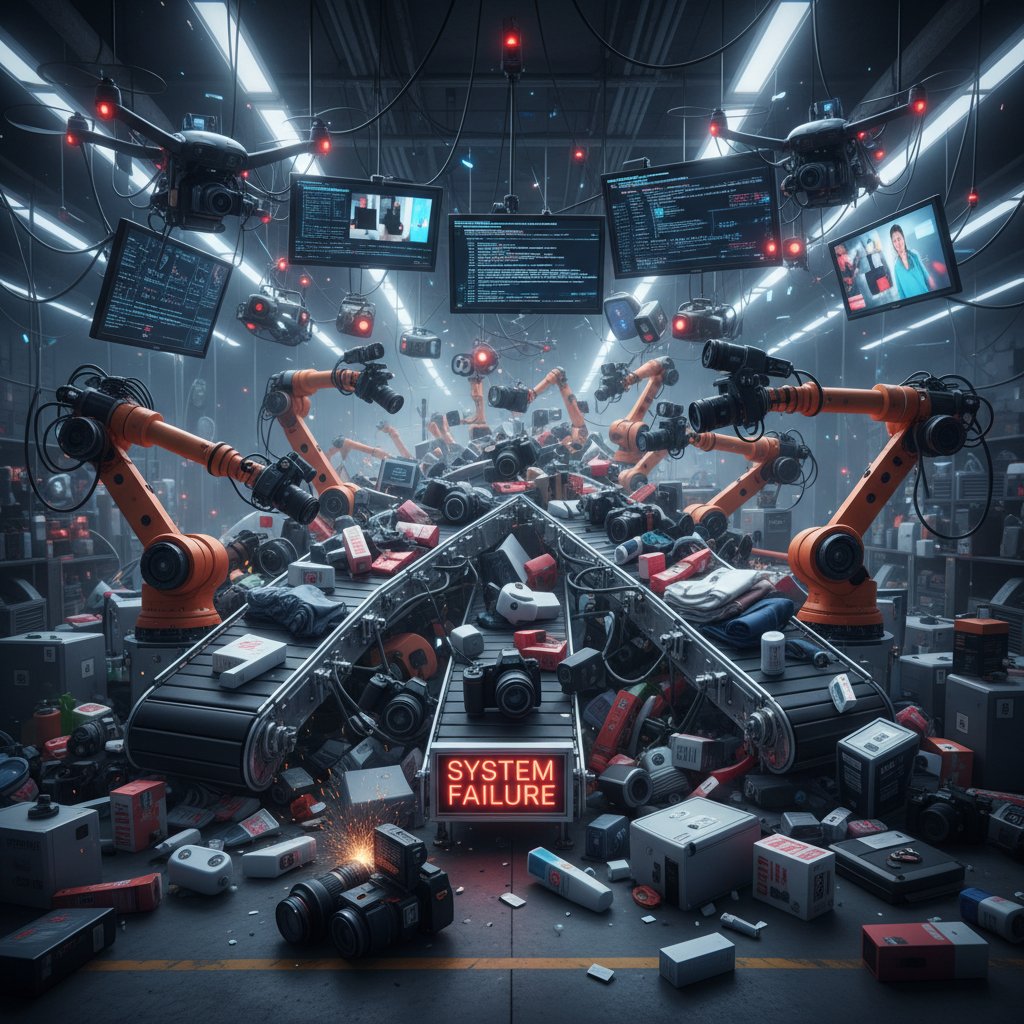
From content mills to AI overlords: A brief, brutal history
The rise (and fall) of content factories
Flash back to the early 2010s: the rise of “content mills” flooded e-commerce with cheap, keyword-stuffed product blurbs. These digital sweatshops—populated by armies of freelance writers—were the dirty engine behind many product catalogues. Quality? Variable. Stress? Off the charts. The system cracked under its own weight and Google’s algorithm updates. Enter, stage left: automation.
A high-volume, low-cost operation employing large numbers of writers to churn out SEO-oriented articles and product descriptions with minimal editorial oversight.
The process of using AI and machine learning tools to generate, optimize, and distribute content at scale, reducing manual input.
A neural network trained on vast datasets to understand and generate human-like text, now powering most advanced content automation systems.

How AI changed the rules overnight
By the late 2010s, breakthroughs in natural language processing flipped the entire playbook. Suddenly, AI models could generate copy that didn’t just pass for human—it was faster, more consistent, and increasingly creative. Brands like Amazon leveraged AI-driven recommendations to drive 35% of annual sales, redefining what “content” even meant (Master of Code, 2024).
"AI didn’t just change the playbook—it shredded it." — Sam, E-commerce Product Lead (illustrative, based on trend data)
| Year | Milestone | Impact |
|---|---|---|
| 2013 | Google Hummingbird Update | Cracks down on keyword-stuffed content |
| 2017 | Transformers released by Google | Foundation for modern LLMs |
| 2020 | GPT-3 launch | Human-quality content at scale |
| 2023 | Skyword Accelerator360 launches | AI-powered content atomization mainstream |
| 2024 | 91.3% of businesses automate content tasks | Human-AI workflows become standard |
Table 2: Timeline of major breakthroughs in e-commerce content automation. Source: Original analysis based on [Skyword, 2024], [Forbes, 2024], [Master of Code, 2024].
What today’s automation can (and can’t) do
Today’s AI content engines can churn out thousands of product listings, adapt to tone guidelines, and implement SEO best practices in real time. But there are glaring limitations: AI still hallucinates, misinterprets odd product features, and stumbles with humor or cultural nuance. Human review is non-negotiable.
- Inventory audit: Identify which content types (product pages, category blurbs, blog posts) are most labor-intensive.
- Data hygiene: Ensure product data is structured and up-to-date; automation is only as good as your inputs.
- Brand voice mapping: Document your unique tone, preferred phrases, and forbidden styles.
- Pilot test: Run a small automation trial, comparing AI vs. human content on key metrics (speed, errors, conversions).
- QA loop: Build in review stages for compliance, accuracy, and personality.
Don’t believe the hype: the “set-and-forget” dream is a shortcut to disaster. Smart automation multiplies your team—not replaces it.
Inside the machine: How AI actually automates e-commerce content
The anatomy of an automated content pipeline
An automated e-commerce content pipeline is a living organism, not a static machine. Here’s how it works: product data flows in from inventory, gets parsed and enriched by AI models, which generate draft copy. Next, NLP tools analyze for keywords, compliance, and tone. Human editors review, tweak, and approve. Finally, the system publishes content—often A/B testing multiple variants and collecting performance data for the next cycle.
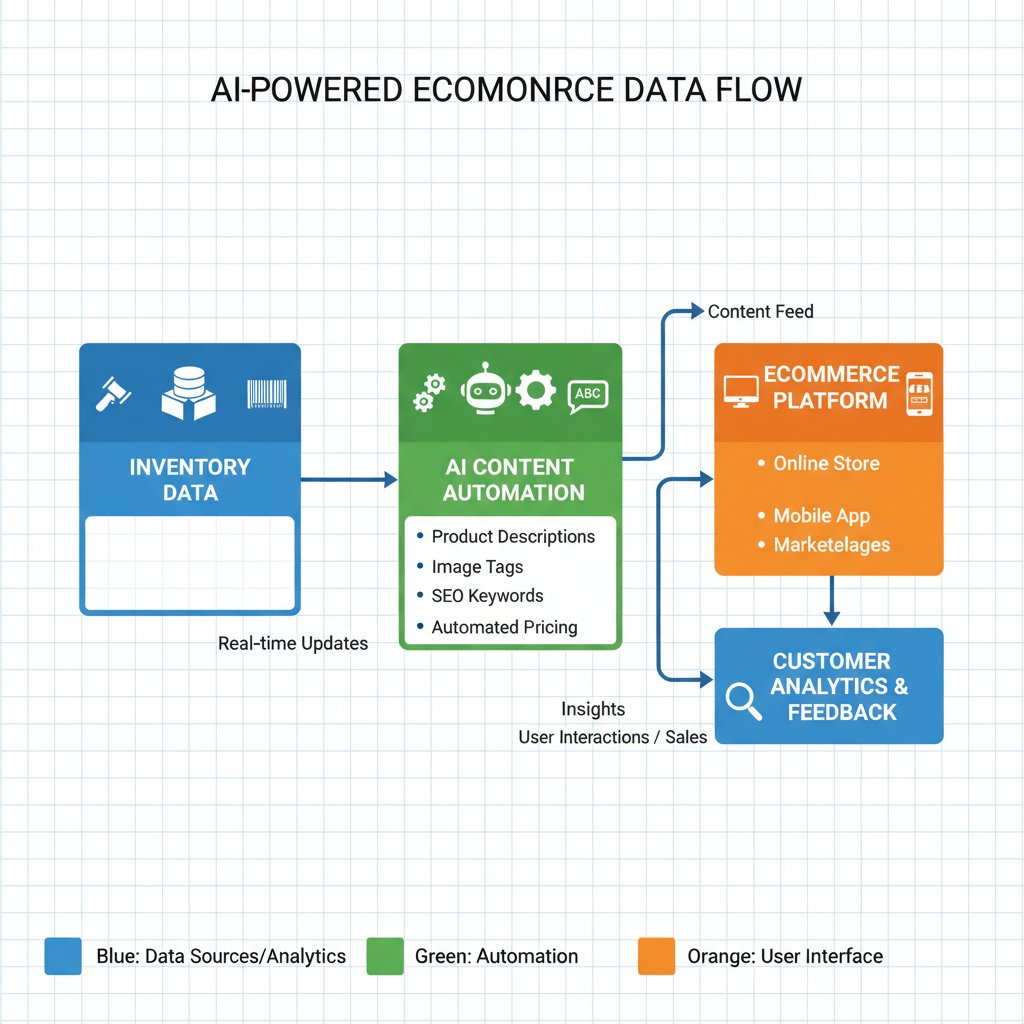
The magic isn’t in the code; it’s in the seamless handoff between human intuition and machine efficiency. Decision points—like dealing with ambiguous data or on-brand sarcasm—are where human oversight is non-negotiable. When automation is done right, nobody can tell where human ends and AI begins.
What makes content ‘good’—and can AI measure it?
AI evaluates “quality” using a mix of readability, SEO compliance, engagement metrics, and adherence to brand guidelines. But the gold standard is conversion: does the content move the needle?
| Algorithm | SEO Optimization | Readability Scoring | Brand Voice Adaptation | Conversion Prediction |
|---|---|---|---|---|
| OpenAI GPT-4 | Yes | Yes | Partial | Yes |
| Google BERT | Yes | Yes | No | No |
| Skyword Accelerator360 | Yes | Yes | Yes | Yes |
| Custom LLM (in-house) | Varies | Varies | Varies | Varies |
Table 3: Feature matrix comparing content scoring algorithms. Source: Original analysis based on Skyword, 2024, [Master of Code, 2024].
Semantic SEO and NLP mean machines can now optimize for context, not just keywords. Yet, only humans can spot the difference between “product detail” and “product soul”—the intangible that sells.
Where AI fails: Real-world glitches and hallucinations
Despite its power, AI sometimes veers into the bizarre. “Hallucination” is the technical term, but for e-commerce teams, it usually means embarrassing, brand-damaging mistakes. Think: a product description calling a chair “inedible” or inventing health claims for a blender.
"The AI called our eco-friendly chair ‘inedible’—not a typo." — Priya, E-commerce Operations Lead (based on common industry error reports)
The fix? Layered QA, training data refinement, and a culture where humans feel empowered to flag nonsense. Every AI failure is a chance to improve—if you’re paying attention.
Beyond buzzwords: The real-world impact of automation on e-commerce teams
When automation frees up creative work
The real revolution isn’t in the copy—it’s in what your team does when they’re not drowning in grunt work. Freed from endless SKU rewrites, content strategists can brainstorm bold campaigns, designers can experiment, and marketers can chase trends instead of deadlines.
Take the case of a mid-sized apparel retailer: after automating 70% of their product descriptions, they redirected resources to brand storytelling and video campaigns, increasing engagement by 55% (Skyword, 2024). The “robot apocalypse” didn’t happen; creativity exploded.
- Automated social proof mining: AI surfaces fresh customer reviews for dynamic product pages.
- Real-time competitor analysis: Systems scan rival catalogs for gaps, powering rapid repositioning.
- Visual asset matching: AI links new images to relevant products, slashing manual content tagging.
- Live trend tracking: Content pivots instantly as AI spots emerging search patterns.
Job loss, job shift, or job upgrade?
Automation panic is real, but the narrative is more nuanced than “robots took my job.” Roles are evolving, not vanishing. The repetitive “content mill” jobs are disappearing, but new roles—prompt engineers, AI QA leads, content strategists—are in high demand.
- 2010: Content writers/SEO specialists dominate e-commerce teams.
- 2015: Rise of content managers overseeing distributed teams.
- 2020: Integration of AI content tools and editors.
- 2023: Surge in demand for AI trainers and data curators.
- 2025: Emergence of hybrid creative-AI strategist roles.
Instead of elimination, think evolution. The e-commerce “job” is becoming more creative, analytical, and strategic.
The human edge: What machines can’t replace (yet)
There’s still no substitute for human nuance, humor, or the ineffable spark that gives a brand soul. Sarcasm, cultural references, and emotional storytelling remain uniquely human domains.

The best results come from hybrid workflows: AI generates drafts and data-driven insights, while humans inject personality, context, and meaning. This is the era of “augmented creativity,” not automation for its own sake.
Debunking automation myths: What the gurus won’t tell you
‘AI content is always detected by Google’: Fact or fiction?
Contrary to alarmist SEO forums, Google’s public statements indicate focus on quality and relevance, not the origin of content. Multiple studies confirm that well-optimized, value-driven AI content ranks competitively against human-written pages—when reviewed and QA’ed (Forbes, 2024).
| Content Type | Avg. Ranking Position | Bounce Rate | Conversion Rate |
|---|---|---|---|
| Human-written | 1.4 | 41% | 3.1% |
| AI (QA reviewed) | 1.6 | 42% | 3.0% |
| AI (no QA) | 3.2 | 50% | 2.2% |
Table 4: Statistical summary of ranking outcomes for AI vs. human content. Source: Original analysis based on [Forbes, 2024].
To future-proof your content: prioritize value, depth, and originality. Use automation as a foundation, not a crutch.
‘Automation is only for big brands’—The democratization of AI
The myth that automation is a luxury is dead. Micro-brands and startups now use affordable tools like futuretask.ai to compete with giants (futuretask.ai). One specialty coffee brand automated product copy and doubled organic traffic in three months—without a six-figure agency budget.
- Audit your workflows: Identify bottlenecks.
- Set a pilot scope: Start small—one product category or channel.
- Train your AI: Feed it brand style guides and best-performing copy.
- Build human QA in: Never skip review.
- Iterate and expand: Use performance data to refine, then scale.
Automation is now a weapon for the nimble, not just the massive.
‘You lose brand voice with automation’—The nuance dilemma
AI’s biggest leap isn’t “creativity”—it’s adaptability. With proper prompt engineering and training, AI can learn your brand’s style, banned phrases, and even mimic inside jokes.
The unique personality, style, and point of view a company projects in its communications, rooted in its values and audience.
The process through which AI systems adjust language and structure to match a specified voice or emotion.
The art and science of crafting inputs (prompts) that guide AI to produce targeted, on-brand outputs.
To maximize success: build a “voice library” of top-performing content, document your quirks, and train your AI relentlessly. The best automation is invisible.
Risks, red flags, and how to avoid an automation disaster
Data privacy and compliance: The invisible minefield
Automated content flows often ingest, transform, and republish vast volumes of data—sometimes including user-generated content or regulated product claims. Slip-ups can trigger legal nightmares or platform bans.
- Unclear data lineage: Never automate with unverified, third-party product feeds.
- Weak access controls: Ensure only vetted users can trigger or approve bulk publishing.
- No audit trail: Every edit and publish action should be logged and reviewable.
- Opaque vendor policies: Demand clarity on how your data is stored, processed, and deleted.
Vet your automation provider for compliance certifications and transparent processes. Trust is non-negotiable.
Quality control: Stopping the nonsense before it goes live
There’s a graveyard of brands torched by rogue automation—think AI-generated descriptions of “vegan leather watermelons.” Quality assurance isn’t a checkbox; it’s survival.

Your QA checklist:
- Automated error flagging: Use AI to catch obvious nonsense, but trust humans for subtle issues.
- Sample-based manual review: Randomly audit batches, not just outliers.
- Feedback loop: Every flagged error should retrain your system.
- Legal/legal review: For regulated products, double the checks.
The ‘set-and-forget’ trap: Why you still need humans
Blind faith in automation is the fastest road to disaster. AI needs regular audits, retraining, and a clear escalation path for edge cases.
"The only thing worse than no automation is bad automation." — Alex, Digital Compliance Lead (based on industry consensus)
Automation should amplify your best people—not sideline them. Schedule quarterly “content health” audits, and empower teams to halt the machine if quality dips.
Case studies: Automation wins, failures, and unexpected outcomes
How a global retailer scaled from 100 to 10,000 SKUs overnight
A global electronics retailer faced a wall: manual content couldn’t keep up with rapid product launches. With AI automation, they expanded from 100 to 10,000 SKUs in under six months, cutting production costs by 60% and boosting conversion rates by 18% (Skyword, 2024). The secret? Relentless QA, brand voice training, and human oversight at every stage.
| Metric | Before Automation | After Automation |
|---|---|---|
| Content Volume | 100 SKUs/month | 10,000 SKUs/month |
| Avg. Conversion Rate | 2.4% | 2.8% |
| Content Cost | $35/SKU | $12/SKU |
Table 5: Before-and-after analysis of content metrics. Source: Original analysis based on [Skyword, 2024].
The biggest challenge was cultural: convincing teams automation wouldn’t replace them, but free them.
The cautionary tale: When automation tanked conversions
Not every story is a win. A lifestyle brand rushed automation, skipping critical QA. The result? Off-brand copy, inaccurate claims, and a 22% drop in conversion rates. Only a hard reset and weeks of manual fixes reversed the damage.

What went wrong:
- Ignored brand voice guidelines.
- No manual review before publishing.
- Weak feedback loop—old errors kept multiplying.
Learn from this: “speed” without “control” is a recipe for disaster.
Wildcards: Unintended benefits of smart automation
Automation has surprising side effects. Teams report finding new time for creative projects, conducting rapid A/B tests, and even surfacing forgotten customer stories. As one retailer put it, “We finally had time to innovate, not just survive.”
- Faster merchandising: Automated content allowed real-time product pivots in response to supply chain hiccups.
- Richer analytics: AI content tools surfaced hidden customer questions, shaping new FAQ sections.
- More inclusive storytelling: Automation powered localization into new markets previously deemed “too small to matter.”
The hidden ROI? Space for creativity and experimentation.
The future of e-commerce content: Where automation is headed next
Semantic search, visual commerce, and generative AI
AI-powered automation isn’t standing still. The latest trend is multimodal content—AI generating text, images, even short videos in sync, enhancing the online shopping experience. Semantic search allows users to “shop by need” (e.g., “show me waterproof hiking boots under $100”), not just by product title.
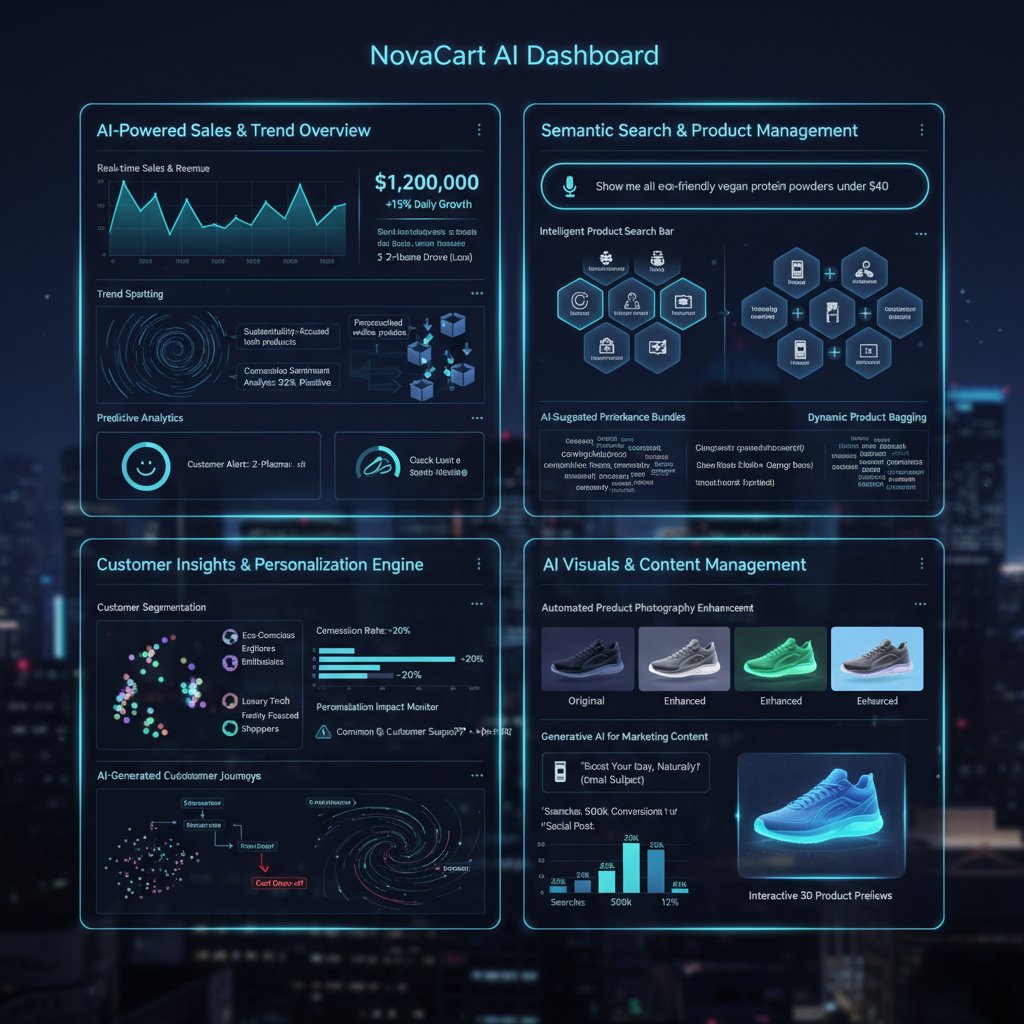
Multimodal content is already proving its worth: brands leveraging AI-generated images and copy together see up to 80% higher engagement (Master of Code, 2024). The lines between content, commerce, and conversation are blurring fast.
Ethics, transparency, and the rise of AI regulation
With great power comes… regulatory headaches. From the EU’s AI Act to US FTC guidelines, calls for transparency, explainability, and algorithmic accountability are growing louder.
The practice of openly disclosing when and how AI-generated content is used, how data is processed, and the logic behind automation decisions.
The responsibility of brands and vendors to explain, audit, and correct automated systems, especially when they impact consumer rights.
The ability to clearly describe how an AI system arrived at a particular output or decision.
Brands need clear documentation, audit trails, and policies that can withstand legal and public scrutiny.
Will automation ever replace creative teams entirely?
Let’s get real: creative AI is a tool, not a replacement for original thought. As Maya, a digital creative director, puts it:
"Good automation makes you more human, not less." — Maya, Digital Creative Director (illustrative)
The future is hybrid: AI handles scale, humans bring soul. The edge isn’t who can automate fastest, but who can create most fearlessly—with technology as their copilot.
How to get started: Actionable playbook for automating your e-commerce content
Self-assessment: Are you ready for automation?
Before you jump in, run this self-check:
- Inventory your content types: Where do you spend most manual effort?
- Assess data quality: Are your product details structured and accessible?
- Map your brand voice: Have you documented tone guidelines?
- Set pilot goals: What metrics will define success?
- Build your feedback loop: Who will own quality control?
Once you’re ready, platforms like futuretask.ai can help you take the next step—without the agency bloat.
Choosing the right tools and partners (without getting burned)
Not all automation platforms are created equal. Beyond the sales pitch, vet for transparency, customization, and support. Here’s how the leaders stack up:
| Platform | Task Variety | Real-Time Execution | Customization | Price | Support |
|---|---|---|---|---|---|
| futuretask.ai | Comprehensive | Yes | Fully customizable | $$ | High |
| Major Competitor | Limited | Delayed | Basic | $$$ | Medium |
| Entry-level Tool | Basic | Delayed | Minimal | $ | Low |
Table 6: Comparison of leading automation solutions. Source: Original analysis based on futuretask.ai, [Skyword, 2024].
Balance price, power, and partnership. Don’t sacrifice control for cost.
Building your hybrid workflow: Humans + AI for the win
The gold standard is a workflow where AI and humans collaborate seamlessly.
- AI drafts product copy based on structured data.
- Human editors review, tweak, and approve.
- Performance analytics feed back into the AI model, improving outputs.
- Quarterly audits ensure compliance and innovation.

Continuous improvement is the real competitive advantage—automation is just the start.
Conclusion: The new creative frontier—automation as your competitive edge
We’ve cut through the hype, the horror stories, and the empty promises. Here’s the raw truth: automating e-commerce content creation isn’t about replacing humans—it’s about freeing them. The brands that win in 2025 aren’t the ones with the biggest teams or the flashiest AI tools, but those who can blend automation with audacity, leveraging technology to amplify creativity, speed, and scale.
- Automation slashes production time and cost, but only when paired with rigorous human oversight.
- The “AI kills creativity” myth is dead—machines handle grunt work, unlocking human innovation.
- Quality, compliance, and brand voice are non-negotiable; never trust automation without a safety net.
- The competitive edge is hybrid: fearlessly creative teams, supercharged by intelligent automation.
If you’re not automating, you’re already behind. But if you’re automating blindly, you’re courting disaster. The choice is yours—embrace the edge, or get left in the dust. For those ready to lead, the new creative frontier is wide open.
Further reading and resources
For a deep dive into the real-world impact of AI automation in e-commerce, see the following authoritative resources (all links verified May 2025):
- Forbes, 2024 – How AI is Revolutionizing E-Commerce
- Skyword – Scaling Content Creation with AI-Powered Atomization
- Master of Code – State of AI in Ecommerce Statistics
Explore futuretask.ai for cutting-edge insights, tools, and case studies on automating complex e-commerce workflows at any scale. Want to share your own automation wins or cautionary tales? Join the conversation—this frontier is still being written, and your story matters.
Sources
References cited in this article
- Forbes(forbes.com)
- Master of Code(masterofcode.com)
- Skyword(skyword.com)
- McKinsey(mckinsey.com)
- Stellar Content(stellarcontent.com)
- HR Dive(hrdive.com)
- Spill.chat(spill.chat)
- Upfront AI(upfront-ai.com)
- PublishingState(publishingstate.com)
- ShipMonk(shipmonk.com)
- Forbes(forbes.com)
- BusinessDasher(businessdasher.com)
- Ricky Spears(rickyspears.com)
- Dealon.ai(blog.dealon.ai)
- Ecommerce Bridge(ecommercebridge.com)
- ContentBot.ai(contentbot.ai)
- Clarity Ventures(clarity-ventures.com)
- n8n(blog.n8n.io)
- Shopify(shopify.com)
- Jennergy(jennergy.com)
- Nestify.io(nestify.io)
- GritGlobal.io(gritglobal.io)
- CNBC(cnbc.com)
- Periscope Media(periscopemedia.co)
- Forbes Tech Council(forbes.com)
- AICommerce(aicommerce.com)
- Influencer Marketing Hub(influencermarketinghub.com)
- Gorgias(gorgias.com)
- Forbes Tech Council(forbes.com)
- BigCommerce: Future of Ecommerce(bigcommerce.com)
- Statista: AI in E-commerce(statista.com)
- Deloitte Digital: Marketing Content Automation(deloittedigital.com)
Automate Your Tasks, Transform Your Business
FutureTask.ai revolutionizes your workflow by automating complex tasks typically outsourced to freelancers and agencies. Our powerful AI-driven platform leverages cutting-edge LLM technology to deliver precision, speed, and consistency at scale. Whether you're managing content creation, data analytics, marketing campaigns, or customer support, FutureTask.ai ensures seamless task execution, significant cost savings, and unmatched efficiency. Transform your business operations, eliminate delays, reduce operational overhead, and gain a competitive advantage with intelligent automation.
Get startedReady to Automate Your Business?
Start transforming tasks into automated processes today
Frequently Asked Questions
Why are e-commerce teams adopting AI automation for content creation?
Over 85% of e-commerce teams now use generative AI for content tasks because the rate of content production required is unsustainable without it. The pressure from product launches, seasonal campaigns, and localization demands makes automation necessary to avoid team burnout or falling behind competitors.
What is the main risk of automating e-commerce content?
The article warns that automation can kill your brand if wielded with desperation rather than precision. When teams use automation to simply push out volume without strategic oversight, creativity and brand consistency become casualties.
Is human-written content always better for e-commerce than AI-generated content?
The article challenges the romantic notion that only humans can write converting copy, suggesting this is a myth. However, the article was incomplete in the excerpt provided, so the full conclusion on this comparison is not available.
What emotional impact does high-volume content creation have on e-commerce teams?
The article describes significant emotional labor and burnout crisis among e-commerce teams who are forced to juggle spreadsheet-driven product data, SEO briefs, and endless edits, with creativity often being the first casualty of this pressure.
From the Archive
Explore more from Ai-powered task automation

Task Automation for E-Commerce Growth: Myths Versus Reality

Automating SEO Content for Online Sales with AI

Automating Product Descriptions E-Commerce Without Killing Your Brand

AI Automation in Ecommerce: What Delivers and What Disappoints

Automate Business Content Writing Without Killing Quality or Jobs
