


Task Automation for E-Commerce Managers: Roi, Risks, and What's Changing in 2025
Written with AI assistance under our editorial guidelines
E-commerce managers face mounting pressure to adopt task automation in 2025, with 26% of finance and operations teams still using no automation tools at all. The digital pace demands efficient order processing, inventory management, and customer service handling, as manual processes increasingly collapse under modern demand. Automation has become essential for scaling operations and preventing costly errors that impact profitability.
Welcome to 2025, where the e-commerce battlefield is littered with digital casualties—stores that moved too slow, managers who clung to spreadsheets, and brands that thought automation was just another buzzword. The truth? Task automation for e-commerce managers isn’t a nice-to-have; it's the difference between scaling up and burning out. According to recent data, 26% of finance and operations teams are still flying blind—using no automation tools at all, a choice that’s rapidly becoming a liability rather than a badge of grit. Meanwhile, 95% of customer-retailer interactions are now automated, redefining not only the pace but the very fabric of online retail. This is not a sterile tech fairytale. It’s a high-stakes game fueled by AI-powered platforms like futuretask.ai, where the right move can make or break your P&L. We’re pulling back the curtain on brutal truths, hidden risks, and the battle-tested playbook you need to future-proof your operation, all while keeping your sanity—and your team—intact.
The new reality: Why e-commerce managers can't ignore automation in 2025
From manual chaos to machine order: The tipping point
Every e-commerce manager knows the feeling: you’re swamped with orders, inventory is a moving target, and customer queries stack up faster than you can blink. The digital pace is unforgiving, and manual processes—once symbols of hands-on excellence—now collapse under the weight of modern demand. According to Rossum.ai, as of 2024, over one-quarter of operations teams have yet to adopt automation, exposing them to inefficiency and preventable human error. The tipping point typically arrives when the pain of chaos outweighs the comfort of “the way we’ve always done it.” For some, it’s a Black Friday debacle; for others, it's a mounting pile of customer complaints or a costly fulfillment error that gets the CFO’s attention.
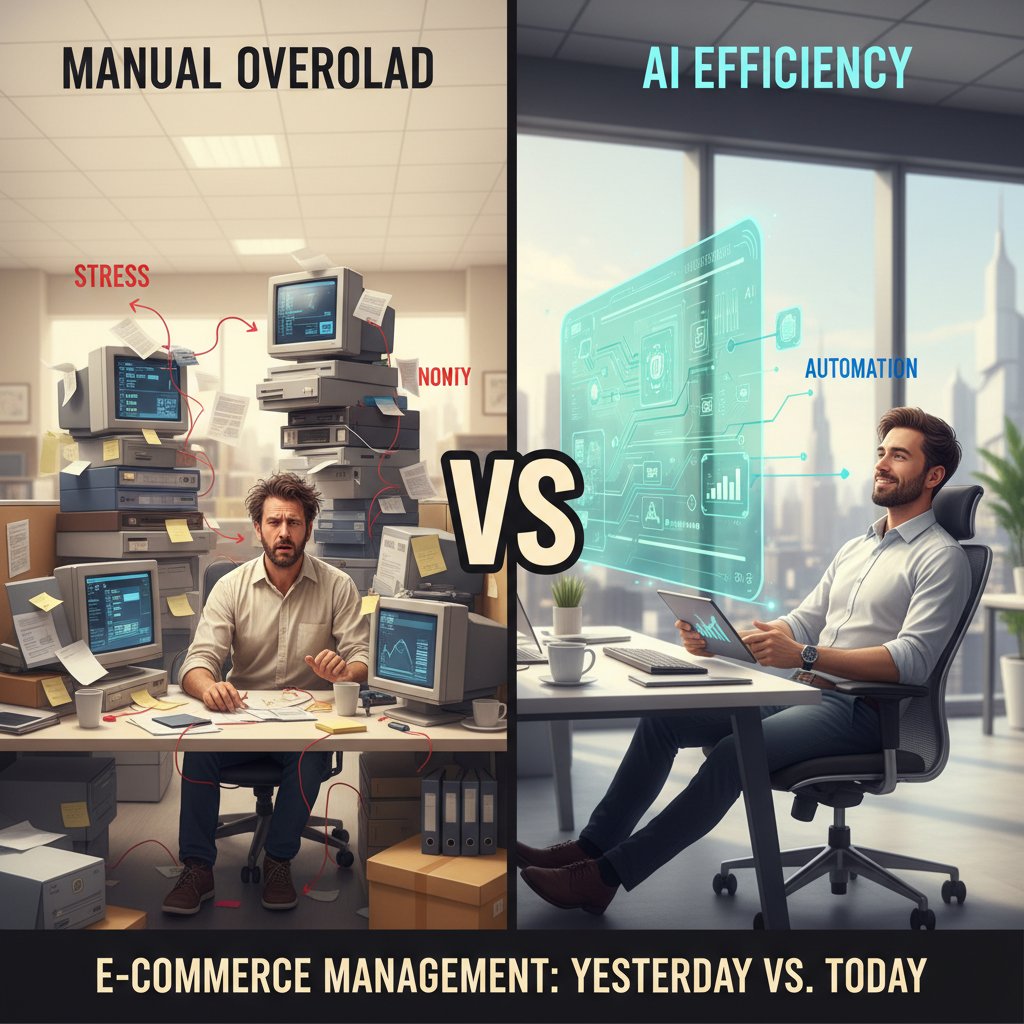
The moment managers seek automation is rarely a gentle evolution. It’s an urgent pivot—often triggered by a near-miss or a stubborn bottleneck that refuses to go away. When you realize you’re missing out on growth because you’re too busy fighting fires, that’s when automation turns from theory into survival gear.
| Workflow Type | Average Time per Task (min) | Cost per Month ($) | Error Rate (%) |
|---|---|---|---|
| Manual | 35 | 2,400 | 7.9 |
| Semi-Automated | 18 | 1,600 | 4.2 |
| Fully Automated | 6 | 1,200 | 1.2 |
Table 1: Manual vs automated workflow—time, cost, and error rates in e-commerce operations (2025 data). Source: Original analysis based on Rossum.ai, 2024, Kissflow, 2024
Why the hype—and why the hangover? Automation's double edge
Automation promises a frictionless future: faster fulfillment, error-free data, teams free to “focus on what matters.” But here’s the kicker: the reality is messier. According to research from Greenhat, many managers are seduced by glossy dashboards, only to find themselves tangled in integration headaches or staring down bots that mishandle nuanced customer issues.
"Automation is seductive, but you have to respect its limits." — Sophie, automation consultant
The emotional rollercoaster is all too real. First, there's hope and excitement—finally, you’ll kill those repetitive tasks! Then, resistance rears its head: staff worry about job loss, while integration takes twice as long (and costs twice as much) as the vendor promised. Managers ride the line between optimism and dread, especially when the first big automation misfire hits the customer experience. The hangover? It's when you realize that automation, poorly executed, can magnify your worst problems at scale.
futuretask.ai and the rise of AI-driven e-commerce ops
In this climate, platforms like futuretask.ai are rewriting the rules. E-commerce managers are no longer just looking for task automation—they’re seeking intelligent, AI-powered solutions that think, adapt, and scale. These platforms don’t just replace manual work; they orchestrate entire workflows, integrating data analytics, content generation, and customer support in one seamless ecosystem. According to Kissflow, 85% of customer interactions in e-commerce will be handled by AI chatbots in 2025, a leap that’s driving demand for platforms that deliver both power and finesse.
Hidden benefits of automation experts won't tell you:
- Unlocks time for creative strategy, not just busywork
- Reduces dependency on unreliable freelancers and agencies
- Makes workflows auditable—so you catch issues early, not after a crisis
- Enables true 24/7 service without burnout or night shifts
- Drastically accelerates experiment-and-learn cycles for marketing and product launches
- Levels the playing field for smaller teams to compete with big-budget rivals
- Turns data chaos into actionable insights, closing the decision gap
Behind the curtain: What e-commerce managers are really automating (and what they're not)
The tasks ripe for automation in 2025
If you think automation is just about processing orders faster, you’re missing the point. E-commerce managers in 2025 are automating everything from personalized marketing flows to real-time inventory updates, freeing themselves to tackle big-picture strategy. According to Cflow, the most commonly automated workflows include order management, returns processing, and customer messaging—tasks that are repetitive, rules-based, and ripe for error when done manually.
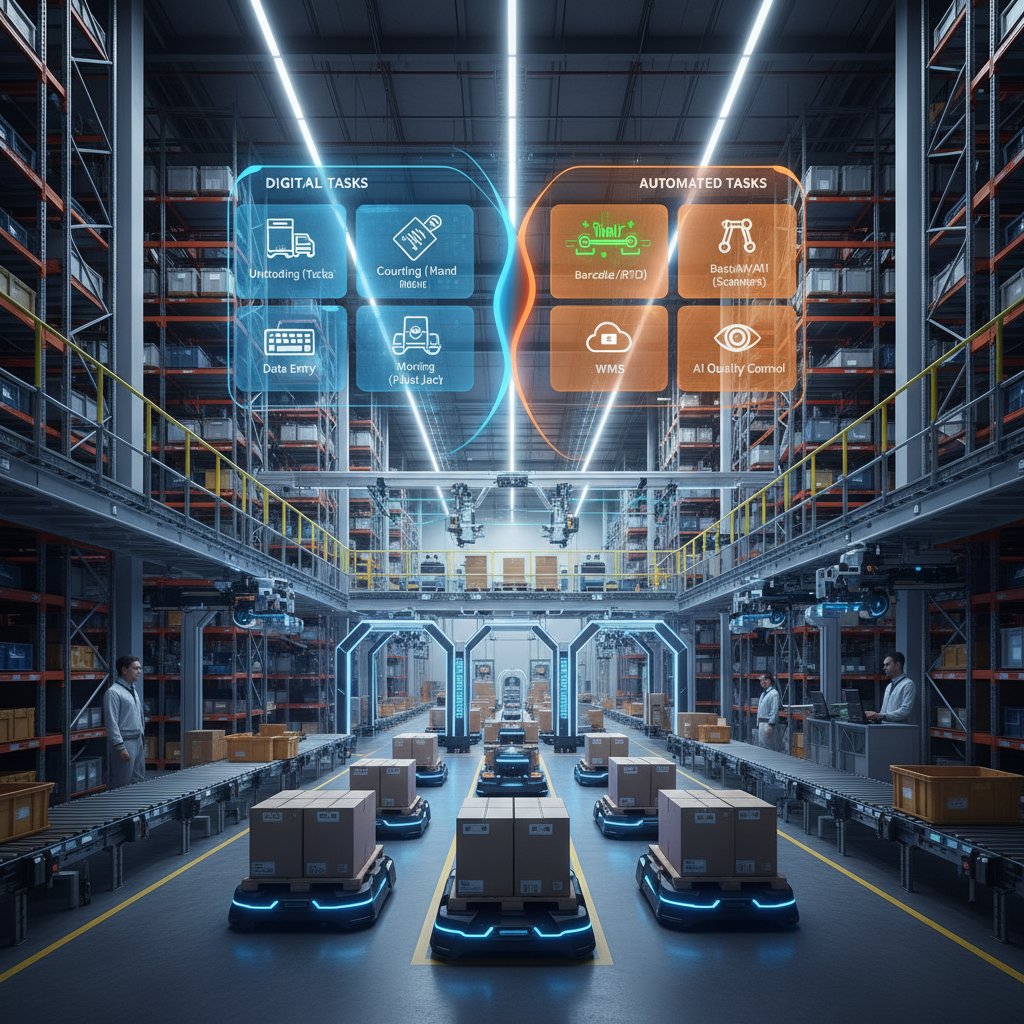
Top 8 tasks every e-commerce manager should automate now:
- Order processing: Speed up fulfillment and reduce human error with end-to-end automation.
- Inventory updates: Sync stock levels across platforms to avoid overselling and out-of-stocks.
- Customer messaging: Use AI-driven responses for order confirmations, updates, and FAQs.
- Returns management: Automate approvals, refunds, and restocking to cut admin time.
- Product content creation: Auto-generate descriptions and SEO copy for faster launches.
- Marketing campaigns: Schedule, personalize, and A/B test emails and ads at scale.
- Financial reporting: Pull and reconcile sales, taxes, and expenses automatically.
- Review and feedback collection: Trigger post-purchase requests to boost social proof.
What still resists the robots: The limits of current tech
Here’s an uncomfortable truth: not every task is ready for the machine revolution. Creativity, complex negotiations, and truly nuanced customer service—these remain stubbornly human. According to expert interviews, tasks that demand empathy, improvisation, or high-stakes persuasion consistently resist automation, no matter how advanced the AI.
"Some problems just need a human brain." — Ava, e-commerce manager
It’s in these moments—when a customer is irate and wants more than a templated apology, or when a supplier negotiation hinges on reading between the lines—that human managers prove irreplaceable. Automation handles the grunt work, but humans still write the playbook for the hardest problems.
Unconventional use cases: Automation beyond the basics
Savvy e-commerce managers are pushing boundaries, using automation in surprising ways that turn small wins into strategic advantages.
Unconventional uses for task automation for e-commerce managers:
- Sentiment analysis on product reviews to trigger instant product tweaks
- Automated competitor price tracking and dynamic repricing
- Auto-curation of user-generated content for social proof and engagement
- Fraud detection bots that learn from new scam patterns instantly
- Automated influencer outreach and campaign tracking
- Smart scheduling for supply chain logistics to dodge delays and cut shipping costs
The anatomy of a breakdown: When task automation fails (and why nobody talks about it)
The root causes: Cultural, technical, and strategic sabotage
Not every automation project ends in glory. In fact, failure is disturbingly common—often for reasons managers would rather not discuss. According to Rossum.ai, the most brutal root causes include resistance to change (“We’ve always done it this way”), bad data (garbage in, garbage out), and goals that are either too vague or hopelessly ambitious. If leadership isn’t aligned, or if frontline staff feels threatened, sabotage becomes inevitable.
| Reason for Failure | Description | Common Warning Signs |
|---|---|---|
| Resistance to change | Staff push back on new processes | Drop in morale, passive delays |
| Poor data quality | Automation “breaks” when data is inconsistent | Frequent errors, rework loops |
| Unclear goals | No one can define success | Scope creep, endless revisions |
| Underestimating complexity | Overly simplistic implementation | Endless troubleshooting |
| Lack of ongoing oversight | Set-and-forget mentality | Degrading performance, surprises |
Table 2: Top 5 reasons e-commerce automation fails, with warning signs. Source: Original analysis based on Rossum.ai, 2024, Greenhat, 2024
Automation horror stories: Real-world lessons
Failure in automation isn’t just theoretical; it’s painfully real. Consider the mid-sized retailer whose “smart” order-batching system accidentally flagged hundreds of legitimate purchases as fraudulent—paralyzing sales for days. Or the brand whose automated email campaign sent out discount codes to the wrong segment, triggering a costly refund wave.

"We automated ourselves into a corner." — Raj, AI researcher
These stories share a theme: overconfidence in technology, underinvestment in oversight, and a lack of contingency planning. Recovery only came when teams reintroduced human review and built in fail-safes—clear reminders that automation amplifies both strengths and weaknesses.
Red flags: Early warning signs you can't ignore
Smart managers know that trouble rarely arrives unannounced. Here are warning signs that your automation initiative is veering off track.
Red flags to watch out for when automating e-commerce tasks:
- Unexpected surge in customer complaints or returns
- Staff quietly reverting to manual “shadow” processes
- Frequent error messages or unexplained process halts
- Declining team morale or increased turnover
- Automation “black boxes” that no one can explain
- KPIs plateauing or trending downward after implementation
- Increasing exceptions that require manual intervention
- Vendor support tickets piling up with slow resolution
The ROI reckoning: Does automation actually pay off?
Breaking down the numbers: Time, money, and morale
ROI in automation isn’t a fairy tale—it’s numbers, pressure, and the mood of your team. According to consolidated industry data, small stores see the fastest percentage gains, while large operations achieve the biggest absolute savings. Indirect benefits like improved team morale and fewer costly errors are significant, but only when automation is rolled out thoughtfully and maintained with care.
| Store Size | Initial Automation Cost ($) | Monthly Savings ($) | Productivity Gain (%) | Team Morale Impact |
|---|---|---|---|---|
| Small | 5,000 | 1,200 | 25 | Positive |
| Medium | 15,000 | 4,500 | 36 | Mixed |
| Large | 40,000 | 15,000 | 44 | Variable |
Table 3: ROI of automation—costs, savings, and productivity metrics across small, medium, and large stores. Source: Original analysis based on Kissflow, 2024, Autify, 2024
While morale often climbs when tedious manual work vanishes, it can dip if automation is seen as a threat or if botched rollouts introduce new frustrations. Open communication and staff involvement in the process are key.
The hidden costs: What the sales decks won't tell you
Vendors love to pitch automation as a silver bullet—but it comes with costs they’d rather not discuss.
7 hidden costs of automation every manager should budget for:
- Integration with legacy systems that weren’t built for APIs
- Continuous maintenance and platform updates
- Staff retraining and ongoing education
- Process redesign to fit automation workflows
- Unexpected vendor lock-in or price hikes
- Manual intervention for outlier cases
- Security and privacy audits, especially for customer data
Case study: How one brand scaled up—and what they regret
Take the story of Vivid Threads, a mid-sized apparel brand. In 2024, they invested heavily in automation—cutting content costs by 50% and boosting organic traffic by 40%. But beneath the surface, not all was rosy: integration delays ate into their savings, and a lack of early employee buy-in led to “shadow work” as staff clung to old routines. Their lesson? Start small, invest in change management, and never assume automation will “just work.”

Myths, fears, and the future: Debunking automation's biggest misconceptions
Mythbusting: No, automation isn't a job killer (mostly)
Let’s clear the air: automation isn’t out to gut your workforce. Instead, it’s transforming roles—freeing managers and staff from soul-crushing busywork to focus on creative, analytical, and high-touch functions. According to research from Autify, most businesses report job evolution rather than mass layoffs, with upskilling and new roles in data analysis, creative direction, and customer experience.
Key automation terms and why they matter:
A software environment that manages and executes automated workflows, integrating multiple tools and data sources for seamless operations in e-commerce.
Solutions that allow users to build automation workflows through visual interfaces and drag-and-drop modules, reducing dependency on IT teams.
Technology that mimics human actions to execute rules-based tasks—useful for legacy systems, but less flexible than AI-driven tools.
Uses machine learning and natural language processing to handle complex, context-sensitive tasks—think chatbots that learn from every interaction.
Fear factor: Automation as existential threat—or secret weapon?
The psychological terrain of automation adoption is fraught. Managers worry: “Will I be replaced? Will my job become meaningless?” But the opposite is often true. Automation, when done right, strips away the grunt work and lets teams focus on bigger, bolder moves.
"Automation made my job more interesting, not obsolete." — Sophie, automation consultant
Anxiety is real, but when managers frame automation as a tool for growth—not a threat—teams step up, learn new skills, and become champions of change.
The human edge: Where people still outperform the machines
There are frontiers where AI simply can’t compete. Human strengths—empathy, improvisation, cultural nuance, and gut instinct—remain unmatched. When a high-value customer calls with a nuanced issue, when a viral trend explodes overnight, or when a black swan event hits the supply chain, it’s human managers and teams who adapt, soothe, and innovate.

The AI revolution: How large language models are rewriting the automation playbook
What changed in 2025? The dawn of AI-first automation
The real game-changer in e-commerce automation isn’t just faster bots—it’s the arrival of large language models (LLMs) that understand context, nuance, and intent. AI-first platforms analyze mountains of data, generate content that actually converts, and respond to customers in real English, not just robotic scripts. Platforms like futuretask.ai harness LLMs to blur the line between human and machine decision-making, giving managers superpowers their predecessors could only dream of.

A new breed of tools: What to look for now
Legacy tools built for simple, rules-based tasks are no match for the adaptive intelligence of modern platforms. Today’s e-commerce managers need automation solutions that learn, adapt, and grow alongside the business.
| Feature | 2025 AI Automation Platforms | Classic RPA Tools |
|---|---|---|
| Task Variety | High (creative + routine) | Limited (routine) |
| Real-Time Execution | Yes | Often delayed |
| Customizable Workflows | Fully customizable | Basic settings |
| Integration | Deep, AI-driven | Manual, limited |
| Cost Efficiency | High | Moderate |
| Continuous Learning AI | Yes (adaptive) | No (static) |
Table 4: Feature matrix—2025 automation platforms vs classic RPA tools. Source: Original analysis based on Greenhat, 2024, Cflow, 2024
Choosing wisely: Checklist for evaluating AI automation platforms
When the stakes are this high, picking the right automation partner is everything.
10-step priority checklist for picking your next automation platform:
- Define your automation goals and KPIs before shopping for tools.
- Vet the platform’s integration capabilities—APIs, data sources, and compatibility.
- Test for true no-code usability (not just marketing hype).
- Review AI adaptability—does it learn and improve?
- Examine customer support and onboarding resources.
- Assess real-world performance via case studies and third-party reviews.
- Clarify vendor lock-in risks and export options for your data.
- Ensure robust security, privacy, and compliance features.
- Map out total cost of ownership—including training and updates.
- Seek transparency: Can you audit and tweak workflows as needs change?
How to make automation work for you: A practical playbook for e-commerce managers
Step-by-step: From chaos to streamlined ops
Success with automation doesn’t happen by accident. It’s a phased journey—one that starts with clarity and ends with continuous improvement.
Step-by-step guide to mastering task automation for e-commerce managers:
- Map your processes: Document every task—manual, semi-automated, and automated.
- Prioritize pain points: Identify where errors, delays, or costs are highest.
- Set clear ROI targets: Know what success looks like (time saved, errors reduced, revenue boost).
- Involve your team: Solicit feedback, fears, and insights from those closest to the work.
- Research and shortlist platforms: Use your checklist to compare vendors.
- Pilot with a single workflow: Start small, measure, and iterate before scaling.
- Train and upskill staff: Ensure everyone knows how to work with the new system.
- Monitor results: Track KPIs and adjust workflows based on real data.
- Scale up incrementally: Expand automation to new processes as confidence grows.
- Review and optimize: Treat automation as an ongoing strategy, not a one-off project.
Team buy-in: Turning skeptics into champions
Getting your team onboard is half the battle. Resistance comes from fear—of job loss, loss of control, or being left behind. The antidote? Radical transparency and inclusion. Managers who share the “why” behind automation, invite feedback, and celebrate early wins transform skeptics into evangelists.

Avoiding the landmines: What nobody tells you about scaling up
Scaling automation is where most projects stumble. It’s not just about more bots—it’s about evolving culture, maintaining oversight, and adapting as your business shifts.
5 overlooked mistakes in scaling e-commerce automation:
- Failing to allocate budget for ongoing optimization, not just launch
- Neglecting staff retraining as roles and workflows evolve
- Over-automating—removing too much human review or flexibility
- Ignoring integration debt with legacy systems
- Treating automation as a “set it and forget it” project
The next frontier: What automation means for the future of e-commerce management
From tool to collaborator: The evolving role of AI
AI is no longer just a tool—it’s emerging as a true collaborator. E-commerce managers are learning to delegate not just tasks, but decision-making, to systems that “think” alongside them. The most successful leaders know how to blend human judgment and AI insight, leveraging strengths on both sides of the equation.

Ghost stores and digital labor: Societal impacts nobody's talking about
The rise of automation has birthed a new class of “ghost stores”—operations run almost entirely by bots, with human oversight fading into the background. This silent, invisible workforce raises real questions about jobs, ethics, and what it means to “run” a business in the digital age.
"We built a store that runs itself, but what did we lose?" — Ava, e-commerce manager
Behind every seamless order is an algorithmic decision, a piece of logic that replaced a person. The challenge for the next generation of managers is to ensure that efficiency doesn’t erase the soul of their brand.
Are you ready for the future? Self-assessment checklist
Before you join the ranks of fully automated stores, ask yourself—are you ready?
Self-assessment: Is your e-commerce operation automation-ready?
- Do you have clear documentation for all critical workflows?
- Are your data sources reliable and up-to-date?
- Have you set measurable automation goals and KPIs?
- Is your team trained and prepared for new tools?
- Do you have a process for error escalation and human intervention?
- Is your tech stack integration-friendly?
- Have you budgeted for ongoing maintenance and optimization?
- Are you committed to continuous learning and improvement?
Conclusion: Automation, survival, and thriving in the age of AI
Here’s the final verdict: in 2025, task automation for e-commerce managers isn’t optional—it's existential. The winners are those who blend ruthless efficiency with human insight, leveraging platforms like futuretask.ai to execute complex workflows, scale up with confidence, and pivot when the market shifts beneath their feet. But automation is a tool, not a destiny. Its value lies in how fiercely you define your terms, train your teams, and keep the spark of creativity alive amid a sea of algorithms. Build your automation roadmap, measure relentlessly, and never forget: the future isn’t automated. It’s augmented—by people, vision, and the courage to adapt. Explore what the best platforms offer, stay skeptical, and you’ll not just survive, but thrive.
Sources
References cited in this article
- Cflow(cflowapps.com)
- Rossum(rossum.ai)
- Kissflow(kissflow.com)
- Autify(autify.co.uk)
- Greenhat(greenhat.net)
- Shipcloud(shipcloud.com)
- TechRound(techround.co.uk)
- Simicart(simicart.com)
- Volusion(volusion.com)
- Fieldsquared(fieldsquared.com)
- LYB Solutions(blog.lyb.solutions)
- GraffersID(graffersid.com)
- Triple Whale(triplewhale.com)
- Shopify(shopify.com)
- SellerChamp(sellerchamp.com)
- ProcessMaker(processmaker.com)
- Pimberly(pimberly.com)
- Digital Silk(digitalsilk.com)
- Kardex Remstar(us.blog.kardex-remstar.com)
- Foreo Partners(partners.foreo.com)
- Shopify(shopify.com)
- KPMG(kpmg.com)
- Academia.edu(academia.edu)
- Forbes(forbes.com)
- Wolf & Co.(wolfandco.com)
- TrueLayer(truelayer.com)
- CIO(cio.com)
- FinancesOnline(financesonline.com)
- Paperform(paperform.co)
- WinSavvy(winsavvy.com)
- Mintsoft(mintsoft.com)
- ResearchGate(researchgate.net)
- Nature(nature.com)
- OmniOnlineStrategies(omnionlinestrategies.com)
- GetManifest.ai(blog.getmanifest.ai)
- Coredna(coredna.com)
- Miebach(miebach.com)
- Periscope Media(periscopemedia.co)
- Constructor(constructor.com)
- Camunda(camunda.com)
- ApiWorx(apiworx.com)
- CIOAxis(cioaxis.com)
- Springer(link.springer.com)
- 9operators(9operators.com)
- NetSolutions(netsolutions.com)
- Forbes(forbes.com)
- PrajnaAI(prajnaaiwisdom.medium.com)
- Experro(experro.com)
- Amplework(amplework.com)
- The Future of Commerce(the-future-of-commerce.com)
Automate Your Tasks, Transform Your Business
FutureTask.ai revolutionizes your workflow by automating complex tasks typically outsourced to freelancers and agencies. Our powerful AI-driven platform leverages cutting-edge LLM technology to deliver precision, speed, and consistency at scale. Whether you're managing content creation, data analytics, marketing campaigns, or customer support, FutureTask.ai ensures seamless task execution, significant cost savings, and unmatched efficiency. Transform your business operations, eliminate delays, reduce operational overhead, and gain a competitive advantage with intelligent automation.
Get startedReady to Automate Your Business?
Start transforming tasks into automated processes today
Frequently Asked Questions
What percentage of finance and operations teams are still not using any automation tools?
According to the article, 26% of finance and operations teams are still using no automation tools at all, which is described as a choice that's rapidly becoming a liability.
What percentage of customer-retailer interactions are now automated?
The article states that 95% of customer-retailer interactions are now automated, redefining the pace and fabric of online retail.
What typically triggers e-commerce managers to seek automation?
According to the article, the moment managers seek automation is rarely a gentle evolution but rather an urgent pivot triggered by a near-miss, a stubborn bottleneck, or realizing they're missing growth opportunities because they're too busy fighting fires.
Why is task automation described as essential rather than optional for e-commerce managers in 2025?
The article states that task automation is the difference between scaling up and burning out, and that manual processes can no longer sustain modern business demands, making automation a necessity for survival rather than a nice-to-have feature.
From the Archive
Explore more from Ai-powered task automation

Task Automation for E-Commerce: Roi, Risks, and Real Winners

Task Automation for E-Commerce Growth: Myths Versus Reality

Task Automation Software: Roi, Risks and Real Trade-Offs

Task Automation for Business Growth: ROI and Risks Explained

AI Automation in Ecommerce: What Delivers and What Disappoints
