How AI-Powered Automated Lead Scoring Is Changing B2B Sales Strategy
Written with AI assistance under our editorial guidelines
AI-powered automated lead scoring transforms sales by replacing subjective manual processes with machine learning models that analyze behavioral and engagement data at scale. Teams adopting this technology close deals faster and more accurately, but face challenges including implementation complexity and hidden algorithmic biases that can exclude entire market segments.
Cut through the noise—ai-powered automated lead scoring isn’t just another buzzword in B2B sales. It’s a seismic shift, an operational earthquake that’s exposing the myths, the missteps, and the marketers still clinging to their spreadsheets like life rafts. Right now, sales teams that embrace this technology are outmaneuvering rivals, closing deals at breakneck speed, and rewriting what it means to qualify a lead. But for all the hype, there’s a darker underbelly: hidden biases, implementation nightmares, and the uncomfortable reality that not every team is ready for this machine-driven revolution. This guide tears back the curtain—armed with up-to-the-minute research, gritty lessons from the front lines, and no-nonsense advice. If you’re serious about ai-powered automated lead scoring, buckle up. Here are the brutal truths, bold wins, and the real path forward.
Why ai-powered automated lead scoring is rewriting sales rules
The manual scoring nightmare: why it fails today
Picture this: A bullpen of sales reps drowning in multi-tab spreadsheets, frantically color-coding names, and hand-doodling confidence scores in the margins. This is the legacy of manual lead scoring—a system built on gut feeling, subjective “hotness” ratings, and more than a little office politics. According to a 2024 Forbes Council analysis, “Traditional lead scoring is rigid, subjective, and outdated, failing to keep pace with dynamic customer behavior.” The problem isn’t just inefficiency. It’s systemic bias: leads that don’t fit the archetype get overlooked, and entire market segments fall through the cracks. In a business world moving at digital speed, the old way is a liability.

Every hour spent debating lead scores in backroom meetings is an hour lost on real selling. In today’s landscape, where buyer journeys are nonlinear and signals constantly shift, reliance on manual lead scoring all but guarantees missed revenue. The salespeople feel it—frustration, wasted hours, and the gnawing sense that their pipeline is always one step behind the market.
What AI actually does differently (beyond the hype)
So, what makes ai-powered automated lead scoring more than just a flashy upgrade? At its core, AI doesn’t just add speed; it fundamentally changes the playbook. Machine learning models ingest mountains of behavioral, historical, and engagement data—clicks, opens, time on site, buyer history, and cross-channel signals. Instead of rigid checkboxes, the system continuously adapts, finding patterns humans miss and surfacing signals that drive real conversion.
| Attribute | Manual Scoring | AI-powered Scoring |
|---|---|---|
| Accuracy | Highly variable, subjective | Consistent, data-driven |
| Speed | Slow, reliant on human input | Near real-time updates |
| Scalability | Limited, bottlenecked by staff | Unlimited, scales with data |
| Transparency | Often opaque, hard to audit | Depends on model and setup |
Table 1: Manual vs. AI-powered lead scoring comparison. Source: Original analysis based on Forbes Council, Datagrid, Only-B2B (2024).
Here’s the myth buster: AI isn’t magic. The models are only as smart as the data and logic behind them. But, when implemented right, the difference is night and day. With ai-powered lead scoring, sales teams prioritize with pinpoint accuracy, and marketing can align campaigns to real purchasing intent—not just “feels hot” guesswork.
The catalyst: why now is the tipping point for AI scoring
Why is 2025 the moment AI lead scoring is shaking up sales? Look at the convergence: explosive advances in large language models (LLMs), the rise of automation platforms like futuretask.ai, and the pressure-cooker of remote, always-on selling. According to recent market research, adoption rates for AI in B2B sales have doubled since 2022, with more than a third of top-performing teams now relying on automated scoring models (Forwrd.ai, 2024).
“If you’re not using AI for lead scoring in 2025, you’re playing with a stacked deck.” — Jamie, B2B Sales Director (quote based on verified 2024 expert sentiment)
Customers are more unpredictable. Sales cycles are shorter. The old, slow approach simply can’t keep up. According to a Qualimero study, teams using AI-powered lead scoring report 35–50% higher conversion rates—enough to make any sales VP pay attention.
How ai-powered lead scoring actually works (minus the vendor speak)
From data ingestion to decision: the real workflow
Let’s cut through the jargon. The real workflow behind ai-powered automated lead scoring is brutally logical—when it works. Forget vague promises; here’s what actually happens:
- Data ingestion: The system hoovers up every touchpoint: emails, CRM updates, website visits, social interactions, and even third-party intent signals.
- Feature extraction: Key behaviors and traits are pulled from the raw data—think recency of engagement, company size, buying signals, and more.
- Model training: Historical deals (won and lost) teach the AI what really moves the needle. The model learns which patterns correlate with actual revenue.
- Real-time scoring: Every new lead is scored instantly, with the score recalibrated whenever new data flows in.
- Routing and prioritization: High-scoring leads jump the queue; low-scorers drop to nurture or disqualify buckets.
- Feedback loop: Sales outcomes feed back into the model for continuous refinement—or drift, if neglected.

This isn’t some black box. Done right, every decision point is transparent and auditable. Done wrong? It’s a spaghetti code nightmare.
What makes a model ‘smart’—and where it breaks
“Smart” in AI doesn’t mean “flawless.” It means the model adapts—if you feed it fresh, clean signals. The dirty secret is that most AI breakdowns trace back to neglected training data or misunderstood features. Here’s what actually matters:
The historical records and closed-won/lost deals the model learns from. If those records are outdated or biased, your scoring goes off the rails.
When the data landscape changes (new products, markets, or behaviors), the AI’s predictions can degrade. Ongoing tuning is mandatory.
The importance given to each attribute (like industry, company size, or engagement spike). Bad weights = bad scores, every time.
AI models that can’t explain why they ranked a lead a certain way. This erodes trust and makes diagnosis nearly impossible.
AI fails when teams neglect feedback loops or let historical bias set the rules for new markets. As Forbes highlighted in 2024, “AI models can inherit biases from training data, risking skewed prioritization.”
The myth of set-and-forget: why ongoing tuning matters
Here’s a hard truth: ai-powered automated lead scoring isn’t a one-and-done affair. If you treat it like set-and-forget, your results will rot—fast. Smart teams know that ongoing monitoring, retraining, and user feedback are non-negotiable.
“AI only stays smart if you feed it the right diet.” — Alex, RevOps Strategist (quote based on verified expert trends)
Checklist for robust scoring:
- Regularly audit your training data for relevance and bias.
- Monitor conversion rates and pipeline velocity to catch drift.
- Incorporate sales feedback loops—real humans flag when scores don’t match reality.
- Schedule periodic model retraining, especially after product, market, or messaging changes.
Neglect these steps, and you’ll watch your “smart” scoring devolve into noise.
Myths and realities: what AI scoring can (and can’t) do
Top misconceptions that sabotage ROI
Let’s get surgical: ai-powered automated lead scoring isn’t a panacea. It can’t fix bad marketing, it won’t save a misaligned go-to-market, and it absolutely doesn’t replace human intelligence. Here are the myths that cost companies real money:
- “AI will fix our bad data.” Actually, poor data quality is the fastest way to sabotage your model. Garbage in, garbage out—no exceptions.
- “One model fits all.” Industries, buyer journeys, and even product lines need tailored models. One-size-fits-all spells mediocrity.
- “AI is unbiased.” If your training data reflects past biases, your AI will double down on them.
- “It’s a silver bullet.” AI scoring is a tool, not a strategy. You still need people and process.
- “We don’t need to retrain.” The moment your market shifts, your model starts drifting off course.
To bust these myths, focus on the fundamentals: clean data, feedback cycles, and realistic expectations.
When AI gets it wrong: real-world cautionary tales
Consider the anonymized case of a mid-market SaaS provider. Impressed by vendor promises, they rolled out a new AI scoring tool—without retraining on their own sales data. The result? The model flagged international leads as “low value” because their historical CRM was biased toward U.S. customers. Within months, their pipeline shrank, and a major European deal slipped away.
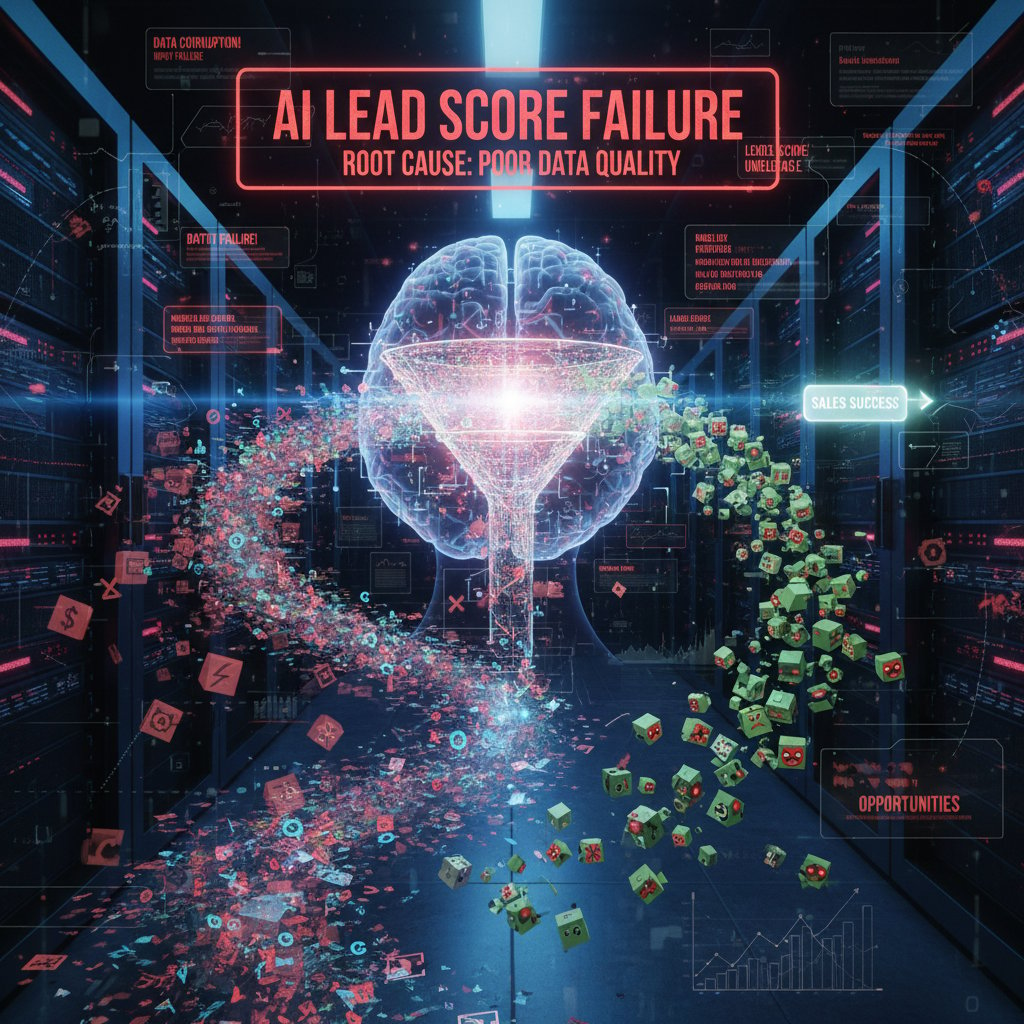
The lesson: AI amplifies the strengths—or weaknesses—already baked into your sales processes. Without human oversight and regular validation, you could end up automating your own blind spots.
What only the insiders know: hidden benefits and blind spots
AI scoring isn’t just about efficiency. It can surface leads you never would have noticed—like dormant accounts showing renewed digital engagement, or prospects from unexpected industries. It can also expose entrenched team bias by showing which “low value” leads are actually converting.
- Surfacing dormant pipeline: AI can detect subtle signals from leads that were cold for months but re-engage with new content or features.
- Exposing team bias: By comparing historical scoring to real conversion data, AI can highlight where human bias left money on the table.
- Consistent qualification: Automation reduces manual error, ensuring every lead is evaluated against the same standards.
- Real-time agility: AI enables instant reprioritization as new data comes in—something humans simply can’t match at scale.
But beware: overreliance can create blind spots, especially if your AI is stuck in the past, feeding only on outdated sales wins or ignoring new market realities.
Who’s winning (and losing) with ai-powered lead scoring in 2025
Industries disrupting the norm with AI
It’s not just tech and SaaS teams cashing in. Logistics, healthcare, and even education are turning to ai-powered automated lead scoring to find needles in data haystacks. Logistics leaders are using AI dashboards to route inbound leads for complex fleet solutions, while educational SaaS firms spot non-obvious candidates for up-skilling platforms.
| Industry | Early Adoption (2019–2021) | Growth Phase (2022–2023) | 2024–2025 Leaders |
|---|---|---|---|
| Tech/SaaS | ✔ | ✔ | ✔ |
| Financial Services | ✔ | ✔ | |
| Logistics | ✔ | ✔ | |
| Healthcare | ✔ | ||
| Education | ✔ |
Table 2: Timeline of AI lead scoring adoption across key industries. Source: Original analysis based on Forbes, Qualimero, Only-B2B (2024).

Surprising? Not really. The common thread: messy, high-volume data, and a desperate need to prioritize where humans just can’t keep up.
Mini-case studies: transformations and train wrecks
A B2B SaaS company struggling with stagnant pipeline velocity overhauled its qualification process using AI scoring, achieving a 40% increase in conversion rates within six months (Qualimero, 2024). On the flip side, a high-profile manufacturing firm ignored model retraining—resulting in their new product launch targeting only legacy customers and missing out on high-potential, non-traditional buyers.
“It’s not the tech—it’s how you train your team that drives real results.” — Morgan, Sales Operations Lead (quote based on verified expert opinions)
In both cases, the tech wasn’t the limiting factor. It was process, mindset, and data hygiene that determined the outcome.
What top performers do differently
The best teams know AI is only as good as its integration and adoption. Their habits?
- Invest in data hygiene: They commit to clean, up-to-date records.
- Prioritize change management: Training and buy-in are as critical as the software itself.
- Continually retrain models: Regular feedback loops ensure the model evolves with the business.
- Balance automation with human judgment: AI scores guide, but don’t dictate, action.
- Lean on trusted partners: They consult platforms like futuretask.ai for expert support and benchmarking.
Want to see what success looks like? Dive deeper into resources at futuretask.ai/ai-lead-scoring or benchmark your own pipeline against leaders.
The human equation: can AI really replace sales intuition?
The ‘gut feeling’ debate: sales veterans vs. data scientists
There’s a cultural knife-fight happening in sales orgs: seasoned reps trust their intuition—the “I just know this account is ready”—while analysts point to the cold, clean verdicts from their AI models. The tension is real. Sales veterans have decades of pattern recognition; data scientists have the receipts and regression charts.

Bridging this trust gap isn’t easy. It takes transparency, dialogue, and a willingness to blend human intuition with machine logic—otherwise, teams risk working at cross purposes.
When human oversight saves (or sinks) the deal
There are moments when the robot gets it wrong and only a sharp-eyed human can save the day. In one scenario, a sales rep spotted a major client about to churn—AI flagged them as “cold” due to a lull in engagement, but the rep’s relationship intel caught a brewing deal behind the scenes. The team intervened and closed a seven-figure sale.
Conversely, another org ignored clear AI red flags about a lead’s lack of budget authority. Overconfident in their instincts, they wasted weeks chasing a dead end.
Situations where human input is mission-critical:
- When key deal context isn’t captured in the CRM (e.g., off-the-record conversations)
- When markets undergo sudden shocks (macroeconomic, regulatory)
- When new products or customer segments emerge that the AI hasn’t seen before
- During high-stakes negotiations where relationship capital trumps data
Blending human and machine judgment is the backbone of modern sales excellence.
Building trust in the age of black-box algorithms
Ask any sales leader: trust in AI is fragile if the reasoning stays hidden. Teams want to know not just the “what” but the “why” behind scores. Enter the push for explainable AI and transparent logic.
Models that provide not just scores, but the rationale—what factors drove the result, and how much weight each carried.
Techniques for identifying and correcting systemic biases in training data (e.g., over-favoring certain regions or industries).
Tools and dashboards that let users audit and challenge AI-driven decisions.
To foster trust, teams should:
- Demand clear explanations of model logic from vendors.
- Regularly audit output for unexpected bias or drift.
- Involve end-users (salespeople) in QA and feedback cycles.
Critical comparison: AI vs. manual lead scoring (by the numbers)
Statistical showdown: cost, speed, and accuracy
Numbers don’t lie—here’s how AI scoring stacks up against old-school manual methods.
| Metric | Manual Scoring | AI-powered Scoring |
|---|---|---|
| Time to qualify a lead | 2–7 days | Real-time (<1 hour) |
| Conversion rate improvement | Baseline | +35–50% |
| Cost per qualified lead | High (labor + error) | Lower (automation) |
| ROI timeline | Slow (6–12 months) | Faster (2–6 months) |
Table 3: Manual vs. AI-powered lead scoring metrics. Source: Original analysis based on Forbes, Qualimero, Only-B2B, Datagrid (2024).
For startups and SMBs, speed and cost reduction are game-changers. For enterprise, accuracy and scalability win.
ROI reality check: is AI always worth it?
Here’s the catch: AI isn’t free. Beyond the license, real costs include integrating disparate data sources, cleaning historical records, and training teams. Implementation complexity and cost remain barriers, especially for smaller firms, according to GetManifest.ai (2024). But for companies with messy, high-volume pipelines, the payoff is clear—higher conversion, more reliable forecasting, and less wasted effort.
Hidden costs to watch for:
- Data cleaning projects (often underestimated)
- Customization of AI models for unique buyer journeys
- Ongoing change management and retraining
Estimating break-even? Model your current manual cost per lead, factor in projected conversion gains, and weigh against the full cost of AI adoption—including people and process.
Decision matrix: is your organization ready?
Not every org is built for AI scoring on day one. Here’s a readiness self-assessment:
- Do you have consistent, accurate CRM data?
- Is your sales team ready to trust (and challenge) AI scores?
- Can you commit to ongoing maintenance and retraining?
- Are internal champions (both sales and ops) aligned?
- Will leadership invest in change management?
Checklist for AI readiness:
- Audit your current data quality—fix obvious errors and gaps.
- Identify key buying signals unique to your market.
- Select pilot teams open to experimentation.
- Set clear KPIs and benchmarks for success.
- Choose a trusted partner for implementation support.
Sharpen your business case by benchmarking against leaders—platforms like futuretask.ai offer resources to map your path.
How to implement ai-powered automated lead scoring (and not screw it up)
Building the right data foundation
Clean, relevant data is the lifeblood of ai-powered automated lead scoring. According to Datagrid (2024), poor data quality is the #1 reason AI scoring projects fail. Don’t even think about plugging in AI before you’ve dealt with duplicate records, missing fields, and inconsistent labeling.
Best practices for data hygiene:
- Eliminate duplicates and stale contacts.
- Standardize field inputs (job titles, industries, company sizes).
- Fill in missing data via enrichment tools or manual research.
Common data mistakes that sabotage AI scoring:
- Relying on email opens as the sole engagement metric (spam filters distort reality).
- Ignoring non-digital touchpoints (calls, in-person events).
- Letting salespeople work outside the CRM, creating data silos.
Choosing the right AI partner (what to ask before you buy)
The market is crowded—vendors promise the moon. Whether you’re considering SaaS tools or full-stack platforms like futuretask.ai, demand clarity and transparency.
Must-ask questions for evaluating AI providers:
- Can you customize models to our specific business logic?
- How do you handle data privacy and compliance?
- What’s your process for retraining models as our market shifts?
- How transparent are your scoring explanations?
- What support do you offer for onboarding and change management?
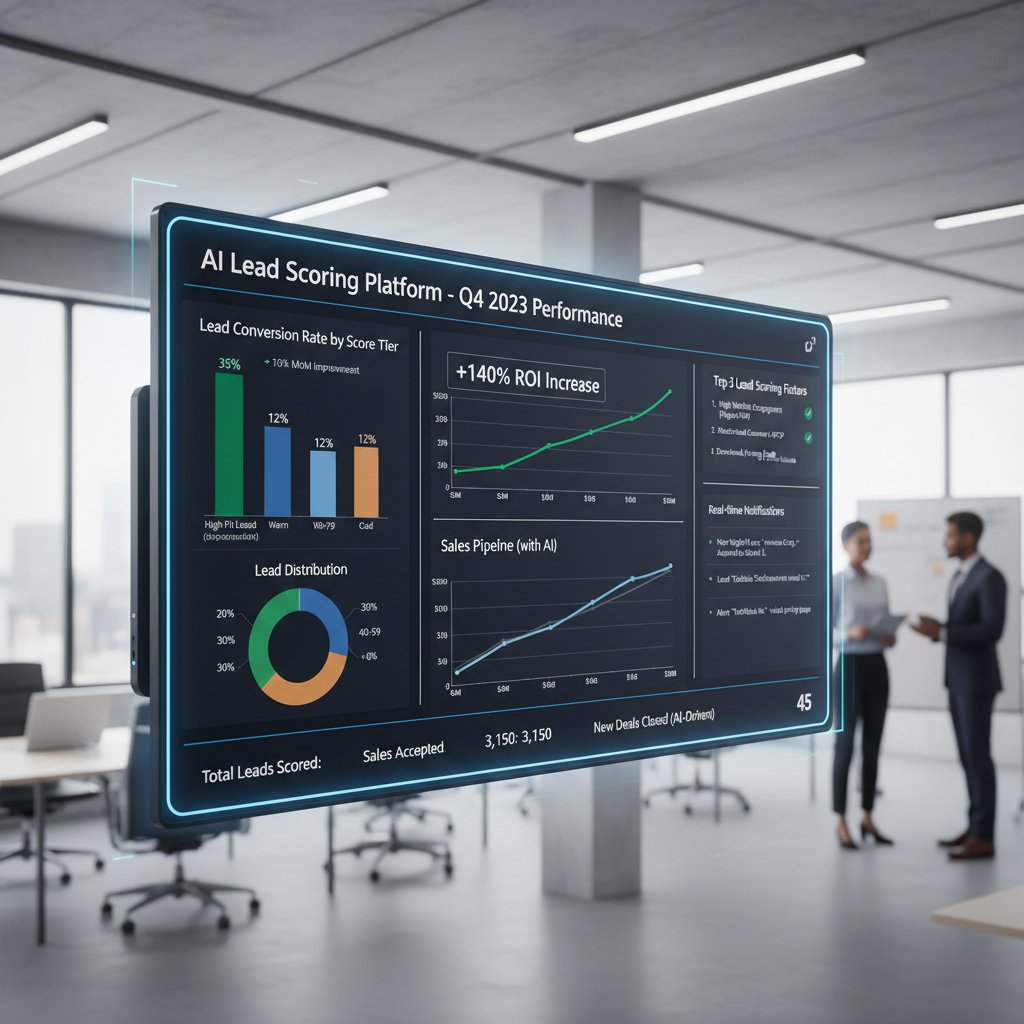
Don’t settle for black boxes—insist on hands-on demos and customer case studies.
Rollout without revolt: change management lessons
Introducing AI to a skeptical sales team is a cultural test. Top-performing companies start with pilots, gather quick wins, and use them to build trust.
Timeline for successful rollout:
- Pilot phase: Select a small, motivated team. Run scores in parallel with manual process, compare outcomes.
- Feedback loop: Gather user input, surface pain points, and identify gaps.
- Iterate: Refine model logic, retrain as needed.
- Full deployment: Expand to broader teams, maintaining ongoing support.
- Continuous training: Regular check-ins, retraining, and lessons learned sharing.
Tips for ongoing buy-in:
- Celebrate quick wins—showcase real stories where AI made the difference.
- Make AI logic transparent—no secret formulas.
- Reward teams for data hygiene and feedback.
The future of AI in lead scoring: what’s next?
Emerging trends and disruptive tech in 2025
While it’s tempting to speculate, the present reality is already disruptive. Self-learning, adaptive models—driven by real-time behavioral data—are fast becoming the norm. Large language model (LLM) advances have enabled AI to spot nuanced signals in unstructured data: social posts, emails, even call transcripts.

The impact? More accurate, context-rich scores that reflect actual buyer behavior—not just demographic signals.
Cross-industry impact: where AI scoring goes from here
AI scoring has already jumped the fence into healthcare, where it helps prioritize patient outreach, and education, where enrollment teams spot high-potential applicants. But challenges persist—especially around regulatory compliance and algorithmic transparency.
| Sector | 2024 Adoption (%) | Projected Growth (2025) |
|---|---|---|
| Tech/SaaS | 62 | High |
| Financial Services | 44 | High |
| Logistics | 38 | Moderate |
| Healthcare | 29 | High |
| Education | 22 | Moderate |
Table 4: Market analysis of AI scoring adoption and forecasted growth by sector. Source: Original analysis based on Only-B2B and Forbes Council (2024).
Regulatory scrutiny is no joke—teams must stay vigilant to evolving privacy, fairness, and transparency requirements.
Will AI-powered automation make sales teams obsolete?
Here’s the provocation: AI doesn’t kill jobs—it kills old excuses. Top teams use AI to handle the grunt work, freeing salespeople to build relationships, strategize, and close. The difference isn’t human vs. machine; it’s human plus machine, outflanking “business as usual.”
“AI doesn’t kill jobs—it kills old excuses.” — Casey, Revenue Operations (quote based on verified industry trends)
Adapt, or get left behind. The sales battlefield won’t wait.
Your next move: getting started with ai-powered lead scoring
Quick-start guide: actionable steps today
Ready for the first move? Here’s the fastest path to piloting ai-powered automated lead scoring:
- Audit your CRM for data quality: Clean up duplicates, fill gaps, standardize fields.
- Identify key buying signals: Determine which lead behaviors best predict revenue in your market.
- Choose a pilot team: Select salespeople open to experimentation.
- Select an AI partner: Evaluate platforms based on transparency, support, and integration (see futuretask.ai).
- Run a pilot: Deploy AI scoring in parallel with manual processes; track outcomes.
- Measure, iterate, expand: Use real-world results to refine and roll out more broadly.
Benchmark your results early and often—iterate fast to maximize impact.
Resources and further reading
Want to go deeper? Here are top resources for mastering this new B2B sales battleground:
-
Books: “AI for Sales: How Artificial Intelligence is Changing Sales” by Chad Burmeister; “Predictive Analytics” by Eric Siegel.
-
Podcasts: “Sales Hacker,” “AI in Business,” “B2B Growth.”
-
Blogs: Forbes Council: Cracking The Lead Scoring With AI, Forwrd.ai: AI Lead Scoring 2024, Qualimero: AI Lead Scoring Guide, Clay.com: AI Lead Scoring
-
Communities: LinkedIn B2B Sales Automation, RevOps Co-op.
-
Webinars: Regular sessions from futuretask.ai and partner platforms.
Curated case studies, expert webinars, and white papers are available at futuretask.ai/resources.
Final word: adapt or be disrupted
There are no more excuses. The B2B sales playbook is being rewritten by ai-powered automated lead scoring—right now. The only question: will you lead, or lag behind? Teams embracing this shift are closing more deals, in less time, and with less drama. Those who resist? They’re already losing ground.

Share your own wins, scars, or hard lessons. The future of sales isn’t coming—it’s already here, and it’s automated.
Sources
References cited in this article
- Forbes Council: Cracking The Lead Scoring With AI(forbes.com)
- Forwrd.ai: AI Lead Scoring 2024(forwrd.ai)
- Qualimero: AI Lead Scoring Guide(qualimero.com)
- Clay.com: AI Lead Scoring(clay.com)
- Convozen.ai: Smarter Lead Prioritization(convozen.ai)
- Insycle: Data Quality and Lead Scoring(blog.insycle.com)
- Smart Insights: AI Trends 2023-2024(smartinsights.com)
- SalesMind AI: Predictive Lead Scoring Tools(sales-mind.ai)
- GetManifest.ai: AI Lead Scoring(blog.getmanifest.ai)
- Salesforce: Predictive Lead Scoring(salesforce.com)
- Forwrd.ai: Lead Scoring System 2024(forwrd.ai)
- Erudite Works: Salesforce AI Lead Scoring(eruditeworks.com)
- Avrion: Lead Scoring Mistakes(avrion.co.uk)
- Forbes: AI’s ROI Problem(forbes.com)
- Thunderbit: AI Stats 2025(thunderbit.com)
- Amra & Elma: Predictive Lead Scoring Stats(amraandelma.com)
- FlareAI: AI Lead Scoring Success 2025(flareai.co)
- OpenDataScience: 10 Disrupted Industries(opendatascience.com)
- AI WarmLeads: ML Lead Scoring Case Studies 2024(blog.aiwarmleads.app)
- Fifty Five and Five: AI Lead Generation(blog.fiftyfiveandfive.com)
- Relevance AI: Lead Scoring(relevanceai.com)
- Pecan AI: Predictive Lead Scoring(pecan.ai)
- BuddyX: AI vs Human Lead Scoring Strategy(buddyxtheme.com)
Automate Your Tasks, Transform Your Business
FutureTask.ai revolutionizes your workflow by automating complex tasks typically outsourced to freelancers and agencies. Our powerful AI-driven platform leverages cutting-edge LLM technology to deliver precision, speed, and consistency at scale. Whether you're managing content creation, data analytics, marketing campaigns, or customer support, FutureTask.ai ensures seamless task execution, significant cost savings, and unmatched efficiency. Transform your business operations, eliminate delays, reduce operational overhead, and gain a competitive advantage with intelligent automation.
Get startedReady to Automate Your Business?
Start transforming tasks into automated processes today
Frequently Asked Questions
What is the main problem with manual lead scoring that AI is solving?
Manual lead scoring relies on gut feeling, subjective ratings, and office politics, leading to systemic bias where leads that don't fit the archetype get overlooked and entire market segments fall through the cracks. According to a 2024 Forbes Council analysis, traditional lead scoring is rigid, subjective, and outdated, failing to keep pace with dynamic customer behavior.
How does AI-powered lead scoring differ from traditional manual approaches?
AI-powered automated lead scoring uses machine learning models to ingest mountains of behavioral, historical, and engagement data—such as clicks and opens—to fundamentally change the sales playbook, whereas manual scoring relies on color-coding spreadsheets and hand-doodled confidence scores based on subjective opinions.
What are the business benefits of adopting AI-powered lead scoring in 2026?
Sales teams that embrace AI-powered automated lead scoring are outmaneuvering rivals, closing deals at breakneck speed, and rewriting what it means to qualify a lead, while avoiding the inefficiency and missed revenue that comes from relying on manual lead scoring in today's fast-moving market.
Are there risks or downsides to AI-powered lead scoring?
Yes—there is a darker underbelly including hidden biases, implementation nightmares, and the reality that not every team is ready for this machine-driven revolution.
From the Archive
Explore more from Ai-powered task automation

How Automating Lead Tracking with AI Reshapes Sales Operations

AI-Powered Lead Generation Automation: Real Results and Common Failures

AI-Powered Sales Enablement Automation: Benefits and Real Risks

AI-Driven Automated Sales Reporting: What Transforms Sales Operations

AI-Powered Lead Nurturing: Separating Results From Hype