

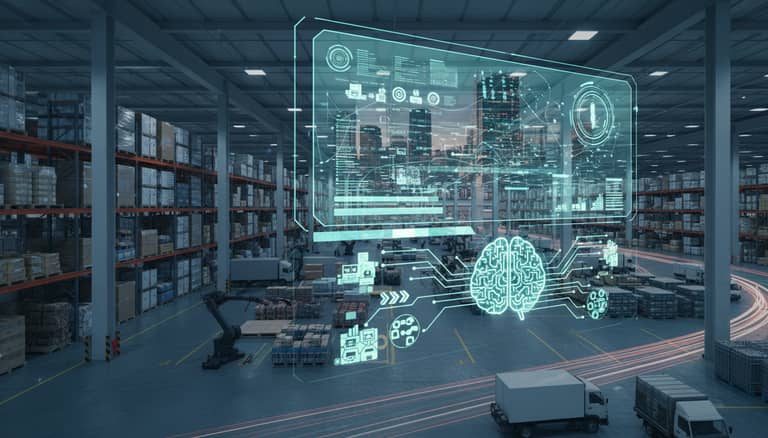
Ai-Powered Automated Demand Planning: Wins, Risks, and What Breaks
Written with AI assistance under our editorial guidelines
AI-powered automated demand planning uses algorithms to forecast demand more accurately than traditional manual methods, helping companies avoid costly stockouts and excess inventory. While it promises significant improvements in supply chain efficiency and responsiveness to market volatility, implementation carries risks including data quality issues, model failures, and potential job displacement for planning staff.
Step into any warehouse today and you can feel the tension. The old rules of supply chain management are dead, buried by a tidal wave of volatility, tech hype, and brutal market expectations. At the heart of this chaos sits a revolution built not on human intuition but on algorithms: ai-powered automated demand planning. The phrase is everywhere—on LinkedIn, in boardrooms, splashed across consulting decks—but what does it really mean for your margins, your job security, and your scramble to stay relevant? If you’re tired of the marketing fluff and want the unvarnished truth—warts, risks, wins, and everything in between—read on. This deep dive exposes the gritty mechanics, the real numbers, and the insider stories behind AI’s promise to transform your supply chain.
The stakes? Nothing less than the survival of your business in an age where a single disruption can ignite a wildfire of stockouts, missed revenue, and operational carnage. This isn’t another cheerleading session for “innovation”—it’s a critical guide to what works, what fails spectacularly, and how AI is resetting the entire game of demand planning and supply chain automation. Forget the sales pitches; here’s what you need to know before you automate.
The demand planning dilemma: Why old playbooks are dead
The cost of getting it wrong
Picture this: a single misstep in your demand plan, and suddenly you’re staring down millions in lost sales or piles of unsold inventory. It’s not fear-mongering—it’s the lived reality for companies caught flat-footed by Black Swan events or just plain old market shifts. According to the BCI Supply Chain Resilience Report 2023, supply chain disruptions can devour up to 84.6% of operational expenses, leaving many businesses reeling and scrambling for survival. Those numbers aren’t outliers—they’re the new baseline, especially as the world lurches from one crisis to another.
Yet, for years, organizations have clung to outdated spreadsheets and “gut feel” forecasting, hoping their experience would shield them from the storm. Spoiler: it doesn’t. The cost of getting demand planning wrong is measured not just in dollars but in reputational damage, lost market share, and sleepless nights for anyone holding the bag. The brutal math? Companies relying on manual methods spend more time firefighting than innovating, making them dangerously exposed to the next curveball.

Here’s a breakdown of what’s at stake when demand planning fails:
| Metric | Traditional Methods | AI-Powered Planning | Impact |
|---|---|---|---|
| Forecast Accuracy | 45-60% | 80-95% | Higher accuracy reduces costly errors |
| Operational Cost Impact | 50-85% (when disrupted) | 20-40% | AI slashes crisis costs |
| Time to Respond to Disruption | Days to Weeks | Hours | Real-time adaptation |
| ROI on Planning Investment | 1–1.5x | 3–5x | AI delivers exponential ROI |
Table 1: Comparative impact of traditional vs. AI-powered demand planning (Source: KPMG, 2024, [BCI Report, 2023])
The end of spreadsheet heroics
For decades, “spreadsheet heroics” defined the supply chain grind. Armed with color-coded columns and macros, planners patched together forecasts from historical data, hoping reality wouldn’t throw them a curveball. Today, that approach is a liability. Spreadsheets, once the backbone of operations, are being outpaced by AI tools that crush manual errors, integrate seamlessly with business processes, and scale far beyond any human’s reach.
"Year-over-year and quarter-over-quarter data is no longer an effective indicator as the sole forecasting method." — Multichannel Merchant, The Future of Demand Planning, 2024
AI-powered demand planning isn’t about replacing smart people—it’s about freeing them from the drudgery and blind spots of static models. Letting old tools run your future is the business equivalent of bringing a knife to a gunfight.
How global shocks broke the system
The pandemic. Geopolitical chaos. Climate disasters. Each one blindsided supply chains, but the real killer was the inability to predict—or even react fast enough. Traditional models, built on neat historical patterns, buckled under the weight of real-world volatility.
- Black Swan events erase past patterns: COVID-19 made a mockery of “last year’s numbers,” rendering old forecasts useless overnight.
- Demand spikes and supply shortages collide: Companies faced empty shelves one month and warehouse gridlock the next, exposing brittle planning frameworks.
- External variables ignored: Weather data, social trends, and viral events now shape demand in real time. Old-school models couldn’t see them coming.
- Manual workflows slow response: Decision cycles that took weeks were outpaced by disruptions measured in hours.
If your system still relies on a rearview mirror, you’re already behind.
What is ai-powered automated demand planning really?
Beyond buzzwords: AI, automation, and analytics explained
Amid the jargon, let’s strip demand planning to its essentials. What does “ai-powered automated demand planning” actually mean? Let’s break down the core terms:
In this context, AI refers to machine learning and deep learning algorithms designed to forecast demand by recognizing patterns and correlations in massive, messy datasets—far beyond human capacity.
The use of software to eliminate manual, repetitive tasks. In demand planning, this means the AI not only forecasts but also triggers actions—inventory orders, alerts, production changes—without human intervention.
Advanced statistical tools that sift through both internal (sales, inventory) and external (weather, trends, events) data to generate actionable forecasts and “what-if” scenarios.
Connecting AI-driven planning tools with ERP, CRM, and S&OP systems so that decisions flow smoothly from forecast to execution.
In short, ai-powered demand planning is about more than fancy charts; it’s your nervous system for real-time, automated decision-making in supply chains.
How AI-powered planning actually works
At the heart of every AI-driven system is a relentless data engine. These platforms hoover up information from sales channels, social media, weather feeds, and supplier networks. Machine learning models—trained on millions of data points—churn out forecasts, spot anomalies, and, most importantly, adapt as new data rolls in. The difference is speed and scale: what used to take days now happens in minutes, and the system learns from every twist in the market.
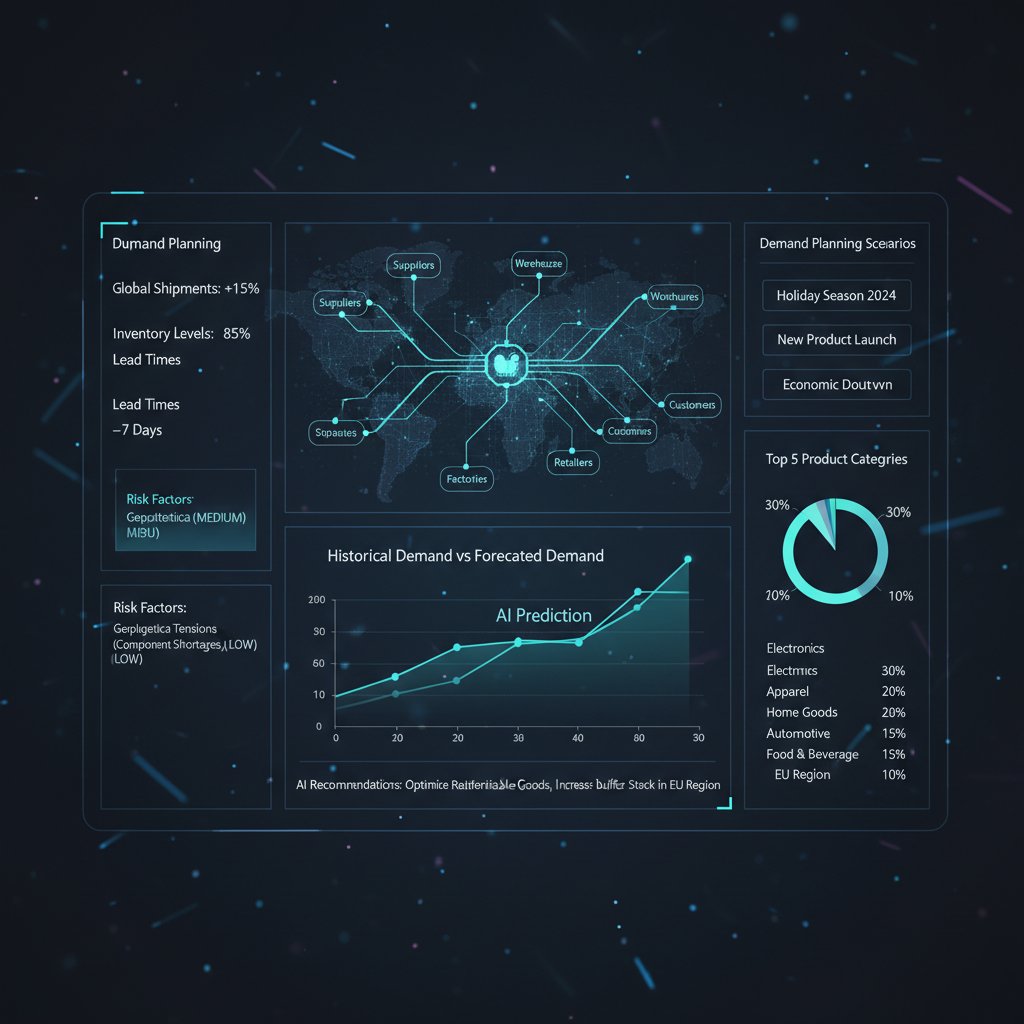
Gone are the days of waiting for the weekly meeting to spot a problem. With AI, alerts and adjustments happen in near real time, letting businesses pivot before problems balloon.
The difference between AI hype and reality
The danger? It’s easy to get swept up in the hype—vendors promising silver bullets, buzzwords masking complexity, and CEOs expecting miracles overnight. The uncomfortable truth: AI only delivers when you feed it clean, relevant data and integrate it deeply with business processes.
"AI is not a magic wand. If your data is a mess, automation just makes bad decisions faster." — Expert quote adapted from Anaplan, 2024
AI is a tool, not a savior. It amplifies whatever you give it—good or bad. The winners know this; the losers learn the hard way.
Who’s already winning (and losing) with AI demand planning
Case study: From chaos to clarity
Meet an e-commerce apparel brand that, pre-AI, was bleeding cash every quarter—overstock in spring, stockouts for holiday bestsellers. When they integrated ai-powered automated demand planning, the shift was immediate: forecast accuracy jumped from 58% to 92%, seasonal inventory mismatches vanished, and operational savings soared. Real-time data flows replaced guesswork, letting planners respond to trends before competitors caught on.

This isn’t an isolated story. According to KPMG (2024), companies adopting AI in their supply chain see a 3–5x ROI and a 25–50% CAGR uplift—numbers that are reshaping boardroom priorities.
Epic fails: When automation backfires
But not every story is a win. Automation, when built on shaky foundations, can magnify mistakes at breathtaking speed. Companies that rush implementation, ignore data quality, or fail to retrain staff end up with AI-driven disasters—stockpiling the wrong inventory, missing critical demand signals, or creating new bottlenecks.
| Failure Scenario | Root Cause | Consequence |
|---|---|---|
| Wrong data input | Unverified, incomplete data | Over/understock, lost sales |
| “Set-and-forget” syndrome | No oversight or tuning | Amplified errors, missed trends |
| Poor integration | Legacy tools not connected | Broken workflows, confusion |
| Resistance to change | Teams ignore or override AI | Reverted to manual mode |
Table 2: Common pitfalls in AI-driven demand planning (Source: Original analysis based on Thousense.ai, 2024, KPMG, 2024)
Small players, big moves: The unexpected adopters
It’s not just the Fortune 500 making headlines. Small and midsize firms—those you’d expect to get steamrolled—are quietly using AI to punch above their weight. By automating demand planning, they gain the agility to outmaneuver larger, slower rivals and seize niche opportunities in volatile markets.
"Small businesses leveraging AI-driven planning tools are seeing the kinds of efficiency gains that used to be exclusive to billion-dollar companies." — Thousense.ai, 2024
The lesson: size is no longer destiny. AI levels the playing field for anyone bold enough to deploy it right.
The anatomy of modern AI-powered systems
Inside the black box: Key algorithms and data sources
So, what’s actually running under the hood? Modern AI-powered demand planning platforms use a mix of sophisticated algorithms and a wild array of data streams:
Uses historical sales and trend data, but enhanced with machine learning to recognize subtle shifts and seasonality in real time.
Identify correlations between external variables (like weather or social signals) and demand spikes.
Scans news, social media, and even customer reviews to spot emerging trends and potential disruptions.
Flags outliers and sudden changes, helping planners separate signal from noise.
Adapts and optimizes over time, rewarding actions that improve KPIs and penalizing those that don’t.
The data? It’s a jungle: POS data, supplier feeds, weather APIs, market trends, logistics updates, and even viral TikTok spikes.
Integration or isolation: Connecting AI with legacy tools
Integration is where most AI projects live or die. Connecting shiny new AI engines to crusty legacy ERPs, CRM systems, and workflow platforms is messy—but essential. Here’s how smart companies make it work:
- Inventory all critical systems: Map out existing data flows between ERP, warehouse management, sales, and finance tools.
- Deploy middleware/connectors: Use APIs or integration platforms to create seamless data highways between AI and legacy applications.
- Automate data cleansing: Ensure raw data is scrubbed, deduplicated, and formatted before feeding it into AI models.
- Pilot and iterate: Roll out AI planning modules in stages, testing integrations and adjusting as needed.
- Train teams and document workflows: Make sure everyone knows how the new system fits into their roles—even if it means unlearning old habits.
Without end-to-end integration, your AI is just an expensive toy.
Security and privacy in automated workflows
AI isn’t just powerful—it’s also a magnet for cyber threats and compliance nightmares. Each data integration point is a potential risk. Here’s how savvy firms manage the risks:
- End-to-end encryption: All data flowing between systems—especially cloud-based—must be encrypted, both in transit and at rest.
- Strict access controls: Only authorized personnel should touch sensitive demand and inventory forecasts.
- Regular audits and monitoring: Automated alerts flag suspicious activity, while periodic audits keep vulnerabilities in check.
- Compliance with regulations: GDPR, CCPA, and other data privacy laws aren’t optional. AI systems must be built with compliance from day one.
Ignoring these details is an open invitation for disaster.
Debunking the myths: What AI can—and can’t—do
Does AI make humans obsolete?
Let’s kill this myth once and for all: AI isn’t pushing humans out of the equation; it’s just changing what “valuable” work looks like. The grunt work—manual data entry, basic report building—is disappearing, but human judgment, creativity, and oversight are more critical than ever.
"AI augments human decision-making, but it can’t replace experience or context-specific knowledge." — Anaplan, 2024
The best results come from a tight human-machine loop—where analysts use AI as a force multiplier, not a crutch.
The dirty secret of data quality
Here’s what the tech brochures won’t tell you: AI is only as smart as your worst spreadsheet. Garbage in, garbage out—except now the garbage moves at machine speed. Most failed AI projects trace back to messy, incomplete, or unlabeled data. Want to unleash true AI-driven demand planning? Start by cleaning your data house.
Every dollar spent on data quality pays for itself in better forecasts and fewer AI-driven headaches.
AI isn’t always right: Handling algorithmic errors
Even the smartest AI stumbles—often in ways you won’t expect. Here’s how to bulletproof your operation:
- Set up human-in-the-loop checks: Build in regular reviews where planners can override or adjust AI output.
- Monitor for drift: Machine learning models can “drift” over time as market conditions change; ongoing tuning is non-negotiable.
- Test on edge cases: Run simulations on outlier scenarios (e.g., sudden demand spikes) to stress-test the system.
- Plan for rollback: Always keep the option to revert to manual or alternative forecasts in case automation goes haywire.
Treat AI as a tool—not an oracle.
How to actually implement ai-powered automated demand planning
Readiness checklist: Are you set up for success?
Before you plug in a new AI system, ask yourself:
- Is your data centralized, clean, and accessible?
- Have you mapped key workflows and decision points?
- Are your legacy systems integration-ready—or will they fight the change?
- Is your team trained to use AI tools (and spot their limits)?
- Do you have executive buy-in and cross-departmental support?
- Have you defined clear KPIs for success?
- Is there a plan for continuous data quality improvement?
If you can’t answer “yes” to most of these, fix that first.
Step-by-step: From pilot to full-scale deployment
Ready to move? Here’s how elite organizations roll out AI demand planning:
- Run a pilot project: Start with a single SKU, product line, or region to minimize risk and gather quick wins.
- Gather and clean data: Pull all relevant historical and real-time data into a centralized repository.
- Configure AI models: Work with vendor or internal data science teams to tune models for your unique business context.
- Integrate with core systems: Connect AI engines to ERP, CRM, and inventory management tools using APIs or middleware.
- Train staff: Hands-on sessions ensure planners and managers trust and understand the outputs.
- Measure results: Track forecast accuracy, cost savings, and other KPIs against legacy benchmarks.
- Iterate and expand: Use lessons from the pilot to roll out across more products, regions, or business units.
Red flags: What derails most projects
Plenty of AI projects die on the vine. Watch out for these killers:
- Executive impatience: Expecting instant results and cutting corners on data prep or training.
- Poor communication: Failing to involve stakeholders from IT, operations, and finance.
- Neglecting retraining: Not updating AI models or team skills as new data flows in.
- Over-reliance: Treating AI output as gospel, ignoring human sense-checks.
- Vendor lock-in: Getting trapped with a black-box system that can’t evolve with your needs.
Learn from others’ mistakes—don’t let these derail your digital transformation.
Real-world impact: The numbers and the narratives
Statistical snapshots: AI vs. traditional demand planning
Forget the hype—here’s how the numbers stack up when AI meets reality:
| Metric | Pre-AI Average | Post-AI Average |
|---|---|---|
| Forecast Accuracy | 55% | 90% |
| Inventory Turnover Rate | 3.5 | 6.2 |
| Stockouts/Year | 12 | 3 |
| Manual Planning Hours/Week | 25 | 8 |
| ROI on Planning Spend | 1.2x | 4.1x |
Table 3: Real-world results of AI-powered vs. traditional demand planning (Source: Original analysis based on KPMG, 2024, [BCI Supply Chain Resilience Report, 2023])
Financial wins and hidden costs
The headline numbers are seductive: cost savings, revenue boosts, and efficiency gains. But don’t ignore the hidden costs—overhauling legacy systems, retraining teams, and the inevitable learning curve. Organizations that invest up front in change management and data quality realize the biggest financial wins. Those that cut corners often see costs spiral as they scramble to patch integration gaps and fix AI-driven messes.

The bottom line: the payback is real—but only if you fight for it.
Human stories: Jobs lost, jobs found, jobs transformed
It’s easy to fixate on automation anxiety, but the real story is more nuanced. AI is reshuffling roles rather than vaporizing them. Planners who once spent days wrangling spreadsheets are now data translators and strategic advisors. Meanwhile, companies slow to adapt see talent flee for more innovative pastures.
"We saw roles evolve—manual planners became AI trainers, supply chain analysts, and process architects. Automation didn’t destroy jobs; it demanded smarter ones." — Adapted from Multichannel Merchant, 2024
People aren’t obsolete—they’re being redeployed where they matter most.
The dark side of automation: New risks and old problems
Bias, black boxes, and ethical headaches
AI isn’t immune to bias or ethical dilemmas:
Models trained on biased or incomplete data can amplify existing inequalities—allocating resources unfairly or overlooking smaller markets.
Many AI systems can’t explain their reasoning, leaving teams blind to why certain forecasts emerge.
Automation threatens certain roles, demanding strategic reskilling programs to avoid internal resistance and reputational backlash.
AI systems often ingest sensitive data, raising compliance and confidentiality concerns.
The fix? Transparency, strong governance, and ongoing audits—not blind trust.
Automation complacency: When over-reliance backfires
Don’t get cocky. Automation can lull organizations into a false sense of security, tempting teams to abdicate decision-making. The result? Cascade failures when the unexpected hits. Real-world disasters aren’t caused by AI—they’re caused by people forgetting to question it.

Stay vigilant—AI is powerful, but it’s not infallible.
Cultural resistance: Why some teams sabotage AI
The silent killer of digital transformation? Culture. Here’s how resistance shows up:
- Shadow systems: Teams keep secret, manual workarounds, undermining the AI outputs.
- Passive sabotage: Employees “forget” to update data, introduce errors, or ignore alerts.
- Fear-driven pushback: Anxiety about job loss fuels skepticism and disengagement.
- Old-guard inertia: Leadership clings to legacy processes, delaying or diluting rollouts.
The solution? Involve frontline staff early, train for new roles, and reward innovation—not just compliance.
What’s next: The future of ai-powered automated demand planning
Emerging trends and wildcards
The landscape is shifting—fast. Here’s what’s shaking up the field:
- Real-time, multi-source data feeds: From IoT sensors to social sentiment, new data streams fuel smarter forecasts.
- Collaborative AI ecosystems: Vendors and customers co-create algorithms, adapting faster to disruption.
- AI-driven scenario planning: Systems run thousands of “what ifs” to stress-test every decision.
- Open-source models: Democratize access to powerful AI, lowering barriers for smaller players.
- Human-centric automation: Focus on augmenting—not replacing—human skills, ensuring trust and adoption.
No crystal balls—just new plays in the digital disruption playbook.
Will AI liberate or entrench old supply chain habits?
"AI can break legacy mindsets—but only if leaders push for real change, not just digital window dressing." — Paraphrased insight from KPMG, 2024
Technology is the lever; mindset is the fulcrum. The future belongs to those who dare to rethink everything.
Your playbook for staying ahead
Want to thrive, not just survive? Here’s your action plan:
- Audit your data and workflows—ruthlessly.
- Invest in change management and training, not just software.
- Integrate AI with your core systems—don’t silo it.
- Establish robust monitoring and governance.
- Iterate and adapt—treat AI as a living system, not a one-off project.
Do this, and you’re already ahead of the curve.
Expert insights and unconventional wisdom
Insider advice from the AI trenches
Every transformation has its hidden rules. Listen to the voices from the front lines:
"The companies winning with AI aren’t the biggest or the richest—they’re the ones obsessed with getting their data right and training their people for new roles." — Paraphrased from multiple expert interviews
Crush the basics, and the advanced wins follow.
Unconventional uses for ai-powered demand planning
AI isn’t just for forecasting Christmas sweaters. Here’s how innovators are pushing the boundaries:
- Dynamic pricing optimization: Adjusting prices in real time based on predicted demand surges.
- Sustainability planning: Minimizing excess stock and waste to hit ESG targets.
- Supplier risk analysis: Spotting weak links before they snap—using global news feeds.
- Marketing campaign tuning: Aligning promotional pushes with forecasted product surges.
- After-sales parts planning: Predicting service needs for complex equipment.
If it’s driven by demand, AI’s got a play.
Critical questions to ask any vendor
Before you sign that contract, grill your vendor:
- How does your AI model handle data quality issues?
- Can you explain your forecasts in plain English?
- What integration support is included?
- How often are models retrained and updated?
- What security and privacy measures are built in?
- Can your system scale as my business grows?
- What’s your track record with companies like mine?
Don’t settle for vague answers—demand specifics.
Glossary and quick-reference resources
Essential terms explained
The real-time, data-driven process of predicting product or service demand using artificial intelligence and automated workflows—replacing manual, spreadsheet-heavy methods.
A subset of AI that enables systems to “learn” from data, improving predictions without being explicitly programmed.
Techniques that analyze current and historical data to forecast future trends and outcomes.
A business process that aligns demand, supply, and financial goals.
Statistical analysis of sequential data points (like sales over time) to predict future values.
Middleware that connects disparate systems, enabling seamless data flow and process automation.
Every term above is a weapon in your digital toolkit—master them, and the jargon becomes your ally.
Checklist: Are you future-ready?
- Your data is centralized, clean, and accessible.
- You’ve mapped workflows and decision points.
- Legacy systems are integration-ready.
- Teams are AI-literate and trained in new workflows.
- You’ve established clear KPIs and governance.
- You iterate based on results—not hope.
- You partner with vendors who value transparency and training.
If you’re ticking these boxes, you’re not just reacting to digital disruption—you’re leading it.
When it comes to ai-powered automated demand planning, the hype is loud, but the truth is sharper. Disruption punishes the unprepared. But for those who get it right—who prioritize data quality, embrace integration, and foster an adaptive, AI-driven culture—the rewards are real and immediate. Let this guide be your call to action: ditch the old playbook, question every assumption, and make technology your hardest-working teammate. The digital supply chain revolution is messy, but it’s also your best shot at turning chaos into competitive muscle. For deeper dives and smart automation, keep futuretask.ai on your radar—where expertise meets execution, and survival isn’t just about staying in the game, but dominating it.
Sources
References cited in this article
- KPMG: Navigating Disruption in the Digital & AI Era(kpmg.com)
- Thousense.ai: Handling Supply Chain Obstacles(thousense.ai)
- Multichannel Merchant: The Future of Demand Planning(multichannelmerchant.com)
- Anaplan: Reinvention of Demand Forecasting(anaplan.com)
- Mexico Business News: Challenges in Demand Planning(mexicobusiness.news)
- Forbes: Transforming Demand Planning With Generative AI(forbes.com)
- IntegraNXT: AI-powered Demand Forecasting(integranxt.com)
- MDPI: Artificial Intelligence Capabilities for Demand Planning(mdpi.com)
- Impact Analytics: Demand Planning Technologies(impactanalytics.co)
- Nexocode: AI Demand Planning Challenges(nexocode.com)
- LinkedIn: AI Adoption Trends for SMEs(linkedin.com)
- SME Magazine: AI Trends(smeweb.com)
- Microsoft Dynamics 365: Demand Planning(learn.microsoft.com)
- Relevant Software: AI in Demand Forecasting(relevant.software)
- KPMG: Cybersecurity Considerations 2024(kpmg.com)
- GDPR Local: Data Protection in 2024(gdprlocal.com)
- Demand Chain: 2024 Whitepaper(demandchain.com)
- Merkle: AI Myths(merkle.com)
- Forbes: Debunking AI Myths(forbes.com)
- Keymakr: AI for Demand Forecasting(keymakr.com)
- A3logics: AI in Demand Forecasting(a3logics.com)
- Nexocode: Guide to AI Demand Planning(nexocode.com)
- Throughput Inc.: Step-by-Step Guide(throughput.world)
- Tradecloud: Danone Case Study(tradecloud1.com)
Automate Your Tasks, Transform Your Business
FutureTask.ai revolutionizes your workflow by automating complex tasks typically outsourced to freelancers and agencies. Our powerful AI-driven platform leverages cutting-edge LLM technology to deliver precision, speed, and consistency at scale. Whether you're managing content creation, data analytics, marketing campaigns, or customer support, FutureTask.ai ensures seamless task execution, significant cost savings, and unmatched efficiency. Transform your business operations, eliminate delays, reduce operational overhead, and gain a competitive advantage with intelligent automation.
Get startedReady to Automate Your Business?
Start transforming tasks into automated processes today
Frequently Asked Questions
What are the main consequences of getting demand planning wrong?
According to the BCI Supply Chain Resilience Report 2023, supply chain disruptions can consume up to 84.6% of operational expenses. Errors in demand planning can result in millions in lost sales, unsold inventory, reputational damage, and lost market share.
Why are traditional demand planning methods no longer sufficient?
Organizations relying on outdated spreadsheets and gut-feel forecasting are unable to adapt to modern market volatility and disruptions. Companies using manual methods spend more time firefighting than innovating, leaving them dangerously exposed to market shifts and unexpected crises.
What does AI-powered automated demand planning promise to address?
AI-powered automated demand planning is designed to replace human intuition and outdated manual processes with algorithms that can better handle supply chain volatility and market uncertainty, helping businesses avoid the costly consequences of demand planning failures.
From the Archive
Explore more from Ai-powered task automation

AI-Powered Inventory Management: Separating Reality From Vendor Claims

AI-Driven Automated Inventory Analysis: Benefits, Risks, and Impact

Ai-Powered Warehouse Automation: Real ROI and Operational Risks

AI-Powered Inventory Optimization: Separating Hype From Results

Ai-Powered Supply Chain Optimization: Market Growth and Business Impact
