


Ai-Powered Automated Customer Experience Tracking’s Hidden Risks
Written with AI assistance under our editorial guidelines
AI-powered automated customer experience tracking offers speed and scale advantages, but carries significant hidden risks. While AI now handles 70% of customer interactions globally, legacy systems fail to capture emerging trends and customer values. Organizations must carefully balance automation's operational benefits against data privacy concerns, algorithmic bias, and the loss of human insight that deeper customer understanding requires.
In a world obsessed with instant gratification and relentless digital transformation, “ai-powered automated customer experience tracking” has become the rallying cry for brands desperate to stand out—or just survive. The numbers alone are seductive: As of 2024, AI handles nearly 70% of all customer interactions, up wildly from just 15% in 2018, according to Gartner via ExpertBeacon. The global AI customer service market is swelling, hitting a staggering $12.06 billion in 2024, with forecasts stretching beyond $47 billion by 2030 (WhatsTheBigData, 2024). The promise? Flawless experiences, hyper-personalization, and operational nirvana. But scratch beneath the surface, and the story is rawer, more complex, and infinitely more real. What’s actually powering this revolution—and who’s getting left behind, burned, or buried in the noise? This piece strips away the buzzwords, exposing the hidden realities, the costly mistakes, and the rare opportunities for those bold enough to outsmart the market. Welcome to the real world of automated CX tracking—brace yourself.
Why traditional customer experience tracking is broken
The hidden costs of legacy CX systems
Step into any enterprise call center or customer ops bunker and you’ll sense it: the quiet desperation of teams struggling under decades-old systems. Legacy CX tracking tools—think static dashboards, siloed ticketing, and endless survey spreadsheets—are more than outdated. They are actively sabotaging modern customer insight. Data lives in isolated islands, updated at glacial speeds, and riddled with contradictions that block any chance at a unified customer view. According to Forbes, 32% of US shoppers switched brands in 2023 driven by values such as sustainability—trends legacy tools consistently miss (Forbes, 2024). This isn’t just inefficiency—it’s lost revenue, missed signals, and mounting frustration.

| Manual CX Tracking | AI-powered Automated CX Tracking | |
|---|---|---|
| Speed | Days to weeks | Seconds to minutes |
| Accuracy | Inconsistent, error-prone | Consistently high, auto-validated |
| Cost | High labor, redundant | Lower labor, scalable |
| Adaptability | Rigid, manual updates | Real-time, adaptive learning |
| Actionability | Lagging, static reports | Proactive, real-time interventions |
Table 1: Comparison of manual vs. AI-powered customer experience tracking highlights massive differences in speed, adaptability, and cost efficiency.
Source: Original analysis based on WhatsTheBigData, 2024, Forbes, 2024.
How customer expectations have outpaced old methods
The game has changed: today’s customers are digital natives, wielding more power and expectation than ever. Instant feedback, real-time outrage, and viral review culture have exploded the myth that brands can coast on quarterly surveys or “representative” focus groups. Static questionnaires deliver lagging, sanitized data that misses critical context and raw emotion. According to WhatsTheBigData, a whopping 61% of consumers crave faster AI responses over waiting for a human. In this landscape, every delay is a black mark, every missed signal a lost customer. As Jamie, an industry analyst, bluntly put it:
"Customers expect magic, not just metrics." — Jamie, industry analyst
This isn’t hyperbole—it’s the hard truth of competing in the always-on economy, where milliseconds matter and loyalty is as fragile as a tweet.
The data deluge: why more isn’t always better
More data should mean deeper insight, right? Wrong. For many brands, it means paralysis by analysis—a drowning pool of siloed dashboards, conflicting metrics, and “insights” that never translate to action. The modern enterprise is awash in customer data, yet most struggle to separate the critical signals from deafening noise.
- Unmanageable volume: Terabytes of raw feedback pour in across channels, but much remains unanalyzed or misunderstood.
- Siloed sources: Departments guard their piles of intel, creating rival versions of “truth” that sabotage collaboration.
- Lag time: By the time data is processed, the opportunity for action has evaporated.
- Irrelevant metrics: Vanity KPIs distract from what really moves the needle—actual customer outcomes.
- Decision fatigue: Too many dashboards, not enough actionable recommendations, leading to inaction or misguided strategy.
The result? Even heavy investments in “customer experience” barely move the needle—in 2023, only 6% of brands saw measurable CX improvements despite massive outlays (GetZowie, 2023). It’s not a lack of data—it’s a lack of clarity.
How ai-powered automation is rewriting the rules
From manual to mind-blowing: what automation actually changes
Forget what you think you know about automation. Traditional rule-based systems—“if X, then Y”—are yesterday’s news. The latest wave of ai-powered automated customer experience tracking uses adaptive AI, continuously learning from every customer touchpoint, every sentiment shift, every outlier. This is not about simply moving faster; it’s about seeing what humans can’t, connecting dots across channels, and surfacing insights no spreadsheet ever could.

The difference is night and day: AI doesn’t just automate; it augments human decision-making, identifying micro-trends in real time, predicting churn before it happens, and personalizing at a scale unimaginable with legacy tools. According to Salesforce via ExpertBeacon, 77% of service leaders are now deploying AI to support their frontline agents, not replace them—an important distinction that’s changing the entire dynamic of CX (ExpertBeacon, 2024).
Real-time insights: the new CX arms race
Speed is the new battleground. AI-powered automated customer experience tracking gives companies the edge by turning mountains of unstructured feedback into actionable insights—often within seconds. No more waiting weeks for NPS scores or manually trawling through complaints. As of 2024, the adoption curve is steep and unforgiving:
| Year | % of Companies Using AI-powered CX Tracking | Source |
|---|---|---|
| 2018 | 15% | Gartner via ExpertBeacon |
| 2021 | 35% | GetZowie |
| 2024 | 70% | WhatsTheBigData, Gartner, ExpertBeacon |
Table 2: Statistical snapshot showing rapid adoption of AI-powered CX tracking from 2018 to 2024. Source: ExpertBeacon, 2024; WhatsTheBigData, 2024; GetZowie, 2023.
The arms race is real, and those without real-time intelligence are outflanked by competitors who act within moments—resolving issues, rewarding loyalty, and preventing the viral disasters that make or break brands overnight.
The myth of “set-it-and-forget-it” AI
There’s a dangerous myth that AI is a silver bullet—deploy, sit back, and watch miracles happen. Reality check: AI, especially in customer experience, is a living system. It needs constant feeding, testing, and tuning to stay sharp and relevant. Data drifts, customer sentiment evolves, and cultural context shifts. The best brands treat AI not as a crystal ball, but as a powerful partner—one that demands vigilance and creativity.
"AI is powerful, but it’s not a crystal ball." — Priya, AI product manager
Neglecting this reality leads to classic blunders: tone-deaf chatbots, broken feedback loops, and “personalized” experiences that feel anything but personal. The winners are those who invest in ongoing AI stewardship, blending cutting-edge tech with relentless human curiosity.
Inside the black box: what really powers ai-driven CX tracking
Decoding the algorithms: NLP, sentiment analysis, and more
So what’s actually under the hood of modern ai-powered automated customer experience tracking? Three core technologies drive today’s breakthroughs:
NLP is the AI field focused on understanding and generating human language. It allows systems to parse customer emails, social posts, or chat transcripts—extracting meaning, intent, and even sarcasm from the raw text. It’s the engine behind real-time sentiment detection and context-aware responses (IBM, 2024).
This technique uses AI to determine whether text expresses positive, negative, or neutral emotions. But advanced sentiment analysis goes further, decoding subtleties like frustration, confusion, or delight, often across multiple languages and cultural contexts.
AI applies statistical modeling and deep learning to predict what customers will do next: who will churn, who’s at risk of a negative review, which intervention will turn anger into loyalty.
Such systems are not magic—they are math at scale, constantly ingesting new data and refining their models in the background.
Data quality: the fuel (and Achilles’ heel) of AI
Here’s an uncomfortable secret: AI is only as good as the data you feed it. Poor, biased, or outdated data leads to garbage outcomes—fast. Many brands, hungry for automation, skip the dirty work of data cleaning and governance, unleashing algorithms that replicate old mistakes at warp speed. “Bad data is the number one cause of AI failure in the enterprise,” argue experts at MIT Sloan Review (MIT Sloan Management Review, 2024).

The brands that win are obsessive about data hygiene—standardizing formats, rooting out bias, and ensuring feedback is actually representative, not just convenient.
Ethics, bias, and the risk of automated mistakes
Automation can reinforce the very biases it’s meant to overcome. AI trained on historical data can amplify prejudice, miss nuance, and even worsen customer experience if left unchecked. Human oversight is non-negotiable, especially as AI decisions impact real lives.
- Hidden algorithmic bias: AI can inherit and magnify biases present in training data.
- Opaque decision-making: “Black box” models make it harder to explain why certain outcomes occur.
- Feedback echo chambers: Automated systems may over-prioritize frequent feedback, sidelining minority voices.
- Unintended consequences: Automated interventions can trigger backlash or confusion if not tailored carefully.
- False positives/negatives: Incorrect sentiment classification can escalate issues instead of resolving them.
- Compliance risks: Mishandling PII (personally identifiable information) risks fines and reputational disaster.
- Over-automation: Excessive reliance on AI erodes human empathy and trust, making brands seem robotic.
The best brands build in checks, balances, and regular audits—treating AI as a powerful tool, not an unquestioned oracle.
Case studies: ai-powered CX tracking in the wild
Retail revolution: from angry tweets to loyal customers
The retail sector has become a proving ground for ai-powered automated customer experience tracking. Consider a major global retailer faced with a social media storm—dozens of angry tweets erupting over a botched product launch. Instead of scrambling manually, the retailer’s AI system flagged the surge in negative sentiment within minutes, triaging the most urgent issues and enabling the CX team to respond with personalized apologies, expedited replacements, and public transparency. The result? A crisis was defused, and loyalty scores actually increased, turning would-be detractors into advocates.

According to GetZowie, 2023, brands adopting real-time AI tracking in retail have seen customer retention rates jump by up to 25%, while reducing manual escalation workloads by nearly half.
Healthcare: personalizing patient journeys with AI
Healthcare has historically lagged in digital experience, but the tide is turning as providers realize the cost of poor patient engagement. AI-powered CX tracking allows clinics and hospitals to detect frustration before it festers—personalizing reminders, follow-ups, and educational content based on real-time feedback.
- Assess patient touchpoints: Map every interaction from scheduling to discharge.
- Integrate data feeds: Connect EHRs, call logs, email, and survey data into a unified AI model.
- Deploy NLP analytics: Use natural language processing to decode patient sentiment in messages and reviews.
- Segment cohorts: Identify high-risk or dissatisfied patient groups for targeted outreach.
- Automate alerts: Flag urgent feedback for immediate response by care teams.
- Personalize engagement: Tailor education and reminders based on individual needs.
- Monitor outcomes: Track satisfaction and recovery metrics for continuous improvement.
- Close the loop: Act on data, report outcomes, and adapt processes.
As reported by WhatsTheBigData, clinics leveraging AI-driven tracking have seen patient satisfaction rates rise by up to 20%, with administrative workloads dropping sharply.
When automation goes wrong: cautionary tales
The hype around ai-powered automated customer experience tracking sometimes blinds brands to its risks. A notable example: a large telecom provider launched a chatbot to deflect routine customer queries, but failed to monitor or retrain the model as new products rolled out. The result? Confused, irate customers received outdated answers, and the brand’s social sentiment tanked—forcing a costly PR mea culpa.
"Tech should serve people, not the other way around." — Alex, customer experience lead
This is not a call to abandon AI, but a warning: unchecked automation can alienate those it’s meant to serve. Continuous oversight and a willingness to admit (and fix) mistakes set leaders apart from the pretenders.
Debunking the biggest myths about ai-powered CX tracking
Myth 1: AI replaces human intuition
The narrative that AI will “replace” human empathy in customer experience is pure fantasy. While AI excels at pattern detection and scaling insights, it’s the fusion of AI and human creativity that delivers truly memorable, context-aware interactions.
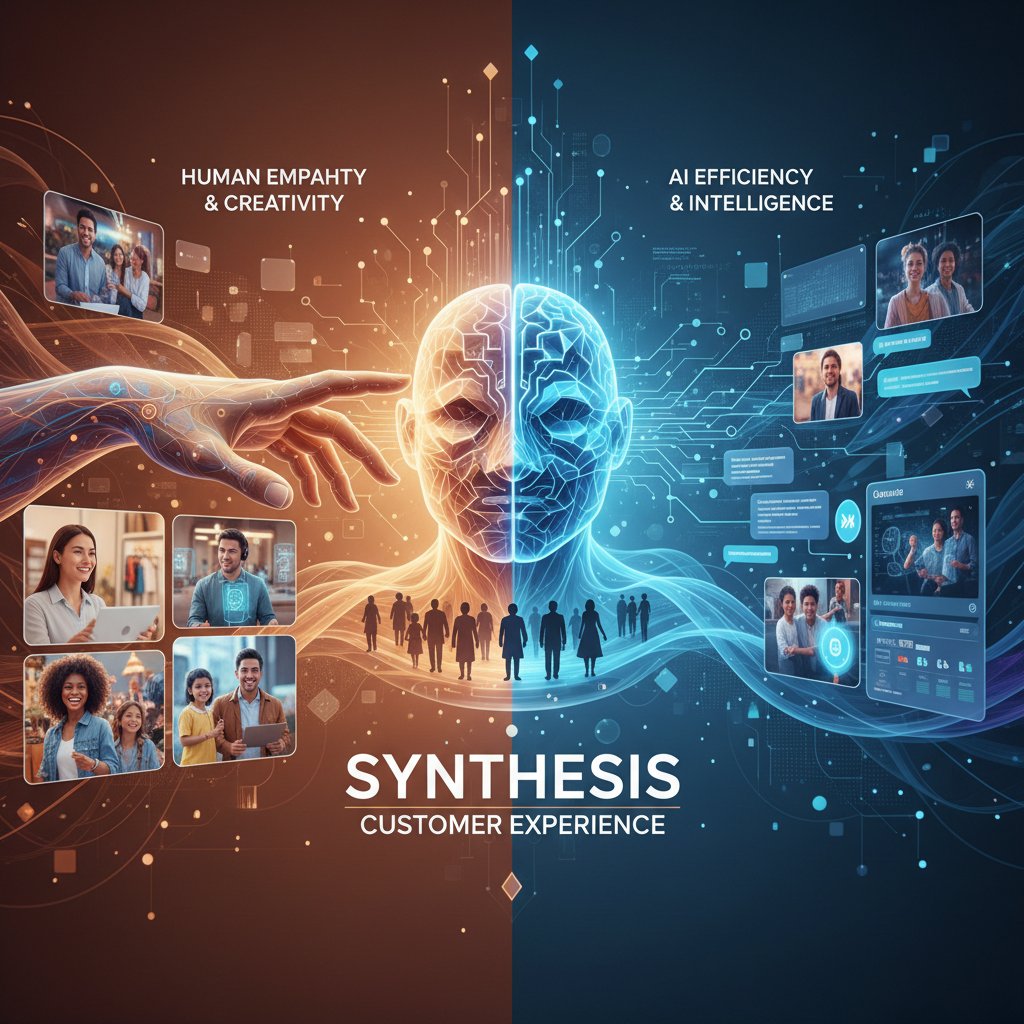
Even the most advanced algorithms struggle with nuance, humor, and cultural context—spaces where humans thrive. The smartest brands use AI to enhance, not erase, the judgment of seasoned CX professionals (Forbes, 2024).
Myth 2: AI-powered tracking is only for tech giants
Another stubborn myth: only Fortune 500s can afford sophisticated AI-driven customer experience automation. In reality, a proliferation of SaaS platforms and plug-and-play tools—like those found at futuretask.ai—have dramatically lowered the barrier to entry. Even lean startups and mid-sized firms can harness AI to monitor sentiment, triage tickets, and optimize journeys.
- Local businesses: Use AI to auto-respond to reviews and flag urgent complaints.
- E-commerce boutiques: Automate product feedback analysis to refine offerings.
- Healthcare clinics: Monitor patient satisfaction and automate follow-ups.
- Nonprofits: Track donor sentiment and engagement with real-time alerts.
- Hospitality firms: Use AI to personalize offers and resolve guest issues instantly.
- Education providers: Analyze student feedback for adaptive curriculum changes.
These unconventional use cases prove that scale is not a prerequisite for impact—ambition and smart tools are.
Myth 3: It's plug-and-play (and always right)
No, AI is not a “set-it-and-forget-it” solution. The best results come from continuous tuning, data hygiene, and—crucially—human oversight. Even the slickest interface can’t compensate for misaligned business goals or ignored feedback loops.
| Year | Key Milestone | Industry Adoption (%) | Source |
|---|---|---|---|
| 2015 | Early chatbots, static rules | 8% | Gartner, Forrester |
| 2018 | Sentiment analysis enters mainstream | 15% | Gartner |
| 2021 | Real-time analytics, multichannel | 35% | GetZowie |
| 2023 | Self-learning models, human+AI teams | 55% | Salesforce, ExpertBeacon |
| 2024 | Automated orchestration, proactive CX | 70% | WhatsTheBigData, Gartner |
| 2025 | Ongoing oversight and regulatory focus | — | Projected, see regulatory updates |
Table 3: Timeline of AI-powered CX tracking evolution from 2015-2025. Source: Original analysis based on WhatsTheBigData, 2024; ExpertBeacon, 2024; GetZowie, 2023.
How to choose the right ai-powered CX tracking platform
Critical features that matter (and those that don’t)
The CX tech market is awash in dazzling demos and dizzying feature lists. But which capabilities actually move the needle for ai-powered automated customer experience tracking?
The ability to process feedback as it happens and trigger instant interventions—no more waiting for weekly reports.
Aggregating data from chat, social, phone, email, and in-person encounters for a true 360-degree view.
Grouping customers not just by demographics, but by actions, preferences, and journey stage.
Nice-to-have? Gamification dashboards, vanity metrics, or endless customization options that distract from outcomes. Focus on actionable insight, not bells and whistles.
Checklist: what to ask vendors before you buy
Due diligence separates hype from reality. Here’s what to demand from any prospective CX tracking solution:
- How do you handle data security and compliance?
- Can you provide case studies in my industry?
- How customizable are analytics and reporting features?
- What is your approach to bias mitigation in AI models?
- How frequently are algorithms updated and by whom?
- What integrations are available (CRM, helpdesk, etc.)?
- How is customer support structured—AI-only or human backup?
- What is the onboarding and training process?
- How does pricing scale with usage or data volume?
- Can I pilot the platform with real data before committing?
Asking tough questions protects you from buyer’s remorse and ensures alignment with business strategy.
Spotting marketing hype and empty promises
The AI landscape is notorious for “smoke and mirrors” marketing—buzzword-laden promises that rarely deliver. Cut through the noise by demanding evidence, not adjectives.

If a vendor can’t provide verifiable results, transparent methodology, or real customer references, move on. The real ROI is measured in improved outcomes, not in demo sizzle.
Future trends: what’s next for ai-powered customer experience tracking
Hyper-personalization: where AI meets customer delight
The next chapter in ai-powered automated customer experience tracking is hyper-personalization—crafting unique journeys for every customer, every time. Using advanced behavioral analytics and real-time context, AI now adapts offers, messaging, and support to the individual, not just the segment.

This isn’t science fiction. Brands like Bank of America (with its Erica AI assistant) and Marriott Hotels (using continuous AI feedback) have already notched measurable gains in loyalty and satisfaction (WhatsTheBigData, 2024).
Regulation, privacy, and the coming AI backlash
But with great power comes scrutiny. The regulatory landscape is tightening around automated tracking and data usage:
- Data privacy laws: GDPR-style frameworks now enforce strict limits on personal data storage and processing.
- Transparency requirements: AI decision-making must be explainable—no black boxes.
- Consent management: Customers expect clear opt-in and opt-out controls for data sharing.
- Algorithmic audits: Regulators are demanding routine bias and fairness testing.
- Litigation risk: Mishandling sensitive info can trigger lawsuits and PR nightmares.
Brands that ignore these challenges do so at their peril. Compliance is now table stakes, not a luxury.
Blending AI with human creativity and empathy
The smartest organizations aren’t choosing between AI and humans—they’re combining the two. Hybrid teams use AI to crunch data, surface trends, and automate grunt work, freeing human experts to design creative solutions and build genuine relationships.
"The future isn’t all AI or all human—it’s both, in the same room." — Morgan, CX strategist
This blended approach is redefining what “customer experience” even means—shifting from transactional to relational, from reactive to preemptive.
Taking action: your roadmap for mastering ai-powered CX tracking
First steps: assessing readiness and setting goals
Before you leap into the AI deep end, start with a clear-eyed audit of your current customer experience processes.
- Map existing customer journeys: Identify every touchpoint and feedback flow.
- Audit data quality: Clean, standardize, and centralize your data sources.
- Benchmark current performance: Use NPS, CSAT, and retention as baselines.
- Identify business objectives: Pinpoint what you want to improve—speed, satisfaction, cost, or all three.
- Engage key stakeholders: Bring CX, IT, compliance, and frontline teams into the conversation.
- Set measurable KPIs: Define what success looks like for your AI implementation.
- Choose pilot projects: Start small, iterate rapidly, and scale what works.
This staged approach minimizes risk and maximizes learning—crucial for turning theory into ROI.
Building the right team (hint: it’s not all data scientists)
Successful ai-powered automated customer experience tracking blends tech skills with deep domain expertise.
- Data engineers: Build and maintain data pipelines.
- CX analysts: Translate findings into business action.
- AI trainers: Refine algorithms and oversee performance.
- Compliance officers: Ensure ethical, legal adherence.
- Customer support pros: Provide frontline context.
- Product managers: Align AI outcomes with market needs.
- Change management leads: Drive adoption and training.
- Communications experts: Tell the story and manage feedback.
This mix of technical, creative, and customer-facing talent is your secret weapon.
Measuring ROI and proving value to skeptics
Show, don’t just tell. Track and report on the real outcomes of AI-powered automation—avoiding vanity metrics for hard business impact.
| Factor | Manual CX Tracking | AI-powered CX Tracking (2025) |
|---|---|---|
| Time-to-resolution | 2.5 days | 30 minutes |
| Customer satisfaction | 75% | 89% |
| Operational cost per case | $22 | $9 |
| Data accuracy | 78% | 98% |
| Churn reduction | 4% | 14% |
Table 4: Cost-benefit analysis of AI-powered vs. manual customer experience tracking (2025 data). Source: Original analysis based on WhatsTheBigData, 2024, GetZowie, 2023, Forbes, 2024.
Conclusion: what nobody tells you about ai-powered customer experience tracking
The uncomfortable truths and bold opportunities
There’s no going back—ai-powered automated customer experience tracking isn’t a fad, but a fundamental rewiring of how brands understand, serve, and delight their customers. But the path is riddled with paradoxes: staggering new capabilities come with fresh risks; unprecedented insight can breed dangerous overconfidence. The brands that thrive are those who combine technical ambition with relentless skepticism, never mistaking automation for immunity.

The real secret? Vigilance. Continuous learning. And a willingness to challenge your own assumptions—because in the world of AI, the only constant is change.
Why the future belongs to the bold (and how to start now)
If you’re ready to move beyond empty metrics and unlock transformative customer insight, the time to act is now. Embrace the discomfort, question the easy answers, and seek out partners who value transparency over hype. Platforms like futuretask.ai are helping organizations of all sizes get started—bringing advanced automation, trusted expertise, and relentless focus on outcomes to the table. The next era of customer experience isn’t about who shouts the loudest, but who listens, learns, and acts the fastest.
Ready to outsmart the market? Dive in—because the real revolution has already begun.
Sources
References cited in this article
- WhatsTheBigData(whatsthebigdata.com)
- Forbes(forbes.com)
- ExpertBeacon(expertbeacon.com)
- GetZowie(getzowie.com)
- SurveySparrow(surveysparrow.com)
- Forbes(forbes.com)
- The DRG(thedrg.com)
- Invoca(invoca.com)
- Productlane(productlane.com)
- Zendesk(zendesk.com)
- CMSWire(cmswire.com)
- Outsource Accelerator(outsourceaccelerator.com)
- AIPRM(aiprm.com)
- HubSpot(blog.hubspot.com)
- Forbes(forbes.com)
- KPMG(kpmg.com)
- Comidor(comidor.com)
- Webuters(webuters.com)
- KPMG(kpmg.com)
- Mosaikx(mosaikx.com)
- Sprout Social(sproutsocial.com)
- Zendesk(zendesk.com)
- Deloitte(www2.deloitte.com)
- McKinsey(mckinsey.com)
- CallMiner(callminer.com)
- LinkedIn Pulse(linkedin.com)
- Information Age(information-age.com)
- SupportLogic(supportlogic.com)
- Arion Research(arionresearch.com)
- Merkle(merkle.com)
- Beam.ai(beam.ai)
- Yellow.ai(yellow.ai)
- Threado(threado.com)
- Zendesk(zendesk.com)
- HubSpot(blog.hubspot.com)
- Forbes(forbes.com)
- Statista(statista.com)
Automate Your Tasks, Transform Your Business
FutureTask.ai revolutionizes your workflow by automating complex tasks typically outsourced to freelancers and agencies. Our powerful AI-driven platform leverages cutting-edge LLM technology to deliver precision, speed, and consistency at scale. Whether you're managing content creation, data analytics, marketing campaigns, or customer support, FutureTask.ai ensures seamless task execution, significant cost savings, and unmatched efficiency. Transform your business operations, eliminate delays, reduce operational overhead, and gain a competitive advantage with intelligent automation.
Get startedReady to Automate Your Business?
Start transforming tasks into automated processes today
Frequently Asked Questions
What percentage of customer interactions are handled by AI as of 2024?
As of 2024, AI handles nearly 70% of all customer interactions, up from just 15% in 2018, according to Gartner via ExpertBeacon.
How large is the global AI customer service market expected to grow by 2030?
The global AI customer service market hit $12.06 billion in 2024 and is forecasted to stretch beyond $47 billion by 2030.
What is a major problem with legacy CX tracking systems?
Legacy CX tracking tools suffer from siloed data, glacial update speeds, and contradictions that prevent a unified customer view, causing companies to miss important trends and revenue opportunities.
What drove 32% of US shoppers to switch brands in 2023?
According to Forbes, 32% of US shoppers switched brands in 2023 driven by values such as sustainability, trends that legacy CX tools consistently miss.
From the Archive
Explore more from Ai-powered task automation

AI-Powered Automated Customer Engagement Analysis, Decoded

AI-Powered Customer Relationship Management: Gains and Risks

AI-Driven Automated Customer Experience Analysis Explained

AI-Driven Customer Engagement: Strategies That Work in 2025

How AI Transforms Customer Success Tracking and Churn Prevention
