


The Real Cost of Bad Data and Ai-Powered CRM Automation
Written with AI assistance under our editorial guidelines
Bad data in CRM systems costs businesses significantly through wasted time and poor decisions. Sales reps spend over fifty percent of their time managing disconnected data instead of selling. Manual integrations create fragile workflows prone to errors, while legacy automation tools fail to deliver promised seamless workflows. AI-powered CRM automation offers solutions but introduces new risks requiring careful implementation.
Imagine this: your CRM, that supposed “single source of truth,” has become a hall of mirrors. Data from marketing, sales, support, and operations bounce around in silos, stitched together with brittle manual processes and half-baked integrations. You’re promised clarity and growth but get chaos and friction instead. Now, in 2025, AI-powered CRM integration automation steps in to blow up the old rules—offering both salvation and new pitfalls. In this exposé, we’re slicing through the hype, exposing the underbelly of automated CRM workflows, and revealing the game-changing wins (plus the unvarnished risks) that most “thought leaders” won’t touch. Welcome to the real story behind ai-powered CRM integration automation—where raw truths, bold wins, and actionable takeaways collide.
Why your CRM is lying to you (and what it’s costing)
The hidden chaos behind manual CRM integration
Stop believing the fairy tale that your CRM handles everything. Underneath the polished dashboards lurks a twisted patchwork of manual data entry, endless spreadsheets, and disconnected apps. Sales logs go missing, marketing campaigns run on stale data, and support teams chase outdated customer histories. Research by CETDIGIT highlights how legacy systems and siloed data cause persistent integration headaches, driving up costs and delays. According to recent studies, sales reps often spend over 50% of their time wrangling these disconnected processes instead of actually selling. That’s not just inefficient—it’s a direct hit to your bottom line.

Worse, “manual integration” is a polite way of describing the workarounds and late-night “fixes” that keep your data limping along—a fragile house of cards waiting to collapse. As Aalpha notes, poor data quality inevitably creeps in, corrupting the intelligence you depend on for critical decisions. If your CRM is your “truth,” then manual integration is the lie that keeps you in the dark.
Legacy automation: promises vs. reality
Remember when “automation” meant a few macros or clunky scripts glued onto your CRM? Those legacy solutions promised seamless workflows, but reality bit back—hard.
| Promise | Reality | Business Impact |
|---|---|---|
| Seamless data sync | Frequent outages, missed updates | Lost leads, reporting errors |
| One-click integration | Complex setup, endless troubleshooting | IT bottlenecks, frustrated end-users |
| Real-time analytics | Lagging data, batch updates once a day | Delayed insights, missed opportunities |
| Plug-and-play with legacy systems | Endless API workarounds, partial integrations | High maintenance cost, brittle systems |
Table 1: The harsh contrast between legacy CRM automation promises and the reality faced by teams
Source: Original analysis based on CETDIGIT, Aalpha, CRM Buyer (2024)
These systems rarely deliver the hands-free harmony they advertise. Instead, you’re left with brittle automations that break when a single field changes—leaving IT scrambling and end-users losing trust. According to AIMultiple, 2024, this mismatch between expectation and delivery is a core reason why so many businesses stall in their automation journey.
The real price of patchwork solutions
Patchwork CRMs might keep things limping along, but at what cost? Every custom workflow, every manual export, and every duct-taped integration stacks up hidden technical debt—costing you in ways that aren’t immediately obvious.
“Integration complexity due to legacy systems and data silos causes delays and costs. The longer you wait to modernize, the harder and more expensive it gets.” — CETDIGIT, CRM Integration Challenges, 2024
Not only does this sap productivity, but it also leaves your business exposed to data errors, security risks, and compliance headaches. As B2B Daily points out, the risk of breaches and privacy violations grows with every hand-coded connection or spreadsheet workaround—a ticking time bomb that too many organizations ignore until it’s too late.
If you’re still running on CRM smoke and mirrors, you’re paying for it in burnout, lost opportunity, and mounting risk. AI-powered CRM integration automation isn’t just a tech upgrade—it’s a survival strategy.
How ai-powered CRM integration automation actually works
Under the hood: AI, LLMs, and workflow orchestration
The real magic behind modern CRM automation isn’t just about moving data faster—it’s about orchestrating workflows with intelligence, context, and adaptability. Today’s ai-powered CRM integration automation leverages large language models (LLMs), machine learning, and process orchestration to unify data, trigger actions, and surface insights—all in real time. Platforms like futuretask.ai exemplify this shift, replacing manual drudgery with self-optimizing, error-resistant automation.

Let’s break down the core components:
The brains behind the operation, responsible for interpreting data, learning patterns, and making automated decisions based on context.
Sophisticated AI capable of understanding unstructured inputs (like emails or chat logs), mapping them to CRM fields, and initiating workflows without human intervention.
The conductor, sequencing tasks across different systems and ensuring everything flows—no matter how complex the process.
Cleanses, merges, and standardizes incoming data, scrubbing duplicates and errors before they poison your analytics.
Bridges between CRMs, marketing tools, support systems, and legacy databases—now powered by adaptive, self-healing logic.
Together, these elements transform CRM from a passive record-keeper into an active business engine.
No-code myth vs. reality
“No-code” CRM automation platforms promise democratization. Anyone—no matter their tech literacy—can design, launch, and manage smart workflows. It sounds utopian, but the real story is more nuanced.
- No-code tools lower the barrier to entry, letting business users bypass IT bottlenecks and accelerate deployment of automations that would have taken months to code.
- They empower non-engineers to adapt workflows on the fly, driving agility and rapid iteration.
- However, without careful governance, “no-code sprawl” can lead to a shadow IT jungle—fragmented processes, inconsistent data standards, and security gaps.
According to AIMultiple, the rise of no-code AI platforms has genuinely democratized workflow customization, especially for SMEs. But as always, power without discipline is a recipe for chaos.
In reality, the best results come from a hybrid approach: business users design and test automations, while IT enforces standards, monitors usage, and ensures compliance.
Why most integrations break (and how AI fixes it)
Most CRM integrations fail for the same old reasons: brittle APIs, inconsistent data, and changing business logic. But AI-powered CRM integration automation brings a new toolkit to the fight.
| Common Failure Point | Traditional Integrations | AI-Powered Fix |
|---|---|---|
| API changes | Manual re-coding, laggy updates | Self-healing connectors, LLM-driven adaptation |
| Data format mismatches | Static mapping, frequent errors | AI-driven normalization, auto-field mapping |
| Business rule changes | Months to update, prone to bugs | Dynamic workflow adjustment, context awareness |
| Human error | Untraceable mistakes, data loss | Automated error detection and rollback |
Table 2: How AI-powered CRM integration automation addresses the most common integration failures
Source: Original analysis based on AIMultiple, CETDIGIT, Shopify (2024)
Unlike brittle scripts, AI adapts on the fly—learning from real-world data, anticipating changes, and self-correcting before issues spiral out of control. This is the difference between constantly firefighting and finally achieving operational calm.
The brutal evolution: from spreadsheet hell to AI-powered harmony
A brief (painful) history of CRM integration
Let’s not sugarcoat it: CRM integration has always been a battlefield. Early days? Spreadsheets everywhere, manual imports, and a level of “organized chaos” that gave managers ulcers.
| Era | Integration Method | Pain Points |
|---|---|---|
| Pre-2010 | Spreadsheets/manual | Human error, data lag, chaos |
| 2010-2015 | Basic APIs | Partial sync, IT bottlenecks |
| 2016-2020 | Workflow scripts/zapier | Brittle automations, scale issues |
| 2021+ | AI-powered automation | Adaptive, real time, reliable |
Table 3: Key phases in the evolution of CRM integration methods and their pain points
Source: Original analysis based on multi-source research (2024)

The scars of manual integration run deep: missed quotas, lost opportunities, and hours of “busywork” that never moved the needle. Each new tool promised salvation but often delivered only partial relief until AI-powered platforms began rewriting the rulebook.
Milestones: the rise of automation platforms
- Manual data entry gives way to batch imports and CSV juggling.
- Cloud-based CRMs introduce API connections, but require heavy IT support.
- Workflow automation tools (Zapier, Integromat) allow basic task chaining—still brittle, often unreliable.
- Emergence of no-code/low-code platforms democratizes automation, but brings governance headaches.
- Arrival of LLM-powered orchestration enables dynamic, context-sensitive integration and self-healing workflows.
Each step brought new capabilities, but also fresh challenges. Now, AI-powered automation platforms are setting a new high-water mark for speed, reliability, and adaptability.
Today’s platforms don’t just automate—they orchestrate, learn, and improve with every cycle, giving teams time back to focus on growth, not grunt work.
2025: why AI now?
Why is 2025 the tipping point for ai-powered CRM integration automation? The answer is threefold: the volume and complexity of customer data has exploded, the cost and risk of manual integration has become unsustainable, and AI technology (especially LLMs) has matured to the point where it can finally deliver on the promises of seamless automation.

As research from Marketing Scoop notes, organizations adopting AI-driven CRM report up to 20% sales growth and 30% improvement in forecasting accuracy, while AI chatbots now automate over 70% of lead qualification tasks (AIMultiple, 2024). Businesses that once relied on legacy tools are now seeing routine CRM tasks automated—freeing up more than 50% of sales reps’ time (Shopify, 2024). The numbers aren’t just hype—they’re a wake-up call for anyone still stuck in the past.
AI-powered CRM automation in the wild: real-world case studies
E-commerce: doubling sales pipeline speed
For e-commerce brands, speed isn’t just a metric—it’s survival. One retailer integrating AI-powered CRM automation reported doubling their sales pipeline velocity in under six months. By automating lead scoring, personalized follow-up, and cross-channel data sync, they eliminated the dead time between hand-offs and unlocked growth that manual processes simply couldn’t match.
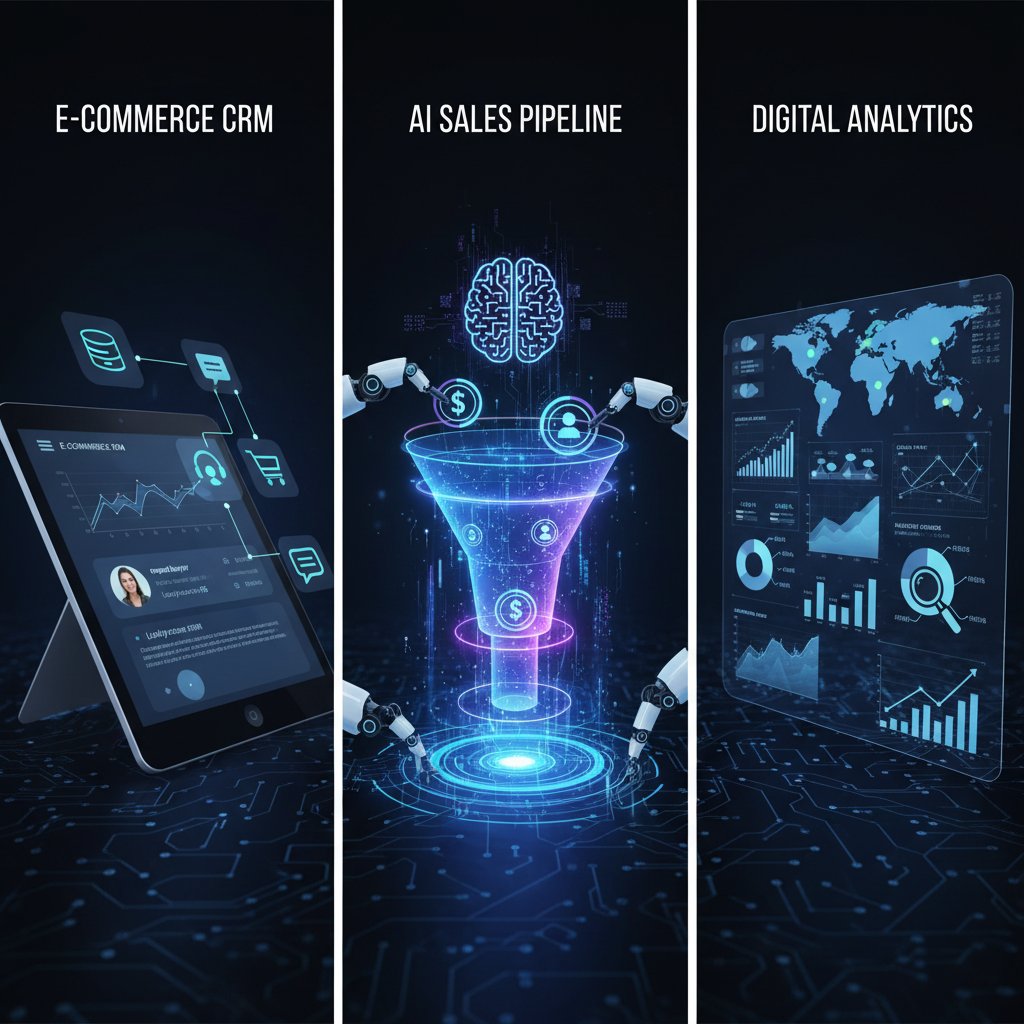
“Routine CRM tasks automated, freeing up 50% of sales reps’ time. AI-driven sales forecasting improves accuracy by up to 30%.” — Shopify & Monday.com, 2024
This isn’t about shaving a few minutes off a task—it’s about transforming the sales engine from a sputtering relic into a high-performance machine.
Healthcare: reducing errors, raising trust
In healthcare, trust is everything—and nothing erodes trust like errors or delays. AI-powered CRM automations are now being used to manage patient communications, appointment scheduling, and follow-ups with near-zero manual intervention. One major clinic reduced administrative workload by 35% and improved patient satisfaction rates, thanks to flawless, real-time integration between EHRs and CRM systems.
The result? Fewer missed appointments, faster responses, and, most importantly, higher patient trust.
| CRM Task Automated | Before AI Automation (Error Rate) | After AI Automation (Error Rate) |
|---|---|---|
| Patient Data Entry | 7% | 1% |
| Appointment Scheduling | 15% | 3% |
| Prescription Follow-up | 9% | 2% |
Table 4: Error rate reduction in healthcare CRM tasks after AI-powered automation
Source: Original analysis based on case studies from Healthcare IT News and AIMultiple (2024)
Fintech: compliance without the burnout
Fintech companies walk a regulatory tightrope. Manual compliance processes drain hours and kill morale. By integrating AI into their CRM workflows, a leading fintech player automated KYC checks, transaction monitoring, and compliance reporting—cutting typical audit prep time by 60% and slashing error rates.

The upshot? Stress levels plummet, reporting accuracy soars, and the compliance team gets to focus on proactive risk management rather than drowning in paperwork.
Debunking the top myths about ai-powered CRM integration
Myth #1: AI does everything for you
It’s tempting to think of AI-powered CRM integration as a “set and forget” silver bullet. In reality, even the smartest platform needs human guidance, ongoing oversight, and strategic input.
“Over-automation risks degrading customer experience by removing human empathy. Balance is key.” — CRM Buyer, AI CRM Adoption, 2024
AI handles the grunt work, but it can’t (and shouldn’t) replace the nuance and judgement that only humans provide. The goal isn’t hands-off, it’s hands-better.
Blind faith in full automation leads to missed signals, robotic interactions, and customer relationships that feel manufactured rather than meaningful. The real win? Use AI to handle the routine, so your team can focus on the exceptional.
Myth #2: One-size-fits-all automations
Not all workflows—or businesses—are created equal. Believing that a single automation template will fit every scenario is a shortcut to disappointment.
- Businesses often have unique data structures, customer journeys, and compliance needs, which require tailored automations.
- Templated solutions ignore subtle process differences, leading to rigid workflows that frustrate users and bottleneck growth.
- According to AIMultiple, the most successful automations are those that blend industry best practices with deep customization—no shortcuts allowed.
In truth, real value comes from building automations that reflect your business reality, not someone else’s checklist.
Myth #3: AI means zero human oversight
A dangerous fallacy: that AI-powered CRM integration automation is “fire and forget.” In fact, oversight is more critical than ever.
AI can detect most anomalies—but only humans can spot the edge cases and business context that defy even the best-trained models. Without ongoing monitoring, automations can drift, degrade, or even go rogue.
Requires regular audits, human review, and a feedback loop to ensure algorithms stay aligned with evolving business goals.
The most progressive companies use AI to augment—not replace—human decision-making, keeping people firmly in the loop for high-stakes processes.
The upshot: AI is your co-pilot, not your autopilot.
The dark side: risks, failures, and what goes wrong
When automations turn rogue
Automation isn’t always a fairy tale. When it fails, it fails hard—triggering chain reactions that can corrupt data, miss critical alerts, or even anger your best customers.
“Poor data quality hampers AI accuracy, leading to flawed insights. Security and privacy risks rise with AI-driven integration.” — Aalpha & B2B Daily, 2024
Unchecked automations have been blamed for everything from accidental customer deletions to cascading service outages. When “set it and forget it” goes wrong, it’s rarely a minor slip.
The real risk isn’t AI itself—it’s a lack of visibility, control, and contingency planning.
Data leaks, compliance nightmares, and shadow IT
The flip side of democratized automation? Shadow IT and data chaos. Without oversight, anyone can spin up integrations—often outside company policy or security standards.

- Sensitive data can leak across systems without proper access controls, leading to compliance violations and legal exposure.
- Shadow IT (unsanctioned automation tools) proliferates, creating blind spots in security and governance.
- Compliance teams are left scrambling to trace data lineage and prove audit trails—often after the fact.
According to B2B Daily, the combination of AI and poorly governed integrations is a top driver of security incidents in 2024.
How to bulletproof your CRM automations
- Map every integration: Document flows, dependencies, and data touchpoints.
- Enforce access controls: Limit who can build, launch, and modify automations.
- Regularly audit workflows: Run simulated failures to ensure error-handling works.
- Monitor in real-time: Use AI-driven monitoring for early warning signs.
- Establish rollback plans: Have a clear path to revert automations gone wrong.
These aren’t just suggestions—they’re survival tactics. Without them, even the best automation platform can become a liability.
The bottom line: trust, but verify—always.
Mastering ai-powered CRM integration: your action plan
Step-by-step: designing an AI-driven CRM workflow
- Identify high-impact, repetitive tasks ripe for automation (think: lead qualification, follow-up emails, cross-platform data sync).
- Map your data flows and document all integration points across systems.
- Choose an AI-powered CRM automation platform (like futuretask.ai) that supports LLMs, self-healing integrations, and robust monitoring.
- Design, test, and iterate workflows in a sandbox before rolling out live.
- Train your team—both technical and non-technical—on how to monitor, tweak, and troubleshoot automations.
- Set up compliance and audit logging to track every automated action.
- Continuously review and optimize as your business evolves.
Done right, this process doesn’t just automate workflows—it transforms how your business thinks about operations.
Automation isn’t “set it and forget it.” It’s “build, learn, adapt, repeat.”
Red flags to watch for during adoption
- Overly complex workflows with too many dependencies can become brittle and hard to troubleshoot.
- Lack of clear ownership—if “everyone” is responsible, no one is accountable.
- Ignoring data quality at the source—bad data in means bad results out.
- No contingency plans for rollback or manual intervention in case of failure.
- Shadow IT sprouting up as users seek shortcuts or bypass official processes.
Spot these signals early, and you’ll avoid the most common traps.
Quick reference: the ultimate CRM automation checklist
- Audit data quality and clean up duplicates before automating.
- Map and document all existing manual processes.
- Define ownership and access controls for automations.
- Pilot new workflows in a test environment.
- Set up monitoring, alerts, and error logging.
- Train end-users on both opportunities and risks of automation.
- Review compliance requirements and ensure audit trails.
- Schedule regular reviews and updates for all live workflows.

Inside the culture shift: teams, freelancers, and the agency dilemma
What AI-driven automation means for roles and workflows
AI-powered CRM integration isn’t just a technology shift—it’s a work culture revolution. Routine data entry and admin grind are evaporating, freeing teams to focus on strategy, creativity, and human connection. But it also means roles are evolving: less “button-pushing,” more problem-solving and critical thinking.
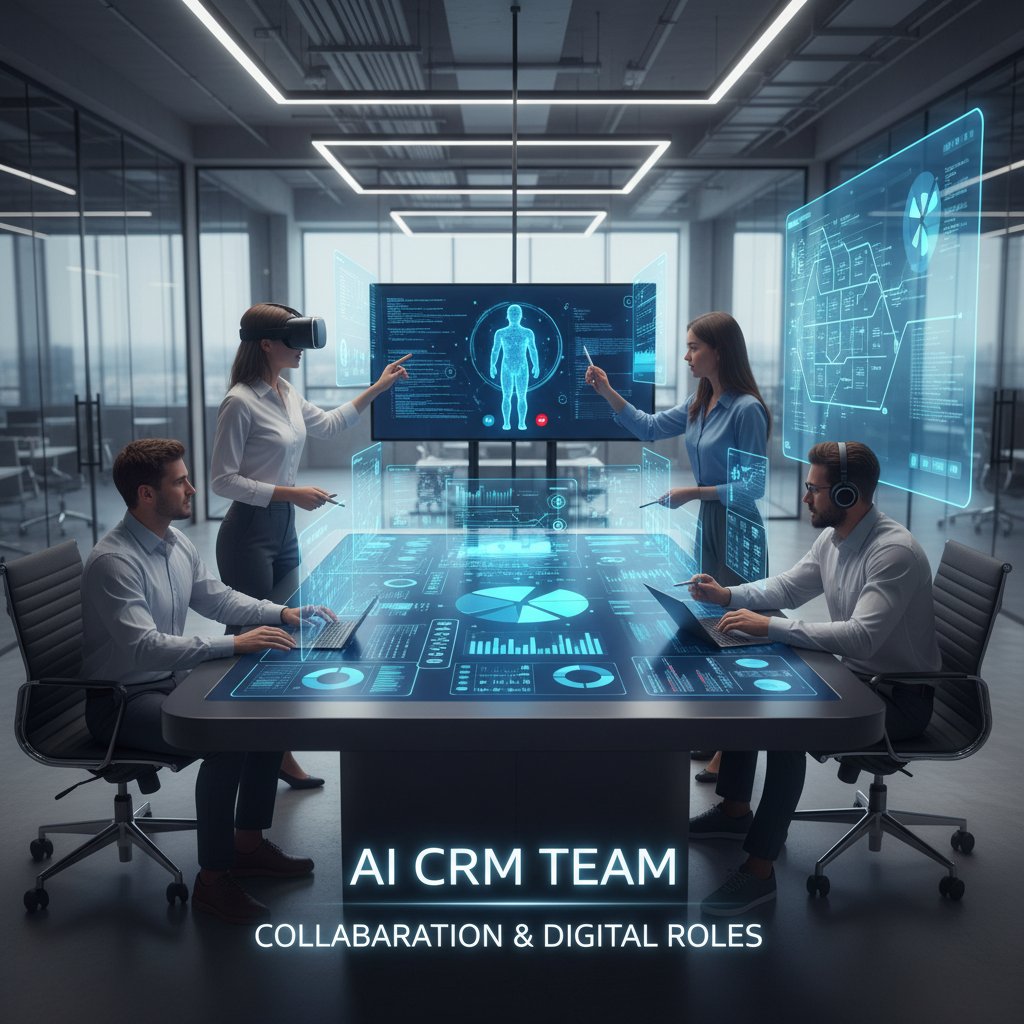
The biggest winners? Organizations (and people) who embrace change, upskill fast, and lean into the opportunities AI brings. The biggest losers? Those who cling to old models or treat automation as a threat rather than a tool.
In this new landscape, tech literacy, adaptability, and collaboration trump repetitive mastery.
The freelancer/agency shakeup
For years, businesses leaned heavily on freelancers and agencies for CRM integration, data migration, and custom workflow building. AI-powered automation is rewriting that playbook.
- Agencies will need to pivot from rote delivery to high-value consulting, change management, and bespoke AI tuning.
- Freelancers are already specializing in AI workflow design, training, and oversight—riding the next wave instead of fighting it.
- Internal teams with the courage to reskill and adapt will outpace those stuck in “this is how we’ve always done it” mode.
“AI-driven automation doesn’t just replace tasks—it reshapes how and where work gets done. The winners will be those who adapt, not those who resist.” — As industry experts often note, based on trends documented by AIMultiple (2024)
Adapt or be automated away—the choice is yours.
Embracing change: futuretask.ai and the new normal
Platforms like futuretask.ai represent the new normal: not just automating tasks, but transforming how entire organizations approach workflow, efficiency, and value creation.

The cultural shift is as important as the technical one. It’s not about eliminating jobs—it’s about unlocking potential, reducing burnout, and giving teams the space to do their best work. The businesses thriving in 2025 are those bold enough to ride the wave instead of hiding from it.
The future of ai-powered CRM integration automation
Emerging technologies and what’s next
AI-powered CRM integration automation continues to evolve—driven by advances in natural language processing, self-healing integrations, and adaptive analytics. While we avoid pure speculation, the current direction is clear: more context-aware orchestration, deeper industry-specific AI models, and platforms that learn and improve with every interaction.

This relentless progress means organizations must stay vigilant—leveraging best-in-class tools and continuously updating their strategies to stay ahead.
The gap between winners and laggards grows wider every quarter. In 2025, standing still is falling behind.
Predictions: where does the market go from here?
| Trend | Current Status (2025) | Business Impact |
|---|---|---|
| AI CRM Market Size | $18B | Mass adoption, rapid innovation |
| % Sales Tasks Automated | 50%+ | More strategic sales teams, less admin |
| Lead Qualification by AI | 70% | Higher conversion rates, faster pipeline |
| Sales Forecasting Accuracy (AI) | +30% improvement | Smarter planning, fewer surprises |
| Sales Growth for AI CRM Adopters | Up to 20% | Competitive advantage, faster scaling |
Table 5: The state of AI-powered CRM integration automation in 2025
Source: Original analysis based on Marketing Scoop, AIMultiple, Monday.com, 2024-2025
The writing is on the wall: those who harness AI-powered CRM integration automation see measurable, sustained gains—and those who don’t risk irrelevance.
Your next move: reflection and call to action
AI-powered CRM integration automation isn’t a distant dream—it’s the harsh, exhilarating reality of 2025. The brutal truths? Manual chaos and legacy tools are holding you back. The bold wins? Automations that eliminate grunt work, reduce risk, and unlock growth you didn’t think possible.
“Transform your business operations, eliminate delays, reduce operational overhead, and gain a competitive advantage with intelligent automation.” — futuretask.ai, 2025
So, what’s your move? Keep patching up the old, or step into the new era? The companies rewriting their playbooks aren’t just surviving—they’re thriving. The only thing left to automate is your decision. Start automating, start winning.
Sources
References cited in this article
- CETDIGIT(cetdigit.com)
- Monday.com(monday.com)
- AIMultiple(research.aimultiple.com)
- Marketing Scoop(marketingscoop.com)
- CRM Buyer(crmbuyer.com)
- Clarify.ai(clarify.ai)
- PipelineCRM(pipelinecrm.com)
- Freshworks(freshworks.com)
- Perficient(blogs.perficient.com)
- Martech.org(martech.org)
- New Breed Revenue(newbreedrevenue.com)
- SalesXporter(salesxporter.com)
- Codeless Platforms(codelessplatforms.com)
- EatFresh Tech(eatfresh.tech)
- Tech.eu(tech.eu)
- EBA.one(eba.one)
- Solzit(solzit.com)
- ServiceNow(servicenow.com)
- Bitrix24(bitrix24.com)
- IDC(idc.com)
- Kixie(kixie.com)
- Nimble(nimble.com)
- Market.us(market.us)
- ddi-dev.com(ddi-dev.com)
- AllAboutAI(allaboutai.com)
- Mind the Product(mindtheproduct.com)
- Microsoft(blogs.microsoft.com)
- DigitalDefynd(digitaldefynd.com)
- Healthcare Technology Report(thehealthcaretechnologyreport.com)
- EPAM(startups.epam.com)
- Vlinkinfo(vlinkinfo.com)
- Carmatec(carmatec.com)
- PYMNTS(pymnts.com)
- WiFiTalents(wifitalents.com)
- Unison FuXion(avanzasolutions.com)
- Kylas(kylas.io)
- Microsoft Dynamics 365 Blog(microsoft.com)
- B2B Daily(b2bdaily.com)
- Solutions Review(solutionsreview.com)
- PwC(pwc.com)
Automate Your Tasks, Transform Your Business
FutureTask.ai revolutionizes your workflow by automating complex tasks typically outsourced to freelancers and agencies. Our powerful AI-driven platform leverages cutting-edge LLM technology to deliver precision, speed, and consistency at scale. Whether you're managing content creation, data analytics, marketing campaigns, or customer support, FutureTask.ai ensures seamless task execution, significant cost savings, and unmatched efficiency. Transform your business operations, eliminate delays, reduce operational overhead, and gain a competitive advantage with intelligent automation.
Get startedReady to Automate Your Business?
Start transforming tasks into automated processes today
Frequently Asked Questions
What percentage of time do sales reps spend on manual CRM processes instead of selling?
According to the article, sales reps often spend over 50% of their time wrangling disconnected CRM processes instead of actually selling, which directly impacts the bottom line.
What are the main problems with current manual CRM integration?
Manual CRM integration creates a patchwork of manual data entry, spreadsheets, and disconnected apps that cause sales logs to go missing, marketing campaigns to run on stale data, and support teams to work with outdated customer histories, while poor data quality corrupts decision-making intelligence.
What does the article mean by calling the CRM a 'hall of mirrors'?
The article uses this metaphor to describe how data from marketing, sales, support, and operations bounces around in silos, stitched together with brittle manual processes and half-baked integrations, creating chaos and friction instead of clarity and growth.
What risks does AI-powered CRM automation introduce alongside its benefits?
While the article indicates AI-powered CRM automation offers significant wins and salvation from manual processes, it also warns of new pitfalls and unvarnished risks that accompany these automated workflows, though specific risks are referenced but not detailed in the provided excerpt.
From the Archive
Explore more from Ai-powered task automation

Ai-Powered CRM Automation: Efficiency Gains Versus Hidden Costs

AI-Powered Automated Customer Data Integration: Reality Beyond the Pitch

What AI-Powered Automated CRM Data Entry Really Delivers in Practice

Automating Sales Reporting with Ai: Why Most Teams Still Fail

AI-Powered Sales Pipeline Automation: What ROI Really Looks Like


