


AI-Driven Marketing Analytics: Hard Truths About ROI and Risk
Written with AI assistance under our editorial guidelines
AI-driven marketing analytics can deliver significant value, but success requires honest assessment rather than blind faith in technology. Many brands struggle to extract meaningful ROI due to data quality issues, implementation complexity, and the difficulty of translating algorithmic insights into effective action. The global market has grown substantially, yet countless organizations remain trapped in analysis paralysis, unable to separate genuine strategic advantages from marketing hype.
Think you understand ai-driven marketing analytics? Think again. This isn’t another breathless tribute to technology’s promise—this is a deep-dive into the raw, sometimes uncomfortable truths reshaping how brands win or lose in 2024. From the birth of spreadsheets to the sentient algorithms dissecting your every campaign, the journey is littered with both triumphs and trainwrecks. Welcome to the unvarnished story behind the dashboards: hard data, failed experiments, and the real, sometimes messy, transformation redefining what it means to be a marketer. If you’re tired of shiny marketing platitudes and want a field guide for what actually works (and what blows up), keep reading. Whether you’re an agency lead, startup founder, or old-school CMO obsessed with “hustle,” this guide will challenge everything you think you know about ai-driven marketing analytics—and arm you with the brutal truths that your competition is still too scared to say out loud.
The rise and reckoning of ai-driven marketing analytics
How marketing analytics got here: from spreadsheets to sentience
To grasp the seismic shift that is ai-driven marketing analytics, you need to journey back—way back—before cloud dashboards and “big data” were household phrases. In the analog age, marketing analytics meant endless paper charts, coffee-stained spreadsheets, and gut instinct masquerading as insight. Marketers obsessed over last quarter’s print ad performance, praying their interpretation of the numbers was less wishful thinking and more actionable strategy. The arrival of digital shifted everything: suddenly, every click, scroll, and abandoned cart became a data point, tracked in real time.
But even then, tools were dumb—the digital equivalent of a glorified abacus. Enter machine learning: algorithms that could spot patterns, predict customer behavior, and even optimize campaigns before a human lifted a finger. The transformation wasn’t gentle. For every Amazon—deploying ai-driven dynamic pricing and hyper-personalization to astounding effect—there were thousands of brands drowning in dashboards, unsure how to separate the signal from the noise.

Today, ai-driven marketing analytics are worth more than $30.8 billion globally, according to Loopex Digital, 2023. This isn’t just a new tool; it’s a paradigm shift that’s upending everything marketers thought they knew.
Why hype clouds the truth: separating myth from reality
The AI hype machine is relentless, churning out miracle stories and apocalyptic warnings in equal measure. The reality? Most of what you’ve heard about ai-driven marketing analytics is either oversimplified or flat-out wrong. So, let’s torch some sacred cows:
- AI will replace all marketers: False. AI elevates the best marketers—those that can blend machine insight with human creativity. Automation kills drudgery, not ingenuity.
- AI is “plug and play”: Absolutely not. Most failed AI projects stem from businesses expecting instant results without the hard work of integration and data cleaning.
- AI always makes unbiased decisions: Wrong. AI systems can amplify bias buried in historical data. The algorithm is only as fair as your inputs.
- You need “big data” for AI to work: Not necessarily. Smart, clean small datasets often outperform big, messy ones.
- AI-driven analytics guarantees higher ROI: Only if you know how to act on the insights. Data without execution is just digital wallpaper.
- Dashboards tell the whole story: Far from it. AI can surface trends but often obscures context and nuance.
- AI is too expensive for SMBs: 28% of small businesses expect AI to save them over $5,000 annually, and almost half spend less than 10% of their marketing budget on AI (Influencer Marketing Hub, 2023).
The pivotal failures nobody talks about
For every AI-driven marketing analytics success, there’s a graveyard of flops—projects that burned through cash and credibility. Early adopters often failed spectacularly: think botched rollouts, overhyped algorithms that misread customer intent, and dashboards that spit out nonsense. One e-commerce giant famously spent millions on a “predictive analytics” system that recommended snow boots to shoppers in Miami… in July.
| Year | Breakthrough | Setback |
|---|---|---|
| 2015 | Amazon launches AI-driven dynamic pricing | AI tools misinterpret sentiment, cause PR blunders |
| 2017 | Starbucks integrates predictive analytics in app | Retailers overspend on “black box” AI with no ROI |
| 2019 | Chatbots streamline customer engagement | AI misses cultural context, alienates users |
| 2023 | Real-time AI optimizes campaign spend | SMBs struggle with integration and data hygiene |
Table 1: Major breakthroughs and failures in AI marketing analytics, showing the turbulent path to today’s market
Source: Original analysis based on Loopex Digital, 2023, Forbes, 2024
Demystifying the black box: how ai-driven marketing analytics actually works
Inside the machine: key technologies explained
Stripping away the jargon, ai-driven marketing analytics is fueled by a few core technologies—each with its own brand of magic (and occasional mischief):
- Machine learning: Algorithms that “learn” from data to predict outcomes and recommend actions. They’re the brains behind AI-driven personalization, churn prediction, and dynamic pricing.
- Natural language processing (NLP): The tech that lets computers “understand” text—crucial for chatbots, sentiment analysis, and social listening.
- Predictive modeling: Statistical techniques that forecast future events, like campaign performance or lead conversion.
- Computer vision: AI that “sees” images—used in virtual try-ons or analyzing ad creative.
- Automation engines: Orchestrate repetitive tasks, freeing marketers for strategy and creativity.
Key AI analytics terms:
A subset of AI where algorithms learn from data to make predictions or recommendations without explicit programming. Essential for sophisticated segmentation and forecasting.
AI technology enabling machines to interpret and respond to human language. NLP powers chatbots, reviews analysis, and even ad copy testing.
Uses statistical models and machine learning to predict outcomes based on historical and real-time data—vital for optimizing spend and timing.
Instantly analyzes data as it’s generated, allowing marketers to adjust campaigns on the fly.
Systematic errors introduced when AI learns from flawed or unrepresentative data—a silent killer of ROI and brand trust.
What your dashboard isn’t telling you
Here’s the dirty secret: most AI-driven dashboards are beautiful, fast… and sometimes dangerously misleading. Marketers see “insights” at a glance, but under the hood, algorithms can amplify outliers, miss deep context, or surface patterns that are pure mirage. Dashboards rarely show data lineage or uncertainty—meaning a sudden spike might be a game-changer… or a statistical fluke.

If you aren’t interrogating your AI’s decisions—manually, and often—you’re handing the wheel to an autopilot with a blind spot.
Transparency, trust, and the explainability dilemma
The number one reason executive teams distrust ai-driven marketing analytics? The infamous “black box” problem. AI can spit out razor-sharp predictions, but when asked “why,” it often shrugs. This isn’t just a technical headache—it’s a trust crisis. As Alex, a seasoned data scientist, bluntly puts it:
"If you can’t explain it, you can’t trust it." — Alex, data scientist
Marketers must balance the power of AI with explainability—not just for compliance, but to ensure human oversight. It’s about asking the hard questions, even when the answers are complex or inconvenient.
The real-world impact: game-changing results and harsh lessons
Case studies: wins, losses, and unexpected outcomes
Let’s cut through theory with the scars and glory of real brands. Take Amazon: their AI-driven approach to dynamic pricing and hyper-personalization is legendary, driving billions in fresh revenue and putting old-school competitors on life support. Starbucks, meanwhile, leverages predictive analytics to nudge loyalty app users with eerily accurate offers, fueling both sales and customer satisfaction.
But not all stories glitter. A global cosmetics chain dumped millions into an AI recommendation engine—only to watch sales tank as the system suggested bizarre product combos. The post-mortem? Garbage in, garbage out: the algorithm was trained on incomplete data, with nobody questioning its assumptions.
| Metric | Traditional Analytics | AI-Driven Analytics |
|---|---|---|
| Speed | Slow (hours–days) | Instant/real-time |
| Accuracy | Medium (manual errors) | High (algorithmic checks) |
| Cost | High (analyst hours) | Lower (automation) |
| Insight depth | Surface-level patterns | Deep, predictive insights |
Table 2: Traditional vs. AI-driven marketing analytics across key performance metrics
Source: Original analysis based on Loopex Digital, 2023, Forbes, 2024
Cross-industry insights: what marketers can steal from other sectors
AI-driven analytics isn’t just a marketing phenomenon—it’s the secret sauce in sports, healthcare, and political campaigns. Hospitals deploy predictive models to anticipate patient surges. Political strategists mine social media with NLP to gauge voter sentiment. Sports teams use AI to optimize lineups and scout talent—transforming gut instincts into data-driven wins.
Unconventional uses for ai-driven marketing analytics:
- Craft breweries using AI to predict flavor trends and tweak their next releases.
- Political campaigns micro-targeting swing voters with NLP-driven sentiment analysis.
- Nonprofits optimizing donation asks based on donor behavior and AI-driven A/B tests.
- Healthcare providers segmenting patients for targeted preventive care campaigns.
- Sports brands tapping AI to personalize fan engagement during live events.
The human element: how teams adapt (or don’t)
This isn’t just a tech revolution; it’s a cultural earthquake. Marketers raised on “don’t fix what isn’t broken” face culture shock as AI tools demand constant learning and new skills. Teams that thrive are those who upskill, embrace creative-analytical collaboration, and aren’t afraid to challenge the machine. Winners build “AI fluency” across roles—making data scientists, creatives, and strategists co-pilots, not rivals.

Resistance is real—but so is the reward for those who adapt.
Beyond the buzzwords: practical steps to harness ai-driven marketing analytics
A candid checklist for getting started
Adopting ai-driven marketing analytics isn’t about buying the shiniest platform. It’s about building a foundation for sustainable change. Before you dive in, ask yourself: do you really know your own data? Have you mapped out clear objectives? Are you ready for the organizational impact? Here’s a field-tested, brutally honest checklist to get you moving:
- Audit your data quality: Clean, structured data is non-negotiable. Bad data means bad AI.
- Define clear objectives: What problem are you actually trying to solve?
- Identify quick wins: Start with high-impact, low-risk experiments.
- Build multidisciplinary teams: Pair technical experts with marketers for best results.
- Invest in upskilling: Make AI literacy core to your talent strategy.
- Prioritize explainability: Choose tools that let you interrogate decisions, not just automate.
- Monitor, iterate, repeat: AI is not “set and forget”—constant optimization is key.
Red flags: how to spot vaporware and hollow promises
The AI snake oil industry is booming. Every vendor claims “revolutionary” impact. Here’s how to spot the fakes before they burn your credibility (and budget):
- No transparency on data sources or model logic. If a vendor can’t explain how their AI makes decisions, walk away.
- Overpromising “instant” transformation. Real impact takes time, iteration, and human involvement.
- Lack of integration support. Tools that don’t play nice with your stack are a recipe for chaos.
- No provision for bias or error handling. If they ignore bias, they’re ignoring reality.
- Generic, one-size-fits-all dashboards. Authentic AI adapts to your business—not the other way around.
Quick wins vs. long-term transformation
AI-driven marketing analytics can deliver rapid, visible wins—like real-time campaign optimization or automated reporting. But the real gold is in deep transformation: re-engineering workflows, rethinking skill sets, and building a test-and-learn culture. The most successful brands balance both—celebrating small victories while building for the long haul.

The risks beneath the surface: bias, privacy, and algorithmic pitfalls
How bias creeps in (and what you can do about it)
Bias is the silent saboteur of ai-driven marketing analytics. Fed historical data shaped by old prejudices, AI can reinforce harmful stereotypes, exclude minority audiences, or misread sentiment in a multicultural world. If left unchecked, bias can tank campaigns—and reputations.
"The algorithm is only as fair as your data." — Morgan, CMO
The answer? Systematic checks, diverse training data, and a commitment to ruthless bias audits—before, during, and after every campaign.
Data privacy: managing the new battleground
Personalization is seductive—but so is the risk of crossing privacy lines. AI-driven analytics thrive on granular data, and regulations like GDPR, CCPA, and others have raised the stakes for marketers everywhere.
| Regulation | Key Requirement | Impact on AI Analytics |
|---|---|---|
| GDPR (EU) | Explicit consent, data minimization | Limits on data scope and retention |
| CCPA (California) | Consumer opt-outs, transparency | Mandated disclosures, data deletion |
| LGPD (Brazil) | Lawful basis, data subject rights | Requires auditable AI workflows |
Table 3: Data privacy regulations and their impact on ai-driven marketing analytics (2024)
Source: Original analysis based on EU, US, and Brazil regulatory summaries
Smart marketers now treat privacy as a feature, not a compliance headache—building trust through radical transparency.
The black swan problem: when AI gets it spectacularly wrong
Occasionally, AI analytics delivers catastrophic “black swan” failures—a viral tweet taken out of context, an algorithm that tanks sales overnight, a personalization engine that offends instead of delights. These events are rare, but the fallout is brutal: public backlash, lost revenue, and shaken trust. The common thread? Over-reliance on “black box” systems and lack of human oversight.
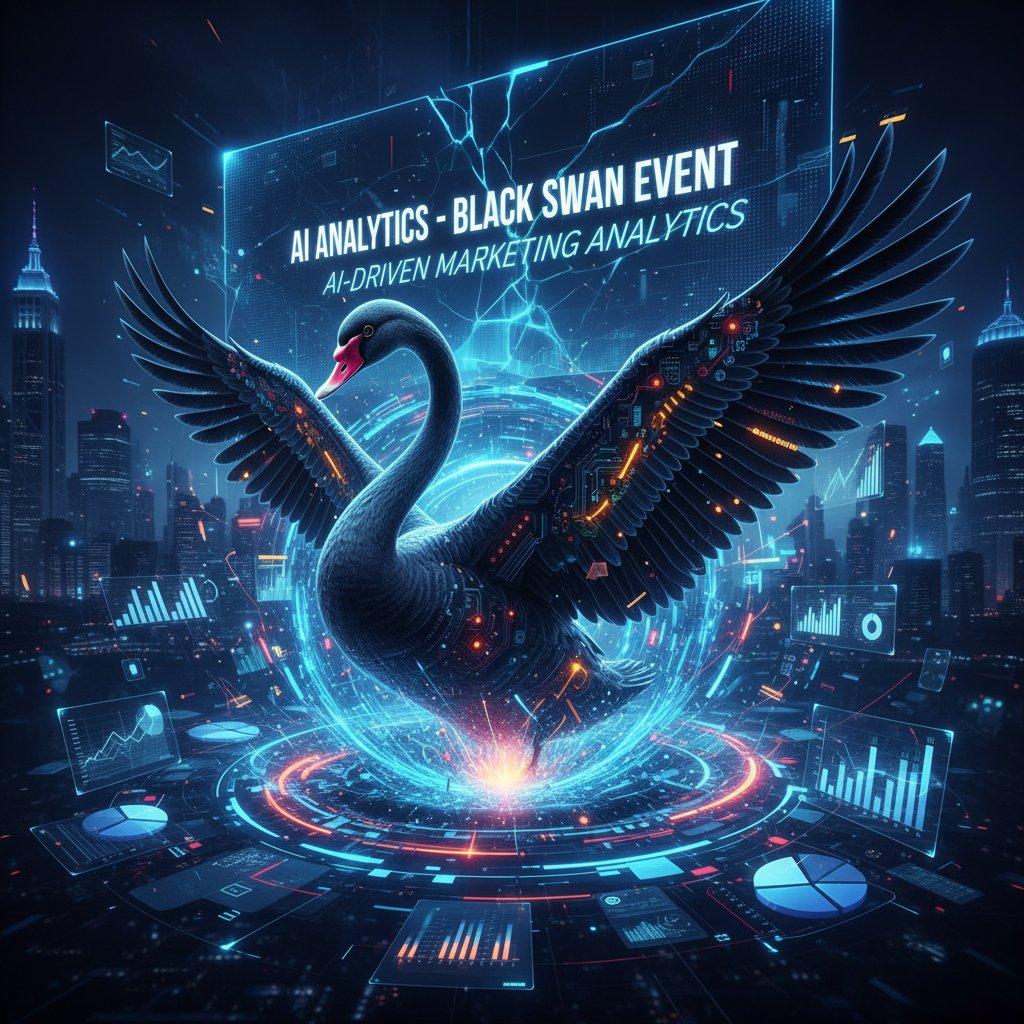
The lesson: always keep a human in the loop.
ROI and reality: measuring success with ai-driven marketing analytics
What’s really measurable—and what’s marketing fantasy
Not all KPIs are created equal. AI-driven analytics makes it easy to drown in meaningless metrics, chasing vanity numbers while missing genuine impact. The priority? Focus on a tight set of KPIs that actually drive business growth.
Priority checklist for ai-driven marketing analytics measurement:
- Customer acquisition cost (CAC)
- Return on ad spend (ROAS)
- Conversion rate improvement
- Customer lifetime value (CLV)
- Churn reduction
- Attribution accuracy
- Campaign velocity and turnaround time
Anything less—and you’re just playing dashboard games.
Cost-benefit breakdown: the numbers behind the promise
Let’s get brutally honest: AI-driven marketing analytics isn’t always cheap, but the payoff—when done right—can be enormous. According to Forbes, 2024, 60% of marketers now see AI delivering the most value and ROI from all tech investments.
| Industry | Avg. ROI on AI Analytics | Avg. Annual Savings |
|---|---|---|
| E-commerce | 25-40% | $5,000–$50,000 |
| Financial Svcs | 20-35% | $8,000–$100,000 |
| Healthcare | 18-30% | $4,000–$40,000 |
| Marketing/Agency | 20-38% | $6,000–$60,000 |
Table 4: Statistical summary of AI analytics ROI benchmarks by industry (2023–2024)
Source: Original analysis based on Loopex Digital, 2023, Forbes, 2024
Why some brands never see ROI (and how to fix it)
Here’s the ugly truth: some brands never see ROI from ai-driven marketing analytics because they try to automate chaos. If your processes are broken, AI just makes them fail faster. The fix? Ruthlessly audit your workflows, clean your data, and align your teams before you plug in the machines.
"You can’t automate a broken process." — Jordan, growth strategist
The cultural shift: how ai-driven analytics changes the marketer’s DNA
From gut instinct to algorithmic intuition
Creativity and analytics aren’t opposites—they’re collaborators. The best marketers now blend gut instinct with algorithmic intuition, crafting campaigns that surprise and delight... precisely because they’re grounded in real, machine-verified insight.
This isn’t about replacing creativity—it’s about supercharging it.
New roles, new skills: who thrives in the age of AI marketing
AI-driven analytics is rewriting marketing’s job descriptions. New stars rise: data storytellers, algorithm auditors, AI strategists. The most valuable talent is relentlessly curious, tech-fluent, and unafraid to challenge both human and machine assumptions.
Hidden benefits of ai-driven marketing analytics experts won’t tell you:
- Sharper cross-functional collaboration between marketing, IT, and strategy teams.
- Ability to scale winning campaigns globally, instantly.
- Faster, more accurate insights mean more time for creative experimentation.
- Data-driven confidence in high-stakes decisions.
- Enhanced team morale as “grunt work” fades away.
Resisting the robot: pushback, fear, and the path to trust
Let’s be real: AI sparks anxiety. Some fear job loss; others, the loss of creative control. The antidote is transparency—inviting teams to test, question, and even break new tools. The organizations that thrive don’t preach AI—they build trust through open debate, training, and shared wins.

The future belongs to teams that harness both human and artificial intelligence.
The future is now: what’s next for ai-driven marketing analytics
Emerging trends: what to watch in 2025 and beyond
The ai-driven marketing analytics revolution isn’t slowing. Voice search optimization, generative AI for campaign creation, and advanced predictive analytics are reshaping the field. Real-time feedback loops and hyper-personalization are the new battlegrounds for brand loyalty and market share.
| Trend | 2024 Status | 2025–2026 Roadmap |
|---|---|---|
| Voice search analytics | Gaining steam | Standard for campaign targeting |
| Generative AI content | Early adoption | Mainstream creative workflows |
| Predictive segmentation | Widespread | Deeper behavioral insights |
| Algorithmic ROI audits | Emerging | Compliance-driven standard |
Table 5: Roadmap of AI marketing analytics trends (2024–2026)
Source: Original analysis based on Mosaikx, 2024
How to futureproof your team and strategy
Survival isn’t about betting on the “next big thing”—it’s about relentless learning, experimentation, and strategic partnerships. Platforms like futuretask.ai now play a critical role in democratizing access to cutting-edge tools and insights, helping marketers of all stripes stay at the vanguard.
Timeline of ai-driven marketing analytics evolution:
- 2010: Digital analytics go mainstream (basic dashboards, simple attribution).
- 2015: Machine learning enters marketing, powering personalization.
- 2020: Real-time predictive analytics and NLP reshape engagement.
- 2024: Generative AI, automated campaign optimization, and AI-driven attribution become table stakes.
The ultimate question: will AI replace marketers, or supercharge them?
Let’s settle it: AI isn’t coming for your job—it’s coming for your old job. Routine, repetitive tasks? Gone. Strategic, creative, data-driven mastery? More essential than ever. The best teams don’t fight the machine—they ride it to the next level.

And for those who still doubt: the brands redefining marketing today are the ones where humans and AI collaborate, not compete.
Debunking persistent myths and answering burning questions
Fact vs. fiction: the 5 most common misconceptions
Let’s call out the myths that just won’t die:
- AI can “understand” customers like a human. Not quite. AI spots patterns, but humans provide meaning and context.
- You need a data science PhD to use AI analytics. Tools are increasingly user-friendly, democratizing access for all marketers.
- AI is too risky for regulated industries. With the right safeguards, AI can actually enhance compliance and auditability.
- AI solutions are only for big brands. SMBs are among the fastest adopters—often seeing the biggest efficiency gains.
- AI analytics are set and forget. False. Continuous monitoring and human oversight are non-negotiable.
Your questions answered: quick-fire expert responses
We scoured forums, LinkedIn debates, and expert roundtables for your burning questions. Here are the most candid, research-backed answers:
The practice of using artificial intelligence and machine learning to collect, analyze, and act on marketing data in real-time, boosting accuracy and performance.
Leveraging historical data, statistical algorithms, and AI to forecast future marketing outcomes and drive smarter decisions.
An approach that prioritizes decisions based on hard data—not gut instinct—using AI to amplify insight and speed.
The science of assigning credit to different channels and touchpoints using AI to optimize campaign spend.
The principle that AI decisions should be explainable and auditable—critical for trust and compliance.
Where to go next: learning, communities, and ongoing resources
The journey never ends—AI marketing is an endless classroom. Trusted resources include the Influencer Marketing Hub, 2023, Forbes, 2024, and Mosaikx, 2024, along with peer networks and platforms like futuretask.ai, where marketers and technologists share real-world case studies, not just glossy vendor demos.

Surround yourself with people—and machines—that challenge your assumptions daily.
Conclusion
The age of ai-driven marketing analytics is here, raw and unapologetic. It’s not about buzzwords—it’s about execution, trust, and the hard work of aligning tech with human brilliance. As the data—and the scars—clearly show, there’s no shortcut to mastery. Brands that thrive are those who interrogate the machines, invest in their teams, and treat every myth as an invitation to dig deeper. The real disruptors? They’re not the ones with the fanciest dashboards, but those with the guts to confront brutal truths, act on them, and adapt faster than the competition. Whether you’re a data geek or a creative visionary, ai-driven marketing analytics is your new reality. Embrace it, challenge it, and—if you’re ready—let it supercharge your next campaign.
Sources
References cited in this article
- Loopex Digital(loopexdigital.com)
- Influencer Marketing Hub(influencermarketinghub.com)
- Forbes(forbes.com)
- Mosaikx(mosaikx.com)
- eWeek(eweek.com)
- Smart Insights(smartinsights.com)
- AND Marketing(and-marketing.com)
- IBM AI in Marketing(ibm.com)
- WordStream(wordstream.com)
- SmartDev(smartdev.com)
- Gartner(gartner.com)
- Influencer Marketing Hub(influencermarketinghub.com)
- Lumen5(lumen5.com)
- Twiz.io(resources.twiz.io)
- TechPilot.ai(techpilot.ai)
- MarketingHire(marketinghire.com)
- TheMarketingAIAgents(themarketingaiagents.com)
- Forbes Tech Council(forbes.com)
- Forbes(forbes.com)
- Dataiku(pages.dataiku.com)
- Springer Journal of Marketing Analytics(link.springer.com)
- TandFOnline(tandfonline.com)
- ScienceDirect(sciencedirect.com)
- Invoca(invoca.com)
- Policy Center(policycenter.ma)
- Forbes(forbes.com)
- SEMrush(semrush.com)
- AI for Businesses(aiforbusinesses.com)
- Forbes(forbes.com)
- LinkedIn(linkedin.com)
- WARC(brands.in)
- Brainz Magazine(brainzmagazine.com)
- HubSpot(blog.hubspot.com)
- Flow20(flow20.com)
- Forbes(forbes.com)
- Harvard DCE(professional.dce.harvard.edu)
- Curinos(curinos.com)
Automate Your Tasks, Transform Your Business
FutureTask.ai revolutionizes your workflow by automating complex tasks typically outsourced to freelancers and agencies. Our powerful AI-driven platform leverages cutting-edge LLM technology to deliver precision, speed, and consistency at scale. Whether you're managing content creation, data analytics, marketing campaigns, or customer support, FutureTask.ai ensures seamless task execution, significant cost savings, and unmatched efficiency. Transform your business operations, eliminate delays, reduce operational overhead, and gain a competitive advantage with intelligent automation.
Get startedReady to Automate Your Business?
Start transforming tasks into automated processes today
Frequently Asked Questions
What is the current market size for AI-driven marketing analytics?
According to Loopex Digital 2023 data cited in the article, AI-driven marketing analytics are worth more than $30.8 billion globally.
How has marketing analytics evolved from the analog age to today?
Marketing analytics evolved from paper charts and spreadsheets in the analog era, to digital tracking of clicks and abandonment in the early internet age, to machine learning algorithms that can predict behavior and optimize campaigns in real time.
What is the main purpose of this article about AI-driven marketing analytics?
The article aims to provide unvarnished, uncomfortable truths about AI-driven marketing analytics rather than promoting hype, exploring both real successes and failures to help marketers understand what actually works versus what fails.
What example of successful AI-driven marketing does the article mention?
The article cites Amazon as an example of a brand that successfully deployed AI-driven dynamic pricing and hyper-personalization to astounding effect.
From the Archive
Explore more from Ai-powered task automation

Automating Marketing Campaign Roi: What Actually Works

Ai-Powered Website Analytics Automation: Capabilities and Risks

Automating Data-Driven Marketing with Ai: Wins and Pitfalls

AI-Driven Customer Data Analysis: What Delivers and What Disappoints

What Ai-Powered Real-Time Customer Analytics Actually Costs
