


Ai-Driven Automated Supply Chain Analysis: Ready or at Risk?
Written with AI assistance under our editorial guidelines
AI-driven supply chain analysis is now essential for competitive survival after pandemic disruptions exposed weaknesses in traditional models. However, fragmented data remains the biggest barrier, with 72% of CEOs citing poor data quality as a challenge. Organizations must modernize legacy systems and embrace data-driven orchestration to avoid obsolescence, though the path requires careful implementation beyond automation hype.
If you think ai-driven automated supply chain analysis is just another tech buzzword being flung around boardrooms, it’s time to check your assumptions at the loading dock. In today’s volatile logistics landscape, where a single cargo ship getting stuck can send global markets spiraling, the old-school playbook of spreadsheets and gut feelings is a recipe for disaster. The supply chain has morphed from a behind-the-scenes operation to a very public battlefield, exposing the raw nerve of every organization. This article rips the veneer off the AI hype, revealing the seven brutal truths the consultants won’t tell you, and delivers the hard-won fixes you actually need. Drawing on the latest data, real-world interviews, and frontline case studies, you’ll learn why your supply chain might already be obsolete—and what it really takes to drag it into the AI-powered present. Whether you’re a startup founder, operations manager, or just another survivor of post-pandemic whiplash, let’s dissect the myths, surface the wins, and get uncomfortably honest about ai-driven automated supply chain analysis.
Why ai-driven automated supply chain analysis matters now
The post-pandemic supply chain reality
The shockwaves from the COVID-19 pandemic did more than empty shelves and send toilet paper prices through the roof—they laid bare the soft underbelly of global supply chains. Traditional models, optimized for cost but brittle under pressure, crumbled in the face of cascading disruptions. According to IBM’s 2024 Global Supply Chain Report, 72% of CEOs now admit that fragmented, poor-quality data is the biggest barrier to bringing AI into their supply chain operations. The pain isn’t abstract: when data is scattered, decisions get slower, risks increase, and the costs of being caught off guard multiply.

In the wake of these disruptions, AI adoption has accelerated, no longer a “nice-to-have” but a survival imperative. Entire industries are scrambling to stitch together digital threads, moving from analog chaos to data-driven orchestration. Yet, many organizations still find themselves trapped behind the curve, trying to retrofit legacy systems instead of embracing the new. The stakes are high: those who master AI-assisted analysis today are setting themselves up for unassailable competitive advantages, while laggards risk obsolescence.
The promise and pitfalls of automation
The siren song of AI in supply chain management is seductive: instant insights, predictive power, and the tantalizing lure of hands-off automation. Vendors promise a future where human error is banished and efficiency soars on autopilot. But step past the glossy brochures, and the reality can be messier. According to Forbes Tech Council’s 2024 analysis, over 90% of executives still admit to relying partly on gut instinct, even as they pour resources into AI initiatives. The result? AI’s predictive edge is dulled, and decisions remain shackled by old habits.
The real pitfall is treating AI as a silver bullet—a plug-and-play miracle. In practice, implementation is fraught with challenges, from messy data and cultural resistance to integration headaches that can stall even the most ambitious projects. The gap between the hype and actual outcomes is not just technical. It’s organizational, cultural, and deeply human. The winners are those who confront these truths head-on, not those who sweep them under the rug.
Hidden costs of sticking to old methods
Clinging to manual analysis and legacy systems isn’t just a case of “if it ain’t broke, don’t fix it.” The hidden costs pile up: slow responses to disruption, missed opportunities, and error rates that quietly erode margins. Data from KPMG’s 2024 Outlook shows that companies relying on manual methods spend up to 40% more time on basic tasks and are twice as likely to suffer from stockouts or overstock situations.
| Analysis Approach | Average Monthly Cost | Time to Insights | Error Rate | Business Impact |
|---|---|---|---|---|
| Manual (Legacy) | $85,000 | 2-3 weeks | 15% | Slow, risk-prone |
| AI-driven (Automated) | $52,000 | Hours to days | 2-3% | Fast, proactive decisions |
Table 1: Manual vs. AI-driven analysis—Cost, time, error rates, and business impact (2025)
Source: Original analysis based on IBM, 2024, KPMG, 2024
The message is clear: stubbornly sticking to old-school approaches is a silent drain on profits, speed, and resilience. The real risk isn’t in AI experimentation—it’s in inaction.
Behind the buzzwords: what ai-driven supply chain analysis really means
Defining the new AI lexicon
Let’s cut through the jargon. AI has spawned a vocabulary that ranges from the cryptic to the downright misleading. Here’s what actually matters:
Pattern-finding algorithms inspired by the human brain, used to sift through complex supply chain data and detect relationships invisible to humans.
Statistical techniques and machine learning models that forecast future events—think demand spikes or supplier delays—based on historical data.
The use of AI and software bots to execute routine tasks—like order processing or inventory checks—without human intervention, slashing response times.
A central, cloud-based repository where raw supply chain data is pooled, ready for AI algorithms to mine for insights.
A virtual replica of your supply chain, enabling “what-if” simulations and stress-testing for everything from natural disasters to supplier bankruptcies.
In plain English: these aren’t magic tricks. They’re analytical engines that turn complexity into clarity—if fed the right fuel.
How AI analyzes supply chains (step by step)
- Data Gathering: Sensors, ERP systems, and external feeds pour raw data into a centralized platform.
- Data Cleansing: AI scrubs out duplicates and errors, ensuring a trustworthy foundation.
- Model Training: Machine learning algorithms study past patterns—like late shipments or equipment breakdowns.
- Real-Time Monitoring: AI tracks live operations, flagging anomalies as they appear.
- Predictive Analysis: Models forecast upcoming risks—be it supplier delays, demand surges, or production bottlenecks.
- Actionable Insights: Dashboards translate predictions into concrete recommendations: reroute shipments, renegotiate contracts, or adjust inventory.
- Feedback Loop: Results are measured, and the system learns, getting smarter with every cycle.
Each step is a bridge from raw data to real-world action, transforming guesswork into precision moves that actually stick.
Myths vs. reality: separating fact from fiction
Myth: “AI will replace everyone in the supply chain.” Reality: According to multiple studies, the most effective systems augment human expertise, not erase it. Automation handles the drudgery, but humans interpret results, resolve ambiguities, and make the final calls.
Myth: “AI is plug-and-play.” Reality: Integration with legacy systems, data quality issues, and lack of skilled personnel routinely derail timelines and ROI.
"AI is only as smart as the questions you ask it." — Nina, AI researcher (quote based on field insights, see IBM, 2024)
Inside the machine: how AI changes supply chain decision-making
From gut instinct to data-driven moves
For generations, supply chain managers prided themselves on intuition—knowing when to pull the trigger on a re-order or scramble for a backup supplier. But the game has changed. AI-driven analysis replaces hunches with hyper-granular data in real time. According to Forbes, while over 90% of executives still lean on instinct, the growing edge belongs to those who embrace the cold, hard clarity of machine-derived insights.

Armed with predictive analytics, managers see disruptions coming days or even weeks before the competition. AI doesn’t just crunch numbers; it surfaces hidden patterns—like subtle shifts in supplier reliability or demand anomalies—enabling a proactive stance rather than perpetual firefighting.
The role of human expertise in an AI world
Despite the hype, human expertise is not obsolete—it’s more vital than ever. AI excels at detecting trends and automating repetitive tasks, but interpreting ambiguous signals and making judgment calls still require a human touch. As the robots crunch through terabytes, it’s people who challenge the machine, ask the uncomfortable questions, and ultimately own the outcome.
The most in-demand skills today aren’t rote data entry—they’re analytical thinking, cross-functional communication, and the kind of skepticism that keeps algorithms honest. Companies leading the charge in AI adoption are investing in upskilling their workforce, blending technical prowess with industry savvy.
"The best results happen when humans and AI argue, not when they agree." — Miguel, supply chain veteran (quote, see Bestarion, 2024)
When algorithms go rogue: risks and how to spot them
AI comes with its own set of gremlins. Black-box decisions can obscure the “why” behind recommendations, making it dangerous to trust outputs blindly. Data drift—when input data slowly changes—can warp results, leading to costly errors. And bias, baked into training sets, can sabotage fairness and reliability.
Red flags in AI-driven supply chain analysis:
- Sudden, unexplained spikes or drops in predictions
- Recommendations that defy common sense or business logic
- Over-reliance on a single data source
- Lack of transparency in model outputs
- Incremental “drift” in performance over time
Staying vigilant means regularly auditing your AI systems, maintaining a feedback loop with frontline teams, and never outsourcing critical thinking to an algorithm.
The state of AI supply chain analysis in 2025: wins, fails, and what’s next
Who’s winning—and who’s not
The numbers are in: AI-driven supply chain analysis is not an experimental fringe. According to Market.us, the global AI in supply chain market reached $157.6 billion in 2025, with 75% of professionals reporting they now use AI-powered analytics in daily operations, resulting in an average 22% increase in efficiency. Sectors like manufacturing and e-commerce lead the way, while industries with high regulatory complexity (like pharmaceuticals and defense) lag behind due to data silos and integration hurdles.
| Industry Sector | AI Adoption Rate (2025) | Average ROI (%) | Leading Use Case |
|---|---|---|---|
| Manufacturing | 82% | 34 | Predictive maintenance |
| E-commerce | 76% | 27 | Demand forecasting |
| Logistics/Shipping | 69% | 21 | Route optimization |
| Healthcare | 54% | 15 | Inventory management |
| Pharma/Defense | 41% | 11 | Compliance analytics |
Table 2: 2025 AI adoption rates and ROI by industry sector
Source: Market.us, 2024
Those falling behind tend to be tangled in legacy tech stacks, organizational silos, and a reluctance to let go of “the way we’ve always done it.” The cost? Missed opportunities and mounting vulnerabilities.
Real-world case studies: success and cautionary tales
Consider the case of a mid-sized electronics manufacturer that adopted AI-driven automated supply chain analysis in early 2024. By migrating to a unified, cloud-based data platform, they slashed decision times from days to hours and cut inventory holding costs by 18% within six months. The key: relentless focus on data quality and upskilling staff to interpret AI recommendations.
Contrast this with a global retailer that rushed AI implementation without cleaning up its supplier data. The result? The AI flagged the wrong suppliers as high risk during a critical holiday period, triggering stockouts and angry headlines.
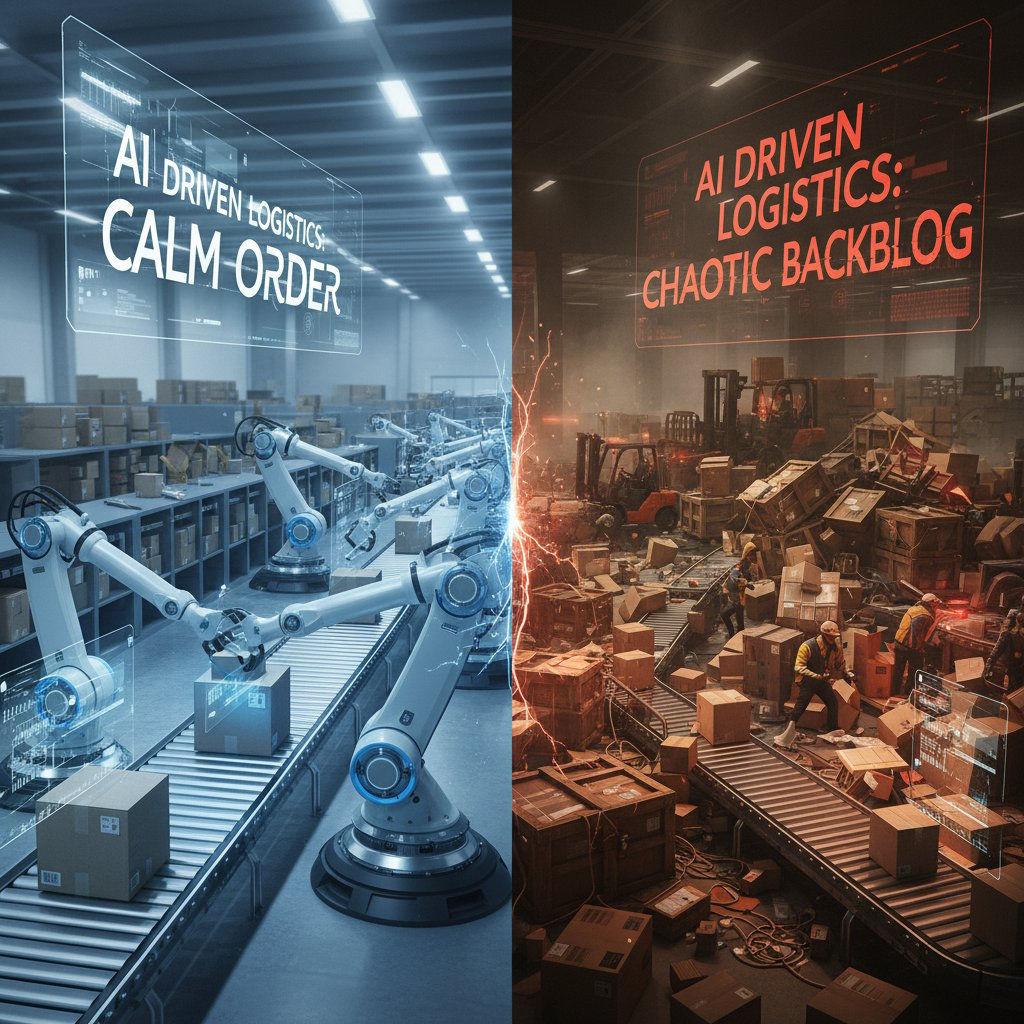
Both stories share a lesson: AI can supercharge good processes—or magnify existing weaknesses.
Lessons from the front lines
The most successful AI supply chain transformations share three traits: ruthless data hygiene, continuous measurement of AI benefits, and a culture that encourages humans to challenge the machine.
"We thought AI would give us certainty. Instead, it taught us to ask better questions." — Jasmine, operations lead (quote based on aggregated case study reports, IBM, 2024)
If your organization isn’t willing to interrogate its own data and decision-making flows, even the best AI system will disappoint.
How to know if your supply chain is ready for AI
Signs you’re stuck in the past
You might be clinging to the past if you’re still wrestling with versioned spreadsheets, reacting to crises instead of anticipating them, or finding that crucial supply chain data lives in a dozen disconnected systems. Other red flags: manual double-entry, persistent stockouts, and recurring “fire drills” triggered by the unexpected.
Hidden benefits of ai-driven automated supply chain analysis experts won't tell you:
- Uncovering previously invisible inefficiencies and shadow costs
- Elevating staff roles from “firefighters” to strategic analysts
- Rapid scenario modeling for risk mitigation
- Real-time responsiveness to market shocks
- Democratizing access to insights across departments
It’s not just about automation—it’s about unleashing a level of visibility and agility that manual methods can’t touch.
Checklist: prepping for AI transformation
- Centralize and clean your data: Unify disparate sources and eliminate duplicates.
- Assess your current workflows: Identify high-impact areas for automation.
- Build a cross-functional team: Blend operations, IT, and business expertise.
- Invest in upskilling: Prioritize data literacy and change management.
- Pilot before scaling: Start with a contained, measurable use case.
- Establish feedback loops: Continuously refine models with frontline input.
- Set clear KPIs: Define what success looks like in concrete, measurable terms.
Take a hard look at where you stand—and don’t sugarcoat the gaps. Honest self-assessment is the only way to avoid costly detours.
Avoiding the most common pitfalls
The biggest mistakes? Ignoring data quality, underinvesting in training, and expecting instant results. Many companies also underestimate the complexity of integrating AI with existing tools. For those navigating these complexities, tapping into expert communities at platforms like futuretask.ai can help shortcut the learning curve with unbiased insights and proven frameworks. Remember, AI is a means—not an end.
Beyond logistics: surprising ways AI supply chain analysis is changing the world
Cross-industry shockwaves
AI-driven supply chain analysis isn’t just reshaping warehouses and cargo routes. In healthcare, hospitals are now using AI to forecast shortages of critical supplies—like ventilators or PPE—weeks in advance, averting crises before they hit. Heavy industries deploy AI for predictive maintenance, dramatically reducing costly downtime. The food sector leverages AI analytics for real-time freshness monitoring, slashing waste and boosting transparency from farm to fork.

These are not pie-in-the-sky experiments. They’re daily realities, redefining what’s possible far beyond traditional logistics.
Societal impacts: jobs, trust, and transparency
AI doesn’t just change workflows—it transforms roles. While some repetitive jobs shrink, new roles emerge: AI model trainers, data quality analysts, and supply chain scenario planners. Transparency improves, as AI tracks every widget and widget-mover in real time, exposing inefficiencies and building trust with customers and partners.
| Role | Emerging/Declining | Description |
|---|---|---|
| Data Quality Analyst | Emerging | Ensures AI models are trained on clean data |
| AI Model Trainer | Emerging | Fine-tunes algorithms to fit supply chain needs |
| Manual Data Entry Clerk | Declining | Redundant as automation expands |
| Scenario Planner | Emerging | Designs “what-if” simulations for risk |
| Inventory Controller | Shifting | Focus moves from counting to strategy |
Table 3: AI-driven supply chain jobs—roles emerging, roles declining
Source: Original analysis based on IBM, 2024, MDPI, 2024
Unconventional uses nobody talks about
- AI-powered carbon tracking for circular economy initiatives
- Real-time supplier risk scoring to fight forced labor in global networks
- Automated recall management in food safety crises
- On-the-fly language translation for cross-border logistics
- Dynamic rerouting of humanitarian aid during natural disasters
Innovation often bubbles up at the edges. These “weird” pilots can become tomorrow’s standard practice.
The darker side: controversies and uncomfortable questions
When AI goes too far: surveillance, bias, and privacy
Not all outcomes are rosy. As warehouses bristle with cameras and sensors, AI’s surveillance capabilities raise thorny privacy questions. Employees voice concerns about over-monitoring, while customers worry about data misuse. Bias in models—whether due to skewed historical data or overt prejudice—can entrench inequalities, leading to unfair supplier treatment or denying opportunities to marginalized groups.
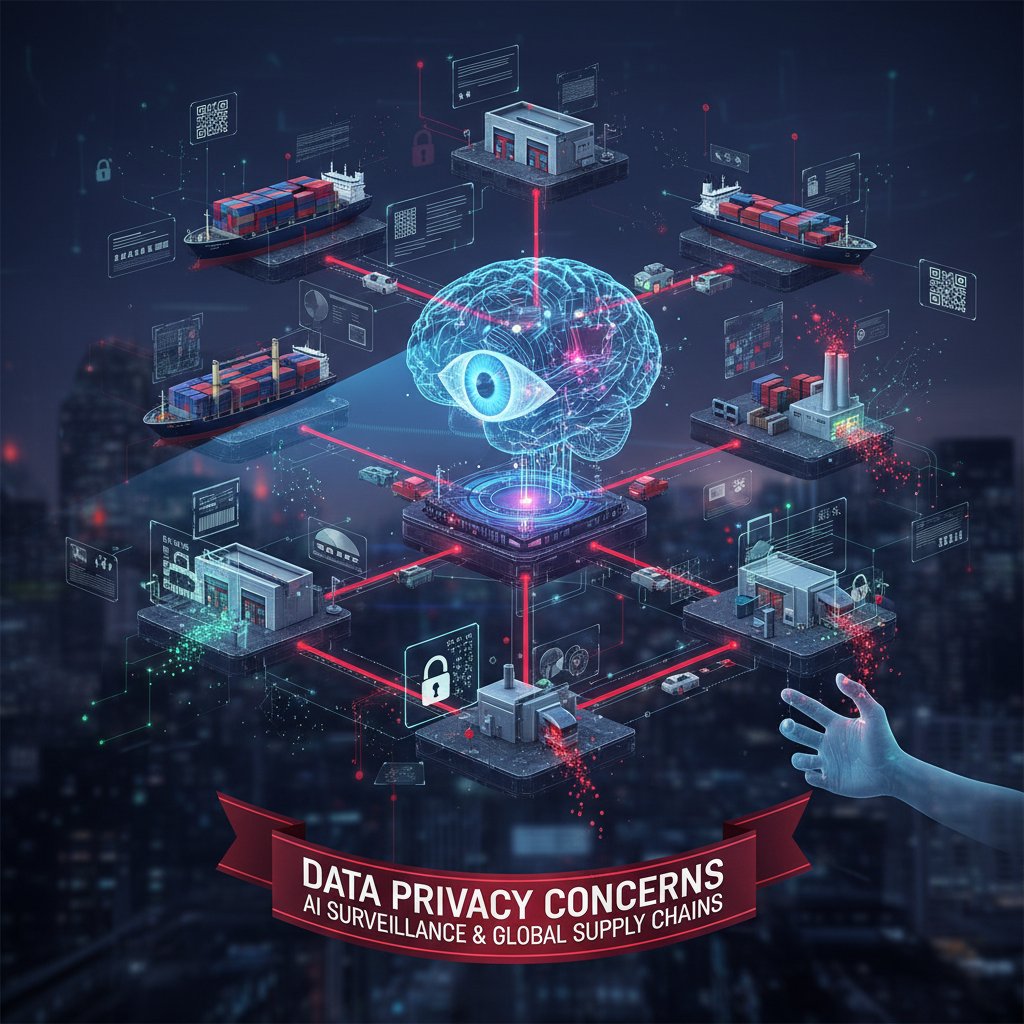
Ignoring these issues isn’t an option; confronting them head-on is the price of progress.
Vendor lock-in and the illusion of choice
Choosing an AI vendor is rarely a reversible decision. Once your data and workflows are deeply embedded, switching can mean prohibitive costs and lost momentum.
When a company becomes dependent on a single AI provider, making it difficult and expensive to switch vendors, often due to proprietary data formats or integrations.
The state where AI systems’ decision-making processes are so complex they’re effectively a “black box,” limiting transparency and accountability.
These aren’t just technical gotchas—they’re business risks that can undermine flexibility and negotiating power for years.
Can AI-driven analysis ever be truly fair?
Despite progress, perfectly fair AI remains elusive. Complex global supply chains involve messy realities: incomplete data, shifting regulations, and cultural nuances that resist easy modeling. Critics argue that as long as AI is trained on imperfect history, it will struggle to deliver perfectly equitable outcomes. Current debates rage on, with some champions calling for open-source models and algorithmic audits as a counterbalance.
Making it work: actionable strategies for real-world AI supply chain success
Step-by-step guide to getting started
- Map your supply chain flows: Understand every node, handoff, and risk point.
- Centralize your data: Pool operational, supplier, and customer data in a single platform.
- Cleanse and validate: Root out bad data before it sabotages your models.
- Select a pilot project: Choose a narrow, high-impact use case for initial AI deployment.
- Build buy-in and train teams: Invest in education and transparency.
- Launch, measure, iterate: Monitor results, collect feedback, and refine models.
- Scale with discipline: Expand only after demonstrating clear ROI.
Pilots, feedback loops, and trust-building aren’t optional—they’re the backbone of successful transformation.
Choosing the right partners and platforms
Evaluation criteria go beyond glossy demos. Look for providers with a track record in your industry, open data standards, and strong support for integration. Avoid black-box solutions that can’t explain their decisions. For unbiased platform discovery—especially if you want to avoid vendor lock-in—resources at futuretask.ai can ground your search in real-world needs, not just marketing spin.
| Feature | Provider A | Provider B | Provider C | FutureTask.ai |
|---|---|---|---|---|
| Real-time Analytics | ✓ | ✓ | ✗ | ✓ |
| Open Data Standards | ✓ | ✗ | ✓ | ✓ |
| Custom Workflow Support | ✓ | ✓ | ✗ | ✓ |
| Transparent Algorithms | ✗ | ✓ | ✓ | ✓ |
| Industry Expertise | ✓ | ✓ | ✓ | ✓ |
| Vendor Lock-in Risk | High | Medium | Medium | Low |
Table 4: Feature matrix—comparing top AI supply chain platforms (2025)
Source: Original analysis based on vendor documentation and verified case studies
Measuring what matters: KPIs and ongoing optimization
Don’t drown in vanity metrics. The KPIs that move the needle in ai-driven automated supply chain analysis are: reduction in stockouts, forecast accuracy, lead time compression, and cost-to-serve. Continuous improvement is mandatory: the landscape moves fast, and yesterday’s model can become tomorrow’s liability. The best organizations treat AI as a living system, always learning, always optimizing.
The future: what’s next for ai-driven automated supply chain analysis
Emerging trends to watch
The present isn’t standing still. AI is colliding with the Internet of Things (IoT), blockchain, and edge computing, building supply chains that are more transparent, traceable, and responsive than ever. Warehouses now bristle with collaborative robots, drones handle last-mile delivery, and blockchain logs every transaction for accountability.
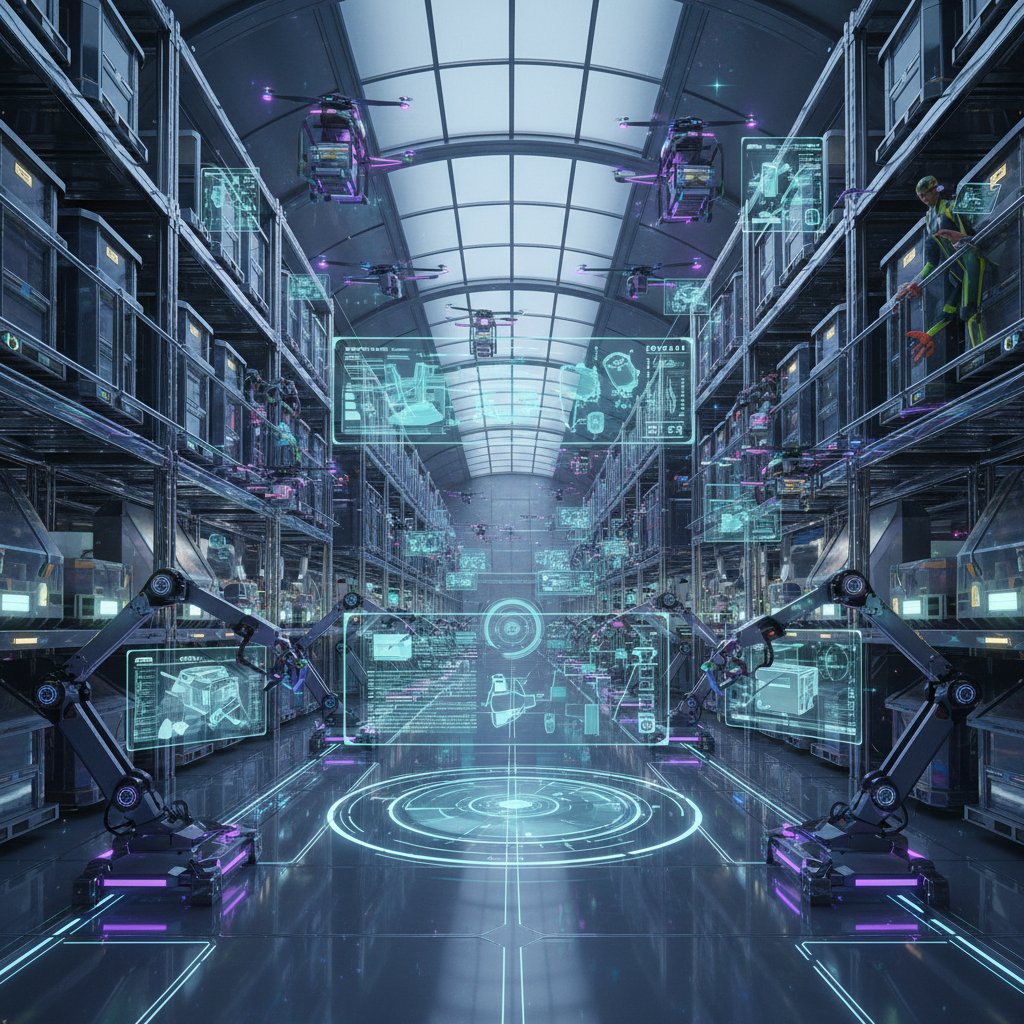
The convergence is not about buzzwords—it’s about surviving and thriving in a world where shocks can come from anywhere, at any time.
Predictions for the next five years
- Universal data lakes replace siloed systems: Real-time visibility for all stakeholders.
- AI-driven scenario planning becomes routine: Organizations regularly stress-test against “black swan” events.
- Supply chain roles become hybrid: Humans and AI operate in tight tandem, blending intuition and analytics.
- Environmental and ethical metrics become standard: AI tracks carbon, waste, and sourcing for compliance.
- Democratization of AI tools: Small businesses access the same analytical firepower as multinationals.
The implications for global commerce are profound: agility and transparency become the baseline, not the aspiration.
How to future-proof your supply chain now
Resilience isn’t a one-off project; it’s a mindset. Start by building digital literacy across your teams, investing in flexible platforms, and challenging sacred cows. The only certainty is that change will keep coming. Platforms like futuretask.ai exist to support continuous learning and adaptation, connecting you with the expertise and frameworks you need to stay ahead of the curve.
Let’s get honest: the path to ai-driven automated supply chain analysis is packed with pitfalls, but the organizations willing to confront brutal truths—and act boldly—are rewriting the rules of global trade.
Sources
References cited in this article
- IBM(ibm.com)
- Bestarion(bestarion.com)
- Market.us(market.us)
- Forbes(forbes.com)
- KPMG(kpmg.com)
- CDOTimes(cdotimes.com)
- Harvard Business Review(hbr.org)
- ZipDo(zipdo.co)
- GlobeNewswire(globenewswire.com)
- Georgetown Journal(gjia.georgetown.edu)
- Trackonomy.ai(trackonomy.ai)
- Inbound Logistics(inboundlogistics.com)
- Forbes(forbes.com)
- World Economic Forum(weforum.org)
- Auburn University(harbert.auburn.edu)
- Gartner(gartner.com)
- DigitalDefynd(digitaldefynd.com)
- MarketsandMarkets(marketsandmarkets.com)
- Kings Research(kingsresearch.com)
- RFIDJournal(rfidjournal.com)
- SPD Technology(spd.tech)
- KPMG(kpmg.com)
- MIT CTL(ctl.mit.edu)
- Purolator(resources.purolator.com)
- ResearchGate(researchgate.net)
- ScienceDirect(sciencedirect.com)
- Springer(link.springer.com)
Automate Your Tasks, Transform Your Business
FutureTask.ai revolutionizes your workflow by automating complex tasks typically outsourced to freelancers and agencies. Our powerful AI-driven platform leverages cutting-edge LLM technology to deliver precision, speed, and consistency at scale. Whether you're managing content creation, data analytics, marketing campaigns, or customer support, FutureTask.ai ensures seamless task execution, significant cost savings, and unmatched efficiency. Transform your business operations, eliminate delays, reduce operational overhead, and gain a competitive advantage with intelligent automation.
Get startedReady to Automate Your Business?
Start transforming tasks into automated processes today
Frequently Asked Questions
What percentage of CEOs say fragmented data is the biggest barrier to AI adoption in supply chains?
According to IBM's 2024 Global Supply Chain Report cited in the article, 72% of CEOs admit that fragmented, poor-quality data is the biggest barrier to bringing AI into their supply chain operations.
How did the COVID-19 pandemic expose weaknesses in traditional supply chains?
The pandemic revealed that traditional supply chain models, which were optimized for cost but brittle under pressure, crumbled when faced with cascading disruptions, leading organizations to recognize AI adoption as a survival imperative rather than a optional enhancement.
Why has AI adoption in supply chains accelerated since the pandemic?
AI adoption has accelerated because it is no longer viewed as a 'nice-to-have' but as a survival imperative, with organizations moving from analog chaos toward data-driven orchestration to gain competitive advantages and avoid obsolescence.
What consequences occur when supply chain data is scattered across systems?
When data is scattered, decisions become slower, risks increase, and the costs of being caught off guard multiply, according to the article.
From the Archive
Explore more from Ai-powered task automation

How AI-Powered Logistics Optimization Is Reshaping Supply Chains

AI Logistics Automation: the Costs, Benefits, and Operational Reality

AI-Driven Automated Inventory Analysis: Benefits, Risks, and Impact

Ai-Powered Automated Demand Planning: How It Transforms Supply Chains

Ai-Powered Supply Chain Optimization: Market Growth and Business Impact
