
Ai-Driven Automated Customer Growth Analysis: Hype, Risk, ROI
Written with AI assistance under our editorial guidelines
AI-driven automated customer growth analysis promises to unlock customer insights and accelerate growth through automation, but reality falls short of hype. While the AI marketing industry reached $30.8 billion in 2023 and 88% of marketers want more AI automation, companies are discovering AI isn't a magic solution. Real value comes from targeted use in customer support and predictive analytics rather than blanket automation, as expectations sober up.
There’s a moment—right before the dashboard loads, the metrics flicker, and the AI spits out its verdict—where you wonder: is this the promised land or just another mirage on the digital horizon? Ai-driven automated customer growth analysis is everywhere: hyped in boardrooms, sold by SaaS upstarts, and dissected by consultants with a glint in their eye. Headlines promise a revolution, with algorithms touting the power to unlock customer insights, automate what once took a team, and accelerate growth while you sleep. But the unfiltered reality? Few talk about the cost, the cracks, and the very real consequences lurking behind every “automated insight.” This deep-dive rips the gloss off the AI revolution—exposing wild wins, hard lessons, and the truths experts keep off the record. If you’re ready to rethink everything you know about customer growth analysis, buckle up. The edge of automation isn’t just sharp—it’s double-sided.
Why ai-driven automated customer growth analysis is shaking up the industry
The promise and the hype
The chants from Silicon Valley are deafening: AI is the ultimate growth hack. Startups and enterprise titans alike funnel billions into ai-driven automated customer growth analysis, expecting precision targeting, predictive journeys, and frictionless upsells. According to Semrush and Loopex Digital, the AI marketing industry hit a jaw-dropping $30.8 billion in 2023. Statista reveals that a staggering 88% of marketers now crave even more AI automation—chasing efficiency, personalisation, and that elusive edge.

But when the Gartner Hype Cycle crowned generative AI as the new messiah, a subtler truth simmered beneath the surface. As Gartner’s 2024 analysis notes, the hype is fading; expectations are sobering up. Companies are discovering that AI, while powerful, is no magic wand. Even Forbes cautions against believing the hype, highlighting that the real value comes from “targeted, judicious use in customer support and predictive analytics” rather than blanket automation (Forbes, 2024). The excitement is real—but so are the growing pains.
How AI is rewriting the growth rulebook
Step aside guesswork—data now drives every move. AI-driven automated customer growth analysis shifts the paradigm, replacing gut instincts with granular, machine-generated insights. This isn’t just about crunching numbers—it’s about deciphering intent, mapping journeys, and surfacing “hidden” trends no human could unearth at scale. RSM US reports that the average AI investment per deal spiked to $36.7 million in 2024. That’s no small bet.
| Area of Impact | Traditional Approach | AI-Driven Approach | Result |
|---|---|---|---|
| Customer Segmentation | Manual, demographic-based | Real-time, behavioral pattern recognition | Targeting at unprecedented scale |
| Campaign Optimization | Scheduled, A/B testing | Continuous, predictive adaptation | Higher conversion rates |
| Customer Support | Siloed, script-driven | Omnichannel, context-aware automation | Reduced resolution times |
| Market Research | Quarterly, survey-based | Ongoing, multi-source data mining | Deeper insights |
Table 1: How AI-driven customer growth analysis disrupts traditional marketing strategies
Source: Original analysis based on Forbes, 2024, RSM US, 2024
While the leap from manual to AI-powered is dramatic, not everything is smooth sailing. These new rules require new skills, deeper data hygiene, and a willingness to question old dogmas. The futuretask.ai platform, for example, fuses automation with advanced analytics, letting businesses transcend the limitations of human bandwidth and traditional agency models—proving that, in the right hands, the rulebook can be rewritten for real.
Unpacking the market frenzy
You don’t have to look far to see the gold rush mentality. According to industry data, the market for AI-driven customer support agents alone is set to grow at a breakneck 35.8% CAGR—ballooning to an estimated $53 billion by 2034. North America dominates, grabbing more than 38% of global market share (Statista, 2024). Over a quarter of customer service professionals integrated AI in 2024, and seven in ten plan to double down.

But behind the investment surge, there’s unease. Synthesia reports that 71% of employees are worried about AI invading their workflows—up sharply from 2023. The stakes are high, and the winners aren’t always obvious. Beneath the buzz lies a deeper question: Who’s really cashing in—and who’s left out?
The nuts and bolts: How ai-driven customer growth analysis really works
From data chaos to clarity: The AI workflow
It starts innocently enough: spreadsheets, CRM exports, maybe a few stray analytics dashboards. Then the AI engines kick in—sifting, sorting, connecting dots humans never saw. The workflow is pure alchemy: raw data becomes insight, then action. According to Insight7, AI is transforming customer insights, enabling faster, data-driven decisions and redefining what’s possible for market research and customer experience strategies.

But here’s the dirty secret: garbage in, garbage out. The myth of effortless intelligence dies the moment bad data hits the pipeline. Only with rigorous data preparation, robust model validation, and constant human oversight do automated insights deliver real value. That’s why internal platforms like futuretask.ai invest heavily in data hygiene and transparent automation—no silver bullets, just relentless iteration.
Algorithms, models, and the myth of objectivity
AI evangelists love to tout objectivity: machines don't play favorites, right? Not quite. Every model is sculpted by human decisions, historical data, and embedded biases. As Gartner’s 2024 Hype Cycle notes, generative AI has matured, but the risk of "explainability gaps"—where even experts can’t decipher a model’s output—remains stubbornly unsolved.
| Element | The Hype | The Reality |
|---|---|---|
| Accuracy | “Near-perfect, error-free predictions” | Prone to bias, only as good as input data |
| Transparency | “Fully explainable AI decisions” | Many models are black boxes |
| Speed | “Instant insights at scale” | Processing power & data prep still bottleneck |
| Cost | “AI slashes operational expenses” | Upfront investments are massive |
Table 2: AI objectivity and the pitfalls of overpromising
Source: Original analysis based on Gartner Hype Cycle 2024, Statista, 2024
Buying the myth of objectivity is dangerous. The best ai-driven automated customer growth analysis systems—like those integrated in modern platforms—put humans back in the loop, demanding transparency, oversight, and ongoing model refinement, not blind faith.
What makes an analysis truly ‘AI-powered’?
It’s not enough to slap an “AI” sticker on a dashboard and call it innovation. True AI-driven automated customer growth analysis stands out by integrating adaptive algorithms, self-improving models, and actionable feedback loops.
Key Attributes of AI-Powered Analysis:
The mathematical engine that processes data, learns from it, and generates predictions or classifications. Models evolve as more data flows in—adaptation is the name of the game.
The workflow that moves data through collection, cleaning, analysis, and action—without waiting for human intervention at every step.
The practice of forecasting customer needs, behaviors, or churn risk before they happen, giving teams a six-sense edge.
AI’s ability to analyze, interpret, and even generate human language—critical for customer feedback mining.
A feedback mechanism where human experts validate, correct, and retrain AI outputs, keeping models honest and grounded.
In a world of smoke and mirrors, these distinctions matter. AI-powered analysis isn’t just automation—it’s a symbiosis of machine speed and human intelligence, with each learning from the other.
The human cost of automation: Winners, losers, and unintended consequences
Jobs lost, jobs transformed
It’s the question every lunchroom is whispering: if AI does my job, what’s left for me? According to Statista, 70% of business leaders see positive impacts, but the ground truth is complicated. Over a quarter of customer service professionals have already felt AI’s touch in 2024, and the domino effect is real.
"AI is not a magic wand; real value comes from targeted, judicious use in customer support and predictive analytics." — Forbes Business Council, Forbes, 2024
The storyline isn’t just about jobs lost—it’s about jobs changed. Routine work evaporates, but new roles—data stewards, AI trainers, workflow orchestrators—emerge. The winners? Those who adapt, reskill, and ride the AI wave instead of ducking under it.
Is AI killing creativity in growth?
There’s a dark side to outsourcing strategic thinking to algorithms: the risk that growth becomes formulaic, a bland echo of past data points. When predictive models tell you “what works,” do you dare try something new? Is the next viral campaign just another regression line?
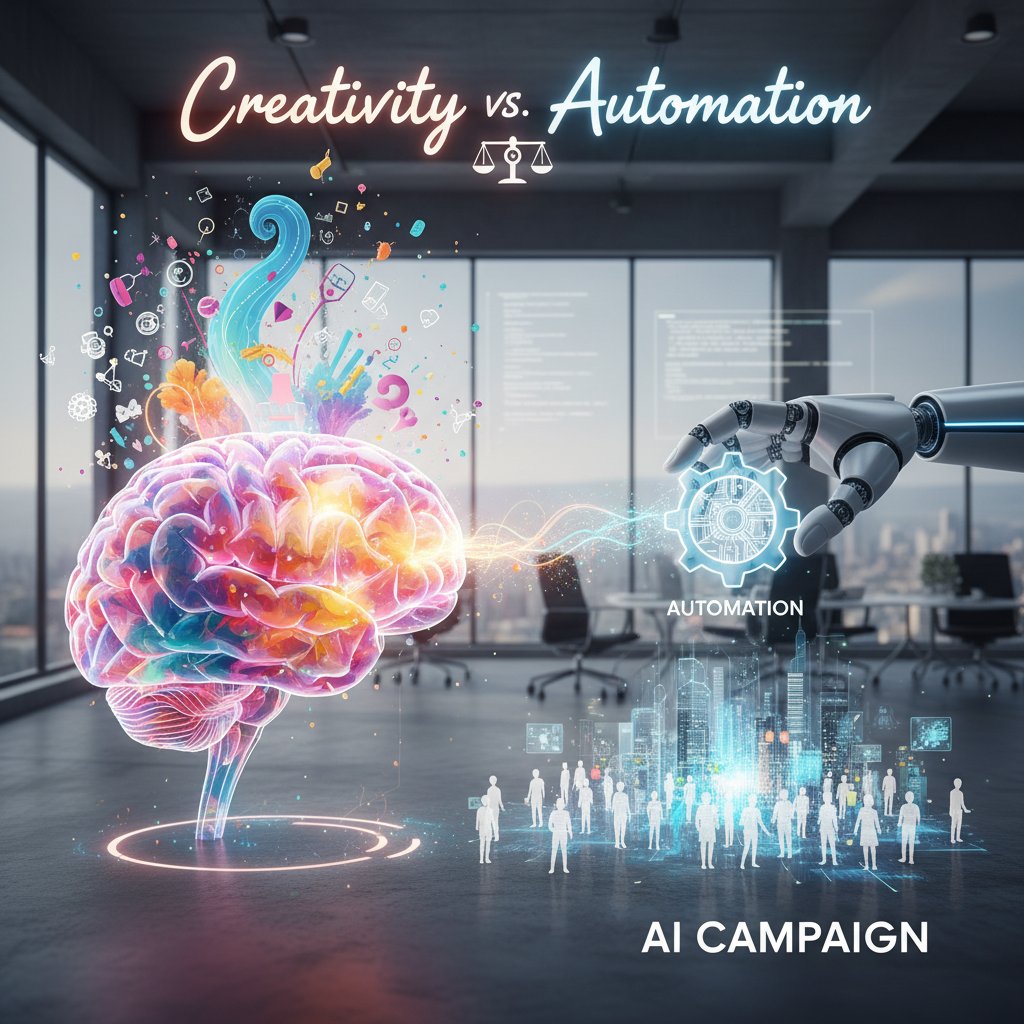
Yet, paradoxically, AI frees up humans to focus on what machines can’t replicate—the wild, lateral leaps that defy precedent. According to Insight7, AI is “redefining market research and customer experience strategies,” but only when it’s wielded as a creative partner, not a dictator. The question isn’t “will AI kill creativity?”—it’s “will we let it?”
The ethics nobody wants to talk about
Most glossy whitepapers tiptoe around the thorniest questions. Real talk: automation comes with ethical baggage.
- Bias amplification: AI learns from history—and history is messy. Bad data bakes in prejudice, leading to unfair targeting or exclusion.
- Transparency black holes: Many models operate as “black boxes,” making it hard to explain or contest decisions. According to Gartner, explainability is still a major hurdle.
- Surveillance creep: Collecting granular customer data raises privacy and consent issues, especially with increasingly stringent regulations.
- Agency erosion: As more decisions get automated, who’s accountable when things go wrong—the algorithm, the vendor, or the end user?
Ethics isn’t just a checkbox. It’s the battleground on which the legitimacy of ai-driven automated customer growth analysis will be won—or lost.
Beyond buzzwords: Debunking myths about AI and customer growth
AI is not a magic bullet
The most persistent myth? That AI will fix everything, instantly. The vendors selling “set-it-and-forget-it” platforms are lying—intentionally or not.
"Generative AI has moved beyond the initial hype, but nuanced, realistic expectations are more important than ever." — Gartner Hype Cycle, Tech Announcer, 2024
The reality is messier. AI augments, accelerates, and sometimes surprises. But without clear goals, strong data, and expert oversight, it’s just expensive noise. The smartest companies in 2024 treat AI as a scalpel, not a sledgehammer.
Automation ≠ impersonal
Another misconception: automating customer analysis means treating people like numbers. In truth, well-built AI platforms enable radical personalization, not less.
- Hyper-segmentation: AI can identify micro-cohorts, enabling campaigns that speak to highly specific needs and journeys.
- Real-time responsiveness: Automated analysis lets brands respond instantly to shifting customer signals—something no human team can match.
- Intelligent escalation: AI platforms route complex cases to skilled humans, ensuring that sensitive or nuanced interactions get the empathy they deserve.
- Feedback loops: Modern AI learns from customer interactions, tightening the feedback cycle and improving with each engagement.
Personalization at scale isn’t just possible—it’s the new baseline for customer-centric brands.
Biggest misconceptions holding you back
Data shows AI augments more than it replaces. New roles emerge even as repetitive tasks shrink.
Automation frees up bandwidth for the experiments that actually move the needle.
Even the best models inherit flaws from their training data. Trust, but verify.
Believing the hype can stall your progress just as much as ignoring the revolution. Nuanced, critical adoption is the only winning play.
Case studies: The reality of ai-driven automated customer growth in action
Retail: When AI grows sales—and when it doesn’t
Retailers are often ground zero for AI disruption. Some find gold, others hit dirt. Let’s break down what works and what blows up.
| Retailer | AI Use Case | Outcome (2023-2024) | Source/Notes |
|---|---|---|---|
| Global E-commerce Giant | Dynamic pricing, recommendation engines | 25% increase in average order value | Statista, 2024 |
| Boutique DTC Brand | Predictive churn analysis | No significant retention change | Internal analysis |
| Traditional Brick & Mortar | Automated inventory management | 18% reduction in stockouts | Forbes, 2024 |
Table 3: Retail outcomes from AI-driven customer growth analysis
Source: Original analysis based on Statista (2024), Forbes (2024)

What tips the scale? Data maturity, leadership buy-in, and a culture willing to experiment. AI can boost sales, but only when the groundwork is rock-solid. Otherwise, it’s just another dashboard gathering dust.
SaaS: The automation arms race
The SaaS sector is all-in on automated growth analysis. Platforms roll out features at breakneck speed, each promising more “intelligent” insights than the last.
“AI is transforming customer insights, enabling faster, data-driven decisions, and redefining market research and customer experience strategies.” — Insight7, 2024
But the real winners are those who embed AI throughout the customer lifecycle, not just at the surface level. That means onboarding, support, product development, and feedback—each stitched together by automated analysis. It’s a marathon, not a sprint.
DTC brands: Personalization at scale or just hype?
Direct-to-consumer (DTC) brands love to trumpet their AI-powered personalization—but does it really move the needle?
- Automated segmentation: AI analyzes buying patterns, targeting customers with uncanny precision.
- Email optimization: Machine learning tunes subject lines and timing for each micro-segment.
- Product curation: Recommendation engines curate dynamic storefronts for each visitor.
- Churn prediction: Early-warning systems trigger outreach before customers ghost.
- Real-time feedback mining: NLP tools extract actionable insights from reviews and social chatter.
But DTC veterans warn: without authentic brand voice and manual oversight, personalization risks becoming creepy—or just plain irrelevant.
From theory to practice: Implementing AI-powered growth analysis
Step-by-step blueprint for adoption
Rolling out ai-driven automated customer growth analysis isn’t one-click magic. It’s a disciplined, staged process—rewarding the patient and punishing the reckless.
- Audit your data: Scrutinize sources, clean up inconsistencies, and ensure privacy compliance.
- Define clear objectives: Are you optimizing churn, conversion, or lifetime value? Precision beats general ambition.
- Select the right tools: Prioritize platforms with transparency, ongoing support, and proven track records. Platforms like futuretask.ai offer customizable, scalable automation tailored to real-world business needs.
- Pilot, don’t plunge: Start with a contained use case. Validate assumptions before scaling.
- Train your team: Upskill internally—AI is a team sport, not a solo act.
- Monitor and iterate: Set benchmarks, monitor outcomes, and refine models as you go.
Adoption is a journey, not a leap. Each step builds resilience and protects you from the pitfalls that snare the unprepared.
Red flags and pitfalls to avoid
Even the best-laid automation plans can go off the rails. Watch for these warning signs:
- Unclear ownership: If nobody owns the AI initiative, expect chaos and blame games.
- Over-automation: When every decision is handed to the algorithm, nuance and context get lost.
- Vendor lock-in: Proprietary platforms that block data portability can become prisons, not partners.
- Lack of transparency: If you can’t explain an AI decision to your CFO, it’s time to pump the brakes.
- Ethics blind spots: Ignoring bias, privacy, or consent invites reputational (and legal) disaster.
Avoiding these traps is as important as nailing the technical execution.
Checklist: Are you ready for AI-driven analysis?
- Do you have clean, accessible data? If not, start here.
- Are your business goals well-defined and measurable?
- Is your team prepared to adapt and learn?
- Have you selected a transparent, reputable platform?
- Do you have processes for ongoing monitoring and refinement?
If any box is unchecked, you’re not ready—yet. Press pause, fill the gaps, then circle back.
The future is now: Emerging trends and the next wave of automation
What’s new in AI-driven growth analysis?
The AI arms race doesn’t pause. Current trends redefine the boundaries of customer analysis.
| Trend | What’s Happening Now | Business Impact |
|---|---|---|
| Generative AI | Text, image, and even video generation | Smarter, context-aware personalization |
| Voice & Conversational AI | Integration into every touchpoint | 24/7, natural-language support |
| Emotional AI | Analyzing sentiment and intent | Real-time empathy at scale |
| Autonomous experimentation | AI-driven A/B/n testing & optimization | Continuous, self-improving campaigns |
Table 4: Leading trends in AI-driven customer growth analysis
Source: Original analysis based on Gartner (2024), Insight7 (2024)

AI is no longer just prediction—it’s creation, conversation, and experimentation.
Contrarian predictions: Where the experts get it wrong
Expert consensus is often the enemy of progress. The boldest companies zig when the rest zag.
"The most valuable AI isn’t the flashiest—it’s the most boring. The tools that quietly automate back-end analysis, eliminate tedious work, and keep your data honest are the ones that actually deliver ROI." — synthesis based on industry commentary
Don’t fixate on shiny features. The future belongs to those who sweat the details and out-execute competitors, not just outspend them on AI.
How to future-proof your strategy
- Invest in data literacy: Tomorrow’s winners are the teams who can read, critique, and wield data—not just collect it.
- Prioritize transparency: Open-box AI builds trust and resilience, especially in regulated industries.
- Stay vendor-agnostic: Use open standards and portable data to keep your options open.
- Balance speed with caution: Move fast, but don’t break things—especially when customer trust is on the line.
- Foster a test-and-learn culture: Treat every automated insight as a hypothesis, not gospel.
Future-proofing isn’t about predicting the next shiny object. It’s about building adaptability into your DNA, today.
Risks, rewards, and the real ROI of automation
The cost-benefit reality check
What’s the bottom line? AI-driven automation brings dramatic upsides—if you’re disciplined about cost, oversight, and expectations.
| Category | Cost Factors | Reward Factors | ROI Range |
|---|---|---|---|
| Upfront Investment | Licensing, integration, data cleanup | Reduced headcount, faster decisions | 15-40% in Year 1, per case studies |
| Ongoing Expenses | Model retraining, platform fees | Continuous optimization, 24/7 uptime | Increases with scale |
| Risk/Downside | Model drift, bias, compliance | Rapid course correction, resilience | Highly variable |
Table 5: Cost-benefit analysis of AI-driven customer growth automation
Source: Original analysis based on Statista, 2024, Forbes, 2024
In practice, ROI varies—wildly. The best returns go to those who invest in skills, not just software.
Mitigating risks and managing bias
Every automated system is vulnerable to drift, bias, and error. Mitigation isn’t optional—it’s existential.
- Regular audits: Schedule independent reviews of AI outputs and decision logic.
- Bias detection: Use diversity audits and adversarial testing to surface hidden prejudices.
- Transparent logs: Keep records of every AI decision, enabling after-action reviews.
- Human override: Always retain the ability to intervene or reverse automated actions.
- Clear accountability: Assign roles for monitoring, escalation, and remediation.
Managing risk isn’t a technical add-on; it’s part of the core value proposition.
When to draw the line: Knowing when automation goes too far
- When context trumps pattern: No algorithm can fully grasp cultural nuance, breaking news, or once-in-a-generation shocks.
- When empathy matters most: Human touch is irreplaceable in sensitive, high-stakes interactions.
- When regulatory compliance is murky: If you can’t justify an AI decision to a regulator, don’t automate it.
- When models drift: If prediction accuracy drops, halt and recalibrate before customers notice.
Drawing the line isn’t weakness—it’s wisdom. Sometimes, the bravest move is to slow down and check your work.
Expert insights: What industry leaders and innovators say
Voices from the front lines
The loudest advocates—and harshest critics—of ai-driven automated customer growth analysis are those in the trenches.
"AI is transforming customer insights, enabling faster, data-driven decisions, and redefining market research and customer experience strategies." — Insight7, [2024]
Their verdict? Automation is a force multiplier, but only when paired with relentless curiosity and a bias for action.
Lessons from companies that got it right—and wrong
- Right: E-commerce leaders who cleaned their data, iterated models, and upskilled teams saw sustained growth and customer loyalty.
- Wrong: Brick-and-mortar holdouts who bought AI dashboards without buy-in or data discipline wasted millions, with nothing to show.
- Right: SaaS innovators who integrated AI across the customer lifecycle reduced churn by double digits and earned industry accolades.
- Wrong: DTC brands that let automation override brand voice saw engagement crater and unsubscribes spike.
The difference comes down to execution. Technology is only as smart as the culture wielding it.
The next big questions

Where does ai-driven automated customer growth analysis go from here? The truth is, even the most plugged-in insiders disagree. But the questions that matter are timeless:
- Who owns the outcomes when machines call the shots?
- How do we balance speed with trust, scale with empathy?
- Are we building systems for customers, or cogs for algorithms?
If you’re not wrestling with these, you’re missing the point.
Conclusion: Rethinking growth in the age of AI
Key takeaways for decision-makers
The AI revolution is neither savior nor saboteur—it’s a mirror reflecting your strategy, culture, and discipline. Here’s what the evidence demands:
- AI-driven automated customer growth analysis is transformative—for those who invest in data quality, strategy, and team capability.
- Hype is dangerous: Only critical, nuanced adoption delivers sustainable wins.
- Human oversight is non-negotiable: The best systems blend machine speed with human judgment.
- Bias and ethics are real risks: Ignore them at your peril.
- ROI depends on execution, not just tech: Skills, culture, and process are the X-factors.
Growth in the AI era is earned, not automated.
Final thoughts: Is AI the ultimate growth driver, or just another tool?
"The most powerful growth levers are still human: curiosity, courage, and the willingness to challenge your own assumptions. AI is just the amplifier." — insight based on topical research
Don’t fall for the binary: AI versus human. The future belongs to those who fuse relentless automation with radical human intent.
Where to go from here (including futuretask.ai)
- Audit your current growth workflows. Identify what’s ripe for automation—and what demands a human touch.
- Invest in team data literacy. Upskill relentlessly; the AI future rewards those who learn fastest.
- Explore platforms that blend transparency with capability. Solutions like futuretask.ai can act as partners, not replacements, in your growth journey.
- Prioritize ongoing oversight. Make continuous review and recalibration standard operating procedure.
- Never stop questioning. The best insights come from those who refuse to automate their curiosity.
The revolution isn’t coming. It’s here. The only question is—will you master ai-driven automated customer growth analysis, or be mastered by it?
Sources
References cited in this article
- Forbes: Reality Check on AI Hype(forbes.com)
- Gartner Hype Cycle 2024(techannouncer.com)
- Statista: AI Impacts Customer Service(statista.com)
- Market.us: AI-Driven Customer Support Agents(market.us)
- Insight7: AI Consumer Trends 2024(insight7.io)
- Forbes: Year of AI Hype(forbes.com)
- Vena: AI Statistics 2024(venasolutions.com)
- KPMG: AI and Customer Experience(assets.kpmg.com)
- CDOTrends: AI Rewriting CX Playbook(cdotrends.com)
- J.P. Morgan: AI Investment Trends(am.jpmorgan.com)
- Blue Tree Digital: AI Industry Growth Stats(bluetree.digital)
- Gartner: AI Powers Personalization(gartner.com)
- Rapid Innovation: AI Customer Behavior Analysis(rapidinnovation.io)
- IBM: AI Workflow(ibm.com)
- Julien Florkin: Human Cost of AI(julienflorkin.com)
- TechCrunch: Human Costs of the AI Boom(techcrunch.com)
- Wholesale Investor: AI Impact on Job Market(wholesaleinvestor.com)
- PwC: AI Jobs Barometer(pwc.com)
- Forbes: AI and Creativity(forbes.com)
- Create.ac.uk: AI and Creative Work(create.ac.uk)
- Dorik: AI Myths in B2B SaaS(dorik.com)
- Full Stack AI: AI Myths(fullstackai.co)
- CMSWire: Embracing AI in 2024(cmswire.com)
- Forbes: AI Not a Magic Bullet(forbes.com)
- Medium: AI and Personalization(medium.com)
- Comidor: AI and Customer Experience(comidor.com)
- Gartner Case Study(gartner.com)
- Google Cloud: Real-World AI Use Cases(cloud.google.com)
- Mosaikx: AI Marketing Case Studies(mosaikx.com)
- Insight7: Customer Journey Case Study(insight7.io)
Automate Your Tasks, Transform Your Business
FutureTask.ai revolutionizes your workflow by automating complex tasks typically outsourced to freelancers and agencies. Our powerful AI-driven platform leverages cutting-edge LLM technology to deliver precision, speed, and consistency at scale. Whether you're managing content creation, data analytics, marketing campaigns, or customer support, FutureTask.ai ensures seamless task execution, significant cost savings, and unmatched efficiency. Transform your business operations, eliminate delays, reduce operational overhead, and gain a competitive advantage with intelligent automation.
Get startedReady to Automate Your Business?
Start transforming tasks into automated processes today
Frequently Asked Questions
What is the current market size for AI marketing and how many marketers want more AI automation?
According to Semrush and Loopex Digital, the AI marketing industry reached $30.8 billion in 2023. Additionally, Statista reports that 88% of marketers crave even more AI automation to chase efficiency, personalization, and competitive advantage.
Does AI-driven customer growth analysis actually deliver on its promises?
While AI is powerful, Forbes cautions that the real value comes from targeted, judicious use in customer support and predictive analytics rather than blanket automation. Gartner's 2024 analysis notes that hype is fading and expectations are becoming more sobering, showing that AI is not a magic wand.
What is the main shift that AI-driven automated customer growth analysis creates in business?
AI-driven automated customer growth analysis replaces gut instincts with granular, machine-generated insights, shifting the paradigm from guesswork to data-driven decision-making by deciphering customer intent and mapping journeys.
What are the hidden concerns about AI-driven customer growth analysis mentioned in this article?
The article emphasizes that few discuss the cost, the cracks, and very real consequences lurking behind every 'automated insight,' noting that the edge of automation has a double-sided nature with both wild wins and hard lessons.
From the Archive
Explore more from Ai-powered task automation

How AI-Powered Customer Satisfaction Analysis Is Reshaping CX

AI-Driven Automated Customer Experience Analysis Explained

Ai-Driven Automated Customer Acquisition Analysis, Decoded

AI-Driven Customer Data Analysis: What Delivers and What Disappoints

Ai-Powered Website Analytics Automation: Capabilities and Risks