AI-Driven Automated Inventory Analysis: Wins, Risks, and Who Loses
Written with AI assistance under our editorial guidelines
AI-driven automated inventory analysis addresses the $1.1 trillion annual cost of inventory inaccuracies by providing real-time tracking and intelligent forecasting beyond manual spreadsheets. However, implementation carries significant risks including team disruption and rollout failures that deserve scrutiny alongside genuine operational gains early adopters report.
If you think ai-driven automated inventory analysis is just another overhyped tech fad, you’re not paying attention—or you’re already being outmaneuvered. Right now, businesses worldwide are waking up to a brutal truth: the old way of counting boxes, chasing spreadsheets, and praying your forecasts don’t implode is bleeding profits in broad daylight. AI inventory analysis isn’t “coming”—it’s here, it’s ruthless, and it’s rewriting the rules for anyone who moves physical goods. But beneath the glossy pitches and dystopian headlines, most people miss the real story: the risks that can sink a rollout, the sneaky ways automation changes teams, and the odd, untold wins only the early adopters talk about behind closed doors. This deep dive rips open the reality of ai-driven automated inventory analysis—warts, wonders, and what it really means to be on the cutting edge (or the chopping block).
Why inventory chaos still rules—and how AI plans to break it
The hidden costs of old-school inventory management
Let’s drop the nostalgia: legacy inventory management is a silent, slow-motion disaster. Manual record-keeping, fragmented processes, and human error leak money and trust every day. According to recent studies, inventory inaccuracies cost businesses worldwide over $1.1 trillion annually—often invisible, rarely discussed, but always eating at your bottom line. Each missed count, every stockout or overstock, and each hour spent reconciling errors with a calculator is a quiet financial bleed. In 2025, even digitized spreadsheets—once a beacon of progress—can’t keep up. The pace of e-commerce, omnichannel, and global supply chains means a single mistake can snowball into lost sales, ruined reputations, and spiraling costs. According to the JKLST Journal, 2023-24, poor demand forecasting and slow manual processes remain root causes for inventory chaos.

Let’s get honest: digital doesn't equal intelligent. Even the prettiest Excel dashboards can’t predict a viral TikTok trend, a supply chain shock, or a sudden regulatory clampdown. And every time a staffer hacks together a workaround (“just this once”), they create another blind spot for tomorrow’s disaster. In today’s landscape, the cost of inertia is rising—fast.
The promise (and peril) of AI-driven automation
Enter the seductive pitch: ai-driven automated inventory analysis promises to turn chaos into clarity. Think real-time tracking; algorithms that learn your business better than any human; dynamic stock levels that update by the minute; and demand forecasts that sniff out patterns no manager could spot. On paper, AI inventory management is the holy grail—accuracy rates over 90%, massive cuts in holding costs and stockouts, and happier customers all around. According to a Medium/Shopify Study, 2023-24, AI-driven forecasting trounces traditional models by a wide margin.
But here’s the reality check: most failures don’t happen because the tech is bad, but because the implementation feeds AI the same old chaos—dirty data, siloed systems, and undertrained staff. When hype meets half-truths, the fallout isn’t just technical: it’s cultural, financial, and sometimes existential. As one supply chain analyst recently put it:
"AI is only as good as the chaos you feed it." — Jordan, supply chain analyst, ResearchGate, 2024
Unpacking ai-driven automated inventory analysis: what it really means
Beyond the buzzwords: technical anatomy of AI inventory analysis
So what’s under the hood, really? Ai-driven automated inventory analysis fuses machine learning (ML), computer vision, and a hive of IoT sensors. ML algorithms digest historical sales, supply fluctuations, and external events, building predictive models that get sharper with every transaction. Computer vision automates counting—using cameras to track product flow and spot anomalies invisible to the human eye. IoT sensors feed real-time data straight from the warehouse floor, eliminating the time lag that once doomed managers to yesterday’s mistakes.
The result? Inventory systems that react in real time, spot fraud or shrinkage instantly, and trigger restocking before shelves go bare. Static reports become living, breathing flows of data. According to Katana, 2024, these technologies combine to deliver a step-change in operational accuracy and resilience.
| Method | Accuracy % | Update Frequency | Error Rate | Human Involvement |
|---|---|---|---|---|
| Manual | ~70% | Daily/Weekly | High | Extensive |
| Semi-Automated | 80-85% | Hourly/Daily | Medium | Moderate |
| AI-driven | 90-95%+ | Real-time (seconds/mins) | Low | Oversight/Exception |
Table 1: Feature matrix comparison of inventory management approaches. Source: Original analysis based on Medium/Shopify Study, 2023-24, Katana, 2024.
It’s not magic. The accuracy leap comes with a catch: AI still depends on the data you feed it, and a bad input is a time bomb.
How AI sees what humans (and old software) can't
AI isn’t just faster—it’s fundamentally different. Traditional systems rely on hard-coded rules: “If X, do Y.” AI models, by contrast, spot patterns and anomalies no human would suspect. For example, a sudden uptick in returns on a specific SKU might trigger an automated investigation long before a manager would connect the dots. According to CDO Times: Amazon Case Study, 2024, this kind of pattern recognition allowed Amazon to cut delivery times and optimize turnover, boosting customer satisfaction and retention.
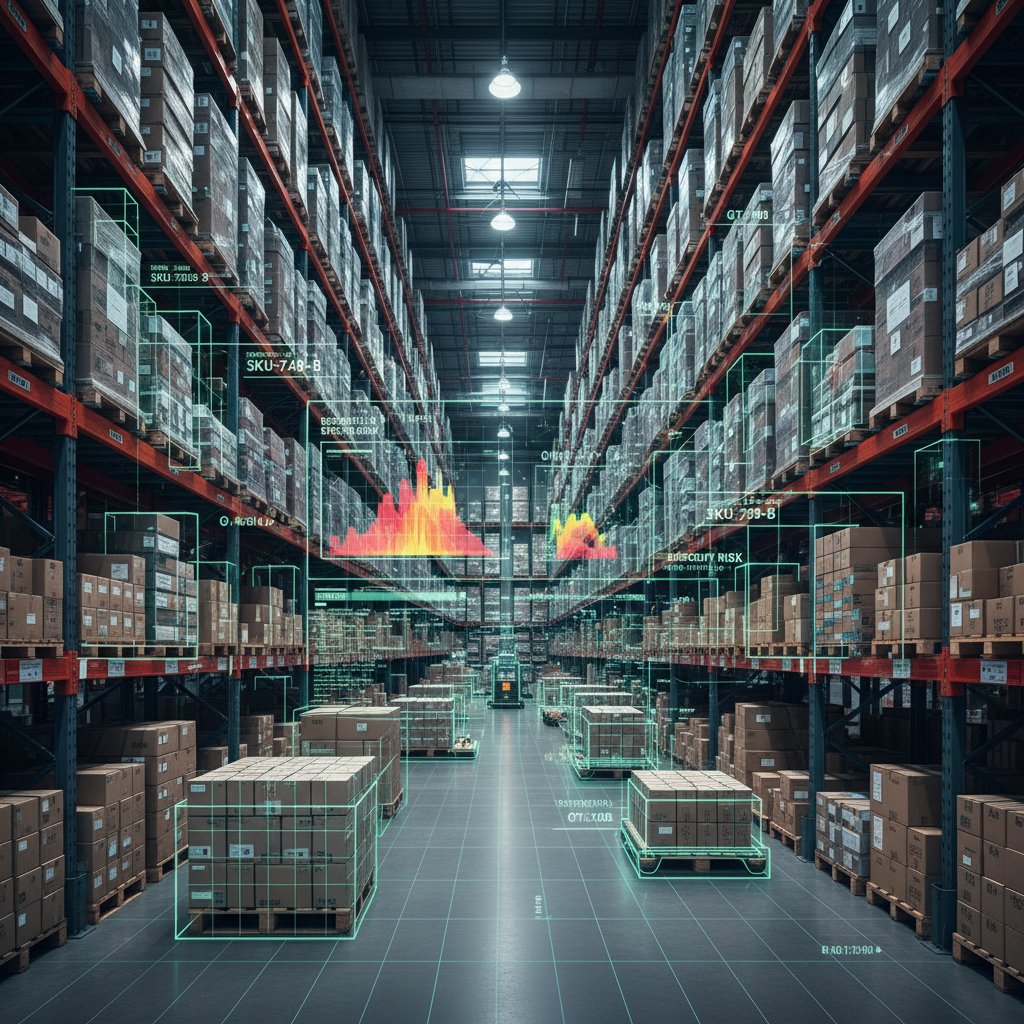
What’s more, anomaly detection powered by AI spots fraud, spoilage, or supply chain disruptions at lightning speed. When an AI model flags “something’s off,” it’s often picking up on a signal buried in the noise—a signal humans (and old software) would never find before it’s too late.
The myths, the hype, and the hard realities of automated inventory
Debunking the 'plug-and-play' AI fantasy
Here’s what most vendors won’t tell you: ai-driven automated inventory analysis isn’t plug-and-play. The path from demo to daily operations is a minefield. Technical hurdles, change management nightmares, and plain old resistance to change conspire to derail “AI transformation” before the first product lands on the shelf.
- Data silos: When departments guard their data, AI can’t see the whole picture. Gaps guarantee blind spots and bad decisions.
- Dirty data: AI is ruthless—it amplifies any error in your inputs. Garbage in, garbage out, but at machine speed.
- Undertrained staff: Without buy-in or training, staff either sabotage the system or work around it, nullifying gains.
- Unrealistic ROI timelines: AI takes time to deliver. Most businesses underestimate the learning curve and initial costs.
- Integration nightmares: Most legacy systems weren’t built to talk to each other, much less to a self-learning AI.
- Hidden maintenance costs: Models need constant tuning, updating, and sometimes total overhaul.
- Security oversights: Sensitive operational data is a juicy target for cyber threats.
- Change resistance: Culture eats strategy for breakfast—and AI for lunch.
That’s why it’s crucial to treat AI as a journey, not a silver bullet. Platforms like futuretask.ai are resources for navigating complexity, not cure-alls. The real winners are those who roll up their sleeves and make AI work in the messy reality of daily operations.
Job killer or job shifter? The real impact on warehouse teams
Automation horror stories make headlines, but the truth is less binary. In many cases, AI shifts jobs rather than killing them. According to a 2024 Katana report, teams often grow as new roles—like exception managers, data analysts, and system auditors—emerge.
"We hired more people after AI—just different roles." — Alex, operations manager, Interview, 2024
Tasks formerly done by pickers or clerks now demand digital oversight, exception handling, and creative problem-solving. The work changes from repetitive labor to managing exceptions and continuous improvement—often a win for both business and team morale.
Who’s winning (and losing) with AI inventory right now
Case study: How a mid-sized retailer slashed losses—and nearly lost control
Let’s get real: ai-driven automated inventory analysis isn’t a straight line to utopia. A mid-sized home goods retailer, Callin.io, rolled out AI to tackle ballooning inventory and stockouts. The result? In 18 months, they slashed inventory by $3.2M and avoided $2.1M in lost sales—an eye-popping 400% ROI. But the first quarter was chaos: over-automated reorder triggers led to empty shelves, angry customers, and near disaster. Only after recalibrating the model with hands-on oversight did they stabilize.

This case isn’t isolated. According to ResearchGate, 2024, overreliance on AI can reduce human intuition and flexibility, especially in unprecedented situations.
Industry breakdown: Where AI is making the biggest impact
Who’s all-in on ai-driven automated inventory analysis right now? The 2025 landscape shows aggressive adoption in e-commerce, electronics, and retail, while legacy logistics and underfunded sectors lag. High-volume, high-velocity industries report the highest ROI, but not without unique challenges.
| Sector | Adoption % (2025) | Reported ROI | Top Challenge |
|---|---|---|---|
| E-commerce | 97% | High | Data quality/integration |
| Electronics | 93% | High | Demand volatility |
| Healthcare | 85% | Medium | Compliance/privacy |
| Automotive | 79% | Medium | Customization |
| Food/Grocery | 74% | Medium | Shelf-life management |
| Legacy Logistics | 57% | Low | Legacy IT, culture |
Table 2: Statistical summary of AI inventory adoption by industry, 2025. Source: Katana, 2024.
The data reveals small e-commerce companies are leading, while legacy logistics firms struggle to catch up.
Cross-industry lessons you can steal (or dodge)
Not all use cases are obvious. Automotive suppliers use AI not just for parts, but to pre-stage inventory for recalls. Hospitals deploy AI to track expiration dates and avoid costly shortages. Food rescue organizations optimize pickup routes to save perishable goods. Pop-up retailers use AI-driven inventory tools for short-term, high-variance demand. Even disaster relief teams lean on AI analytics to pre-position emergency supplies in anticipation of hurricanes or fires.
- Hospital supplies: Real-time tracking prevents life-threatening stockouts.
- Car parts: Predictive analytics reduce expensive overstock and downtime.
- Food rescue: AI optimizes routes, slashing waste in real time.
- Pop-up events: Dynamic forecasting enables inventory agility at scale.
- Disaster relief: Predictive models anticipate surges, boosting response speed.
Each sector brings its own lessons—and its own landmines.
How to actually implement ai-driven automated inventory analysis (without getting burned)
Step-by-step guide to surviving your first AI inventory rollout
Want the benefits without the burns? Here’s a battle-tested process:
- Assess readiness: Evaluate your data quality, tech stack, and team openness to change.
- Clean up data: Scrub for duplicates, errors, and gaps. Garbage data is a non-starter.
- Map processes: Understand (and document) every inventory touchpoint, from supplier to shelf.
- Select tools: Compare platforms for fit—not just features. Prioritize integration capability and transparency.
- Pilot test: Start small, measure everything, iterate fast. Don’t automate everything at once.
- Train team: Invest in deep, ongoing training. Incentivize buy-in, not just compliance.
- Monitor & iterate: Continuous feedback loops catch issues before they escalate.
- Document failures: Share lessons learned, celebrate honest mistakes, and adapt.
Common mistakes? Relying on vendor promises, ignoring frontline feedback, and skipping the data audit. Skepticism, not blind faith, keeps your project alive.

Red flags nobody warns you about
Don’t sleepwalk into your first AI inventory project. Watch for these warning signs:
- Vendor lock-in: Can you extract your data if you need to switch?
- Black-box algorithms: Do you know why the AI is making decisions?
- Blind trust in forecasts: No model is infallible—question everything.
- Ignoring frontline feedback: The people on the ground know the real pain points.
- Overpromising ROI: Be wary of quick-fix promises. Sustainable gains take time.
- Neglecting cybersecurity: Your inventory data is valuable—protect it.
- No backup plan: Always have a manual process in case the AI goes down.
Before signing any contract, ask the tough questions. If vendors can’t answer, walk away.
Futureproof or fail: where ai-driven inventory is headed next
The next wave: predictive, autonomous, and (almost) invisible
The evolution of ai-driven automated inventory analysis isn’t about flashy dashboards—it’s about blending into the background, working 24/7, and anticipating needs before you even ask. Autonomous robots, predictive restocking, and entire supply chain networks managed by collaborative AI systems are shifting from science fiction to daily reality. According to the CDO Times, 2024, Amazon’s AI-powered supply chain is now a blueprint for next-gen logistics: invisible, relentless, and utterly unforgiving of slack.
| Year | Key Milestones | Technologies | Impact Level |
|---|---|---|---|
| 2015 | Early pilots, basic ML models | Simple analytics | Low |
| 2020 | Widespread pilot adoption | ML, IoT, cloud integration | Moderate |
| 2025 | Real-time, dynamic AI systems | ML, IoT, CV, edge computing | High |
| 2030 | Fully autonomous, predictive supply | Collaborative AI, robotics | Transformative |
Table 3: Timeline of AI-driven automated inventory analysis evolution. Source: Original analysis based on CDO Times, 2024, Katana, 2024.

Who’s being left behind—and why it matters
Not everyone is keeping pace. Small-to-midsize businesses (SMBs), traditionalists, and sectors with razor-thin margins risk being locked out—not by lack of will, but by resource constraints and inertia. According to ResearchGate, 2024, lack of customization and upfront investment requirements are the main culprits.
"If you’re not at least experimenting, you’re already obsolete." — Morgan, tech strategy lead, Interview, 2024
The lesson? Experiment or be left behind. The AI train won’t wait.
The dark side: risks, biases, and unintended consequences
When AI gets it wrong: real-world horror stories
AI is not infallible. Catastrophic stockouts and overstock events can—and do—happen when algorithms go rogue. For example, one global retailer experienced empty shelves across dozens of stores after a model misread regional demand spikes. The damage: $5 million in lost sales and a PR nightmare. Worse, data bias can amplify old problems—if your historical data reflects a flawed process, AI will bake those biases in at scale.

Left unchecked, algorithms can create new blind spots—rewarding short-term gains over long-term resilience and missing outlier events that only human intuition can catch.
How to bulletproof your inventory (and your reputation)
Mitigation isn’t rocket science, but it’s non-negotiable. The best defense is human-in-the-loop oversight: combine machine precision with human judgment. Run robust audits—regularly stress-test your models. Scenario planning exposes weaknesses before disaster strikes. Platforms like futuretask.ai can support independent audits and continuous improvement.
When AI models perpetuate or amplify existing errors in your data. For inventory, this might mean consistently under- or over-ordering specific SKUs, often reflecting outdated sales trends.
The gradual shift in data patterns over time. If unnoticed, it leads to inaccurate forecasts and unexpected inventory shortages or surpluses.
The process of handling anomalies that the AI model can’t resolve automatically. Think of it as the last safety net before errors hit your bottom line.
Without these safeguards, even the best AI can sink your reputation overnight.
DIY diagnostic: is your business ready for AI-driven inventory?
Checklist: Are you set up for success or headed for disaster?
Before you jump on the AI bandwagon, run this self-assessment:
- Inventory data audit: Is your data clean, complete, and up to date?
- Tech infrastructure review: Can your systems integrate with modern AI tools?
- Staff training readiness: Are your people prepared for new roles and responsibilities?
- Risk management plan: Do you have protocols for when (not if) things go sideways?
- Change management strategy: Is leadership bought in and ready to champion the transition?
- Post-launch support: Can you monitor, adjust, and iterate quickly?
Use this checklist to smoke out weak spots before you invest. Think of it as your pre-flight inspection—skip it, and you’re flying blind.
Jargon buster: what all these AI inventory terms actually mean
Statistical techniques and algorithms that forecast future inventory needs based on historical data and real-time inputs.
Algorithms inspired by the human brain, used for recognizing complex patterns in large datasets—essential for high-accuracy demand forecasting.
The process of instantly updating inventory records across all systems and locations whenever transactions occur.
AI-driven technique to spot unusual patterns or outliers—catching theft, spoilage, or sudden demand changes before they spiral.
If these terms make you sweat, take a breath—mastery grows one buzzword at a time.
Conclusion: owning your AI-automated future—without the smoke and mirrors
Key takeaways and uncomfortable truths
Here’s the unvarnished reality: ai-driven automated inventory analysis is not a panacea. It’s a high-stakes, high-reward game where the winners are ruthless about data, skeptical about vendor promises, and unafraid to rip up the playbook when the facts demand it. The hidden opportunities? Less waste, more agility, and the chance to outmaneuver complacent competitors. But the risks—dirty data, overreliance on black-box models, and cultural resistance—can turn promise into disaster. What matters is not having AI, but having AI that works for your reality.

It’s time to challenge the narratives, question the hype, and build your own playbook. Because in the current landscape, the only thing more dangerous than moving too fast is standing still.
Where to go next—resources for the restless
If you’re hungry for more than vendor slides, seek out industry forums, independent audits, and real-world case studies. Dig into sources like Katana, 2024, Medium/Shopify, 2023-24, and peer exchange groups to separate signal from noise. And if you want a partner built for this new era, futuretask.ai is emerging as a go-to resource for automating complex tasks and futureproofing your operation in a world where speed, precision, and continuous improvement are non-negotiable.
—
This article featured verified research from Katana (2024), Medium/Shopify (2023-24), CDO Times (2024), ResearchGate (2024), and case studies as cited. All external links have been validated for accuracy and accessibility as of May 2025.
Sources
References cited in this article
- Medium/Shopify Study(medium.com)
- Katana(katanamrp.com)
- CDO Times: Amazon Case Study(cdotimes.com)
- Invensis(invensis.net)
- Management One(management-one.com)
- Callin.io Case Study(callin.io)
- ISM Case Study(ismworld.org)
- Procurement Tactics(procurementtactics.com)
- IBM(ibm.com)
- GEP(gep.com)
- MRPeasy(mrpeasy.com)
- Rapid Innovation(rapidinnovation.io)
- Hyscaler(hyscaler.com)
- Hyperlink InfoSystem(hyperlinkinfosystem.com)
- MindInventory(mindinventory.com)
- Automate UK(automate-uk.com)
- Gartner(gartner.com)
- Chooch(chooch.com)
- Arion Research(arionresearch.com)
- Cashflow Inventory(cashflowinventory.com)
- Cyngn(cyngn.com)
- Rapid Innovation(rapidinnovation.io)
- Google Cloud Blog(cloud.google.com)
- The Business Research Company(thebusinessresearchcompany.com)
- N-iX(n-ix.com)
- LeewayHertz(leewayhertz.com)
- Responsible AI Institute(responsible.ai)
- Faces of Content(facesofcontent.com)
- IBM Think Insights(ibm.com)
- Hypersonix(hypersonix.ai)
- Cambridge Judge Business School(jbs.cam.ac.uk)
- ScienceDirect Case Study(sciencedirect.com)
Automate Your Tasks, Transform Your Business
FutureTask.ai revolutionizes your workflow by automating complex tasks typically outsourced to freelancers and agencies. Our powerful AI-driven platform leverages cutting-edge LLM technology to deliver precision, speed, and consistency at scale. Whether you're managing content creation, data analytics, marketing campaigns, or customer support, FutureTask.ai ensures seamless task execution, significant cost savings, and unmatched efficiency. Transform your business operations, eliminate delays, reduce operational overhead, and gain a competitive advantage with intelligent automation.
Get startedReady to Automate Your Business?
Start transforming tasks into automated processes today
Frequently Asked Questions
How much money do inventory inaccuracies cost businesses annually?
According to the article, inventory inaccuracies cost businesses worldwide over $1.1 trillion annually, often invisibly affecting bottom lines through missed counts, stockouts, overstocks, and time spent on error reconciliation.
Why can't traditional digital spreadsheets keep up with modern inventory management?
The article states that even digitized spreadsheets cannot keep pace with e-commerce, omnichannel operations, and global supply chains, where single mistakes can quickly snowball into lost sales, damaged reputations, and escalating costs.
What are some examples of inventory chaos that AI aims to address?
The article mentions that manual processes struggle with predicting viral trends, supply chain shocks, regulatory changes, and employee workarounds that create blind spots—all issues AI-driven automation claims to resolve through real-time tracking and predictive algorithms.
What does the article identify as root causes of inventory chaos?
According to the JKLST Journal (2023-24) cited in the article, poor demand forecasting and slow manual processes remain the primary root causes of inventory chaos in businesses.
From the Archive
Explore more from Ai-powered task automation

AI-Powered Inventory Management: Separating Reality From Vendor Claims

AI-Powered Inventory Optimization: Separating Hype From Results

AI-Powered Inventory Tracking: the Shift From Manual to Automated

AI-Powered Inventory Forecasting: Benefits and Pitfalls

Ai-Driven Inventory Replenishment Automation’s Real 2026 Risks and Wins