


AI-Driven Decision Making Tools: What's Really at Stake in Business
Written with AI assistance under our editorial guidelines
By 2026, AI-driven decision-making tools will benefit organizations that implement them strategically while managing risks like algorithmic bias and over-reliance on black-box systems. Winners will be those balancing efficiency gains with transparency, human oversight, and ethical guardrails rather than purely automation-focused approaches.
Every generation has its revolution. The printing press wrested power from gatekeepers; electricity rewired civilizations. In 2025, it’s not revolutions that come and go—it’s the very act of deciding that’s being hijacked, streamlined, and, some would argue, weaponized by AI-driven decision making tools. These platforms don’t just sort your inbox or run your numbers; they tunnel deep into the DNA of your business, dictating strategy, operations, and even the subtle art of who gets a job, a loan, or a second chance. The promise? Razor-sharp efficiency, untamed scale, and intelligence that never sleeps. The risk? Invisible biases, certainty illusions, and a creeping sense that your fate might be sealed by a black box you’ll never fully understand.
Before you entrust your next pivotal move to an algorithm, this is the unfiltered truth: AI decision tools are more than productivity hacks—they’re shaping economies, upending industries, and forcing a reckoning with what it means to trust, compete, and even be human. Let’s rip the mask off the automation revolution. Here’s what’s really at stake.
Why ai-driven decision making tools matter now
The chaos of modern decision making
It’s 9 a.m. You’re already drowning in dashboards, emails, and Slack pings. The pressure to make smart, rapid-fire decisions is relentless. Data pours in from every direction—customer analytics, competitor moves, market signals—until paralysis sets in. According to Forbes Advisor (2024), over 97% of business and IT leaders now feel a burning urgency to deploy AI in decision processes, as the volume and complexity of data simply outpace human bandwidth.

“Every choice now feels like a bet against a machine.” — Alex
Traditional decision models—gut instinct, committee meetings, manual analysis—are cracking under this weight. Human bias creeps in, time drags on, and crucial opportunities slip away. Fragmented processes lead to inconsistencies and costly mistakes. This new chaos is precisely why ai-driven decision making tools are no longer a luxury—they’re a survival mechanism.
- Hidden benefits of ai-driven decision making tools experts won’t tell you:
- Silent risk mitigation: Algorithms can detect outliers and red flags buried deep in your data, catching what human eyes miss.
- Unbiased pattern recognition: AI exposes non-obvious correlations without the baggage of office politics—or at least, that’s the pitch.
- Always-on adaptability: 24/7 operation means your business evolves as fast as the market shifts.
- Scalable expertise: AI’s knowledge base never tires, never calls in sick, and gets sharper with every dataset ingested.
- Decision audit trails: Every recommendation is tracked, making it easier to justify— or challenge—past calls.
- Continuous learning: Machine learning models adapt, sometimes outpacing even your best human analysts.
- Micro-personalization: AI can fine-tune decisions to the nth degree, customizing offers, pricing, and interactions at scale.
What makes a tool truly 'AI-driven'?
There’s a chasm between old-school rule-based automation and genuine AI-driven decision intelligence. A spreadsheet macro or “if-then” script is not intelligent—it’s just fast. Real AI-driven tools, on the other hand, absorb massive data streams, learn from outcomes, and make nuanced calls amidst uncertainty. According to the World Economic Forum’s 2024 report, the move from deterministic logic to adaptive, self-learning systems is what defines this new class of decision tools.
Key terms and what they really mean:
The science of augmenting human decisions with AI—combining data, models, and human expertise to make smarter calls. Think of it as the brain’s strategic advisor, not just a calculator.
A model or system whose internal workings are opaque—inputs go in, outputs come out, but how? That’s often the problem. With AI, especially deep learning, even engineers sometimes can’t fully explain the rationale behind a decision.
The holy grail of trustworthy AI. It’s the ability to clarify how and why an algorithm arrived at a conclusion—vital for compliance, ethics, and user trust.
To spot authentic AI-driven decision platforms, look for solutions that dynamically update models based on new data, offer some level of transparency or explanation, and outperform simple automation in complex, ambiguous environments.
| Feature | Rule-based tools | Real AI-driven tools |
|---|---|---|
| Adapts to new data | No | Yes |
| Handles ambiguity | Poorly | Effectively |
| Learns over time | No | Yes |
| Makes recommendations | Static | Dynamic |
| Offers explainability | Limited | Varies (work in progress) |
| Detects subtle patterns | Rarely | Consistently |
| Scales decisions | With effort | Effortlessly |
Table 1: Key differences between traditional rule-based automation and modern AI-driven decision making tools. Source: Original analysis based on WEF AI for Impact 2024, Forbes Advisor, 2024
The anatomy of ai-driven decision making tools
Under the hood: Algorithms, models, and data
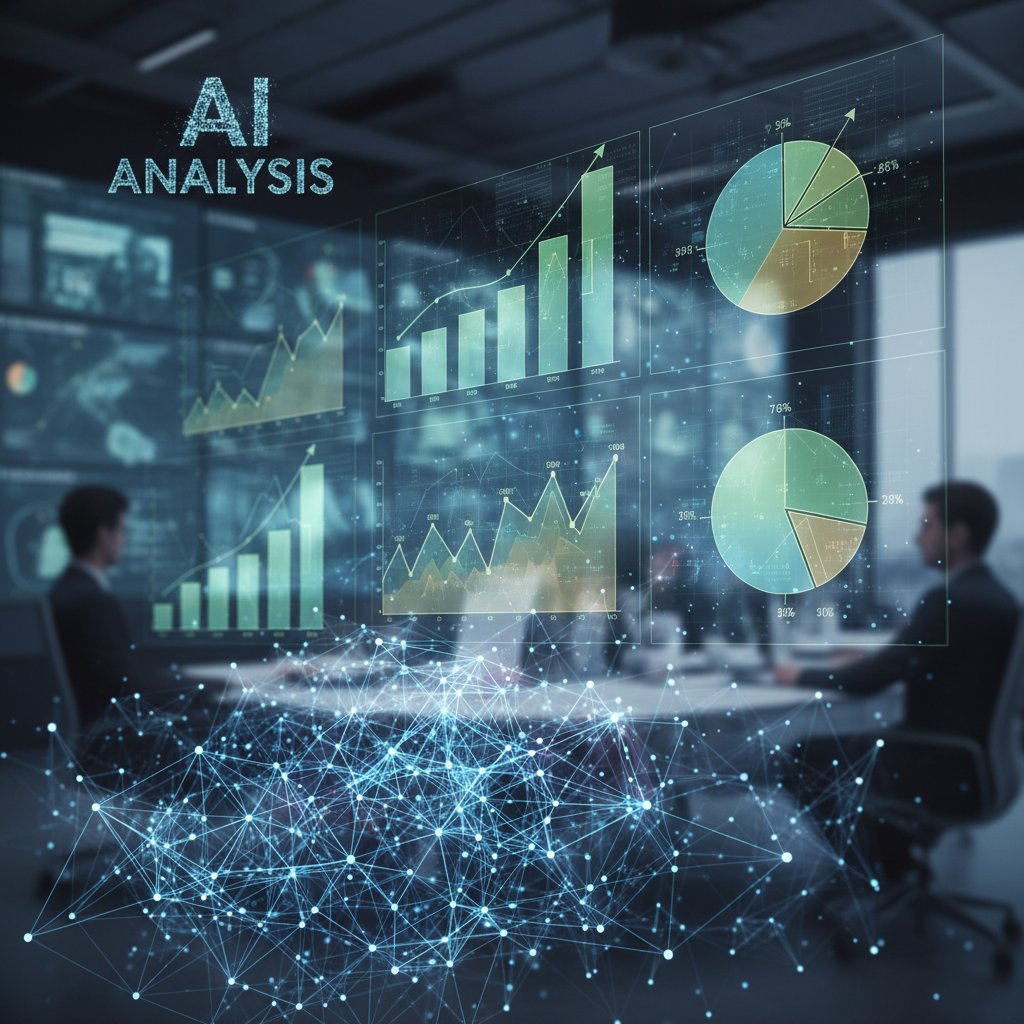
At the core, these tools devour raw data—sales trends, customer behaviors, even social sentiment—and run it through statistical models and neural networks trained to “see” what humans can’t. The choice of algorithm—be it classical regression, decision trees, or deep learning—dictates how the system learns from history and extrapolates into the unknown. But the real secret sauce? The quality and diversity of training data. As the World Economic Forum highlights, if you feed models biased or incomplete data, you get garbage—or worse, discrimination—out.
Transparency is more than a buzzword: explainability is the difference between trusting a tool and blindly following it off a cliff. Regulatory bodies and industry watchdogs demand that decisions—especially those affecting people’s lives or finances—are auditable and justifiable. If you can’t explain why your AI blackballed a loan applicant or flagged a transaction, you’re playing with fire. According to Frontiers in Political Science (2025), explainability is now a non-negotiable for leadership teams committed to ethical, defensible decision making.
Where machine logic beats human intuition—and where it fails
Let’s get brutal: AI shines in pattern recognition, anomaly detection, and rapid responses to dynamic inputs. For example, in fraud detection, machine learning models can spot suspicious behavior across millions of transactions in milliseconds, outpacing any human compliance officer (Forbes Advisor, 2024). In supply chain optimization, AI crunches weather forecasts, geopolitical events, and demand shifts, dynamically rerouting logistics at a scale unfathomable to even the most seasoned manager.
But hand over the steering wheel in high-stakes, ambiguous scenarios, and the cracks show. AI can’t (yet) parse the nuanced context of a PR crisis, interpret cultural subtext, or navigate ethical gray areas with human finesse. The cost of a misfire? Real and sometimes brutal.
“I trusted the algorithm, and it cost us a client.”
— Jamie
| Scenario | AI outcome: Strength/Weakness | Human outcome: Strength/Weakness |
|---|---|---|
| Fraud detection | Catches subtle patterns, no fatigue | Prone to oversight, slower |
| Crisis PR response | Lacks context, tone-deaf | Nuanced, adaptable |
| Medical triage | Fast, data-driven, but risks bias | Empathetic, can miss rare cases |
| Product pricing | Dynamic, scalable, sometimes opaque | Consistent, but slow, less adaptive |
| Talent screening | Scalable, but risk of encoded bias | More context, but subjectivity |
Table 2: Comparative outcomes of AI vs. human decision makers in key business scenarios. Source: Original analysis based on WEF AI for Impact 2024, Frontiers in Political Science, 2025
Debunking the myths: AI objectivity, infallibility, and hype
Myth #1: AI is always objective
Here’s the dirty secret: AI systems reflect the data—and the worldviews—of their creators. If historical data is biased, say, favoring certain demographics in hiring, the AI’s “objectivity” just automates discrimination at warp speed. According to the World Economic Forum (2024), unintentional bias has been observed in AI recruitment tools, leading to gender and racial disparities. The illusion of neutrality is seductive but dangerous.
Real-world incidents are mounting: from recruitment AIs that sidelined qualified candidates based on gendered keywords, to loan algorithms that “learned” to penalize zip codes. The legal, ethical, and reputational fallout isn’t hypothetical—it’s already landed on the front pages.
Myth #2: AI can replace human judgment entirely
AI has limits—sharp ones. In ambiguous, novel, or high-empathy contexts, machine logic falters. Automating decisions without human oversight is a recipe for disaster. According to recent research from Frontiers in Political Science, 2025, the danger of over-reliance on AI isn’t just technical—it’s existential. When every call is rubber-stamped by a machine, critical thinking and organizational learning atrophy.
- Priority checklist for ai-driven decision making tools implementation:
- Audit your data for hidden biases before training any model.
- Demand transparency from vendors on how decisions are made.
- Establish clear human “veto” points for high-impact outcomes.
- Test tools using real-world edge cases, not just happy path scenarios.
- Train your team to challenge, not just follow, AI recommendations.
- Monitor for “certainty illusions”—AI’s tendency to mask residual uncertainty.
- Document every automated decision for later review or challenge.
- Plan for regular, independent audits of AI system performance.
Myth #3: More data always equals better decisions
Here’s the paradox: the more data you throw into the maw of AI, the higher the risk of noise, overfitting, and “analysis paralysis.” As industry experts note, it’s not the volume of data but its relevance, diversity, and cleanliness that matter. Bad data leads to bad decisions—just faster.
“Sometimes less is more—especially when the stakes are high.”
— Priya
Inside the ecosystem: Top ai-driven decision making tools (2025 edition)
What the leaders offer—and where they fall short
The competitive landscape is packed: from legacy giants like IBM Watson and Microsoft Azure AI, to nimble startups and vertical specialists. According to Forbes Advisor (2024), over 70% of global organizations now use some form of AI-driven decision platform. Each touts a different edge—speed, scalability, accuracy, compliance—but no solution is flawless.
| Tool/Platform | Strengths | Weaknesses | Best for |
|---|---|---|---|
| IBM Watson | Enterprise-grade, robust analytics | Black box complexity, costly | Regulated industries |
| Microsoft Azure AI | Seamless integration, developer friendly | Limited industry customization | Tech-driven businesses |
| Google Vertex AI | Scalable, strong ML models | Steep learning curve | Data-rich organizations |
| DataRobot | Automated ML, explainability focus | Less control for advanced users | Mid-size firms |
| futuretask.ai | Task automation, rapid deployment | Newer to market, evolving feature set | SMBs, agencies, startups |
Table 3: Unvarnished comparison of leading AI-driven decision platforms. Source: Original analysis based on Forbes Advisor, 2024, WEF AI for Impact 2024
What’s missing across the board? Seamless explainability, universal bias controls, and cross-domain adaptability. No tool gets it all right—yet. The brutal truth: even industry leaders still leave you juggling gaps in transparency, integration, or domain expertise.
The rise of platforms like futuretask.ai
A new wave of AI-powered task automation services is challenging the old guard. Platforms such as futuretask.ai promise not just analytics but action—automating content creation, market research, data analysis, campaign optimization, and more. The difference? These platforms don’t just recommend—they execute, using advanced language models and workflow engines to handle complex business processes end-to-end.
What sets them apart isn’t just price or speed, but the promise of freeing organizations from the grind of sourcing freelancers or wrangling agencies. AI-driven platforms like futuretask.ai deliver consistent, scalable, and increasingly sophisticated decision-making without the human bottleneck. For startups and lean teams, this is less about disruption and more about survival.

Real-world impact: Stories from the front lines
Case study: Crisis management with AI
Picture a retail chain blindsided by a global supply shock. Inventory vanishes, demand spikes, and every forecast is obsolete. In the chaos, an AI-driven decision platform rapidly reallocates inventory, reroutes logistics, and pinpoints high-risk bottlenecks. According to research from the World Economic Forum (2024), organizations deploying AI in crisis scenarios reported a 30% reduction in response time and minimized revenue loss.
Here’s what went right: the AI’s real-time analytics uncovered patterns humans missed, enabling decisive action before competitors even registered the threat. But not all was seamless. The AI flagged a supplier as unreliable based on outdated data—almost severing a critical partnership. Only human intervention caught the context.
The lesson? AI is a force multiplier, not a savior. Human oversight isn’t optional—it’s essential.

Case study: The creative edge—or creative burnout?
Creative teams at media agencies leverage AI to brainstorm campaign ideas, analyze audience sentiment, and optimize content distribution. The upside: rapid ideation, data-driven targeting, and a 25% bump in campaign conversion rates, as shown in recent industry research (Forbes Advisor, 2024). But there’s a catch. Over-reliance on AI-generated suggestions can lead to homogenized output—campaigns start to sound eerily similar, and genuine originality is at risk.
- Unconventional uses for ai-driven decision making tools:
- Automating A/B test design and candidate selection in marketing experiments.
- Simulating regulatory impacts on business models before they hit.
- Optimizing creative team workflows based on real-time performance analytics.
- Detecting subtle shifts in consumer sentiment across social platforms.
- Personalizing onboarding or training pathways for new hires based on historical success factors.
- Generating counter-narratives for crisis communications planning.
Controversies, risks, and the human factor
Algorithmic bias and ethical dilemmas
Some of the biggest headlines in AI come from ethical failures: an AI system that denied insurance claims disproportionately in certain zip codes; recruitment platforms that perpetuated gender bias; or facial recognition tools implicated in wrongful arrests. According to Medium’s 2024 review of societal challenges, these issues aren’t just technical glitches—they’re systemic.
Efforts are underway to craft fairer, more transparent models. Open data audits, third-party certifications, and “ethics by design” approaches have gained ground. But the central question remains: when AI gets it wrong—who’s responsible? The developer? The data? The business leader who clicked “approve”?
The hidden costs of automation
Lost jobs. New skill requirements. An underbelly of AI consultants and “explainability auditors” springing up to patch the gaps. According to Cisco’s 2024 AI Impact report, workforce shifts are inevitable—some roles vanish, others mutate, and the lucky few ride the wave as AI super-users. But there’s a psychological toll, too. As decision authority slips from humans to machines, a creeping sense of alienation and loss of agency sets in—a shadow cost rarely tallied in financial projections.

How to choose (or survive) your next AI decision platform
Critical questions to ask before you commit
Before you sign that contract or plug an AI tool into your critical workflows, interrogate its claims. Demand answers—detailed, auditable ones—on how the platform works, who trained it, and what happens when things go sideways.
- Step-by-step guide to mastering ai-driven decision making tools:
- Identify your highest-value decision bottlenecks.
- Map out available, clean data sources for those processes.
- Evaluate vendors for transparency and explainability features.
- Demand independent validation (not just vendor benchmarks).
- Pilot with a controlled, real-world use case.
- Establish human oversight checkpoints.
- Train staff to interpret and challenge AI outputs.
- Monitor for drift—AI models can decay over time.
- Document every decision and outcome for auditing.
- Iterate relentlessly—automation is never “set and forget.”
And the red flags? Beware any tool that won’t show its logic, refuses external audits, or glosses over bias controls. Non-negotiables: data privacy compliance, robust security, and the right to challenge any automated decision.
Checklist: Are you ready for AI-driven decisions?
Organizational readiness isn’t just about tech. Culture, data literacy, and willingness to adapt are critical. Does your team trust algorithms? Do you have the skills to challenge or debug them? Here’s what to watch for:
- Leadership ambiguity on responsibility for AI outcomes
- Siloed or dirty data sources feeding the models
- Overhyped promises from vendors with no audit trail
- Lack of documented processes for decision overrides
- Weak or non-existent bias detection protocols
- Staff skepticism or lack of buy-in
- No plan for re-skilling or up-skilling displaced roles
If your organization needs guidance, resources like futuretask.ai can help demystify the landscape and connect you with vetted platforms and best practices.
The future: Where do humans fit in an AI world?
What AI can’t (and shouldn’t) do
No matter how advanced, AI lacks true creativity, intuition, and moral judgment. It can remix existing ideas but struggles to invent genuinely new concepts or navigate ethical gray zones. There are moments—crisis leadership, creative breakthroughs, sensitive negotiations—where human override isn’t just preferable, it’s vital.
Examples abound: in healthcare, AI tools might flag high-risk patients, but only a doctor can weigh family context or patient preference; in HR, algorithms can screen for skills, but culture fit and potential are still human calls.
The next frontier: Autonomous organizations and beyond
Trends point to fully autonomous “decision ecosystems”—companies run by code, not committees. Some startups operate with minimal human staff, relying on AI for supply chain, sales, and even hiring decisions. The opportunity? Near-instant adaptability and radical efficiency. The risk? Fragility, loss of oversight, and new forms of digital exclusion.
| Era/Phase | Key Technology | Decision Model | Human Role |
|---|---|---|---|
| Pre-2010 | Rule-based automation | Deterministic | Manual override primary |
| 2011–2018 | Early statistical ML | Probabilistic | Human/AI collaboration |
| 2019–2022 | Deep learning, NLP | Adaptive, opaque | Oversight, training |
| 2023–2025 | LLMs, autonomous platforms | Self-learning, partial explain | Strategic intervention |
| Beyond 2025 | Autonomous organizations* | Ecosystem-level, evolving | Governance, values guardrail |
Table 4: Timeline of AI-driven decision making tools evolution. Source: Original analysis based on Frontiers in Political Science, 2025, WEF AI for Impact 2024
Frequently asked questions about ai-driven decision making tools
Are AI-driven tools trustworthy?
Trust starts with transparency and rigorous validation. Reputable platforms document their model training, allow for independent audits, and disclose known biases. Industry standards like ISO/IEC 23053:2022 for AI system management are gaining traction. Staying current means monitoring regulatory shifts and vetting tools for third-party certifications. According to Frontiers in Political Science (2025), organizations that embrace explainability and continuous review of outcomes report higher user trust and smoother adoption.
Can small teams or startups benefit—or is this just for big players?
Accessibility has never been higher. Cloud-based decision tools, including those from platforms like futuretask.ai, drop startup costs to near zero. Real-world examples show startups automating content, research, and customer support, slashing costs and outpacing slower incumbents. The trick? Agility and a willingness to experiment—trying, failing, and iterating until the AI fits your unique business DNA.
Conclusion
The game has changed. AI-driven decision making tools aren’t just speeding up workflows—they’re rewriting the rules of competition, trust, and risk. The rewards are real: organizations see up to 3.7x ROI, leaner operations, and a strategic edge impossible a decade ago (Forbes Advisor, 2024). But the risks—bias, opacity, job displacement, and “certainty illusions”—are just as stark. Your move isn’t whether to adopt, but how: with eyes wide open, relentless scrutiny, and a human core that never abdicates judgment to a black box. In the end, AI is the tool. The revolution is how you wield it.
Sources
References cited in this article
- WEF AI for Impact 2024(www3.weforum.org)
- Frontiers in Political Science, 2025(frontiersin.org)
- Medium: Societal Challenges(medium.com)
- Forbes Advisor, 2024(forbes.com)
- IDC AI Study, 2024(blogs.microsoft.com)
- Deloitte GenAI Report, 2024(www2.deloitte.com)
- TDWI: Tackling Information Overload(tdwi.org)
- Washington Post: AI in Government(washingtonpost.com)
- DEV Community: Best AI Tools 2024(dev.to)
- IABAC: AI Tools 2024(iabac.org)
- IBM: AI Workflow(ibm.com)
- Intellias: AI in Decision Making(intellias.com)
- Forbes: Debunking AI Myths(forbes.com)
- eLearning Industry: Unmasking AI Myths(elearningindustry.com)
- North Dakota Monitor, 2024(northdakotamonitor.com)
- Harvard Gazette: AI Bias(news.harvard.edu)
- Florida Bar: Judicial Decision Making(floridabar.org)
- HBR: Human Decision-Making(hbr.org)
- Synthesia: Best AI Tools 2025(synthesia.io)
- Hightouch: AI Decisioning Platforms(hightouch.com)
- Taskade AI 2024(blog.productivity.directory)
- World Economic Forum, 2023(weforum.org)
- Forbes Tech Council, 2024(forbes.com)
- Juvare: AI in Crisis Management(juvare.com)
- Forbes: Cal Fire AI(forbes.com)
- World Economic Forum: AI & Creative Industries(weforum.org)
- Forbes: AI & Burnout(forbes.com)
- WEF Global Risk Report 2024(futureofbeinghuman.com)
- Carnegie Endowment: AI & Crisis(carnegieendowment.org)
- Harvard Misinformation Review, 2024(misinforeview.hks.harvard.edu)
- IBM: Hidden AI Costs(ibm.com)
- Salesforce Trailverse: AI Energy Costs(salesforcetrailverse.com)
Automate Your Tasks, Transform Your Business
FutureTask.ai revolutionizes your workflow by automating complex tasks typically outsourced to freelancers and agencies. Our powerful AI-driven platform leverages cutting-edge LLM technology to deliver precision, speed, and consistency at scale. Whether you're managing content creation, data analytics, marketing campaigns, or customer support, FutureTask.ai ensures seamless task execution, significant cost savings, and unmatched efficiency. Transform your business operations, eliminate delays, reduce operational overhead, and gain a competitive advantage with intelligent automation.
Get startedReady to Automate Your Business?
Start transforming tasks into automated processes today
Frequently Asked Questions
What percentage of business and IT leaders feel urgency to deploy AI in decision processes?
According to Forbes Advisor (2024), over 97% of business and IT leaders feel a burning urgency to deploy AI in decision processes due to the volume and complexity of data outpacing human bandwidth.
What are the main risks of AI-driven decision making tools mentioned in the article?
The article identifies invisible biases, certainty illusions, and the risk that decisions may be sealed by a black box that users will never fully understand as key risks of these tools.
Why are traditional decision-making models like gut instinct and committee meetings insufficient today?
Traditional decision models are cracking under the weight of modern data volume and complexity, leading to human bias, time delays, missed opportunities, fragmented processes, and costly inconsistencies.
What are some claimed benefits of AI-driven decision making tools?
The article mentions silent risk mitigation through detection of buried outliers, unbiased pattern recognition without office politics, and always-on 24/7 adaptability as claimed benefits of these tools.
From the Archive
Explore more from Ai-powered task automation

When AI-Powered Data-Driven Decision Making Outperforms Human Judgment

How Automated Data Analytics Software Creates Competitive Advantage

AI-Powered Competitive Intelligence Automation in 2025

Adaptive AI Task Automation Tools: Reshaping Work in 2025

AI-Powered Predictive Analytics Automation: Benefits and Hidden Risks
