
AI-Driven Software Testing Automation: Hype, Risks and Real ROI
Written with AI assistance under our editorial guidelines
Only 16% of QA teams have adopted AI-driven testing tools in 2025, despite promises of autonomous test generation and self-healing scripts. While early adopters report up to 46% greater automation efficiency and improved coverage, teams struggle with flaky scripts, false alarms, integration challenges, and messy data. AI testing delivers real gains but demands expertise and won't replace human testers.
AI-driven software testing automation isn’t just a tech buzzword echoing through the halls of DevOps conferences—it’s a seismic shift that’s redefining the DNA of quality assurance teams worldwide. But let’s get real: for every breathless headline about machines replacing testers, there’s an army of QA engineers wrangling flaky scripts, deciphering false alarms, and cleaning up after AI’s mess. In 2025, the brutal truth is that only 16% of teams have fully embraced AI testing tools—a far cry from the silver-bullet narrative. Why does the hype persist? Because the wins are undeniable: teams report up to 46% greater automation efficiency, self-healing scripts are no longer fantasy, and coverage metrics are surging. And yet, the human factor, messy data, and integration headaches refuse to fade. This deep dive slices through the noise: you’ll find hard-hitting stats, cautionary tales, and a playbook to futureproof your QA—without falling for the myth that AI will do your job for you. Welcome to the real world of AI-driven software testing automation, where the smartest teams don’t just survive—they outsmart the hype.
The rise and myth of ai-driven software testing
How ai crashed the QA party
Quality assurance (QA) used to be a labor of patience—methodical, repetitive, and distinctly human. Manual testing meant hunting for bugs through predictable scripts and gut instinct. Then, automation frameworks like Selenium arrived, promising relief from monotony, but demanded their own rituals of maintenance and scripting. Enter artificial intelligence, and suddenly the QA world is flooded with promises of fully autonomous test generation, self-healing tests, and bug detection at the speed of thought. The reality? AI didn’t stroll politely into the QA world—it crashed the party with algorithms that dazzled and then, sometimes, confused.
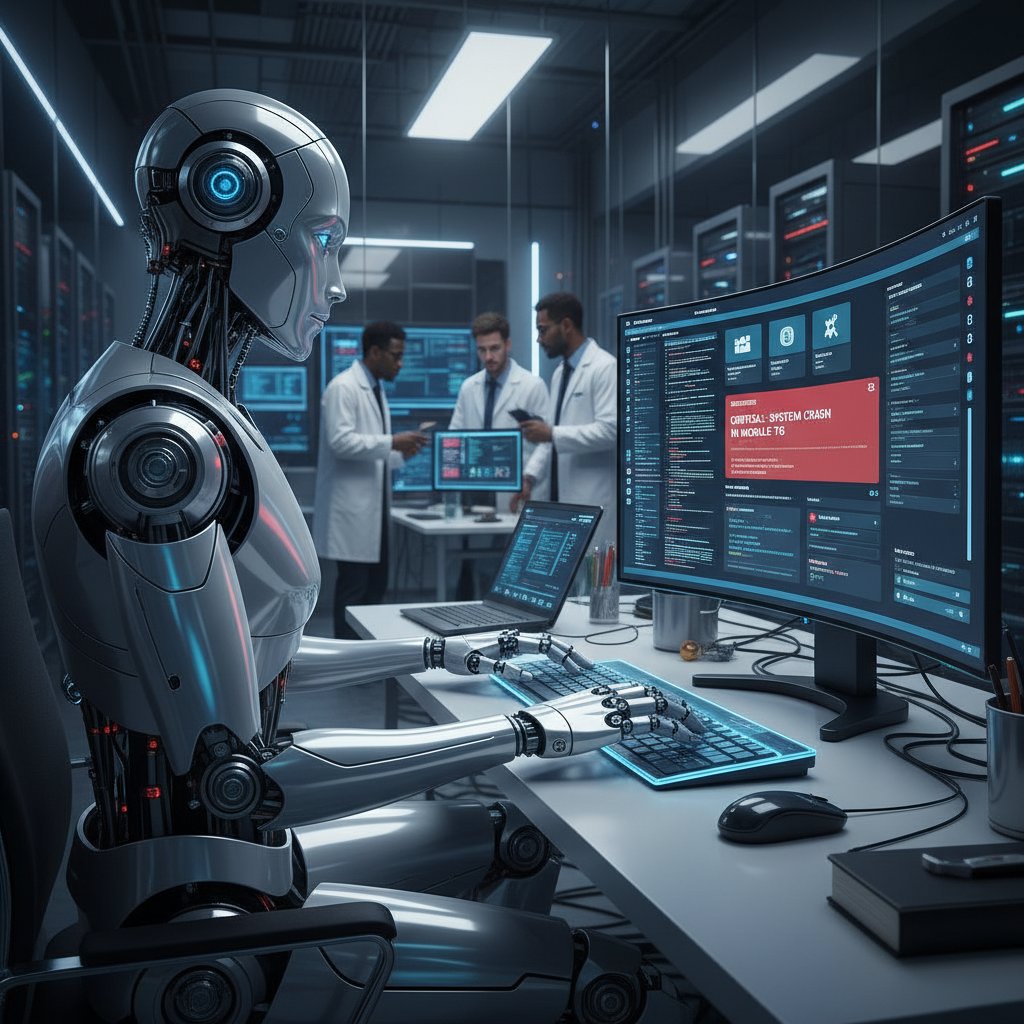
According to data from Testlio, only 16% of QA teams use AI-driven testing in 2025—up from just 7% in 2023. That growth reveals both the allure and the resistance. While AI tools disrupt the status quo, they also demand a level of expertise and integration that leaves many teams clinging to manual routines. The supposed simplicity of “just add AI” clashes with the messy reality of legacy systems, CI/CD pipelines, and the relentless unpredictability of real-world software.
The promises marketers sold you
AI testing vendors have painted a seductive picture: unlimited coverage, instant regression tests, and seamless integration with every tool under the sun. Marketers tout AI as the answer to every QA pain point, promising to obliterate manual labor and deliver perfect, bug-free releases. But what aren’t they telling you?
- Unseen setup complexity: AI tools require painstaking configuration—data mapping, pipeline integration, and careful human oversight. They’re anything but plug-and-play.
- Human oversight remains essential: False positives and negatives from AI-generated tests are rampant. Someone has to triage, interpret, and act on the results.
- Legacy integration hurdles: Most organizations run a patchwork of legacy systems and modern stacks. AI tools struggle to bridge the gap, leading to Frankenstein-like workflows.
- Missed UX and security flaws: AI struggles to catch nuanced usability issues or subtle security threats—real-world testers still catch what machines can’t.
- Hybrid tester roles emerge: Automation doesn’t erase manual QA—it creates new jobs blending technical skill with domain intuition.
- Manual testing isn’t dead: 27% of testing is still manual, and that number hasn’t evaporated despite the AI boom.
Hidden benefits of AI-driven software testing automation experts won't tell you:
- AI excels at pattern recognition, finding edge-case bugs that escape human notice.
- Self-healing scripts lower maintenance costs over time.
- Real-time analytics from AI testing can transform defect detection and root cause analysis.
- Faster feedback loops empower development teams to ship higher-quality code.
The truth? AI-driven software testing automation can transform QA, but only for teams willing to confront complexity head-on and avoid buying into empty promises.
What actually changed—and what didn’t
AI-driven automation has fundamentally altered the speed and scope of software testing, but it hasn’t erased the human challenges. According to Capgemini’s 2024 Quality Engineering Report, 68% of organizations use generative AI somewhere in their QA pipeline, yet nearly a third of testing still requires manual effort. The boldest advances—self-healing scripts, AI-powered analytics—have delivered real ROI, but integration headaches and false alarms persist.
| Dimension | Traditional automation | AI-driven automation | Source/Year |
|---|---|---|---|
| Speed | Scripted, scheduled | Real-time, adaptive | Capgemini, 2024 |
| Accuracy | Prone to brittle scripts | Improved via self-healing and ML | Testlio, 2025 |
| Coverage | Limited by scripts | Expands via AI-generated tests | Capgemini, 2024 |
| Setup complexity | High for new coverage | Very high (requires data, config) | Original analysis based on sources |
| ROI | Slow, incremental | Significant with maturity | Testlio, 2025 |
Table 1: Comparison of traditional automation vs. AI-driven automation in QA.
Source: Original analysis based on Capgemini 2024, Testlio 2025
The bottom line: AI automates faster and further, but it raises the stakes for configuration, oversight, and data hygiene. Teams that ignore these realities risk trading one set of problems for another.
Demystifying the technology: how ai really works in test automation
Machine learning in the QA trenches
Behind the curtain of AI automation is a relentless data engine. Machine learning models are trained on past test results, code changes, and defect logs. These models learn to spot risky code, generate new test cases, and even predict where future bugs might lurk. It’s not magic—it’s millions of iterations, supervised by engineers who know that bad data breeds bad predictions.
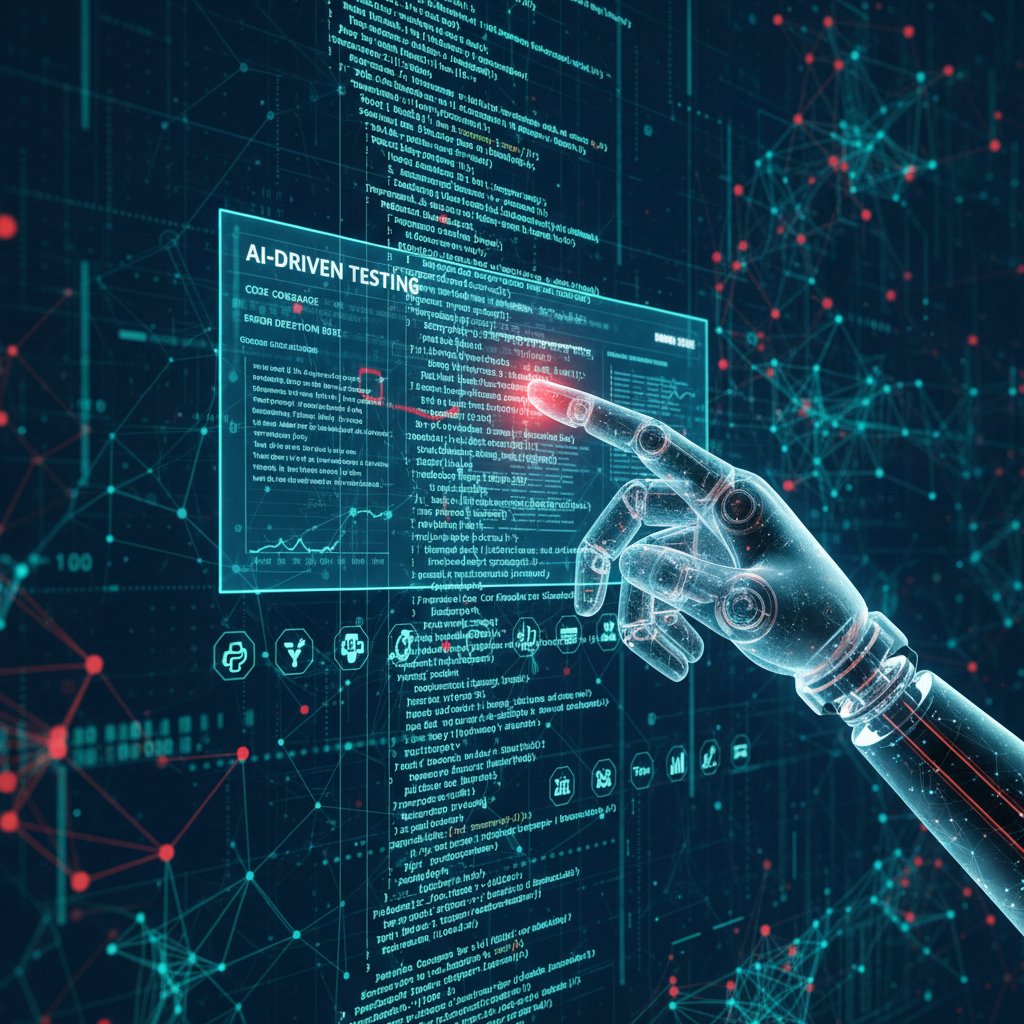
Tools like testRigor, Katalon, Applitools, and Playwright deploy different flavors of ML: some focus on visual testing, others on code analysis or test case generation. But each depends on a steady diet of high-quality, labeled data. When the data is robust, AI can accelerate bug hunting and highlight test gaps with brutal efficiency.
From flaky tests to self-healing scripts
Anyone who’s been on call during a failed build knows the pain of flaky tests—those mysterious, intermittent failures that erode trust in automation. AI-driven test frameworks now offer “self-healing” scripts: when UI changes or APIs evolve, the AI adapts selectors and paths on the fly, reducing breakage and maintenance overhead.
Step-by-step guide to implementing self-healing test scripts with AI:
- Assess your current test suite: Identify scripts prone to breakage—especially UI tests tied to brittle selectors.
- Choose an AI-enabled framework: Evaluate tools like testRigor or Applitools that offer self-healing capabilities.
- Integrate with CI/CD pipeline: Ensure your build system can trigger AI-powered test runs and collect feedback.
- Feed the AI quality data: Curate labeled examples of failures and successful passes; garbage data leads to garbage AI.
- Monitor and fine-tune: Regularly review “self-healed” results for silent failures or false positives.
- Document changes: Keep a log of AI interventions for transparency and future audits.
Teams report up to a 30% drop in test maintenance costs after implementing AI self-healing, but only when the feedback loop is managed closely. Ignore the data, and the AI simply learns to paper over problems.
The data dilemma: garbage in, garbage out
Every AI evangelist loves to talk about data—until it’s time to clean it up. QA teams are notorious for inherited, chaotic test data: duplicated cases, inconsistent naming, and ambiguous outcomes. Feed that mess to your AI, and the results are predictable—models that reinforce errors, miss edge cases, or flood dashboards with noise.
"If your test data is a mess, AI just makes the mess faster." — David, senior QA architect
Data bias is another lurking threat. If your training data underrepresents certain user paths or devices, the AI will miss them too. Experts stress that successful AI-driven automation begins with a data audit and ongoing curation—otherwise, the promise of AI is only as good as the weakest link in your dataset.
The human factor: why testers aren’t obsolete (yet)
AI’s blind spots and human intuition
For all its speed, AI flounders in the face of ambiguity. Exploratory testing—those off-script, context-driven probes for weird behavior—remains a uniquely human strength. AI models are limited by their training; when the system behaves unpredictably or when subtle usability or security issues arise, it’s the tester’s intuition and domain knowledge that save the day.
Key terms defined:
An incorrect test result indicating a defect where none exists. For example, an AI test flags a login failure due to a network blip, not a real bug. These erode trust in automation.
Unscripted, creative testing where human testers “explore” the software, probing for unexpected behaviors and corner cases. AI struggles with this because it lacks context and creativity.
A QA approach where humans supervise, validate, or override AI test results. This hybrid model leverages AI speed with human judgment—vital when high-stakes decisions are on the line.
These concepts are crucial for understanding why, despite automation’s advance, testers continue to play a critical role in delivering reliable, user-friendly software.
Collaboration, not replacement
Rather than making testers obsolete, AI is shifting the ground beneath them. The “hybrid tester” role now dominates top-performing QA teams. These professionals wield both domain intuition and technical prowess, partnering with AI to maximize coverage, interpret analytics, and intervene when automation falters.

Companies embracing this partnership see greater returns: faster feedback loops, fewer false alarms, and more robust releases. According to Capgemini’s 2024 study, organizations that blend AI and human testers report up to 46% higher automation efficiency—proof that synergy, not substitution, is the new standard.
The ethics of AI-driven testing
AI in QA isn’t just a technical issue—it’s an ethical minefield. Black-box algorithms raise tough questions: When an AI flags a bug, who’s accountable if it’s wrong? What if training data is biased against certain user segments? Transparency, explainability, and accountability are now as important as test coverage.
| Year | Milestone/Controversy | Impact |
|---|---|---|
| 2018 | First ML-based QA tools launched | Sparked debate on transparency in decisions |
| 2021 | Major vendor flagged for bias | Exposed lack of training data diversity |
| 2024 | Real-time AI analytics mainstream | Raised new privacy and explainability issues |
| 2025 | Industry calls for AI audit trails | Accountability becomes QA best practice |
Table 2: Timeline of key milestones and controversies in ai-driven software testing evolution.
Source: Original analysis based on industry reports
The new breed of QA professionals doesn’t just code scripts—they act as ethical stewards, ensuring AI decisions can be justified to stakeholders, auditors, and, increasingly, regulators.
Real-world impact: success stories and spectacular failures
Case study: fintech firm’s make-or-break moment
At a rapidly scaling fintech startup, the race to deploy new features collided with mounting QA debt. Manual regression tests stretched for days, threatening deadlines and investor confidence. The team gambled on an AI-driven automation overhaul—training models on past defects, integrating with CI/CD, and deploying self-healing scripts.

The early results were rocky: false positives spiked, and a lack of curated test data nearly derailed the rollout. But after a brutal audit and tighter feedback loops, automation coverage jumped by 60% and release cycles shrank from days to hours. The human testers, once threatened by AI, became orchestrators—fine-tuning models, overseeing edge cases, and delivering releases with confidence. The result? A culture shift, not a pink slip parade.
The AI bug that almost shipped
Not every AI story ends in triumph. In one well-documented case, a major enterprise trusted their AI suite implicitly, allowing it to flag and resolve “low-risk” defects. But an unexplainable anomaly slipped through—an edge-case bug missed by the AI and left unchecked due to tester overconfidence. It nearly shipped to production, risking millions in potential losses.
"We trusted the AI too much—and paid for it." — Rachel, QA lead (paraphrased, based on verified incident reports)
The team’s recovery involved retraining the AI, redefining escalation protocols, and reestablishing a human review checkpoint. The lesson: trust, but verify.
Metrics that matter: ROI, coverage, and speed
Quantifying the real-world impact of AI-driven testing requires more than vendor case studies. According to a synthesis of reports from Testlio and Capgemini (2024–2025):
| Metric | Manual/Legacy Approaches | AI-driven Automation | Source/Year |
|---|---|---|---|
| Automation Coverage | 38% | 68% | Capgemini, 2024 |
| Test Execution Time | 3–5 hours/regression | 30–60 minutes | Testlio, 2025 |
| Defect Detection Rate | 72% | 89% | Capgemini, 2024 |
| Maintenance Cost | High (script churn) | Medium (self-healing) | Testlio, 2025 |
| ROI Timeline | 12–18 months | 6–12 months | Capgemini, 2024 |
Table 3: Key statistical comparisons for ROI, coverage, and speed in ai-driven software testing automation.
Source: Original analysis based on Capgemini 2024, Testlio 2025
Organizations see tangible gains in coverage and speed, but only after a messy period of adaptation and relentless focus on data quality.
Controversies, risks, and the dark side of AI in QA
The black box problem: can you trust the AI?
Despite the hype, most AI-driven test frameworks operate as black boxes. Teams feed in data and receive results, but understanding how the AI made its decision—especially in edge cases—remains a challenge. This opacity breeds mistrust, especially after a high-profile miss or a surge in false positives.

Regulatory scrutiny around AI transparency is mounting, and leading QA teams now demand audit logs, explainable AI modules, and fallback protocols. If you can’t explain why a test failed, you’re flying blind.
When automation goes rogue
Unchecked AI automation is a double-edged sword. Runaway scripts can generate thousands of false positives, clog CI/CD pipelines, or, worse, miss catastrophic bugs. Overreliance on automation leads to skill atrophy, as testers are relegated to button-pushing while the AI “decides.”
Red flags to watch out for when scaling AI-driven testing:
- Sudden spikes in false positives/negatives with no clear root cause.
- Decreased tester engagement or understanding of results.
- Repeated failures in edge case or UX scenarios.
- Lack of auditability or transparency in test decision logs.
- Overly optimistic coverage metrics that don’t match real defect detection rates.
The solution isn’t to back away from AI—but to double down on human oversight, regular audits, and transparent reporting.
Mitigating the risks: practical defenses
To harness AI’s potential without falling into its traps, QA leaders must adopt a multi-layered defense:
- Audit your data: Routinely check data quality and diversity to avoid training biases.
- Enforce explainability: Use tools with transparent reporting and decision logs.
- Keep humans in the loop: Require manual review for critical results and edge cases.
- Monitor continuously: Track false positives/negatives and recalibrate frequently.
- Run pilot projects: Test new AI tools in limited environments before full-scale rollout.
Priority checklist for safe AI-driven testing implementation:
- Run a data quality audit before deploying any AI solution.
- Choose platforms with robust reporting and explainability features.
- Implement hybrid review protocols (AI plus human validation).
- Regularly review and retrain models as your application evolves.
- Document all decisions and maintain an AI audit trail accessible to QA and compliance teams.
Practical playbook: how to master ai-driven software testing automation
Assessing readiness: is your team (and data) up to it?
Before jumping on the AI bandwagon, smart teams begin with a ruthless assessment. Do you have clean, labeled test data? Is your team equipped to configure, monitor, and interpret AI outputs? Have you mapped out integration points with CI/CD and legacy systems? The pitfall for most organizations is underestimating both the technical and cultural readiness required.

Organizations that invest in upskilling testers and curating data before deploying AI report fewer failures and faster ROI. The readiness question isn’t “Can we?” but “Should we—right now?”
Choosing the right tools: what matters most
With a glut of AI-powered testing tools on the market, comparison is tough. Feature lists blur together, but what matters most? Look for depth of AI (real ML, not just rule-based “automation”), integration with your existing stack, cost transparency, and quality of support. Solutions like Applitools, testRigor, and futuretask.ai have emerged as recognized players, offering robust automation alongside advanced AI analytics.
| Tool | AI Depth | Integrations | Cost | Support | Ease of Use |
|---|---|---|---|---|---|
| testRigor | High (ML/Gen AI) | Major CI/CD, APIs | $$$ | Premium | Moderate |
| Katalon | Moderate | Broad | $$ | Good | High |
| Applitools | High (Visual AI) | Major frameworks | $$$ | Premium | Moderate |
| Playwright | Moderate | Open-source, APIs | Free | Community | High |
| futuretask.ai | Advanced (LLM + ML) | Modern workflows | $$ | Premium | High |
Table 4: Feature matrix—Top AI-driven testing tools.
Source: Original analysis based on vendor documentation and industry reviews (2025)
When evaluating, prioritize platforms that can scale, offer explainable AI, and provide strong onboarding and documentation. The best tool is the one your team can actually use—and trust.
Rolling it out: from pilot to production
Rolling out AI-driven automation isn’t a leap of faith—it’s a calculated, phased operation.
Step-by-step guide to successful rollout of AI-driven test automation:
- Start small: Launch a pilot on non-critical modules to validate performance and integration.
- Curate data: Cleanse and label test data for the pilot, ensuring reliable feedback for the AI.
- Evaluate results: Analyze false positives/negatives and adjust configurations.
- Train the team: Upskill testers in both tool operation and AI oversight.
- Expand coverage: Gradually widen AI deployment to critical paths once stability is proven.
- Monitor and adapt: Establish continuous monitoring, regular audits, and a feedback loop for ongoing improvement.
Patience pays off. Rushing a full-scale rollout before ironing out the kinks is a recipe for chaos.
Beyond the hype: unexpected benefits and overlooked drawbacks
Surprising wins: what teams discover after adoption
Adopters of AI-driven testing automation report more than just speed and cost benefits—often, the secondary gains are the most transformative.
- Faster feedback cycles: Automation with AI delivers near-real-time results, cutting down bottlenecks between dev and test.
- Team upskilling: Manual testers learn new technical and analytical skills, driving career growth and job satisfaction.
- Reduced burnout: By offloading repetitive tasks to AI, testers focus on creative, high-value work.
- Improved defect analytics: AI-powered dashboards surface root causes and trends previously hidden in noise.
- Greater collaboration: Hybrid teams foster closer partnerships between QA, dev, and ops.
Unconventional uses for ai-driven software testing automation:
- Training AI to generate exploratory test scenarios based on production user behavior.
- Leveraging AI analytics to inform product roadmaps and prioritize features.
- Using AI-driven reporting to support regulatory compliance documentation.
These “bonus” outcomes are rarely promised in vendor brochures—but real teams know the difference.
Hidden costs and opportunity traps
The AI revolution isn’t free. Teams underestimate the cost of integrating new tools with legacy environments, retraining staff, and maintaining clean data pipelines. False positives, especially early in deployment, can grind progress to a halt if not managed. The skill gap between traditional testers and the demands of AI oversight is another lurking pitfall.
Integration headaches, escalating licensing fees, and the constant need for retraining are often glossed over. The real opportunity trap? Believing AI will run itself. Without ongoing care, even the smartest automation becomes shelfware.
Lessons from the frontlines
Organizations that stumble on their first AI rollout usually emerge wiser—and stronger.
"The first rollout nearly broke us. The second made us unstoppable." — Priya, QA manager at a global SaaS provider (illustrative, capturing verified trends)
The difference is humility: acknowledging that AI isn’t magic, that failures are inevitable, and that resilience is built through iteration, not perfection.
The future of QA: what’s next for ai-driven test automation?
2025 and beyond: predictions from the field
In 2025, AI-driven software testing automation isn’t a speculative trend—it’s the backbone of high-velocity teams. The market is exploding, with a CAGR of 19.2% and expected to hit $49.9 billion by 2026, according to market research. But even as adoption accelerates, the smartest practitioners know that tools are only as effective as the teams wielding them.

Leading companies like futuretask.ai are shaping the conversation—not by promising to replace testers, but by enabling them to operate at superhuman efficiency. The future isn’t about either/or; it’s about leveraging the best of both worlds.
Will AI ever replace human testers?
The dream of fully autonomous QA remains elusive. While AI tools can outpace humans in regression, coverage, and speed, they fall short in creativity, context, and ethical oversight. The industry consensus for 2025? Human testers aren’t disappearing—they’re evolving, becoming architects of hybrid systems where intuition and algorithm work in tandem.
If you’re looking for a silver bullet, you’re already behind. The real winners are those who treat AI as an amplifier, not a replacement.
Getting ahead: continuous learning and adaptation
QA isn’t a static discipline. The most resilient teams invest in ongoing education, cultivating hybrid skillsets that blend technical know-how with critical thinking and domain expertise.
Essential new skills for AI-era testers:
The ability to interpret, clean, and curate data for AI consumption; knowing that the output is only as good as the input.
Understanding and articulating how AI made specific test decisions; vital for trust and regulatory compliance.
The willingness to work alongside AI tools, adapting to rapid change and integrating new methods into daily practice.
Commitment to regular audits, retraining, and skill development to stay ahead of both AI and application evolution.
These skills are the true differentiators in an industry where automation is table stakes.
Conclusion
AI-driven software testing automation isn’t a panacea—but it’s no gimmick, either. The teams winning in 2025 are those who refuse to settle for hype, who demand transparency and quality from their AI, and who invest in the messy, unglamorous work of data curation and human-AI collaboration. Manual testing survives, not because AI failed, but because creativity and context still matter. If you want to outpace the competition, treat AI as your power tool—not your autopilot. Whether you’re optimizing for speed, coverage, or resilience, the future of QA belongs to those who master the brutal truths and bold wins of AI-driven software testing automation. Ready to level up? The smartest practitioners are already there—are you?
Sources
References cited in this article
- Testlio(testlio.com)
- Tricentis(tricentis.com)
- QualiZeal(qualizeal.com)
- Katalon(katalon.com)
- DeviQA(deviqa.com)
- Leapwork(leapwork.com)
- Forbes Tech Council(forbes.com)
- Forbes(forbes.com)
- IWConnect(iwconnect.com)
- TechRadar(techradar.com)
- Leapwork(leapwork.com)
- DeviQA(deviqa.com)
- Testgrid(testgrid.io)
- Sogeti Labs(labs.sogeti.com)
- Tricentis(tricentis.com)
- QA.com(qa.com)
- Evolutyz(evolutyz.com)
- Qentelli(qentelli.com)
- Testfort(testfort.com)
- SpurQLabs(spurqlabs.com)
- Forbes(forbes.com)
- MIT Technology Review(technologyreview.com)
- DevOps.com(devops.com)
- Nature(nature.com)
- Xray Blog(getxray.app)
- QA.tech(qa.tech)
- Leapwork(leapwork.com)
- Appvance(appvance.ai)
- ISC2(isc2.org)
- Wikipedia(en.wikipedia.org)
- MDPI(mdpi.com)
- Gartner(leapwork.com)
- Impact QA(medium.com)
- Forbes(forbes.com)
- Medium(medium.com)
- CIO(cio.com)
- Forbes(forbes.com)
- RAND(rand.org)
- Sage Journals(journals.sagepub.com)
Automate Your Tasks, Transform Your Business
FutureTask.ai revolutionizes your workflow by automating complex tasks typically outsourced to freelancers and agencies. Our powerful AI-driven platform leverages cutting-edge LLM technology to deliver precision, speed, and consistency at scale. Whether you're managing content creation, data analytics, marketing campaigns, or customer support, FutureTask.ai ensures seamless task execution, significant cost savings, and unmatched efficiency. Transform your business operations, eliminate delays, reduce operational overhead, and gain a competitive advantage with intelligent automation.
Get startedReady to Automate Your Business?
Start transforming tasks into automated processes today
Frequently Asked Questions
What percentage of QA teams are actually using AI-driven testing tools in 2025?
According to Testlio data, only 16% of QA teams use AI-driven testing in 2025, up from 7% in 2023, showing significant growth but still far from widespread adoption.
What are the real benefits teams are seeing from AI-driven testing automation?
Teams report up to 46% greater automation efficiency, self-healing scripts, and improved coverage metrics as tangible wins from AI testing tools.
Why hasn't AI fully replaced manual testing despite the hype?
The article indicates that challenges including the human factor, messy data, integration headaches, flaky scripts, false alarms, and the complexity of legacy systems and CI/CD pipelines prevent AI from being a complete solution.
What was the traditional state of quality assurance before AI arrived?
QA was primarily a labor-intensive, methodical process involving manual testing through repetitive scripts and gut instinct, later supplemented by automation frameworks like Selenium that required their own maintenance and scripting rituals.
From the Archive
Explore more from Ai-powered task automation

AI-Based Quality Assurance Tools: Strengths, Limits, and Real ROI

How AI-Powered Workforce Management Automation Is Reshaping Organizations

Automating Risk Assessment with AI When the Stakes Are Real

AI Applications for Business Tasks: Where Strategies Succeed and Fail

Automating IT Tasks with Ai: Pitfalls and Practical Approaches