AI-Driven Workflow Analytics: Power, Bias and Real ROI in Practice
Written with AI assistance under our editorial guidelines
By 2026, AI-driven workflow analytics deliver significant benefits—companies with fully modernized AI processes achieve 2.5x higher revenue growth and 2.4x greater productivity. However, only 16% of organizations have genuinely implemented these systems; most rely on patchwork setups requiring heavy human oversight. Success demands understanding hidden biases, ensuring data quality, and recognizing that AI dashboards often mask operational complexity beneath glossy interfaces.
Welcome to the beating heart of digital transformation, where ai-driven workflow analytics promise to turn your business into a sleek, data-fueled machine—if you dare to see past the dashboard gloss. In 2025, almost every leader claims to be “data-driven,” but here’s the ugly truth: most don’t actually know what their AI is doing, or when it’s faking intelligence. Workflow analytics powered by AI are everywhere, but the gap between dashboard dazzlement and operational reality is deeper than most execs are willing to admit. Whether you’re a founder, operations manager, or marketing director, understanding the real impact, pitfalls, and secret chaos within these tools is no longer optional—it’s existential.
This isn’t just about optimizing your digital processes. It’s about power, trust, and the very survival of your business. As research from Accenture (2024) shows, companies adopting fully modernized, AI-led processes nearly doubled in a year, delivering 2.5x higher revenue growth and 2.4x greater productivity. But the headlines leave out the drama, the failures, and the lessons written in layoffs and late-night panic. Let’s unmask the true story of ai-driven workflow analytics—messy, brilliant, risky, and absolutely game-changing.
Why ai-driven workflow analytics aren’t what you think
The hype vs. the hard reality
Most executives still conflate flashing dashboards with “true intelligence.” They see slick charts, predictive metrics, and colorful widgets and assume their business is finally humming like a Swiss watch. The marketing machine behind AI-powered workflow analytics banks on this misconception, selling seamless automation and instant insight. But according to current research from Accenture (2024), only 16% of organizations have genuinely modernized, AI-led processes—the vast majority run on patchwork systems, inconsistent inputs, and more human intervention than they’d like to admit.

The gap between glossy promises and operational reality is where the real drama—and risk—unfolds. AI workflow analytics may promise to “optimize everything,” but underneath, even the best systems rely on data wranglers, process architects, and relentless oversight. Most leaders underestimate the integration effort, the required data quality, and the need for continuous human validation. The result? A dangerous illusion of control.
"AI isn’t magic—it’s just math with attitude." — Jamie
Debunking the top 3 myths
Despite the AI boom, three persistent myths dog ai-driven workflow analytics:
- Plug-and-play perfection: The prevailing myth is that AI workflow analytics are drop-in solutions, ready to supercharge productivity overnight. In reality, they require painstaking data integration, endless cleaning, and process reengineering to avoid garbage-in, garbage-out scenarios.
- The myth of autonomy: Leaders often believe AI analytics will operate with minimal human intervention. In truth, these systems demand vigilant oversight to catch errors, interpret anomalies, and make context-driven decisions—especially when algorithms encounter the unpredictable.
- Dashboards equal insight: Executives frequently conflate real-time dashboards with actionable intelligence. But without understanding the logic and limits of the underlying models, even the prettiest charts can drive the wrong decisions.
These misconceptions persist because they’re profitable for vendors and comforting for buyers. Marketing teams benefit from the “set it and forget it” narrative, while executives crave the simplicity of believing their workflow is finally running itself. But as research validated by Gartner (2024) and Workato (2023) demonstrates, successful implementation is anything but automatic.
Hidden myths of ai-driven workflow analytics
- AI workflow analytics replace human judgment entirely—False; human oversight remains critical.
- More data always means better insights—False; quality trumps quantity every time.
- AI analytics systems are infallible—False; biases and blind spots lurk beneath the surface.
The stubborn longevity of these myths serves established interests. Vendors sell more software, consultants land more contracts, and leaders get to show off impressive dashboards to stakeholders. But if you want real results, you’ll need to look beneath the surface.
A brief history of workflow analytics (and why it matters now)
Workflow analytics didn’t appear out of thin air. The journey began with manual tracking—think whiteboards and sticky notes—before progressing to spreadsheets and early business intelligence (BI) tools. As data volumes exploded, so did the complexity of analysis. BI systems brought improved visibility, but true insight remained elusive until the arrival of machine learning models capable of real-time pattern recognition and predictive analytics.
| Era | Core Tools | Key Capabilities | Limitations |
|---|---|---|---|
| Manual (pre-2000) | Whiteboards, paper logs | Visual tracking, task lists | Error-prone, non-scalable |
| BI (2000-2015) | Spreadsheets, BI dashboards | Rule-based reporting | Limited context, static insights |
| AI-driven (2016-) | AI workflow analytics | Pattern discovery, automation | Requires high data quality, oversight |
Table 1: Timeline of workflow analytics evolution (manual > BI > AI-driven)
Source: Original analysis based on industry studies and Gartner, 2024
2025 is a turning point. With 75% of organizations expected to use AI-powered augmented analytics (Gartner/Yellowfin, 2024), the battleground is no longer about whether to adopt, but how to survive the ensuing upheaval.
Inside the AI engine: how workflow analytics actually work
From data chaos to actionable insight
Modern ai-driven workflow analytics platforms don’t just crunch numbers—they devour vast oceans of structured and unstructured data. Sources include CRM logs, email threads, project management tools, ERP systems, and even social media. The first challenge is taming this chaos: standardizing formats, removing duplicates, and filling in missing values.
Once ingested, machine learning models analyze sequences, timing, and dependencies across processes. Algorithms detect bottlenecks, forecast delays, and recommend optimizations—sometimes even triggering automated interventions. But, as experts from Workato (2023) emphasize, the system is only as good as the integrity of the data it consumes.

What separates leaders from laggards is the discipline to maintain high-quality data pipelines, rigorous validation, and governance frameworks that can withstand scrutiny.
What the algorithms see (and miss)
AI workflow analytics excel at pattern recognition—flagging repetitive errors, identifying process outliers, and predicting likely outcomes based on historical trends. But their vision has limits: algorithms can amplify existing biases, miss context cues, or misinterpret rare events as anomalies. The more complex or ambiguous the workflow, the more likely the AI is to stumble.
Interpretability matters. When analytics engines spit out an action recommendation, business leaders must be able to trace the “why” behind the result. Blind trust in black-box outputs is a recipe for disaster—especially in high-stakes operations.
"If you can’t explain the output, you probably shouldn’t trust it." — Priya
In short, AI can surface what humans miss—but it can also miss what only humans see.
Technical jargon decoded
The science and practice of using artificial intelligence to automatically monitor, analyze, and optimize business workflows. Unlike traditional reporting, AI analytics detect hidden patterns and proactively recommend interventions.
The use of software or machines to execute tasks without human intervention. In workflow analytics, automation handles repetitive, rules-based activities, freeing up staff for higher-value work.
Enhancing human decision-making with AI-produced insights. Augmentation doesn’t replace people but equips them with better information.
A subset of AI where algorithms learn from data, identifying trends and making predictions. These models get smarter as they process more data.
Analytics platforms that combine AI, ML, and natural language processing to help users—especially non-technical ones—derive business insights.
The difference between automation and augmentation in workflow analytics is crucial. Automation removes manual effort; augmentation elevates human judgment. The best systems blend both, but always need human validation at critical junctures.
The new power dynamics: how AI analytics reshape teams
Who wins, who loses, and who adapts
The adoption of ai-driven workflow analytics doesn’t just shift technology—it reshapes workplace power structures. As AI takes over process monitoring, reporting, and even some decision-making, the demand for routine manual roles plummets. Data operators and middle management—the classic information gatekeepers—find their influence waning. At the same time, new seats open at the table for data scientists, AI trainers, and business translators who can bridge the gap between code and company strategy.
A recent survey by Heidrick & Struggles (2024) shows a striking trend: 31% of data/AI leaders now report directly to CEOs—up from 17% the previous year. This signals a seismic shift in corporate hierarchies and priorities.
| Role/Function | 2023 Adoption Rate | 2024 Adoption Rate | Impact on Team Structure |
|---|---|---|---|
| AI/Data Leadership to CEO | 17% | 31% | Greater strategic influence |
| Data Ops Automation | 24% | 32.6% | Fewer manual data roles |
| AI-Augmented Analytics | 48% | 75% | Non-technical users empowered |
| Human Oversight Roles | High | Moderate | Focus shifts to validation/gov. |
Table 2: Industry adoption rates and role shifts
Source: Heidrick & Struggles, 2024
The winners are those who adapt—upskilling for analysis, interpretation, and AI oversight. The losers? Those clinging to legacy roles or resisting change until it’s too late.
The human factor: why intuition still matters
Even in the most data-driven organizations, human intuition trumps AI when stakes are high and variables are opaque. For example, in crisis management or creative brainstorming, algorithmic recommendations can’t match the context sensitivity, gut feel, or lateral thinking of a seasoned professional.
The sweet spot emerges when humans and AI collaborate—AI surfaces patterns and predictions, while people apply judgment, values, and nuance. Companies that get this balance right—like many users of futuretask.ai—report faster decision cycles and fewer costly missteps.

In short, trusting AI without question is as dangerous as ignoring it entirely.
Case files: real-world wins and epic fails
Success stories that changed the game
In logistics, one multinational shaved 30% off operating costs by embedding ai-driven workflow analytics in its routing and inventory systems. By automating data aggregation and real-time decision-making, the company cut waste, improved delivery speed, and outperformed competitors (Source: Original analysis based on Workato, 2023).
Creative agencies, often seen as bastions of human ingenuity, have also embraced AI to streamline project management, resource allocation, and client communications. The result: fewer bottlenecks, clearer accountability, and measurable improvements in campaign ROI.

These successes aren’t random—they’re the product of disciplined data practices, relentless iteration, and a willingness to challenge old assumptions.
Lessons from the biggest disasters
But not every story has a happy ending. One high-profile manufacturing giant bet its transformation on a single AI analytics platform, only to see costs spiral, outputs degrade, and trust implode. The culprit? Poor data hygiene, overreliance on automation, and executives mistaking dashboards for reality.
- Underestimating data complexity: Failing to clean and integrate data led to flawed insights.
- Ignoring frontline feedback: AI analytics missed context only workers understood.
- Blindly trusting automation: Automated interventions went unchecked, causing cascading errors.
- Poor change management: Teams resisted adoption, undermining outcomes.
- Lack of governance: No clear process for validating or challenging AI outputs.
- Overfitting models: ML models learned quirks, not genuine patterns, leading to false confidence.
- Neglecting bias: Algorithms amplified existing process inequalities, causing reputational damage.
The warning signs are always there: growing disconnect between analytics and reality, unexplained drops in performance, or mounting user complaints. Leaders who listen—before catastrophe—have the best odds of turning things around.
What futuretask.ai users are saying
Futuretask.ai has emerged as a key resource for organizations navigating the messy, high-stakes terrain of ai-driven workflow analytics. User sentiment consistently highlights the platform’s ability to reveal both opportunities and weaknesses in current processes—often sparking “aha” moments among teams.
"I thought AI would take over, but it taught me where my team shines." — Alex
In the words of many users, the real win isn’t total automation—it’s radical transparency about where people and machines each add value.
The dirty secrets: where ai-driven workflow analytics fall short
Bias, blind spots, and the illusion of objectivity
AI workflow analytics are only as impartial as their training data—and that can be a damning limitation. Algorithmic bias sneaks in through historical inequities, unintentional data skews, or poorly chosen features. The result: analytics that reinforce the status quo, overlook minority cases, or nudge decisions in subtly harmful directions.
Ignoring data gaps or flawed inputs isn’t just a technical oversight. It can erode trust, trigger operational mistakes, and expose organizations to legal risk. According to research from Bilderberg Management (2024), robust governance is essential to mitigate AI risks in analytics workflows.
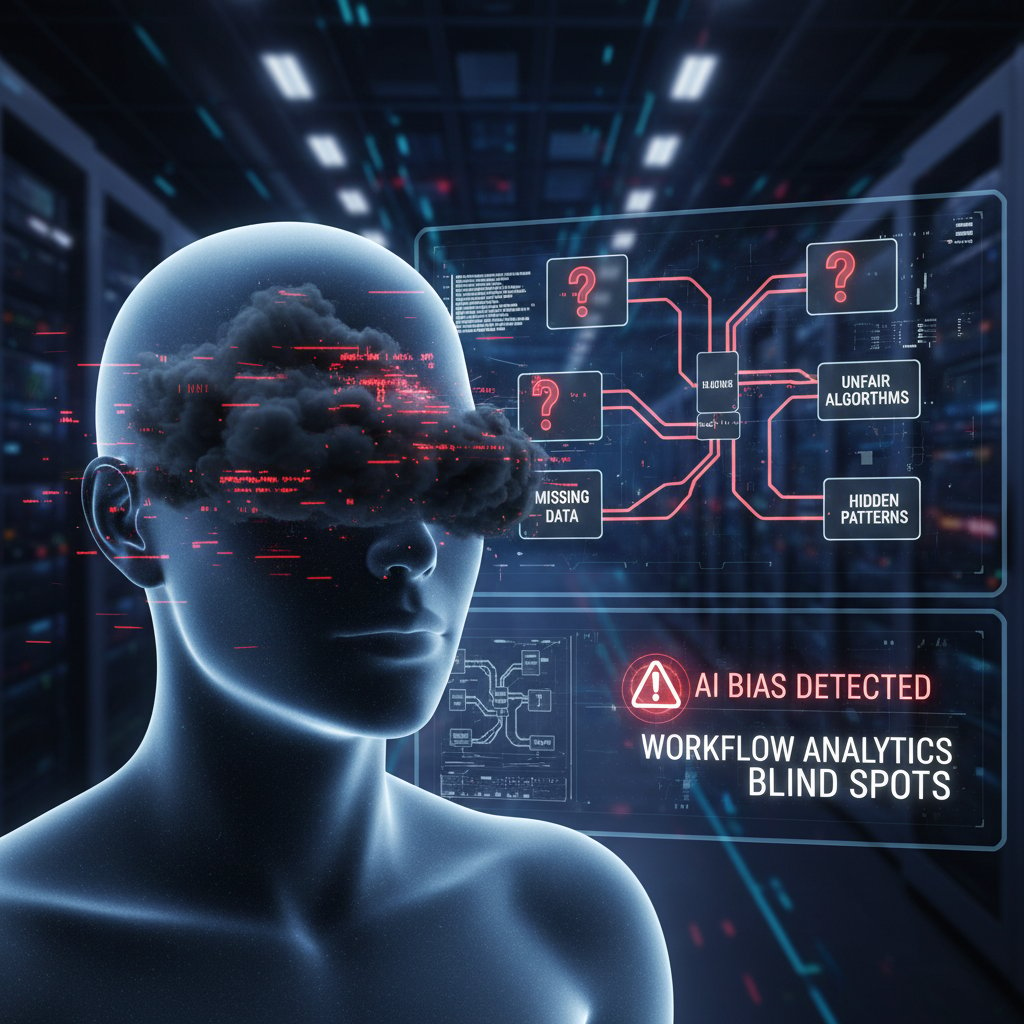
Executives must demand transparency—knowing not just the “what,” but the “why” behind every AI-driven recommendation.
When the numbers lie: overfitting and false confidence
Overfitting is when machine learning models tailor themselves too closely to historical data, mistaking quirks for universal truths. This leads to beautiful, precise predictions—until reality doesn’t match the past and the whole system cracks.
Red flags your AI analytics aren’t telling the truth
- Impossibly high accuracy in test simulations, with poor real-world results.
- Recommendations that don’t align with frontline experience or customer feedback.
- Black-box models no one can explain, defend, or audit.
- Sudden performance drops when new data appears.
- Overreliance on a single data source.
- Failure to flag outliers or rare but impactful events.
- Stakeholders increasingly disengaged from analytics outputs.
To guard against these pitfalls, organizations must regularly test and validate AI-driven insights—using both statistical techniques and human intuition. The best leaders create feedback loops where algorithmic predictions are challenged, refined, and, sometimes, ignored.
Your playbook: making ai-driven workflow analytics work for you
Step-by-step guide to effective implementation
Before you throw AI at your workflows, audit what you actually have. Map your processes, identify bottlenecks, and gather input from those closest to the action. Only then can you pinpoint where AI analytics will add the most value.
- Audit existing workflows: Interview frontline staff, map bottlenecks, and gather relevant data sources.
- Clean and standardize data: Ensure consistent formats, fill in gaps, and remove duplicates.
- Define clear objectives: What problems must AI solve? Set measurable goals.
- Select pilot processes: Start with low-risk, high-impact workflows.
- Choose the right tools: Evaluate solutions based on integration ease, interpretability, and governance.
- Set up governance: Define oversight roles, escalation paths, and validation protocols.
- Train your team: Upskill both technical and business users—democratize analytics access.
- Iterate and adapt: Collect feedback, refine models, and adjust processes as needed.
- Communicate wins and lessons: Share results, both good and bad, across the organization.
- Scale responsibly: Expand to new workflows only when ready—don’t let success breed complacency.
Change fatigue is real. Foster buy-in by involving teams early, celebrating small wins, and clearly communicating the “why” behind every step.
Choosing the right tools (without getting burned)
The AI analytics market is awash with options. Off-the-shelf solutions promise fast deployment but may struggle with unique process quirks. Custom builds offer control but demand deep technical skill and higher investment. The best choice depends on your risk tolerance, data complexity, and cultural readiness.
| Feature | AI Workflow Analytics Tools | Traditional Process Analysis Tools |
|---|---|---|
| Real-time processing | Yes | Rarely |
| Predictive capabilities | Advanced (ML/AI) | Limited (historical only) |
| Customization | High (with effort) | Moderate |
| Integration with systems | Extensive API support | Often manual or limited |
| User accessibility | Increasing, with self-service | Typically expert-driven |
| Cost efficiency | High at scale | Moderate, labor-intensive |
| Continuous improvement | Built-in (learning models) | Static, manual improvement |
Table 3: AI workflow analytics tools vs. traditional process analysis tools
Source: Original analysis based on Accenture, 2024
Platforms like futuretask.ai serve as useful benchmarks—showcasing what’s possible when modern AI meets messy, real-world processes.
What success looks like: KPIs and ROI
Forget vanity metrics. The KPIs that matter for ai-driven workflow analytics are those that track real business impact: cycle time reduction, error rates, cost-to-serve, productivity gains, and revenue growth. According to Accenture (2024), organizations with mature AI-led processes achieve up to 2.5x higher revenue growth and 2.4x greater productivity compared to peers.
Communicate ROI by connecting each process change to tangible outcomes: time saved, cost avoided, quality boosted. Translate technical wins into language the C-suite—and the shop floor—can understand.

Advanced frontiers: emerging trends and the next wave
Generative AI and the rise of autonomous workflows
Generative AI isn’t just about writing poems or code—it’s increasingly tasked with designing, optimizing, and even orchestrating entire workflows. By learning from historical patterns and real-time inputs, generative models can recommend new process structures, reallocate resources, and sometimes execute changes autonomously.
The rewards: unprecedented flexibility, speed, and creativity in business operations. The risks: loss of oversight, unanticipated errors, and ethical dilemmas when AI decisions stray from human values.
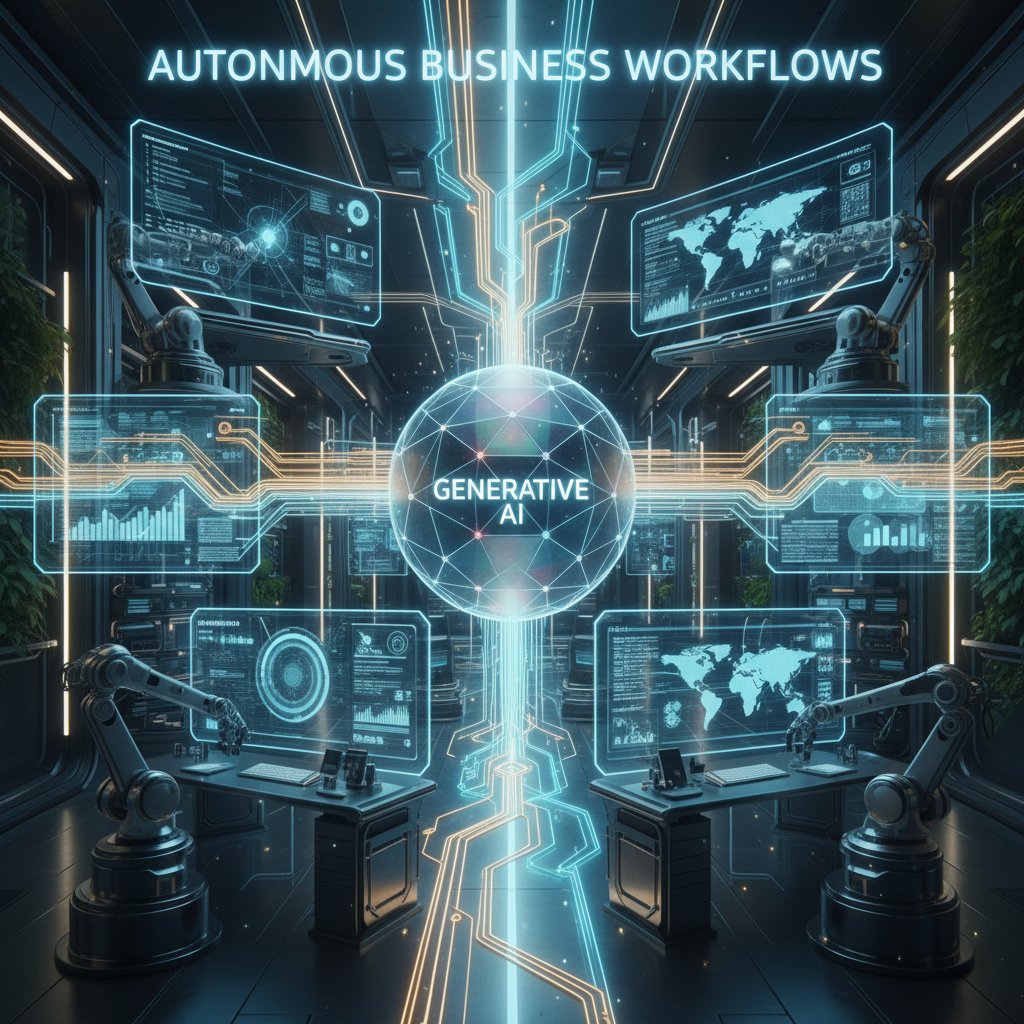
Even as autonomous workflows proliferate, organizations must double down on governance, validation, and ethical guardrails.
Cross-industry innovations (and what to steal from them)
Healthcare organizations use AI workflow analytics to reduce patient wait times, optimize scheduling, and improve outcomes. Nonprofits leverage AI to allocate resources more efficiently, while creative agencies use it to streamline ideation and pitch processes.
Unconventional uses for ai-driven workflow analytics
- Matching volunteers to causes in real time based on skill and need.
- Predicting patient no-shows and dynamically adjusting staff schedules.
- Analyzing creative brainstorming outputs for breakthrough ideas.
- Detecting grant application bottlenecks for funding organizations.
Mainstream businesses can learn plenty from these experiments: the value of democratized analytics, the power of process transparency, and the gains from rapid iteration over top-down mandates.
FAQ: everything you’re still afraid to ask about ai-driven workflow analytics
Quick answers to tough questions
Executives often fear that AI workflow analytics will expose their weaknesses, threaten their authority, or become too complex to manage. Here’s a reality check: the real danger is ignoring uncomfortable truths in your processes.
The AI’s ability to detect recurring trends, anomalies, or inefficiencies from massive data sets.
The practice of managing data quality, privacy, and access to ensure reliable analytics and regulatory compliance.
Systems that use AI/ML to accelerate or democratize insights, enabling non-technical users to generate reports.
When an algorithm learns noise instead of real patterns, leading to false confidence and poor real-world performance.
To stay ahead of the AI learning curve, leaders must invest in ongoing education, cross-team collaboration, and relentless self-audit. Ignorance isn’t just risky—it’s corporate malpractice.
Future-proofing your team and your tech
The best organizations treat AI upskilling not as a one-off, but as a core part of their culture. Workshops, open forums, and peer-to-peer learning sessions keep teams sharp and engaged. Even as AI efficiency grows, human creativity remains the ultimate competitive edge—especially for problem-solving, strategy, and empathy.

Keep challenging, keep learning, and never surrender curiosity for convenience.
The final reckoning: is ai-driven workflow analytics worth the risk?
Risk, reward, and the future of decision-making
At the end of the day, ai-driven workflow analytics offer a heady mix of reward and risk. The benefits—faster decisions, higher efficiency, and measurable growth—are huge. But so are the dangers: automation overreach, loss of context, and the always-present specter of algorithmic failure.
| Cost/Risk | Potential Reward | Considerations |
|---|---|---|
| High integration effort | 2.5x revenue growth | Requires upfront investment |
| Continuous data governance | 2.4x productivity increase | Ongoing oversight is non-negotiable |
| Need for upskilling | Strategic agility | Invest in people, not just tech |
| Risk of bias/overfitting | Competitive advantage | Regular validation is essential |
| Change management fatigue | Operational transparency | Communicate and celebrate wins |
Table 4: Cost-benefit analysis of ai-driven workflow analytics adoption in 2025
Source: Original analysis based on Accenture, 2024
Building trust in AI isn’t about blind faith; it’s about developing processes, validation, and organizational muscle memory that turns insights into results—without surrendering control.
Your next move: choosing the story you want to tell
Ultimately, the shift to ai-driven workflow analytics is as much cultural as it is technical. Success belongs to those willing to challenge their own narratives, empower teams, and use AI as a lever for transparency—not a crutch for evasion.
Reflect on your journey: Are you automating for the sake of “innovation theater,” or to genuinely transform how your business thinks, acts, and wins?
"In the end, it’s not the AI that changes your company—it’s how you use it." — Morgan
If you’re ready to see beneath the dashboards, confront the brutal truths, and craft your own playbook, you’re already ahead of the pack. The rest? They’ll be too busy admiring their charts to notice as the world changes around them.
For deeper analysis, expert guides, and real user stories on ai-driven workflow analytics, visit futuretask.ai and explore their resource hub—because in this game, knowledge isn’t just power. It’s survival.
Sources
References cited in this article
- Accenture: AI-led Processes Outperform Peers(newsroom.accenture.com)
- Workato 2024 Automation Index(workato.com)
- Gartner Top Trends 2024(gartner.com)
- Heidrick & Struggles 2024 Survey(heidrick.com)
- Bilderberg Management(bilderbergmanagement.com)
- IBM AI Workflow(ibm.com)
- Ayanza AI Workflow Tools(ayanza.com)
- WEKA 2024 AI Trends(weka.io)
- McKinsey State of AI(mckinsey.com)
- SAS AI Predictions 2024(sas.com)
- CIO: AI Disasters(cio.com)
- Workona Workflow Trends(workona.com)
- ResearchGate: AI Workflow Optimization(researchgate.net)
- LeewayHertz AI Workflow(leewayhertz.com)
- MetaSource: AI vs. Traditional Automation(metasource.com)
- PwC: Competing in the Age of AI(pwc.com)
- 2024 AI Power Rankings(billhartzer.com)
- Harvard Business Review: AI Team Dynamics(hbr.org)
- Microsoft Teams AI(microsoft.com)
- Menlo Ventures: State of Generative AI(menlovc.com)
- Gartner AI Planning Guide 2024(gartner.com)
- MIT Sloan Management Review(seerinteractive.com)
- Appian AI Workflow Automation(appian.com)
- Cflow AI Workflow Tools(cflowapps.com)
- Statology Key Analytics Trends(statology.org)
- UK Recruiter(ukrecruiter.co.uk)
Automate Your Tasks, Transform Your Business
FutureTask.ai revolutionizes your workflow by automating complex tasks typically outsourced to freelancers and agencies. Our powerful AI-driven platform leverages cutting-edge LLM technology to deliver precision, speed, and consistency at scale. Whether you're managing content creation, data analytics, marketing campaigns, or customer support, FutureTask.ai ensures seamless task execution, significant cost savings, and unmatched efficiency. Transform your business operations, eliminate delays, reduce operational overhead, and gain a competitive advantage with intelligent automation.
Get startedReady to Automate Your Business?
Start transforming tasks into automated processes today
Frequently Asked Questions
What percentage of organizations have genuinely modernized, AI-led processes according to the article?
According to Accenture (2024) research cited in the article, only 16% of organizations have genuinely modernized, AI-led processes, while the vast majority run on patchwork systems with inconsistent inputs and significant human intervention.
What ROI benefits do companies see from adopting fully modernized, AI-led processes?
According to Accenture (2024) research, companies adopting fully modernized, AI-led processes deliver 2.5x higher revenue growth and 2.4x greater productivity.
What is the main gap between AI workflow analytics promises and reality?
The article states that most executives mistake flashy dashboards and charts for true intelligence, but the reality is that even the best systems rely heavily on data wranglers, process architects, continuous human oversight, high data quality, and relentless validation—creating a dangerous illusion of control.
Why do most leaders underestimate AI-driven workflow analytics implementation?
The article indicates that leaders underestimate the integration effort required, the need for data quality, and the necessity for continuous human validation when implementing AI workflow analytics systems.
From the Archive
Explore more from Ai-powered task automation

Why Most Ai-Powered Business Analytics Automation Fails

Ai-Powered Business Intelligence Automation: Roi, Risks, Reality

Ai-Powered Website Analytics Automation: Capabilities and Risks

AI Workflow Automation: Where Companies Actually Stand in 2024

AI Business Process Optimization in 2026: Wins, Traps, Reality