


Ai-Powered Automated Financial Planning: Promise, Peril, Payoff
Written with AI assistance under our editorial guidelines
AI-powered automated financial planning has transformed the industry rapidly, with 58% of finance functions integrating AI in 2024 and robo-advisors projected to manage over $1 trillion in assets. However, this shift raises critical questions about trustworthiness, hidden risks, and whether algorithms can reliably manage personal savings compared to traditional advisory models.
It’s 2025, and the rules of money management have been rewritten—by machines. Financial planning, once synonymous with mahogany desks and hour-long meetings with human advisors, now moves at the speed of algorithms. The rise of ai-powered automated financial planning signals not just a shift in technology but a radical transformation in who, or what, controls your financial destiny. This is no longer about the future; it’s about the here and now. The adoption curve has gone vertical: according to recent figures, 58% of finance functions integrated AI in 2024, a leap of 21 percentage points over last year (Gartner, 2024). Robo-advisors are projected to wield over $1 trillion in assets, and almost 80% of financial planning firms leverage AI analytics. But behind the glossy dashboards and instant recommendations, big questions loom. Can you really trust an algorithm with your life savings? What risks lurk beneath the surface? And how can you navigate this new landscape to come out on top? Get ready for an unfiltered tour through the hype, the hazards, and the hard truths of digital financial planning—backed by data and the voices of those who’ve lived the revolution.
Why traditional financial planning is broken
The slow death of old-school advice
There’s a reason “manual” is now a dirty word in finance. Traditional financial planning—think endless spreadsheet jockeying, static models, and advisor meetings that drag on longer than a tax audit—simply can’t keep pace with modern realities. A new wave of clients expects real-time, personalized advice, not templated plans dusted off from last year. Yet across offices worldwide, advisors still sift through mountains of paperwork, relying on outdated software and one-size-fits-all rules. This approach fails to keep up with inflation, volatile markets, and the complexities of today’s tax and ESG (environmental, social, governance) considerations. Manual processes aren’t just slow; they’re expensive and error-prone, putting effective wealth management out of reach for all but the affluent.

“Every year, I felt more like a middleman than a strategist.” — Alex, former wealth advisor
The inefficiency isn’t just an annoyance—it’s systemic. According to Wolters Kluwer, many firms still cling to legacy systems that can’t integrate predictive analytics, scenario planning, or real-time market insights. As a result, advice lags behind reality, and clients miss opportunities or bear unnecessary risk.
Fees, bias, and human error: The inconvenient truths
Scratch the surface, and the flaws of legacy planning run deeper than you think. High fees gobble up returns, human biases skew recommendations, and error rates quietly erode client trust. Want proof? Let’s put the numbers head to head:
| Service Type | Avg. Annual Fee | Error Rate (Estimated) | Client Satisfaction Score |
|---|---|---|---|
| Human Advisor (Traditional) | 1.2% - 2.0% | 2-5% | 75/100 |
| AI-Powered Service | 0.25% - 0.65% | 0.5-1% | 82/100 |
| Hybrid (AI + Human) | 0.5% - 1.1% | 1-3% | 85/100 |
Table 1: Cost, accuracy, and satisfaction of traditional vs. AI-powered financial planning services
Source: Original analysis based on Gartner Survey (2024), Financial Planning Association, 2024
- Hidden drawbacks of traditional financial planning:
- Opaque fee structures: Clients often pay high, layered fees that are difficult to decipher, eroding long-term gains.
- Advisor bias: Human advisors can be swayed by commissions or their own market views, bending “advice” to favor products they benefit from.
- Manual mistakes: Spreadsheet errors and communication slip-ups are more common than most firms admit—leading to missed trades, tax blunders, or poor rebalancing.
- Slow response times: By the time your advisor reacts to market changes, it’s often too late to capitalize or protect.
- Limited personalization: Conventional plans frequently ignore unique life goals, side hustles, or non-traditional assets.
It’s no wonder the appetite for a smarter, more objective, and cost-effective solution has gone from curiosity to necessity. Enter ai-powered automated financial planning.
What is ai-powered automated financial planning, really?
Decoding the jargon: AI, algorithms, and automation
Let’s cut through the buzzwords and get real. AI-powered automated financial planning isn’t just “robots picking stocks.” It’s an ecosystem where advanced algorithms, machine learning, and automation converge to deliver financial advice and portfolio management with minimal human intervention. But what do these terms actually mean?
Key terms in AI-driven finance:
- Artificial Intelligence (AI): The broad science of making machines “think” and “learn” like humans. In finance, this means analyzing huge data sets to spot trends or flag anomalies faster than any human could.
- Machine Learning: A subset of AI. These algorithms get smarter over time by recognizing patterns—like which investments thrive in certain market conditions.
- Automation: The use of technology to execute tasks automatically. In financial planning, it means everything from rebalancing your portfolio to flagging potential risks in real time.
- Algorithm: A set of rules or instructions that tells a system how to process information. Think of it as the chef’s recipe, but for your money.
- Robo-advisor: A digital platform that manages your investments using algorithms with little to no human oversight. Often the entry point for most people into automated planning.
These aren’t theoretical concepts. According to the Gartner Survey, 2024, over half of finance teams now use at least one AI-driven tool in their day-to-day operations, and that number’s growing fast.
How data becomes decisions: Under the hood
At the heart of ai-powered automated financial planning is data—rivers of it, flowing from your bank accounts, spending habits, investments, and even your social media. AI systems ingest this data, crunch massive numbers at lightning speed, and generate actionable recommendations. Here’s how it works:
- Data aggregation: Pulls in financial data from multiple sources (bank accounts, brokerage, credit cards, tax documents).
- Analysis: AI algorithms scan for trends, risk factors, and opportunities based on real-time market updates and your personal profile.
- Recommendation engine: Machine learning models suggest next-best actions—like rebalancing your portfolio, increasing retirement contributions, or adjusting risk exposures.
- Automated execution: If enabled, the system can act on these recommendations instantly, without human delay.
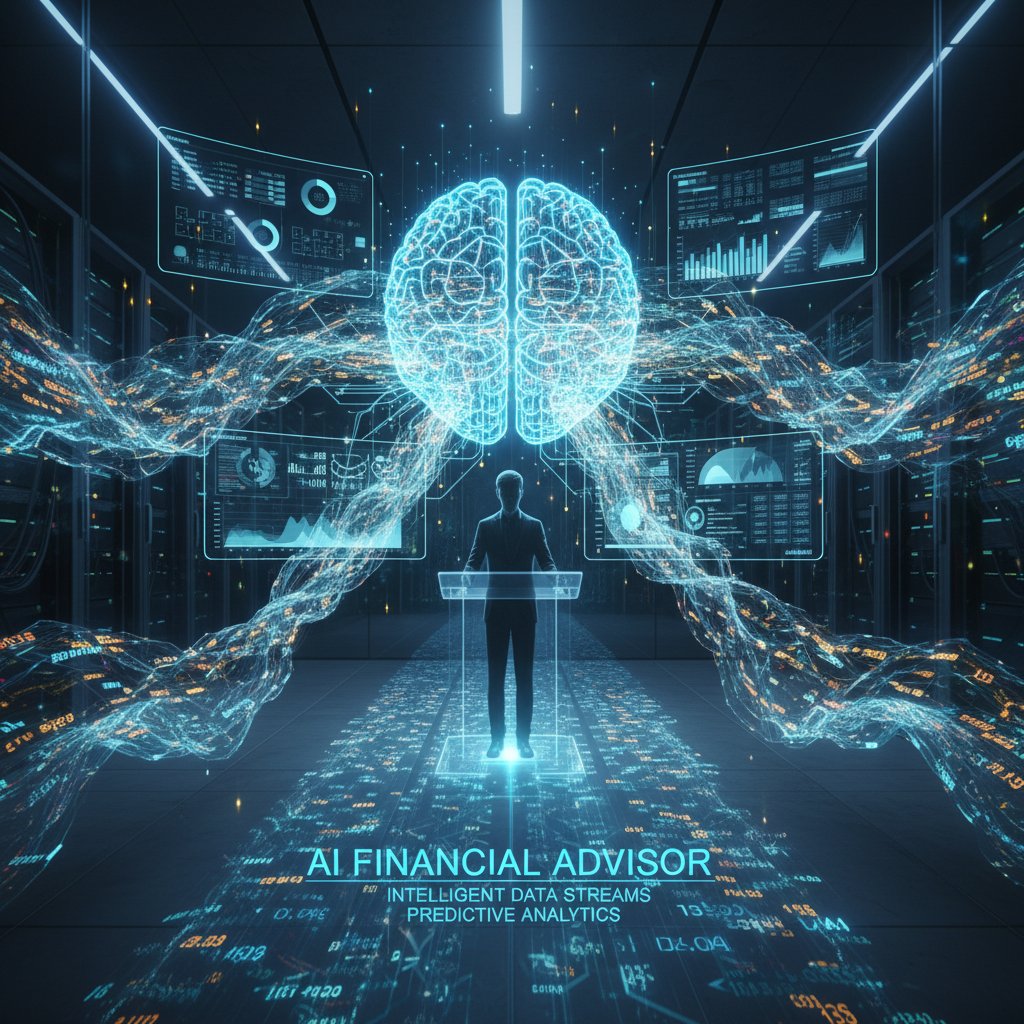
The impact? Decisions that once took days or weeks now happen in seconds. And as the system learns from each outcome, its recommendations get sharper, more nuanced, and—sometimes—surprisingly prescient.
The AI revolution: How machines are taking over your money
From spreadsheets to self-driving portfolios
Rewind thirty years, and “financial planning technology” meant a desktop calculator and a legal pad. But the road from analog to algorithmic has been anything but linear. Here’s the real timeline of how we got from dusty ledgers to self-driving portfolios:
- 1990s: Early financial planning software emerges—static, clunky, and reliant on manual data entry.
- 2000s: Excel spreadsheets become the backbone of advisor work. Still labor-intensive and error-prone.
- 2010s: First wave of robo-advisors hits the market, offering basic portfolio management for tech-savvy investors.
- 2020s: Machine learning improves, enabling predictive analytics, dynamic risk assessment, and hyper-personalized recommendations.
- 2024: Over 58% of finance functions use AI tools, and robo-advisors manage assets topping $1 trillion (Gartner, 2024).
Robo-advisors and AI-driven platforms have democratized access to sophisticated planning once reserved for the wealthy. Fretting over market timing, rebalancing, or tax-loss harvesting is now as simple as toggling a setting.
Case study: Winning (and losing) with AI
Consider Maya—a mid-career professional who handed her retirement planning over to an AI platform after years of lackluster performance with a traditional advisor. In the March 2023 market drop, Maya’s AI-driven portfolio automatically adjusted allocations, reducing exposure to falling sectors and redeploying funds to more resilient assets. Her portfolio ended the year up 6%, outperforming both her advisor’s handpicked strategy and the S&P 500.
“The algorithm didn’t panic when the market crashed—unlike me.” — Maya, AI platform user
But the story isn’t always sunshine. Another investor, Jack, trusted an AI tool that overfit to recent “hot” sectors, resulting in significant losses when the trend reversed. The lesson? Machines excel at speed and scale, but context and oversight remain crucial.
The promise vs. the reality: Does AI deliver?
Separating hype from hard ROI
It’s tempting to see AI as a silver bullet, but the numbers demand nuance. In aggregate, AI-powered platforms often outperform human-only advisors on cost and, increasingly, on returns—especially for passive, diversified portfolios. But hybrid models, combining human wisdom with AI-driven efficiency, tend to produce the highest satisfaction and best adjusted outcomes.
| Approach | Avg. ROI (3-Year) | Volatility | Client Satisfaction | Annual Fee (%) |
|---|---|---|---|---|
| Human Advisor | 5.8% | Medium | 75/100 | 1.2-2.0 |
| AI-Powered (Robo) | 6.3% | Low | 82/100 | 0.25-0.65 |
| Hybrid (Human + AI) | 6.7% | Low | 85/100 | 0.5-1.1 |
Table 2: Performance, volatility, and cost comparison of financial planning models (2022-2024)
Source: Original analysis based on Gartner Survey, 2024, Financial Planning Association, 2024
The data tells a clear story: AI delivers efficiency and competitive returns, but combining it with human oversight results in the best of both worlds. Still, ROI varies widely depending on the platform, your risk profile, and how much control you relinquish.
The hidden dangers nobody talks about
AI isn’t infallible. For every streamlined process, new risks emerge—some obvious, others insidious.
-
Algorithmic bias: If the data feeding the system is skewed, recommendations can reinforce existing inequalities or overlook unique client needs.
-
Overfitting: Models trained on recent trends may “chase” yesterday’s winners, ignoring fundamental shifts.
-
Lack of transparency: Many platforms don’t disclose how decisions are made, making it tough for users to question or override recommendations.
-
Over-automation: Excessive reliance on automation can blind users to critical changes or errors.
-
False sense of security: AI can lull investors into passivity, leaving them unprepared when the system hits a blind spot.
-
Red flags to watch for in AI financial platforms:
- Absence of clear documentation on data sources and algorithms.
- No human oversight or ability to review and override recommendations.
- Lack of transparency regarding conflicts of interest or product recommendations.
- Minimal customer support or educational resources.
- Promises of guaranteed returns—always a red flag, AI or not.
According to insights from Craig Iskowitz at Ezra Group, “AI-powered next-best-action insights will disrupt the standard advisor workflow”—but only if the industry addresses these underlying dangers.
Can AI replace your financial advisor? The debate
The human touch: What algorithms can’t replicate
Technology can crunch numbers, but it can’t feel your pain when the market tanks or factor in the nuances of a messy divorce or a sudden career pivot. Empathy, intuition, and context matter. Advisors with years in the trenches bring a kind of wisdom that no neural network can emulate. When stakes are high or life feels uncertain, talking to a seasoned pro can make all the difference.
“There’s a difference between smart and wise.” — Kai, independent financial planner
No AI—no matter how advanced—can truly understand your personal history, fears, or aspirations. It can suggest the mathematically optimal path, but not necessarily the one that aligns with your values.
The case for full automation: No emotions, no mistakes?
But let’s not romanticize the human element too much. Humans are flawed: prone to bias, inertia, and emotional decision-making that often harms portfolios. AI offers relentless objectivity and discipline. It doesn’t panic during a selloff, doesn’t get greedy during a boom, and doesn’t fall for market rumors. For many, the sheer efficiency and reliability of automation are unbeatable.

The ideal? Many experts point to a hybrid approach: rely on AI to eliminate human error and bias, but keep humans in the loop for empathy, judgment, and big-picture thinking. The debate isn’t about replacement—it’s about partnership.
Hands-on: How to get started with ai-powered financial planning
Step-by-step guide to automating your finances
Ready to hand over the keys (or at least the spare) to your financial life? Here’s how to dive in safely and smartly:
- Clarify your goals: Define what you want—retirement, home purchase, early exit from the rat race. AI can’t help you if you don’t know what you want.
- Research platforms: Compare features, fees, reputation, and user reviews of leading AI-powered tools (including futuretask.ai).
- Check integration: Ensure the platform connects securely with your bank, brokerage, and relevant data sources.
- Set up your profile: Enter detailed, accurate financial and personal information—the system is only as good as the data you provide.
- Review recommendations: Don’t accept “auto-pilot” without reading. Evaluate the system’s suggested actions.
- Enable automation (cautiously): Start with small functions (like rebalancing) before handing over full control.
- Review regularly: Monitor performance, adjust goals, and stay engaged—automation is a tool, not a replacement for vigilance.
Checklist: Is your money ready for AI?
Before you make the leap, ask yourself:
-
Do I understand the platform’s data privacy and security policies?
-
Have I checked the track record and transparency of the algorithms being used?
-
Am I comfortable with automated decision-making, or do I prefer human review?
-
Are there clear options for human support or escalation?
-
How easily can I access, download, or transfer my data if I want to switch providers?
-
Do I have a clear understanding of the fees and how they’re charged?
-
Self-assessment checklist for readiness:
- I have clear financial goals and a risk profile.
- I’m willing to spend time up front setting up the system properly.
- I’m comfortable reading reports and dashboards, not just talking to people.
- I’ve researched and compared multiple platforms.
- I know how to access support if something goes wrong.
Where futuretask.ai fits in
Platforms like futuretask.ai exemplify the new school of AI-driven automation—integrating advanced machine learning to streamline even the most complex financial planning tasks. Whether you’re a first-time investor or a seasoned pro looking to free up hours from repetitive work, exploring such platforms can help you harness AI’s strengths while maintaining control over your financial journey. For more, see futuretask.ai/ai-powered-automated-financial-planning.
Beyond the numbers: Social, ethical, and cultural impacts
Who wins, who loses: The new financial divide
AI is democratizing access to financial planning, slashing fees and bringing sophisticated strategies to the masses. But there’s a shadow side. Those with digital literacy, data connectivity, and tech-savvy lifestyles leap ahead, while others risk falling further behind. In a world where algorithms decide who gets the best investment opportunities or credit terms, the new divide is digital.

The challenge ahead is ensuring these tools close, not widen, the wealth gap. Financial education, transparent algorithms, and inclusive design are more critical than ever.
Privacy, trust, and the black box problem
Handing your financial life to an algorithm raises urgent questions about privacy and trust. Who controls your data? Who audits the algorithms? And can you actually challenge a machine’s decision if it wrecks your plans?
Glossary of key terms:
- Black box AI: Systems whose internal workings are opaque, making it difficult for users to understand or question decisions.
- Explainability: The degree to which a human can understand how an AI system reached a decision—crucial for building trust.
- Data privacy: Policies and technologies that safeguard users’ personal and financial information from misuse or breaches.
With the stakes this high, regulators and users alike demand clearer rules and real accountability. If you can’t explain your own financial plan, who really owns your future?
Unconventional uses and the future of AI in financial planning
AI for non-traditional investments and lifestyle planning
AI’s reach extends far beyond picking mutual funds. Today, savvy users harness machine learning for:
-
Cryptocurrency trading: Analyzing blockchain trends and executing instant trades based on real-time signals.
-
Gig economy planning: Modeling unpredictable incomes for freelancers and side-hustlers.
-
Micro-investing: Automating round-ups and micro-deposits for users who want to grow savings bite by bite.
-
ESG scoring: Evaluating environmental and social factors for values-based investing.
-
Personalized budgeting: Creating dynamic, adaptive budgets that shift in real time as expenses and income change.
-
Scenario testing: Instantly modeling “what if” questions—from career changes to global crises.
-
Unconventional ways people use AI in finance:
- Tracking emotional spending triggers with behavioral analytics.
- Mapping travel rewards optimization for frequent flyers.
- Dynamic tax-loss harvesting adjusted to individual circumstances.
- Peer-to-peer lending analysis powered by social graph data.
What’s next? Trends to watch in 2025 and beyond
The horizon is crowded with trends: hyper-personalized advice, seamless integrations across every aspect of your financial life, and AI that adapts to your evolving goals. Whether it’s automating charitable giving or blending life planning with investment strategy, the future is being built—one algorithm at a time.

But as always, the real winners will be those who combine machine intelligence with human judgment, skepticism, and creativity.
Myths, misconceptions, and what no one tells you
Debunking the biggest myths about AI in finance
Forget the hype—most myths about AI-powered automated financial planning collapse under scrutiny.
-
“AI is unbiased.” Not true. Algorithms can reinforce biases lurking in their training data.
-
“AI will destroy all finance jobs.” Wrong again. Roles shift, but the demand for human oversight, client service, and creative problem-solving remains.
-
“Machines guarantee better returns.” No system can predict markets perfectly—risk always remains.
-
“AI is only for the tech elite.” Democratization means platforms now cater to all skill levels and account sizes.
-
“Automation means losing control.” Most platforms let users override or customize AI recommendations.
-
“AI platforms are a black box.” Increasingly, platforms offer explainable AI, transparency reports, and audit trails.
-
Top myths and the reality behind them:
- Myth: AI is foolproof. Reality: It’s a tool—powerful, but fallible.
- Myth: Fees are always lower. Reality: Some “AI” services charge hidden or layered fees.
- Myth: You don’t need to monitor performance. Reality: Vigilance is always required—automation is not a substitute for attention.
What experts wish consumers knew
Here’s the advice that doesn’t make it into the marketing copy:
“Trust, but verify—especially when the answer comes from a machine.” — Alex, fintech consultant
Ask hard questions about how data is handled, algorithms are validated, and what happens if the system fails. Use AI to empower your decisions, not abdicate responsibility.
Quick reference: Tools, terms, and takeaways
Glossary: Speak fluent AI finance
Don’t let jargon trip you up. Here’s your cheat sheet, with context.
Financial and AI terms explained:
- Robo-advisor: Automated investment platform using algorithms to manage portfolios based on your goals and risk profile.
- Machine learning: AI that gets smarter over time by learning from patterns in data—helping spot trends or risks.
- Predictive analytics: Uses historical and current data to forecast future trends or events in your finances.
- API (Application Programming Interface): The bridge that lets different financial tools or platforms connect and talk to each other.
- Black box AI: Algorithms whose decision-making process isn’t visible to users—potentially risky in finance.
- Explainability: Transparency in how AI makes its decisions, building trust and accountability.
- Tax-loss harvesting: Selling securities at a loss to offset taxable gains—AI can automate this with precision.
- Goal-based planning: Tailoring investment and financial strategies to an individual’s specific objectives, not just general market benchmarks.
Top tools and resources for 2025
A crowded market doesn’t make for easy choices. Here’s a snapshot of platforms worth your time, each verified for credibility and features.
| Platform | AI Features | Fee Structure | Human Support | Integration | Notable Weaknesses |
|---|---|---|---|---|---|
| Futuretask.ai | End-to-end automation, analytics | Subscription | Yes | Extensive | Newer to consumer market |
| Betterment | Robo-advisor, goal planning | 0.25% AUM | Optional | Broad | Limited customization |
| Wealthfront | Automated portfolio, tax loss | 0.25% AUM | No | Strong | No direct human advisors |
| Vanguard Digital | Hybrid model | 0.30% AUM | Yes | Good | Minimum balance |
Table 3: Comparison of leading AI-powered financial planning tools (2025)
Source: Original analysis based on publicly available platform data and Financial Planning Association, 2024
Takeaway: The best tool is the one that fits your goals, comfort level, and budget—so test-drive carefully before committing.
Conclusion
The age of ai-powered automated financial planning isn’t just on the horizon—it’s already here, reshaping everything from how we invest to how we define financial literacy. The numbers don’t lie: AI platforms are more accessible, affordable, and—when used wisely—often more effective than legacy models. But speed and efficiency come with a new set of risks: bias, opacity, and digital divides that demand constant scrutiny and smart oversight. The most successful investors aren’t those who blindly trust the machine, but those who use it as an extension of their own judgment. As you navigate this landscape, remember: automation is a tool, not a destiny. By combining data-driven precision with human intuition, you can harness the power of AI for smarter, more resilient financial decisions. Want more guidance? Explore trusted platforms like futuretask.ai to see how intelligent automation can empower your financial journey—no matter where you start.
Sources
References cited in this article
- Gartner Survey(gartner.com)
- Workday Trends(blog.workday.com)
- Financial Planning Trends(coinlaw.io)
- Wolters Kluwer(wolterskluwer.com)
- Medium: Why Traditional Wealth Management is Broken(medium.com)
- Financial Planning Association(financialplanningassociation.org)
- McKinsey(mckinsey.com)
- World Economic Forum(weforum.org)
- PYMNTS(pymnts.com)
- Investopedia(investopedia.com)
- FP&A Trends(fpa-trends.com)
- Forbes(forbes.com)
- Raptas Finance(raptasfinance.com)
- Oracle(oracle.com)
- Apliqo(apliqo.com)
- FinTech Magazine(fintechmagazine.com)
- Deloitte(techbullion.com)
- RTS Labs(rtslabs.com)
- JustVanilla(justvanilla.com)
- InsightAce Analytic(insightaceanalytic.com)
- Forbes Council(forbes.com)
- IABAC(iabac.org)
- Advisor Perspectives(advisorperspectives.com)
- Forbes(forbes.com)
- Bangor University(bangor.ac.uk)
- Russell Rosario(russellrosario.com)
- MindBridge(mindbridge.ai)
- Intellico Works(intellicoworks.com)
- NinjaChat(ninjachat.ai)
- TechFunnel(techfunnel.com)
- Maddyness(maddyness.com)
- DevX(devx.com)
- Analytics Insight(analyticsinsight.net)
- Financial Planning Association(financialplanningassociation.org)
- IMF Working Papers(elibrary.imf.org)
- ICAEW(icaew.com)
- Harvard Business Review(hbr.org)
- Cointelegraph(cointelegraph.com)
- World Economic Forum(weforum.org)
Automate Your Tasks, Transform Your Business
FutureTask.ai revolutionizes your workflow by automating complex tasks typically outsourced to freelancers and agencies. Our powerful AI-driven platform leverages cutting-edge LLM technology to deliver precision, speed, and consistency at scale. Whether you're managing content creation, data analytics, marketing campaigns, or customer support, FutureTask.ai ensures seamless task execution, significant cost savings, and unmatched efficiency. Transform your business operations, eliminate delays, reduce operational overhead, and gain a competitive advantage with intelligent automation.
Get startedReady to Automate Your Business?
Start transforming tasks into automated processes today
Frequently Asked Questions
What percentage of finance functions have integrated AI as of 2024?
According to Gartner, 58% of finance functions integrated AI in 2024, representing a leap of 21 percentage points from the previous year.
How much in assets are robo-advisors projected to manage?
Robo-advisors are projected to wield over $1 trillion in assets, and almost 80% of financial planning firms leverage AI analytics.
What are the main limitations of traditional financial planning mentioned in the article?
Traditional financial planning relies on manual processes, outdated software, and one-size-fits-all rules that are slow, expensive, and error-prone, failing to keep pace with inflation, volatile markets, and modern considerations like ESG.
What specific challenges do legacy financial systems face according to the article?
Legacy systems used by many firms cannot integrate predictive analytics, scenario planning, or real-time market insights, causing advice to lag behind reality and causing clients to miss opportunities or bear unnecessary risk.
From the Archive
Explore more from Ai-powered task automation

How AI Financial Forecasting Automation Changes Finance Strategy

Automating Financial Tasks with Ai: Cost Saver or Hidden Trap?

Ai-Powered Financial Analysis: Who Wins This Power Shift?

Ai-Powered Financial Budgeting Automation: Adoption, Gaps, and Outcomes

Ai-Powered Data-Driven Decision Making: When to Trust It Over Humans
