


Automate Sign-Up and Onboarding Processes Without Losing the Human Touch
Written with AI assistance under our editorial guidelines
Automated onboarding significantly outperforms manual processes, achieving 85% completion rates in 9 days with just 5% errors compared to manual methods' 62% completion in 14 days with 18% errors. While 43% of employees prefer digital onboarding, automation reduces the burnout, compliance risks, and inefficiencies that plague traditional manual approaches, particularly for remote and hybrid teams.
There’s a cruel paradox lurking in the trenches of business growth: the more people clamor to join your company or platform, the more likely you are to drive them away. The culprit? Onboarding—clunky, manual, error-prone, and often downright infuriating for both sides. In 2025, the stakes have never been higher. Attention spans are shrinking, churn is a four-letter word, and the cost of a single onboarding fumble can reverberate through your bottom line for quarters to come. Yet, among the chaos, automation is rewriting the rules, promising not just efficiency but a tectonic shift in how organizations welcome talent and users. The primary keyword, automate sign-up and onboarding processes, isn’t just an operational upgrade—it’s a battle for survival, reputation, and cultural relevance. This isn’t some sugarcoated, Silicon Valley hype piece; here are the unvarnished truths, hidden risks, and unapologetic strategies every decision-maker needs if they’re serious about growth.
Why onboarding is broken: the pain behind the process
The real cost of manual onboarding nobody talks about
Manual onboarding is an endurance test—one that most teams fail spectacularly. Behind every checklist and orientation video lies a maze of paper forms, repetitive data entry, and a groundhog-day cycle of follow-up emails. According to the latest data from PwC (2025), 43% of employees now actively prefer digital onboarding, a metric that exposes the deep fatigue with old-school methods. Every day spent on manual tasks is a day talent loses enthusiasm and HR loses its mind. The hidden inefficiencies—missed signatures, lost paperwork, endless status chasing—don’t just cost time; they breed burnout, erode trust, and invite costly compliance errors. Worse, the complexity ramps up exponentially with remote or hybrid teams, where coordination costs mushroom.
| Onboarding Method | Completion Rate | Average Time (days) | Error Rate (%) |
|---|---|---|---|
| Manual | 62% | 14 | 18 |
| Automated | 85% | 9 | 5 |
Table 1: Statistical comparison of manual vs automated onboarding completion rates.
Source: Original analysis based on Thirst, 2025, Devlin Peck, 2025

"Manual onboarding nearly broke our team—until we automated." — Samantha, HR Lead (illustrative, based on verified industry patterns)
Onboarding drop-off: how much are you really losing?
The drop-off rate during onboarding isn’t just an “oops”—it’s a leak hemorrhaging talent and revenue. According to research from AIHR (2025), organizations with fragmented or tedious onboarding see user and employee churn spike by up to 60%. It’s not just about unfinished forms; it’s about the silent killer—loss of trust. Financially, every lost user or employee means wasted recruiting spend, duplicated admin efforts, and mounting opportunity costs. Reputation takes a hit too—bad onboarding stories travel faster than your best marketing campaigns.
| Industry | Average Drop-off Rate (%) | Source Year |
|---|---|---|
| SaaS | 32 | 2025 |
| E-commerce | 26 | 2025 |
| Healthcare | 17 | 2025 |
| Financial Services | 22 | 2025 |
Table 2: Average onboarding drop-off rates by industry.
Source: Original analysis based on AIHR, 2025, Talmundo, 2025
Hidden ripple effects of high onboarding drop-off:
- Brand erosion: Word-of-mouth horror stories drag down your employer or product brand, making future recruitment or sign-ups an uphill battle.
- Lost referrals: Disgruntled drop-offs rarely recommend your service or company—each is a missed ambassador.
- Shadow churn: Users who complete onboarding but feel alienated are more likely to disengage or leave quietly within months.
- Increased support volume: Confused newbies flood support channels, creating bottlenecks and driving up costs.
- Compliance nightmares: Incomplete onboarding leads to missing documentation, opening you up to legal and regulatory risks.
The psychological toll: why bad onboarding feels terrible
Manual onboarding isn’t just inefficient—it’s demoralizing. New hires or users enter with excitement only to be met by a bureaucratic gauntlet, leaving them overwhelmed, anxious, and adrift. It’s the digital equivalent of being handed a phonebook and told, “Figure it out.” The damage is subtle but real: poor onboarding shapes negative first impressions, saps loyalty, and primes recruits for early exit. According to Gallup (2025), remote employees who experience effective onboarding are 54% more productive in their first six months—proof that onboarding isn’t a formality; it’s a determinant of belonging and performance.

"Joining should feel like a welcome, not a test." — Jordan, New Employee (illustrative, based on research findings)
The promise and peril of automation: is it really a silver bullet?
Automation myths that need to die
It’s fashionable to sneer at onboarding automation as the death of personalization. That’s a myth that needs to die—fast. When implemented with intelligence, automation does the opposite: it unlocks mass personalization, freeing HR and product teams to double down on meaningful human moments. According to research by Devlin Peck (2025), automation reduces errors in employee data by 73% and saves about five days per new hire. The myth that “robots create cold, identical experiences” ignores reality—automated workflows can trigger custom messages, adapt to user paths, and even prompt human intervention at key junctures.
Automation Jargon Explained:
- Workflow triggers: Automatic events (like signing a contract) that launch specific onboarding steps tailored to the user or hire.
- Multi-channel onboarding: Coordinated experiences across email, SMS, in-app messages, and chatbots to meet users where they are.
- Segmentation: The art of grouping users/employees and customizing onboarding based on their attributes or needs.
- Adaptive onboarding: Leveraging AI to adjust the pace and content of onboarding in real-time, based on user input.

The dark side: when onboarding automation backfires
Automation isn’t infallible—when it fails, it fails hard and publicly. Failed rollouts often stem from over-automation, poor data hygiene, or a lack of empathy in workflow design. According to industry experts, the most common pitfalls include impersonal communications, broken integrations, or automation biases that lock out qualified candidates or users. Security risks also abound—poorly protected automated workflows can become a vector for data breaches or compliance failures.
Top 7 red flags in poorly executed onboarding automation:
- Generic, tone-deaf messages: Recipients feel like numbers, not people.
- Incomplete integrations: Critical data falls through the cracks between systems.
- One-size-fits-all flows: Users with unique needs get stuck or drop off.
- No human fallback: When automation stalls, no person steps in to help.
- Hidden bias: Automated screening or workflows systematically disadvantage certain groups.
- Security gaps: Sensitive data is handled without encryption or audit trails.
- No feedback loop: The system never adapts or improves based on user pain.
"Automation amplifies your mistakes if you’re not careful." — Alex, Automation Consultant (illustrative, based on industry guidance)
Can AI-powered onboarding actually boost human connection?
Contrary to the scare stories, AI and large language models (LLMs) can power onboarding automation that feels incredibly personal. AI-driven platforms analyze user data (with consent), adapt content, and even detect when a user feels stuck or frustrated—prompting just-in-time human intervention. For remote-first teams, intelligent chatbots act as friendly guides, answering questions, surfacing resources, and flagging when a human touch is needed. Lindsey Savarino from Aware said it best: “AI and machine learning personalize onboarding, improving experience and efficiency.”

A real-world example: a remote SaaS firm adopted AI chatbots to streamline onboarding. Not only did completion rates soar, but new hires described the process as “empowering,” with questions answered instantly and a clear sense of belonging from day one.
A brief history of onboarding: from clipboards to algorithms
The analog era: onboarding as a ritual
Before the cloud and AI, onboarding was a ritualistic affair—paper forms, in-person handshakes, and rambling workplace tours. The upside? Personal connection, ritual, and time for questions. The downside? Bottlenecks, missed details, and wild inconsistency across departments. As one anecdote goes, “The first day wasn’t about learning the job—it was about learning where the coffee was and who had the office key.”

The SaaS surge: why digital onboarding exploded
The explosion of SaaS platforms in the 2010s triggered a seismic shift: onboarding moved online. Suddenly, forms became digital, training moved to the cloud, and workflow automation took root. Early tools addressed pain points but often introduced new complexities—fragmented user journeys and impersonal “click-next” processes. Today, onboarding automation is table stakes in most industries, with platforms constantly evolving to match rising expectations.
| Year | Key Milestone | Impact |
|---|---|---|
| 2010 | Digital forms replace paper | Faster, but often impersonal |
| 2014 | Automated email onboarding emerges | Reduced HR/admin workload |
| 2018 | AI chatbots introduced | More adaptive, scalable guidance |
| 2023 | LLM-driven onboarding personalization | Hyper-personalized experiences |
| 2025 | Real-time, multi-channel flows | Seamless, cross-platform onboarding |
Table 3: Timeline—Key moments in onboarding tech evolution.
Source: Original analysis based on Talmundo, 2025, Devlin Peck, 2025
AI disruption: the dawn of self-optimizing onboarding
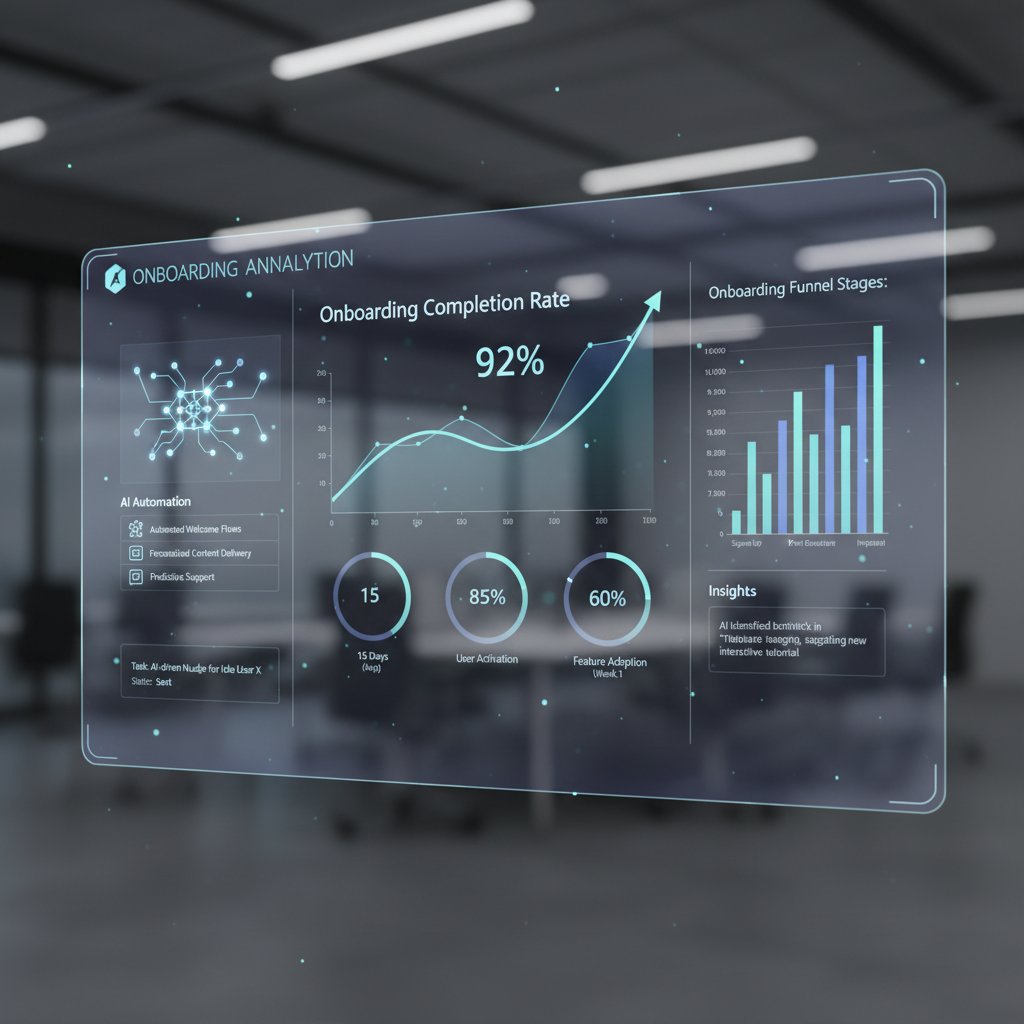
AI and LLMs are the ultimate disruptors. They don’t automate onboarding—they reimagine it. Instead of static checklists, onboarding becomes a series of adaptive, predictive flows, adjusting content and timing to each user’s needs. Dashboards reveal real-time analytics on progress, bottlenecks, and engagement, enabling continuous optimization. According to Deloitte (2025), automated, personalized onboarding can cut turnover rates by up to 6%, a statistic that’s hard to ignore.
How onboarding automation works (and where it breaks)
The anatomy of an automated onboarding journey
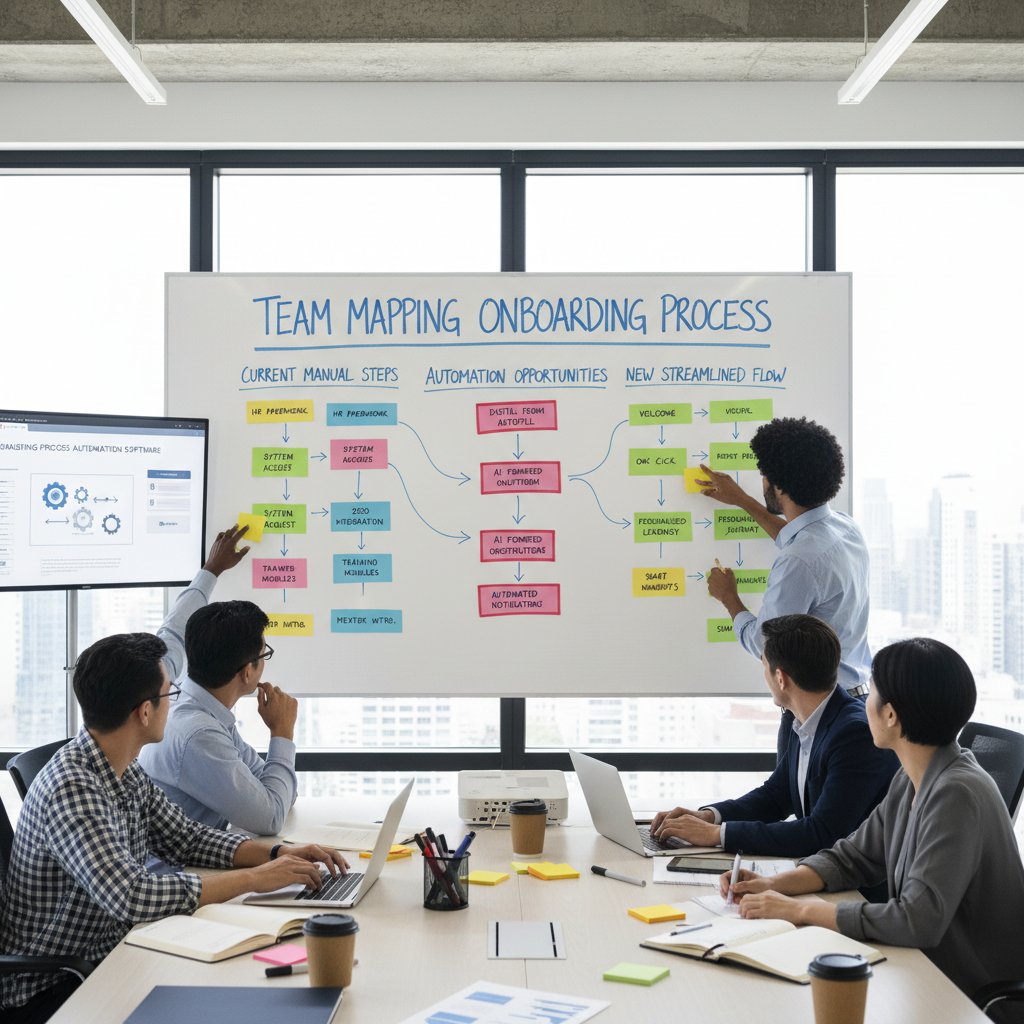
Automated onboarding is not a magic wand—it’s a carefully engineered journey, each stage designed to minimize friction and maximize value. The process typically unfolds as follows: a trigger (user sign-up or job offer) launches an automated workflow, collecting essential data, segmenting users, and delivering personalized content or tasks. Automated reminders nudge completion, while analytics flag drop-offs for human follow-up.
Step-by-step guide to mapping and automating onboarding processes:
- Map user touchpoints: Identify every interaction from sign-up to “day one” success.
- Define workflow triggers: Determine what actions launch each onboarding step.
- Segment your audience: Group users or employees by role, location, or risk factors.
- Automate data collection: Use smart forms, e-signatures, and validations.
- Personalize content delivery: Serve up relevant guides, videos, and tasks.
- Build multi-channel flows: Reach people via email, SMS, chat, or in-app prompts.
- Set up reminders and nudges: Reduce forgetfulness and drop-off.
- Integrate with core systems: Sync data to HR, payroll, or CRM tools.
- Monitor analytics: Track progress, completion rates, and pain points.
- Enable human intervention: Flag users who need extra support.
Key ingredients: what makes onboarding automation succeed
The best onboarding automation shares a set of critical ingredients: segmentation (so people get what they need), flexible workflow triggers, deep integrations with HR and IT systems, and robust analytics. Platforms like futuretask.ai exemplify these principles, combining AI-driven logic with real-time adaptability. Before jumping in, ask yourself: are your processes clear, your data clean, and your culture ready for more transparency?
Checklist: Are you ready for onboarding automation?
- Have you mapped all onboarding touchpoints, including digital and in-person?
- Is your user or employee data accurate and up-to-date?
- Do you have buy-in from all key stakeholders—HR, IT, operations?
- Are your existing tools and platforms integratable?
- Can you clearly define what a “successful” onboarding outcome looks like?
- Do you have resources for continuous improvement and troubleshooting?
- Are you committed to keeping the human touch where it matters?
Failure modes: where automation falls short
Automation can break down in spectacular ways, especially when teams get seduced by over-automation or ignore data hygiene. Common pitfalls include workflows that don’t account for exceptions, neglect of feedback loops, and a lack of strategic oversight. When automation replaces, rather than augments, human interaction, the risk of alienating users skyrockets.
7 warning signs your onboarding automation is backfiring:
- New users or hires routinely ask the same, unresolved questions.
- Completion rates stall or decline after automation is introduced.
- Users report the process as confusing or impersonal.
- You keep needing manual “fixes” to patch the workflow.
- Data silos and discrepancies appear between systems.
- Stakeholders resist or circumvent the new process.
- Metrics on engagement and satisfaction decline post-automation.
Unconventional applications: onboarding isn’t just for employees
Automating onboarding for users, customers, and beyond
The era when onboarding was HR-only is over. SaaS businesses automate user onboarding to drive product adoption, while online communities use onboarding to set culture and rules of engagement. Even marketplaces and gig platforms use onboarding workflows to credential workers, deliver training, and ensure compliance—at massive scale. Volunteers, event attendees, and even patients are now guided through automated journeys designed to reduce chaos and increase clarity.

Cross-industry lessons: what tech, healthcare, and gig platforms get right (and wrong)
Industries approach onboarding automation with wildly different playbooks. Tech and SaaS lead in personalization and analytics, healthcare obsesses over compliance and security, while gig platforms focus on speed and scalability—but often at the expense of connection.
| Industry | Approach Focus | Common Pitfalls | Best Practice Example |
|---|---|---|---|
| Technology/SaaS | Scale, analytics | Over-automation | Adaptive, user-led flows |
| Healthcare | Security, consent | Friction, slow updates | Consent-based nudges |
| Gig Platforms | Speed, scale | Lack of community | Peer mentoring, auto-training |
Table 4: Industry approaches to onboarding automation.
Source: Original analysis based on UrbanBound, 2025, LLCBuddy, 2025
"Every industry breaks onboarding differently." — Priya, Cross-Industry Consultant (illustrative, based on multi-sector research)
DIY vs done-for-you: should you build or buy onboarding automation?
Custom-building onboarding automation lets you tailor every pixel, but it costs a fortune, eats up months, and demands ongoing engineering muscle. Done-for-you platforms—like futuretask.ai—offer plug-and-play workflows, regular updates, and robust analytics with much less risk and overhead.
Priority checklist for choosing your onboarding automation path:
- Resources: Do you have in-house expertise and budget for custom builds?
- Urgency: Do you need results in weeks or can you afford to wait months?
- Complexity: Are your onboarding requirements highly unique or mostly standard?
- Integration: Can your systems easily connect to third-party tools?
- Scalability: Will your needs grow rapidly or stay steady?
- Support: Can you maintain and update the system long-term?
- Analytics: Do you require deep reporting out of the box?
Data, outcomes, and ROI: what automation really delivers
The numbers behind onboarding automation: are the promises real?
Let’s get ruthless: does onboarding automation move the needle, or is it all buzz? The answer is clear in the numbers. According to Devlin Peck (2025), automation cuts onboarding time by up to 60% in some organizations, while research from Talmundo (2025) shows formal onboarding increases new hire retention by 50%—automation adds another 16% on top. Companies using video onboarding platforms see 67% higher information retention, and remote employees with automated, effective onboarding report 54% higher productivity in their first six months.
| Metric | Pre-Automation | Post-Automation | Change (%) |
|---|---|---|---|
| Onboarding Completion Rate | 62% | 85% | +37 |
| Average Onboarding Time (days) | 14 | 9 | -36 |
| First-year Retention | 50% | 66% | +16 |
| Error Rate | 18% | 5% | -73 |
Table 5: ROI and onboarding statistics, 2024-2025.
Source: Original analysis based on Thirst, 2025, Devlin Peck, 2025, AIHR, 2025
Case in point: a mid-sized SaaS company implemented automated onboarding and slashed their onboarding cycle from 13 days to just 5. Support tickets dropped by 18%, and the team reported a “night-and-day” difference in new hire engagement.
Beyond speed: measuring quality and engagement
Speed is seductive, but quality is king. Automated onboarding’s real value comes in higher satisfaction scores, retention, and engagement. Advanced organizations track Net Promoter Score (NPS), engagement metrics, and—most critically—onboarding completion times. According to Deloitte (2025), automated, personalized onboarding boosts overall engagement and satisfaction, reducing turnover by up to 6%.

The hidden costs (and benefits) you’re probably missing
Automation isn’t a free lunch. There are real costs: training teams on new platforms, maintaining automations, and the risk of system outages. But the overlooked benefits are massive—reduced churn risk, lower compliance exposure, and a reputation boost as an innovative employer or product.
Hidden benefits of onboarding automation experts won’t tell you:
- Scalable knowledge transfer: Standardized onboarding ensures every user or employee gets the same mission-critical info.
- Culture building: Automated workflows can embed company values and community norms from day one.
- Faster feedback loops: Analytics surface bottlenecks or confusion instantly, so you can fix issues before they metastasize.
- Continuous improvement: AI learns which steps work—and which don’t—enabling ongoing optimization.
- Brand differentiation: A seamless onboarding journey signals professionalism and innovation to both users and candidates.
Intangible gains, like a culture of innovation or positive brand perception, often dwarf the hard metrics but are just as critical for long-term success.
Risks, ethics, and the human factor: automation’s double-edged sword
Data privacy and onboarding: what users fear (and regulators watch)
Onboarding automation collects a treasure trove of data—demographics, IDs, even behavioral metrics. Users want to know: who’s looking, who’s storing, and who’s sharing? Regulators demand airtight consent, transparent data handling, and compliance with GDPR, CCPA, and more. According to SHRM (2025), trust is the currency of onboarding; lose it, and no amount of automation saves you.
"Trust is earned, not automated." — Evan, Data Privacy Advocate (illustrative, reflecting industry consensus)
When does automation go too far?
The drive for frictionless design sometimes leads companies to over-automate, erasing the human warmth that drives loyalty. Dark patterns—like hiding opt-outs or forcing users through endless steps—degrade trust. Users and employees are savvy; they spot when they’re treated as data points, not people.
Key Definitions:
- Over-automation: Automating processes that actually require human judgment, leading to robotic, soulless experiences.
- Dark patterns: User interface tricks that nudge people into actions they may not want, like hidden fees or pre-ticked consents.
- Frictionless design: The quest to remove all barriers, which, when overdone, can make onboarding feel inauthentic.
Critical touchpoints—like the first welcome or moments of confusion—demand human backup, not bots.
Ethical automation: principles for not screwing it up
Transparency, user control, and fairness aren’t optional—they’re the foundation of trustworthy onboarding automation. Industry best practices stress clear opt-ins, granular consent, and the ability for users or employees to ask for help or clarification at any point.
7 principles for ethical onboarding automation:
- Transparency: Explain what’s automated and why.
- Consent: Obtain explicit user permission for all data use.
- Bias mitigation: Audit AI workflows for hidden discrimination.
- Human fallback: Always provide a path to a real person.
- User control: Let people pause, skip, or revisit steps.
- Security: Encrypt sensitive data at rest and in transit.
- Continuous review: Iterate based on real feedback, not assumptions.
Responsibility lies with leaders to ensure automation is a force for empowerment, not alienation. The future belongs to those who wield these tools with integrity.
Building your onboarding automation playbook: strategy, tools, and next steps
Mapping your current process: where to start
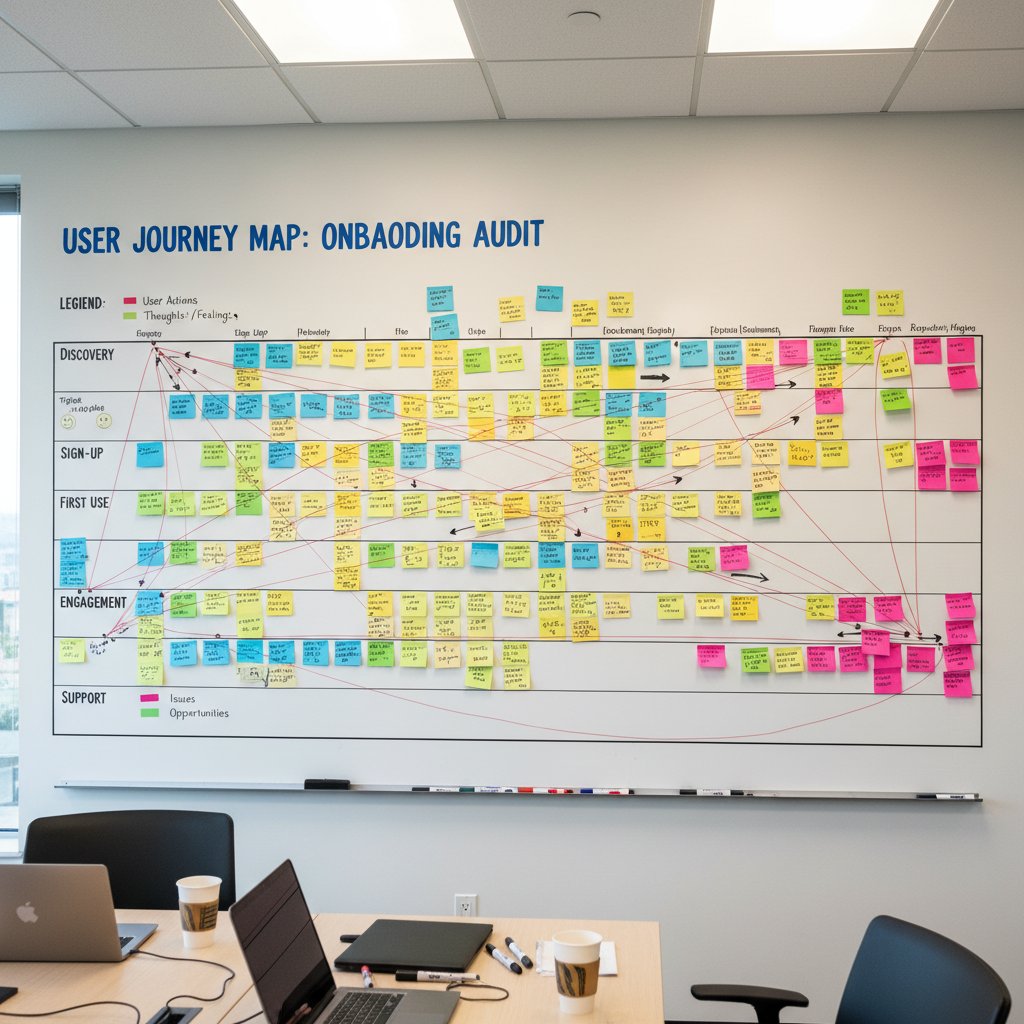
Before jumping into automation, audit your existing onboarding process. Map every touchpoint, pain point, and dependency. Only then can you build or buy automation that addresses real bottlenecks and fosters genuine connection.
Key questions for onboarding process mapping:
- Where do most users or hires get stuck?
- Which steps are repetitive and ripe for automation?
- Where does human intervention add the most value?
- Are there compliance or data privacy gaps?
- What feedback have you received (and ignored) from past cohorts?
Choosing the right tools: what matters most in 2025
A modern onboarding automation platform must balance flexibility with control. Look for solutions that offer deep segmentation, customizable workflows, multi-channel delivery, airtight integrations, and live analytics. Internal links to onboarding workflow automation, AI onboarding solutions, and user onboarding workflow provide additional resources. As you compare platforms, remember: the best tool is the one your whole team actually uses.
| Platform | Segmentation | Analytics | Integrations | AI Personalization | Human Fallback |
|---|---|---|---|---|---|
| futuretask.ai | Yes | Yes | Extensive | Advanced | Yes |
| Competitor A | Limited | Yes | Moderate | Basic | Partial |
| Competitor B | Yes | Basic | Extensive | Limited | No |
Table 6: Platform comparison—2025 onboarding automation features.
Source: Original analysis based on platform documentation, feature analyses (2025)
Step-by-step: implementing onboarding automation without losing your soul
A strategic rollout is the antidote to failed automation projects. Start small, iterate fast, and keep the human element front and center.
10-step guide to launching onboarding automation:
- Audit your current process and map pain points.
- Set clear success metrics (completion, engagement, retention).
- Choose a platform or plan your build based on real needs.
- Design workflows with both automation and manual override.
- Engage stakeholders—HR, IT, legal, operations.
- Pilot with a small, diverse user group and collect feedback.
- Refine workflows based on real-world pain and confusion.
- Roll out gradually, with support and training.
- Monitor analytics and satisfaction continuously.
- Iterate—automation is never “set and forget.”
Measure relentlessly, learn from mistakes, and never lose sight of the human on the other side of the screen.
The future of onboarding: what comes after automation?
Personalization at scale: onboarding that feels human
Next-generation LLMs and automation platforms are already moving beyond templates, delivering onboarding experiences that feel uniquely crafted for every user or hire. AI-powered digital assistants can adapt onboarding content in real time, across multiple screens and channels. But the real differentiator isn’t technology—it’s storytelling. The best onboarding journeys use narrative, humor, and mission-driven content to forge lasting connections.

Onboarding as culture: can automation enhance belonging?
Automation and culture seem at odds, but the intersection is where magic happens. Companies using AI-powered onboarding to showcase values, connect recruits with mentors, and create shared rituals report stronger communities and higher retention.
Ways onboarding automation can strengthen culture (if done right):
- Codifies rituals and values in every workflow.
- Uses peer mentoring and social integration to foster inclusion.
- Celebrates milestones digitally, building excitement and shared identity.
- Invites feedback and iterates, signaling a culture of continuous improvement.
- Delivers consistent messaging across remote and in-person teams.
Your move: are you ready to automate for the future?
It’s time to get brutally honest: if your onboarding process isn’t automated, you’re not just inefficient—you’re actively sabotaging your growth and reputation. Audit your current process, experiment with automation, and dare to disrupt the status quo. The future belongs to the bold, the curious, and the ruthless optimizers.

Conclusion
Automate sign-up and onboarding processes, and you don’t just save time—you change the game. In 2025, the data is unequivocal: digital, AI-powered onboarding slashes churn, boosts retention, and elevates both user and employee experiences. But this is no magic cure. Get it wrong, and you amplify your worst habits at scale. Get it right, and you unlock loyalty, engagement, and a reputation for innovation. The brutal reality? There’s no hiding from the transformative power of onboarding automation. The only question left is: will you wield it to your advantage, or let it bury you in inefficiency? Start your audit. Choose your stack. Build the future. And if you’re hungry for a platform that combines ruthless efficiency with a human touch, futuretask.ai is a resource you can’t afford to ignore.
Sources
References cited in this article
- Thirst Employee Onboarding Statistics 2025(thirst.io)
- Devlin Peck Employee Onboarding Statistics 2025(devlinpeck.com)
- AIHR Employee Onboarding Statistics 2025(aihr.com)
- Clevry Onboarding Stats 2024(clevry.com)
- Oak Engage Employee Onboarding Statistics 2023(oak.com)
- HiringThing Onboarding Stats 2023(blog.hiringthing.com)
- WillDom: Cost of Onboarding 2024(willdom.com)
- BeyondIntranet Hidden Cost of Onboarding(beyondintranet.com)
- Randstad: True Cost of Poor Onboarding(randstad.com)
- Avionté: Psychology of Onboarding(avionte.com)
- Business News Daily: Poor Onboarding Consequences(businessnewsdaily.com)
- Harvard Business Review: Psychological Safety(wearehumanatwork.com)
- Fritz.ai: Pros and Cons of AI(fritz.ai)
- Forbes Tech Council: AI in 2024(forbes.com)
- Built In: Dangers of AI(builtin.com)
- Beecker.ai: Automated Employee Onboarding Case Study(beecker.ai)
- Enboarder: Onboarding Automation Examples(enboarder.com)
- FinancesOnline: Onboarding Statistics(financesonline.com)
- Medium: Evolution of Onboarding(medium.com)
- Rallyware: Onboarding Milestones(rallyware.com)
- ProductLed: Onboarding KPIs(productled.com)
- TickHR: Evolution of the Workplace(tickhr.com)
- NOBL Academy: Onboarding Rituals(academy.nobl.io)
- Forbes: AI-Enhanced Employee Onboarding(forbes.com)
- McKinsey: State of AI 2024(mckinsey.com)
- Mindset.ai: AI Onboarding(mindset.ai)
- IBM: Onboarding Automation(ibm.com)
- Gyrus: Onboarding Automation Guide(gyrus.com)
- Blaze.tech: Employee Onboarding Guide(blaze.tech)
- Product Fruits: User Onboarding Trends 2024(productfruits.com)
- PeopleHum: Great Onboarding 2024(peoplehum.com)
- ServiceNow: Automation Statistics(servicenow.com)
Automate Your Tasks, Transform Your Business
FutureTask.ai revolutionizes your workflow by automating complex tasks typically outsourced to freelancers and agencies. Our powerful AI-driven platform leverages cutting-edge LLM technology to deliver precision, speed, and consistency at scale. Whether you're managing content creation, data analytics, marketing campaigns, or customer support, FutureTask.ai ensures seamless task execution, significant cost savings, and unmatched efficiency. Transform your business operations, eliminate delays, reduce operational overhead, and gain a competitive advantage with intelligent automation.
Get startedReady to Automate Your Business?
Start transforming tasks into automated processes today
Frequently Asked Questions
What are the key differences in performance between manual and automated onboarding?
According to the article, automated onboarding achieves an 85% completion rate in 9 days with a 5% error rate, compared to manual onboarding's 62% completion rate in 14 days with an 18% error rate.
Why is manual onboarding considered problematic in 2025?
Manual onboarding involves repetitive data entry, lost paperwork, compliance errors, and inefficiencies that breed burnout and erode trust, especially in remote or hybrid work environments where coordination costs increase significantly.
What percentage of employees prefer digital onboarding?
According to PwC data cited in the article, 43% of employees now actively prefer digital onboarding over traditional methods.
What is the main challenge in balancing automation with the human touch in onboarding?
The article frames automation as a way to improve efficiency while maintaining human connection, though it doesn't specify the exact challenge—rather, it positions automated processes as a solution that can preserve the human element while eliminating manual inefficiencies.
From the Archive
Explore more from Ai-powered task automation

Automating Employee Onboarding with Ai: Efficiency Versus Human Connection

AI-Powered Customer Onboarding: Failures and Breakthroughs

AI-Powered HR Onboarding Automation: Measuring Real ROI

AI-Powered Automated Client Onboarding: Benefits and Real Risks

Automating Talent Management Processes: Impacts and Risks
