
Automating Talent Management Processes Without Losing the Human
Written with AI assistance under our editorial guidelines
Companies are automating talent management to eliminate inefficiency and unlock strategic possibilities, but the real challenge lies in maintaining human connection throughout the process. Automation handles routine administrative tasks, freeing HR teams to focus on employee experience and engagement. Success requires balancing technological efficiency with genuine human interaction to avoid cultural damage.
Walk into any forward-thinking HR department in 2025, and you’ll smell ozone and ambition—automation is no longer a looming disruptor, but the engine driving a seismic power shift. Automating talent management processes isn’t just about shaving a few seconds off the onboarding clock or streamlining paperwork; it’s about rewriting what “human resources” even means. The clichés are dead: automated recruitment, AI workflow automation for HR, and digital talent management have collided to create a wild new status quo. Forget the sanitized vendor pitches—this article dives deep into the real, gritty truths of automating talent management processes, including the hidden risks, the unexpected cultural fallout, and the power struggles happening behind closed doors. Ready to see what your competitors aren’t telling you? Let’s rip the cover off the machine.
Welcome to the machine: why automating talent management processes is inevitable
The origins of talent management automation
Once upon a time, HR was a world of clacking typewriters, overflowing filing cabinets, and a Sisyphean paper chase. The leap from analog to digital began in the late 20th century, with the first wave of HR software taking over payroll and benefits administration. But it wasn’t until the 2010s that cloud-based systems, big data, and algorithms crashed the party. Suddenly, applicant tracking systems (ATS) and employee self-service portals empowered HR teams to do in minutes what once took days. This shift wasn't just about speed; it was about unlocking new strategic possibilities. By 2025, with AI workflow orchestration and large language models (LLMs) in play, talent management automation has become the default, not the exception.

Digital transformation wasn’t a gentle evolution—it was a survival instinct. Manual HR processes became the bottleneck for growth, especially as remote work and global teams exploded. According to Deloitte, companies who failed to automate critical HR tasks saw higher error rates, employee burnout, and lost competitive ground. As technology matured, the idea of relying on slow, manual systems started to look not just inefficient, but reckless.
What’s broken in today’s HR world
If you’ve ever witnessed HR staff buried under a mountain of onboarding paperwork, you already know what’s broken. Manual HR is a maze of inefficiency: duplicative entry, inconsistent data, overlooked compliance deadlines, and a never-ending churn of routine queries. High-value employees are stuck on repetitive grunt work, while strategic initiatives languish on the back burner. According to research from RippleHire, 2025, operational bottlenecks and efficiency gaps have made automation not just desirable, but essential.
| Manual talent management | Automated talent management | |
|---|---|---|
| Accuracy | Prone to human error, data entry mistakes | Near-perfect accuracy, auto-validation |
| Speed | Slow, sequential, bottlenecked | Real-time, parallel, scalable |
| Scalability | Resource-hungry, hard to expand | Instantly scales to need |
| Employee satisfaction | Low, high burnout | Higher, focus on meaningful work |
Table 1: Manual vs. automated talent management: key differences
Source: Original analysis based on RippleHire, 2025, LinkedIn, 2025
It’s not about replacing humans—it’s about letting them do work that matters. Legacy processes drain morale and create blind spots in compliance and diversity. Meanwhile, the competitive pressure from companies leveraging digital talent management software grows impossible to ignore.
Statistical snapshot: automation adoption in 2025
The numbers don’t lie—by 2025, automation isn’t just a trend; it’s the bedrock of modern HR. According to McKinsey, 2024, half of all HR leaders use AI-driven tools, shrinking hiring timelines by 40% and boosting quality of hire. Research from TRG International, 2024 shows 40% of companies now make recruitment decisions based on data, double the rate from just four years prior.
| Region | 2022 Adoption (%) | 2023 Adoption (%) | 2024 Adoption (%) | 2025 Adoption (%) |
|---|---|---|---|---|
| North America | 28 | 38 | 47 | 56 |
| Europe | 22 | 31 | 41 | 51 |
| Asia-Pacific | 19 | 29 | 38 | 48 |
| Latin America | 11 | 17 | 26 | 35 |
| Global Average | 20 | 29 | 38 | 48 |
Table 2: Global adoption rates of HR automation (2022-2025)
Source: Original analysis based on 365Talents, 2024, TRG International, 2024
The surge is even more dramatic in industries like tech, finance, and marketing, where 70%+ adoption is already the norm. The upshot? If you’re not automating, you’re not even in the race.
Does automating talent management really work? Myths, facts, and failures
Mythbusting: automation will replace HR (or will it?)
The oldest scare story in the book: “The robots are coming for your job.” It’s an easy myth to sell, but current research paints a more nuanced picture. Automation in talent management—especially when driven by AI workflow automation for HR—doesn’t eliminate the need for human expertise; it amplifies it. According to AIHR, 2025, 75% of HR professionals use AI-powered solutions, but only 40% of HR jobs are automated. The new standard? Human-AI collaboration.
"Automation is a tool, not a takeover." — Maya Lopez, HR strategist, HR.com, 2025
HR teams who master digital talent management are freed to focus on strategy, culture, and leadership—things even the sharpest algorithm can’t replicate. The only jobs truly at risk are the ones stuck in the past.
When automation goes wrong: cautionary tales
Yet, not all automation stories have happy endings. Rushed rollouts, untested algorithms, and blind faith in “black box” systems have led to high-profile failures. For instance, several Fortune 500 firms faced legal battles when their automated recruitment software perpetuated bias or filtered out qualified candidates due to poor data training, as detailed by Forbes, 2024. Consequences have ranged from public relations disasters to regulatory fines and plummeting morale.

One notorious example: an AI-driven screening tool at a global retailer systematically favored certain demographics, leading to a costly internal audit and the overhaul of their entire process. The lesson is clear—automation without oversight can do more harm than good.
Separating hype from reality: what the data says
So what does the ROI on automation really look like? While upfront investments can be steep, the payback is undeniable for organizations that plan and execute wisely. According to Deel, Deloitte, 2024, automation can slash hiring costs by 30% and onboarding time by 50%, while elevating retention rates and compliance.
| Metric | Manual Approach | Automated Approach | ROI |
|---|---|---|---|
| Setup Costs | Low | Moderate-High | — |
| Ongoing Expenses | High (labor, errors) | Low (maintenance) | — |
| Hiring Time | 6-8 weeks | 3-4 weeks | 40-50% faster |
| Compliance Errors | Frequent | Rare | +250% improvement |
| Retention | Flat/Declining | Improved | +15% |
Table 3: Cost-benefit analysis: manual vs. automated talent management
Source: Original analysis based on Deel, Deloitte, 2024, LinkedIn, 2025
Automation works—when it’s implemented with rigor and a focus on outcomes, not just hype.
Inside the black box: how AI really automates talent management
From rules to reasoning: the tech powering automation
Early automation in HR was strictly rules-based: “If candidate answers yes to X, send Y email.” But today’s systems are powered by AI, machine learning, and natural language processing. This isn’t just about digitizing forms—it’s about evolving from rote process automation to intelligent, adaptive workflows.
Key terms you need to know:
Software bots that mimic repetitive human actions like data entry, approvals, and notifications. RPA helped automate rote HR tasks but lacks contextual understanding.
Advanced AI (like GPT-4) that can process, generate, and interpret human language, enabling nuanced screening, personalized onboarding, and even performance reviews.
The design and management of end-to-end HR processes, integrating multiple systems (payroll, recruitment, training) for seamless automation and visibility.
Techniques for detecting and correcting algorithmic bias in automated HR processes, including regular audits, diverse training data, and vendor transparency.
According to HR.com, 2025, leading HR organizations demand transparent algorithms and audit trails to guard against black-box risk.
Debunking ‘one-size-fits-all’ automation
No two organizations share the same culture, workflows, or risk tolerance. Plug-and-play automation almost always disappoints. The best HR teams tailor automation to their unique DNA—balancing standardization with customization. Research from 365Talents, 2024 finds that companies with the highest ROI are those who adapt automation to their evolving culture and workforce strategy.

Automation is a scalpel, not a sledgehammer. The smartest teams iterate, collecting user feedback and fine-tuning automation to build trust and drive adoption.
Checklist: is your process ripe for automation?
- Your HR team spends more than 30% of their time on repetitive, rules-based tasks.
- Manual errors in compliance, payroll, or onboarding have triggered warnings or fines.
- Employee or candidate experience scores have plateaued or dipped.
- You struggle to scale HR operations during periods of rapid hiring or organizational shifts.
- Data silos prevent a unified view of talent and performance.
- You lack real-time analytics on recruitment, retention, or diversity metrics.
- Strategic HR initiatives are constantly delayed due to lack of bandwidth.
- Leadership is open to iterative, data-driven change and process optimization.
If you ticked off more than three, your process is screaming for automation.
The dark side of talent automation: bias, compliance, and culture shock
Bias in, bias out: the hidden risk
For all its promise, automating talent management processes can turbocharge existing biases if not carefully managed. When Amazon famously scrapped its experimental AI hiring tool for penalizing female candidates, it was a wake-up call for the industry. The culprit? Training data that reflected historical imbalances, not objective merit. Recent audits, highlighted by HR.com, 2025, show that even sophisticated systems can encode bias unless algorithms are regularly scrutinized.
"An algorithm learns what you feed it. Garbage in, garbage out." — Jordan Tan, AI ethicist, HR.com, 2025
The lesson: automation is only as fair as the data and intent behind it. Bias audits and transparent reporting are non-negotiable in 2025.
Navigating the legal minefield
Automating HR isn’t just a technical journey—it’s a legal tightrope. Privacy laws, anti-discrimination statutes, and local regulations are tightening globally. The EU’s AI Act sets rigorous standards for algorithmic transparency in recruitment. In the US, states like Illinois and Maryland have passed laws requiring disclosure of automated decision-making to candidates.
Seven steps to ensure compliance:
- Map all automated HR processes; document data inputs and outputs.
- Perform regular bias audits on algorithms and datasets.
- Disclose use of AI tools to all candidates and employees.
- Obtain explicit consent for data collection and usage.
- Provide human override options for key hiring and personnel decisions.
- Stay updated on evolving regulations in all relevant jurisdictions.
- Retain detailed documentation of all compliance efforts.
Failure to comply isn’t just bad publicity—it attracts legal action and erodes trust.
When culture rebels: automation and employee trust
No matter how “seamless” the rollout, automation can spark resistance, distrust, or outright rebellion. Employees fear being turned into data points; managers fear losing control. A rushed, top-down implementation can tank morale and spur covert workarounds. According to LinkedIn, 2025, the most successful transformations are transparent, participatory, and iterative—leaders invite feedback, address fears, and demonstrate tangible benefits.

Ignoring culture is the fastest way to turn a promising automation project into an expensive failure. Trust is the true currency of successful digital transformation.
Case files: real-world wins and fails in automating talent management
Breakthroughs: companies who got it right
Take the story of a fast-scaling e-commerce startup that automated its end-to-end recruitment pipeline using a blend of AI-powered talent management software and custom workflow orchestration. Within six months, they cut time-to-hire by 45%, improved offer acceptance rates by 30%, and slashed recruitment costs in half—all while increasing workforce diversity. According to LinkedIn, 2025, their secret was continuous feedback loops and a relentless focus on employee experience.

This isn’t just about efficiency; it’s about building a talent engine that attracts and retains top performers.
Lessons from the burnout trenches
But not every automation tale has a happy ending. Chris, a talent manager at a legacy financial services firm, recalls:
"We thought automation would save us—until it nearly broke us." — Chris Morgan, talent manager, Forbes, 2024
A top-down push for “total automation” led to misconfigured systems, angry employees who couldn’t get answers, and a spike in regrettable attrition. The company had to pause, retrain its AI, and rebuild trust from the ground up. Lesson: never confuse speed with progress.
Unconventional uses for automation you haven’t seen yet
- Real-time sentiment analysis of employee chat channels to spot burnout before it erupts.
- AI-driven mentorship pairings based on skill gaps and personality profiles.
- Automated “stay interview” scheduling to boost retention proactively.
- Dynamic workforce planning that reallocates teams based on project data and market trends.
- Predictive analytics for internal mobility—spotting star performers before competitors can poach them.
- Micro-learning modules triggered by workflow events, not just training schedules.
- Automated DEI dashboards that surface inclusion blind spots in real time.
These edgy applications show that automation isn’t just about hiring faster—it’s about working smarter and deeper.
Building your automation roadmap: strategy, steps, and snags
Step-by-step guide to mastering automation
- Secure executive buy-in with a clear business case tied to ROI and strategic outcomes.
- Map existing HR processes; identify bottlenecks, redundancies, and compliance risks.
- Engage employees early—conduct workshops, gather input, and address concerns.
- Select automation tools that offer transparency, customization, and integration.
- Pilot automation in low-risk, high-volume workflows (e.g., onboarding, leave management).
- Audit outputs for bias, errors, and process gaps; iterate based on real feedback.
- Scale successful pilots incrementally, expanding to more complex workflows.
- Implement robust change management—train, communicate, support.
- Monitor outcomes continuously with real-time analytics and reporting.
- Foster a culture of continuous improvement—solicit feedback, adapt, and optimize.
These steps are battle-tested across industries, from futuretask.ai to global enterprises.
Which platform? Feature comparison table
Choosing the right automation platform is a strategic decision. The leaders offer much more than checklists—they combine AI, integration, and transparency. Below, a snapshot of top platforms, including futuretask.ai:
| Platform | Task Automation Variety | Real-Time Execution | Customizable Workflows | Cost Efficiency | Continuous Learning AI |
|---|---|---|---|---|---|
| FutureTask.ai | Comprehensive | Yes | Fully customizable | High savings | Adaptive improvements |
| Competitor A | Limited | Delayed | Basic customization | Moderate savings | Static performance |
| Competitor B | Moderate | Yes | Some customization | Moderate | Some improvements |
Table 4: Top talent management automation platforms (2025)
Source: Original analysis based on futuretask.ai and industry benchmarks
Always prioritize platforms that offer transparency, audit capabilities, and seamless integration with your existing stack.
Red flags to watch out for
- Lack of algorithmic transparency or explainability.
- Vendors who dodge questions about bias audits or compliance.
- Rigid, non-customizable workflows that don’t fit your culture.
- Over-promising “plug-and-play” solutions for complex challenges.
- No clear ownership or accountability for automation outcomes.
- Poor training and change management support.
- Ignoring employee feedback or cultural pushback.
- Failure to comply with local privacy and employment laws.
If you see these, back away—your automation project is headed for trouble.
The human paradox: will automation re-humanize or dehumanize HR?
Automation as a creativity unlock
It’s easy to see automation as a threat to “human” resources, but the true impact is more nuanced. By stripping away repetitive, low-value work, automation grants HR teams the time and mental bandwidth to focus on creativity, empathy, and strategic vision. According to LinkedIn, 2025, organizations with high automation adoption report higher employee engagement and more innovative HR initiatives.
What gets lost in translation?
Still, something is lost when algorithms triage resumes or chatbots answer employee queries: nuance, context, and the deep listening that defines great HR. Subtle cultural signals, unspoken anxieties, or emerging conflicts may slip through the cracks. The best HR teams act as stewards, ensuring that technology augments—not replaces—the human touch.
Hybrid future: augmented intelligence, not replacement
The emerging best practice is blended intelligence: AI handles pattern recognition, data crunching, and routine communications, while humans focus on judgment, ethics, and relationships. At futuretask.ai, this philosophy guides the development of intelligent automation that supports—not supplants—HR professionals.
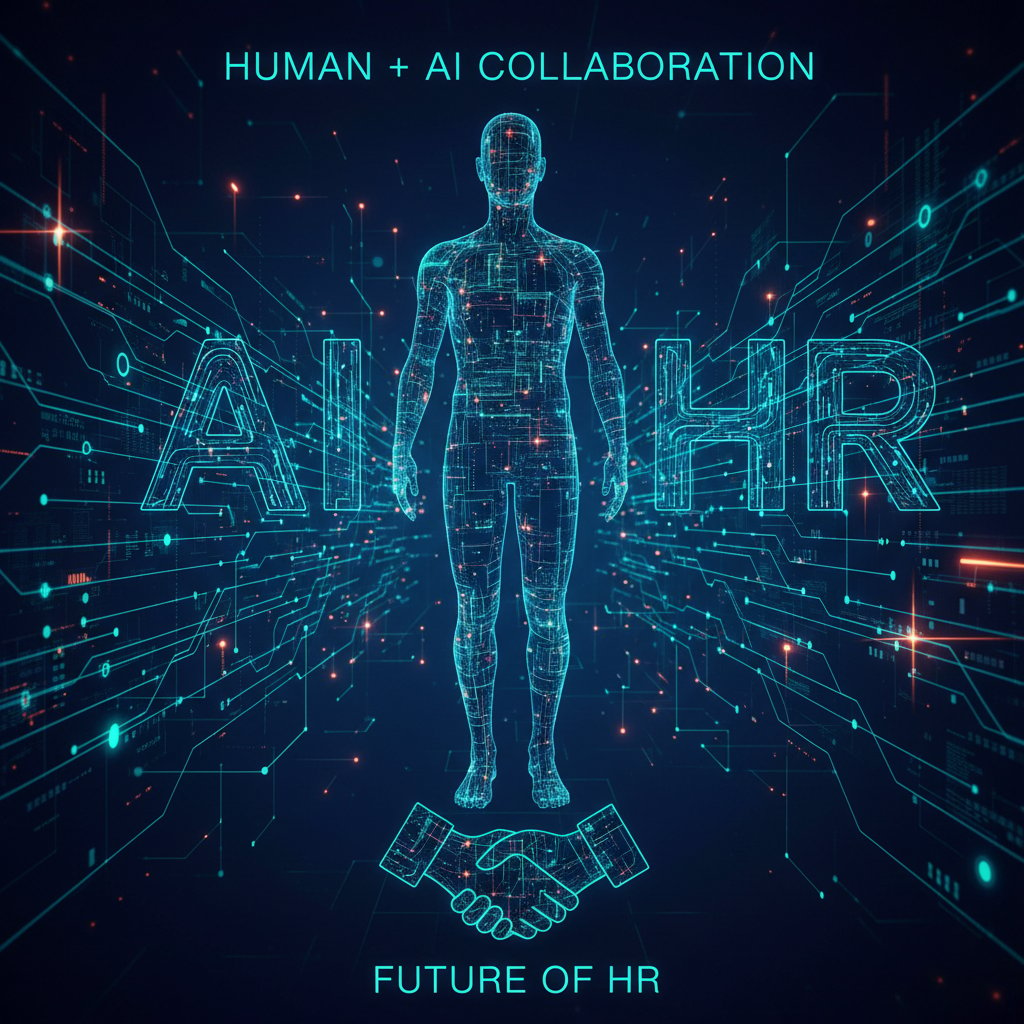
The organizations thriving in 2025 are those that get this balance right.
What’s next? The future of automating talent management processes
2025 and beyond: what to expect
Forget the hype—here’s what’s real right now. LLM-powered chatbots handle onboarding and policy questions with nuance. Predictive analytics surface flight risks before they turn into churn. Adaptive workflows personalize employee journeys at scale. These aren’t tomorrow’s dreams—they’re today’s competitive edge, as seen in 365Talents, 2024.
Timeline: the evolution of talent management automation
- Manual record-keeping and paper files dominate (pre-1990s).
- First HR software digitizes payroll and benefits (1990s).
- Cloud-based HR systems and ATS adoption (2000s).
- Early RPA automates rote tasks (early 2010s).
- AI-powered screening and onboarding tools emerge (late 2010s).
- LLM-driven chatbots and analytics become mainstream (2022-2024).
- Bias audits and algorithmic transparency become standard (2024).
- Fully integrated, adaptive, and compliance-ready HR automation defines best-in-class organizations (2025).
This arc shows that automating talent management processes is a journey—not a product.
Who leads the charge? Meet the disruptors
A new generation of HR tech leaders, startups, and thinkers is rewriting the playbook. Companies like futuretask.ai are at the edge, blending AI, workflow automation, and compliance into solutions that empower people—not just processes. Thought leaders champion transparency, ethics, and human-centered design. These disruptors are setting the pace for the next era of digital talent management.
Getting started: your quick reference guide to automating talent management
Priority checklist for automation success
- Define clear outcomes—what does “success” look like for your HR automation?
- Audit your current workflows for bottlenecks, errors, and compliance risks.
- Engage stakeholders from day one; make change a shared mission.
- Choose tools with transparency, integration, and bias mitigation baked in.
- Pilot automations in small, measurable ways; capture feedback continuously.
- Train your team—not just on the tech, but on new ways of working.
- Build a culture of continuous learning, iteration, and improvement.
Get these right, and you’re already ahead of 80% of the market.
Glossary: decoding automation jargon
Bots that replicate repetitive, rules-based HR tasks with high accuracy. Essential for automating bulk operations.
AI that understands and generates human language, enabling smarter screening, communication, and sentiment analysis.
The strategic coordination of multiple HR processes into seamless, automated flows.
A formal review process to identify and correct potential discrimination in automated HR systems.
Designing automation so that decisions can be explained and justified to stakeholders, regulators, and employees.
Using data and AI to forecast HR trends, such as turnover or skill gaps, before they become problems.
Automation that evolves with your organization, learning from outcomes and user feedback.
Systems that ensure processes meet legal and regulatory standards automatically, reducing risk.
Resource roundup: where to go next
For leaders seeking to master automating talent management processes, start with trusted industry reports, communities like HR.com, and the robust insights shared by futuretask.ai. Peer communities, academic research, and transparent vendors are critical allies in this journey. Above all, keep the conversation going—automation is a team sport, not a solo sprint.
Conclusion: automation, agency, and the new rules of talent management
The new HR playbook
The game has changed. Automating talent management processes isn’t just a technical upgrade—it’s a revolution in agency and accountability. HR leaders must toss out the old playbook and embrace a mindset of relentless adaptation, ethical stewardship, and radical transparency. According to current research, those who blend automation with empathy and cultural intelligence aren’t just surviving—they’re dominating.
Final thought: are you ready to disrupt yourself?
The question isn’t whether automation will redefine HR—it already has. The real question is: will you seize the moment, challenge your own assumptions, and build the future your team deserves? Or will you cling to outdated models, watching as more agile competitors race ahead? The choice, as always, is yours. But in the age of digital talent management, standing still is the riskiest move of all.
Sources
References cited in this article
- HR.com: 19 Experts Predict The Biggest HR Trends For 2025(hr.com)
- Forbes: HR Predictions For 2025(forbes.com)
- 365Talents: Future of HR: 10 HR trends and predictions for 2025(365talents.com)
- RippleHire: How HR automation is transforming talent management in 2025(ripplehire.com)
- LinkedIn: Talent Management Trends for 2025(linkedin.com)
- ATOSS: The evolution of automation in HR(atoss.com)
- Forbes: Pioneering the Future: AI’s Evolution in Talent Management(forbes.com)
- CIPD: Resource and talent planning report 2024(cipd.org)
- SHRM: 2024 Talent Trends Report(shrm.org)
- Engagedly: Talent Management Trends and Updates to Watch in 2024(engagedly.com)
- Fortune Business Insights: Talent Management Software Market(fortunebusinessinsights.com)
- AIHR: Could Your HR Job Be Automated in the Next 10 Years?(aihr.com)
- HRMSWorld: The future of HR automation (and AI)(hrmsworld.com)
- IBM: AI in Talent Acquisition(ibm.com)
- Draup: AI in Talent Management(draup.com)
- ResearchGate: Debunking the one-size-fits-all approach to HR(researchgate.net)
- Medium: 50 Case Studies Exploring Talent Management(mark-bridges.medium.com)
- Writesonic: HR Automation 2024(writesonic.com)
- Rippling: 5 HR processes you should automate(rippling.com)
- American Bar Association: Navigating the AI Employment Bias Maze(americanbar.org)
- Thomson Reuters: 10 Global compliance concerns for 2024(thomsonreuters.com)
- HBR: Talent Management in the Age of AI(hbr.org)
- Centuro Global: HR Case Studies 2024(centuroglobal.com)
- Wolters Kluwer: 5 ways to rethink your talent strategy in 2024(wolterskluwer.com)
- TRG International: Talent Management Trends 2024(blog.trginternational.com)
- Acronotics: Develop an Automation Roadmap(acronotics.com)
- Forbes: Lead The Change: The Enterprise Executive Roadmap To Automation Platforms(forbes.com)
- Leoforce: The Expert’s Guide to Recruitment Process Automation(leoforce.com)
- LinkedIn: Navigating the Future: Talent Management Best Practices for 2024(linkedin.com)
Automate Your Tasks, Transform Your Business
FutureTask.ai revolutionizes your workflow by automating complex tasks typically outsourced to freelancers and agencies. Our powerful AI-driven platform leverages cutting-edge LLM technology to deliver precision, speed, and consistency at scale. Whether you're managing content creation, data analytics, marketing campaigns, or customer support, FutureTask.ai ensures seamless task execution, significant cost savings, and unmatched efficiency. Transform your business operations, eliminate delays, reduce operational overhead, and gain a competitive advantage with intelligent automation.
Get startedReady to Automate Your Business?
Start transforming tasks into automated processes today
Frequently Asked Questions
What is talent management automation and why is it becoming inevitable?
Talent management automation uses digital systems, AI, and algorithms to handle HR processes like recruitment, onboarding, and employee management. It has become inevitable because manual HR processes create bottlenecks for growth, especially with remote and global teams, leading to higher error rates and employee burnout according to Deloitte.
How has talent management automation evolved since the late 20th century?
HR automation began in the late 20th century with basic HR software for payroll and benefits, then evolved in the 2010s with cloud-based systems and big data. By 2025, AI workflow orchestration and large language models have made talent management automation the default approach rather than the exception.
What problems does talent management automation solve?
Automation solves the inefficiency of manual HR processes by reducing tasks that once took days to minutes, eliminating duplicative data entry, and reducing human error. This allows HR teams to unlock new strategic possibilities beyond just administrative burden.
Does the article suggest automation eliminates the human element in HR?
No—the article's title explicitly emphasizes automating talent management processes "without losing the human," and it examines the real impacts including cultural fallout and the importance of maintaining human judgment in HR decisions.
From the Archive
Explore more from Ai-powered task automation

Automating HR Task Management with Ai: the Real Trade-Offs

Ai-Powered Talent Acquisition Automation: What Actually Works

Automate HR Processes with AI Without Falling for Vendor Myths

How AI-Powered Workforce Management Automation Is Reshaping Organizations

Automating Workflow Management Tasks: Balancing Efficiency with Team Retention