

Ai-Powered Shipping Automation: Real Roi, Risks and What Breaks
Written with AI assistance under our editorial guidelines
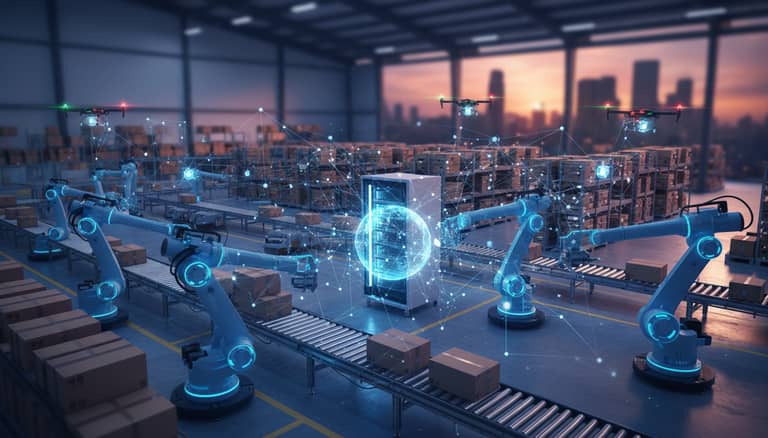
AI-powered shipping automation offers real operational benefits in today's volatile logistics landscape marked by labor shortages and supply chain disruptions. However, the technology comes with hidden costs, implementation risks, and isn't universally suitable for all businesses. Success requires understanding both the genuine ROI potential and the practical challenges that emerge when deploying automation at scale.
Welcome to the no-BS guide to ai-powered shipping automation—the kind of insider exposé the glossy sales decks and LinkedIn “thought leaders” won’t share. If you’re in logistics, e-commerce, or operations, you’re witnessing a convulsion in the global supply chain. Automation, once a boardroom buzzword, now runs deep in the arteries of shipping, routing, and last-mile delivery. But peel back the shiny dashboard, and the story gets messy: hidden costs, worker anxiety, ROI myths, and the reality that not every business is ready for the AI freight train. In this deep-dive, you’ll discover what’s real, what’s hype, and the raw strategies seasoned pros are using—not just to survive, but to own the new shipping game. By the end, you’ll have the truths, risks, and actionable playbooks to ride the AI automation wave and avoid its undercurrents. Don’t blink. This is ai-powered shipping automation in the unvarnished present.
Why ai-powered shipping automation matters now
A world on the edge: shipping chaos in 2024
2024’s logistics landscape is anything but stable. Pandemic aftershocks, labor shortages, and snarled ports have left the shipping industry gasping for solutions, not slogans. According to research from ResearchGate, 2024, the cascade of disruptions has increased operational costs, delayed deliveries, and amplified inventory shortages worldwide. The result? Even giants with flawless pre-pandemic playbooks are scrambling for answers.

If you’re moving goods in 2024, you’re not just fighting weather or customs delays—you’re up against a volatile blend of post-pandemic volatility, geopolitical tension, and the kind of unpredictable consumer demand that shatters old forecasting models. The myth of the smooth, linear supply chain died years ago. Now, automation isn’t a buzzword; it’s the only life raft for companies determined to stay afloat.
According to Lloyd’s Register, 2024, the maritime AI market nearly tripled between 2023 and 2024, surging as organizations scrambled to automate, optimize, and predict their way through chaos. But for every headline about streamlined ports and robotic forklifts, there’s a story of digital growing pains—and companies that faltered because they underestimated the complexity beneath automation’s glossy surface.
From analog to algorithm: the rise of AI in logistics
For decades, shipping was a world of clipboards, spreadsheets, and “gut feel” decision-making. The last 24 months have changed that at a pace that would’ve seemed laughable in 2019. AI now powers route optimization, predicts equipment failures, automates loading docks, and even negotiates freight contracts. According to Maritime Technology Review, 2024, the integration of AI into global shipping has enabled savings that could reach trillions, thanks to smarter routing and fuel reductions.
Here’s how the digital evolution looks in real terms:
| Era | Dominant Process | Key Technologies | Major Limitation |
|---|---|---|---|
| Pre-2019 | Manual scheduling | Spreadsheets, phones | Human error, slow response |
| 2019–2022 | Digital transformation | Cloud TMS, GPS | Siloed data, limited automation |
| 2023–2024 | AI-driven automation | Predictive analytics, AI robotics | Integration complexity, change resistance |
Table 1: Evolution of shipping operations—past to present. Source: Original analysis based on Maritime Technology Review, 2024 and Lloyd’s Register, 2024.
The shift is seismic, but the pain points are real. As companies automate, digital maturity is exposed as the real differentiator: those stuck on outdated platforms, or relying on stagnant data, risk getting left behind. According to Forbes, 2023, many logistics players still lack the real-time visibility and unified data that makes AI truly effective.
What users really want: speed, accuracy, survival
Scratch beneath the tech hype, and shipping customers care about three things: fast delivery, reliability, and not getting burned by unseen risks. In the chaos of 2024, these needs have only sharpened. As noted by Supply Chain Dive, 2024, AI’s allure is its ability to hit what humans (and old systems) can’t—like preventing porch piracy or recalculating delivery ETAs on the fly.
- Faster delivery windows: Modern consumers expect real-time updates, not vague “7-10 day” ranges. AI narrows delivery forecasts while dynamically re-routing shipments to avoid delays—critical in last-mile delivery.
- Ironclad accuracy: Errors in freight verification and tracking have a domino effect on costs and customer satisfaction. AI-driven systems catch anomalies before they escalate, slashing the rate of missing or misplaced shipments.
- Operational resilience: When supply chain shocks hit, AI platforms can simulate scenarios and recommend contingency plans in minutes, not days—a survival tool during global disruptions.
- Cost control: Automation isn’t about gimmicks; it’s about defending razor-thin margins by optimizing fleets, reducing idle time, and curbing unnecessary overtime or fuel usage.
- Transparency and compliance: With global climate targets missed by shipping in 2023 (falling 17% short, according to Intermodal Europe, 2024), companies are under pressure to prove their green credentials using real-time, auditable data.
The demand is unambiguous: in a world where logistics is make-or-break, speed, accuracy, and adaptability are the currencies of survival.
How ai-powered shipping automation actually works
The invisible engine: inside AI shipping platforms
Most people picture robots shuffling boxes. The real revolution in ai-powered shipping automation starts behind the glass: vast data lakes, predictive algorithms, and interconnected platforms humming away, 24/7. According to ResearchGate, 2024, AI-driven platforms ingest live data from traffic, weather, and port congestion feeds—processing information at a pace no human dispatcher could match.

In practice, these platforms aren’t just automating tasks—they’re reshaping decision-making itself. The best systems pool data from dozens of sources: GPS, IoT sensors in containers, weather satellites, customs APIs, even vessel engine logs. AI crunches this chaos into actionable insights, from rerouting a container mid-ocean to predicting a forklift’s next breakdown. The entire operation transforms from reactionary firefighting into proactive, precision logistics.
But if that sounds like plug-and-play magic, think again. According to Forbes, 2023, the real bottleneck is data quality and organizational alignment—not just buying the latest AI widget. Without breaking down data silos and reengineering workflows, even the smartest algorithms end up flying blind.
From orders to outcomes: end-to-end automation explained
How does ai-powered shipping automation really play out from first click to final mile? Here’s a breakdown that cuts through the jargon:
- Order intake and verification: AI parses new orders, flags potential issues (like missing customs info), and auto-verifies shipment details against historical data.
- Dynamic route planning: Algorithms calculate optimal routes in real time, factoring in weather, port congestion, and fuel costs—constantly adapting as new data arrives.
- Automated dispatch and load optimization: Robotics and machine vision assign loads, schedule pickups, and maximize container utilization, reducing human error.
- Predictive maintenance and monitoring: IoT sensors alert operators to equipment issues before they cause delays—AI schedules repairs proactively.
- Real-time tracking, alerts, and ETA recalculations: Customers and operators receive live updates, including instant rerouting in response to disruptions.
- Post-delivery analysis: The system aggregates delivery data, identifies inefficiencies, and suggests tweaks for next time—closing the feedback loop.
Each of these steps is fueled by real-time, multi-source data. According to Maritime Technology Review, 2024, companies leveraging end-to-end AI automation have seen up to 30% reductions in operational costs, and in some last-mile contexts, up to 50% fewer late deliveries.
But the magic only happens when human expertise and AI insights are woven together—a theme that will keep surfacing throughout this guide.
Beyond the hype: what AI can—and can’t—do
It’s time to bust the myths and get real about AI’s capabilities in shipping. Here’s what the technology truly delivers—and what remains stubbornly out of reach.
According to Supply Chain Dive, 2024, AI excels at processing vast, variable datasets to identify the optimal outcome quickly—be it a new route, a fuel-saving tweak, or a red flag on a risky shipment. In predictive maintenance, AI can spot engine trouble weeks before failure, cutting unplanned downtime dramatically.
Per Forbes, 2023, AI stumbles with incomplete or dirty data, and cannot (yet) replace the contextual judgment of seasoned operators during black swan events. It automates, but does not innovate independently. Human oversight, strategic guidance, and on-the-ground experience are still critical.
The biggest trap? Believing AI is a magic bullet. Without thoughtful integration and a willingness to rip out old processes, it’s just another tool—albeit a powerful one.
The truth about costs, ROI, and hidden risks
Breaking down the numbers: what shipping automation really costs
Automation vendors love to tout “instant ROI,” but what do the numbers look like when you peel back the layers? Based on Lloyd’s Register, 2024 and recent industry reports, here’s how the math stacks up for typical AI shipping implementations:
| Cost Category | Average Investment (2024) | Notes/Hidden Fees |
|---|---|---|
| Software/platform license | $50,000–$500,000/year | Tiered pricing, integrations extra |
| Hardware (sensors/robots) | $100,000–$1M+ | Custom installs drive up price |
| Integration/setup | $30,000–$200,000 | Data migration is a wild card |
| Ongoing support/updates | $10,000–$50,000/year | Required for security/compliance |
| Training/change management | $15,000–$75,000 | Underestimated by most companies |
Table 2: Real cost breakdown for ai-powered shipping automation. Source: Original analysis based on Lloyd’s Register, 2024 and Forbes, 2023.
Sticker shock? For some, yes. But the hidden killer is underestimating the cost of integrating with legacy systems and retraining staff. According to Forbes, 2023, these "soft costs" are where most budgets go off the rails.
ROI myths: what the data actually says
The promise: AI will pay for itself in months. The reality: ROI is wildly variable and depends on organizational readiness. In a survey conducted by Lloyd’s Register, 2024, only 40% of shipping companies measured clear ROI in the first year. For laggards, it took 18–36 months to break even—often because they failed to prepare data or overlooked the culture shift required.

According to Maritime Technology Review, 2024, the biggest determinant of fast ROI isn’t the technology—it’s leadership alignment and willingness to rethink old workflows. Many early adopters learned this the hard way, discovering that AI can automate chaos as easily as efficiency if the process is broken to begin with.
The upshot: AI can drive major savings, but only when paired with operational overhauls. Integration, not installation, is the real engine of return.
The hidden risks nobody talks about
It’s time for some uncomfortable truths. Automation isn’t a free lunch, and the biggest risks rarely make the sales deck.
- Data security breaches: With live data flowing through multiple platforms, even a minor breach can trigger regulatory nightmares and reputational damage.
- Vendor lock-in: Many AI solutions are proprietary, making it tough (and expensive) to switch platforms down the line.
- Shadow IT and rogue automation: When departments bypass central IT to “get things done,” unmonitored automation can create chaos—duplicating shipments or losing inventory in the digital ether.
- Underestimated change management: Employees feeling sidelined or threatened by automation may inadvertently sabotage adoption—through “malicious compliance” or simply clinging to old habits.
- False sense of control: AI predictions are only as good as their training data. Garbage in, garbage out—leading to overconfidence and catastrophic errors during black swan events.
Ignoring these risks is a rookie mistake. According to Forbes, 2023, the companies that succeeded were those who invested as heavily in training, governance, and transparent communication as in the technology itself.
Case studies: triumphs, failures, and cautionary tales
When AI delivers: small business success stories
Not all AI success stories are Fortune 500s. In fact, the most dramatic impacts have been among scrappy SMEs and startups. According to Lloyd’s Register, 2024, smaller players are often nimbler, able to rip up old processes and go all-in on automation.

One U.S.-based e-commerce shipper slashed late deliveries by 45% after deploying a cloud-based AI shipping workflow. Another mid-sized distributor cut fuel costs by 22% after switching to dynamic route optimization—translating to six-figure annual savings. The common thread? Both built their operations around AI, rather than bolting it onto old, broken processes.
As Maritime Technology Review, 2024 notes, “the fastest ROI stories come from organizations willing to rethink everything—even if it means short-term pain for long-term gain.”
Disaster averted: learning from automation failures
For every hero story, there’s a cautionary tale. In 2023, a European shipping consortium suffered a week-long shutdown after an untested automation platform misrouted hundreds of containers, creating a logistics nightmare that rippled across three continents.
"The system was supposed to catch errors, but instead it automated them at scale. We learned the hard way that human oversight isn’t just nice—it’s non-negotiable." — Operations Manager, European Shipping Consortium, Maritime Technology Review, 2024
The lesson? Automation multiplies both efficiency and error, depending on process quality and oversight. The smartest companies implement phased rollouts, continuous auditing, and robust fallback plans—never betting the farm on untested code.
The hybrid future: humans and AI in the warehouse
The most resilient operations don’t replace humans—they rewire the relationship. According to Supply Chain Dive, 2024, nearly half of U.S. medium-to-large warehouses now deploy AI-driven robotics alongside skilled staff, blending machine speed with human judgment.
The result isn’t a dystopian robot takeover, but a hybrid model where workers are retrained for higher-order roles—managing exceptions, mentoring bots, and focusing on customer experience. As labor shortages bite and repetitive tasks get automated, this symbiosis becomes the new normal.

Common misconceptions—and what most experts won’t admit
‘Set it and forget it’? Why that’s a fantasy
There’s a seductive myth at the heart of automation: install the platform, flip the switch, and watch the magic happen—permanently. In reality, AI systems degrade over time if not constantly monitored and “fed” new data.
"AI is not a crockpot. If you set it and forget it, you’ll come back to a mess—one that can cost millions if left unchecked." — Senior Analyst, Supply Chain Insights, Supply Chain Dive, 2024
Sustained results demand ongoing oversight, periodic retraining, and a willingness to adapt workflows as technology and market realities shift.
AI is not magic: the hard truths
AI can optimize within set parameters, but it can’t invent entirely new solutions or adapt to radical shifts without human input. It learns patterns, not purpose.
While AI can automate repetitive, rules-based tasks, it struggles with ambiguity, exceptions, and the nuanced problem-solving that experienced staff bring.
Real-world AI deployment is messy. Integration, data hygiene, and process overhaul are all required—and usually underestimated.
The hard truth? AI isn’t a magic wand. It’s a force multiplier for organizations willing to do the hard work of transformation.
Job killer or job transformer? The real impact on people
There’s heated debate about automation decimating jobs. The evidence is more nuanced: according to Maritime Technology Review, 2024, while repetitive roles are disappearing, demand for tech-savvy supervisors, data analysts, and “AI whisperers” is surging.
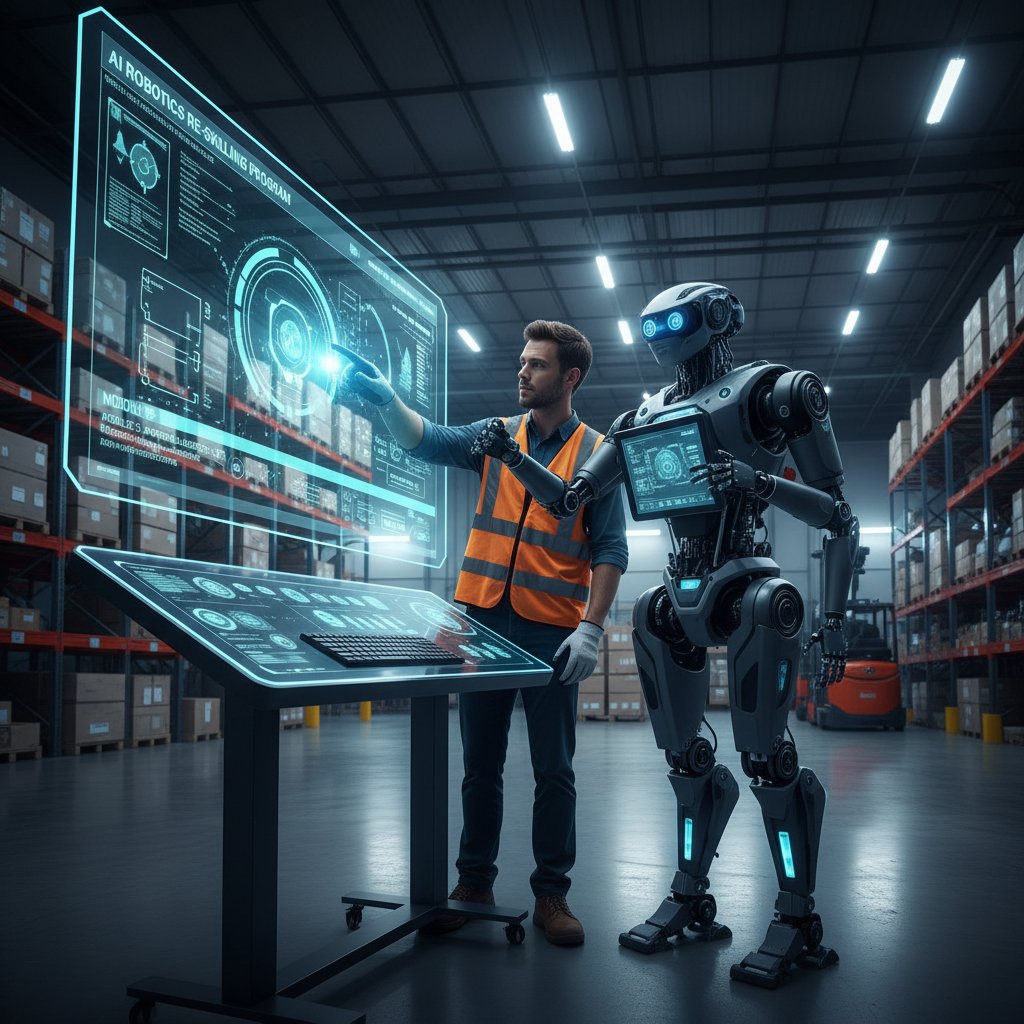
Employees who adapt are finding new, often more rewarding roles. Those who don’t—especially in organizations that neglect training—risk being left behind. The real losers are companies that fail to invest in upskilling, not the workers themselves.
Implementation: turning hype into operational reality
Step-by-step: how to adopt ai-powered shipping automation
Rolling out automation without a plan is asking for trouble. Here’s a time-tested, research-backed roadmap:
- Audit your current workflows: Map every process—identify bottlenecks, manual pain points, and data silos.
- Set clear, measurable goals: Don’t automate for the sake of it. Define what success looks like (e.g., 20% reduction in late deliveries).
- Clean and unify your data: Garbage in, garbage out. Invest in cleansing and integrating your datasets before onboarding AI.
- Select the right platform: Compare vendors for integration capability, support, and transparency (see red flags below).
- Pilot, don’t plunge: Start with a contained pilot—measure results, adjust, and only then scale.
- Train and engage your team: Communicate the why, not just the how. Upskill staff and solicit their feedback throughout.
- Monitor, audit, and iterate: Continuous improvement isn’t optional—track outcomes, retrain models, and adapt processes as conditions evolve.
According to Forbes, 2023, companies that approach implementation as an ongoing journey, not a one-time install, see far greater returns.
Red flags: what to watch out for in vendors and tech
Buyer beware. The wrong vendor can lock you into expensive, inflexible tech—or worse, leave you with a mess. Here’s what to watch for:
- Opaque algorithms: If you can’t audit or explain how decisions are made, you’re flying blind and exposing yourself to regulatory risk.
- Limited integration: Platforms that don’t play nicely with your existing TMS, WMS, or e-commerce stack will create more headaches than they solve.
- Overreliance on proprietary data: If the system can’t learn from your data—or holds it hostage—you’re at the mercy of the vendor.
- No clear path for scaling: Today’s pilot may be tomorrow’s bottleneck. Check that the platform can grow with you.
- Vague or missing SLAs: Without robust service level agreements, you’re exposed to downtime, poor support, and finger-pointing when issues arise.
A little skepticism in the vendor selection process goes a long way.
Checklist: is your business ready for AI shipping?
Before you sign any contracts, tick these boxes:

- Clear understanding of current workflows and pain points
- Unified, clean datasets for AI to process
- Leadership buy-in and willingness to adapt processes
- Budget for integration, training, and ongoing support—not just software
- A culture that values data-driven decision-making
- Concrete KPIs for success, tracked from pilot to rollout
If you can’t check every box, it’s time to hit pause and shore up your foundations.
Beyond logistics: unexpected consequences and new frontiers
The environmental paradox: green promise or hidden toll?
AI is often sold as a green technology, slashing emissions through smarter routing and predictive maintenance. Yet, the picture is more complex. According to Intermodal Europe, 2024, the shipping sector still fell 17% short of international CO2 targets in 2023, despite widespread tech upgrades.
| Environmental Benefit | How AI Delivers | The Catch/Limitations |
|---|---|---|
| Lower fuel consumption | Smarter routing, load optimization | Gains depend on data quality, real-world adoption |
| Emissions tracking | Live monitoring, reporting | Scope limited by sensors and integration gaps |
| Reduced waste | Inventory and delivery optimization | Only works if paired with process change |
Table 3: The environmental impact of ai-powered shipping automation. Source: Original analysis based on Intermodal Europe, 2024.
AI can be a powerful driver of sustainability—but only when paired with real organizational change and transparent reporting.
AI in shipping across the globe: leaders and laggards
Not every region is moving at the same pace. According to Lloyd’s Register, 2024, 36 shipping companies are actively deploying AI, with clusters in North America, Western Europe, and East Asia. Meanwhile, less digitized markets are lagging—often due to infrastructure gaps, regulatory hurdles, or simple inertia.

The effect? Fragmented gains. Global supply chains are only as strong as their weakest—and least automated—links.
Cross-industry lessons: what shipping can steal from fintech, health, and more
Shipping isn’t the only sector wrangling with AI. The industries that have thrived leaned into certain principles:
- Fintech: Rigorous data governance and security protocols, making AI both auditable and compliant.
- Healthcare: Hybrid human-AI teams, where machine suggestions are vetted by experienced practitioners.
- Retail: Lightning-fast feedback loops, using consumer data to inform real-time decision-making.
- Manufacturing: Digital twins and simulation environments to stress-test changes before implementation.
- E-commerce: Personalized, AI-driven customer experiences that drive loyalty and retention.
These lessons translate: invest in governance, prioritize the human-machine interface, and treat AI as an evolving partner—not a black box.
Expert insights: where is ai-powered shipping automation headed?
What industry insiders predict for 2025 and beyond
While this guide focuses on present realities, it’s worth noting the consensus among current industry experts: the pace of adoption is accelerating, but the winners will be those who blend AI with operational and cultural transformation.
"The next wave isn’t about more AI—it’s about smarter integration, relentless auditing, and empowering humans to do what only they can do." — Head of Logistics Innovation, Lloyd’s Register, 2024
The path ahead is less about chasing the next shiny tool, and more about building resilient, adaptable operations.
Regulation, ethics, and the future of automated supply chains
Regulators are catching up to the realities of AI. Current frameworks cover:
- Data protection (GDPR and equivalents), especially for cross-border shipping data
- Algorithmic transparency mandates, requiring auditable decision trails
- Environmental reporting standards for emissions and efficiency metrics
Documenting how AI makes decisions, enabling operators to justify and troubleshoot outcomes.
Ensuring that customer and operational data is processed in compliance with local and international standards.
Preventing biased or unfair outcomes, and balancing efficiency with worker welfare.
Staying compliant requires vigilance and regular audits—don’t assume your vendor has it covered.
How to stay ahead: resources and communities to watch
- Lloyd’s Register (2024): Benchmark AI adoption rates and best practices
- Maritime Technology Review: Deep dives on technology and workforce trends
- Supply Chain Dive: Use cases, case studies, and regulatory updates
- Intermodal Europe: Sustainability and environmental benchmarks
- ResearchGate: Academic research on logistics technology
- FutureTask.ai: Resource hub for automation strategies, workflow guides, and industry insights
- Local and global shipping associations: For networking and advocacy
These communities and resources offer real, actionable intelligence—cutting through the hype and anchoring decisions in current best practice.
The bottom line: what you need to know before you automate
Critical takeaways: what most guides leave out
If you’ve read this far, you know the realities aren’t always pretty—or simple. Here’s what separates the survivors from the statistics:
- AI is a tool, not a panacea: It multiplies the strengths—or flaws—of your existing workflows.
- Data readiness is non-negotiable: Dirty, fragmented data will torpedo your project faster than any tech glitch.
- Change management is as important as code: Train your people, not just your algorithms.
- ROI takes time and sweat: Instant results are the exception, not the rule.
- Ethics and compliance are rising risks: Stay alert, audit often, and never outsource accountability.
Automation is a marathon, not a sprint—and the winners are those playing the long game.
Where to start: making your AI shipping plan today
Ready to get moving? Here’s your first, research-backed checklist:
- Map your current processes and pain points—get granular.
- Define clear KPIs and what “success” will look like.
- Clean and unify your data; patch the leaks before you automate.
- Research leading platforms and communities—leverage resources like futuretask.ai for industry insights.
- Pilot with a small, focused use case—measure, learn, iterate.
- Engage your team—bring them into the process from day one.
- Commit to continuous improvement—automation is never truly “done.”
By following this blueprint, you’ll avoid the common pitfalls and lay a foundation for sustainable, resilient transformation.
The future is automated—just not how you think
In the relentless churn of global shipping, standing still isn’t an option. ai-powered shipping automation is already transforming the landscape, but the winners aren’t those who automate blindly—they’re the ones who blend tech with human ingenuity, data mastery, and relentless, gritty adaptation.

Don’t fall for the hype. Embrace the hard work. And remember: in shipping, as in all things, the edge always belongs to those who see past the surface—and act with courage and clarity.
Are you ready to automate smarter? Check out futuretask.ai for the latest research, tools, and real-world strategies to put AI to work in your shipping operations—no jargon, just results.
Sources
References cited in this article
- Lloyd’s Register(lr.org)
- Maritime Technology Review(maritimetechnologyreview.com)
- Forbes(forbes.com)
- Supply Chain Dive(supplychaindive.com)
- Intermodal Europe(intermodal-events.com)
- ResearchGate(researchgate.net)
- Bremen Invest(wfb-bremen.de)
- CB Insights(cbinsights.com)
- Britannia P&I(britanniapandi.com)
- FulfillmentIQ(fulfillmentiq.com)
- Forbes(forbes.com)
- aiexpert.network(aiexpert.network)
- ResearchGate(researchgate.net)
- C.H. Robinson(chrobinson.com)
- Shipcloud(shipcloud.com)
- MIT(ctl.mit.edu)
- MIS Marine(mismarine.com)
- Purolator(resources.purolator.com)
- The Supply Chain Xchange(thescxchange.com)
Automate Your Tasks, Transform Your Business
FutureTask.ai revolutionizes your workflow by automating complex tasks typically outsourced to freelancers and agencies. Our powerful AI-driven platform leverages cutting-edge LLM technology to deliver precision, speed, and consistency at scale. Whether you're managing content creation, data analytics, marketing campaigns, or customer support, FutureTask.ai ensures seamless task execution, significant cost savings, and unmatched efficiency. Transform your business operations, eliminate delays, reduce operational overhead, and gain a competitive advantage with intelligent automation.
Get startedReady to Automate Your Business?
Start transforming tasks into automated processes today
Frequently Asked Questions
What specific operational challenges in 2024 are driving demand for AI-powered shipping automation?
According to the article, 2024's logistics landscape is destabilized by pandemic aftershocks, labor shortages, snarled ports, geopolitical tension, and unpredictable consumer demand that breaks traditional forecasting models, forcing companies to adopt automation to remain competitive.
How much has the maritime AI market grown recently?
According to Lloyd's Register 2024 research cited in the article, the maritime AI market nearly tripled between 2023 and 2024 as organizations rushed to automate, optimize, and predict their way through supply chain chaos.
What does the article promise to reveal about AI shipping automation?
The article promises to expose the gap between marketing hype and reality, covering hidden costs, worker concerns, ROI myths, practical strategies from industry professionals, and actionable guidance on which businesses are actually ready for AI automation.
Is AI shipping automation suitable for every business?
According to the article, not every business is ready for AI freight automation, suggesting that companies need to carefully assess their readiness before implementing these systems.
From the Archive
Explore more from Ai-powered task automation

Ai-Powered Logistics Automation: Market Growth and Overlooked Risks

Ai-Powered Warehouse Automation: Real ROI and Operational Risks

AI-Powered Order Fulfillment Automation: Benefits, Risks, and Reality

AI Logistics Automation: the Costs, Benefits, and Operational Reality

How AI-Powered Logistics Optimization Is Reshaping Supply Chains
