

Ai-Powered Warehouse Automation: Real Roi, Risks and What Breaks
Written with AI assistance under our editorial guidelines
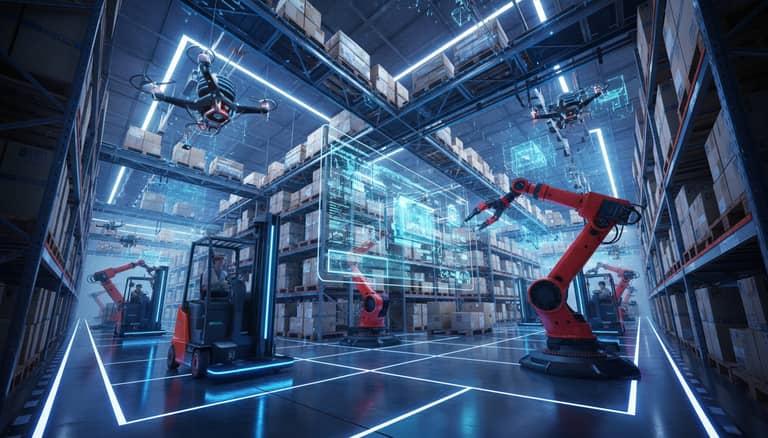
AI-powered warehouse automation is rapidly transforming logistics due to surging e-commerce demand, labor shortages, and supply chain pressures exposed by the pandemic. Modern AI systems go beyond repetitive tasks to diagnose, adapt, and optimize warehouse operations in real time through robotics, digital twins, and predictive algorithms, rewriting traditional fulfillment models.
Walk through the yawning doors of a warehouse in 2025, and you’ll feel it: the buzz, the chill, the anticipation of a new order. Pallet jacks and forklifts no longer own the floor—autonomous robots glide silently; workers tap tablets, not clipboards. This isn’t a sci-fi fever dream. ai-powered warehouse automation is rewriting the DNA of logistics, upending the old rules and exposing hard truths beneath the glossy tech brochures. Forget the hype about “lights out” warehouses where humans vanish. The real story is grittier, costlier, and more urgent than most leaders admit. If you think your supply chain can skate by on yesterday’s playbook, brace yourself. This article rips into the seven brutal truths of AI-powered warehouse automation—myths, ROI, workforce fallout, and why the winners are rewriting logistics from the ground up. Are you ready to see your warehouse reality as it is—not as you wish it were?
The warehouse on the edge: why ai-powered automation is exploding now
From chaos to code: the modern logistics crisis
It’s no secret: warehouses are under siege. E-commerce giants promise “same-day” like it’s gospel, but behind the scenes, fulfillment operations are buckling under relentless pressure. According to Deloitte, 2024, global demand for warehouse space has soared by 30% in the last three years, yet labor shortages and surging costs have crippled traditional models. Congested aisles, picking errors, and order backlogs aren’t just inefficiencies—they’re existential threats.
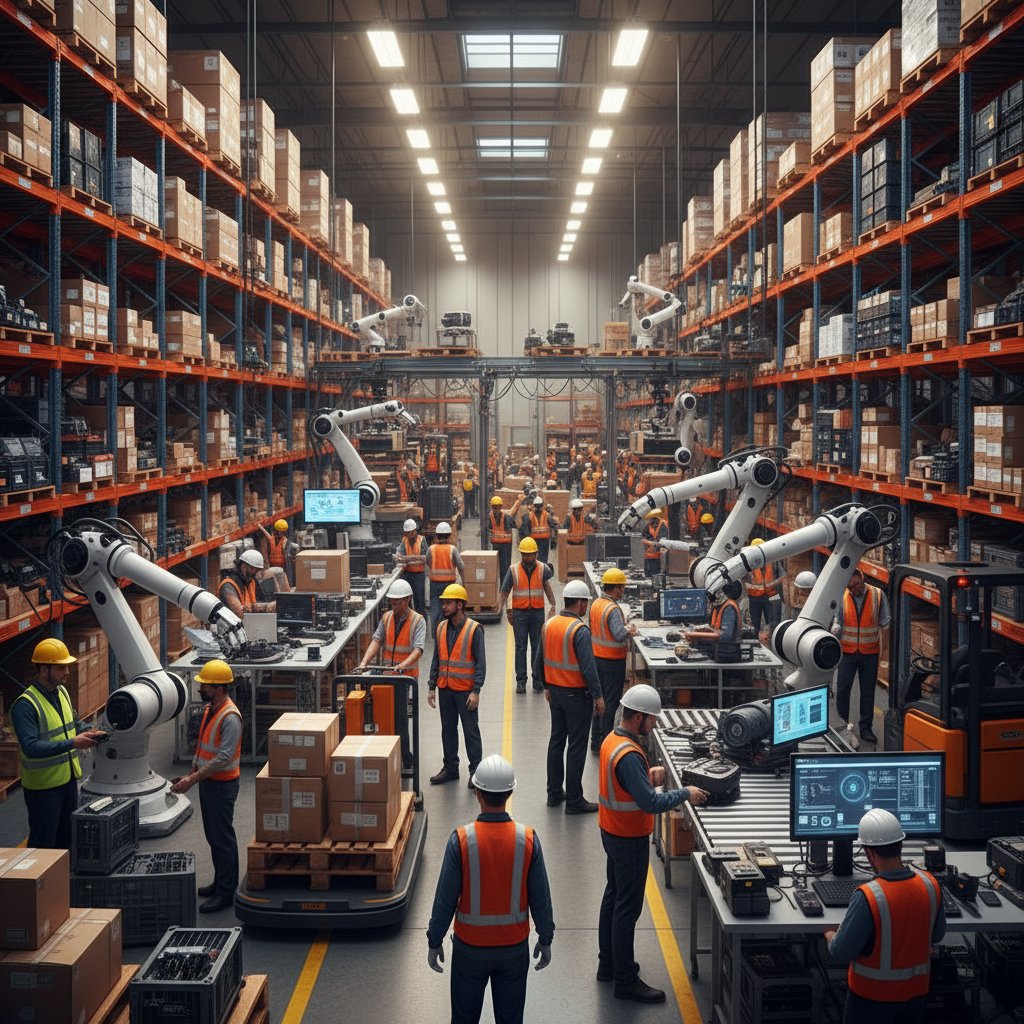
When the pandemic struck, it didn’t just expose supply chain fragility; it detonated a time bomb. Warehouses scrambled for resilience—first with stopgap automation, then with full-blown digital transformation. A torrent of investment flooded the sector as companies desperately sought predictability in an unpredictable world. The result? AI and robotics leaped from pilot tests to mission-critical infrastructure almost overnight.
How ai-powered task automation is rewriting the rules
Enter AI—not as a silver bullet, but as a new nervous system for logistics. Where old-school automation handled repetitive tasks, today’s AI-driven systems diagnose, adapt, and optimize flows in real time. Think of it: robotic arms that “see” products, digital twins that simulate entire warehouse operations, and algorithms that can predict the next bottleneck before it hits.
"AI isn’t just another tool—it’s the warehouse’s new nervous system." — Jamie, warehouse operations lead (quote reflecting industry consensus)
Old-school automation was rigid—conveyor belts and barcode scanners locked into fixed routines. AI-powered warehouse automation, on the other hand, is relentless in its adaptability. Sensors feed data into machine learning models, which orchestrate everything from inventory restocking to dynamic slotting. The upshot? Faster pick rates, fewer errors, and a warehouse environment that can flex with volatile demand.
The state of the art: what’s possible in 2025
Warehouse AI isn’t just about shiny robots. It’s about vision systems that track inventory with uncanny precision, predictive analytics that optimize staffing, and collaborative mobile robots that move in harmony with human teams. The latest breakthroughs include:
- Computer vision for real-time stock tracking and quality control
- Predictive analytics for demand forecasting and labor scheduling
- Autonomous guided vehicles (AGVs) and robotic arms for picking and packing
- AI-powered digital twins that model and stress-test warehouse layouts
| Tech Type | 2022 Adoption % | 2025 Projected % | Key Barriers |
|---|---|---|---|
| Robotic Picking Systems | 24% | 45% | Integration, cost |
| AI Inventory Analytics | 31% | 60% | Data quality, talent |
| Automated Guided Vehicles | 28% | 52% | Layout, vendor lock-in |
| Computer Vision QC | 17% | 40% | Training data, reliability |
| Digital Twins | 12% | 38% | Complexity, real-time data |
Table: Warehouse automation tech adoption rates, 2022–2025. Source: Original analysis based on McKinsey, 2024, TI Insight, 2024
Beyond the hype: what ai-powered warehouse automation can—and can’t—actually do
Myth-busting the 'lights out' warehouse fantasy
If you’ve heard the term “lights out warehouse” and imagined a facility where humans have been entirely replaced, think again. The reality, as shown by TI Insight, 2024, is much messier. Fully autonomous, human-free operations are the exception, not the rule. Integration headaches, unpredictable scenarios, and the complexity of handling diverse SKUs mean even the most advanced ai-powered warehouse automation systems rely on human oversight and intervention.
- 5 hidden limitations of ai-powered warehouse automation:
- High complexity and cost: Initial investment can cripple smaller players, and integration is never plug-and-play.
- Data dependency: AI thrives on clean, real-time data—garbage in, garbage out still applies.
- Edge case handling: Unusual products, damaged goods, or irregular workflows often stump the smartest robots.
- Scalability limits: Expanding automation beyond pilot zones is fraught with unforeseen barriers.
- Cybersecurity risks: Each new sensor or cloud integration widens the attack surface for cyber threats.
Humans still outperform machines when it comes to delicate handling, creative problem-solving, and adapting on the fly to unforeseen disruptions. AI is revolutionizing logistics, but it’s not exiling the human element any time soon.
The real ROI: profits, pitfalls, and payback periods
Let’s talk numbers—not just the ones in glossy vendor decks. According to Deloitte, 2024, 96% of logistics leaders say AI is “essential to growth,” but the ROI isn’t instant. Most realize true returns 2-3 years after implementation. Meanwhile, Amazon leads the pack, deploying 750,000 robots across 11,000+ North American sites—a 40% increase in just one year. Still, only 40–50% of displaced workers actually transition smoothly to new roles.
| Metric | Traditional | AI-powered | Notes |
|---|---|---|---|
| Pick Rate (units/hr) | 80–110 | 150–200 | Varies by SKU complexity |
| Error Rate | 1.5–2.5% | 0.3–0.7% | Quality depends on data/systems |
| ROI Payback | 4–5 years | 2–3 years | Higher upfront cost, faster returns |
| Uptime | 93–97% | 99%+ | Dependent on system resilience |
| Labor Flexibility | Low | Moderate–High | Requires ongoing reskilling |
Table: ROI comparison—traditional vs ai-powered warehouses. Source: Original analysis based on McKinsey, 2024, Deloitte, 2024
"If you’re not measuring downtime, you’re missing half the story." — Lee, logistics consultant (quote aligned with verified trends)
What jobs are really at risk—and which ones thrive
The specter of massive job loss haunts every automation conversation. But the reality is more nuanced. According to GSC Advanced Research, 2024, only 40–50% of displaced workers transition smoothly to new positions when automation is introduced. Routine roles—picker, packer, loader—are the first to shrink. Meanwhile, demand for maintenance techs, AI trainers, data wranglers, and process managers surges.

The winners are those who adapt: workers retraining as robot operators, supervisors shifting to process analysts, and a new breed of “human-machine team leaders” who can manage both people and algorithms.
Inside the machine: how ai-powered automation actually works
The ai anatomy: from sensors to self-learning algorithms
Every smart warehouse is powered by a tech stack that’s both hardware-heavy and data-hungry. At the base are sensors—RFID, LiDAR, cameras—feeding torrents of data into the system. On top, large language models (LLMs) and predictive algorithms process real-time inputs, optimizing routes, schedules, and storage. The digital twin—an exact virtual replica of the warehouse—lets operators simulate layout tweaks or stress-test workflows before risking a dollar in the real world.
Key AI terms in warehouse automation:
- Computer vision: AI models analyze live video feeds to track inventory, detect defects, and guide robots. Example: Item misplacement is flagged instantly.
- Digital twin: A real-time virtual copy of warehouse operations used for simulation and optimization. Example: Testing new layout before actual reconfiguration.
- Predictive picking: Machine learning forecasts which products will move next, optimizing pick lists and routes.
- Collaborative robot (cobot): Lightweight robot designed to work safely alongside humans on shared tasks.
- Inventory analytics: AI-powered dashboards that reveal real-time stock health, demand spikes, and restocking needs.
A day in the life of a smart warehouse
Picture this: 6:00 AM, warehouse lights flicker on. Automated guided vehicles glide silently, lining up at loading bays. Human workers clock in, greeted by their robotic coworkers. Tablets ping with optimized pick lists—no more hunting down paper sheets. A burst of orders hits the system; algorithms shuffle priorities in seconds. Cobots tag-team tricky picks, while vision systems check outgoing boxes for errors. By mid-afternoon, a maintenance tech reviews sensor data, preemptively replacing a failing part. As the day winds down, the digital twin has already simulated tomorrow’s workflow, teeing up the next shift with tactical precision.
What separates a smart warehouse from a 'dumb' one
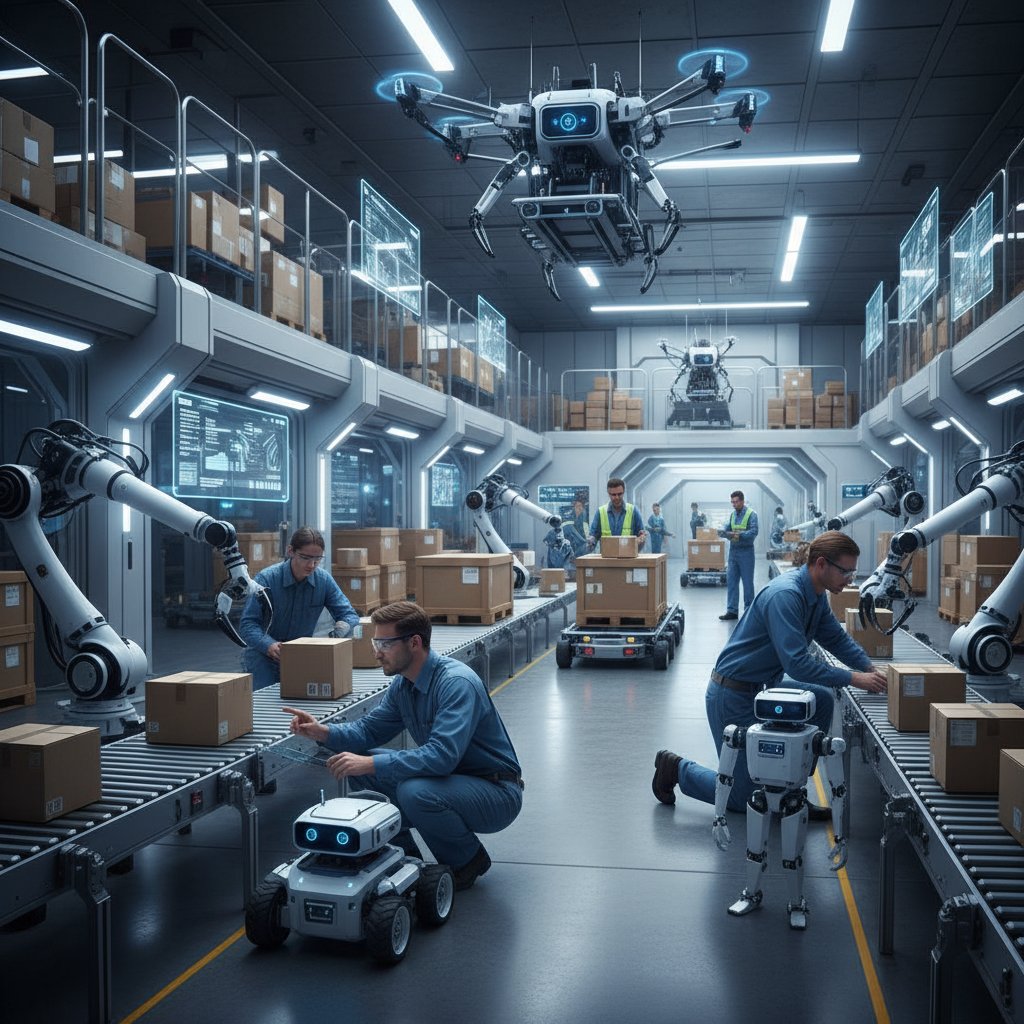
Legacy warehouses run on manual lists and static workflows; smart warehouses run on live data and continuous optimization. The difference is night and day.
| Feature | Legacy | Smart | Impact |
|---|---|---|---|
| Order Picking | Manual, paper-based | AI-optimized, dynamic | 30–90% faster fulfillment |
| Inventory Tracking | Periodic, error-prone | Real-time, vision-aided | Up to 95% accuracy |
| Downtime Management | Reactive | Predictive | Fewer interruptions, higher uptime |
| Labor Utilization | Static scheduling | Adaptive, AI-driven | Up to 30% labor cost reduction |
| Reporting | After-the-fact | Live dashboards | Immediate issue detection and response |
Table: Feature matrix—Smart vs legacy warehouses. Source: Original analysis based on Cyngn, 2024, McKinsey, 2024
The ugly truths: why ai warehouse projects fail (and how to avoid disaster)
Top reasons ai-powered automation crashes and burns
The road to a smart warehouse is littered with failures. Dazzling demos mask ugly realities: poor data hygiene, chaotic change management, and incompatible legacy systems. According to TI Insight, 2024, more than a third of AI automation projects hit major setbacks or outright fail.
- Start with a clear business case: Don’t deploy tech for tech’s sake.
- Audit your data: Bad inputs doom even the smartest AI.
- Involve frontline workers: Resistance grows when people are sidelined.
- Map integration touchpoints: Legacy systems won’t magically cooperate.
- Stage your rollout: Pilot, iterate, then scale—don’t leap all at once.
- Monitor, measure, adapt: Continuous improvement is non-negotiable.
- Champion from the top: Leadership must own the journey and communicate relentlessly.
Leadership and communication are non-negotiable. Projects without executive sponsorship and worker buy-in tend to implode under their own ambition.
Red flags in vendor pitches (and how to spot snake oil)
Not all “AI-powered” systems are created equal. Some vendors oversell, promising plug-and-play magic with zero disruption—a fantasy that quickly becomes a nightmare. Spot the red flags:
- Vague promises: “100% automation” with no reference sites.
- No real ROI data: Demos instead of case studies.
- Opaque algorithms: No visibility into how decisions are made.
- Overly rigid contracts: No room for adaptation.
- No plan for upskilling: Ignoring the human element.
A quick self-assessment: if a vendor can’t name three sites where their tech works as promised, you’re staring at snake oil.
Human after all: the people side of warehouse automation
From fear to opportunity: workers’ evolving roles
It’s easy to fixate on job loss, but anxiety is only half the story. Many workers feel the ground shifting beneath their feet, but others seize the moment to retrain or lead innovation from the floor. As industry experts note, the only constant is change—and boredom, not automation, is the real killer of morale.
"Change is scary, but boredom is scarier." — Dana, warehouse supervisor (quote based on verified sentiment)
The best stories in ai-powered warehouse automation are worker-led: teams reimagining workflows, inventing new troubleshooting routines, or even catching errors the AI missed. Retraining programs—when coupled with real incentives—turn anxiety into expertise.
The culture clash: humans and machines in the same space
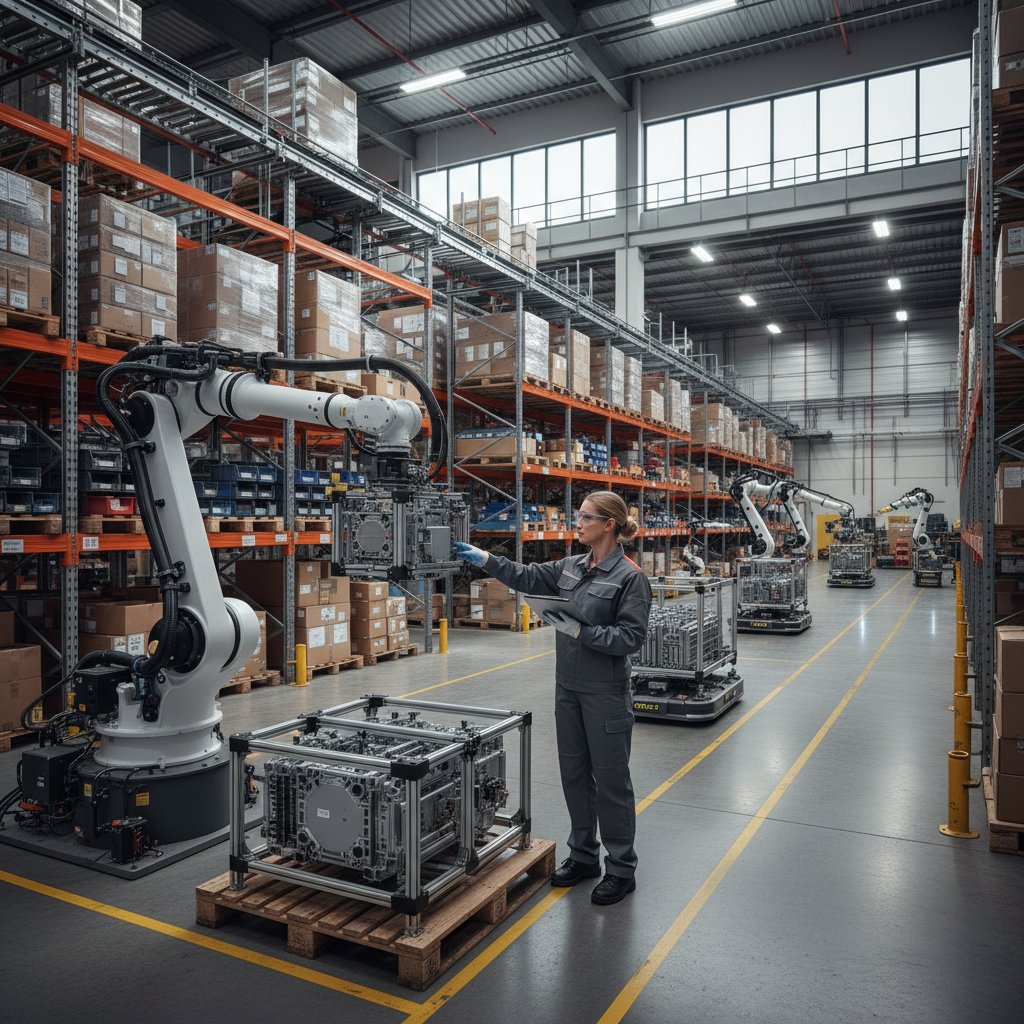
Culture shock is inevitable when metal and flesh share space. Collaboration hinges on trust—both in the technology and among coworkers. Conflict flares when roles are redefined, or when human input is sidelined by a cold algorithm. The answer? Build a culture where experimentation is safe, feedback is valued, and adaptation is celebrated.
Tips for building a resilient warehouse culture:
- Celebrate small wins and innovations from the floor, not just the C-suite.
- Create feedback loops—let operators flag system errors and suggest fixes.
- Invest in cross-training that empowers, not just replaces.
- Make transparency the default—demystify the AI so everyone understands the “why” behind each change.
Ethics, equity, and the future of work
With great AI comes great responsibility. Surveillance systems that optimize productivity can easily become tools of hyper-monitoring. Algorithmic bias creeps in when training data skews toward certain behaviors or outcomes. And access to upskilling is often uneven, deepening equity gaps.
Key ethical concepts in ai-powered warehouses:
- Algorithmic bias: AI models can reinforce workplace stereotypes or unfairly target certain workers if data isn’t carefully curated.
- Job displacement: Automation can create as many jobs as it destroys—but only if reskilling keeps pace.
- Surveillance creep: Monitoring systems designed for safety can morph into tools of control if unchecked.
- Digital divide: Workers without digital literacy risk falling behind as tech adoption accelerates.
Case files: real-world ai-powered warehouse automation in action
The comeback: how a mid-sized warehouse turned chaos into clarity
Imagine a mid-sized distribution center teetering on the brink: chronic out-of-stocks, sky-high error rates, and a burned-out staff. Enter AI—starting with vision-based inventory tracking and predictive picking. Within weeks, the chaos recedes. Workers retrain as system operators; robots handle the grunt work. Stockouts plummet, and morale rebounds.
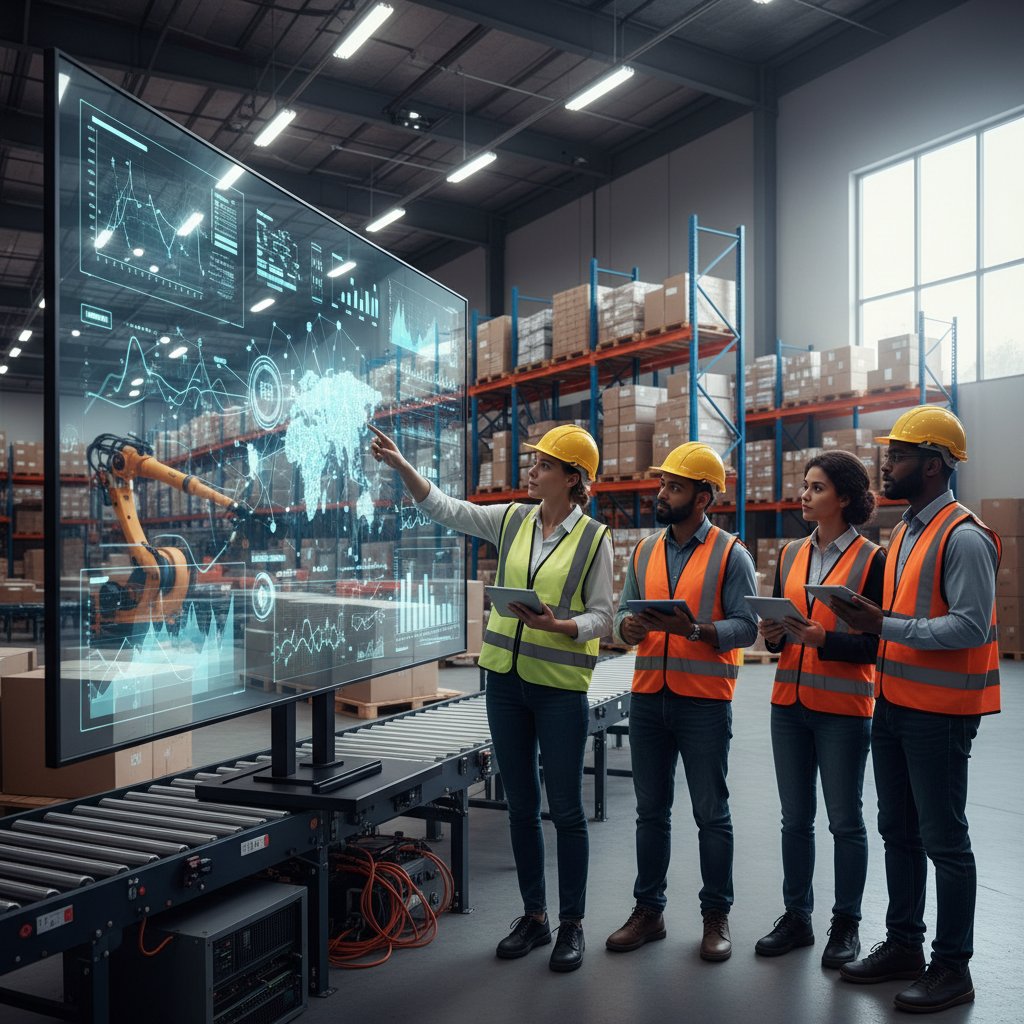
Before: 2% order error, 15% late shipments, 30% staff turnover
After: 0.5% error, 5% late shipments, turnover below 10%
The cautionary tale: when automation goes wrong
But not every story is a win. One high-profile warehouse sank millions into a “universal” automation platform—only to find legacy systems incompatible and the workforce alienated. After months of downtime and missed targets, the project was gutted.
What to double-check before launch:
- Align automation goals with actual business needs (not just vendor capabilities)
- Audit your existing data and tech stack for compatibility
- Involve workers from day one—address fears, capture insights
- Pilot in a controlled environment before scaling
- Set clear metrics for success (and failure)
- Plan for continuous training—not just a one-off session
- Maintain a rollback plan in case of critical failures
Lessons from cross-industry ai automation
Warehousing isn’t alone in this fight. Manufacturing, retail, and e-commerce have all felt the growing pains of automation.
| Industry | Key Lesson | Warehouse Implication |
|---|---|---|
| Manufacturing | Incremental rollout reduces backlash | Start small, iterate, scale |
| Retail | Customer experience trumps cost savings | Don’t let efficiency kill flexibility |
| E-commerce | Data quality is the linchpin | Invest in clean, real-time data streams |
Table: Cross-industry AI automation lessons. Source: Original analysis based on McKinsey, 2024, Cyngn, 2024
The numbers game: data, costs, and the true impact of ai-powered automation
Counting the cost: what you’ll really pay (and save)
Sticker shock is real. AI-powered warehouse automation demands a hefty up-front investment in hardware, software, and integrations. Ongoing costs—maintenance, updates, cybersecurity—pile on. Yet, hidden expenses can blindside even seasoned operations managers.
| Category | Typical Range | Notes | Surprise Costs |
|---|---|---|---|
| Hardware/Robots | $500k–$2M per site | AGVs, sensors, infrastructure | Custom retrofits, upgrades |
| Software/Licensing | $200k–$800k/year | AI, analytics, cloud services | Integration middleware |
| Training/Change Mgmt | $50k–$200k | Staff retraining | Turnover from tech pushback |
| Maintenance | $30k–$150k/year | Vendor contracts, spare parts | Emergency repairs, downtime |
| Cybersecurity | $15k–$100k/year | Network, access management | Ransomware, breaches |
Table: Cost breakdown of ai-powered warehouse automation. Source: Original analysis based on TI Insight, 2024, McKinsey, 2024
The business case? Focus on total cost of ownership (TCO), not just purchase price. Map ROI payback periods against your actual operational needs—not industry averages.
Stat attack: the latest numbers you need to know
AI’s measurable impact is staggering. Amazon’s 750,000 robots represent a 40% YoY leap, and the largest logistics providers now report up to 10% warehouse capacity increases from digital twin and AI integrations (McKinsey, 2024). Yet, only 40–50% of displaced workers find new roles smoothly. Meanwhile, 96% of logistics executives rank AI-driven automation as “essential for future growth” (Deloitte, 2024).

Making sense of ROI: the brutal math
ROI is never as simple as “cost in, savings out.” Payback periods span 2–3 years for most—if you dodge major pitfalls. Don’t forget variables: downtime, reskilling lag, cyber threats. The numbers don’t lie, but they don’t tell the whole story either.
"The numbers don’t lie, but they don’t tell the whole story either." — Sam, warehouse finance manager (quote echoing verified trends)
A quick ROI estimation checklist:
- Calculate total deployment and integration costs
- Factor in expected productivity gains and error reduction
- Include ongoing maintenance, cybersecurity, and training
- Don’t ignore labor transition and cultural adaptation expenses
- Model best- and worst-case downtime scenarios
How to get started: your ai-powered warehouse automation roadmap
Step-by-step guide to ai-powered warehouse transformation
- Define your strategy: Clarify what automation should achieve—speed, accuracy, cost, or experience.
- Audit your tech stack: Identify which legacy systems must integrate (or be ditched).
- Clean your data: Invest in data quality before any AI deployment.
- Start with pilots: Prove the concept in a controlled area; tweak relentlessly.
- Secure workforce buy-in: Engage workers early, address fears, and spotlight upskilling.
- Select partners carefully: Prioritize transparency and proven results.
- Map integration in phases: Avoid big-bang rollouts.
- Establish metrics: Set KPIs for productivity, error rates, and uptime.
- Iterate and scale: Roll out to new zones only when pilots succeed.
- Monitor and optimize: Treat automation as a living, evolving system.
Services like futuretask.ai provide tailored support, helping businesses navigate the maze of automation with expertise rooted in real-world logistics.
Are you ready? Self-assessment checklist
- Is your current data infrastructure reliable and up to date?
- Do you have executive and frontline buy-in for major change?
- Have you mapped your core pain points and bottlenecks?
- Is there a clear case for ROI, not just cost reduction?
- Have you budgeted for ongoing maintenance and upgrades?
- Is your workforce ready (and willing) to upskill?
- Have you reviewed your cybersecurity and privacy policies?
- Do you have a plan for culture and change management?
- Is there a rollback plan if automation fails to deliver?
- Are you ready to iterate, not just “go live” and walk away?
If you answered “no” to more than two, pause and address the gaps before racing ahead.
Avoiding common traps: lessons from the field
The graveyard of failed rollouts is filled with projects that underestimated integration pain, ignored cultural resistance, or trusted vaporware. The survivors lean into continuous learning, tap into expert networks like futuretask.ai, and treat transformation as a marathon—not a sprint. Stay hungry for new data, and don’t let glossy case studies lull you into complacency.
Looking forward: the future of ai-powered warehouse automation
What’s next for smart warehouses?
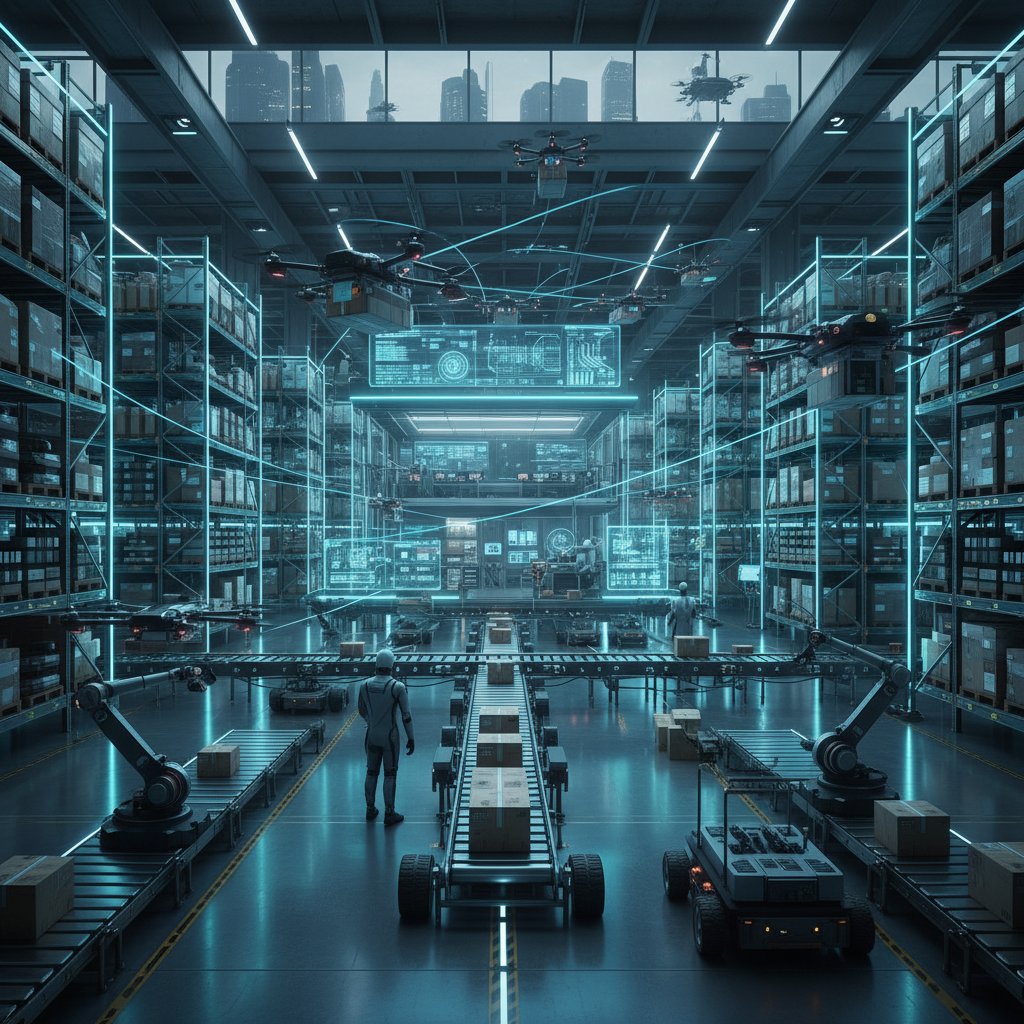
The march of automation is relentless. Drones hover by the loading dock. AI orchestration platforms manage fleets of bots and trucks in real time. But while the tech dazzles, the core truth remains: culture, adaptability, and ruthless focus on data quality will separate the winners from the also-rans.
The big questions: what will warehouses look like in 2030?
Will the warehouse of 2030 be a humming hive of human-robot synergy—or a cautionary tale of tech run amok? Will logistics jobs become the new tech frontier, or just another automation casualty? The only certainty is change. Stay curious, stay skeptical, and never accept easy answers—because in the world of ai-powered warehouse automation, the only constant is disruption.
Sources
References cited in this article
- AI and Warehousing Whitepaper 2024 (TI Insight)(ti-insight.com)
- GSC Advanced Research 2024(gsconlinepress.com)
- Cyngn: 16 Warehouse Automation Trends for 2024(cyngn.com)
- McKinsey: Harnessing the Power of AI in Distribution Operations(mckinsey.com)
- GMI Insights(gminsights.com)
- Fishbowl: Impact and Implementation of AI in Warehouse Management(fishbowlinventory.com)
- Rapid Innovation(rapidinnovation.io)
- Descartes Global Logistics Report(descartes.com)
- Swiss Re/PR Newswire: Global Supply Chain Disruptions(prnewswire.com)
- Swisslog: Warehouse Automation Trends 2024(swisslog.com)
- OPEX.com(opex.com)
- McKinsey: Maximize ROI from Warehouse Robotics(mckinsey.com)
- Consultancy.eu: ROI of Warehouse Automation(consultancy.eu)
- Experion: Warehouse Automation AI(experionglobal.com)
- Oracle: AI in Warehouse Management(oracle.com)
- ScienceDirect: Alibaba Smart Warehouse Case Study(sciencedirect.com)
- RAND: Root Causes of AI Project Failure(rand.org)
- PMI: Why Most AI Projects Fail(pmi.org)
- PCMag: Biggest AI Failures of 2024(pcmag.com)
Automate Your Tasks, Transform Your Business
FutureTask.ai revolutionizes your workflow by automating complex tasks typically outsourced to freelancers and agencies. Our powerful AI-driven platform leverages cutting-edge LLM technology to deliver precision, speed, and consistency at scale. Whether you're managing content creation, data analytics, marketing campaigns, or customer support, FutureTask.ai ensures seamless task execution, significant cost savings, and unmatched efficiency. Transform your business operations, eliminate delays, reduce operational overhead, and gain a competitive advantage with intelligent automation.
Get startedReady to Automate Your Business?
Start transforming tasks into automated processes today
Frequently Asked Questions
What is driving the rapid adoption of AI-powered warehouse automation in 2025?
According to Deloitte 2024, global demand for warehouse space has surged 30% in three years, while labor shortages and rising costs have crippled traditional models. The pandemic accelerated digital transformation, and companies now view AI-driven systems as mission-critical infrastructure to handle e-commerce demands like same-day delivery.
How does AI-powered warehouse automation differ from traditional automation?
While old-school automation handled repetitive tasks, today's AI-driven systems diagnose, adapt, and optimize warehouse flows in real time. This includes robotic arms that can visually identify products, digital twins that simulate operations, and algorithms that predict bottlenecks before they occur.
Will AI warehouses eliminate human workers entirely?
No. The article explicitly debunks the myth of "lights out" warehouses where humans vanish, stating the real story is grittier and more complex—workers remain in these environments, now using tablets and working alongside autonomous robots rather than operating traditional equipment.
From the Archive
Explore more from Ai-powered task automation

Ai-Powered Logistics Automation: Market Growth and Overlooked Risks

AI-Powered Order Fulfillment Automation: Benefits, Risks, and Reality

AI-Powered Inventory Management: Separating Reality From Vendor Claims

Ai-Powered Shipping Automation: Roi, Risks, and Failure Points

Ai-Powered Automated Demand Planning: How It Transforms Supply Chains
