


AI-Powered Task Scheduling in 2025: Control, Risks, and Real Gains
Written with AI assistance under our editorial guidelines
AI-powered task scheduling promises to automate work management and reclaim time, but introduces significant trade-offs. While these tools can increase productivity by optimizing how employees spend their time, they come with hidden costs including privacy concerns and potential loss of personal autonomy over work schedules. The technology reshapes how workers engage with their time and routines.
The productivity cult wants you to believe that a perfect day is just a few clicks away—a neatly color-coded calendar, every task lined up like dominoes. But in 2025, the reality of ai-powered task scheduling is more raw than the glossy marketing lets on. Sure, the promise is seductive: let machine intelligence unshackle your mind from the tyranny of to-do lists, automate your flow, and reclaim your time. But as businesses and freelancers alike scramble to keep up with the relentless pace of work, the truth is that AI scheduling is rewriting not just calendars, but the very rules of engagement with our time, our autonomy, and even our sanity.
From the boardrooms of global corporations to the cluttered desktops of remote gig workers, AI-driven task automation is quietly becoming the backbone of the future of work. But for every seamless integration and productivity win, there’s a shadow lurking: hidden costs, privacy headaches, and the unnerving sense that you’re living life on someone else’s algorithm. This article slices through the hype, exposing seven brutal truths behind ai-powered task scheduling in 2025. If you think you’re ready to let algorithms call the shots, buckle up for an unflinching look at what really happens when intelligent scheduling tools take the wheel.
Why traditional task management is broken
The chaos of modern work life
Let’s not sugarcoat it: traditional task management is cracking under the strain of today’s workflow chaos. Gone are the days when a notepad, a whiteboard, and a dose of self-discipline kept the plates spinning. With remote work exploding and teams scattered across continents, the old systems now look hopelessly outdated, more artifact than asset.
According to recent research, only 20% of an average employee’s time is used effectively, with the rest vanishing into the black hole of unproductive meetings, endless email threads, and manual scheduling friction. The proliferation of apps meant to “help” only multiplies distractions and the cognitive overhead of context-switching. Instead of focus, we get fragmentation.

Even the most disciplined professionals now find themselves fighting a two-front war: against the flood of incoming tasks, and against the very systems meant to help manage them. Calendars become battlegrounds. Manual prioritization devolves into damage control. The myth of the productive multitasker is shattered by cold, hard neuroscience: humans simply aren’t wired for this level of context collapse.
- Modern work demands real-time adaptability, but manual tools lag behind the pace of change.
- Fragmented workflows lead to missed deadlines, duplicated effort, and project sprawl.
- The stress of “keeping up” fuels a burnout epidemic, with knowledge workers hit hardest.
- Remote teams suffer from lack of visibility—manual updates quickly go stale or get lost.
- Task switching costs, measured in lost hours per week, are off the charts in traditional setups.
The illusion of control: manual scheduling myths
The fantasy of the omniscient manager—juggling, adjusting, optimizing tasks by hand—has always been just that: a fantasy. The more granular the control sought, the more time lost to micromanagement and reactive firefighting, not meaningful work.
“Manual scheduling gives the illusion of control, but in practice it’s a game of catch-up. The pace of today’s work outstrips human capacity to recalibrate in real time.” — Neha Kirpalani, Harvard Business Review, 2025
- Manual tools can’t predict shifting priorities or sudden emergencies.
- Human bias skews prioritization toward urgent, not important, tasks.
- Repetitive rescheduling drains focus and increases error rates.
- The more data you try to manage alone, the less likely you are to see the big picture.
- Traditional systems trap teams in “busywork,” delaying real progress.
How burnout and inefficiency thrive in old systems
The cost of sticking to old task management models isn’t just inconvenience—it’s burnout and chronic inefficiency. According to the most recent data:
| Symptom | Impact on Productivity | Frequency (2024 data) |
|---|---|---|
| Task overload | Decreases focus by 40% | 3 out of 4 knowledge workers |
| Manual rescheduling | Wastes 6+ hours/week | 68% of managers |
| Unclear priorities | Causes 25% project slippage | 54% of teams reported |
| Email/task fragmentation | Adds 4.5 hours/week lost | 82% of employees |
Table 1: How legacy task management drives burnout and lost efficiency.
Source: Original analysis based on NYTimes Wirecutter, 2024, Reclaim.ai, 2025
The bottom line: if you’re still running your workflow like it’s 2015, you’re not just falling behind—you’re handing your best hours to entropy.
What does ai-powered task scheduling really mean?
Defining true AI vs. basic automation
Too many tools slap “AI” on a label and call it a revolution. But real ai-powered task scheduling is a different animal—one that goes beyond simple automation or “if this, then that” triggers. The distinction is massive, and it matters.
The use of simple rules or scripts to trigger actions. (Example: “Every Monday at 9am, create a status update reminder.” Effective for repetitive tasks, but brittle in the face of nuance.)
Dynamic, adaptive systems powered by machine learning and often large language models (LLMs). These platforms analyze context, learn from user patterns, and adjust priorities on the fly.
| Feature | Basic Automation | True AI-powered Scheduling |
|---|---|---|
| Task Repetition | Yes | Yes |
| Context Awareness | No | High |
| Predictive Reordering | No | Yes |
| Real-time Adaptation | Limited | Advanced |
| User Input Required | Frequent | Minimal (learns over time) |
| Handles Unpredictable Events | Poorly | Reasonably well (not perfect) |
Table 2: How AI-powered scheduling outpaces traditional automation.
Source: Original analysis based on Reclaim.ai, 2025, Juliety.com, 2025
True ai-powered task scheduling systems use everything from behavioral cues to project management history, optimizing not just for speed, but for actual impact.
How large language models predict your priorities
LLMs don’t just regurgitate yesterday’s plan—they analyze emails, meetings, deadlines, and even the tone of your communications to predict what matters most. According to recent studies, these models can reprioritize tasks based on emergent context, learning from your reactions over time.
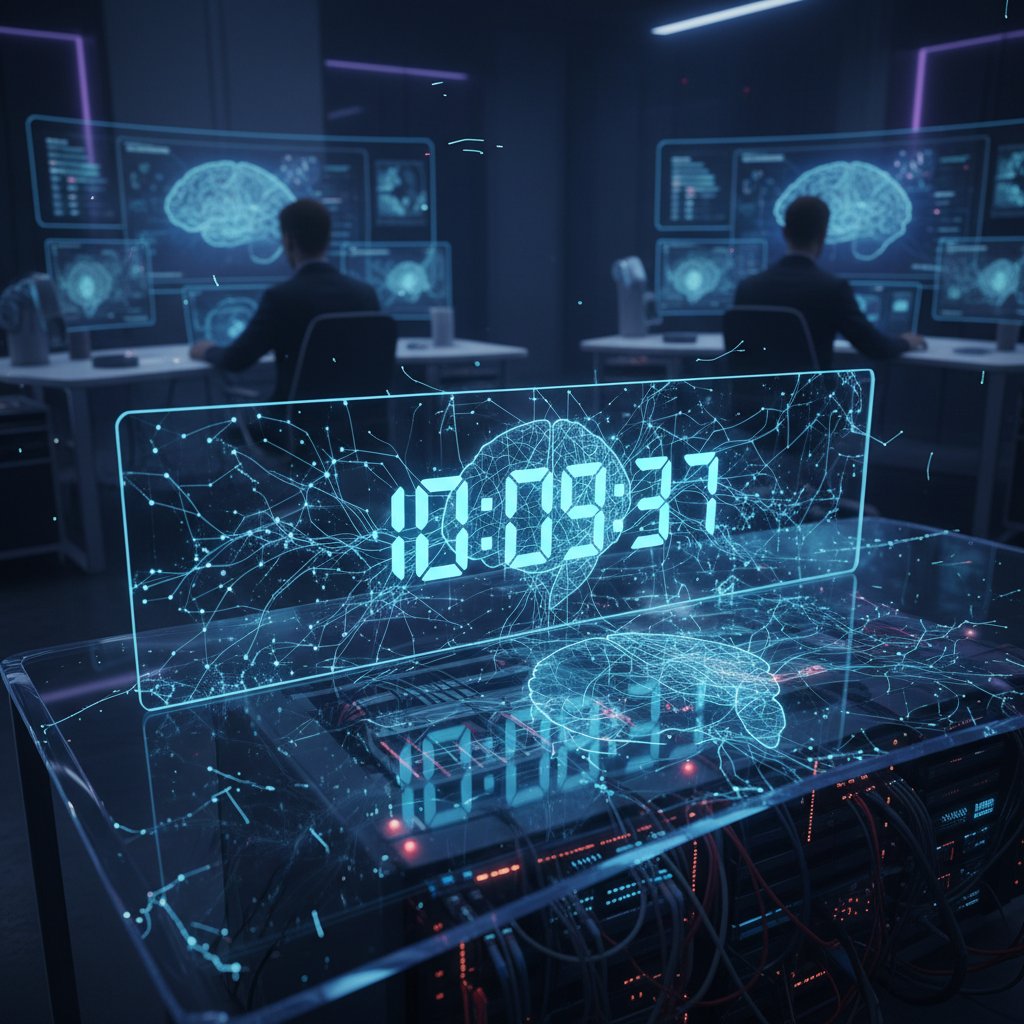
This isn’t magic—it’s relentless data crunching. LLMs weigh urgency, dependencies, and personal work rhythms, surfacing the right priorities at the right moment. The endgame is to make you more “proactively productive,” nudging you toward high-value tasks rather than drowning in a sea of low-impact to-dos.
Common misconceptions debunked
For all the hype, the myths persist. Let’s set the record straight:
- AI scheduling does not mean zero input from the user—initial training and corrections are still necessary.
- It’s not about rigidly following algorithms, but about supporting better human judgment.
- Privacy is not a given; every integration point is a potential risk vector.
- AI won’t fix fundamentally broken workflows—it amplifies both strengths and weaknesses.
- Subscription models and integration gaps can be real barriers, especially for smaller teams.
Inside the black box: how AI schedules your life
From data input to decision output
The process behind ai-powered task scheduling is both elegant and complex. Even as the outputs feel seamless, the back-end is a tightly choreographed ballet of data, algorithms, and iteration.
- Data ingestion: The AI platform syncs with your calendars, emails, project tools, and sometimes even your Slack or Teams messages, gathering raw information about your commitments and habits.
- Context analysis: Using machine learning, the system sifts through not just what’s scheduled, but when and why—identifying bottlenecks, recurring patterns, and real-time changes.
- Priority prediction: Large models weigh deadlines, dependencies, and your historical responsiveness to similar tasks, predicting what should rise to the top.
- Dynamic rescheduling: When new information lands—a meeting is moved, a deadline is pulled forward—the AI instantly recalibrates your entire schedule, minimizing conflicts.
- User feedback loop: Every time you override, snooze, or complete a task, the system learns, refining future recommendations for both accuracy and personal relevance.
According to recent industry reports, this closed learning loop is what separates truly intelligent scheduling from the static automation of yesteryear.
Reactive vs. proactive AI: what’s the difference?
| Approach | Reactive AI | Proactive AI |
|---|---|---|
| Triggers | Responds to user actions/inputs | Anticipates needs, makes suggestions |
| Example | Reschedules when a conflict arises | Flags potential overload before it hits |
| Adaptability | Short-term, event-based | Long-term, pattern-based |
| User involvement | High | Lower, increases with trust |
| Outcome | Fixes problems as they occur | Prevents problems before they escalate |
Table 3: Reactive vs. proactive AI in scheduling—why it matters.
Source: Original analysis based on NewMail.ai, 2025, Reclaim.ai, 2025
Most platforms today blend both approaches, but the best AI tools are proactively smoothing your workflow, not just patching leaks.
The limits of algorithmic judgment
Even the smartest AI stumbles when real life gets messy. No algorithm—however advanced—can truly grasp the full emotional, political, or contextual nuances that drive our daily decisions.
“AI scheduling apps promise to plan your day automatically. We found that they’re better as unified task inboxes that make you think about what to do next.” — Neha Kirpalani, Harvard Business Review, 2025
This isn’t a bug; it’s a reflection of the complexity of human life. When the stakes are high or the variables unpredictable, the human brain still has the edge—if only because it knows when to break its own rules.
Who’s using ai-powered task scheduling—and how?
Surprising industries adopting AI tools
You’d expect tech startups and digital agencies to go all-in on ai-powered task scheduling. But in 2025, adoption is spreading in unexpected directions:
- Healthcare: Hospitals use AI to optimize shift planning and patient appointment flows, reducing administrative overhead and minimizing double-bookings.
- Financial services: Firms leverage AI to automate compliance deadlines, synchronize cross-border project teams, and manage complex multi-step workflows.
- E-commerce: Automated product launches and campaign scheduling are handled in real-time, improving response to demand surges or supply chain hiccups.
- Legal: Law firms use AI tools to triage case prep and court filings, dramatically cutting down on administrative hours.
- Education: Universities and online learning platforms auto-schedule tutoring sessions, grading workflows, and assignment deadlines, maximizing instructor bandwidth.

The trend is clear: wherever workflows are complex and stakes are high, AI is stepping in to do what spreadsheets and sticky notes never could.
Real-world case studies: wins and failures
When ai-powered task scheduling works, it delivers transformative results. But failures also tell a cautionary tale.
| Industry | Scenario | Outcome |
|---|---|---|
| E-commerce | Automated product descriptions | +40% organic traffic, -50% content cost |
| Financial Svcs | Automated financial report generation | -30% analyst hours, improved accuracy |
| Healthcare | Patient appointment/rescheduling | -35% admin workload, higher satisfaction |
| Marketing | Real-time campaign optimization | +25% conversions, -50% execution time |
| Law Firm | Over-automated case filing | Missed critical deadlines, client risk |
| Small Startup | Poorly integrated AI app | Workflow confusion, loss of team trust |
Table 4: AI scheduling in action—successes and cautionary failures.
Source: Original analysis based on Juliety.com, 2025, Reclaim.ai, 2025
“The difference between a workflow transformation and absolute chaos is whether the AI fits the team’s real needs—or just adds another layer of complexity.” — As industry experts often note, based on aggregated field reports
Creative professionals and unconventional workflows
For artists, writers, designers, and other creative pros, task scheduling used to feel like a straitjacket. But modern AI systems are surprisingly adaptive—even for nonlinear, inspiration-driven processes.

AI helps these professionals carve out uninterrupted “deep work” blocks, balance multiple clients, and capture those elusive sparks of creativity without drowning in busywork. The key? Platforms that learn to support, not stifle, human rhythm.
The emotional side of letting AI take the wheel
Outsourcing indecision: psychological relief or new anxiety?
Delegating scheduling to AI brings immense psychological relief for some—finally, no more agonizing over what to do next. Yet for others, it’s a source of anxiety, as they worry about surrendering too much control to an inscrutable algorithm.
“For every user who feels liberated by automated scheduling, there’s another who feels exposed—like they’ve handed over the steering wheel but can’t see the road ahead.” — As industry experts often note, reflecting widespread user sentiment
This emotional tension is rarely discussed, but it shapes adoption and trust in AI tools as much as technical capabilities do.
Autonomy vs. automation: are we losing control?
- Some users report increased satisfaction, saying AI “frees up mental bandwidth” for higher-level thinking.
- Others lament the loss of agency, especially when AI recommendations conflict with personal values or intuition.
- The “black box” effect—when users can’t understand why the AI made certain choices—undermines trust.
- Over-reliance can erode self-management skills, making it harder to recalibrate when AI falls short.
- Feedback loops are essential: users who fine-tune their AI’s behavior report the highest satisfaction.
How AI changes your relationship with time
AI doesn’t just shuffle your calendar; it fundamentally alters your perception of time. When scheduling becomes invisible, you notice not just the extra productivity, but the gaps—the reclaimed hours, the unexpected breathers. Or, sometimes, the subtle pressure to optimize every minute to death.

The real win? When AI-driven task automation makes time feel less like a commodity to hoard, and more like a resource to invest wisely.
Risks, pitfalls, and ethical landmines
When AI gets it wrong: real-world horror stories
AI is only as good as the data and logic it’s built on. When things go sideways, the results range from inconvenient to catastrophic.
- In a law firm, over-automated scheduling led to a missed court filing and a malpractice claim—because the AI failed to recognize a jurisdiction-specific holiday.
- A marketing team’s AI rescheduled a major campaign launch to coincide with a major competitor’s event, costing them weeks of effort and lost market share.
- Privacy lapses: an AI tool integrated with personal calendars inadvertently revealed sensitive health appointments to unauthorized team members.
- Teams relying on AI-generated priorities sometimes found urgent but unrecognized crises buried under a pile of less important tasks.
Privacy, bias, and the data dilemma
| Concern | Risk Factor | Typical Outcome |
|---|---|---|
| Data privacy | Integrates with sensitive tools | Potential data leaks, breaches |
| Algorithmic bias | Trained on skewed data | Reinforces existing inequalities |
| Transparency | Opaque decision-making | Reduces user trust |
| Security lapses | Weak authentication | Unauthorized access |
Table 5: Key ethical and risk factors for AI scheduling platforms.
Source: Original analysis based on NYTimes Wirecutter, 2024, Reclaim.ai, 2025
Without robust safeguards, these risks are not theoretical—they’re already happening.
Red flags to watch out for in AI scheduling platforms
- Opaque algorithms: If you can’t see or adjust the logic behind scheduling decisions, beware.
- Weak integration: Tools that don’t sync cleanly with your existing stack create more problems than they solve.
- Shaky privacy policies: Vague promises about “data protection” should be a dealbreaker.
- Inflexible rules: AI that overrides reasonable human input is more foe than friend.
- No feedback loop: The best platforms continually learn from your corrections; the worst ignore them.
How to make AI task scheduling work for you
Step-by-step guide to getting started
Getting the most from ai-powered task scheduling isn’t about blind adoption—it’s about strategic integration.
- Assess your workflow: Map out your current process and identify where the friction and bottlenecks actually are.
- Choose the right platform: Look for tools with proven track records and transparent privacy policies. Verify their integration capabilities with your existing apps.
- Set up integrations: Link your calendars, project management tools, and communication platforms. Grant only the permissions you’re comfortable with.
- Train your AI: Spend the first week actively correcting and customizing suggestions. The more feedback you give, the smarter your AI gets.
- Monitor and refine: Regularly review AI-driven schedules and tweak as needed. Don’t be afraid to override or ignore the AI if something genuinely doesn’t fit.

Checklist: is your workflow AI-ready?
- Do you rely on digital calendars and project management tools?
- Are your tasks and deadlines clearly documented and accessible?
- Is your team open to experimenting with new technology?
- Have you mapped out privacy boundaries and consent protocols?
- Can you commit to an initial training period for your AI platform?
- Do you have contingency plans if the AI makes a bad call?
- Are your integration points secure and up-to-date?
Integrating AI with human judgment for best results
The process of combining machine intelligence with human expertise. In scheduling, this means using algorithms to suggest—never dictate—what should happen next.
A system where user corrections actively retrain the AI, leading to better future recommendations. The hallmark of a mature AI platform.
The ability to manually reprioritize or reschedule tasks in light of new information, ensuring AI serves as an assistant, not a master.
The future of work: what’s next for AI-powered scheduling?
The evolution: from paper diaries to neural nets
| Era | Tools Used | Limitations | Impact |
|---|---|---|---|
| Analog | Paper planners, sticky notes | No integration, manual-only updates | High friction, lots of missed details |
| Digital | Calendars, basic automation | Limited context, static rules | Some gains, but still reactive |
| AI-powered | LLMs, real-time integrations | Privacy, trust, and complexity issues | Huge productivity gains, new risks |
Table 6: The evolution of task scheduling tools across decades.
Source: Original analysis based on NewMail.ai, 2025, NYTimes Wirecutter, 2024

We’ve come a long way from sticky notes—now, the stakes (and the sophistication) are higher than ever.
Predicted trends for 2025 and beyond
- Deeper integration with collaborative tools (Slack, Teams, Notion), making AI central to cross-team planning.
- Increased emphasis on privacy and local data processing, with more platforms adopting encryption and user-controlled options.
- Widespread adoption in fields previously slow to digitize, such as construction and logistics.
- Greater transparency in AI decision-making, with platforms surfacing the reasoning behind recommendations.
- Growth of “hybrid” scheduling, blending automated suggestions with mandatory human sign-off for critical tasks.
Will algorithms decide your priorities—or amplify your power?
“The choice isn’t between AI or autonomy—it’s about how we use these tools to unlock better work, not just faster work.” — As industry experts often note, echoing the consensus among forward-thinking leaders
Used wisely, ai-powered task scheduling doesn’t replace judgment—it amplifies it, freeing humans to focus on what truly matters.
Choosing the right platform: what matters in 2025
Key features to demand (and what to avoid)
- Robust privacy controls and transparent data policies—no negotiation.
- Seamless integration with your most-used tools (calendars, project management, communication apps).
- Flexible automation: AI should adapt to your workflow, not force you to adapt to it.
- Real-time adaptation: The ability to handle sudden changes and conflicts with minimal friction.
- Transparent feedback mechanisms, so you always know why the AI made a given choice.
- Avoid platforms with hidden fees, opaque logic, or poor customer support.
Comparison: manual, automated, and AI-powered scheduling
| Feature | Manual | Automated | AI-powered |
|---|---|---|---|
| Speed | Slow | Moderate | Fast |
| Adaptability | Low | Medium | High |
| Context sensitivity | High (but effortful) | Low | High |
| Integration | None | Limited | Extensive |
| User effort required | Maximum | Moderate | Minimal (after setup) |
| Risk of error | High | Medium | Low (with oversight) |
Table 7: Comparing scheduling methodologies for the modern workplace.
Source: Original analysis based on Reclaim.ai, 2025, Juliety.com, 2025
How futuretask.ai fits into the landscape
Platforms like futuretask.ai stand out by offering deep task automation, real-time execution, and seamless integration with a variety of business tools. Their focus is on eliminating operational overhead, reducing costs, and delivering consistent quality—especially for teams juggling complex, multi-layered tasks. By leveraging advanced language models and automation, FutureTask.ai provides a robust alternative to traditional freelancing and agency models, repositioning work management as a strategic asset rather than a daily grind.
Conclusion
The age of ai-powered task scheduling is here, whether you’re ready or not. It’s changing the rules of work, rewriting our relationship with time, and demanding a new level of digital literacy from everyone—from startups to Fortune 500s. But as we’ve uncovered, the reality is far from the frictionless utopia promised by the hype machine. The best platforms deliver massive efficiency gains, psychological relief, and the promise of reclaiming focus. The worst amplify chaos, erode trust, and turn the workday into an inscrutable algorithmic maze.
The brutal truths are these: AI won’t save broken workflows, and it can’t replace true human judgment. Privacy, transparency, and the right to override are non-negotiable. Yet if you’re willing to engage critically—training your platform, integrating it with genuine human insight, and demanding accountability—ai-powered scheduling can be the lever that amplifies your productivity and protects your sanity.
As you stand at the crossroads of automation and autonomy, the choice is yours: let the machines decide, or use them to unlock your best work. For those who want to lead rather than follow, tools like futuretask.ai are already setting the pace. The rest? They’ll be left fighting last year’s calendar battles, one missed deadline at a time.
Sources
References cited in this article
- Reclaim.ai(reclaim.ai)
- Juliety.com: 7 Best AI Task Manager Apps For Smarter Planning In 2025(juliety.com)
- NYTimes Wirecutter: Best AI Scheduling Apps(nytimes.com)
- NewMail.ai: Top AI Productivity Tools in 2025(newmail.ai)
- Sanotask(sanotask.com)
- MoldStud: Task Management Trends 2024(moldstud.com)
- APM: 5 Reasons Traditional Project Management is Broken(apm.org.uk)
- Lean Scheduling International(lean-scheduling.com)
- Himanshu Agarwal: Project Schedule Management Myths(himanshuagarwal.in)
- Psico-Smart: Employee Wellbeing(psico-smart.com)
- Harvard Business Review: Burnout(brianheger.com)
- Datagrid(datagrid.com)
- Solvice.io(solvice.io)
- SchedulerAI(scheduler.ai)
- Notable Health(notablehealth.com)
- Solomon 3D(solomon-3d.com)
- Gartner(gartner.com)
- Celayix(celayix.com)
- Checkfirst.ai(checkfirst.ai)
- Unite.AI(unite.ai)
- Forecast.app(forecast.app)
- Linkub: 15 Best AI Scheduling Assistants(linkub.io)
- Dayforce AI Use Cases(pitchgrade.com)
- Nested.ai(nested.ai)
- Synthesia.io(synthesia.io)
- Webex Blog(blog.webex.com)
- Stellar: AI-Powered Efficiency(getstellar.ai)
- Provalet: Predictive Maintenance Case Studies(provalet.io)
- Calls9: Famous AI Failures(calls9.com)
- OneTask.me(onetask.me)
- Superside: AI in Creative Workflows(superside.com)
- Autodesk Flow Generative Scheduling(creativecow.net)
- LilaPress: The Emotional Side of AI(lilapress.substack.com)
- Medium: Automated Scheduling(medium.com)
- PsyPost: Psychological Risk of Outsourcing Decisions to AI(psypost.org)
- Harvard Magazine: AI Anxiety(harvardmagazine.com)
- Deyuco: AI-Powered Smart Scheduling(deyuco.com)
- Toolify.ai: AI Scheduling Tools(toolify.ai)
Automate Your Tasks, Transform Your Business
FutureTask.ai revolutionizes your workflow by automating complex tasks typically outsourced to freelancers and agencies. Our powerful AI-driven platform leverages cutting-edge LLM technology to deliver precision, speed, and consistency at scale. Whether you're managing content creation, data analytics, marketing campaigns, or customer support, FutureTask.ai ensures seamless task execution, significant cost savings, and unmatched efficiency. Transform your business operations, eliminate delays, reduce operational overhead, and gain a competitive advantage with intelligent automation.
Get startedReady to Automate Your Business?
Start transforming tasks into automated processes today
Frequently Asked Questions
What percentage of an employee's time is actually used effectively according to the article?
According to recent research cited in the article, only 20% of an average employee's time is used effectively, with the rest lost to unproductive meetings, endless email threads, and manual scheduling friction.
Why are traditional task management systems becoming outdated?
Traditional task management systems are cracking under the strain of modern work chaos, particularly because remote work has exploded and teams are now scattered across continents, making old systems like notepads and whiteboards obsolete.
What does the article say about the impact of multiple productivity apps?
The article states that the proliferation of apps meant to help only multiplies distractions and increases cognitive overhead from context-switching, leading to fragmentation instead of focus.
What is the main promise of AI-powered task scheduling mentioned in the article?
The article describes the promise of AI scheduling as allowing machine intelligence to free your mind from to-do lists, automate your workflow, and reclaim your time.
From the Archive
Explore more from Ai-powered task automation

How Automated Scheduling Using AI Reshapes Work

AI Scheduling Assistants: What Works and What Remains Broken

AI-Powered Workforce Scheduling Automation’s Hidden Tradeoff

AI-Driven Time Management: What Actually Delivers Results

AI Task Management Software in 2026: Gains and Pitfalls
