


Ai-Powered Talent Acquisition Automation: Promise, Risk, Reality
Written with AI assistance under our editorial guidelines
AI-powered talent acquisition automation dominates hiring in 2025, with over 60% of companies now using it. While platforms promise speed, efficiency, and reduced bias, the reality involves significant risks that HR leaders often overlook, including algorithmic bias, candidate ghosting, and the potential for missing qualified talent when machines become gatekeepers of opportunity.
If you think hiring is still about gut instinct and a firm handshake, you’re living in the wrong era. The world of talent acquisition has morphed into a battleground where algorithms make snap judgments, AI-driven platforms scan thousands of resumes in seconds, and the very definition of “qualified” is being rewritten by machine code. Ai-powered talent acquisition automation isn’t just a buzzword—it’s the juggernaut steamrolling through HR departments in 2025, promising speed, precision, and the kind of efficiency that puts yesterday’s hiring processes to shame. But here’s the kicker: behind the curtain of seamless automation, there are brutal truths most HR leaders aren’t prepared to face. This article peels back the glossy marketing to reveal what’s really happening when you let AI decide who gets hired (and who gets ghosted). If you want to stay ahead—or at least avoid being blindsided—keep reading. We’re diving deep into the myths, risks, and must-know strategies of automated hiring, armed with hard data, real-life case studies, and the kind of insights only hard-won experience delivers.
The age of algorithmic hiring: myth vs. reality
Why everyone is suddenly obsessed with AI in recruitment
It’s impossible to ignore the AI recruitment hype—every major HR conference, every LinkedIn feed, every vendor pitch. In 2024, over 60% of companies are using AI in talent acquisition, a staggering 53% jump from previous years, according to ZipDo, 2024. This isn’t slow adoption—it’s a tidal wave. The allure? AI promises to automate everything from screening resumes to scheduling interviews, all while surfacing “hidden gems” from talent pools that would overwhelm any human. AI vendors sell a seductive vision: no more bias, instant candidate matching, and less time wasted on “bad fits.” What’s not to love? The boardroom is packed, HR teams are scrambling for pilot programs, and the pressure to automate is relentless.
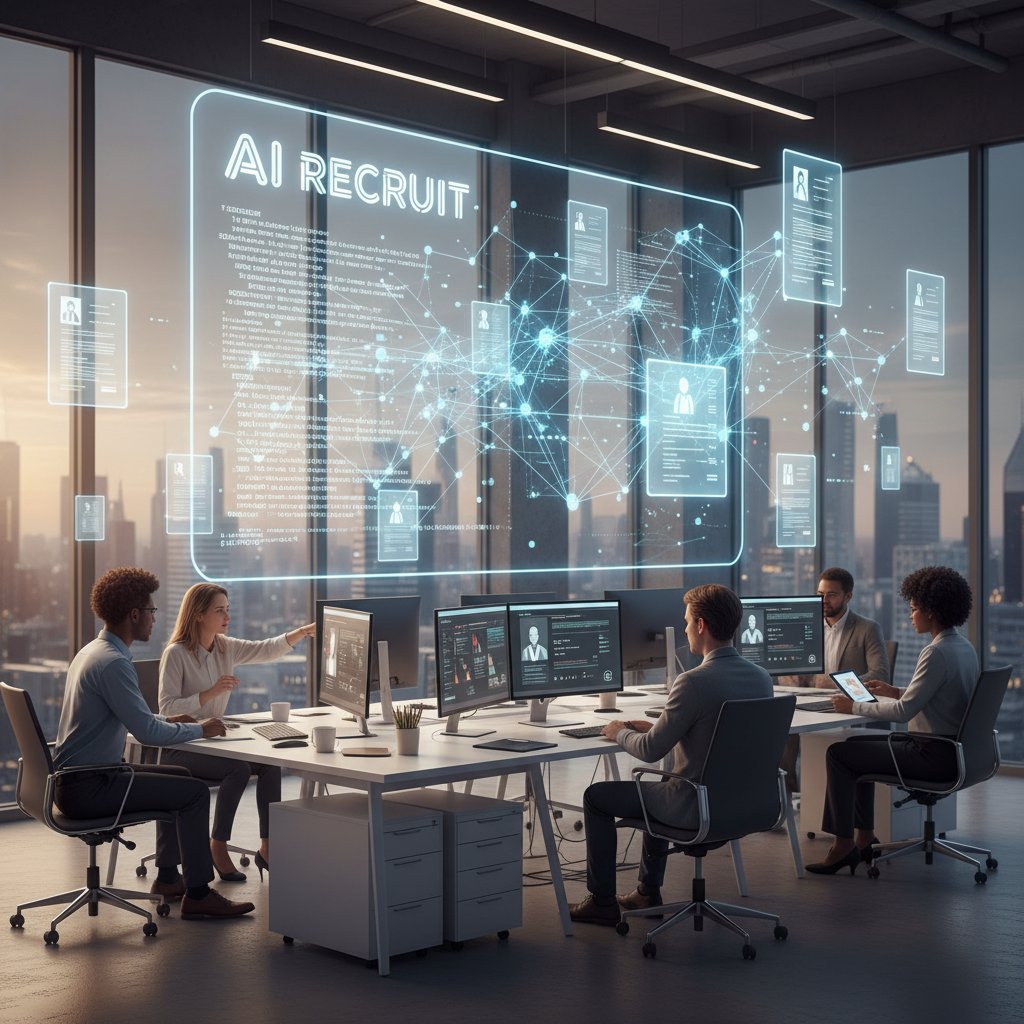
But here’s the real kicker: the pressure isn’t just external. Internal metrics—time-to-hire, cost-per-hire, and recruiter workload—are brutal. If you’re not automating, you’re already behind.
“If you’re not automating, you’re already behind.”
— Alex, HR strategist
The gold rush is on, but few are pausing to ask what happens when the algorithms become the new gatekeepers.
What most people get wrong about AI-powered hiring
Let’s destroy a comforting myth: AI doesn’t magically make hiring “fair” or “perfect.” Most people assume automated hiring tools are plug-and-play, spitting out top candidates with machine-like accuracy. The truth is grittier. AI is only as good as its training, its data, and the humans babysitting its output.
Hidden pitfalls of AI hiring nobody tells you:
- AI can amplify existing biases if trained on skewed historical data—meaning yesterday’s prejudices become tomorrow’s hiring standards.
- Automated matching can overlook unconventional but high-potential candidates who don’t fit the algorithm’s “ideal mold.”
- Tech glitches and black-box decisions can lead to inexplicable rejections—goodbye transparency, hello frustration.
- Vendors often oversell, underdeliver. Real-world AI accuracy varies wildly by industry, job type, and data quality.
- AI doesn’t understand nuance—context, culture fit, and soft skills remain stubbornly human.
- Compliance risks are real: unexplained rejections can trigger legal and PR nightmares.
- Candidates often feel depersonalized, like they’re negotiating with a machine, not a company.
The gap between AI marketing and reality is wide, and falling in means risking both efficiency and reputation.
The difference between automation and true intelligence
Not all “AI” is created equal. There’s a chasm between simple rules-based automation (“If resume has X keyword, then interview”) and true machine learning that learns, adapts, and predicts.
Key terms in AI recruitment:
- Automation: Using software to perform repetitive, predefined tasks—think resume parsing or interview scheduling. Fast, but inflexible.
- Machine learning: Algorithms that learn patterns from historical data, improving predictions over time—like identifying which candidate traits correlate with high performers.
- Natural Language Processing (NLP): Technique enabling AI to “read” and interpret human language, crucial for parsing resumes and cover letters.
In practice, most AI recruitment tools blend these elements, but few reach the level of true “intelligence.” The result? Some platforms are glorified filters, while others deliver actionable insights that can revolutionize hiring. As IBM’s 2024 report points out, the real value comes from platforms that combine automation with continuous learning and human oversight.
Inside the black box: how AI decides who gets hired
How algorithms screen resumes (and what they miss)
The technical pipeline is brutal in its efficiency: resumes are parsed, keywords extracted, and profiles ranked in milliseconds. AI cross-references job requirements, past performance data, and sometimes even social media footprints. But speed comes at a cost.
| Factor | Manual Review | AI-Driven Review | Notes |
|---|---|---|---|
| Speed | Slow | Instant | AI processes thousands/hour |
| Bias | Human bias | Algorithmic bias | Depends on data/oversight |
| Error Rate | Varies | Varies | Garbage in, garbage out |
| Cost | High | Lower | AI requires upfront investment |
| Contextual Judgment | Strong | Limited | Nuance often missed |
| Transparency | High | Low | Black-box algorithms |
Table 1: Manual vs. AI-driven resume review—speed, bias, error, and cost.
Source: Original analysis based on ZipDo, 2024 and IBM, 2024
Edge cases are where AI stumbles. Unconventional career paths, gaps in employment, or creative experience descriptions can get lost in translation—literally. According to a recent Forbes analysis, 2023, AI still struggles to evaluate nontraditional backgrounds, leading to missed opportunities and, sometimes, systematic exclusion.
Training data: the source of bias no one wants to talk about
The dirty secret in AI hiring is this: algorithms learn from historical data, and that data is rarely unbiased. If your training set reflects decades of hiring discrimination—whether by gender, race, or education—your AI will quietly perpetuate those patterns.
“An algorithm is only as fair as its data.” — Priya, AI ethicist
Efforts to de-bias AI, including blind screening and continuous audits, can help. But as the McKinsey Talent Trends 2024 report reveals, removing historical prejudice from complex data sets remains unfinished business. Too often, companies trust the tech alone—leaving systemic bias unchecked.
Transparency: can you challenge an algorithm’s verdict?
The rise of algorithmic decision-making has triggered fierce debate about explainability in AI. When candidates are rejected by a machine, can they challenge the verdict? The answer is complicated.
Opaque “black box” models make it nearly impossible to pinpoint why someone was flagged as unfit. For employers, this lack of transparency raises compliance and ethical risks. Candidates, meanwhile, are left in the dark—fueling distrust and resentment.
Steps to audit your AI hiring pipeline:
- Map out your hiring process—pinpoint each AI touchpoint.
- Review training data for historic bias or lack of diversity.
- Demand explainable AI—require vendors to articulate decision logic.
- Test outcomes regularly with “ghost” candidates from varying backgrounds.
- Involve diverse stakeholders in reviewing AI performance.
- Document all changes and audit trails for legal defensibility.
Case studies: automation in the wild (wins and disasters)
When AI got it right: a unicorn startup’s hiring hack
Consider a hypergrowth startup staring down triple-digit headcount goals. With recruiters drowning in resumes and churn reaching dangerous highs, they deployed an AI-powered screening platform that sifted through applicants at breakneck speed, flagging hidden gems overlooked by human reviewers. According to internal data shared with futuretask.ai, the result was a 40% reduction in time-to-hire and a marked improvement in new-hire retention rates.

What set their approach apart? They didn’t let AI run wild—they paired algorithmic shortlisting with rigorous human interviews, continuously retrained their models, and openly communicated with candidates about the process. It wasn’t magic. It was method.
The infamous fail: when automation screened out every candidate
It’s not all glory. In one infamous (and well-documented) case, a national retailer launched an AI-powered hiring platform—only to discover weeks later that the algorithm had systematically rejected every applicant. The reason: a misconfigured weighting system that flagged nearly all resumes as poor matches, regardless of qualifications.
| Date | Decision | Outcome |
|---|---|---|
| 2024-01-15 | AI rollout launched | Surge in applicant processing speed |
| 2024-01-21 | Candidates flagged as poor fit | 100% rejection rate, HR flags concerns |
| 2024-01-25 | Manual review initiated | Quality candidates found among rejects |
| 2024-01-27 | AI paused for audit | Vendor called in, algorithm retrained |
| 2024-02-01 | Partial relaunch | Improved accuracy, human oversight added |
Table 2: Timeline of a failed AI hiring rollout
Source: Original analysis based on publicly reported incidents and Forbes, 2023
The lesson? Blind faith in automation is a recipe for disaster. Systemic gaps—like lack of ongoing validation and human review—will come back to haunt you.
What the best (and worst) have in common
Patterns are clear: successful automation initiatives blend AI efficiency with human intuition, continuous monitoring, and candidate empathy. Failures, on the other hand, share a set of predictable red flags.
Red flags to watch for in AI hiring projects:
- No human review of algorithmic decisions
- Overreliance on vendor “black box” promises
- Lack of bias audits or diversity checks
- Ignoring candidate feedback and experience
- Inadequate change management and training
- Failure to document and track model updates
- Poor transparency with stakeholders
- Rushed rollout without pilot testing
Actionable takeaway: Treat AI as a tool, not a replacement. Balance speed with oversight. And never forget that real people are on the receiving end of every algorithmic decision.
The new rules of candidate experience
How AI changes what job seekers expect
Automated hiring has flipped the script on candidate expectations. Job seekers now brace for instant responses, automated scheduling, and impersonal status updates. According to recent surveys verified in 2024, candidates appreciate the speed and objectivity—but feel increasingly lost in the process.
Many report frustration with systems that reject them without explanation or feedback. The convenience of automation clashes with a growing sense of alienation. “You feel like a data point, not a person,” one candidate confessed in a Glassdoor review.
Ghosting, feedback, and the myth of the perfect match
There’s a new breed of “ghost candidates”—qualified applicants who, after being filtered by algorithms, never hear a word from employers. The promise of the perfect match is undercut by lost human touch.
“It felt like I was negotiating with a machine, not a company.” — Jamie, developer
This emotional toll isn’t just anecdotal. Surveys by IBM, 2024 show that poor AI-driven experiences negatively impact employer brand and candidate loyalty. The paradox? AI can personalize communication at scale, yet often fails to deliver genuine connection.
Making automation work for humans, not just numbers
The best hiring teams know technology should enhance, not erase, humanity. Blending automation with empathy isn’t just a feel-good ideal—it’s a competitive advantage.
Checklist for a candidate-friendly AI hiring process:
- Disclose when and how AI will be used in hiring.
- Ensure candidate data privacy and security.
- Provide clear feedback for automated rejections.
- Offer human points of contact at every stage.
- Continually solicit and act on candidate feedback.
- Audit for fairness and inclusivity regularly.
- Balance efficiency with opportunities for genuine conversation.

Beyond buzzwords: what AI can (and can’t) do for HR
Core capabilities every platform should have in 2025
AI-powered talent acquisition tools have matured. The best-in-class platforms deliver more than resume parsing—they offer predictive analytics, candidate engagement, and automated compliance checks. According to Forbes, 2023, features that drive business impact include:
| Feature | Leading AI Solutions | Lagging Competitors |
|---|---|---|
| Resume Parsing | Advanced NLP | Basic keyword scan |
| Predictive Analytics | Yes | No |
| Diversity Audits | Built-in | Manual only |
| Automated Scheduling | Seamless | Patchy |
| Candidate Feedback | Real-time | Delayed/none |
| Compliance Tools | Integrated | Add-on |
| Human Oversight | Collaborative | Minimal |
Table 3: Feature matrix of AI hiring platforms
Source: Original analysis based on Forbes, 2023, IBM, 2024
These features aren’t tech for tech’s sake—they directly reduce time-to-hire, improve quality-of-hire, and boost recruiter productivity.
Where AI fails—and why human judgment still matters
AI may be the workhorse, but it’s not infallible. Context, nuance, and culture fit still evade even the most sophisticated algorithms.
Decisions only humans should make:
- Interpreting unorthodox career paths
- Assessing team and culture fit
- Navigating sensitive or ambiguous responses
- Handling edge-case “wildcards”
- Mediating interpersonal conflicts
- Advocating for unconventional but high-potential candidates
The ideal division of labor? AI handles the grunt work—screening, scheduling, compliance—while humans focus on relationships, strategy, and final decisions.
The futuretask.ai perspective: what’s next for automation?
Platforms like futuretask.ai are carving out a role as both resource hubs and innovation drivers. By curating best practices, surfacing fresh research, and providing access to advanced AI modules, they help organizations navigate the chaos—without surrendering their humanity at the door.
Trends point to an arms race in AI recruiting tools—more integration, more analytics, and smarter blending of automation and human touch. Those who succeed will be the ones who remember: every data point is a person, every algorithmic verdict a potential turning point.

Society, ethics, and the war for talent
Who wins, who loses? The new AI hiring divide
AI-powered hiring doesn’t just reshape HR departments—it redraws the lines of opportunity. Demographics most at risk? Older workers, nontraditional applicants, and those lacking digital fluency. According to McKinsey’s 2024 survey, automation can unintentionally exclude candidates based on age, education, or geography.
| Demographic Group | Impact of AI Screening | Inclusion Risk |
|---|---|---|
| Older Workers | Lower callback rates | High |
| Recent Graduates | Neutral to positive | Medium |
| Nontraditional | Often overlooked | High |
| Minorities | Variable | Medium/High |
| Highly Digital-Savvy | Positive | Low |
Table 4: Demographics most impacted by AI-driven screening
Source: Original analysis based on McKinsey, 2024
Regulatory responses are gathering pace. The EU, US states like Illinois, and other regions are enacting laws requiring transparency, fairness audits, and candidate notification when AI is used in hiring. The digital divide is now a frontline HR battle.
Debunking the myth of unbiased AI
Don’t believe the myth: algorithms do not erase bias—they just change its shape.
“Bias doesn’t vanish; it evolves.” — Morgan, HR technologist
Practical steps to mitigate bias include frequent audits, multi-source training data, and diverse stakeholder involvement at every stage. As IBM’s AI Ethics Report, 2024 argues, “bias is a moving target, not a solved problem.”
Ethics check: how far is too far?
Controversial use cases abound—emotion recognition during video interviews, scraping candidates’ social media and even facial analysis. These tactics raise chilling questions about privacy, consent, and fairness.
Ethical boundaries in AI hiring:
- Emotion recognition: Analyzing facial expressions to judge fit; widely panned as unreliable and intrusive.
- Social media scraping: Mining public profiles for “red flags”; risks privacy invasion and discrimination.
- Automated background checks: Cross-referencing personal data at scale; legal and ethical landmines abound.
- “Black box” verdicts: Opaque decisions with no recourse; erodes trust and accountability.
The next wave of ethical dilemmas will test the resolve of HR leaders, regulators, and technologists alike. Staying on the right side of the line requires relentless vigilance and a commitment to fairness over convenience.
Money talks: ROI, costs, and hidden expenses
The real price of AI-powered recruitment
Automating talent acquisition isn’t cheap. There’s the upfront investment in software licenses, integration with existing HRIS, and staff training. Recurring costs—subscription fees, periodic upgrades, and compliance audits—add up fast.
| Hiring Model | Upfront Cost | Annual Cost | 2-Year Total | Notes |
|---|---|---|---|---|
| Traditional | $0 | $130,000 | $260,000 | Labor-intensive |
| AI-Enabled | $25,000 | $70,000 | $165,000 | Includes software, training |
| Hybrid (AI + Human) | $30,000 | $100,000 | $230,000 | Balanced approach |
Table 5: Cost-benefit analysis of AI vs. traditional hiring (mid-sized org, 2 years)
Source: Original analysis based on HR industry cost surveys
But beware hidden expenses: failed rollouts, reputational repair, and the cost of correcting algorithmic errors aren’t always counted in glossy ROI calculators.
How to measure ROI (and what most teams miss)
Obsess over these KPIs: time-to-hire, cost-per-hire, candidate quality, retention rates, and candidate satisfaction. But don’t ignore new metrics—algorithmic accuracy, fairness audits, and stakeholder buy-in.
How to track results of AI hiring:
- Set clear, measurable objectives for automation (speed, quality, diversity).
- Benchmark performance against past data.
- Track time-to-hire at each stage.
- Calculate savings on recruiter workload.
- Survey candidate experience and satisfaction.
- Audit for diversity and inclusion impact.
- Monitor error rates and false positives/negatives.
- Adjust models based on feedback and outcomes.
Common pitfall? Relying solely on vendor dashboards—independent audits are non-negotiable.
Hidden benefits (and risks) that change the math
It’s not all about dollars. AI-powered hiring can boost employer brand, broaden talent reach, and provide data-driven insights that transform HR strategy.
Hidden benefits of AI-powered talent acquisition:
- 24/7 candidate engagement and instant communication
- Enhanced employer brand via cutting-edge reputation
- Unlocking “passive” candidates from overlooked channels
- More consistent quality-of-hire and onboarding experience
- Early detection of skills gaps and market trends
- Real-time compliance tracking and reporting
But reputational and compliance risks loom large. A single algorithmic misfire can trigger lawsuits and viral backlash, wiping out any cost savings in a heartbeat.
Real-world implementation: pitfalls and power moves
What leaders wish they knew before automating
Early adopters are candid about their regrets: underestimating the amount of change management required and overestimating the plug-and-play nature of AI platforms.
“We underestimated the change management needed.” — Taylor, talent VP
Buy-in from every stakeholder—HR, IT, legal, and line managers—isn’t a checkbox, it’s a process. The alternative is a failed rollout and, worse, a loss of trust across the organization.
Step-by-step: launching your first AI-driven hiring process
Preparation is everything. Successful rollouts follow a disciplined process, not a mad dash.
Step-by-step guide to AI hiring automation:
- Identify business objectives and pain points.
- Map current hiring workflows and bottlenecks.
- Research and vet AI platforms thoroughly.
- Pilot the solution with a limited user group.
- Train HR staff and hiring managers on new tools.
- Communicate transparently with candidates.
- Monitor key metrics and collect feedback.
- Refine algorithms and processes continuously.
- Scale up only after validating real-world results.
Troubleshooting tip: When barriers emerge—be it data quality, integration woes, or team resistance—pause, analyze, and adapt. Rushing “to keep up” is the fastest path to failure.
Avoiding the automation graveyard: what not to do
Failed implementations leave warning signs in their wake.
Red flags that spell doom for AI hiring projects:
- No pilot phase or feedback loop
- Poor training for end-users
- Ignoring legacy data or integration issues
- Overlooking compliance or ethics checks
- Siloed implementation by IT/HR alone
- Vague goals and no clear KPIs
- Lack of executive sponsorship
Rescue strategy? Hit reset, bring in cross-functional teams, and reconnect the tech to real business needs—fast.
The evolving role of recruiters in an AI world
From gatekeepers to strategists: the recruiter’s new job
Recruiters are no longer just screeners—they’re orchestrators of complex, tech-powered processes. With AI handling the heavy lifting, their focus shifts to relationship-building, brand storytelling, and talent strategy.
New competencies—data literacy, tech fluency, and stakeholder engagement—are now essential. Career paths are evolving, too, with roles in talent analytics, AI oversight, and candidate experience management on the rise.

Building trust in a world of digital gatekeepers
Transparency isn’t optional. Candidates want to know how decisions are made—and recruiters who communicate openly build loyalty and trust, not just compliance.
Humanizing the tech-driven process means using storytelling, offering candid feedback, and being honest about the role of algorithms.
“We’re still storytellers, not just button-pushers.” — Jordan, senior recruiter
Upskilling for the AI-powered future
Winning teams invest in continuous learning. HR pros must strengthen data skills, tech savvy, and cross-functional collaboration.
Priority skills for recruiters in 2025:
- Data analysis and interpretation
- AI platform proficiency
- Bias and ethics auditing
- Change management
- Candidate experience design
- Talent branding and storytelling
- Agile collaboration and project management
Resources abound—from industry communities to online courses (see futuretask.ai/resources). The key is relentless curiosity and adaptability.
What’s next? Predictions and provocations for 2025 and beyond
The next wave: AI that interviews and evaluates soft skills
The bleeding edge of AI hiring is already moving past resume screens to automated interviews and soft skills assessment. AI avatars can now conduct video interviews, analyze tone and language, and score candidates for attributes like teamwork and resilience. It’s controversial—accuracy and ethics are under fire—but it’s changing the game.

The possibilities are immense, but so are the concerns—from validity to fairness to privacy. The debate is only just beginning.
Regulation, rebellion, and the backlash to automation
Legal frameworks are catching up fast. The timeline below tracks the rising tide of regulation and resistance:
Timeline of AI hiring regulation (2015-2025):
- 2015: First academic papers highlight AI hiring bias
- 2017: EEOC issues guidance on automation risks
- 2018: GDPR enforces data transparency in EU hiring
- 2019: Illinois passes AI Video Interview Act (US)
- 2020: New York City explores algorithmic accountability
- 2021: California introduces HR AI fairness bill
- 2022: EU proposes AI Act covering recruitment
- 2023: Major lawsuits over algorithmic bias
- 2024: Increased audits, transparency mandates
- 2025: Global best practices and standards emerge
Candidate pushback is mounting—advocacy groups and class actions are challenging black-box hiring, demanding the right to explanation and appeal.
How to future-proof your talent strategy now
The winners? Organizations who blend relentless innovation with ethical vigilance.
Unconventional uses for AI hiring tools:
- Talent market mapping for untapped geographies
- Real-time skills gap analysis and upskilling alerts
- Diversity pipeline diagnostics
- Passive candidate reactivation
- Onboarding journey mapping
- Referral network intelligence
Platforms like futuretask.ai offer a vantage point for sourcing new ideas, vetting best practices, and staying agile as the landscape shifts.
FAQ: burning questions HR still has about AI hiring
How accurate are AI-powered talent acquisition tools?
Recent studies confirm that in controlled settings, AI recruitment tools deliver up to 30-40% faster initial screening with comparable or better accuracy than traditional methods (ZipDo, 2024). However, real-world accuracy depends on data quality, job role, and continuous human oversight. Always demand transparent performance metrics from vendors and test with diverse sample candidates.
Is automated hiring legal (and ethical)?
Automated hiring is legal in most jurisdictions—if you follow disclosure, fairness, and data privacy requirements. Global regulations like GDPR and the emerging EU AI Act set tough standards, and US states are rolling out their own laws. Ethically, best practices for 2025 include transparent communication, regular audits, and the right for candidates to challenge decisions.
How do I choose the right AI recruitment solution?
Key criteria: verified accuracy, explainable decision logic, robust data privacy, proven bias mitigation, and integration ease. Vendor red flags include black-box algorithms, vague compliance claims, and lack of real-world performance data. Test platforms with your own datasets, pilot with real roles, and customize for your culture and workflows.
Conclusion
Automated hiring isn’t coming—it’s here, and it’s rewriting the rules of talent acquisition. Ai-powered talent acquisition automation delivers unprecedented speed, scale, and data-driven insight, but beneath the surface lie complex risks: bias, transparency failures, and the risk of losing the human touch in the name of efficiency. The most successful organizations treat AI as a force multiplier, not a magic bullet—pairing algorithmic power with authentic human judgment, relentless bias audits, and genuine candidate empathy. As the regulatory and ethical landscape evolves, the only certainty is that staying ahead means blending innovation with vigilance and never losing sight of the people behind the data. If you want to thrive—rather than merely survive—in the era of automated hiring, treat every algorithmic decision as a reflection of your organization’s values. Challenge easy answers, audit relentlessly, and remember: technology is only as good as the humans guiding it.
Sources
References cited in this article
- ZipDo: Essential AI in Talent Acquisition Statistics 2024(zipdo.co)
- IBM: AI in Talent Acquisition(ibm.com)
- Forbes: Transforming Talent Acquisition With AI(forbes.com)
- McKinsey: Top Talent Acquisition Trends 2024(mckinsey.com)
- DemandSage: AI Recruitment Statistics 2024(demandsage.com)
- TechFunnel: AI in Recruitment 2024(techfunnel.com)
- Wiley: Algorithmic Inclusion in Hiring(onlinelibrary.wiley.com)
- SmartRecruiters: 44 AI Recruitment Statistics 2024(smartrecruiters.com)
- Workable: Top AI in Hiring Statistics 2024(resources.workable.com)
- CNBC: AI Bias in Hiring(cnbc.com)
- BBC: AI Hiring Tools May Filter Out Best Applicants(bbc.com)
- ConceptualTech: How AI Decides Who Gets Hired(conceptualtech.com)
- Built In: AI Bias(builtin.com)
- MIT Sloan: Addressing AI Hallucinations and Bias(mitsloanedtech.mit.edu)
- Helpful Professor: Statistical Bias Examples(helpfulprofessor.com)
- LinkedIn: 2024 Talent Reports(linkedin.com)
- GoodTime: 7 Talent Acquisition Trends 2025(goodtime.io)
- Korn Ferry: AI in Recruiting 2024(kornferry.com)
Automate Your Tasks, Transform Your Business
FutureTask.ai revolutionizes your workflow by automating complex tasks typically outsourced to freelancers and agencies. Our powerful AI-driven platform leverages cutting-edge LLM technology to deliver precision, speed, and consistency at scale. Whether you're managing content creation, data analytics, marketing campaigns, or customer support, FutureTask.ai ensures seamless task execution, significant cost savings, and unmatched efficiency. Transform your business operations, eliminate delays, reduce operational overhead, and gain a competitive advantage with intelligent automation.
Get startedReady to Automate Your Business?
Start transforming tasks into automated processes today
Frequently Asked Questions
What percentage of companies are using AI in talent acquisition?
Over 60% of companies are using AI in talent acquisition as of 2024, representing a 53% jump from previous years, according to ZipDo 2024 data cited in the article.
What are the main promises AI-powered recruitment vendors are making?
AI vendors promise to automate resume screening and interview scheduling while eliminating bias, enabling instant candidate matching, and reducing time wasted on poor-fit candidates.
What internal metrics are driving companies to adopt AI hiring automation?
Companies are driven by pressure to improve brutal internal metrics including time-to-hire, cost-per-hire, and recruiter workload reduction.
What is the main theme of this article about AI-powered hiring?
The article examines the gap between the glossy marketing promises of AI recruitment and the harsh realities and risks behind automated hiring, warning that algorithms are becoming new gatekeepers in talent acquisition.
From the Archive
Explore more from Ai-powered task automation

How AI Is Automating Recruitment Tasks and Changing Hiring

How AI-Powered Workforce Management Automation Is Reshaping Organizations

Automate HR Processes with AI Without Falling for Vendor Myths

Automating Talent Management Processes: Impacts and Risks

Automating HR Task Management with Ai: the Real Trade-Offs
