


Ai-Powered Time Tracking: Productivity Boost or New Surveillance?
Written with AI assistance under our editorial guidelines
AI-powered time tracking offers real productivity benefits by automating manual logging and reducing guesstimation, yet simultaneously raises serious surveillance concerns. The technology addresses genuine pain points in traditional tracking systems, but creates new risks around worker privacy and monitoring that organizations must carefully navigate.
Time—measured, monitored, monetized, and, let’s be honest, often wasted. If you’ve ever felt the itch of unease watching your minutes slip by, you’re not alone. In 2025, the relentless advance of AI-powered time tracking has shifted that anxiety from a private struggle to a data-driven battleground. This isn’t another shallow productivity hack or a brochure for the latest SaaS darling. This is about the dark corners, wild upsides, and the real, raw consequences of letting artificial intelligence count your hours. Whether you’re a freelancer tired of losing billable seconds, an operations lead desperate for real visibility, or just someone who resents being reduced to a number, this is the unfiltered, research-backed story of AI time management—warts and all.
AI-powered time tracking is everywhere: lauded as the savior of productivity, cursed as a new surveillance regime, and already driving radical changes in how we work, rest, and resist. Here, we dig into the brutal truths, expose the hidden benefits, and cast a cold, analytical light on the future of work. Ready to see what’s lurking behind the digital clockface? Let’s tear off the veneer.
Why ai-powered time tracking is exploding—and why you should care
The broken promise of traditional time tracking
Manual time logs: the professional equivalent of chain-smoking—addictive, time-consuming, and ultimately bad for you. Teams slog through Excel rows, try to remember what happened yesterday, and fudge the inevitable gaps. According to a 2024 DeskTrack report, nearly 70% of professionals admit to “guesstimating” their hours at least once a week—accuracy be damned. The emotional fallout? Micromanagement breeds resentment, and the constant recalibration of trust between managers and teams drains morale.
It’s no wonder, then, that workers confess to burnout and eye-rolling at every new timekeeping policy. One creative agency manager, Jamie, summed it up brutally:
"We tried spreadsheets, apps, even sticky notes. Nothing stuck."
— Jamie
The traditional system is shattered: a cracked clock trying to keep up with digital realities.

The rise of AI: not just hype, but necessity
Why is AI time tracking catching fire across industries? Start with the sheer speed and complexity of modern work. Static tools are outclassed by the brutal pace of real-world digital workplaces—remote teams, gig platforms, and multinational projects can’t afford yesterday’s slow, error-prone tracking.
AI steps in with machine learning algorithms, activity recognition, and second-by-second tracking. It doesn’t just log hours—it learns patterns, categorizes tasks, and generates insights traditional systems can’t touch. According to Gartner, 55% of organizations are already piloting or deploying generative AI, including time tracking, to claw back wasted time and gain competitive edge (Gartner, 2023).
7 hidden benefits of ai-powered time tracking experts won't tell you:
- Pinpoint accuracy: AI tracks time at a granular level—no more rounding, no lost minutes.
- Task categorization: Automatic sorting of activities gives deep productivity analytics.
- Focus enhancement: Real-time nudges and focus features help kill distractions.
- Automated reports: No more hours lost on manual timesheet reconciliation—reports just appear.
- Resource allocation: Managers can see, in real time, where effort is actually going.
- Seamless integration: AI plays nice with project management, payroll, and workflow tools.
- Remote work support: Monitors hybrid and distributed teams without endless check-ins.
Who's driving the revolution? From freelancers to Fortune 500
It’s not just tech giants piloting AI-powered time tracking. Startups, remote teams, and creative agencies are leading the charge, desperate for insights and transparency. For many, it's about survival in a world where every hour must count and every inefficiency is a missed opportunity.
Case in point: a creative collective in Berlin, fragmented by remote work and project chaos, slashed their billing errors by 40% after deploying AI-driven tracking. On the flip side, a Fortune 500 finance department embedded AI time logging to optimize allocations—and discovered their “rockstar” team was spending 25% of their time on admin work.

Everyone—from solo freelancers to multinational execs—is realizing that in the attention economy, invisible work is lost work. AI-powered time tracking isn’t a niche experiment; it’s a necessary evolution.
How AI-powered time tracking actually works (and what nobody tells you)
Under the hood: algorithms, sensors, and data streams
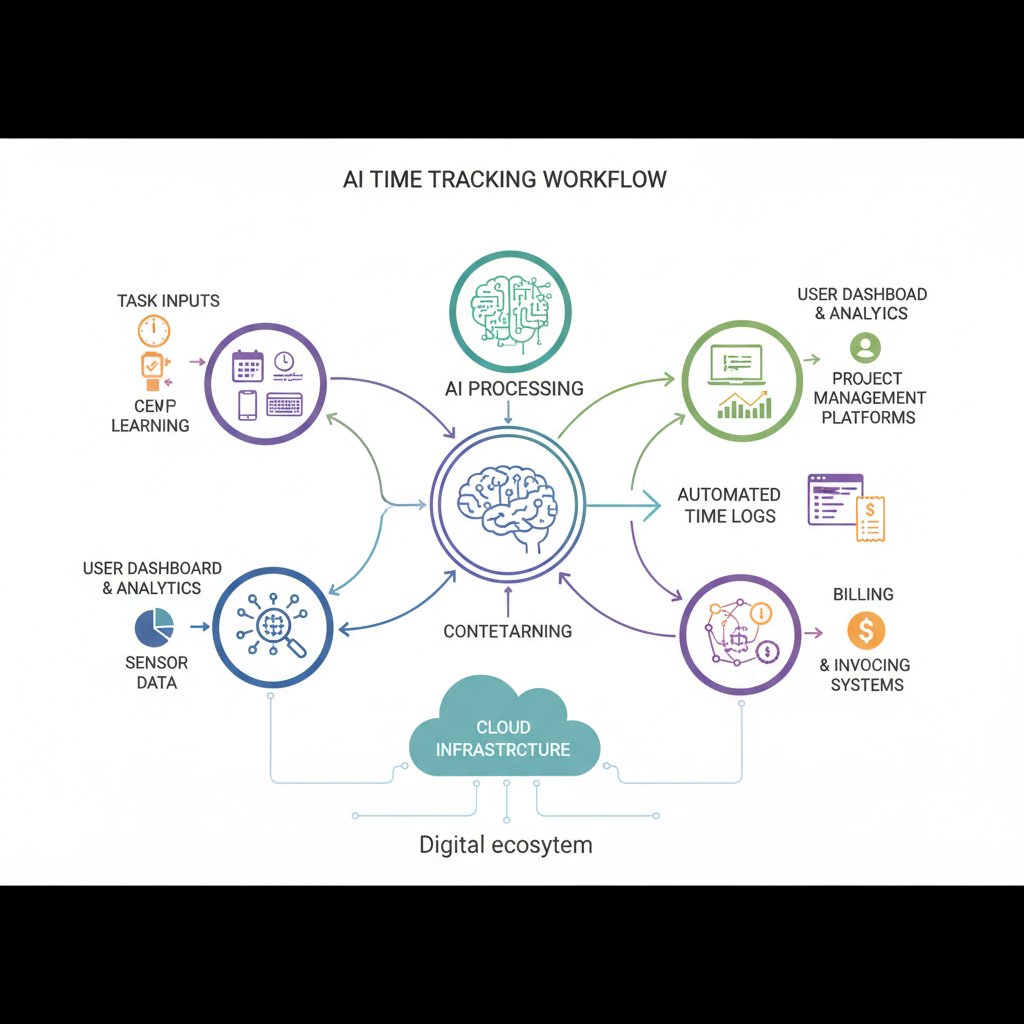
At a technical level, AI-powered time tracking is less about Orwellian oversight and more about ruthless pragmatism. It starts with sensors: keystrokes, mouse movements, app usage, web activity, and—sometimes—location data. Sophisticated algorithms analyze these streams to recognize not just when you’re working, but what you’re working on. Activity recognition, contextual analytics, and anomaly detection all play a role.
Context is king. AI doesn’t just note you’re “active”—it classifies tasks, cross-references project data, and flags suspicious patterns. Some systems integrate with calendars, project management apps, and even communication platforms. The result? Second-level accuracy, zero manual entry, and a living, breathing portrait of how work gets done.
| Tracking Method | Features | Accuracy | Privacy | Cost |
|---|---|---|---|---|
| Manual (spreadsheets) | User-entered data, no sensors | Low | High | Very low |
| Semi-automated | App triggers, timestamps | Medium | Medium | Low-moderate |
| AI-powered | Contextual analytics, sensors | High | Varies | Moderate |
Table 1: Comparison of manual, semi-automated, and AI-powered time tracking systems. Source: Original analysis based on DeskTrack, 2024 and Gartner, 2023
What data is really being collected?
Let’s be clear: AI time trackers can log everything from keystrokes and mouse clicks to which websites you visit, which files you open, and how long you spend on each application. Some even track location (especially for field teams) and integrate with video calls or messaging platforms.
This raises a crucial distinction. While critics brand these systems as “surveillance,” most AI platforms aren’t interested in your bathroom breaks or lunch habits. They’re after patterns, not minutiae. The goal is productivity insight, not personal policing.
"AI doesn’t care about your bathroom breaks. It cares about patterns." — Jordan
Most reputable providers offer transparency dashboards, customizable privacy controls, and clear data policies. The reality is nuanced: data can empower teams when used responsibly—but also be weaponized.
The privacy paradox: empowerment or surveillance?
Here’s the rub: AI-powered time tracking can be a tool for empowerment or a mechanism for control. The line is thin, and the difference comes down to intent, transparency, and execution. Some platforms encrypt data end-to-end, allow granular opt-outs, and let teams audit exactly what’s being logged. Others bury details in fine print, or, worse, leave data unsecured.
6 red flags to watch out for when choosing an AI time tracker:
- Opaque data policies: If you can’t easily understand what’s tracked, run.
- No encryption: Sensitive work data should never be exposed.
- No user controls: Opt-out and privacy settings are non-negotiable.
- Hidden third-party sharing: Beware platforms that share data with advertisers or partners.
- Weak audit trails: You should know who accessed your data and when.
- Overly granular surveillance: Keystroke-level monitoring for general knowledge work is excessive.
The psychology of tracking: how AI changes our relationship with time
Why tracking time feels so damn personal
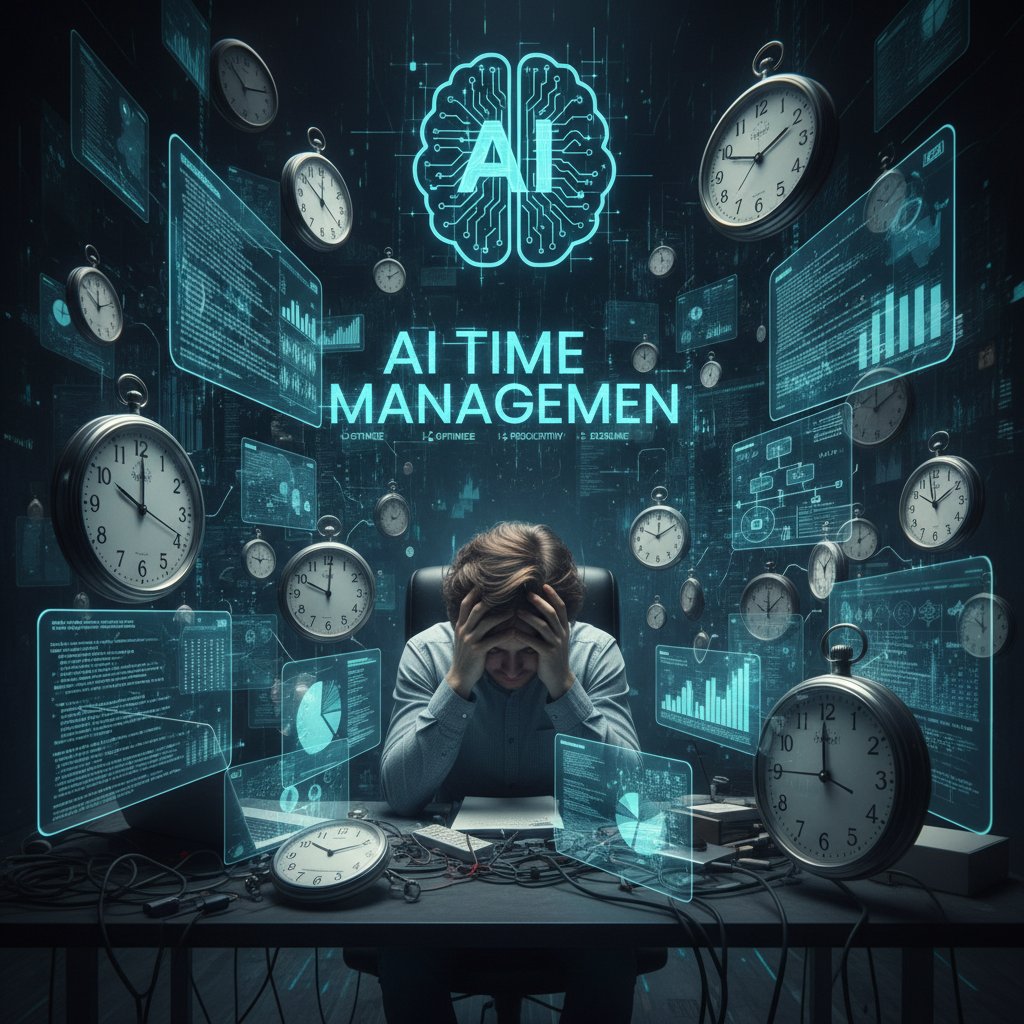
There’s a reason time tracking triggers a visceral response. It’s not just about logs or reports—it’s about autonomy, trust, and the fear of being reduced to a productivity statistic. Studies published in 2024 by DeskTrack found that 32% of employees under AI monitoring reported poorer mental health, compared to 24% of those unmonitored. The hyper-awareness of being tracked creates a subtle, persistent pressure: Am I working hard enough? Is someone watching every click?
Psychologists call it “productivity anxiety”—the feeling that every second must be justified, every break a liability. In creative fields and knowledge work, this anxiety can erode not just morale but actual output.
Does AI make it better—or worse?
For some, AI-powered time tracking brings relief: no more obsessing over timesheets, no more self-policing. The data is objective, mechanical, and (in theory) impartial. A content manager we interviewed described it this way:
"My AI tracker feels like a coach, not a warden. But that’s not everyone’s story." — Mia
But for others, the specter of over-optimization looms large. AI can nudge you to focus, flag outliers, and suggest “improvements”—but unchecked, this can spiral into burnout. The risk: the relentless drive to optimize every second leaves no room for downtime, creativity, or plain human messiness.
When to say no: the anti-tracking movement
Not everyone wants to be watched, no matter how benevolent the algorithm. A rising movement in tech—spanning privacy advocates, unions, and even some managers—argues for trust-based systems, where output matters more than time spent. For jobs defined by creativity, problem-solving, and relationships, sometimes the best “tracker” is trust.
Still, AI-powered time tracking has found uses far outside the office. Here are five unconventional examples:
- Personal productivity: Freelancers using AI tools for self-coaching, not surveillance.
- Activism: Campaigners tracking volunteer hours and engagement spikes.
- Nonprofits: Monitoring program impact, not just staff efficiency.
- Fitness & wellness: Logging time spent on mindfulness or exercise, not work.
- Parenting: Parents tracking (with consent) screentime or learning activities for kids.
Industry case studies: the good, the bad, and the ugly
Creative agencies: from chaos to clarity
Creative agencies notoriously struggle with time tracking—billable hours slip, admin work balloons, and revenue leaks into the cracks. One London-based agency (anonymized for privacy) deployed AI-driven time tracking and saw a transformation: creative teams got accurate feedback on project time, billing improved, and management finally saw where the hours went.
Before AI, only 68% of hours were captured accurately; after, it shot up to 95%. Profitability increased by 17% in six months, largely by eliminating underbilling and freeing up staff for actual creative work.
| Metric | Before AI Tracking | After AI Tracking |
|---|---|---|
| Accurate Hours Logged | 68% | 95% |
| Revenue Leakage | $25,000/month | $5,000/month |
| Staff Satisfaction | 65% | 80% |
| Billing Disputes | 12/month | 2/month |
Table 2: Before-and-after metrics for a creative agency using AI-powered time tracking. Source: Original analysis based on DeskTrack, 2024.
Legal and consulting: the fight for every billable hour
In legal and consulting, time is money—literally. Firms that miss just a few billable hours per employee, per month, bleed profits. One mid-sized law firm implemented UseMotion’s AI time tracker and discovered they were losing nearly 10% of billable time due to manual logging errors. By automating tracking, they recovered $120,000 in annual revenue and reduced partner stress over “lost” hours.

The gig economy: freedom or new shackles?
Gig workers—riders, coders, designers—are the frontline for AI time tracking. For some, it means transparent records and faster payments; for others, it’s algorithmic control dressed up as efficiency. In 2024, a group of ride-share drivers in California protested an AI-driven tracker that penalized “idle time,” arguing it ignored the reality of waiting for rides. Some workers manufactured “active” signals to game the system.
"For some, AI means freedom. For others, it’s just a smarter boss." — Alex
The truth? AI time tracking can empower or exploit—often both at once.
Debunking the top myths about ai-powered time tracking
Myth #1: AI time tracking is just digital micromanagement
Sure, the roots of time tracking are tangled up with control and oversight. But calling all AI-powered solutions “digital micromanagers” misses the point. Properly implemented, these systems offer data to employees, not just about them—enabling smarter self-management, project planning, and even negotiating workloads.

Myth #2: It’s only for big corporations
AI time tracking isn’t just a Fortune 500 play. Freelancers, startups, and micro-teams are adopting these tools for transparency and leverage in client negotiations. For small businesses, the biggest gains are in freeing up admin time and getting real clarity on project profitability.
7 steps to implement AI time tracking in a small team:
- Assess your needs: List your workflow bottlenecks and key pain points.
- Research providers: Compare features, privacy, and integration options.
- Pilot with volunteers: Test with a subset of your team before a full rollout.
- Set clear expectations: Communicate why you’re tracking and how data will be used.
- Configure privacy settings: Allow opt-outs and tailor what’s tracked.
- Integrate with existing tools: Connect to project management and payroll systems.
- Review and iterate: Analyze the data, take feedback, and adjust as needed.
Myth #3: Manual tracking is more accurate
Human memory is as fallible as it is creative. Manual logs are riddled with errors, from misremembered hours to “double counting” and simple omission. AI tracks time continuously, recognizing patterns humans miss and flagging anomalies for review.
| Method | Error Rate 2024 | Error Rate 2025 |
|---|---|---|
| Manual | 20% | 19% |
| AI-powered | 5% | 4% |
Table 3: Error rates in manual vs. AI-powered time tracking. Source: Original analysis based on CompTIA AI Stats, 2024 and UseMotion, 2025.
Implementing AI-powered time tracking: a no-BS guide
Choosing the right system for your needs
There’s no “one size fits all” for AI time tracking. The best system is the one that meets your actual needs—balancing robust analytics with privacy, automation with customization, and seamless integration with your existing tech stack.
Key criteria include: transparency, customizable privacy settings, integration with your tools, reporting quality, real-time insights, and responsive support.
Priority checklist for AI-powered time tracking implementation:
- Define core tracking objectives.
- Audit your current workflows and pain points.
- Research top-rated AI time tracking solutions.
- Demand clear, published privacy policies.
- Test with a small group for usability.
- Gather honest feedback.
- Enable opt-ins and privacy controls.
- Integrate with key business systems.
- Train your team—don’t just deploy and pray.
- Review outcomes and adjust policies quarterly.
Integration with your workflow: play nice or cause chaos?
AI time trackers often promise “seamless integration”—but the reality is messier. Syncing with legacy systems, project management apps, and payroll platforms can get complex fast. The difference between a productivity boost and digital chaos comes down to planning, IT support, and training.
Best practice: map your workflows, engage power users, and pilot integrations before a company-wide rollout. Invest in onboarding—not just technically, but culturally.
Measuring success: what to track and why it matters
Don’t just track hours—track outcomes. Key metrics post-implementation include accurate hours logged, project delivery times, employee satisfaction, and reduction in admin time. Use the data to spot bottlenecks, redistribute workloads, and—crucially—listen to user feedback.
"Success isn’t just saved minutes—it’s happier teams." — Casey
Iterate, don’t stagnate. Data is only as good as what you do with it.
Risks, rewards, and the ethics of automation
The double-edged sword: productivity vs. privacy
Efficiency is seductive; privacy is sacrosanct. The relentless drive for productivity can steamroll autonomy—and with AI, the temptation to measure everything is ever-present. Legal and ethical frameworks lag behind tech advancement, leaving organizations to make moral calls in the gray zones.
Dictionary of AI time tracking terms:
Algorithms that classify user activity (working, idle, in meeting) based on input data. Example: recognizing when a designer is using Photoshop vs. email.
The process of correlating time data with project, client, or outcome context. Example: linking hours spent on a pitch with the resulting deal.
Practice of collecting only the data absolutely necessary for a purpose. Example: logging app usage but not content viewed.
Avoiding the AI time trap: over-optimization and burnout
Over-reliance on AI to optimize every second can push teams—and individuals—into burnout territory. The signals are subtle: an endless chase for “peak” efficiency, anxiety over every flagged “unproductive” minute, and a shrinking tolerance for downtime.
6 signs you're falling into the AI time trap:
- You’re obsessively checking your productivity dashboard.
- You feel guilty stepping away from your desk—even for essentials.
- Your “focus” scores trump actual job satisfaction.
- Feedback feels more like surveillance than guidance.
- Team morale drops as optimization pressure mounts.
- Innovation and downtime disappear in the name of efficiency.
Balance automation with human judgment. Sometimes the best work happens off the clock.
Who owns your data? Navigating the grey zones
Data ownership is a messy battleground. Employees demand transparency, companies want insight, and vendors collect mountains of behavioral data. Always vet providers for clear, ethical data policies: Who can access your data? How is it anonymized? What happens if you leave the platform?
For organizations looking to understand responsible automation and ethical AI integration, futuretask.ai is an emergent resource—advocating for transparent, human-centric solutions in the age of digital surveillance.
The future: will AI time tracking make time obsolete?
From timesheets to trust: the workplace of 2030
Trends in 2025 already point toward a subtle revolution: outcome-driven management, trust-based systems, and a radical focus on results over raw hours. Experts interviewed by Bilderberg Management in 2024 note that the most innovative firms are quietly moving away from time-obsessed tracking to performance and value-centric models.

AI-powered task automation: when the work tracks itself
The future of AI-powered time tracking isn’t just about counting hours—it’s about executing and managing tasks automatically. Platforms like futuretask.ai are pioneering this shift, where tasks—not hours—become the currency of productivity. Here’s a look at key milestones in the evolution:
| Year | Milestone |
|---|---|
| 2015 | First automated time tracking apps emerge |
| 2018 | AI-based activity recognition introduced |
| 2020 | Integration with project management tools |
| 2023 | Generative AI piloted for workflow insight |
| 2024 | Second-level activity analytics mainstream |
| 2025 | Task automation platforms (e.g., futuretask.ai) gain traction |
Table 4: Timeline of AI-powered time tracking evolution. Source: Original analysis based on CompTIA AI Stats, 2024, DeskTrack, 2024, and Bilderberg Management, 2024.
Should we stop tracking time altogether?
Radical voices in the productivity world argue for abolishing time tracking entirely: let output speak for itself. This shift demands new cultural norms—deep trust, clear outcomes, and acceptance of the messiness of human work.
"When you trust the work, you don’t need the clock." — Riley
But for now, most teams find a middle ground: using AI to make invisible work visible, then moving toward results—not hours—as the ultimate measure.
Conclusion
AI-powered time tracking is neither panacea nor panopticon. It’s a powerful tool—one that can expose wasted effort, optimize workflows, and even spark new conversations about what work means. But it also demands caution: respect for privacy, an eye for bias, and the courage to say “enough” when optimization turns toxic. Every statistic cited, every case study shared, points to a simple truth: the future of work isn’t about squeezing more minutes from your day. It’s about making those minutes matter.
In this new reality, futuretask.ai stands as a guidepost—championing responsible automation, ethical data practices, and the quest for work that’s measured not by hours, but by impact. So the next time you feel the clock ticking, ask yourself: Is it tracking you, or are you finally tracking what matters?
Sources
References cited in this article
- DeskTrack(desktrack.timentask.com)
- UseMotion(usemotion.com)
- CompTIA AI Stats(connect.comptia.org)
- Ars Technica(arstechnica.com)
- Bilderberg Management(bilderbergmanagement.com)
- Hypersense Software(hypersense-software.com)
- Vention Teams(ventionteams.com)
- WEKA Global Trends(weka.io)
- Forbes Advisor(forbes.com)
- Timely(timely.com)
- Tempo AI Timesheets(tempo.io)
- CloudApper.ai(cloudapper.ai)
- TingHsiao.com(tinghsiao.com)
- Salesforce SMB AI Trends(salesforce.com)
- SEMrush AI Stats(semrush.com)
- IBM AI Adoption(newsroom.ibm.com)
- AI-Online(ai-online.com)
- Jibble(jibble.io)
- Timetackle(timetackle.com)
- Cake.com(cake.com)
- IAPP(iapp.org)
- Reuters(reuters.com)
- IBM AI Privacy(ibm.com)
- Compunnel(compunnel.com)
- PMC Article(ncbi.nlm.nih.gov)
- Psychology Today(psychologytoday.com)
- APA Survey(apa.org)
- Nature(nature.com)
- Productive.io(productive.io)
- Timely.com(timely.com)
- Sindermann et al., 2020(tandfonline.com)
- Tech.co AI Failures(tech.co)
- Northwestern AI Incident Database(casmi.northwestern.edu)
- Forbes(forbes.com)
- ProfileTree(profiletree.com)
- PMC Policy Primer(pmc.ncbi.nlm.nih.gov)
- ResearchGate PDF(researchgate.net)
- Sofigate(sofigate.com)
- Futuramo(futuramo.com)
- American Bar Association(americanbar.org)
- Jibble(jibble.io)
- Pew Research(pewresearch.org)
- SHRM(shrm.org)
- ISACA(isaca.org)
- Forbes(forbes.com)
- Statista(statista.com)
- Forbes(forbes.com)
- Microsoft Future of Work Report(microsoft.com)
- Forbes AI Predictions(forbes.com)
- TIME AI in 2025(time.com)
- Tech Startups(techstartups.com)
- Gartner(gartner.com)
Automate Your Tasks, Transform Your Business
FutureTask.ai revolutionizes your workflow by automating complex tasks typically outsourced to freelancers and agencies. Our powerful AI-driven platform leverages cutting-edge LLM technology to deliver precision, speed, and consistency at scale. Whether you're managing content creation, data analytics, marketing campaigns, or customer support, FutureTask.ai ensures seamless task execution, significant cost savings, and unmatched efficiency. Transform your business operations, eliminate delays, reduce operational overhead, and gain a competitive advantage with intelligent automation.
Get startedReady to Automate Your Business?
Start transforming tasks into automated processes today
Frequently Asked Questions
What percentage of professionals admit to guessing their work hours?
According to a 2024 DeskTrack report cited in the article, nearly 70% of professionals admit to 'guesstimating' their hours at least once a week.
What problems does traditional time tracking cause according to the article?
Traditional time tracking relies on manual logs that are time-consuming and inaccurate, breeds micromanagement and resentment, drains team morale, and fails to keep up with the pace of modern digital workplaces.
Why is AI-powered time tracking growing in popularity?
The article suggests AI time tracking is rising due to the speed and complexity of modern work, as static traditional tools cannot keep pace with remote teams, gig platforms, and multinational projects.
What are the two main perspectives presented on AI-powered time tracking?
The article presents AI-powered time tracking as both a potential productivity boost and a new form of surveillance, exploring both the benefits and concerns.
From the Archive
Explore more from Ai-powered task automation

Ai-Powered Productivity Tracking: Tool for Focus or New Anxiety?

Ai-Powered Employee Performance Tracking: How It Works Today

Automating Attendance Tracking with Ai: Efficiency or Surveillance?

AI-Driven Time Management: What Actually Delivers Results

Do AI Productivity Apps Truly Improve Your Work Output?


