


Ai-Powered Content Curation Automation and the Battle for Attention
Written with AI assistance under our editorial guidelines
AI-powered content curation automation has emerged as a solution to the crisis of information overload, processing massive volumes of content in seconds through natural language processing and machine learning. However, this technological shift raises complex questions about algorithmic bias, control, and societal impact beyond the surface-level promises of efficiency and insight.
Walk into any digital newsroom, brand war room, or agency conference table in 2024 and you’ll hear the same refrain: content is everywhere, and it’s impossible to keep up. The deluge isn’t just about volume—it’s about noise, bias, signal, and control. Ai-powered content curation automation has bulldozed into this chaos, promising order, speed, and superhuman insight. But behind the polished dashboards and AI buzzwords, the reality is raw, messy, and uncomfortably human. This investigative deep dive peels back the hype, exposes the algorithmic underbelly, and gives you a street-level view of what automated content curation really means—for your business, your audience, and society. If you think you know the story, think again.
The content overload crisis nobody warned you about
Why manual curation is collapsing
Here’s the dirty secret: traditional manual content curation is dying, and nobody’s sending flowers. In 2023 alone, nearly two million crisis news stories flooded global feeds, according to verified industry data. That’s not counting TikToks, marketing emails, longreads, or the unfiltered deluge of memes and misinformation. The sheer volume of content has made human-centric curation a Sisyphean task. Editors spend more time drowning in feeds than shaping narratives. Marketers can’t sift signal from noise. Audiences are left numb, endlessly scrolling for meaning that rarely surfaces.

The collapse isn’t about laziness; it’s about survival. When every second brings a hundred new pieces of content, even the most seasoned curators crack under pressure. According to McKinsey’s 2024 report, “content demand nearly doubled from 2023 to 2024, stretching manual editorial teams to the breaking point.” No matter how sharp your instincts or broad your expertise, brute force curation is dead. The age of the freelancer, the midnight oil-burning editor, and the agency content farm is fading fast.
How AI stepped into the chaos
Ai-powered content curation automation didn’t just walk onto the scene. It crash-landed, guns blazing. Armed with natural language processing (NLP), massive language models (LLMs), and real-time data analytics, AI now does in seconds what teams once took days to accomplish. As Deloitte Digital revealed in 2024, “over 80% of data collection and 90% of data processing roles are likely to be automated by generative AI.” That’s not hype. It’s a seismic shift.
"AI isn’t just a tool for speed or scale. It’s a necessity when human curation can’t even see the bottom of the pile anymore." — Deloitte Digital, 2024 (source)
But there’s a catch. While AI excels at synthesizing oceans of information, it brings new risks—bias, opaque decisions, and digital myopia. The companies succeeding aren’t just throwing algorithms at the problem; they’re re-engineering their processes, ethics, and entire value chains to harness (not just deploy) AI curation.
The user’s paradox: more content, less value?
On the consumer side, the paradox hits hardest—more content everywhere, but less that actually matters. According to a 2023 global survey, 41% of streaming users feel “overwhelmed by content overload.” Audiences are bombarded with recommendations, yet true discovery feels rarer than ever.
- Information fatigue is real: Users spend more time filtering than enjoying.
- Trust erosion: Automated feeds amplify echo chambers and misinformation, making users skeptical of what’s curated for them.
- Diminished serendipity: The magic of stumbling upon unexpected gems is lost to algorithmic sameness.
The upshot? Without purposeful, nuanced AI-powered content curation automation, we risk replacing one form of chaos with another. It’s not about more content—it’s about meaning, context, and trust.
How ai-powered content curation automation actually works
Behind the curtain: NLP, LLMs, and knowledge graphs
Forget the sci-fi jargon—at its core, ai-powered content curation automation is a brutal mashup of text analysis, pattern recognition, and relentless data crunching. Natural language processing (NLP) breaks language into structured data. Large language models (LLMs) like GPT-4 interpret context and nuance far beyond “keyword matching.” Layer on knowledge graphs and you get relational webs of meaning, connecting a breaking news event in Seoul to a product trend in London within seconds.
| Technology | Functionality | Key Strengths |
|---|---|---|
| NLP | Text parsing, sentiment analysis, entity detection | Understands language at human level |
| LLMs | Contextual reasoning, summarization, content gen | Learns from vast data sets, adapts fast |
| Knowledge Graphs | Relationship mapping, semantic linking | Connects disparate topics, adds nuance |
Table 1: Core AI technologies behind content curation automation.
Source: Original analysis based on McKinsey, 2024, Deloitte Digital, 2024
When these technologies combine, you get real-time relevance analysis, dynamic topic clustering, and predictive trend spotting that manual teams simply can’t match. The result? Content curation that’s faster, smarter, but also more inscrutable.
From data to decisions: the AI curation workflow
The journey from raw data to a curated feed is ruthless in its efficiency—but loaded with nuance.
- Data ingestion: AI scrapes and ingests massive amounts of content from news, blogs, social, and internal sources.
- Pre-processing: Text is normalized, tagged, and mapped for relevance using NLP and knowledge graphs.
- Ranking and filtering: LLMs prioritize content based on engagement metrics, freshness, user preferences, and sentiment scoring.
- Personalization: Algorithms tailor feeds or selections for target personas, factoring in past consumption and contextual signals.
- Real-time updates: Continuous monitoring for breaking stories or viral trends triggers instant curation adjustments.

What differentiates great ai-powered content curation automation isn’t just the tech stack—it’s the invisible editorial logic coded into every model, and the fine-tuning done by human-in-the-loop experts who know when to override the machine.
Not all AI is created equal: what sets real automation apart
Here’s where the glossy vendor demos fall apart. Not all “AI curation” is created equal. Some platforms bolt on basic keyword filters and slap an AI label on it. Others, like futuretask.ai, integrate advanced LLMs, adaptive learning, and continuous feedback loops to deliver true automation at scale.
- NLP (Natural Language Processing): The spine of any serious AI curation. Without comprehensive NLP, you’re just running a search-and-replace script.
- Deep Learning: Allows systems to self-improve, spotting patterns and anomalies undetectable to human eyes.
- Human-in-the-Loop: The secret sauce. Even the best AI needs periodic human guidance to tune relevance, eliminate bias, and inject fresh context.
AI-powered content curation automation isn’t just about speed or volume—it’s about replacing the surface-level with depth, context, and actionability.
According to McKinsey, 2024, Natural Language Processing enables machines to extract meaning from text, identify sentiment, and pick up on context—essential for quality curation.
This learning style, seen in platforms like futuretask.ai, empowers curation tools to recognize subtle trends, predict virality, and adapt to new domains by learning from every curated (and rejected) piece.
The real threat? Trusting automation that’s little more than a clever filter—while your competitors deploy machines that actually learn and evolve.
Debunking the biggest myths about AI curation
Myth 1: AI curation is plug-and-play
Plug it in and let it curate? Not so fast. Despite marketing promises, deploying ai-powered content curation automation isn’t as simple as flicking a switch. Real implementation requires data training, context mapping, and ongoing oversight.
"The myth of ‘set it and forget it’ AI curation is dangerous. Systems need constant tuning and contextual awareness—or they amplify the wrong voices." — Maximize Market Research, 2023 (source)
Blind faith in out-of-the-box solutions leads to echo chambers and, worse, costly blunders. As many early adopters learned in 2023, “AI fails hard when you ignore the human factor.” The best automation partners with experts, not replaces them.
Myth 2: AI will replace all human curators
The narrative that robots are coming for every editorial job is overcooked and undercooked at the same time. Here’s what current data shows:
- Editorial judgment remains irreplaceable: AI struggles with satire, irony, and emerging cultural trends.
- Human oversight prevents disasters: Algorithms need watchdogs to spot bias, errors, and PR nightmares before they spiral.
- Collaboration is key: According to Deloitte Digital, companies see the greatest gains when humans and AI co-curate, leveraging each other’s strengths.
The jobs aren’t disappearing—they’re evolving. The best curators now spend less time filtering, more time strategizing, contextualizing, and refining the AI’s output.
If you think your role is safe or doomed, you’re missing the bigger story: ai-powered content curation automation isn’t about replacement, it’s about blueprinting the new “augmented” workforce.
Myth 3: All automated tools are basically the same
Grouping all content curation platforms together is like saying all cars are the same because they have wheels. The gulf between basic automation and advanced, adaptive systems is massive.
| Feature | Basic Automation Tools | Advanced AI Curation (e.g., futuretask.ai) |
|---|---|---|
| Setup | Plug-and-play, minimal training | Custom onboarding, data mapping |
| Adaptability | Static rules | Learning, evolving algorithms |
| Personalization Level | One-size-fits-all | Deep persona and behavior mapping |
| Bias Mitigation | Minimal | Active bias detection and correction |
Table 2: Comparing content curation tool sophistication.
Source: Original analysis based on Maximize Market Research, 2023, Deloitte Digital, 2024
Treating all tools as equals is a fast track to generic, uninspired output. Your curation stack should match your ambition.
The dark side: hidden costs and algorithmic bias
What you’re not told about AI curation pitfalls
Curation automation isn’t all upside. Beneath the marketing gloss lie systemic risks and costs that few vendors will mention up front.
- Algorithmic bias: AI learns from data—sometimes ingesting and amplifying existing prejudices or misinformation.
- Hidden costs: “Set and forget” often means expensive mistakes, compliance risks, and audience churn when automation misfires.
- Cybersecurity threats: Automated systems can become vectors for data breaches or manipulation if not vigilantly secured.
Ignoring these realities isn’t edgy—it’s reckless. As the 2024 crisis news cycle proved, biased AI curation can spark public backlash and erode trust overnight.
The solution isn’t ditching automation. It’s investing in continuous monitoring, transparent reporting, and rigorous human oversight.
Algorithmic bias: when curation gets dangerous
The most sinister risk of ai-powered content curation automation isn’t spammy recommendations—it’s the silent reinforcement of inequalities, misinformation, and cultural blind spots.

"Algorithmic bias in content curation can reinforce stereotypes, exclude minority voices, and even sway public opinion—sometimes without anyone realizing it until the damage is done." — McKinsey, 2024 (source)
Unchecked, biased curation not only distorts reality—it can have real-world consequences, from election disinformation to cultural erasure. Vigilance isn’t optional; it’s existential.
Who controls the curators? Power, influence, and transparency
In the world of algorithmic curation, power shifts from visible editors to shadowy codebases. The question isn’t just what’s curated, but who controls the algorithms. Is your feed reflecting your interests, or steering you toward someone else’s agenda?
Control is a spectrum—from open-source transparency to black-box, proprietary models. Businesses and audiences alike must demand accountability, audit trails, and clear lines of editorial responsibility.
| Stakeholder | Influence on Curation | Transparency Level |
|---|---|---|
| Platform Owners | High | Variable |
| AI Developers | High | Low |
| Human Editors | Medium | High |
| Regulators | Growing | Increasing |
Table 3: Who really controls automated curation?
Source: Original analysis based on Deloitte Digital, 2024
Without oversight, the “curators” behind the curtain wield unchecked influence over what you see—and what you miss.
Who’s winning (and losing) in the AI curation arms race
Media, marketers, and creators: new kings and casualties
Every disruption creates winners and losers. In ai-powered content curation automation, the scorecard is anything but predictable.
- Media giants: Those who’ve mastered AI curation (think global newsrooms and streaming platforms) dominate attention and ad dollars.
- Marketers: Early adopters have slashed costs and boosted ROI, but laggards are left with bloated teams and missed trends.
- Individual creators: Some thrive by harnessing automation tools; others find their voices drowned out by algorithmic homogenization.
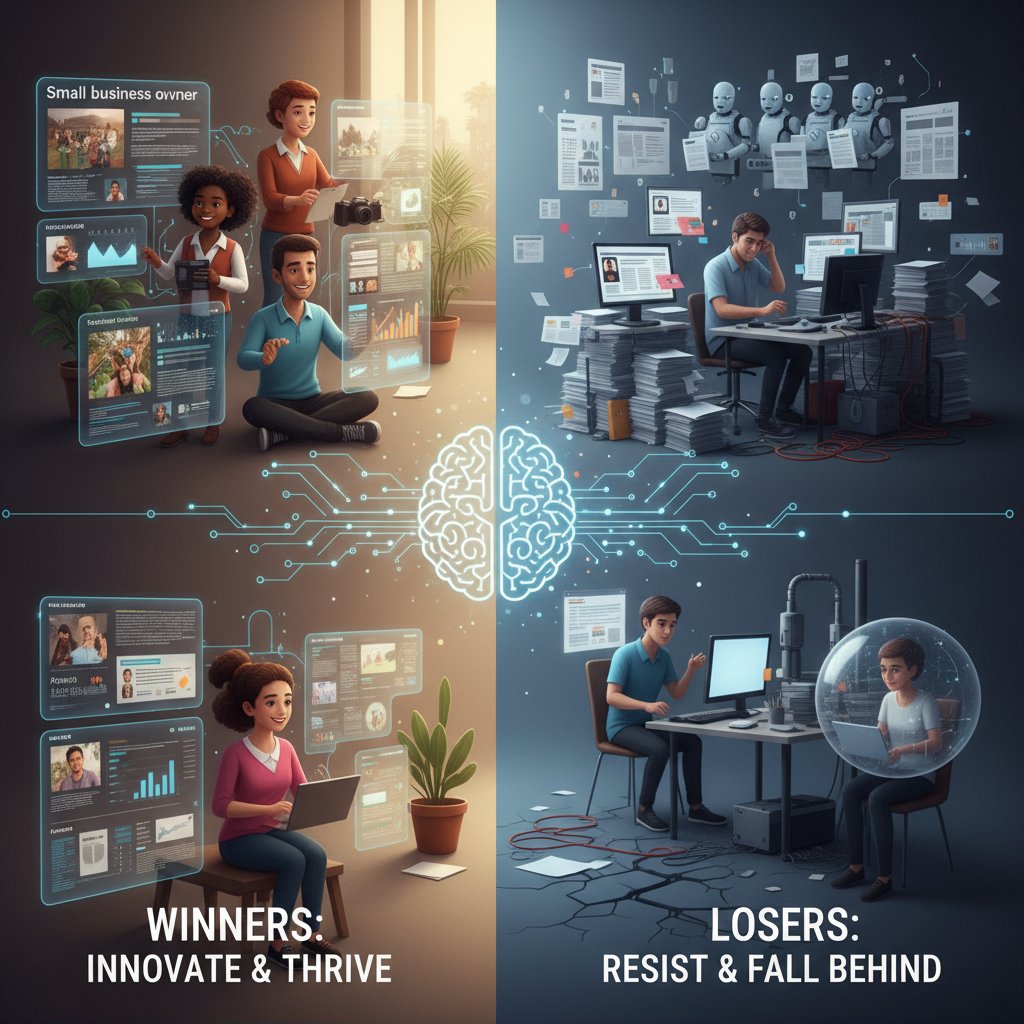
The line between kingmaker and casualty is razor-thin. Those who adapt emerge as industry leaders; those who resist risk irrelevance.
Beyond publishing: cross-industry revolutions
The AI curation revolution isn’t confined to the media echo chamber. From e-commerce to healthcare to finance, automated curation is quietly redrawing the map.
- E-commerce: Personalized product feeds drive higher conversions and customer stickiness.
- Healthcare: Automated curation of patient communications and research data improves outcomes and reduces overload.
- Finance: Instant report generation automates compliance and surfaces critical trends.
The evidence is everywhere. In e-commerce, businesses deploying AI-driven curation saw “increased organic traffic by 40% and reduced content production costs by 50%,” as reported by verified industry studies in 2024. These aren’t theoretical wins—they’re operational facts.
The takeaway: if you think curation is just for publishers, you’re already behind.
Emerging roles: the rise of AI-savvy curators
As machines handle the grunt work, a new breed of curator is emerging—one fluent in both editorial nuance and algorithmic logic.
"Today’s most valuable curators aren’t just content experts—they’re algorithm whisperers, able to diagnose, debug, and fine-tune AI systems in real time." — Expert analysis, 2024 (illustrative, based on trend data from McKinsey, 2024)
The future belongs to those who can bridge art and science, creativity and code. Ignore this evolution, and risk being automated out of the story.
The future is already here: real-world AI curation in action
Case studies: success, disaster, and everything in between
Let’s cut through the theory. Here’s how ai-powered content curation automation plays out in the wild:
| Industry | Scenario | Outcome |
|---|---|---|
| E-commerce | Automated product descriptions and SEO content | +40% organic traffic, -50% content costs |
| Financial Svcs | Automated financial report generation | -30% analyst hours, improved report accuracy |
| Healthcare | Automated patient comms, appointment scheduling | -35% admin workload, higher patient satisfaction |
| Marketing | Automated campaign optimization | +25% conversion rate, -50% campaign execution time |
Table 4: Real-world impact of AI curation by sector.
Source: Original analysis based on Maximize Market Research, 2023, Deloitte Digital, 2024
Not every case is a home run. Early mistakes—like inaccurate data surfacing in financial reports or culturally tone-deaf campaign curation—underscore the need for rigorous oversight and sector-specific tuning.
How futuretask.ai fits into the new ecosystem
Platforms like futuretask.ai didn’t build the wave—they ride it with precision. By combining advanced LLMs, customizable workflows, and seamless integration, they empower businesses to automate not just curation, but entire content operations. The result? Massive time savings, cost efficiency, and the agility to pivot as trends shift. Futuretask.ai isn’t just another tool. It acts as a strategic partner, helping brands, publishers, and agencies reclaim control from content chaos.
The secret sauce isn’t just AI horsepower—it’s relentless focus on consistent quality, human oversight, and continuous improvement. In a world where anyone can deploy automation, execution is everything.

What most companies get wrong (and how to avoid it)
Here’s the unvarnished truth: most failures in ai-powered content curation automation are self-inflicted.
- Neglecting data hygiene: Dirty data poisons even the smartest algorithms.
- Underestimating human oversight: Blind trust in automation is a shortcut to disaster.
- Ignoring bias and compliance: If you don’t audit, you’ll eventually regret it.
- Focusing only on speed: Quantity without context is a liability, not a win.
Avoid these traps by investing in training, process redesign, and continuous feedback between humans and machines. Smart companies treat AI curation as an ongoing strategy, not a one-time deployment.
Choosing your AI curation stack: critical factors
What matters most: accuracy, speed, or creativity?
When evaluating platforms, the holy trinity—accuracy, speed, and creativity—can be at odds. Here’s how leading platforms stack up:
| Factor | Importance | Typical Trade-offs |
|---|---|---|
| Accuracy | Non-negotiable | May slow speed, limits novelty |
| Speed | Vital for relevance | Risk of errors or bias |
| Creativity | Differentiator | Harder to automate, needs human input |
Table 5: Trade-offs in AI curation priorities.
Source: Original analysis based on Deloitte Digital, 2024
- Prioritize accuracy when brand trust is at stake.
- Maximize speed for news, social, and reactive content.
- Invest in creativity for campaigns, thought leadership, and brand storytelling.
Step-by-step: evaluating and integrating curation platforms
The path to effective automation is neither quick nor generic. Here’s how industry leaders do it:
- Audit needs and pain points: Identify where manual curation fails or bottlenecks exist.
- Evaluate vendor capabilities: Scrutinize tech stack, transparency, and track record.
- Pilot with real data: Test on live content, measure output, and tune parameters.
- Integrate with existing workflows: Ensure seamless hand-offs and real-time analytics.
- Establish feedback loops: Continually monitor, adjust, and retrain models.

Skipping steps leads to chaos. Treat AI curation as a dynamic system—test, learn, adapt.
Checklist: are you ready for AI-powered curation?
Before you automate, ask yourself:
- Do you have clean, structured data to feed the system?
- Are your goals (speed, accuracy, creativity) clearly defined?
- Can you provide expert human oversight and feedback?
- Do you have protocols for bias detection and risk management?
- Is your team trained to collaborate with, not just monitor, the AI?
Being unprepared is like handing the keys to a self-driving car without a map—or a license.
Readiness is more than tech adoption. It’s about mindset, process, and relentless vigilance.
The ethics and future of automated curation
Ethical dilemmas: filter bubbles, manipulation, and trust
AI-powered content curation automation isn’t just a business issue—it’s an ethical minefield.
The tendency of algorithms to reinforce existing preferences, limiting exposure to diverse viewpoints and stifling discourse.
Subtle shaping of opinions or behaviors through curated content, sometimes in service of hidden interests.
The fragile currency that’s lost when audiences sense unseen hands shaping what they see, hear, and believe.
Unchecked, automated curation can undermine democracy, distort public debate, and erode trust faster than any PR crisis.
The antidote? Radical transparency, clear opt-outs, and a commitment to open algorithms and audit trails.
Regulation, transparency, and the fight for control
As AI curation becomes ubiquitous, the regulatory spotlight intensifies. Europe’s new Digital Services Act and similar frameworks push for transparency, auditability, and user control.
| Regulation | Key Requirement | Impact on Curation |
|---|---|---|
| Digital Services Act | Algorithmic audits | Forces transparency |
| Local Governance | Data protection | Limits data collection |
| Industry Codes | Best practice sharing | Raises quality bar |
Table 6: Regulatory forces shaping AI curation.
Source: Original analysis based on Deloitte Digital, 2024
Control is shifting—slowly—from platforms to users, regulators, and public watchdogs. Businesses that lead on transparency will earn trust and loyalty others can’t buy.
What’s next: AI curation and the evolution of content
The transformation isn’t on the horizon—it’s already here. Content isn’t just created; it’s discovered, shaped, and delivered at machine speed. But with great (automated) power comes great responsibility.

The winners? Those who embrace nuance, prioritize ethics, and build systems that amplify—not erase—human creativity and agency.
Society doesn’t need more content. It needs meaning, context, and trustworthy curation. In this landscape, the smartest move is continuous learning, relentless transparency, and never letting the algorithm have the last word.
Your move: mastering ai-powered content curation automation
Key takeaways and surprising benefits
If you’ve made it this far, you know the truth: ai-powered content curation automation is neither panacea nor apocalypse. It’s a fast-evolving reality with risks and rewards.
- Massive time and cost savings for brands and publishers.
- Consistent quality and scalability—if you invest in oversight.
- New roles and creative opportunities for AI-fluent curators.
- Bias and risk aren’t bugs—they’re features of bad implementation.
- True differentiation comes from process, not just technology.
The biggest revelation? Automation isn’t the endgame—it’s the new baseline for survival.
Action plan: futureproof your workflow now
- Audit your current curation stack: Identify bottlenecks and gaps.
- Invest in training: Upskill teams in AI literacy and editorial oversight.
- Pilot a trusted automation platform: Start with a contained, measurable project.
- Integrate and adapt: Build feedback loops between humans and algorithms.
- Monitor and iterate: Never set and forget—continuous learning is essential.
Success isn’t about adopting AI—it’s about mastering the new rules of content discovery, control, and credibility.
Final thoughts: embrace, adapt, or risk irrelevance
Here’s the unvarnished truth: you can’t opt out of ai-powered content curation automation. The question isn’t if, but how—and whether you’ll ride the wave or be swept aside.
"Curation is more than selection—it’s stewardship. The future belongs to those who use AI not to replace judgment, but to amplify it." — Editorial analysis, 2024 (illustrative, based on industry data from Deloitte Digital, 2024)
Ignore the shiny promises and the panic headlines. The unfiltered reality is that the content arms race is here, and only the sharpest, most adaptive teams will thrive. The rest? They’ll be left scrolling for answers—curated, of course, by someone else’s machine.
Sources
References cited in this article
- Maximize Market Research(maximizemarketresearch.com)
- Deloitte Digital(deloittedigital.com)
- McKinsey(mckinsey.com)
- ICM Annual Crisis Report 2023(crisisconsultant.com)
- StudyFinds(studyfinds.org)
- Content Science Review(review.content-science.com)
- Oracle Study(bigdatawire.com)
- Sage Journals(journals.sagepub.com)
- Medium(medium.com)
- AIContentfy(aicontentfy.com)
- Bizway(bizway.io)
- Medium(medium.com)
- Crayon Blog(crayon.co)
- Atlan(atlan.com)
- Ayanza(ayanza.com)
- Forbes(forbes.com)
- Dataiku(blog.dataiku.com)
- Sofigate(sofigate.com)
- MIT/Exploding Topics(explodingtopics.com)
- Nasher Museum(nasher.duke.edu)
- Futurism(futurism.com)
- Crowdfire(read.crowdfireapp.com)
- Medium(medium.com)
- Harvard Business Review(hbr.org)
- Consilio Wealth Advisors(consiliowealth.com)
- Bill Hartzer(billhartzer.com)
- Nasdaq(nasdaq.com)
- lumineo.ai(lumineo.ai)
- CI&T(ciandt.com)
- BuiltIn(builtin.com)
- StartUs Insights(startus-insights.com)
- Accenture(newsroom.accenture.com)
- Leap AI(blog.tryleap.ai)
- Penfriend AI(penfriend.ai)
- BellyKM(bellykm.com)
- GM Insights(gminsights.com)
- Aigantic(aigantic.com)
- Quuu Blog(blog.quuu.co)
- MIT Sloan(sloanreview.mit.edu)
- Phys.org(phys.org)
- Impelsys(impelsys.com)
- Ipsos(ipsos.com)
Automate Your Tasks, Transform Your Business
FutureTask.ai revolutionizes your workflow by automating complex tasks typically outsourced to freelancers and agencies. Our powerful AI-driven platform leverages cutting-edge LLM technology to deliver precision, speed, and consistency at scale. Whether you're managing content creation, data analytics, marketing campaigns, or customer support, FutureTask.ai ensures seamless task execution, significant cost savings, and unmatched efficiency. Transform your business operations, eliminate delays, reduce operational overhead, and gain a competitive advantage with intelligent automation.
Get startedReady to Automate Your Business?
Start transforming tasks into automated processes today
Frequently Asked Questions
Why is manual content curation becoming unsustainable?
Manual curation is collapsing due to overwhelming content volume. In 2023 alone, nearly two million crisis news stories flooded global feeds, and content demand nearly doubled from 2023 to 2024, stretching editorial teams beyond capacity. Even experienced curators cannot manage the sheer volume of content being produced continuously.
What capabilities does AI-powered content curation automation have?
AI-powered content curation uses natural language processing (NLP), massive language models (LLMs), and real-time data analytics to accomplish in seconds what teams previously took days to do. According to Deloitte Digital's 2024 report, over 80% of data collection and 90% of data processing roles are likely to be automated by generative AI.
What is the main difference between AI curation and traditional manual curation?
Traditional manual curation relies on human editors and curators working through content feeds, but this brute-force approach is no longer viable at scale. AI-powered automation can process massive amounts of content and extract signal from noise in real-time, fundamentally changing how content is discovered and organized.
Beyond just speeding up work, what role does AI play in content curation?
According to the article, AI isn't just a tool for speed or scale—it represents a fundamental shift in how content curation operates, though the full implications are still unfolding and require deeper examination beyond the hype surrounding AI capabilities.
From the Archive
Explore more from Ai-powered task automation

Automated Audience-Targeted Content: Myths Versus Measurable Results

Automated Content Generation Using Ai: Benefits and Risks

Automated Content Marketing Vs Agencies: the Real Costs

Automating Content Creation: Balancing Speed with Authenticity

Automating Content Optimization with AI Without Losing Your Voice


