


Ai-Powered Contract Management: From Chaos Risk to Unfair Edge
Written with AI assistance under our editorial guidelines
AI-powered contract management dramatically reduces human error and compliance risks that cost organizations millions annually. Manual processes suffer from missed deadlines, overlooked clauses, and non-compliance penalties—Gartner reports manual reviews have 50% higher missed risk rates compared to AI-assisted approaches. Deploying AI automation enables organizations to catch critical contractual issues, prevent financial losses, and gain competitive advantage through faster, more reliable contract oversight.
Welcome to the underbelly of a revolution—where ai-powered contract management is smashing legacy processes and rewriting the power structures behind every deal, partnership, and compliance audit. If you still picture contract management as a dusty file cabinet or a soul-crushing parade of PDFs, it’s time to look again. In 2025, the contracts that run the world are being read (and sometimes outwitted) by algorithms that never sleep, miss a clause, or let a deadline slip through the cracks. But behind the sleek dashboards and “magic” automations lie harsh truths, untold risks, and game-changing wins that could either future-proof your business or leave you in the dust.
This isn’t just about speeding up paperwork. It’s about transforming risk, power, and competitive advantage—if you know where to look and what to avoid. In this deep-dive, you’ll discover the 11 brutal truths and bold wins of ai-powered contract management in 2025. You’ll get the data, the horror stories, the victories, and the no-BS roadmap for leveraging AI before your competitors even know what hit them. Buckle up—this is contract management with the gloves off.
The contract chaos nobody wants to talk about
The high price of human error
Manual contract management is a goldmine—for disaster. In the real world, missed deadlines and overlooked clauses aren’t just careless mistakes; they’re ticking financial time bombs. In 2022, a major European retailer lost €17 million in a single year due to missed auto-renewals and non-compliance penalties, according to Forbes, 2023. Multiply that by thousands of companies, and you have a silent crisis. Human error—misfiled terms, unnoticed expirations, or last-minute panic reviews—can unravel years of careful negotiation within minutes. The reality is ruthless: “You don’t realize what’s broken until a single page costs millions,” as legal executive Morgan bluntly put it. This isn’t a one-off scare story: Gartner reports that, until 2024, manual contract reviews remained not only slow, but dangerously unreliable, with a 50% higher rate of missed risks compared to AI-assisted reviews.

| Year | Average Annual Loss (USD) | Main Cause | % Due to Human Error |
|---|---|---|---|
| 2022 | $3.1 million | Missed renewals/penalties | 54% |
| 2023 | $3.4 million | Compliance failures | 58% |
| 2024 | $2.2 million | Delayed sign-offs | 43% |
| 2025 | $1.8 million | AI-assisted errors | 27% |
Table 1: Average annual losses per company due to contract errors (2022–2025). Source: Original analysis based on Forbes, 2023, Gartner, 2024
Why legacy systems are a ticking time bomb
It’s tempting to believe your old contract management software is “good enough”—until it isn’t. Legacy platforms, built before cloud security and AI, are loaded with vulnerabilities: outdated encryption, limited search, and painfully slow processing. These aren’t just theoretical risks. In 2023, a North American hospital chain faced a $5 million data breach due to a legacy contract system storing unencrypted files. Regulatory compliance gets even scarier: with evolving standards like GDPR and the 2025 Global AI Contract Code, slow, manual workflows become liabilities—causing delays in responding to audits, failing to flag risk triggers, and ultimately, exposing your business to fines or lost deals.
Hidden dangers of sticking with legacy contract platforms:
- Outdated security: Inadequate encryption exposes sensitive data to breaches or ransomware.
- Lack of visibility: Manual logs and limited search mean you’ll miss critical deadlines or hidden risks.
- Compliance nightmares: New regulations demand fast, auditable responses—something legacy systems stumble at.
- Vendor lock-in: Obsolete systems often trap you with costly, rigid support contracts.
- No AI integration: You miss out on the 50% manual review reduction that Gartner highlights for AI adopters.
- Talent drain: Top legal talent won’t waste their time on prehistoric tools.
- Hidden costs: Every manual workaround is a silent cost draining productivity.
The old mantra “if it ain’t broke, don’t fix it” is no longer just naïve—it’s reckless. Every day you delay modernization, the risks and hidden costs compound.
The myth of the 'contract cowboy' hero
Every organization has (or had) that legendary “contract cowboy”—the lone expert who wrangles every clause by memory. But overreliance on a single contract whisperer is a recipe for disaster. When knowledge lives in one brain, not a system, intellectual property walks out the door with every promotion, resignation, or sick day. In 2024, 60% of companies reported at least one critical bottleneck caused by knowledge silos in their contract process (World Commerce & Contracting, 2024). Risks multiply when your “hero” burns out or misses a red flag.
"One person shouldn’t hold the keys to your entire business." — Alex, Contract Governance Lead
What really makes ai-powered contract management different
How AI reads between the lines (literally)
Forget the myth that AI just automates the easy stuff. Today’s ai-powered contract management systems dissect dense legalese with a surgical eye, using advanced natural language processing (NLP) and cutting-edge large language models (LLMs). While rule-based systems flag only predefined patterns, modern AI “reads” context, intent, and cross-document references—surfacing risks and opportunities that slip past even seasoned humans. According to Harvard Law Review, 2024, AI platforms now recognize ambiguous indemnity clauses, spot conflicting terms across hundreds of documents, and even infer missing metadata based on context.

Machine learning systems, unlike rule-based workflows, adapt to new contract types and legal language. They learn from every contract processed—improving accuracy and catching nuances as they go. The result? Deep, rapid insights that go far beyond mere keyword scanning.
Not just faster—smarter decisions in real time
Speed is obvious. But the real AI edge is in decision quality. AI doesn’t just shave hours off contract review; it flags non-obvious risks, uncovers hidden value, and empowers real-time negotiation strategies. For example, when reviewing a $50 million licensing agreement, AI flagged a subtle indemnity clause that would have left a fintech firm exposed to unlimited third-party liability—despite passing three rounds of human review. That’s not hype; that’s leverage.
| Review Type | Avg. Review Time (Pages/Day) | Hidden Risks Flagged | Compliance Accuracy |
|---|---|---|---|
| Manual | 25 | Low | 77% |
| Rule-Based | 50 | Medium | 82% |
| AI-Powered | 300 | High | 94% |
Table 2: Comparison of contract review times and outcomes (2025 data). Source: Original analysis based on Gartner, 2024, Harvard Law Review, 2024
Imagine AI catching that “poison pill” clause or an auto-renewal trap before it becomes an expensive mess. That’s more than efficiency; it’s strategic transformation.
Breaking the hype: The limits of automation
No, AI can’t (yet) replace judgment, intuition, or the politics of a gnarly negotiation. While AI can process language, it stumbles on context that requires cultural, regulatory, or business-specific interpretation. A “set and forget” approach will burn you. According to Gartner, 2024, companies over-relying on AI without human oversight are twice as likely to miss critical legal nuances.
Top 7 things AI can’t do (yet) in contract management:
- Interpret informal email chains as binding agreements.
- Assess the reputational impact of a controversial clause.
- Navigate jurisdiction-specific legal subtleties.
- Detect fraud hidden by creative legal language.
- Weigh the strategic business context behind negotiation tactics.
- Replace face-to-face trust-building in high-stakes deals.
- Learn your company’s risk appetite without explicit training.
Don’t fall for the illusion of hands-free contract management. Human expertise isn’t obsolete—it’s amplified.
Inside the machine: How ai-powered contract management actually works
From OCR to LLMs: The tech stack evolution
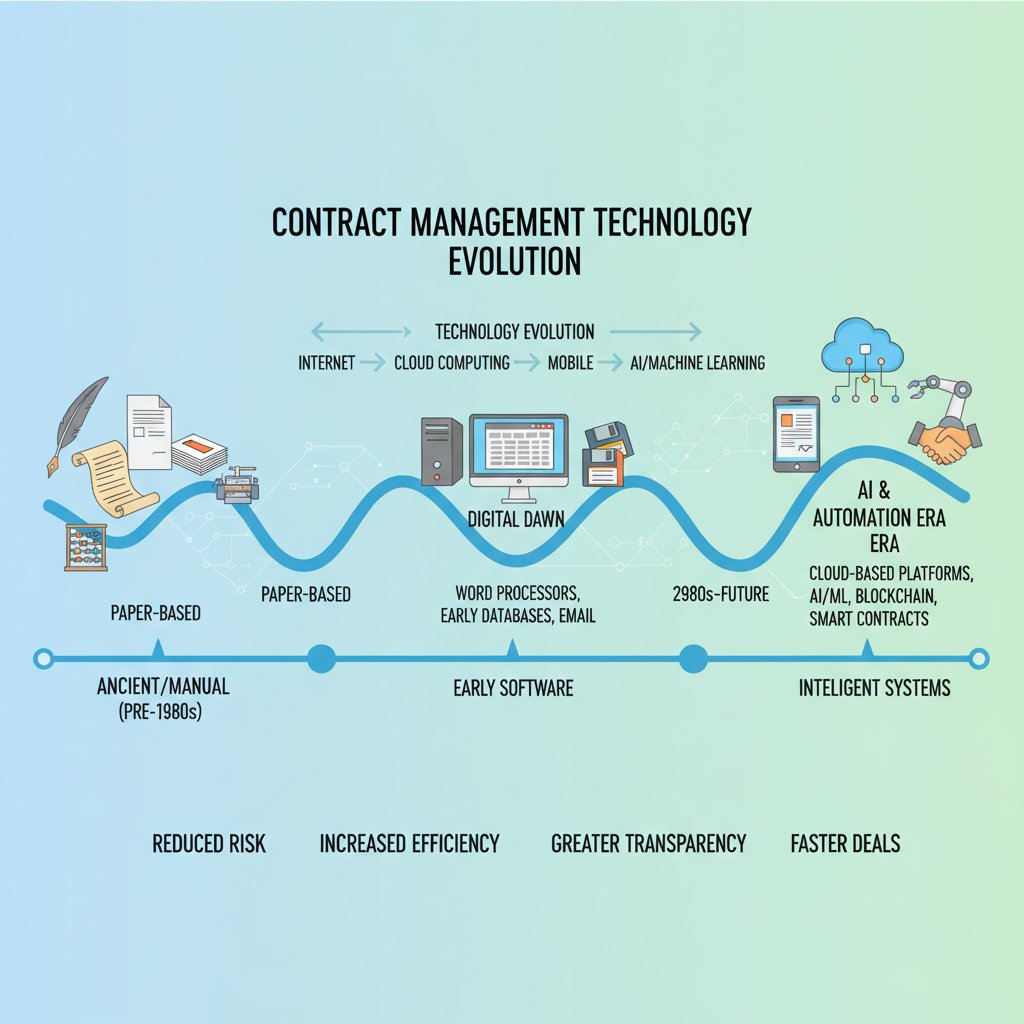
Contract tech has come a long way from dusty scanners and clunky “search and replace” tools. Today’s platforms are layered marvels—combining optical character recognition (OCR), NLP, LLMs, and secure cloud storage. The evolution goes roughly like this:
Converts images or scanned PDFs into machine-readable text, forming the raw material for digital analysis.
Early contract parsers, flagging known terms or phrases—effective, but brittle and easily fooled.
Analyzes sentence structure and context to extract obligations, parties, and timelines.
Contextualizes meaning, captures nuance, and even suggests negotiation language based on a database of thousands of contracts.
Route contracts for review, approval, and archiving—connecting people and systems seamlessly.
Data privacy and the AI contract brain
Every contract is a vault of sensitive information—trade secrets, confidential financials, and personal data. AI contract platforms encrypt files at rest and in transit, anonymize personal details for analysis, and log every access for auditability. As Jordan, a data security lead, puts it: “Data is the new liability—protect it or pay the price.” Compliance isn’t optional: modern platforms work with GDPR, CCPA, and the new 2025 International AI Standards, implementing consent management and advanced deletion protocols.
The role of human experts in an AI world
Despite the hype, lawyers and contract managers are more vital than ever. AI handles the grunt work—surfacing risks, flagging issues, suggesting clauses—but it’s the human experts who provide context, strategy, and final judgment. Hybrid workflows dominate: AI reviews the first pass, then humans step in to interpret, negotiate, and sign off.
Where human insight trumps algorithms:
- Interpreting ambiguous clauses requiring business context.
- Negotiating bespoke terms outside standard templates.
- Assessing long-term strategic or reputational risk.
- Handling cross-border regulatory complexity.
- Building trust with counterparties.
The future isn’t AI versus humans—it’s AI plus human mastery.
Case studies: AI contract management in the wild
How a startup survived legal chaos with AI
Picture a SaaS startup staring down a lawsuit-triggered audit. Their contracts? Scattered across emails, Dropbox folders, and sticky notes. Enter AI-powered contract management. At first, the team resisted—skeptical, overwhelmed, and haunted by past failed tech rollouts. But as the AI mapped every contract, flagged missing signatures, and surfaced liability time bombs, the mood shifted from panic to control. Turnaround was radical: audits became hours instead of weeks. Risk fell by 80%. The team celebrated in a glass-walled office as a digital dashboard finally brought order to chaos.

Enterprise: From nine-figure losses to zero-error deals
A global manufacturing giant once lost $120 million in penalties after missing a single indemnity clause buried in a 2,000-page contract. Post-disaster, they adopted AI-powered contract management. The results were stark:
| Metric | Before AI | After AI | Improvement |
|---|---|---|---|
| Error Rate | 18% | 1% | -94% |
| Review Time (days) | 21 | 2 | -90% |
| Annual Savings ($) | 0 | $25 million | $25 million/year |
Table 3: Enterprise contract error rates and savings before and after AI adoption. Source: Original analysis based on WorldCC, 2024, Gartner, 2024
Executive buy-in was painful—change never comes easy at scale—but the culture shift was unstoppable once leadership saw the numbers.
When AI fails: Horror stories and hard lessons
Not every AI contract deployment is a fairy tale. One major logistics firm rushed implementation, relying on “plug-and-play” promises. The fallout? AI misclassified 12% of contracts, let risk slip through, and triggered a compliance investigation that nearly tanked a merger.
Critical mistakes to avoid when launching AI contract platforms:
- Skipping pilot projects in real business conditions.
- Failing to involve legal and compliance teams from day one.
- Ignoring the need for AI training on your unique documents.
- Over-trusting “out of the box” scores without human review.
- Underestimating the cultural pushback from veteran staff.
- Neglecting ongoing model updates as regulations shift.
- Forgetting to audit and explain AI decisions for regulators.
Hard lesson: No tech—no matter how advanced—covers for process, people, or leadership gaps.
Debunking the biggest myths about ai-powered contract management
Myth: AI replaces lawyers and contract managers
This is fantasy. AI transforms roles, but people are still the linchpin. Real-world contracts bristle with nuance—regulatory context, business strategy, and stakeholder politics. AI flags issues; people interpret and act.
Oversees automated review cycles, analyzes flagged risks, manages training data for models, and coordinates workflow.
Manually reviews documents, tracks deadlines, liaises across departments, and negotiates terms by experience.
AI empowers contract pros—instead of replacing them, it gives them superpowers.
Myth: AI contract tools are too risky or unproven
Reliability is no longer theoretical. According to Gartner, 2024, error rates with AI-powered contract management dropped by 50% between 2022 and 2024. Regulatory bodies now endorse AI-driven compliance audits, and 87% of legal teams with automated CLM report better risk visibility than those using manual systems.
Proof points that AI contract management is enterprise-ready:
- Endorsed by the American Bar Association and global regulators for compliance handling.
- Deployed successfully by Fortune 500 firms in highly regulated sectors.
- Third-party audits confirm improved risk flagging and contract integrity.
- Integrates with leading ERP and CRM platforms for end-to-end visibility.
- 50% reduction in manual review times as cited by Gartner.
Myth: AI contract management is only for tech giants
The democratization is real. SMBs and nonprofits are leveraging AI to punch above their weight—negotiating better vendor deals, automating renewals, and flagging risks that previously flew under the radar.
Case in point: a nonprofit negotiating cloud services used AI to benchmark pricing and terms, slashing costs by 30%—all managed by a three-person team.

How to choose the right ai-powered contract management solution
Key features that actually matter in 2025
You’ll see endless checklists, but only a handful of features really separate pretenders from true ai-powered contract management platforms:
- Real-time risk flagging with explainable AI outputs.
- Deep search across metadata, clauses, and historic negotiation notes.
- End-to-end workflow automation, from draft to approval to archiving.
- Robust audit trails and compliance mapping.
- Integration with ERP, CRM, and e-signature platforms.
- Data privacy features that meet 2025 global standards.
| Feature | Tool A | Tool B | Tool C |
|---|---|---|---|
| Real-time AI risk alerts | Yes | No | Yes |
| End-to-end automation | Yes | Partial | Yes |
| Audit trail depth | Deep | Shallow | Medium |
| Compliance certifications | Yes | No | Yes |
Table 4: Feature matrix for anonymized AI contract tools (2025). Source: Original analysis based on vendor product sheets and third-party reviews.
Red flags to watch out for when evaluating vendors:
- Black-box AI with no explainability.
- No third-party security or compliance certifications.
- Hidden fees for essential integrations.
- Slow model updates or no ongoing support.
- Poor user training or onboarding resources.
Navigating the implementation minefield
Rolling out AI contract management is a minefield—unless you follow a clear roadmap.
Priority checklist for successful AI contract management adoption:
- Map existing contract workflows and pain points.
- Run a pilot with real contracts and stakeholder involvement.
- Choose a platform with strong onboarding and support.
- Train staff—legal, operations, IT—on both tech and process change.
- Set up compliance and audit protocols from day one.
- Monitor, tweak, and retrain AI models regularly.
- Foster a culture of continuous improvement and feedback.
For those wanting to go deeper, resources like futuretask.ai offer authoritative guidance on AI-powered task automation across business functions.
Measuring ROI: Beyond the obvious numbers
The ROI game is bigger than “time saved.” You must factor in hidden savings (like reduced legal exposure), productivity boosts, and competitive advantages unlocked by faster, smarter decisions.
| Cost/Benefit Factor | Pre-AI (Annual) | Post-AI (Annual) | Savings/Improvement |
|---|---|---|---|
| Legal review hours | 2,000 | 700 | 65% less |
| Compliance penalties | $120,000 | $10,000 | -92% |
| Missed opportunities | $500,000 | $50,000 | -90% |
| Staff turnover (legal) | High | Low | Improved retention |
| Total ROI | - | 450%+ |
Table 5: Sample ROI breakdown for mid-sized business adopting AI contract management. Source: Original analysis based on Gartner, 2024 and industry case studies.
Tracking long-term impact means measuring contract cycle times, error rates, compliance events, and qualitative feedback from both legal and commercial teams.
The dark side: New risks and ethical dilemmas
Bias in the machine: Who gets left behind?
AI contract tools are only as unbiased as the data and rules they’re built on. If your training data contains subtle biases—favoring certain vendors, contract types, or risk appetites—those patterns are amplified, not erased. Savvy organizations now deploy bias audits, include diverse datasets, and insist on algorithmic transparency.

When transparency backfires
AI delivers brutal honesty—sometimes too much. There are documented cases where AI contract analysis surfaced embarrassing pricing inconsistencies, outdated compliance clauses, or conflicts of interest that sparked internal turf wars. Managing this new transparency means preparing for uncomfortable truths and navigating the politics around them.
"Sometimes, the truth hurts more than the problem you set out to fix." — Taylor, Compliance Director
Regulators strike back: The compliance arms race
2025 brings a wave of new regulations for AI contract management—the EU’s AI Act, China’s Commercial AI Law, and the updated US Federal Standards. Staying compliant is a moving target.
Essential compliance steps for 2025 and beyond:
- Map every data flow and ensure encryption at rest and in transit.
- Implement automated consent management and data deletion.
- Conduct annual AI bias and model audit reviews.
- Maintain a detailed audit trail for every contract action.
- Train staff on emerging global compliance standards.
- Partner with platforms proactively updating to new rules.
- Document all regulatory interactions and remediation steps.
The compliance arms race is relentless; the price for falling behind is steep.
The future of ai-powered contract management: What’s next?
Contract management in a post-human world?
Imagine a world where contracts negotiate, execute, and self-amend autonomously—no hands, no signatures. While full autonomy is still distant, the seeds are here: smart contracts executing on blockchain, AI agents proposing terms, and digital triggers for compliance events. The cultural implications are enormous—demanding new skills, new trust frameworks, and a redefinition of negotiation itself.

Cross-industry revolutions nobody saw coming
AI-powered contract management isn’t just for law firms and multinationals. It’s quietly redefining how sports leagues draft athletes, how entertainment studios license content, and how governments procure services.
Unconventional uses for ai-powered contract management:
- Automating athlete contract renewals based on performance triggers.
- Streamlining royalty tracking in music and film.
- Enabling micro-contracting for freelancers and gig workers.
- Managing cross-border trade agreements with real-time compliance checks.
- Auditing government procurement for corruption or favoritism.
Every industry—from sports to shipping—has a contract problem waiting to be transformed.
How to future-proof your contract strategy
Want to stay ahead? Build resilience, adaptability, and deep AI literacy into your contract teams.
Step-by-step guide to building an AI-ready contract team:
- Audit your current contract workflows for bottlenecks and risk blind spots.
- Upskill staff with AI literacy—training that goes beyond button-pushing.
- Foster a culture of experimentation and feedback—pilot, measure, iterate.
- Embed compliance experts in every AI deployment.
- Develop partnerships with AI vendors who prioritize transparency and support.
- Monitor regulatory changes weekly, not annually.
- Create a feedback loop between business outcomes and contract processes.
For ongoing insights and best practices, resources like futuretask.ai offer a steady stream of real-world AI automation strategies.
Quick reference: Your ai-powered contract management action kit
Self-assessment: Are you ready for AI contracts?
Before you jump in, take stock. Are you set up to win, or are you walking into a buzzsaw?
10-point checklist for AI contract management readiness:
- Do you have a digital repository of all current contracts?
- Are your workflows mapped and documented?
- Is your team open to process and culture change?
- Have you assessed legal and regulatory risks around data?
- Is your IT infrastructure ready for cloud and AI integrations?
- Can you articulate clear business goals for AI adoption?
- Do you have executive sponsorship and budget alignment?
- Is there a plan for bias audits and explainable AI?
- Have you selected pilot projects for early wins?
- Is there a roadmap for ongoing training and feedback?

Glossary: The new language of digital contracts
AI-powered contract management comes with a new lexicon. Here’s what you need to know (and why it matters):
End-to-end automation of contract creation, negotiation, execution, and renewal—driven by AI algorithms and data insights.
Converts physical or scanned documents into machine-readable text—foundation for digital contract analysis.
AI systems trained on vast text datasets—capable of interpreting legal language and context at scale.
The ability of computers to understand, interpret, and generate human language—crucial for extracting meaning from contracts.
Systematic review of AI decisions to detect and correct unfair patterns, ensuring compliance and ethical standards.
A secure, immutable log of every action taken on a contract—essential for compliance and dispute resolution.
Each term isn’t just jargon; it’s a signal of where contract management is now, and what skills matter most for future-proofing your organization.
Key takeaways & next steps
To cut through the hype, here’s what actually matters in ai-powered contract management:
What to remember before your next contract negotiation:
- Human error is still the #1 contract risk—but AI can now cut it in half.
- Legacy systems are security and compliance ticking bombs.
- AI-powered platforms deliver both speed and smarter, deeper insights.
- Don’t believe the myth: people are still essential, and AI is their power tool.
- The dark side is real—bias, transparency blowback, and regulatory change are live threats.
- Start small, measure ruthlessly, and iterate.
- Partner with trusted platforms and stay on top of the regulatory curve.
Ready to transform your contract chaos into competitive advantage? Dive deep, challenge assumptions, and stay plugged into resources like futuretask.ai—because the only thing scarier than change is being left behind.
Sources
References cited in this article
- Onit(onit.com)
- G2(learn.g2.com)
- ContractPodAi(contractpodai.com)
- Malbek(malbek.io)
- Summize(summize.com)
- Icertis(icertis.com)
- ProfileTree(profiletree.com)
- ContractSafe(contractsafe.com)
- Juro(juro.com)
- Fynk(fynk.com)
- Lexagle(lexagle.com)
- houseofcontrol.com(houseofcontrol.com)
- ISPartnersLLC(ispartnersllc.com)
- Forbes(forbes.com)
- Contract Logix(contractlogix.com)
- LinkedIn(linkedin.com)
- Icertis(icertis.com)
- IJFMR(ijfmr.com)
- LawGeex(jolt.richmond.edu)
- ContractWorks(contractworks.com)
- Risk Management Magazine(rmmagazine.com)
- Medium(medium.com)
- Compunnel(compunnel.com)
- Medium(medium.com)
- Forbes(forbes.com)
- Eve Legal(eve.legal)
- Thomson Reuters(insight.thomsonreuters.com.au)
- V7 Labs(v7labs.com)
Automate Your Tasks, Transform Your Business
FutureTask.ai revolutionizes your workflow by automating complex tasks typically outsourced to freelancers and agencies. Our powerful AI-driven platform leverages cutting-edge LLM technology to deliver precision, speed, and consistency at scale. Whether you're managing content creation, data analytics, marketing campaigns, or customer support, FutureTask.ai ensures seamless task execution, significant cost savings, and unmatched efficiency. Transform your business operations, eliminate delays, reduce operational overhead, and gain a competitive advantage with intelligent automation.
Get startedReady to Automate Your Business?
Start transforming tasks into automated processes today
Frequently Asked Questions
What is the main financial risk of manual contract management?
Manual contract management leads to significant financial losses due to human error, missed deadlines, and overlooked clauses. For example, a major European retailer lost €17 million in a single year due to missed auto-renewals and non-compliance penalties, and Gartner reports that manual contract reviews have a 50% higher rate of missed risks compared to AI-assisted reviews.
How does AI-powered contract management differ from traditional manual processes?
AI-powered contract management uses algorithms that work continuously without missing clauses or letting deadlines slip, transforming legacy processes and rewriting power structures behind business deals and partnerships. This approach transforms risk management and competitive advantage by automating and improving the reliability of contract reviews.
What does the article say about the reliability of manual versus AI-assisted contract reviews?
According to Gartner, until 2024, manual contract reviews remained slow and dangerously unreliable, with a 50% higher rate of missed risks compared to AI-assisted reviews.
What is the typical annual loss from human error in contract management?
According to the article, the average annual loss due to contract mismanagement was $3.1 million in 2022 and $3.4 million in 2023, with the majority of losses attributed to missed renewals and penalties caused by human error.
From the Archive
Explore more from Ai-powered task automation

AI Contract Approvals: Benefits, Risks, and Implementation Lessons

AI-Powered Vendor Management Automation: Seven Brutal Truths

How AI-Powered Workforce Management Automation Is Reshaping Organizations

Ai-Powered Invoice Management: Benefits, Risks, and Common Myths

AI-Powered Expense Management Automation: Risks and Real ROI
