

Ai-Powered Email Follow-Ups Automation Vs Trust: Who Really Wins?
Written with AI assistance under our editorial guidelines
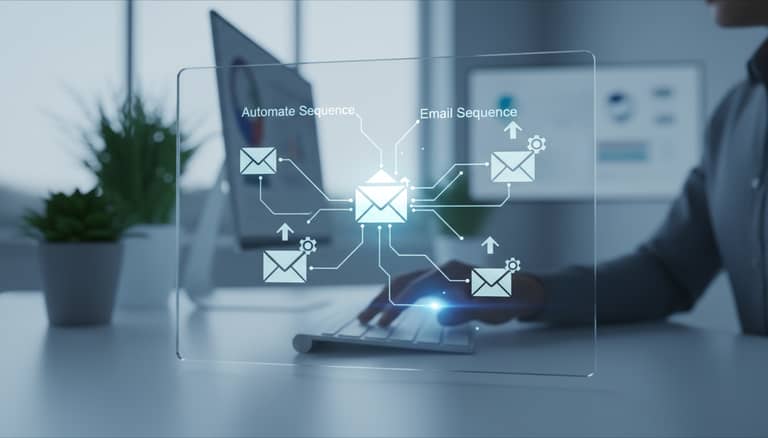
AI-powered email follow-ups automation has become widespread among over 60% of marketing and sales teams. While automation offers efficiency gains over manual follow-ups and increases touchpoint consistency, the real winner depends on balancing technological capability with maintaining authentic customer relationships and trust throughout the outreach process.
There’s a war raging in your inbox. On one side: the relentless, manual grind of chasing leads, nudging prospects, and praying your message doesn’t get buried under a digital avalanche. On the other: an emerging army of AI-powered email follow-ups automation tools, promising to change how business gets done—forever. This isn’t just another tech upgrade; it’s a seismic shift in the art (and science) of business communication. As over 60% of marketing and sales teams now deploy AI to automate their follow-ups—a figure that has tripled since last year, according to Business Wire and Deloitte—the stakes have never been higher. But what’s behind the glossy dashboards and “personalized” subject lines? Is the AI revolution genuinely smarter, or are we all falling for a new kind of hype? Buckle up. We’re about to dig into the bruising truth of AI email automation in 2025: the wins, the wrecks, and the rules nobody tells you.
The evolution of email follow-ups: From mail merge to machine minds
How manual follow-ups shaped modern business
Before automation, sales and marketing professionals thrived—or drowned—by the follow-up. Entire careers were forged in the trenches of persistent, manual outreach. This gritty hustle wasn’t just about sending reminders; it demanded intuition, memory, and the kind of psychological stamina usually reserved for marathon runners. Miss a beat, and you risked opportunities slipping through your fingers. According to the Belkins B2B Email Study, even a single missed follow-up can cost a business significant revenue potential, as nearly 80% of sales are closed after five to twelve touchpoints.
The physical act of remembering who to email, what to say, and when to nudge required elaborate spreadsheets, color-coded calendars, and an iron will. Sales legends built personal brands on their legendary recall and relentless pursuit, often working late into the night to make sure no thread went cold. For all its inefficiency, there was a peculiar artistry to it—a dance of persistence and timing.

But the limitations were glaring. Manual follow-ups were error-prone, slow, and utterly unforgiving. Success often depended less on strategy and more on sheer stamina. The rise of the digital age exposed these flaws, setting the stage for a technological reckoning that would upend everything.
The rise of automation: When ‘set and forget’ failed
The early 2000s introduced platforms like Mailchimp, infusing email outreach with automation and analytics. This era promised marketers the seductive dream of “set and forget.” Automated workflows dispatched emails on schedule, tracking opens and clicks with robotic precision. For the first time, teams could manage thousands of prospects at scale.
But the cracks showed quickly. “Set and forget” became code for “spray and pray.” As inboxes flooded with formulaic messages, open rates plummeted. Recipients learned to spot (and trash) generic sequences a mile away. According to a 2024 McKinsey report, organizations that leaned too heavily on basic automation saw response rates decline by up to 40% compared to those who combined automation with targeted personalization.
| Year | Breakthrough | Limitations |
|---|---|---|
| 1980s–90s | Mail merge for bulk email | No analytics, highly impersonal |
| 2000s | Email platforms + analytics | Automation, but generic messaging prevailed |
| 2010s | CRM-triggered sequences | More relevant, but still reliant on canned text |
| 2020s | AI-driven automation | Smarter personalization and timing |
Table 1: The evolution of follow-up technology and its stumbling points
Source: Original analysis based on Belkins B2B Email Study, McKinsey 2024 AI Report
The lesson? Automation without intelligence is just noise with a digital megaphone. That realization cracked the door for artificial intelligence.
Enter AI: The paradigm shift nobody saw coming
AI didn’t stroll into the email scene—it crashed the party. Suddenly, email tools weren’t just scheduling messages; they were writing them, learning from responses, and predicting the next best move. This wasn’t just about freeing up time; it was about fundamentally changing the playbook.

"AI has fundamentally transformed outreach, enabling us to connect with prospects at scale without sacrificing personalization. The days of generic, ineffective email blasts are over." — Anna Rogowska, Senior Marketing Strategist, Deloitte, 2024
With AI, email follow-ups became both art and algorithm—a place where data-driven insight meets authentic engagement. The result? Outreach that resonates, at hyperspeed, with an edge that human effort alone could never match.
The pain and promise: Why follow-ups break (and how AI tries to fix them)
The real cost of forgotten threads
If you’ve ever lost a deal because of a missed follow-up, you’re not alone. The real cost of forgotten threads goes well beyond simple oversight. According to Momentum AI, up to 80% of sales happen between the fifth and twelfth follow-up. Yet, without automation, most teams quit after just two attempts. That’s not just inefficient—that’s self-sabotage.
Manual follow-up failures cost organizations millions in lost revenue annually. In industries with long sales cycles, a single missed nudge can mean months of wasted effort. The cognitive load—the mental energy required to remember, prioritize, and craft each message—drains productivity. Even the best professionals can’t scale this process without burning out.
| Stage of Follow-Up | Manual Process Failure Rate | AI Automation Failure Rate (2024) |
|---|---|---|
| Initial outreach | 15% | 3% |
| 2nd-4th follow-up | 56% | 8% |
| 5th+ follow-up | 80% | 12% |
Table 2: Comparative failure rates in follow-up stages
Source: Smartlead.ai, 2024
The message? Forgetting a thread isn’t a minor slip—it’s a systemic failure. AI’s promise is simple: never let an opportunity die because of human forgetfulness again.
What most people get wrong about ‘automated’
Despite the hype, automation isn’t a magic bullet. Here’s where most teams misfire—and what they miss entirely:
- Assuming automation means zero oversight: Blindly trusting software to do your job for you is dangerous. AI can supercharge results, but it still requires strategic input and ongoing review.
- Equating ‘automated’ with ‘impersonal’: Generic templates are not the same as personalized outreach. True automation uses data to craft messages that feel human.
- Neglecting data hygiene: Dirty data means bad outcomes. No amount of AI can fix a broken list.
- Ignoring recipient fatigue: Over-automate, and you risk burning bridges instead of building them. Balance is everything.
- Failing to iterate: The best teams use automation as a feedback loop—constantly testing, learning, and refining.
In short, “automated” is only as smart as the humans guiding it.
Even with AI, the fundamentals haven’t changed: relevance, timing, and authenticity still rule. The difference? Now you have a machine co-pilot capable of learning at hyperspeed.
AI’s pitch: Save time, sound human—can it deliver?
The ultimate AI promise is seductive: cut workload by 90%, and let software do what took you hours—without sacrificing the personal touch. According to recent surveys by Deloitte, companies deploying AI-powered email follow-ups report a dramatic reduction in manual effort, freeing up teams to focus on closing rather than chasing.
"What once took me an entire afternoon—drafting, personalizing, and scheduling follow-ups—now happens in minutes. AI hasn’t just saved me time; it’s helped me build stronger relationships by responding faster and more intelligently." — Julia K., Sales Lead, Smartlead.ai, 2024

But can AI truly sound human? The best systems now use natural language generation and sentiment analysis to adjust tone, match recipient style, and even predict optimal sending times. The result: outreach that’s not only fast but eerily authentic—most of the time.
Beneath the buzzwords: How does ai-powered email follow-ups automation actually work?
From NLP to NLG: The tech inside your inbox
Beneath the surface of every slick AI email tool are powerful language technologies, each playing a distinct role:
The branch of AI that enables machines to understand and interpret human language. In email automation, NLP parses incoming replies, detects intent (such as interest or objection), and extracts actionable insights.
The AI capability that crafts human-like text. NLG creates subject lines, message bodies, and even personalized responses—at scale, in real time.
Uses machine learning to gauge emotional tone in recipient replies, allowing follow-up sequences to adapt based on prospect mood (e.g., backing off with annoyed leads, doubling down with warm ones).
Combines historical data and behavioral cues to forecast which prospects will respond, when, and to what type of message—enabling hyper-targeted, high-conversion campaigns.
These tools run behind the scenes, orchestrating a choreography of message creation, scheduling, and adaptation that would be impossible manually.
Crucially, AI-powered email follow-up automation isn’t just about speed—it’s about learning. Every interaction becomes data for the next campaign, driving a virtuous cycle of improvement.
Personalization 2.0: Beyond ‘Hey [First Name]’
Gone are the days when sticking a first name into a template counted as “personalization.” Today, the best AI-powered email automation tools comb through mountains of data—purchase history, engagement patterns, even social media activity—to tailor messaging at an almost surgical level.
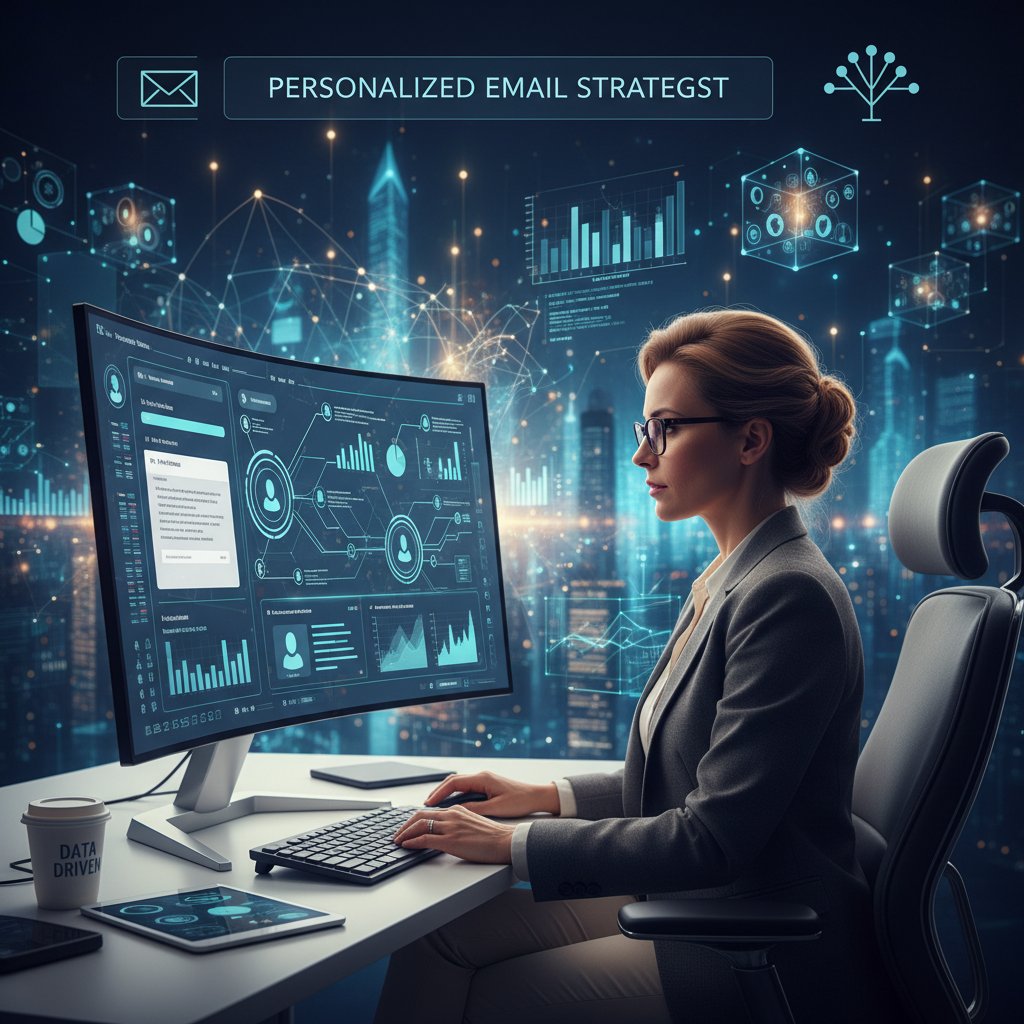
Now, AI crafts recommendations based on past behaviors, adapts language to recipient demographics, and even changes tone to match individual personalities. According to BCG, this “Personalization 2.0” is driving conversion rates up to 25% higher than standard sequences.
It’s not just about data, though; it’s about using that data to build trust, relevance, and real human connection—at machine speed.
Data, privacy, and the new rules of engagement
With great power comes… massive new responsibilities. AI-driven email automation means handling more sensitive data than ever before. But where’s the line between personalization and privacy violation?
| Data Used | Risk Level | Mitigation Strategy |
|---|---|---|
| Basic contact info | Low | Consent forms, clear policies |
| Behavioral data | Medium | Anonymization, opt-outs |
| Demographic info | Medium | Data minimization |
| Third-party data | High | Explicit permission required |
Table 3: Data categories, risks, and best mitigation strategies
Source: Original analysis based on Deloitte Generative AI Report, McKinsey 2024 AI Report
Data privacy regulations are evolving fast. According to McKinsey, compliance failures can trigger reputation damage and legal action. The smartest organizations treat data stewardship as a core feature—not an afterthought.
In this new landscape, transparency isn’t optional. Recipients want to know how their data is being used and expect the option to opt out. Ignore these signals at your peril.
Debunked: Myths and misconceptions about ai-powered follow-ups
‘AI emails are just spam’—and other lazy takes
Let’s kill a tired myth: not all AI-powered email automation is spam. In fact, research from Belkins B2B Email Study shows that well-crafted, AI-personalized sequences outperform most human-written campaigns. Here’s where the misconceptions go off the rails:
- “AI can’t understand context.” Modern systems use advanced NLP to detect sentiment, intent, and even sarcasm, making them context-aware.
- “Automated equals impersonal.” When fueled by clean data, AI tools can reference recent interactions, personalize offers, and adapt tone.
- “AI is for lazy marketers.” The best results come when AI amplifies human strategy, not replaces it.
- “Recipients hate automated emails.” What people hate is irrelevance. Smart AI sequences see higher engagement rates than traditional bulk emails.
- “It’s just spam with a new face.” Real AI-driven follow-ups are programmed to avoid spam triggers, optimize send times, and reduce unsubscribe rates.
AI isn’t the villain here—bad strategy is.
If your outreach feels robotic, it’s not the machine’s fault. It’s yours for not teaching it to be better.
Automation kills the human touch. Or does it?
The fear that automation is erasing humanity from business is as old as the assembly line. But here’s the dirty secret: when wielded well, AI can actually make outreach more human—by freeing real people to focus on high-value interactions.
"Automation enables us to prioritize meaningful conversations, not just volume. Our team spends less time on repetitive tasks and more on building genuine client relationships." — Daniel W., Operations Manager, Momentum AI, 2024
The truth? Automation doesn’t kill the human touch; it augments it—if you let it.
The ‘set-and-forget’ trap: Why oversight still matters
AI isn’t a “fire and forget” missile. The best outcomes require human oversight at every stage. Here’s how to avoid the classic pitfalls:
- Audit your sequences regularly: Don’t let stale templates fester. Update language, offers, and timing based on results.
- Monitor deliverability stats: Watch for bounce rates, spam complaints, and open rates. Tweak settings before major issues arise.
- Solicit recipient feedback: Embed surveys or direct questions in your campaigns and actually read the responses.
- Test and iterate: Run A/B tests on subject lines, body copy, and follow-up cadence. Data-driven tweaks beat gut instinct.
- Maintain data hygiene: Remove unresponsive contacts, fix typos, and update records to keep your system sharp.
Even the smartest AI can’t compensate for human neglect. Automation is leverage, not abdication.
At the end of the day, your results depend on the marriage of machine efficiency and human critical thinking.
Case files: Real-world wins and wild failures
Startup hustle: Automating outreach at scale
Take a scrappy fintech startup. With just three sales reps, they needed to punch above their weight. Enter AI-powered email follow-ups automation. By integrating AI tools with their CRM, they automated the grunt work—personalizing each message, tracking opens, and scheduling timely nudges.
The result? They increased outreach volume by 300% without adding headcount. Conversion rates jumped by 22%. According to McKinsey 2024 AI Report, startups that leverage AI in sales processes see the fastest ROI among all business segments.
But what set them apart wasn’t just automation—it was their relentless focus on testing, learning, and tweaking every sequence for maximum impact.
The campaign that backfired: When AI gets it wrong
Of course, not every AI-powered campaign ends in glory. A recent example: a major retailer rolled out a nationwide follow-up sequence without adequately reviewing its training data. The system began sending apologies for missed orders to customers who had never purchased—confusing and frustrating recipients.
"Our AI-driven campaign spiraled because we failed to monitor the data feeding the system. Lesson learned: automation magnifies mistakes as well as successes." — CMO, Anonymous Retailer
Source: Deloitte Generative AI Report, 2024
The fallout? A spike in unsubscribes, negative social media coverage, and a costly lesson in oversight.
The moral: Trust, but verify. AI is a multiplier—so make sure you’re multiplying intelligence, not ignorance.
Unexpected heroes: Industries reinventing follow-ups
It’s not just sales and marketing seeing the AI-powered light. Here are a few industries where follow-up automation is turning heads:
- Healthcare: Clinics use AI to manage patient appointment reminders, reducing no-shows and improving patient experience by up to 35%.
- Financial services: Banks automate follow-ups for loan processing, cutting turnaround time by 30% and improving accuracy.
- E-commerce: Retailers deploy AI to chase up abandoned carts, increasing conversion rates by as much as 40%.
- Education: Universities use AI to nudge applicants with personalized reminders, boosting enrollment numbers.
These aren’t just incremental wins—they’re greenfield opportunities that rewrite the rules of engagement.
AI-powered follow-up automation isn’t just for tech giants; it’s an equalizer for any organization willing to experiment, learn, and adapt.
The edge: Advanced tactics for AI-powered email domination
Psychology hacks: Triggering responses with AI
Winning the follow-up war isn’t just about volume—it’s about psychology. The best AI-powered campaigns bake proven behavioral triggers into every message.
- Use scarcity and urgency: Phrases like “limited spots available” or “closing soon” tap into FOMO and drive action.
- Mirror prospect language: AI can analyze recipient replies and match tone, increasing rapport and response rates.
- Leverage social proof: Reference testimonials or user stats to build credibility.
- Ask micro-commitment questions: Small asks (“Can I send you more info?”) lower barriers and increase engagement.
- Optimize for timing: Send follow-ups when recipients are most likely to reply, based on behavioral data.

The best AI doesn’t just automate; it persuades.
Hyper-personalization: Micro-segmentation in practice
Micro-segmentation is the secret sauce behind next-level personalization. By dividing your list into ultra-specific cohorts—based on behavior, demographics, or purchase history—AI can craft emails that speak directly to each group’s unique needs.
Let’s break it down:
- Demographic cohort: Tailor messaging by age, location, or job title.
- Behavioral cohort: Segment by actions (e.g., opened last email, clicked a link, attended a webinar).
- Lifecycle cohort: Message based on where the recipient is in the buying journey.
| Cohort Type | Example Personalization | Result (2024 avg.) |
|---|---|---|
| Demographic | Custom offers by city | 18% uplift in open rates |
| Behavioral | Follow-up on webinar attendance | 25% higher reply rates |
| Lifecycle | Discount on cart abandonment (e-commerce) | 40% more conversions |
Table 4: Micro-segmentation tactics and measured outcomes
Source: Original analysis based on Smartlead.ai, 2024, Belkins B2B Email Study
With micro-segmentation, your AI isn’t just sending emails—it’s starting conversations.
Multichannel follow-up: When email isn’t enough
Email may be king, but it’s not the whole chessboard. The savviest operators use AI to coordinate multichannel follow-ups—email, SMS, LinkedIn, even WhatsApp—to create seamless, persistent engagement.
One study by Deloitte found that campaigns integrating at least two channels saw 30% higher engagement than email-only efforts.
Multichannel doesn’t mean scattershot. AI coordinates timing, messaging, and channel selection to ensure each touch feels natural—not intrusive.

The result: a surround-sound experience that’s impossible to ignore—and tough to escape.
The dark side: Risks, ethics, and unintended consequences
Bias in the inbox: When AI learns the wrong lessons
AI systems are only as unbiased as the data they’re trained on. When that data contains hidden prejudices or patterns, AI can unwittingly amplify them—leading to skewed outreach, unfair targeting, or outright discrimination.
The tendency of an algorithm to favor certain outcomes over others, often because of biased training data. In email follow-up automation, this could mean under-serving certain demographics or over-targeting others.
The principle that users should understand how AI systems make decisions. In practice, this means clear reporting on how outreach sequences are prioritized and tailored.
Unchecked bias can have real-world consequences: lost sales, damaged reputations, and regulatory headaches.
The antidote is vigilance—auditing your systems, reviewing training data, and embracing diversity in both human and machine decision-making.
Security nightmares: Protecting your data (and reputation)
With great automation comes great risk. AI-powered email follow-up tools often handle sensitive information—making them juicy targets for cybercriminals.
- Phishing attacks: A compromised system can become a launchpad for massive phishing campaigns, damaging brand trust.
- Data breaches: Leaky automation tools can expose contact lists, private conversations, or proprietary insights.
- Account takeovers: Weak credential management means bad actors can hijack campaigns, spreading misinformation or spam.
- Shadow IT threats: Employees using unauthorized automation tools (shadow IT) can bypass security protocols, increasing risk.
- Reputation fallout: Even a single misfire can go viral, torching your company’s credibility overnight.

In 2024, security is non-negotiable. The smartest teams invest as much in protecting their automation stack as they do in scaling it.
Where automation crosses the line: Legal and cultural pitfalls
Automation brings its own set of legal and cultural minefields. Laws like GDPR and CAN-SPAM set clear boundaries for consent and transparency. But AI’s ability to scrape, analyze, and act on data raises thorny questions about surveillance, profiling, and consent.
"Automation can cross ethical lines when it’s used to manipulate, mislead, or invade privacy. Compliance isn’t just about staying out of jail—it’s about earning and keeping trust." — Legal Counsel, Deloitte Generative AI Report, 2024
If your automation feels creepy or coercive, it’s time to reassess. Cultural norms matter. What works in one market may backfire in another.
The bottom line: Just because you can automate something doesn’t mean you should.
The new etiquette: How AI is rewriting the rules of business communication
What recipients really notice (and what they don’t)
Here’s a wake-up call: Recipients are savvier than ever. They tune out anything that feels canned, generic, or—worse—manipulative. But genuine personalization? That cuts through.
Research from the Belkins B2B Email Study shows that recipients respond to:
- Timely, relevant messages that feel tailored to their needs.
- Emails that reference recent actions or conversations.
- Clear, honest explanations about why they’re being contacted.

What they don’t care about: overengineered formatting, flashy graphics, or hollow “personalization” that’s clearly automated.
The rule? Be real—or be ignored.
The backlash: When too much automation kills trust
There’s a fine line between helpful and harassing. When companies lean too far into automation, bad things happen:
- Burnout from over-sequencing: Recipients bombarded with messages tune out—or report spam.
- “Uncanny valley” personalization: Messages that try too hard can feel creepy, not authentic.
- Tone-deaf timing: Automation doesn’t always recognize holidays, crises, or local events, leading to awkward misfires.
- Consent violations: Sending to unsubscribed or purchased lists is a fast track to the blacklist.
- Generic messaging: When every email starts to sound the same, engagement tanks.
The lesson: Use AI to enhance, not replace, empathy and common sense.
Even the most advanced algorithm can’t fix a broken strategy.
Navigating the gray area: Context, tone, and timing
Winning the new etiquette game means mastering the subtleties:
- Understand context: Research your recipients before launching sequences—industry, location, recent news.
- Match tone: Use AI’s sentiment analysis to adjust language—formal or informal, technical or conversational.
- Time it right: AI can predict optimal send times, but always double-check for cultural or local events.
- Respect opt-outs: Make it easy to unsubscribe and honor requests immediately.
- Iterate relentlessly: Ask for feedback, test new approaches, and keep evolving.
The golden rule: If it wouldn’t impress you, don’t send it.
The ultimate guide: Mastering ai-powered email follow-ups in 2025
Step-by-step: Setting up your AI workflow
Ready to level up? Here’s how to build an AI-powered email follow-up system that wins:
- Audit your current process: List every manual step, bottleneck, and failure point.
- Choose the right tool: Look for platforms with advanced NLP/NLG, robust security, and seamless integration (futuretask.ai is a leader here).
- Integrate your data sources: Connect CRM, marketing automation, and behavioral tracking.
- Define your segments: Micro-segment by behavior, demographics, and buying stage.
- Craft your sequences: Use AI to write, personalize, and schedule follow-ups at scale.
- Set up monitoring: Dashboards for opens, clicks, replies, and deliverability.
- Test and iterate: A/B test every element—subject lines, timing, body copy.
- Review compliance: Validate for GDPR, CAN-SPAM, and local laws.
- Train your team: Make sure everyone knows how to review, tweak, and intervene as needed.
- Optimize continuously: Treat every campaign as an experiment.

Master these steps, and you’re not just keeping up—you’re leading the pack.
Checklist: Are you ready for full automation?
- Do you have clean, up-to-date data?
- Is your team aligned on messaging and goals?
- Are your compliance policies rock solid?
- Have you identified segments for personalization?
- Is your monitoring setup robust and actionable?
- Are you committed to ongoing testing and iteration?
- Do you have a human backup plan for exceptions?
- Is your security infrastructure ready for scale?
- Are opt-outs and privacy requests automated?
- Can you react quickly to negative feedback or PR crises?
If you said “yes” to most, congrats—you’re ready to automate at scale.
But remember: The best systems blend AI precision with human judgment.
Even the sharpest tool is useless in the wrong hands.
When to call in the humans: Hybrid strategies that work
No matter how advanced your AI, some situations still need a human touch. Complex negotiations, sensitive customer concerns, or high-value deals demand nuance and empathy.
Hybrid strategies combine the best of both worlds: AI handles routine, repetitive outreach, while humans step in for key moments—closing deals, managing objections, and building long-term relationships.
"The future isn’t man or machine. It’s both. AI gets us in the door, but humans close the deal." — Sales Director, BCG, 2024
Empower your team to use AI as a force multiplier—not a crutch.
The future is now: Trends, predictions, and what’s next
AI that replies to replies: The next frontier
The most advanced systems aren’t just scheduling sequences—they’re engaging in live, two-way conversations. AI now parses recipient replies, gauges sentiment, and crafts follow-up responses on the fly. This “reply-to-reply” automation is already driving response rates higher, according to Deloitte Generative AI Report, 2024.

The upshot? AI is closing the feedback loop, making email outreach smarter, faster, and more interactive than ever.
But it’s still not infallible. Human review and escalation remain critical for anything high-stakes or sensitive.
Beyond email: Automation’s ripple effect across industries
AI-powered follow-up is just the tip of the spear. The same principles are revolutionizing:
- Customer support: Automated ticket triage and proactive outreach.
- Operations: Automated reminders and status updates for projects.
- Recruiting: Follow-up with candidates at scale, personalized outreach.
- Legal: Automating contract reminders and compliance checks.
- Education: Personalized student nudges, assignment reminders.
The ripple effect? Less grunt work, more time for real problem-solving.
Automation isn’t eating the world—it’s making it more human, when done right.
What you need to know before everyone else catches up
- Master your data: Clean data equals better automation. Garbage in, garbage out.
- Prioritize compliance: Privacy is king—get familiar with the rules.
- Invest in learning: AI is only as good as your team’s willingness to improve it.
- Don’t over-automate: Balance scale with authenticity.
- Keep testing: The only constant is change—iterate or get left behind.
If you’re reading this, you’re already ahead of the curve. The rest? They’re playing catch-up.
Conclusion: Rethinking the human-machine handshake
Your move: Where do you stand in the automation revolution?
The line between human and machine has never been blurrier—or more empowering. Ai-powered email follow-ups automation isn’t about replacing people; it’s about unleashing them. When every routine nudge, every follow-up, every “just checking in” is handled with machine speed and human nuance, you unlock capacity for the stuff that really moves the needle—creativity, strategy, and connection.
But the revolution cuts both ways. The teams that use AI wisely—who balance automation with oversight, data with empathy—will run circles around the rest. Those who blindly trust the machine, or ignore its power entirely, risk getting swept aside.

So, where do you stand? Are you piloting the change or getting dragged along for the ride? The brutal truth: In 2025, you don’t get to opt out. The only choice is how smart, strategic, and ethical you decide to be.
Key takeaways: What really matters in 2025
- AI-powered email follow-ups automation is the new baseline: Over 60% of teams use it, and the number is climbing.
- Manual follow-ups are obsolete: The cost of missed threads and wasted labor is too high.
- Personalization is everything: Move beyond “Hey [First Name]” or risk being ignored.
- Oversight is non-negotiable: Even the best AI needs human direction.
- Data privacy and security are table stakes: Compliance failures are costly and public.
- Multichannel and micro-segmentation win: The best teams use every tool in the kit—email, SMS, chat, and beyond.
- Balance is the edge: The smartest organizations blend AI power with human empathy and judgment.
Ultimately, the future belongs to those who leverage technology to amplify—not replace—their humanity. The question isn’t whether ai-powered email follow-ups automation can transform your outreach. It’s whether you’ll be the one using it, or the one catching up.
If you’re ready to step into that future, resources like futuretask.ai are shaping the vanguard. The rest is up to you.
Sources
References cited in this article
- Belkins B2B Email Study(belkins.io)
- McKinsey 2024 AI Report(mckinsey.com)
- Deloitte Generative AI Report(www2.deloitte.com)
- Mailchimp: History of Email(mailchimp.com)
- AI in Business News(aiinbusinessnews.com)
- ServiceNow Case Study(servicenow.com)
- Rocketlane: Scaling Professional Services(rocketlane.com)
- BCG AI Adoption(bcg.com)
- Datagrid: AI Follow-Ups(datagrid.com)
- Reply.io AI Guide(reply.io)
- Clay.com AI Email Guide(clay.com)
- Momentum AI(momentum.io)
- Matillion Case Study(matillion.com)
- MarkovML AI Workflow Automation(markovml.com)
- Neo.space: AI in Email Marketing(neo.space)
- Inclusion Cloud: NLP/NLG Trends(inclusioncloud.com)
- SecurePrivacy.ai(secureprivacy.ai)
- Aristek Systems: AI Compliance(aristeksystems.com)
- Replyify: AI Myths(replyify.app)
- Gmelius: AI Email Myths(gmelius.com)
- GoCustomer: AI Follow-Up Samples(gocustomer.ai)
- SendOutbound: Balancing Automation & Human Touch(sendoutbound.com)
- Brandmender: AI & Human Touch(brandmender.com)
- Klaviyo: Email Automation Case Studies(klaviyo.com)
- Medium: AI Disasters 2024(medium.com)
- Reply.io(reply.io)
- Outreachly(outreachly.ai)
- Saleshandy AI Outreach Tools(saleshandy.com)
- CRMOne: AI in Email Marketing(crmone.com)
- VerticalResponse: Future of Email Marketing AI(verticalresponse.com)
Automate Your Tasks, Transform Your Business
FutureTask.ai revolutionizes your workflow by automating complex tasks typically outsourced to freelancers and agencies. Our powerful AI-driven platform leverages cutting-edge LLM technology to deliver precision, speed, and consistency at scale. Whether you're managing content creation, data analytics, marketing campaigns, or customer support, FutureTask.ai ensures seamless task execution, significant cost savings, and unmatched efficiency. Transform your business operations, eliminate delays, reduce operational overhead, and gain a competitive advantage with intelligent automation.
Get startedReady to Automate Your Business?
Start transforming tasks into automated processes today
Frequently Asked Questions
What percentage of marketing and sales teams currently use AI to automate their email follow-ups?
Over 60% of marketing and sales teams now deploy AI to automate their follow-ups, a figure that has tripled since last year according to Business Wire and Deloitte.
How many follow-ups are typically needed to close a sale according to the article?
According to the Belkins B2B Email Study cited in the article, nearly 80% of sales are closed after five to twelve touchpoints, meaning even a single missed follow-up can cost significant revenue potential.
What were the main challenges with manual email follow-ups before automation?
Manual follow-ups were error-prone, slow, and required elaborate spreadsheets, color-coded calendars, and significant stamina; success often depended more on sheer persistence than on strategy.
What early automation platforms emerged in the 2000s for email outreach?
The early 2000s introduced platforms like Mailchimp, which brought automation and analytics capabilities to email outreach.
From the Archive
Explore more from Ai-powered task automation

AI-Powered Email Campaign Automation: Promise Versus Real-World Results

AI Email Marketing Automation Versus Human Strategists

AI-Powered Email Personalization: How It Works and What's at Stake

How AI Automation Transforms Email Drip Campaigns

AI-Powered Email List Management Automation’s Hidden Risks
