


Ai-Powered Data-Driven Decision Making: When to Trust It Over Humans
Written with AI assistance under our editorial guidelines
AI-powered decision-making delivers measurable gains: 81% of data and AI leaders report improved operational efficiency versus 61% of traditional peers. However, organizations struggle with implementation—teams become overwhelmed by tools, companies still favor intuition, and ethical risks abound. Success requires balancing algorithmic insights with human judgment rather than blindly replacing one with the other.
Welcome to the age where data is king, and artificial intelligence is the new kingmaker. You’ve heard the slogans—“Let the data tell the story,” or “AI never sleeps”—but here’s the unvarnished truth: ai-powered data-driven decision making isn’t a smooth, infallible journey from spreadsheet to boardroom revolution. It’s messy, thrilling, and sometimes a little terrifying. In 2025, business leaders everywhere are being forced to reckon with the unprecedented power and pitfalls of letting algorithms call the shots. According to a 2025 report from Harvard Business Review and Google Cloud, 81% of data and AI leaders claim improved operational efficiency, compared to just 61% of their more traditional peers. Yet behind the headlines lurk awkward realities—companies still cling to intuition, AI tools overwhelm the very teams they’re supposed to empower, and ethical landmines are everywhere. This article peels back the hype, exposes the hidden risks, and reveals how you can thrive in this brave new world of AI decision automation. Whether you’re a startup founder, a C-suite executive, or just someone who doesn’t want to be left behind, buckle up. These are the seven brutal truths about ai-powered data-driven decision making in 2025 you can’t afford to ignore.
The dawn of ai-powered decision making: why now, why you
A world built on gut calls—until now
For most of human history, big decisions came down to gut instinct, experience, and—let’s be honest—a hefty dose of ego. Boardrooms echoed with the opinions of those who shouted loudest, not with the quiet certainty of data. Senior executives trusted their “feel,” managers relied on precedent, and entire industries operated on little more than tradition. But as the digital revolution slouched into every corner of the enterprise, data quietly began to demand a seat at the table. Now, in 2025, intuition is being muscled aside by the relentless, unbiased logic of algorithmic insight. Yet, the tension between old-school instinct and new-school analytics is far from resolved. If you still feel the urge to trust your gut, you’re not alone—but you’re also not ahead.

The rise of the algorithmic overlords
It didn’t happen overnight. The journey from gut to gigabyte has been a decade-long spectacle. In 2010, companies dabbled with basic business intelligence. By 2015, machine learning crept into forecasting and customer segmentation. The real acceleration—fueled by cheap cloud computing, oceans of data, and the arrival of deep learning—exploded between 2020 and 2025. Today, AI is embedded in everything from supply chain management to hiring decisions. According to Forbes Tech Council (April 2025), more than half of enterprises now use AI in some core process. The result? Executives who ignore this shift aren’t just behind—they’re irrelevant.
| Year | Milestone Decision | Impact |
|---|---|---|
| 2010 | Adoption of BI tools | Data enters the boardroom |
| 2015 | First ML-driven forecasts | AI predicts customer churn |
| 2018 | AI in HR and recruitment | Automated candidate screening |
| 2020 | Real-time supply chain AI | Dynamic logistics and stock decisions |
| 2023 | Generative AI for content | Automated marketing campaigns |
| 2025 | Enterprise-wide AI orchestration | AI sets strategy, not just tactics |
Table 1: Timeline of major AI-powered business decisions, 2010–2025.
Source: Original analysis based on Forbes Tech Council, 2025, Session AI, 2025
What changed in 2024: the tipping point
So why is 2025 different? Blame data abundance, algorithmic sophistication, and a world primed for disruption. The COVID aftershocks forced companies to digitize or die. AI, once a playground for data scientists, broke into the mainstream. As Harvard Business Review noted in February 2025, “AI is no longer a curiosity—it's a necessity.” Yet, as the tools became more accessible, their complexity outpaced most teams’ ability to wield them well. The result: a paradox of empowerment and confusion. One industry leader put it bluntly:
"The future of leadership is knowing when to listen to the machine, and when to shut it off." — Maya, Senior Strategy Officer
Myths, fears, and hype: what everyone gets wrong about ai-powered data-driven decision making
Debunking the infallible AI myth
Let’s get this out of the way: AI does not have all the answers, and it is anything but objective. The myth of the infallible algorithm is as dangerous as any fairy tale. Sure, machine learning can surface patterns human brains miss, but bias creeps in everywhere—through bad data, flawed labeling, or blindness to context. As Techment’s 2025 report observes, the belief that AI is “unbiased” is itself a bias, one that can be weaponized by anyone seeking to duck responsibility.
Red flags to watch out for in AI decision systems:
- Training data that doesn’t reflect reality (“garbage in, garbage out”)
- Models that lack transparency or explainability
- Overfitting—when AI mistakes random noise for insight
- Recommendations that can’t be audited by humans
- Performance that mysteriously degrades over time
The real risk: blind trust, not rogue code
Hollywood loves a rogue AI plotline, but in the real world, the real villain is human complacency. Over-reliance on AI recommendations leads to rubber-stamped decisions, not smarter ones. According to Peak AI, decision makers who blindly “accept the AI’s word” can amplify errors at scale. The result? Costly blunders that no one saw coming because everyone trusted the machine. Wise organizations blend AI with human skepticism, always asking: “Does this make sense?”

Why data doesn’t care about your values—should it?
Data, at its core, is cold and indifferent. It doesn’t know—or care—if the outcome aligns with your corporate mission or social values. Left unchecked, ai-powered data-driven decision making can prioritize efficiency over ethics, profit over people. Yet, leadership is about making the tough calls when the “right” answer isn’t just about numbers. As one expert noted:
"Data is indifferent. But leadership can't afford to be." — Alex, Data Ethics Consultant
How ai-powered decision making actually works (without the buzzwords)
From data to decision: the messy reality
The glossy vendor pitch? “Ingest data, get answers.” The truth? AI-powered data-driven decision making is a marathon, not a sprint. It begins with collecting and cleaning data—often the hardest part. Next, data scientists design models, tune parameters, and run endless simulations. Then the AI spits out recommendations. But at every stage, humans must check for bias, monitor for drift, and intervene when results go sideways. According to a 2025 McKinsey study, most failures stem not from bad models, but from poor data and real-world complexity.
| Process Type | Speed | Transparency | Flexibility | Human Involvement | Error Risk |
|---|---|---|---|---|---|
| Manual | Slow | High | Medium | Total | High (bias, fatigue) |
| Rule-based | Medium | High | Low | Limited | Medium (rigid, outdated) |
| AI-driven | Fast | Variable | High | Oversight needed | Medium-High (bias, drift) |
Table 2: Comparing manual, rule-based, and AI-driven decision processes.
Source: Original analysis based on Harvard Business Review, Forbes Tech Council, and Techment 2025 findings.
Inside the black box: model logic, bias, and explainability
AI’s power stems from complexity—but that’s also its curse. Advanced models are often “black boxes,” spitting out decisions with little insight into how they got there. This opacity can mask dangerous errors or subtle biases. As the University of Cambridge warned in 2025, explainability isn’t a luxury; it’s a survival skill. Know these terms if you want to stay ahead:
Black box:
A model whose internal logic is too complex or opaque for humans to interpret directly. Black boxes can hide both genius and disaster.
Data drift:
A gradual shift in the underlying data distribution, causing AI models to become less accurate or even dangerously wrong over time.
Model explainability:
The extent to which humans can understand and rationalize an AI’s recommendations—critical for trust, auditing, and compliance.
What happens when the data drifts
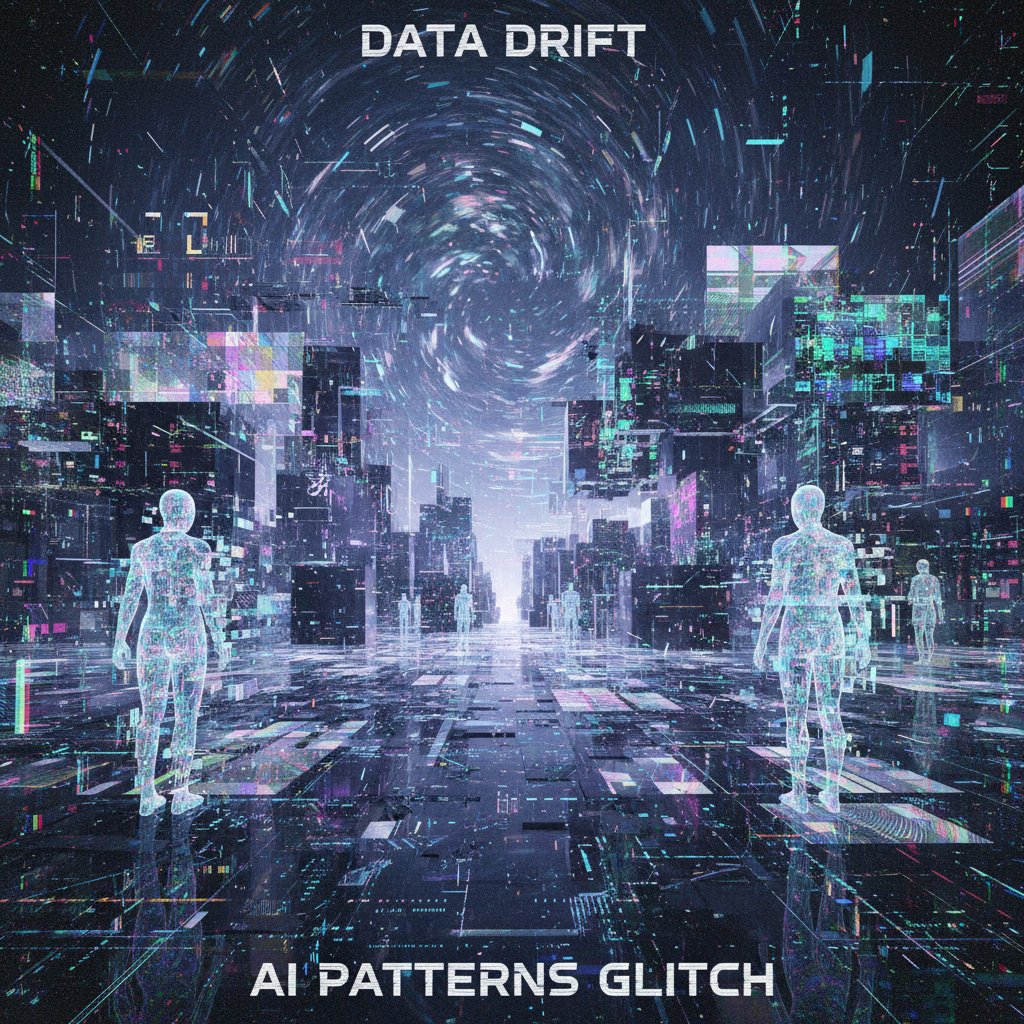
Data isn’t static. Customer preferences shift, markets morph, and yesterday’s insights quickly become tomorrow’s mistakes. “Data drift” is the silent saboteur of ai-powered data-driven decision making. AI models trained on last year’s data can falter when the real world changes. That’s how companies end up making choices that look rational in code, but toxic in practice. According to CEO Today (Feb 2025), regular model retraining and vigilant human oversight are the only defenses.
Real-world wins and epic fails: stories from the AI frontlines
When AI makes million-dollar calls (and gets it right)
Not all AI stories end in disaster. In 2025, countless companies are reaping massive rewards from well-designed, well-managed AI decision systems. E-commerce giants automate product recommendations and pricing, driving profit and personalization at scale. Healthcare providers use AI to optimize scheduling and resource allocation, slashing costs while improving outcomes. According to Techment, some enterprises boosted productivity by 40% after deploying ai-powered data-driven decision making end-to-end. But the best-kept secrets are often the “hidden benefits” that don’t make headlines.
Hidden benefits of ai-powered data-driven decision making:
- Discovery of subtle market trends missed by human analysts
- Faster response to supply chain disruptions
- 24/7 decision support with no fatigue or distraction
- Enhanced transparency and audit trails (when explainability is built-in)
- Ability to experiment rapidly with new strategies
Disaster averted—or disaster made: AI’s biggest public blunders
It’s not all glory. AI has made some of the most expensive—and embarrassing—mistakes in recent business history. In 2023, a retail giant’s algorithm “optimized” prices so aggressively that it drove away loyal customers. A global bank’s AI-driven loan approval system was exposed for denying credit based on biased historical data. The common thread? Blind faith in the machine, coupled with a lack of robust human oversight. According to Forbes (April 2025), these fiascos are less about rogue algorithms and more about poor governance.
| Fiasco | AI-Driven Decision | Human Alternative | Outcome |
|---|---|---|---|
| Retail price “optimization” | Automated price changes | Gradual, manual adjustment | Customer exodus |
| Biased loan approvals | AI model, bad training data | Human review, appeals | Public backlash |
| Faulty hiring filters | Resume screening algorithm | Structured interviews | Diversity decline |
Table 3: AI vs human outcomes in recent decision-making scandals.
Source: Original analysis based on Forbes Tech Council, 2025, CEO Today, 2025.
The unsung heroes: teams that outsmarted the algorithm
Some of the most inspiring stories come from teams who challenged the algorithm—and won. Whether by questioning suspicious outputs, supplementing AI with frontline insights, or tweaking models to better reflect reality, these groups show that the smartest move is often pivoting from “how” to “why.” As one manager famously quipped:
"Sometimes, the smartest move is asking 'why not?'" — Jordan, AI Project Lead
The human factor: can you trust an AI more than your team?
AI vs human judgment: who wins in the real world?
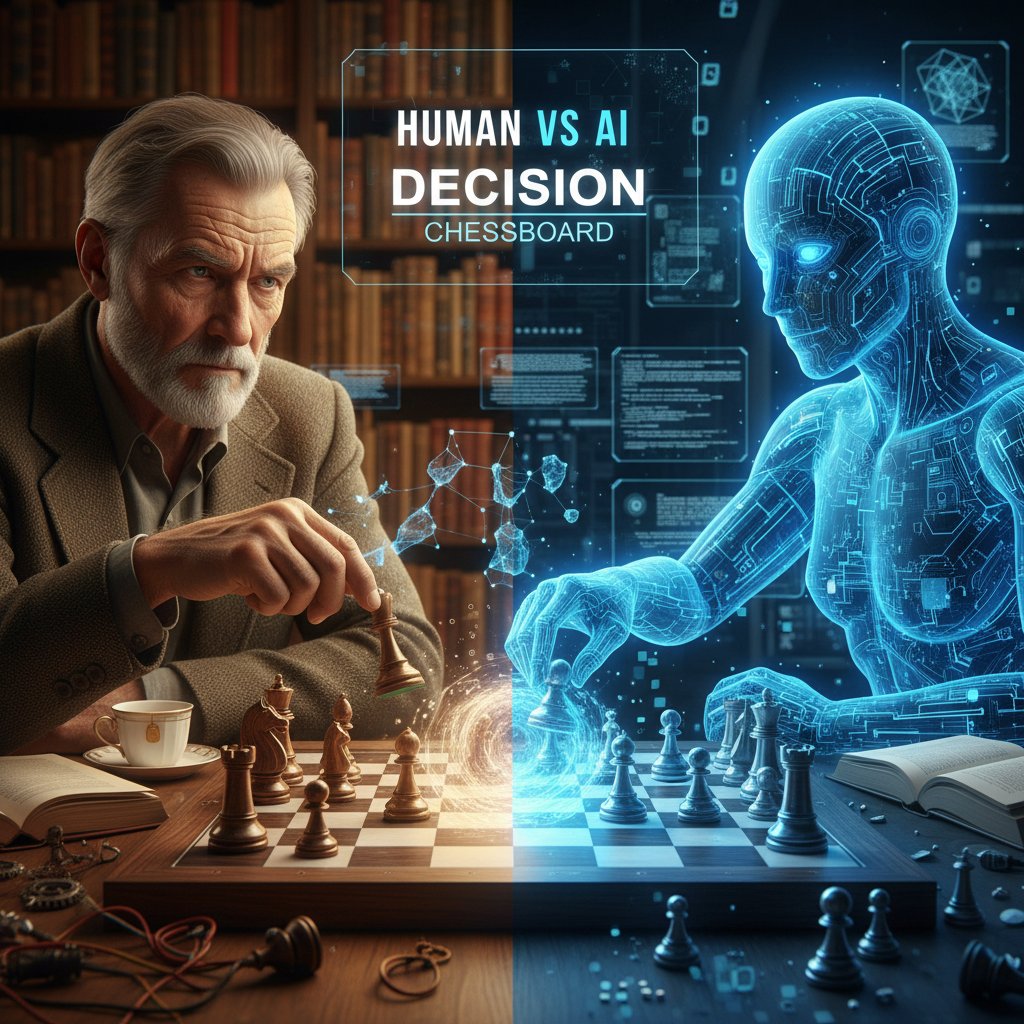
The ultimate showdown isn’t man versus machine—it’s man with machine versus man without. Empirical studies in 2024 found that AI alone outperformed humans on repetitive, data-heavy tasks (think fraud detection or demand forecasting). But in ambiguous, high-stakes decisions—like crisis management or innovation strategy—blended teams came out on top. According to Harvard Business Review, the most successful organizations foster a “cyborg” mentality: trusting AI’s speed, but relying on human judgment for nuance.
Emotions, context, and the missing variables
AI has no gut, no empathy, and no sense of context outside the data it’s fed. That’s both an asset and a liability. Machines don’t get tired, bored, or emotional—but they also miss the “why” behind the numbers. Teams at the cutting edge are learning to spot these blind spots. They reintroduce context, challenge outlier recommendations, and ensure that decisions reflect more than just cold logic. As Techment notes, this human “sense-check” is often the last line of defense against unintended consequences.
At FutureTask.ai, teams leverage automation to handle the heavy-lifting, then review outputs to inject human insight where the data simply can’t reach. This hybrid approach is quickly becoming industry standard.
The trust gap: building confidence in AI-driven decisions
Trust in AI doesn’t come from dazzling dashboards—it’s built day by day, through transparency, education, and demonstrable results. The organizations mastering ai-powered data-driven decision making invest in upskilling, set up clear audit trails, and demand explanations from their models. Here’s how they do it:
- Start with education: Train teams on how AI works, its limitations, and its strengths.
- Demand transparency: Use models with explainable outputs.
- Create feedback loops: Encourage users to challenge, correct, or override AI recommendations.
- Audit regularly: Monitor for drift, bias, and unexpected outcomes.
- Celebrate wins and learn from losses: Use successes and failures as training opportunities.
Industry deep dives: who’s winning and who’s lagging in AI-driven decisions
Finance, healthcare, and manufacturing: three worlds, three realities
Not all industries move at the same pace. In finance, AI thrives on oceans of historical data and real-time trading, making it a powerhouse for fraud detection and risk analysis. Healthcare, meanwhile, wrestles with patient privacy and life-or-death stakes, forcing a slower, more cautious adoption curve. Manufacturing leverages AI for predictive maintenance and supply chain optimization, often outpacing other sectors in operational efficiency. According to a 2025 Harvard Business Review survey, 70% of financial firms report using AI in at least one core process, compared to 55% in healthcare and 60% in manufacturing.
| Industry | AI Adoption Rate (2025) | Top Use Case | Reported Outcome |
|---|---|---|---|
| Finance | 70% | Fraud detection, risk models | 30% reduction in losses |
| Healthcare | 55% | Patient scheduling, diagnostics | 20% efficiency gain |
| Manufacturing | 60% | Predictive maintenance | 25% downtime reduction |
Table 4: 2025 AI adoption rates and outcomes by industry.
Source: Original analysis based on Harvard Business Review, 2025, Techment, 2025.
Cross-industry lessons: what everyone can steal
What separates the winners from the laggards? Nimble organizations borrow best practices from wherever they can. Finance’s obsession with risk management inspires rigorous model validation in healthcare. Manufacturing’s focus on real-time data informs marketing automation. The lesson: don’t wait for your sector to catch up—get bold, borrow heavily, and adapt quickly.
Unconventional uses for ai-powered data-driven decision making:
- Crowdsourced data enrichment for deeper insights
- Real-time scenario analysis in crisis communications
- Automated compliance monitoring in highly regulated sectors
- Hyper-localized marketing campaigns based on micro-trends
- Predictive hiring for skill gaps before they arise
Futuretask.ai: a new breed of automation platforms
Enter FutureTask.ai and its peers—a breed of automation platforms rewiring what’s possible for modern teams. By leveraging state-of-the-art language models, these platforms automate complex, multi-step workflows that once bogged down staff—and cost fortunes in agency fees. Users coordinate content, analyze data, and even orchestrate marketing campaigns at a scale and speed that was science fiction a few years ago. The result? Teams become curators and strategists, not just cogs in the machine.

Hidden costs, ethical landmines, and the price of progress
The invisible price tag: what you’re not paying attention to
AI is often sold as a silver bullet for cost-cutting, but savvy leaders know the real expenses hide below the waterline. Data cleaning, integration, and ongoing model maintenance devour budgets. Talent shortages drive up salaries for skilled data professionals, while regulatory compliance adds even more complexity. The most dangerous cost? Lock-in to platforms that don’t adapt or allow for auditability.
Red flags to watch out for when evaluating AI vendors:
- Proprietary “black box” models with no transparency
- Hidden fees for scaling or customization
- Poor integration with existing tools
- Lack of clear documentation or audit trails
- Overpromising on functionality or speed
Ethical dilemmas: bias, privacy, and accountability
AI decision making magnifies the moral hazards of data-driven business. Bias in training data leads to discriminatory outcomes—a 2024 study by MIT found that facial recognition systems used in hiring favored lighter-skinned candidates, even when trained on “neutral” data. Privacy violations abound when models hoard more information than needed. And as algorithms make more decisions, questions of accountability get murkier—who takes the fall when AI goes rogue?
Real-world example: a major insurer’s AI-driven claims process was found to systematically deny coverage to certain zip codes, effectively redlining vulnerable communities. After public outcry and regulatory scrutiny, leadership had to overhaul the system—and answer some uncomfortable questions.
Can regulation keep up—or will it kill innovation?
Regulators face an impossible task: protect the public without stifling progress. Most laws lag years behind technological reality. In the meantime, it falls on companies to go beyond compliance—building ethical frameworks, supporting transparency, and inviting independent audits. As one compliance officer put it:
"Rules are lagging. But that’s not an excuse for recklessness." — Sam, Chief Compliance Officer
The future: where ai-powered data-driven decision making is going next
AI gets personal: the rise of hyper-individualized decisions
AI isn’t just transforming how companies decide—it’s personalizing decisions down to the individual. Marketing campaigns now adapt in real-time to micro-behaviors. Supply chains reconfigure based on local weather and political shifts. The most advanced systems, like those managed via FutureTask.ai, don’t just automate rote tasks—they tailor recommendations to your unique context, goals, and constraints.

What’s next for jobs and leadership?
AI-driven decision making isn’t about replacing people—it’s about changing what people do. Leaders now need to curate data, interpret algorithmic advice, and build teams that blend technical know-how with curiosity and skepticism. The most futureproof professionals are those who can translate business needs into data questions—and back again.
Strategies for staying relevant? Learn how AI models work, practice critical thinking, and stay curious. Upskilling programs, like those recommended by Harvard Business Review, are vital. Silence isn’t golden; it’s a liability.
Your roadmap: getting started with ai-powered decision making
Ready to take the plunge? Here’s your battle-tested checklist for adopting ai-powered data-driven decision making in your organization:
- Clarify your goals: Know what you’re optimizing for—speed, accuracy, scale, or something else.
- Audit your data: Clean, complete, and relevant data are non-negotiable.
- Select the right tools: Choose platforms that balance power with explainability.
- Educate your team: Upskill on both technical and business fronts.
- Monitor relentlessly: Track for drift, bias, and emerging risks.
- Iterate and adapt: Use feedback to refine models and strategies.
- Stay ethical: Build in checks for fairness, privacy, and accountability.
Quick reference: resources, definitions, and self-assessment
Jargon decoded: glossary for the brave and the baffled
AI:
Short for “artificial intelligence,” this refers to systems or machines that simulate human intelligence, learning from data to make decisions or predictions.
Machine learning:
A subset of AI focused on algorithms that improve at tasks as they process more data—think of it as AI’s learning engine.
Data-driven:
Describes decisions or strategies based primarily on analysis of relevant data, not just intuition or tradition.
Automation:
Replacing repetitive or rule-based tasks with machines or software—AI adds intelligence to the mix.
Explainability:
The quality of an AI system that makes its recommendations or actions understandable to humans. Crucial for trust and accountability.
Bias:
Systematic error or unfairness in data or models, often baked in by historical inequities or poor design.
Augmented intelligence:
AI designed to work alongside, not instead of, humans—enhancing rather than replacing human judgment.
Self-assessment: are you ready for AI-powered decisions?
Before you jump on the AI bandwagon, take a hard look in the mirror. Readiness isn’t about tech budgets—it’s about culture, clarity, and courage.
- Do you have a clear decision-making objective?
- Is your data trustworthy, relevant, and up to date?
- Are key stakeholders educated about AI’s strengths and limits?
- Do you have processes for auditing and feedback?
- Are you prepared for ethical and regulatory scrutiny?
- Do you foster a culture that questions, not just obeys, the machine?
- Is leadership actively involved in AI oversight?
Further reading and where to go next
To dig deeper, check out recent issues of Harvard Business Review, Forbes Tech Council, and peer-reviewed research from MIT and the University of Cambridge. For hands-on exploration of automation trends and workflow transformation, FutureTask.ai offers a knowledge hub and community full of practical resources.
Conclusion
The verdict is in: ai-powered data-driven decision making is not just a trend—it’s a tectonic shift in how business, leadership, and even society operate. But the path is lined with complexity, risk, and opportunity in equal measure. The real winners aren’t those with the fanciest dashboards or most aggressive automation; they’re the organizations that blend the intelligence of algorithms with the wisdom of experience. By facing the brutal truths—about data, bias, ethics, and the limits of technology—you’re not just keeping up. You’re leading the charge. Stay skeptical, stay curious, and never hand over the reins entirely. After all, in the world of AI, the only thing riskier than trusting your gut is pretending you don’t have one.
Sources
References cited in this article
- CEO Today Magazine, Feb 2025(ceotodaymagazine.com)
- Forbes Tech Council, Apr 2025(forbes.com)
- Techment, 2025(techment.com)
- Session AI(sessionai.com)
- Peak AI(peak.ai)
- University of Cambridge(cam.ac.uk)
- Algolia(algolia.com)
- Blue Prism(blueprism.com)
- Forbes Business Council, Apr 2025(forbes.com)
- Quantilus(quantilus.com)
- Forbes, 2022(forbes.com)
- MIT Sloan Management Review(sloanreview.mit.edu)
- Pyramid Analytics(pyramidanalytics.com)
- LeewayHertz(leewayhertz.com)
- Cloverpop(cloverpop.com)
- Morning Brew, Dec 2024(morningbrew.com)
- Lexalytics(lexalytics.com)
- Plivo(plivo.com)
- SNS Insider(snsinsider.com)
- University of the Cumberlands(ucumberlands.edu)
- Intellias(intellias.com)
- Wiley Online Library(bpspsychub.onlinelibrary.wiley.com)
- ScienceDirect(sciencedirect.com)
- Protecto.ai(protecto.ai)
- Forbes, May 2024(forbes.com)
- HBR, Sep 2024(hbr.org)
- Menlo Ventures 2024(menlovc.com)
- IDC/Microsoft 2024(blogs.microsoft.com)
- TSIA 2024(tsia.com)
- GALA Global(gala-global.org)
- Sutherland Global(sutherlandglobal.com)
- Futurepedia(futurepedia.io)
- Ciklum(ciklum.com)
- Slack(slack.com)
- ESADE(dobetter.esade.edu)
- Forbes, Nov 2024(forbes.com)
- SG Analytics(us.sganalytics.com)
Automate Your Tasks, Transform Your Business
FutureTask.ai revolutionizes your workflow by automating complex tasks typically outsourced to freelancers and agencies. Our powerful AI-driven platform leverages cutting-edge LLM technology to deliver precision, speed, and consistency at scale. Whether you're managing content creation, data analytics, marketing campaigns, or customer support, FutureTask.ai ensures seamless task execution, significant cost savings, and unmatched efficiency. Transform your business operations, eliminate delays, reduce operational overhead, and gain a competitive advantage with intelligent automation.
Get startedReady to Automate Your Business?
Start transforming tasks into automated processes today
Frequently Asked Questions
What percentage of data and AI leaders reported improved operational efficiency in 2025?
According to a 2025 report from Harvard Business Review and Google Cloud, 81% of data and AI leaders claim improved operational efficiency, compared to just 61% of their more traditional peers.
Why is AI-powered decision making becoming more prevalent in 2025?
The rise of AI-powered decision making is driven by the digital revolution, cheap cloud computing, oceans of available data, and advances in deep learning that have made algorithmic insights more powerful and accessible than ever before.
What are some hidden risks or challenges with AI-powered decision making mentioned in the article?
The article mentions that companies still cling to intuition, AI tools can overwhelm the teams they're meant to empower, ethical issues are prevalent, and there is ongoing tension between old-school instinct and new-school analytics.
How have business decisions historically been made before the AI era?
Historically, big decisions were based on gut instinct, experience, the opinions of those who spoke loudest, senior executive intuition, managerial precedent, and industry tradition rather than data-driven analysis.
From the Archive
Explore more from Ai-powered task automation

Ai-Powered Business Intelligence Automation: Roi, Risks, Reality

AI-Powered Predictive Analytics Automation: Benefits and Hidden Risks

AI-Powered Competitive Intelligence Automation in 2025

Ai-Powered Data Enrichment Automation: Capabilities, Dangers, and a Costly Misconception

How Automated Informed Decision Making Reshapes Business and Control
