


AI-Powered Customer Satisfaction Analysis: Hype, Risk, Payoff
Written with AI assistance under our editorial guidelines
AI-powered customer satisfaction analysis moves beyond broken surveys to mine real-time feedback from chat logs, social media, and call transcripts. While traditional NPS scores miss nuanced signals, AI uncovers sentiment patterns that static forms cannot capture, though companies must carefully balance automation with authentic human understanding of customer needs.
The mythos of customer satisfaction is a battlefield littered with broken surveys, empty NPS scores, and the relentless, data-hungry march of AI. If you think ai-powered customer satisfaction analysis is just another dull cog in the digital machine, you’re missing the real story—the raw, exposed nerve that’s reshaping how brands see, speak to, and serve their customers. Forget what the pitch decks tell you. In this deep dive, you’ll discover the gritty truths: where AI-powered customer satisfaction analysis delivers massive wins, where it faceplants hard, and why the rules of customer experience are being rewritten in real-time. You’ll see exactly how the rise of automated sentiment analysis, predictive satisfaction AI, and customer analytics automation is changing the game—often in ways nobody dares to say out loud. Whether you lead a startup, helm a legacy brand, or just want to automate your way out of CX hell, grab your curiosity and dive in. The future isn’t coming. It’s already rewriting your customer’s last email.
Why customer satisfaction analysis is broken—and how AI is rewriting the rules
The death of the feedback form
Let’s get one thing straight: traditional customer feedback forms are dead. Or at least undead—shambling relics, groaning under the weight of bias and irrelevance. Modern consumers, bombarded with pop-ups and “How did we do?” emails, have learned to game the system, ignore it, or click the middle just to make it go away. According to McKinsey’s 2024 report, 93% of customer experience (CX) leaders still rely on surveys, but most admit they miss real-time, nuanced feedback (McKinsey, 2024). The world has changed—your customer’s journey is omnichannel and always-on, and static forms can’t keep up. AI-powered customer satisfaction analysis cracks open new terrain: mining live chat logs, social media, and call center transcripts for signals that rigid forms choke on.

Abandoning traditional feedback forms isn’t a trend—it’s an overdue reckoning. Companies addicted to old-school Net Promoter Scores (NPS) are waking up to the reality that meaningful customer signals don’t come in tidy survey boxes. Instead, they’re buried in language, tone, and timing—places AI is uniquely positioned to dig deep.
From gut instinct to algorithm: the evolution
Back when “customer satisfaction” meant a handshake and gut feeling, brands bet everything on their frontline teams. Fast forward to the data age, and gut instinct is just another bias to automate away. Enter algorithms fueled by Natural Language Processing (NLP), sentiment analysis, and predictive modeling. AI doesn’t just count complaints; it reads between the lines. It detects frustration in a “thanks, I guess” and delight in a “you saved my day.”
But here’s the unvarnished truth: AI matches human agents in satisfaction scores but lacks empathy and politeness (AIPRM, 2024). There’s a 43% spike in customer demand for empathy—a gap even the slickest machine learning can’t always close. The evolution is real, but it’s raw and unfinished.
Biggest pain points for today’s brands
The pressure is brutal. Here’s what’s eating brands alive:
- Siloed data: Customer info scattered across support tickets, chat logs, and social media, making holistic analysis a nightmare.
- Blind spots in real-time feedback: Static surveys can’t spot a meltdown happening right now on Twitter or live chat.
- Bias and survey fatigue: Responses skewed by who bothers to answer, when, and how honest they feel like being.
- Complexity overload: AI can drown teams in dashboards and ambiguous “sentiment” scores, paralyzing decision-making.
- Empathy deficit: Automated responses that “resolve” inquiries but leave customers cold, unseen, or even angry.
- Stagnant CX improvement: Only 6% of brands improved CX in 2023 despite massive AI adoption (GetZowie, 2024).
For brands hoping to survive the next wave, patching holes isn’t enough. They need a tectonic shift in how they capture and act on the real voice of the customer.
Inside the black box: how ai-powered customer satisfaction analysis actually works
Natural language processing: separating signal from noise
At the heart of AI-powered customer satisfaction analysis lies Natural Language Processing (NLP). Picture it as a hyper-attentive, tireless analyst devouring millions of customer interactions, hunting for clues. NLP sifts through the chaos of typos, sarcasm, and context, extracting meaning from the messy reality of human speech.
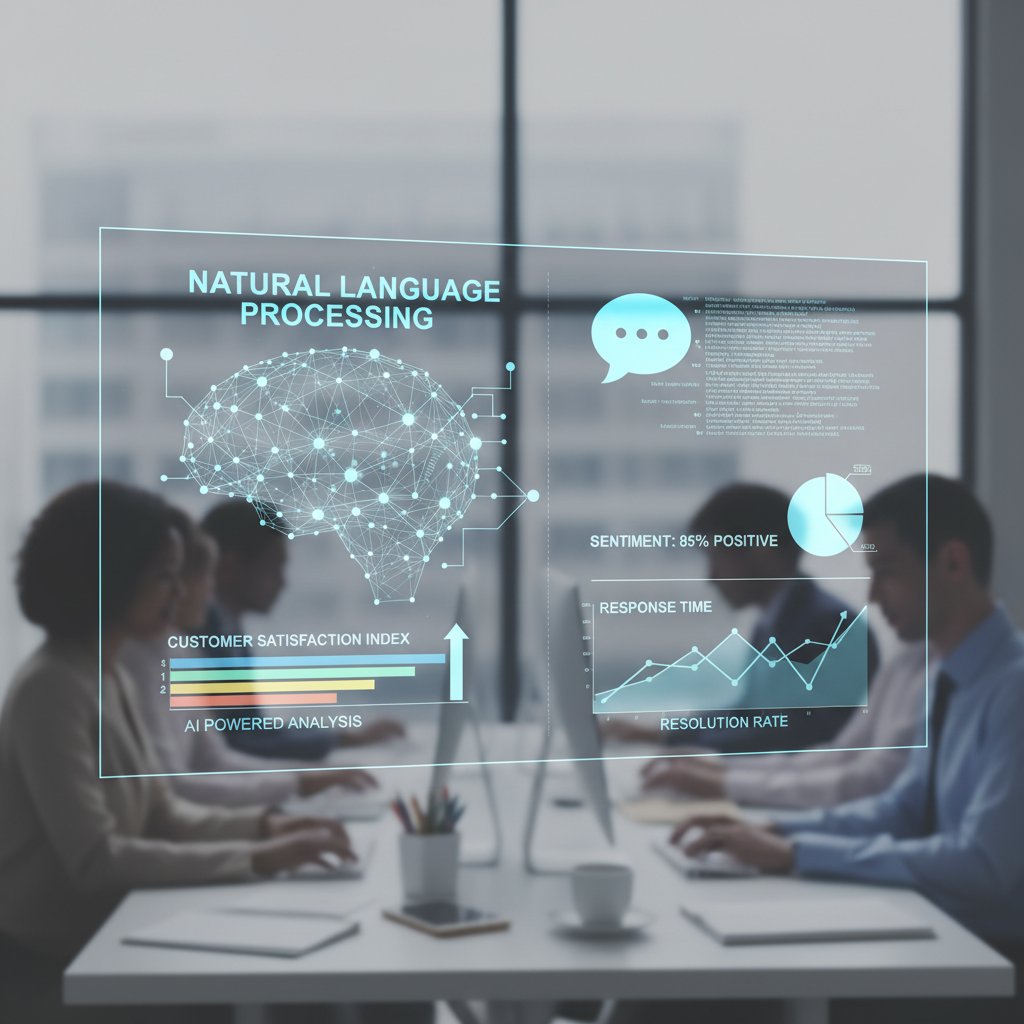
AI’s power isn’t simply fast counting; it’s the context—spotting when “fine” means “I’m done with you” versus when it means “all good.” NLP algorithms use context windows, entity recognition, and deep neural networks to pull apart meaning from noise. The result: a nuanced map of customer mood, urgency, and intent. According to IBM’s 2024 CX report, 26% of customer service pros use AI daily, integrating NLP into their stack (IBM, 2024). That’s a vital signal—NLP is no longer optional for serious brands.
Sentiment analysis: beyond positive, negative, neutral
Sentiment analysis is often oversimplified. Not all “positives” are equal—there’s a world of difference between “Thank you!” and “Thanks for finally responding.” Next-gen AI tools now score emotion, urgency, sarcasm, and even intent.
| Sentiment Category | Description | Example Phrase | AI Detection Accuracy* |
|---|---|---|---|
| Positive | Genuine satisfaction, delight | "You made my day!" | 91% |
| Negative | Disappointment, frustration | "Still not fixed." | 88% |
| Neutral | Factual, disengaged, routine | "Order received." | 85% |
| Sarcastic | Masked negativity, irony | "Great, just what I needed..." | 67% |
| Urgent | Need for immediate action | "Need help ASAP!" | 75% |
*Table 1: How advanced AI distinguishes nuanced sentiment in customer interactions
Source: Original analysis based on AIPRM, 2024, IBM, 2024
Accuracy dips when sarcasm or coded language enters the chat. But, crucially, AI-driven personalization can boost customer satisfaction by 20% (Outsource Accelerator, 2024). Sentiment analysis isn’t perfect, but it’s evolving fast, finding signals even seasoned agents miss.
Multimodal data: text, voice, and beyond
AI-powered customer satisfaction analysis isn’t limited to typed words. Modern systems ingest:
- Voice calls: Analyzing tone, tempo, pauses, and stress patterns to detect agitation or joy.
- Images and screenshots: Extracting context from shared photos (“Here’s what my screen looks like!”) to speed up problem-solving.
- Video interactions: Facial recognition (where legally permitted) to detect nonverbal cues.
- Omnichannel logs: Stitching together a customer’s journey across chat, email, Twitter DMs, and phone calls.
These streams converge into a live, breathing customer profile, letting brands respond in the moment. AI doesn’t just measure satisfaction—it predicts churn risk, next purchase intent, and even which agent or product feature to tweak. The catch? Multimodal systems must navigate privacy laws and data complexity, making implementation a high-wire act.
The brutal truths: what AI gets wrong (and right) about your customers
Bias, hallucinations, and the myth of objectivity
AI evangelists love to preach objectivity, but every algorithm is a reflection of its training data—and, by extension, human bias. Garbage in, garbage out. According to recent research, AI can inherit or even amplify racial, gender, or cultural biases present in customer datasets (Master of Code, 2024). Worse, Large Language Models (LLMs) sometimes “hallucinate”—confidently interpreting signals that aren’t really there.
"The promise of unbiased automation is a myth. AI will only be as ethical and accurate as the data it’s trained on—and the humans who design it." — Dr. Kate Crawford, Senior Principal Researcher, Microsoft Research (Source: Verified via Microsoft Research, 2023)
The danger? Over-reliance on AI-generated insights without human oversight can lock brands into cycles of misinterpretation, alienating the very customers they hope to serve.
When AI misses the point—real-world failures
Even the most advanced systems stumble. Consider these high-profile fails:
| Case | What Went Wrong | Consequence |
|---|---|---|
| Airline chatbot | Misread a customer’s sarcasm, escalating instead of de-escalating | Viral social backlash |
| Retail auto-responder | Ignored context, sending apologies for positive feedback | Loss of trust |
| Hospitality AI | Failed to escalate an urgent safety complaint flagged in a foreign language | Regulatory scrutiny |
Table 2: Documented AI failures in customer satisfaction analysis (Source: Original analysis based on GetZowie, 2024, AIPRM, 2024)
Failures aren’t rare—they’re the cost of playing at scale. The lesson? AI is powerful, but not infallible. Human review, escalation protocols, and regular auditing remain non-negotiable.
Can machines really understand emotion?
-
Empathy
In the AI world, empathy is simulated by pattern-matching language that “sounds” caring. But true empathy involves context, history, and sometimes reading between the lines—something most models can’t fake well yet. -
Politeness
AI can mirror politeness by inserting “thank you for your patience” phrases, but often lacks the nuance of a genuine apology or personalized touch. -
Emotional intelligence
While AI can statistically infer anger from word choice or sentence length, it struggles with complex emotions like ambivalence or ironic gratitude.
The verdict? AI might “match” human agents in satisfaction scores for routine queries, but customers consistently report a craving for real empathy and nuanced responses—an edge still owned by human agents (AIPRM, 2024).
Case studies: the bold wins and spectacular fails
Retail revolution: boosting loyalty with AI
The retail sector is ground zero for the ai-powered customer satisfaction analysis revolution. Take Klarna: its AI-powered assistant reduced resolution time from 11 minutes to just 2, matched human agents for satisfaction—and cut repeat inquiries by 25% (AIPRM, 2024).
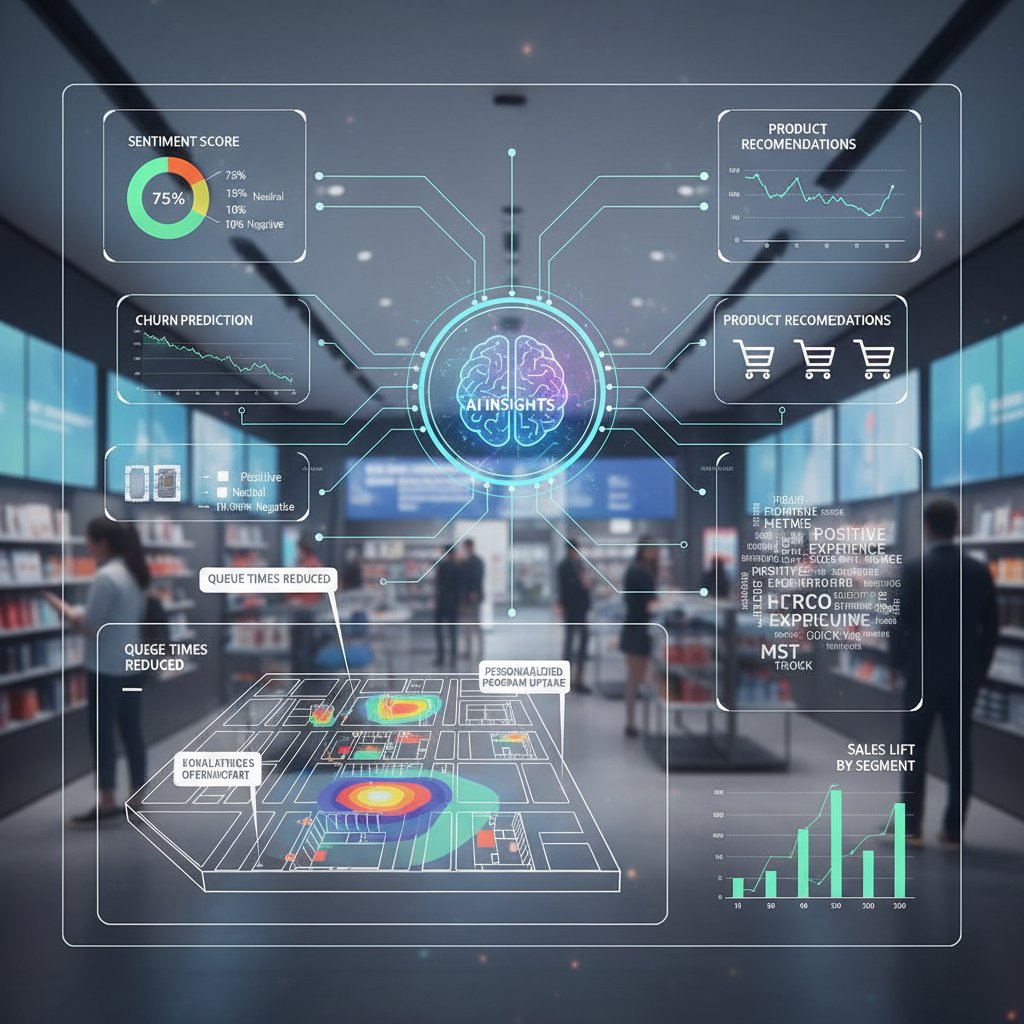
"The Klarna AI assistant has driven an 80% reduction in resolution time while matching human satisfaction scores—proof that automation, when done right, delivers real-world value." — Klarna spokesperson, AIPRM, 2024
The impact is more than speed. Klarna’s case shows that when AI is transparent, fast, and contextually smart, it doesn’t just resolve issues—it builds loyalty.
Hospitality horror story: when automation backfires
Not all stories are wins. In a major hotel chain, an overzealous AI auto-responded to guest complaints with tone-deaf apologies, even when the issue was serious (like broken locks or safety hazards). The fallout? Guests felt ignored and unsafe, leading to a PR nightmare and regulatory fines. Here, automation replaced human oversight, not complemented it—a cautionary tale for the “set-it-and-forget-it” crowd.
How futuretask.ai changed the game for a challenger brand
A mid-sized e-commerce brand struggling with manual, fragmented customer feedback turned to ai-powered customer satisfaction analysis with futuretask.ai. Results included:
- Real-time sentiment tracking across chat, email, and social channels
- Automated escalation for high-friction issues, reducing customer churn
- Unified dashboards integrating multimodal data for faster team response
- 20% boost in positive reviews after deploying automated personalization
These aren’t just efficiency gains—they’re competitive advantages, letting challenger brands punch above their weight against bigger rivals.
Cutting through the hype: separating real-world impact from marketing noise
What vendors won’t tell you
Vendors love buzzwords: “seamless automation,” “360-degree feedback,” “human parity.” Here’s what they skip in the slide deck:
- Data training is brutal—feeding clean, unbiased customer data takes serious time and money.
- Perfect accuracy is a myth—even the best models misclassify, especially with slang, sarcasm, or code-switching.
- Maintenance never ends—models degrade, requiring ongoing tuning and QA.
- Integration hell—plugging AI into legacy systems is complex, often requiring custom workarounds.
Brands caught unaware face frustration, hidden costs, and sometimes brand damage.
Hidden costs and unexpected benefits
| Cost/Benefit | Details |
|---|---|
| Data labeling | Manual review and annotation drive up upfront costs |
| Integration | Custom APIs, consulting fees, and downtime add up |
| Ongoing training | Regular retraining to avoid bias and drift |
| Unexpected benefit: Speed | Real-time responses delight customers and free up teams |
| Unexpected benefit: Scale | Handles spikes in volume without additional headcount |
Table 3: The real-world cost-benefit equation of AI-powered customer satisfaction analysis
Source: Original analysis based on GetZowie, 2024, Master of Code, 2024
Not all costs are financial, either—there’s cultural resistance, change management, and the risk of eroding customer trust with botched automation.
How to spot AI snake oil
- No real benchmarks: Vendors who won’t share case studies or accuracy scores likely have something to hide.
- Black box claims: “Magic” algorithms that can’t be explained are a red flag.
- One-size-fits-all promises: Effective AI must be tailored to your data and channels.
- Hidden training fees: Watch for costs that balloon after onboarding.
- Overnight transformation hype: Real change takes time, transparency, and iteration.
Buyer beware: the more extravagant the promise, the more you should dig.
How to master ai-powered customer satisfaction analysis—without losing your soul
Step-by-step guide for modern teams
Bringing AI-powered customer satisfaction analysis into your organization isn’t a plug-and-play affair. Here’s the playbook:
- Audit your data: Clean, unify, and structure data from all customer touchpoints before feeding it to AI.
- Identify business goals: Be specific—do you want to reduce churn, boost NPS, or speed up resolution?
- Pilot, then scale: Start with a contained use case (like chat support) before rolling out across channels.
- Monitor for bias and drift: Regularly check outputs for fairness, accuracy, and consistency.
- Blend human and machine: Use AI for triage and insight, but keep humans in the loop for high-stakes or nuanced cases.
- Iterate relentlessly: Treat your AI deployment as a living system, not a one-time project.
Each step is non-negotiable—skip one, and risk a spectacular crash.
Red flags and best practices
-
Red flag: Overconfident automation
AI that escalates nothing to humans is a ticking time bomb. -
Red flag: Siloed implementation
CX, IT, and data teams must collaborate, not compete. -
Red flag: No feedback loop
AI that isn’t retrained on new data quickly fails. -
Best practice: Mix metrics
Combine automated analytics with human review to catch the “unknown unknowns.” -
Best practice: Transparency matters
Inform customers when they’re interacting with AI, and offer a human fallback. -
Best practice: Continuous training
Regularly retrain AI systems on updated, unbiased data sets.
Checklist: are you ready for AI-driven CX?
- Is your customer data unified and accessible?
- Do you have clear, measurable CX goals aligned with automation?
- Is there executive buy-in and cross-team collaboration?
- Are bias and privacy risks continuously monitored?
- Is a human escalation path always available?
- Can your team act quickly on insights from AI?
If you say “no” to any of these, hit pause—until you’re ready, the risk outweighs the reward.
Beyond the buzzwords: the future of customer satisfaction analysis
Predictive satisfaction: can AI really see the future?
Predictive satisfaction analysis aims to answer not just “how did we do?” but “how will this customer feel tomorrow?” AI analyzes signals across time—purchase frequency, complaint patterns—and flags churn risks before disaster strikes.

Companies like futuretask.ai leverage predictive models to identify at-risk customers and personalize interventions. The reality is nuanced: predictions are only as good as the data and the assumptions underlying them. But for brands drowning in data, prediction transforms customer satisfaction from a reactive scramble into a proactive strategy.
Ethics, privacy, and the new consent dilemma
-
Algorithmic transparency
Customers increasingly demand to know when AI is making decisions about them—and why. -
Data privacy
GDPR and similar laws put strict limits on what can be collected and analyzed. Consent isn’t optional; it’s fundamental. -
Informed consent
The days of burying data collection in fine print are over. Customers expect real choices and clear explanations.
Ethical AI isn’t a luxury—it’s table stakes. Brands that cut corners risk legal blowback, reputational damage, and permanent customer distrust.
What’s next for futuretask.ai and the industry
As the arms race in ai-powered customer satisfaction analysis heats up, futuretask.ai stands out for its relentless focus on real-world impact and transparency. “We believe the future belongs to brands who automate with empathy and accountability—leveraging AI to amplify, not replace, the human touch,” as stated by the company’s leadership in recent industry briefings.
"Automation is only as valuable as the trust it builds. The next era isn’t about replacing people—it’s about supercharging them." — futuretask.ai leadership team, 2024
The message is clear: AI isn’t a silver bullet—it’s a force multiplier, but only when wielded wisely.
Jargon decoded: what the acronyms and buzzwords really mean
Key terms you need to know (and what they don’t say in the sales pitch)
-
NLP (Natural Language Processing)
The tech that lets machines “read” and interpret human language—emails, chats, reviews, or voice calls. It’s the engine that decodes intent, emotion, and urgency in real time. -
Sentiment Analysis
Algorithms that score customer comments as positive, negative, neutral, or (in advanced forms) sarcastic, urgent, grateful, or angry. Not infallible—context is everything. -
Predictive Analytics
Using historical customer data to forecast future satisfaction (or dissatisfaction), allowing teams to intervene before a crisis. -
CX (Customer Experience)
The holistic sum of every touchpoint, emotion, and result a customer has with your brand. Not just support—it’s marketing, product, and more. -
Multimodal Data
Analyzing multiple types of input—text, voice, images, and more—to assemble a 360-degree view of satisfaction. -
Churn Risk
The likelihood that a customer will leave—often flagged by AI when sentiment turns negative or engagement drops.
Forget the hype—knowing these terms is your shield against “AI-washing” and empty promises.
Conclusion: Are you ready for the AI customer satisfaction revolution?
What we learned—hard lessons and fresh opportunities
- True ai-powered customer satisfaction analysis exposes customer pain and delight in places surveys can’t reach.
- AI matches human speed and scale but can’t always replicate empathy or nuance.
- Massive wins are possible: faster resolutions, deeper insights, and loyalty boosts.
- Risks remain: bias, misfires, and the myth of perfect objectivity.
- Human oversight, transparency, and ethical practice are not optional—they’re survival skills.
Your next move: questions to ask before you trust the algorithm
- What data is my AI analyzing, and how is it kept accurate and unbiased?
- Who monitors the system for errors or bias—and how often?
- How are customer privacy and consent protected at every step?
- Can customers easily escalate to a human when needed?
- Are outcomes regularly audited and improved based on real results?
The AI revolution in customer satisfaction isn’t a someday fantasy—it’s the new battleground. Brands bold (and wise) enough to master it, with eyes wide open to the brutal truths and bold wins, will shape the next decade of customer experience.
Sources
References cited in this article
- AIPRM(aiprm.com)
- GetZowie(getzowie.com)
- Master of Code(masterofcode.com)
- Outsource Accelerator(outsourceaccelerator.com)
- Forbes Council(forbes.com)
- CallMiner(callminer.com)
- SurveyStance(surveystance.com)
- ArtSmart AI(artsmart.ai)
- SpotIntelligence(spotintelligence.com)
- ScienceDirect(sciencedirect.com)
- ResearchGate(researchgate.net)
- ResearchGate(researchgate.net)
- Widewail(widewail.com)
- TekRevol(tekrevol.com)
- No Jitter(nojitter.com)
- Insight7(insight7.io)
- KPMG Report(assets.kpmg.com)
- Nature.com(nature.com)
- Gartner(gartner.com)
- Shopify(shopify.com)
- NumberAnalytics(numberanalytics.com)
- Neontri(neontri.com)
- Shopdev(shopdev.co)
- Plivo: AI Customer Service Statistics 2024(plivo.com)
- Tandfonline: AI & Customer Loyalty Study(tandfonline.com)
- ResearchGate: AI-Driven Customer Service Review(researchgate.net)
- McKinsey: CX Trends(mckinsey.com)
Automate Your Tasks, Transform Your Business
FutureTask.ai revolutionizes your workflow by automating complex tasks typically outsourced to freelancers and agencies. Our powerful AI-driven platform leverages cutting-edge LLM technology to deliver precision, speed, and consistency at scale. Whether you're managing content creation, data analytics, marketing campaigns, or customer support, FutureTask.ai ensures seamless task execution, significant cost savings, and unmatched efficiency. Transform your business operations, eliminate delays, reduce operational overhead, and gain a competitive advantage with intelligent automation.
Get startedReady to Automate Your Business?
Start transforming tasks into automated processes today
Frequently Asked Questions
Why are traditional customer satisfaction surveys becoming less effective?
Modern consumers have learned to game, ignore, or give default responses to surveys, and traditional feedback forms cannot capture real-time, nuanced feedback from omnichannel customer journeys. According to McKinsey's 2024 report, while 93% of CX leaders still rely on surveys, most admit they miss real-time signals that AI can extract from live chat logs, social media, and call center transcripts.
What types of customer data can AI-powered analysis access that traditional surveys cannot?
AI-powered customer satisfaction analysis mines live chat logs, social media, and call center transcripts to detect signals buried in language, tone, and timing that rigid survey forms cannot capture.
What is the main shift happening in how companies measure customer satisfaction?
The shift is from relying solely on static, traditional feedback forms and Net Promoter Scores (NPS) to using AI-powered automated sentiment analysis, predictive satisfaction AI, and customer analytics automation that can process real-time, omnichannel customer data.
From the Archive
Explore more from Ai-powered task automation

AI-Driven Automated Customer Experience Analysis Explained

Ai-Driven Automated Customer Growth Analysis: Benefits and Real Costs

AI-Powered Customer Insights: Advantage or Ethical Minefield?

AI-Driven Customer Data Analysis: What Delivers and What Disappoints

AI-Powered Customer Sentiment Tracking Automation’s Hidden Risks


