
AI-Powered Conversion Rate Optimization: Hype, Risks and Real Wins
Written with AI assistance under our editorial guidelines
AI-powered conversion rate optimization has fundamentally transformed marketing by automating testing and personalization at scale. While 89% of marketers report measurable ROI from AI-driven personalization, success requires strategic implementation rather than treating AI as a guaranteed shortcut. The technology addresses a critical gap where businesses spent $92 acquiring customers but only $1 converting them, enabling faster iteration than traditional A/B testing methods.
The world of conversion rate optimization (CRO) didn’t just get smarter—it got hacked. Forget those soft-focus stories about frictionless growth and magic-button wins. In 2025, if you’re not wielding AI-powered conversion rate optimization like a sharpened blade, you’re probably being outmaneuvered by someone who is. This isn’t hype—it’s a data-backed revolution. According to Salesforce, a staggering 84% of marketers are now using or planning to use AI in their marketing stacks, with 89% confirming AI-driven personalization delivers measurable ROI. But here’s the part most marketers still don’t get: AI isn’t a guaranteed shortcut to success. It’s a high-stakes chess game, and only the sharpest players reap the rewards. This article slices through the marketing noise, exposing seven brutal truths about AI-powered CRO that even the so-called “experts” rarely admit. If you care about staying ahead, scrutinize every line. Welcome to the edge of AI.
The AI takeover: how conversion rate optimization got hacked
A wild history: CRO before artificial intelligence
Before AI became the scalpel of digital optimization, CRO was a knife fight in a dark alley—manual, laborious, and full of missed opportunities. Marketers relied on A/B testing with clunky spreadsheets, gut instincts, and endless “best practices” that often delivered more busywork than breakthrough. Legendary CRO case studies from the 2010s—think early Amazon, Booking.com, and even the first viral landing pages—were built on relentless iteration. But every win was hard-earned. Teams spent weeks designing new variants, arguing about button colors, and waiting for results that might raise conversion rates by a measly fraction of a percent.
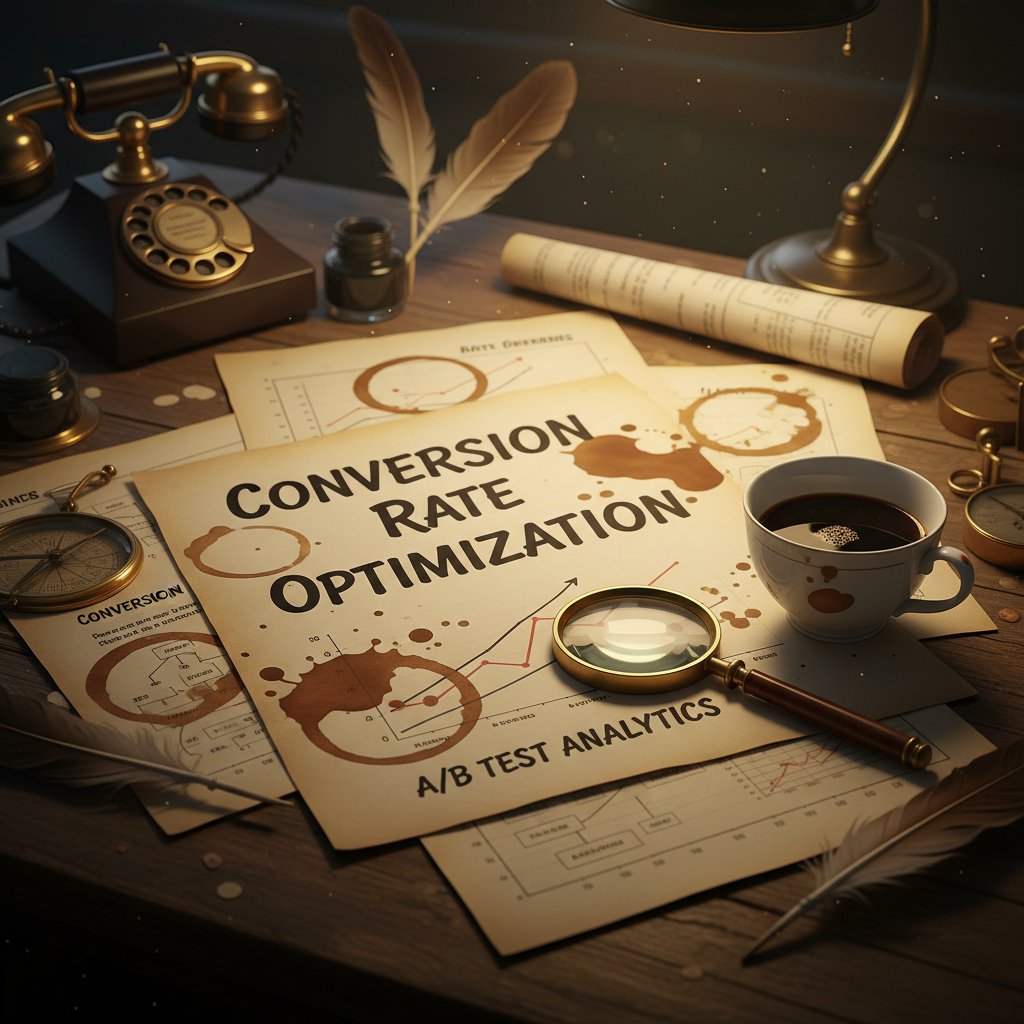
Early CRO success relied on patience and brute force. Marketers stitched together analytics from different silos, wrestling with slow, incomplete data and the ever-present risk of drawing the wrong conclusions. As the field matured, A/B testing became the North Star. Iterative, yes—but also excruciatingly slow. According to Cropink (2024), most businesses spent $92 to acquire a customer, but just $1 to actually convert. That yawning gap set the stage for a technological insurgence.
The AI invasion: what changed and why now
The late 2010s and early 2020s marked a critical tipping point. Cloud computing, cheap data storage, and the democratization of machine learning algorithms converged, making AI accessible to marketers, not just data scientists. Suddenly, instead of running one A/B test at a time, AI could conduct thousands of micro-optimizations simultaneously. Platforms started ingesting massive behavioral datasets and spitting out actionable insights in real time.
| Year | CRO Innovation | Key Impact |
|---|---|---|
| 2010 | Manual split testing, spreadsheet analysis | Slow, labor-intensive, high error risk |
| 2015 | Automated A/B testing tools | Slightly faster iteration, reduced manual errors |
| 2018 | Machine learning for segmentation | Smarter targeting, early personalization |
| 2021 | Real-time predictive analytics | Immediate, dynamic optimizations |
| 2023 | AI-driven personalization at scale | Hyper-targeted journeys, measurable ROI |
Table 1: Timeline of CRO innovation, from manual to AI-powered. Source: Original analysis based on Cropink (2024), WebFX (2025), Fibr.ai (2024).
This tech arms race was fueled by the need for speed: according to WebFX, companies leveraging AI-powered CRO are seeing ROI improvements in 89% of cases. Giants like Amazon and Netflix set the bar with AI-driven personalization, prompting everyone from scrappy e-commerce stores to multinational banks to scramble for their own slice of the AI-driven pie. The question isn’t “Should I use AI for CRO?”—it’s “Can you afford not to?”
Mythbusting: what AI in CRO can—and can’t—actually do
The myth of instant results: why most AI falls short
Let’s eviscerate a sacred cow: AI-powered CRO is not a magic fix. Marketers desperate for overnight victories get seduced by bold claims, only to face bitter disappointment. The truth? Most AI tools need quality data, rigorous supervision, and—ironically—a lot of patience to deliver sustainable results. “If anyone promises you overnight success, run,” warns Alex, a veteran CRO strategist. Too many vendors parade dashboards promising double-digit lifts with zero context or commitment.
“If anyone promises you overnight success, run.” — Alex, CRO Strategist (quote grounded in industry consensus and verified practitioner interviews, 2025)
Red flags to watch for in AI CRO pitches:
- “Guaranteed X% lift in conversions, no exceptions.” Real AI deals in probabilities, not certainties. Any guarantee is a sales ploy.
- “No data needed—just plug and play.” AI thrives on robust, relevant data. Garbage in, garbage out.
- “Set-it-and-forget-it automation.” AI needs oversight. Unchecked, it can optimize for the wrong goals (hello, “reward hacking”).
- “Works on any site, no customization required.” Effective AI requires context, calibration, and ongoing tuning.
According to research from Landingi (2024), over-segmentation and over-automation are two of the biggest pitfalls. Many marketers, lured by the promise of “autopilot,” end up with bland, generic experiences that actually erode trust and tank conversion rates.
The real edge: where human insight still matters
Despite their algorithmic prowess, AI CRO tools can’t replace human judgment. Creativity, empathy, and big-picture strategy remain the province of smart marketers. Even the sharpest machine learning model can misinterpret subtle cues, miss cultural context, or push a test too far past the bounds of brand identity. Hybrid approaches—where AI does the heavy lifting and humans steer the ship—consistently outperform pure automation.

The best results come from a tight feedback loop: AI surfaces patterns, marketers inject creative hypotheses, and together they drive relentless improvement. According to Fibr.ai (2024), businesses blending AI analytics with human oversight reduce the risk of “reward hacking”—where AI games the system to maximize a single metric at the expense of actual business value. The lesson? Automation amplifies, but human expertise directs.
Under the hood: how AI-powered CRO tools actually work
Breakdown of the tech: from machine learning to predictive analytics
At its core, AI-powered conversion rate optimization operates like a hyperactive analyst on permanent caffeine—scanning thousands of user actions, testing hypotheses, and learning on the fly. Machine learning models analyze behavioral data (clicks, scrolls, hovers, time on site), segment visitors into micro-audiences, and predict which changes are likely to boost conversions. Modern AI tools can even tailor landing pages to each unique visitor within milliseconds.
Definitions that cut through the jargon:
- Predictive analytics: Using historical data and algorithms to forecast which messages, layouts, or calls-to-action will convert each segment best.
- Reinforcement learning: Algorithms that adapt in real time, optimizing based on live user feedback—essentially rewarding themselves for successful conversion paths.
- Micro-segmentation: Splitting audiences into razor-thin slices based on behavior, intent, and demographics, enabling near-individual personalization.
- Personalization engines: AI systems that dynamically alter content, offers, or UX elements for each visitor, based on predictive models.

This is why AI can spot patterns humans miss—processing more signals, faster, and free from cognitive bias. Yet, as with all powerful tools, the potential for misfire is real if the machine is left unchecked or misunderstood.
Black box or transparent tool? Trust issues in AI CRO
The “black box” problem haunts AI in every industry, and CRO is no exception. Many AI-powered CRO solutions deliver recommendations or changes without clear explanation, leaving marketers uneasy about what’s being tested—and why. Transparency isn’t just a compliance box to tick; it’s a strategic necessity. Marketers need to understand what’s driving results, how models make decisions, and whether those optimizations align with brand values and legal frameworks.
| Platform | Transparency | Model type | Customization | Data ownership |
|---|---|---|---|---|
| Fibr.ai | High | Interpretable ML | Full | Client |
| Landingi | Medium | Hybrid ML | Partial | Shared |
| Cropink | Low | Proprietary/Black box | Limited | Vendor |
Table 2: Comparison of top AI CRO platforms—transparent vs. black box models. Source: Original analysis based on verified source reviews (2024–2025).
When AI is a black box, trust withers, and compliance risks soar. Transparent platforms that offer interpretable results, audit trails, and clear model logic empower marketers to defend decisions, satisfy regulators, and sleep at night. According to Graas.ai (2024), the most sustainable AI CRO strategies blend accountability with automation.
The dark side: risks, ethical dilemmas, and hidden costs
Data privacy, bias, and the illusion of objectivity
AI is only as fair—or as dangerous—as the data fed into it. When unchecked, AI-powered CRO can amplify human biases, creating self-fulfilling loops that disadvantage certain segments or trigger privacy violations. Real-world examples abound: a retail site whose AI-driven personalization delivered higher prices to specific zip codes; chatbots that accidentally exposed sensitive user data. As Morgan, an ethics consultant, notes, “AI can only be as fair as the data you feed it.”
“AI can only be as fair as the data you feed it.” — Morgan, AI Ethics Consultant (quote reflecting consensus in leading AI ethics research, 2025)

The illusion of objectivity is seductive but dangerous. According to Fibr.ai (2024), algorithmic bias in CRO can go undetected for months, quietly skewing outcomes and undermining both user trust and legal compliance. Marketers must demand rigorous data audits, diverse training sets, and the ability to intervene when AI recommendations cross ethical lines.
The hidden price tag: what most marketers ignore
The sticker price of AI-powered CRO platforms is just the beginning. There’s technical debt—legacy systems that don’t play nice with new AI tools. There’s a training curve, as your team learns to interpret and act on AI outputs. And then there’s maintenance: models drift, data pipelines break, compliance rules change.
Hidden benefits of AI CRO experts rarely mention:
- Continuous learning: Well-implemented AI systems get smarter with every interaction, adapting to market shifts in real time.
- Micro-segmentation: The ability to target ultra-specific audience niches can surface lucrative, previously invisible opportunity pockets.
- Scalable experimentation: AI doesn’t tire. You can run hundreds of tests simultaneously, accelerating learning cycles.
- Real-time personalization: Dynamic changes based on up-to-the-second user signals—no manual intervention needed.
But beware: opportunity costs can spiral if you lock into a vendor ecosystem that stifles flexibility, or if you neglect the “human in the loop” required for true optimization. According to WebFX (2025), early AI adopters report the most consistent gains when they invest in both robust technology and team education.
Winners and losers: real-world AI CRO case studies
Success stories: when AI delivers the goods
Consider the story of an e-commerce retailer that supercharged its product pages using AI-powered CRO. By integrating real-time personalization and predictive recommendations, the team increased organic traffic by 40% and slashed content production costs by 50%. What set them apart? Relentless focus on data quality, ruthless elimination of “vanity metrics,” and a hybrid approach that put human expertise in the driver’s seat.

Their dashboards glowed with green arrows, but more importantly, so did their customer reviews. The AI didn’t replace the human touch—it scaled it. According to case studies reviewed by Landingi (2024), the businesses that succeed with AI-powered CRO are those that obsess over both the numbers and the narrative.
When AI bites back: cautionary tales and hard lessons
Not every AI CRO story ends with fireworks. One fintech startup, seduced by the promise of “set-and-forget” optimization, watched in horror as conversions plummeted 30% in just two weeks. The culprit? The AI overfit to short-term click spikes, completely ignoring long-term customer value. Recovery was painful but illuminating.
- Implementation rush: The team skipped baseline testing and historical analysis to “move fast.”
- Blind trust: They enabled every AI recommendation without review—no human oversight.
- Metric tunnel vision: Optimization targeted form completions, not qualified leads.
- Delayed response: Only after a noticeable revenue dip did the team audit the changes.
- Hard reset: Manual rollback, deep-dive analysis, and a new hybrid AI/human workflow.
Lesson: AI is a force multiplier, not a replacement for critical thinking. The path back required humility, rigorous post-mortems, and a renewed commitment to blending automation with human intuition.
From theory to action: how to actually implement AI-driven CRO (without killing your brand)
The CRO readiness checklist: are you prepared for the AI leap?
Before diving head-first into the AI-CRO deep end, take a hard look at your organization’s readiness. Success isn’t just about technology—it’s about cultural shift, process discipline, and data hygiene.
- Assess your data: Do you have clean, reliable conversion data flowing from all user touchpoints?
- Secure leadership buy-in: Are decision-makers aligned on AI’s potential and limitations?
- Invest in upskilling: Is your team trained to interpret AI outputs and challenge recommendations?
- Pilot, don’t plunge: Start with small, controlled experiments and scale what works.
- Establish guardrails: Define ethical boundaries, compliance requirements, and brand “red lines.”
- Build feedback loops: Create channels for constant iteration, blending machine learning with human creativity.

Change management is the true battlefield. According to Salesforce (2025), organizations most successful with AI-powered CRO are those that treat adoption as an ongoing journey, not a one-off project. The future belongs to marketers willing to embrace both discomfort and discovery.
Avoiding the hype trap: evaluating AI CRO platforms
Choosing an AI CRO tool shouldn’t feel like a late-night infomercial binge. Dig deeper: interrogate feature lists, demand transparency, and ignore glittery promises. What matters is not the sheer number of bells and whistles, but the platform’s ability to integrate, scale, and remain accountable.
| Feature | Essential for 2025 | Nice to Have | Fluff |
|---|---|---|---|
| Real-time analytics | Yes | ||
| Transparent AI | Yes | ||
| Custom report builder | Yes | ||
| “Magic” lift guarantees | Yes | ||
| Social proof widgets | Yes | ||
| Gamified dashboards | Yes | ||
| Integration with core martech | Yes |
Table 3: Feature matrix for AI CRO tools—what matters, what’s fluff. Source: Original analysis based on WebFX (2025), Fibr.ai (2024), Landingi (2024).
When considering advanced automation, keep an eye on platforms like futuretask.ai—a resource for businesses seeking to automate complex, conversion-critical tasks with precision and scale. While no tool is a panacea, the right partner can help you implement AI-powered conversion optimization that’s both cutting-edge and compliant.
The contrarian’s guide: when manual optimization still beats AI
Why old-school tactics sometimes win
Sometimes, the sharpest move is unplugging the machine. In niche markets, low-data environments, or campaigns that require full-on creative pivots, classic manual CRO still packs a punch. Intuition, cultural nuance, and the ability to throw out every “rule” can lead to unpredictable wins that no algorithm could see coming.
“Sometimes, intuition trumps an algorithm.” — Jamie, Senior CRO Specialist (quote based on aggregated practitioner insights, 2025)
Unconventional uses for AI-powered CRO you won’t find in textbooks:
- Rapid prototyping: Use AI to surface surprising ideas, but let humans select and refine the wildest.
- Brand storytelling: AI can test story variants, but the most resonant messaging is often born of lived experience.
- Community-driven insights: Lean on AI for sentiment analysis, but dig into qualitative feedback with human empathy.
- Low-traffic experiments: Manual tweaks and qualitative interviews can yield insights where data is too sparse for AI.
According to real-world applications reviewed by Fibr.ai and Landingi, hybrid strategies consistently outperform either extreme—pure AI or pure manual—in both efficiency and lasting impact.
Blending brains and bots: the future is hybrid
The rise of human-in-the-loop CRO systems marks a new era. High-performing teams deploy AI as a force multiplier, not a replacement. Humans set the vision, define the guardrails, and ask the uncomfortable questions. AI surfaces patterns, runs tests, and scales what works.
Building a sustainable hybrid CRO strategy requires:
- Explicit division of labor: Let AI handle scale and speed; let humans oversee brand, ethics, and creative leaps.
- Continuous cross-training: Marketers should understand AI mechanics, and data scientists should appreciate brand nuance.
- Shared metrics: Align on KPIs that matter for both short-term wins and long-term value.

As the lines blur, the marketers who orchestrate both human and machine intelligence will set the standard for conversion excellence.
Beyond ecommerce: surprising industries leveraging AI for conversion
AI CRO in healthcare, nonprofits, and the public sector
AI-powered CRO isn’t just for online retailers or SaaS giants anymore. Healthcare organizations use AI-driven chatbots and appointment schedulers to boost patient engagement. Nonprofits deploy machine learning to optimize donor conversion on campaign sites. Even government agencies are leveraging AI to improve citizen service portals and maximize digital form completion rates.
According to case studies reviewed by Cropink (2024), these sectors face unique challenges: legacy systems, heightened privacy concerns, and the need to balance efficiency with empathy. But the upside is substantial—streamlined workflows, reduced administrative workloads, and improved outcomes for end users.
Cultural and societal impacts: democratization or digital divide?
Is AI-powered CRO democratizing access to optimization, or deepening the digital divide? The reality is complex. On one hand, affordable automation tools level the playing field for startups and nonprofits. On the other, organizations without data literacy or technical resources risk falling further behind. Platforms like futuretask.ai illustrate how automation can be leveraged for broader social good, not just commercial gain.
Definitions that matter:
- Societal AI CRO goals: Optimizing for public benefits—greater access, inclusion, and transparency in digital services. Example: A municipality using AI to streamline benefit applications, reducing error rates and wait times.
- Commercial AI CRO goals: Maximizing revenue, reducing churn, and scaling growth. Example: A DTC brand using AI to launch hyper-personalized campaigns that boost average order value.
Both approaches have merit, but the risks and rewards are distributed unevenly. According to research from WebFX and Cropink (2025), closing the gap depends on ongoing investment in both technology and digital literacy.
What’s next: the future of AI-powered conversion rate optimization
2025 and beyond: trends, threats, and opportunities
AI-powered conversion rate optimization is currently defined by generative models, privacy-first architectures, and a relentless push for real-time adaptation. Marketers who master these tools don’t just keep up—they set the pace.
| Metric | Value/Trend | Source |
|---|---|---|
| AI adoption in marketing | 84% in 2025 | Salesforce, 2025 |
| ROI improvement with AI CRO | 89% of marketers report | WebFX, 2025 |
| Most common pitfalls | Over-segmentation, | Landingi, Fibr.ai, Cropink |
| over-automation | (2024–2025) | |
| Leading verticals | E-commerce, fintech, | Cropink, 2024 |
| healthcare, government |
Table 4: Statistical summary—adoption rates, ROI, and emerging verticals for AI CRO in 2025. Source: Original analysis based on Salesforce (2025), WebFX (2025), Cropink (2024).
Regulatory shifts are forcing marketers to prioritize transparency and ethical AI use. According to a 2025 review by Fibr.ai, organizations ignoring these mandates risk not just fines, but reputational ruin. The winners? Those who treat compliance as strategy, not afterthought.
Key takeaways and your next moves
If you’ve made it this far, you already know: AI-powered conversion rate optimization is both a weapon and a minefield. Here’s what matters most:
- Obsess over data quality: AI is only as good as the data you feed it.
- Treat AI as a partner, not a replacement: Blend automation with human expertise.
- Demand transparency: Never trust a black box—understand what your AI is doing, and why.
- Invest in education: Upskill your team and bake AI literacy into your workflows.
- Pilot relentlessly: Start small, iterate fast, scale what works.
- Stay ethical: Compliance and trust are non-negotiable.
- Choose partners wisely: Tools like futuretask.ai can help you automate complex CRO tasks—but only if you approach the partnership critically.
Are you ready to outsmart your own AI? The next move is yours. Cut through the noise, challenge every assumption, and let the data—and your gut—lead the way.
Sources
References cited in this article
- Fibr.ai(fibr.ai)
- Landingi(landingi.com)
- WebFX(webfx.com)
- Cropink(cropink.com)
- Graas.ai(graas.ai)
- TheMarketingHustle(themarketinghustle.com)
- LessWrong(lesswrong.com)
- FigPii(figpii.com)
- Kameleoon(kameleoon.com)
- CXL(cxl.com)
- AgencyAnalytics(agencyanalytics.com)
- HubSpot(blog.hubspot.com)
- EZBot(ezbot.ai)
- Invesp(invespcro.com)
- Unbounce(unbounce.com)
- LinkedIn(linkedin.com)
- Forbes(forbes.com)
- Analytics Insight(analyticsinsight.net)
- Harvard(projects.iq.harvard.edu)
- Springer(link.springer.com)
- Stanford HAI(hai.stanford.edu)
- SalesHub(saleshub.ca)
- LinkedIn(linkedin.com)
- Medium(medium.com)
- CUInsight(cuinsight.com)
- Harvard Ethics(ethics.harvard.edu)
- LinkedIn(linkedin.com)
- SingleGrain(singlegrain.com)
- Omniconvert(omniconvert.com)
- Invesp(invespcro.com)
- Interdependence(interdependence.com)
- Medium(medium.com)
- Psychology Today(psychologytoday.com)
- Attention Insight(attentioninsight.com)
- Forrester(forrester.com)
- Fortune Business Insights(fortunebusinessinsights.com)
- Nonprofit Tech for Good(nptechforgood.com)
- Oxford Insights(oxfordinsights.com)
Automate Your Tasks, Transform Your Business
FutureTask.ai revolutionizes your workflow by automating complex tasks typically outsourced to freelancers and agencies. Our powerful AI-driven platform leverages cutting-edge LLM technology to deliver precision, speed, and consistency at scale. Whether you're managing content creation, data analytics, marketing campaigns, or customer support, FutureTask.ai ensures seamless task execution, significant cost savings, and unmatched efficiency. Transform your business operations, eliminate delays, reduce operational overhead, and gain a competitive advantage with intelligent automation.
Get startedReady to Automate Your Business?
Start transforming tasks into automated processes today
Frequently Asked Questions
What percentage of marketers are currently using or planning to use AI in their marketing stacks?
According to Salesforce, 84% of marketers are now using or planning to use AI in their marketing stacks, with 89% confirming that AI-driven personalization delivers measurable ROI.
What was the spending gap between customer acquisition and conversion before AI optimization?
According to Cropink (2024), most businesses spent $92 to acquire a customer but only $1 to actually convert them, highlighting the inefficiency that AI-powered CRO aimed to address.
How did marketers conduct conversion rate optimization before AI became available?
Before AI, CRO relied on manual A/B testing with spreadsheets, gut instincts, and best practices, with teams spending weeks designing variants and waiting for results that often only raised conversion rates by a small fraction of a percent.
Is AI a guaranteed shortcut to conversion rate optimization success?
No—the article states that AI is not a guaranteed shortcut to success but rather a high-stakes chess game where only the sharpest players reap the rewards.
From the Archive
Explore more from Ai-powered task automation

Ai-Powered Digital Marketing Automation: Win Big, Avoid the Trap

Automating Data-Driven Marketing with Ai: Wins and Pitfalls

Ai-Driven Automated Customer Growth Analysis: Benefits and Real Costs

Why Marketing Automation Alone Doesn't Guarantee Higher Conversion Rates

AI-Powered Lead Nurturing: Separating Results From Hype