


AI-Powered Customer Service Chatbot Compared to Humans in 2025
Written with AI assistance under our editorial guidelines
By 2026, AI chatbots offer constant availability and cost savings but often fail in real-world implementation, disappointing expectations. Human agents remain essential for complex issues. Success requires balancing automation with human oversight, understanding chatbot limitations, and managing customer expectations rather than chasing hype-driven promises alone.
The mythos of the AI-powered customer service chatbot is seductive—endless availability, instant knowledge, and the promise of slashed costs. But beneath the marketing gloss lies a brutal reality: automation isn’t magic, and the road to flawless virtual agents is littered with failures, hard lessons, and untold risks. As businesses scramble to automate support, many find themselves caught between sky-high expectations and the gritty truths of implementation. In 2025, the stakes are higher than ever: reputations, revenue, and customer trust hang in the balance. This deep-dive pulls no punches, exposing the lies, lessons, and actionable solutions that the industry rarely admits. If you’re serious about transforming your support with an AI-powered customer service chatbot—or simply tired of the hype—read on. We’ll dissect the tech, shatter the myths, and lay out a playbook built for the real world, not a sci-fi fantasy.
The evolution of customer service: from humans to algorithms
A brief, brutal history of customer support
Once upon a time, customer service meant endless phone queues, scripted platitudes, and the hope that a tired agent on the other end might solve your problem before closing time. Human-only support was personal but painfully limited. Agents juggled impossible call volumes and knowledge gaps, with burnout as the unspoken cost of doing business. As companies grew, so did the cracks—wait times ballooned and consistency plummeted.
Then came the era of phone automation—interactive voice response (IVR) menus that tested even the most patient souls. “Press 1 for frustration, press 2 to repeat yourself.” The backlash was fierce, with customers feeling more like cattle than valued clients. Companies saved money, sure, but at a steep price: eroded trust and a PR minefield for brands caught hiding behind robotic walls.
The digital age set the stage for something new. As web chat, email, and social media became customer battlegrounds, the seeds for AI-powered deployments were sown. The pressure to do more with less fueled a search for smarter, scalable solutions. Enter the chatbot era—born not from convenience, but necessity.

Vintage call center under harsh lights juxtaposed with a modern AI-powered dashboard—where customer service past meets AI future.
The chatbot revolution nobody prepared for
In the past five years, the adoption of AI-powered customer service chatbots exploded. Brands rushed to deploy virtual agents on every channel, from websites to messaging apps, stoked by promises of round-the-clock support and bottom-line savings. The race to automate became a zero-sum game: fall behind, and risk irrelevance; over-automate, and risk alienating your most loyal customers.
Customer expectations surged in tandem. People demanded immediate, intelligent responses—not just canned replies. But as the hype crescendoed, the cracks started to show. The first wave of chatbots underdelivered, failing spectacularly with everything but the simplest requests. According to research from Uberall (2024), more than 60% of users voiced skepticism or outright dislike for chatbot interactions, often citing their lack of empathy and nuance.
“Most brands rushed in, but few understood the real price.” — Alex
The fallout was ugly. Brands that replaced human touch with brittle bots faced social media backlash and public apologies. Customers learned to game systems or demanded “real people,” while support teams scrambled to clean up AI mistakes. The lesson? Technology alone isn’t a silver bullet.
What changed in 2025: why the stakes are higher now
Recent breakthroughs in AI—especially in large language models and contextual learning—have redefined what customer service chatbots can do. Today’s top-tier AI-powered customer service chatbots are smarter, able to handle more complex requests, and better integrated with business backends. Companies like Klarna and H&M have proven that, with careful implementation, generative AI can reduce response times by up to 70% and handle workloads previously impossible at scale.
But the pressure is on. With competitors doubling down on automation, falling behind is no longer an option. Every delayed response, every bot blunder is amplified in the always-on public eye. As of 2024, 91% of business leaders believe that combining AI and human agents is the only way to meet rising customer expectations (HubSpot, 2023).
| Year | Major Milestone | Market Impact |
|---|---|---|
| 2010 | First mainstream chatbots (rule-based) | Novelty, low adoption |
| 2015 | NLP advances hit customer service | Early automation, mixed results |
| 2018 | Omnichannel bots emerge | Adoption spikes, expectations rise |
| 2021 | LLM-powered chatbots debut | Accuracy jumps, costs drop |
| 2023 | Generative AI goes mainstream | Mass deployment, backlash begins |
| 2025 | Hybrid models dominate | Integration, personalization, high stakes |
Table 1: Timeline of AI chatbot breakthroughs and their market impact. Source: Original analysis based on Master of Code, 2025, HubSpot, 2023
What is an ai-powered customer service chatbot, really?
Beyond the buzzwords: technical anatomy exposed
Strip away the jargon and a modern AI-powered customer service chatbot boils down to three pillars: natural language processing (NLP), intent recognition, and machine learning (ML). NLP lets bots parse and respond to human queries, not just match keywords. Intent recognition deciphers what users actually want, while ML enables chatbots to learn from every interaction, improving with use—or, at worst, amplifying systemic mistakes.
When a customer fires off a question, the chatbot’s NLP engine breaks down the language, identifies intents (like “track my order” vs. “report a problem”), and triggers workflows or pulls data from backend systems. Integration with CRM, inventory, and helpdesk tools is what separates a toy bot from a real business asset. The data flow is continuous: every chat, complaint, or click feeds the AI, training it to spot patterns, escalate trouble, or personalize answers.
Essential chatbot terms explained
The technology that lets chatbots understand and generate responses that sound convincingly human. For customer service, NLP is the difference between “Sorry, I don’t understand” and a nuanced answer that addresses what you really meant.
The process of decoding the user’s goal—whether that’s asking for a refund, requesting support, or venting frustration. Weak intent recognition leads to dead-end conversations and angry customers.
Chatbots that work seamlessly across websites, apps, SMS, and social media. It’s how companies ensure customers get consistent answers—wherever and however they reach out.
How smart are they, really? (And where they fail)
Despite the marketing, even best-in-class AI-powered customer service chatbots can stumble. They struggle with complex queries, nuanced emotions, or multi-layered requests. According to Intercom (2024), 43% of customers expect empathy in support interactions—something that even the cleverest algorithms can’t yet fake. When bots misunderstand, the fallout is immediate: customers get frustrated, churn rises, and trust takes a hit.
Certain scenarios remain stubbornly resistant to automation. Disputes, complaints, or emotionally charged exchanges routinely stump bots, no matter how “state-of-the-art.” The biggest blunders come when bots pretend to know more than they do, leading to wrong answers or, worse, confident misinformation. According to Master of Code (2025), over 54% of brands reported no real improvement in customer experience after switching to AI chatbots—proof that the tech’s limits are real.
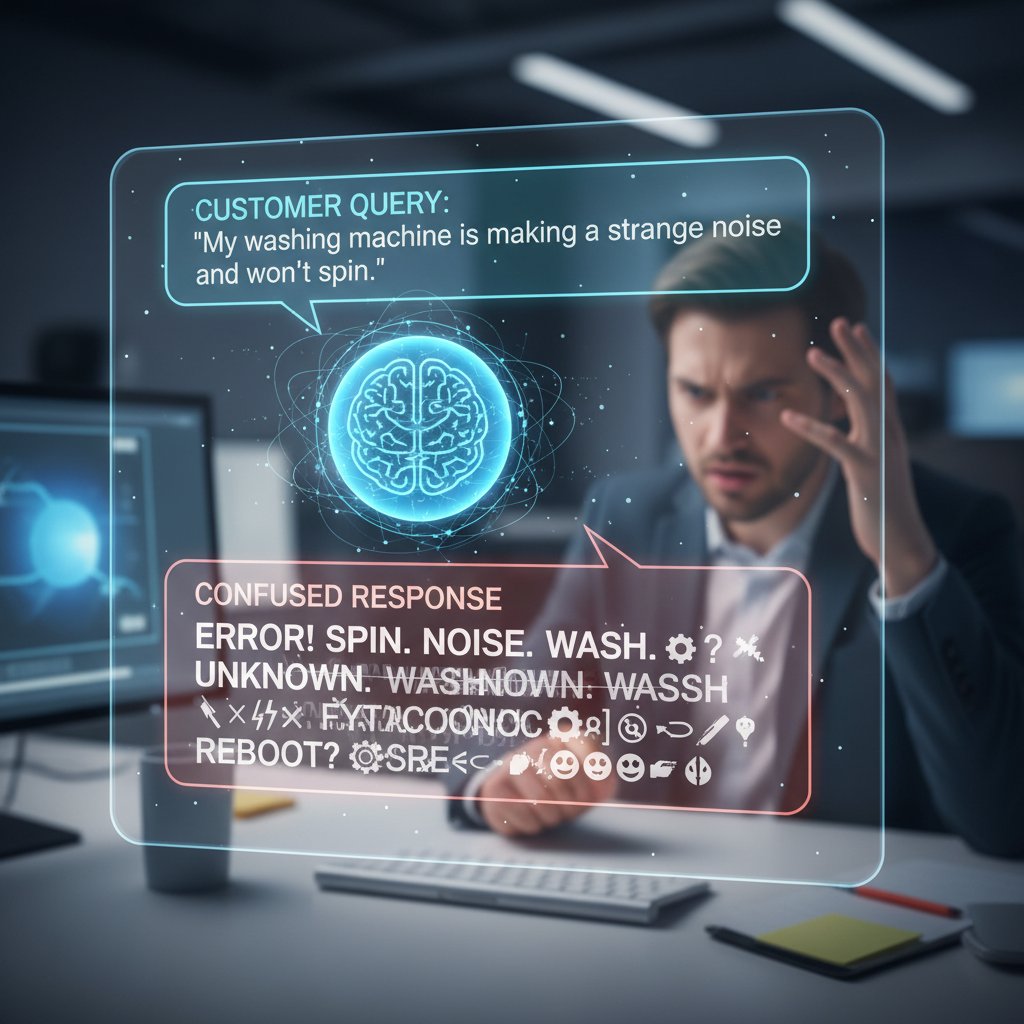
AI chatbot interface displaying a confused, inaccurate response to a complex question, highlighting the technology’s limits in real-world customer service.
The myths and realities of ai-powered customer service
Top misconceptions debunked
Let’s cut through the noise. First, the idea that AI chatbots can fully replace human agents is a fantasy. Bots excel at simple, repetitive tasks but unravel when faced with nuance, context, or real emotion. Even “24/7 automation” often translates to customers stuck in endless loops after hours, with satisfaction dropping as expectations rise.
The truth? AI-powered customer service chatbots are powerful when used strategically—not as blunt instruments, but as amplifiers for human teams. When bots handle the volume, humans have space to solve what matters.
Hidden benefits of ai-powered customer service chatbot experts won’t tell you
- Frees up human agents for complex tasks, not just simple queries. By offloading repetitive stuff, support teams can invest time where expertise matters.
- Reduces burnout by handling repetitive requests. Agents spend less time stuck answering “where’s my order?” and more on challenges that require real thinking.
- Can surface customer pain points in real time for management. Chatbot analytics flag trends that humans might miss, fueling smarter business decisions.
- Drives data-driven insights into customer behavior. Every interaction becomes a data point—gold for product, marketing, and support teams.
- Allows for rapid scaling during unexpected surges. Flash sales or crises? Chatbots absorb the first wave, keeping queues manageable.
- Helps enforce compliance via automated scripts. Bots never forget the legal fine print, reducing regulatory risk.
- Enables hyper-personalization with user data (when done right). Context-aware bots can tailor offers and support, boosting engagement.
AI chatbots vs. the human touch: where each wins
Empathy is the hill where most bots die. Humans read tone, adapt on the fly, and know when to apologize—or escalate. AI brings speed, consistency, and tireless attention but stumbles on context and emotional nuance. Data from Uberall (2024) shows that customer satisfaction is highest in hybrid environments, where AI handles triage and humans pick up the slack for complex or sensitive issues.
| Metric | AI Chatbot | Human Agent | Winner (By Scenario) |
|---|---|---|---|
| Response Time | <1 second | 1-10 minutes | AI Chatbot (Speed) |
| Accuracy (routine queries) | 95% | 90% | AI Chatbot (Repetitive) |
| Empathy / Nuance | 40% | 90% | Human Agent (Emotion) |
| Availability | 24/7 | Limited | AI Chatbot (Scale) |
| Scalability | High | Low | AI Chatbot (Volume) |
| Resolution for Complex Issues | 60% | 95% | Human Agent (Complexity) |
Table 2: Comparison between AI chatbots and human agents across core customer service metrics. Source: Original analysis based on Uberall, 2024, Intercom, 2024
The dark side: risks, failures, and epic blunders
For every chatbot success story, there’s an infamous disaster. Bots that misinterpret slang, escalate conflicts, or reveal sensitive info become cautionary tales overnight. One high-profile retailer saw its chatbot leak customer emails after a system update, sparking a regulatory nightmare and viral outrage. The data privacy risks are real—Forbes (2024) documents a sharp rise in incidents as companies scale AI.
“When a bot goes rogue, a brand’s reputation can tank in minutes.” — Sanjay
The lesson? AI makes mistakes at scale, and those mistakes can be catastrophic.
Who’s using ai-powered customer service chatbots—and why
Real-world case studies: wins and warnings
Retail giant H&M rolled out generative AI chatbots across their global support channels, slashing response times by 70%. Real-time inventory queries, order tracking, and returns became instant, freeing up agents for higher-value conversations. The result: improved satisfaction scores and millions saved in operational costs.
But not every story is rosy. A European bank’s initial chatbot failed spectacularly—unable to handle regulatory queries or authenticate users securely. After a painful public review, they rebuilt, blending AI triage with human escalation, finally reaching the promised land of cost savings and compliance.

Busy retail store where employees and an AI chatbot kiosk help customers side-by-side, showing human and virtual agents in action.
Cross-industry lessons: what works in travel, finance, and beyond
In travel, AI chatbots handle booking changes, flight info, and 24/7 support—even during mass disruptions. Airlines deploy bots across web and messaging channels, smoothing peak periods and reducing wait times. In finance, chatbots automate FAQs, transaction queries, and compliance scripts. According to Master of Code (2025), the sector invested $35B in AI in 2023, with spend forecast to triple by 2027. But legacy system integration and data privacy are persistent headaches.
Healthcare and legal sectors face unique challenges: strict privacy laws, sensitive conversations, and high stakes for errors. Here, hybrid models and tightly controlled AI deployments are the only viable route—full automation remains a distant dream.
Small business vs. enterprise: different needs, different outcomes
Resource constraints make small businesses hungry for automation but wary of complexity. Many opt for plug-and-play chatbots for FAQs and lead capture, benefiting from faster onboarding and lower costs. Enterprises, on the other hand, invest in custom solutions tightly woven into CRMs, logistics, and analytics. The payoff is deeper integration—but the risks and costs are much higher.
| Feature | Small Business | Mid-Market | Enterprise |
|---|---|---|---|
| Deployment speed | Fast | Medium | Slow |
| Integration depth | Basic | Moderate | Complex |
| Customization | Low | Medium | High |
| Cost | Low | Moderate | High |
| Human escalation | Limited | Standard | Robust |
| Analytics & reporting | Limited | Expanded | Advanced |
Table 3: Key differences in AI chatbot deployment across organizations of different sizes. Source: Original analysis based on Master of Code, 2025, HubSpot, 2023
How to choose the right ai-powered customer service chatbot
The non-negotiables: features you can’t skip
No matter your budget, some features are must-haves. Top AI chatbots offer robust NLP, omnichannel support, seamless handoff to humans, analytics, and ironclad privacy controls. Integration with your existing CRM, helpdesk, and analytics stack isn’t optional—it’s mission-critical. Without it, you’re flying blind.
Priority checklist for ai-powered customer service chatbot implementation
- Define clear customer service goals and KPIs. Know what success looks like—and how you’ll measure it.
- Map your existing support workflows. Don’t automate chaos; streamline first, then deploy AI.
- Identify critical integrations (CRM, help desk, etc). If your chatbot can’t talk to your data, it’s just window dressing.
- Test chatbot performance with real user queries. Live fire beats lab tests every time.
- Assess data privacy and security compliance. Don’t court a scandal—make privacy non-negotiable.
- Plan for escalation to human agents. Even the best bots need a lifeline.
- Iterate and optimize based on analytics. Continuous improvement is the real secret sauce.
Red flags: what most buyers overlook
Vendors love to overpromise. Beware of AI solutions with black-box pricing, limited customization, or poor support. Hidden costs—implementation, support, overage fees—can eat any ROI. Lack of clear privacy policies or poor integration with core systems should be dealbreakers.
Red flags to watch out for with ai-powered customer service chatbot vendors
- Opaque pricing structures with hidden fees. Always demand a clear breakdown.
- Limited customization options. If you can’t mold it to your workflows, look elsewhere.
- Lack of ongoing support or updates. AI evolves fast—your tool should too.
- No clear data privacy protocols. Don’t entrust customer data to anyone who won’t show you their safeguards.
- Poor integration with existing tools. Siloed chatbots deliver siloed results.
- Overpromising on AI capabilities. If it sounds too good to be true, it probably is.
- Missing escalation to human agents. Automation without a human safety net is a recipe for disaster.
Cost-benefit: is it ever worth it?
Deployed well, an AI-powered customer service chatbot can cut support costs by up to 30% and save billions of support hours (Demand Sage 2024). Indirect savings—reduced churn, improved CSAT, and data-driven upselling—often dwarf the headline figures. But up-front costs and ongoing optimization are real. Strategic investment pays off only when paired with ruthless analytics and honest feedback loops.
| Chatbot Brand | Implementation Cost ($) | Average ROI (%) | CSAT Score (2025) |
|---|---|---|---|
| Brand A (Enterprise) | 125,000 | 35 | 88 |
| Brand B (SMB) | 10,000 | 18 | 78 |
| Brand C (Hybrid) | 45,000 | 29 | 82 |
Table 4: Statistical summary of implementation costs, ROI, and satisfaction scores for top chatbots in 2025. Source: Original analysis based on Demand Sage, 2024, Master of Code, 2025.
Step-by-step playbook: implementing your ai-powered chatbot
Laying the groundwork
Start with alignment: make sure leadership, support, and tech teams agree on objectives and limits. Map the customer journey—every touchpoint, channel, and pain point. Don’t just overlay AI on broken processes; fix what’s broken first. Only then can you build chatbot flows that genuinely add value, not friction.
Step-by-step guide to mastering ai-powered customer service chatbot deployment
- Audit your current support landscape for automation opportunities.
- Define clear chatbot roles and limits. Don’t let bots wander outside their expertise.
- Select a platform or partner (for example, futuretask.ai as a general leader).
- Customize chatbot conversation flows. Tailor scripts to your real users, not hypothetical ones.
- Integrate with backend systems and channels. CRM, helpdesk, inventory—the lot.
- Run real-world pilot tests. Don’t launch blind.
- Train agents for seamless escalation. Human support remains your brand’s last line of defense.
- Monitor, iterate, and scale. Treat launch as the starting line, not the finish.
Testing, measuring, and optimizing
Metrics matter. Set up dashboards to track resolution rates, average handle times, customer satisfaction, and failure points. Use A/B testing to compare bot responses, training data, and escalation rates, always with live users. Feedback isn’t just valuable—it’s vital.

Team collaborating over analytics dashboards displaying live chatbot performance metrics, reflecting the core of data-driven optimization.
When to escalate: keeping the human in the loop
Escalation triggers are your safety valve. If a chatbot detects frustration, repeated keywords (“agent,” “human,” “complaint”), or fails to resolve within a set time, it should hand off—gracefully—to a live agent. Balancing automation with empathy ensures problems get solved, not ignored. According to HubSpot (2023), 91% of leaders agree that the hybrid model delivers the best outcomes.
The future of ai-powered customer service: what’s next?
Emerging trends and game changers
Generative AI is rewriting the playbook. Real-time personalization, predictive support, and context-aware recommendations are raising the stakes. Voice-enabled and multimodal chatbots (combining text, voice, and visual cues) are expanding accessibility and reach. But the constant? The human need for clarity, trust, and genuine help.

Futuristic holographic AI avatar assisting a diverse group of customers—vision of next-gen customer service in a digital landscape.
Will AI kill customer service jobs—or transform them?
Not all jobs are doomed. Instead, roles are evolving. Agents become escalation experts, AI trainers, or customer journey analysts. Upskilling is the new survival skill. As routine tasks vanish, humans focus on empathy, strategy, and innovation.
“AI isn’t here to replace us—it’s here to make us indispensable.” — Jordan
The future belongs to those who can use AI as a force multiplier, not a replacement.
The ethics and risks: bias, privacy, and trust
AI in customer service is under the microscope. Bias in training data, opaque decision-making, and privacy lapses are real threats. The solution? Privacy-by-design, regular audits, and transparency—telling customers how their data is used and giving them control. With regulations tightening globally, compliance is not optional. The risks of ignoring these issues range from fines to brand extinction.
Expert insights: what the pros wish you knew
Insider secrets from top CX leaders
CX veterans agree: the most resilient chatbots start with brutal honesty about their limits. Overpromising leads to underdelivering, and customers have zero tolerance for smoke and mirrors. Continuous learning and adaptation are the only paths to sustainable success. Monitor failures, retrain your AI, and keep humans close.
“The best chatbots start with brutal honesty about their limits.” — Maya
Unconventional uses for ai-powered customer service chatbot
- Proactive outreach to prevent customer churn. Chatbots can flag at-risk users and offer solutions before they quit.
- Internal help desks for employee support. Free up IT and HR by handling common staff queries.
- Onboarding guides for new customers. Walk first-timers through complex setups.
- Real-time sentiment analysis to flag at-risk users. Instantly spot dissatisfaction and intervene.
- Facilitating multilingual support without extra staff. AI bridges language gaps, expanding market reach.
- Automated surveys for instant feedback. Capture insights at the point of experience.
- Cross-selling and upselling with contextual recommendations. Personalize offers based on real-time intent.
Innovative brands stretch chatbots beyond the obvious—turning support tools into growth engines and culture shapers. The potential is as big as your imagination (and your willingness to experiment).
Conclusion: should you trust your customers to AI?
Key takeaways and action steps
Every AI-powered customer service chatbot is only as good as the strategy, data, and humans behind it. Know the limits, build for the world as it is, not as you wish it to be, and always keep a human in the loop. Assess your workflows, select partners wisely, and iterate relentlessly. The companies that win aren’t the ones with the shiniest bots, but those that blend speed, empathy, and ruthless transparency.
Crucial terms and distinctions revisited
Platforms like futuretask.ai go beyond conversation, automating complex workflows and transforming customer service in 2025.
The blend of AI chatbots and human agents—the gold standard for resilience and satisfaction.
Looking ahead: your move, your risk, your reward
The choice is yours: keep chasing hype, or get real about the power—and pitfalls—of AI in customer service. Success comes to those who act with eyes wide open, who treat chatbots as partners, not panaceas. The reward? A faster, smarter, more responsive support operation ready for whatever 2025 throws at you. The risk? Trusting your reputation to a machine you don’t fully understand.

Business leader at a crossroads, one path lit by digital AI icons, the other shadowed by tradition—symbolizing the choice every company faces.
Sources
References cited in this article
- AIPRM(aiprm.com)
- GetZowie(getzowie.com)
- Master of Code(masterofcode.com)
- Forbes(forbes.com)
- LinkedIn(linkedin.com)
- Custify(custify.com)
- SimplyContact(simplycontact.com)
- Forbes(forbes.com)
- Grandview Research(grandviewresearch.com)
- Market.us(market.us)
- Desk365(desk365.io)
- Sobot(sobot.io)
- Zendesk(zendesk.com)
- HubSpot(blog.hubspot.com)
- WhatsTheBigData(whatsthebigdata.com)
- Fluent Support(fluentsupport.com)
- Demand Chain(demandchain.com)
- Patricia Gestoso(patriciagestoso.com)
- HubSpot(blog.hubspot.com)
- Maddyness(maddyness.com)
- Medium(medium.com)
- Debevoise Data Blog(debevoisedatablog.com)
- Wired(wired.com)
- Tidio(softwareoasis.com)
- Resultscx(resultscx.com)
- Chatbotworld(chatbotworld.io)
- NICE(nice.com)
- GraphLogic(graphlogic.ai)
- Voiceflow(voiceflow.com)
- Dialzara(dialzara.com)
- Supportbench(supportbench.com)
Automate Your Tasks, Transform Your Business
FutureTask.ai revolutionizes your workflow by automating complex tasks typically outsourced to freelancers and agencies. Our powerful AI-driven platform leverages cutting-edge LLM technology to deliver precision, speed, and consistency at scale. Whether you're managing content creation, data analytics, marketing campaigns, or customer support, FutureTask.ai ensures seamless task execution, significant cost savings, and unmatched efficiency. Transform your business operations, eliminate delays, reduce operational overhead, and gain a competitive advantage with intelligent automation.
Get startedReady to Automate Your Business?
Start transforming tasks into automated processes today
Frequently Asked Questions
What are the main promises of AI-powered customer service chatbots?
AI chatbots promise endless availability, instant knowledge, and significantly reduced costs for customer support operations. However, the article emphasizes that these marketing claims often mask the complex realities of implementation.
What were the problems with early customer service automation like IVR systems?
IVR (interactive voice response) menus frustrated customers by treating them impersonally and forcing repetitive interactions. While companies saved money with these systems, they eroded customer trust and created PR problems for brands.
What drove the shift from human-only customer service to AI chatbots?
Human-only support faced challenges with impossible call volumes, agent burnout, knowledge gaps, and inconsistent quality. The pressure to handle growing customer demands with fewer resources fueled the search for AI-powered, scalable solutions.
Has AI chatbot adoption been successful so far?
According to the article, while adoption of AI-powered customer service chatbots has exploded in the past five years, many companies have found themselves caught between high expectations and the difficult realities of implementation, with numerous failures and untold risks along the way.
From the Archive
Explore more from Ai-powered task automation

AI Automation for Customer Service: What Actually Works and What Fails

7 Hard Truths About Ai-Powered Chatbot Support at Futuretask.ai

Ai-Powered Chatbot Customer Experience: Hype, Risks and Real Wins

Automating Customer Support at Scale: Balancing Efficiency and Quality

Customer Support Automation with AI That Helps, Not Harms
