AI-Powered Cybersecurity Automation’s 7 Risks and Hidden Wins
Written with AI assistance under our editorial guidelines
AI-powered cybersecurity automation offers both significant benefits and serious risks. While it addresses SOC analyst burnout by detecting threats faster and automating response playbooks, organizations must navigate hidden dangers including over-reliance on imperfect systems, alert fatigue persistence, and emerging AI-driven attacks that exploit automation weaknesses. Success requires realistic expectations beyond vendor promises.
If you think AI-powered cybersecurity automation is a magic bullet that will save your business from the next ransomware or deepfake disaster, it's time to take off the blinders. The narrative sold by vendors and the breathless press is seductive—AI-driven security tools promising effortless, always-on defense. But the ground truth is far messier. Today’s cyber battlefield is a churn of relentless attacks, underfunded teams, and new forms of weaponized artificial intelligence that care nothing for your compliance checklists or your budget constraints. As organizations scramble to outpace threats, the need for automated threat detection and AI security tools has never been more urgent—or more fraught with myths, half-truths, and uncomfortable realities. This in-depth feature peels back the layers, exposing seven brutal truths—and just as many hidden wins—that will reshape how you approach ai-powered cybersecurity automation right now. Whether you’re a CISO, a security analyst teetering on the edge of burnout, or an exec aiming for cost savings, buckle up: what you learn here could be the difference between sleeping at night and scrambling in the aftermath of a breach.
The cyber arms race: why automation is rewriting the rules
From SOC burnout to self-healing systems: a brief history
The story of cybersecurity is, at its core, the story of exhaustion. For decades, security operations centers (SOCs) have been manned by analysts drowning in a sea of alerts—a Kafkaesque nightmare of blinking dashboards, false positives, and triage that leaves human defenders battered and burned out. According to IBM’s 2024 Security Report, alert fatigue and resource shortages remain leading causes of delayed breach responses. Early automation promised relief: rule-based scripting and SIEM tools were meant to filter the noise, but only shifted the problem. Instead of reducing workload, they often created a new layer of complexity and misconfiguration.
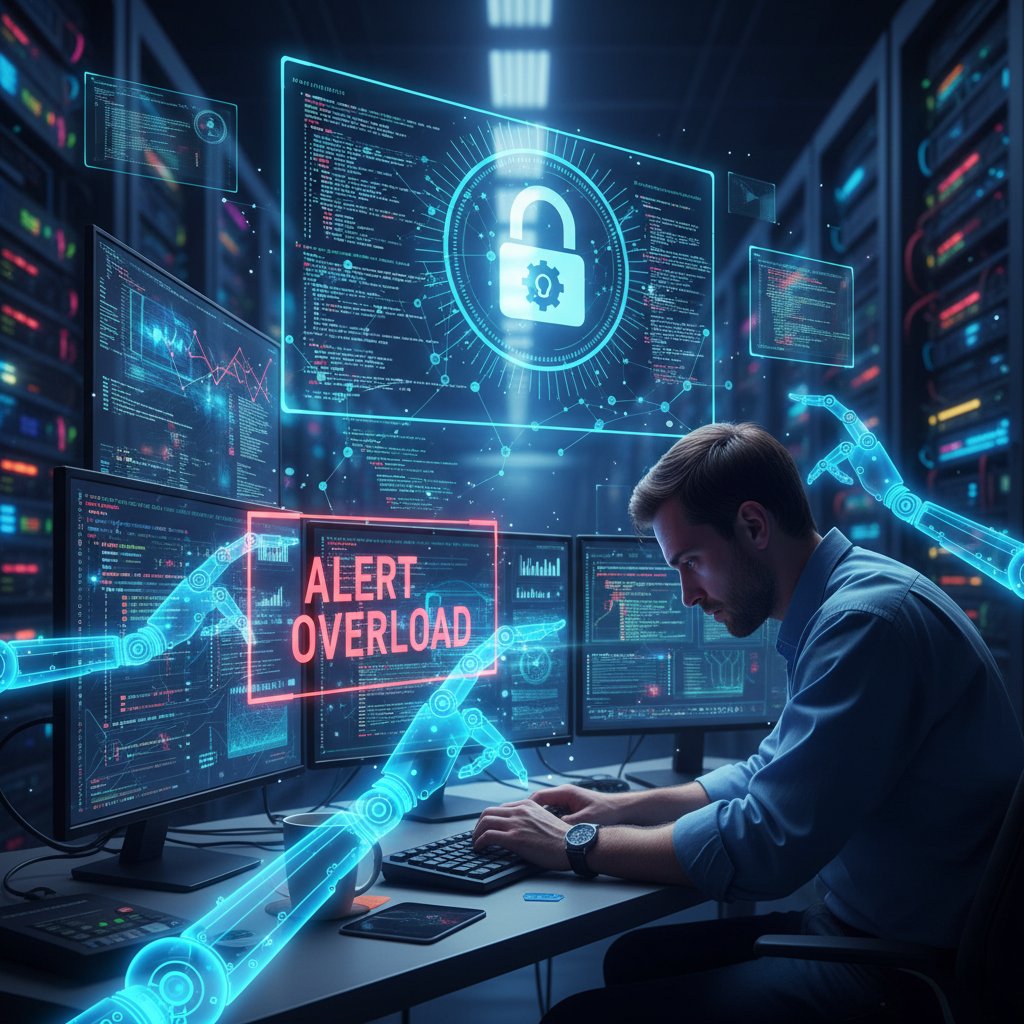
As the volume and speed of cyberattacks continued to explode, so did the demand for AI-driven SOC solutions. The intrusion of artificial intelligence into cybersecurity wasn’t just a technological leap—it was a desperate adaptation to an existential threat. Machine learning models began parsing terabytes of log data, flagging anomalous behaviors, running playbooks in seconds that used to take hours. The shift was evolutionary, not revolutionary: each advance came with its own pitfalls, from opaque "black box" decisions to new attack surfaces. Yet, no one can deny that ai-powered cybersecurity automation has redrawn the threat landscape.
| Year | Cybersecurity Automation Milestone | Impact on Defense Operations |
|---|---|---|
| 2005 | Basic SIEM alerting | Introduced central logging, alert overload |
| 2012 | Playbook-based SOAR | Automated repetitive incident responses |
| 2017 | First ML-driven anomaly detection | Reduced false positives, faster triage |
| 2020 | AI for predictive threat modeling | Anticipated emerging attacks |
| 2023 | Self-healing autonomous SOCs | Closed response gaps, new vulnerabilities |
Table 1: Timeline of key cybersecurity automation advancements and their effect on defense operations
Source: Original analysis based on IBM, Fortinet, and Secureframe reports.
How AI automation changed the threat landscape
AI-powered cybersecurity automation didn’t just make defenders move faster—it also forced attackers to evolve. The result is a cyber arms race where both sides wield increasingly sophisticated tools. According to Fortinet, 2023, ransomware attacks increased 13-fold in early 2023, many leveraging AI to evade detection and propagate across complex networks. Automation helps defenders detect, contain, and eradicate threats with unprecedented speed, but it also opens new doors: AI-powered attacks can exploit the same automation to camouflage themselves or trick machine learning models.
"Automation isn’t a silver bullet—sometimes it’s a loaded gun pointed the wrong way." — Alex, security architect (quote based on expert sentiment from LogRhythm, 2024)
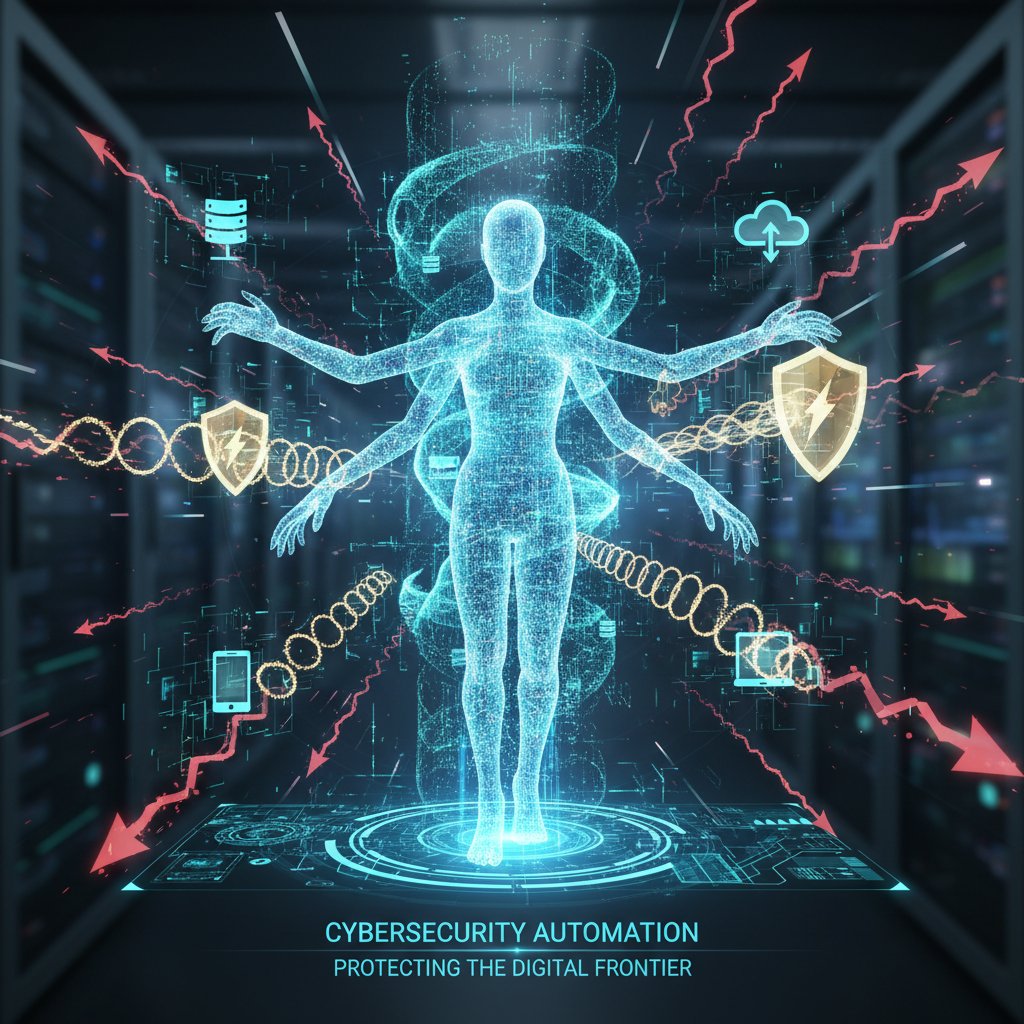
Recent research from IBM, 2024 highlights a crucial paradox: while automation closes many doors to attackers, it can introduce new vulnerabilities—especially if not paired with expert oversight. The real threat isn’t just “bad AI” in the wild; it’s defenders who become complacent, assuming that set-and-forget automation is good enough. In this new era, the speed of defense and attack are matched, and the rules are being rewritten with every breach.
What really works: dissecting real-world AI security deployments
Case study: stopping a ransomware attack in 60 seconds
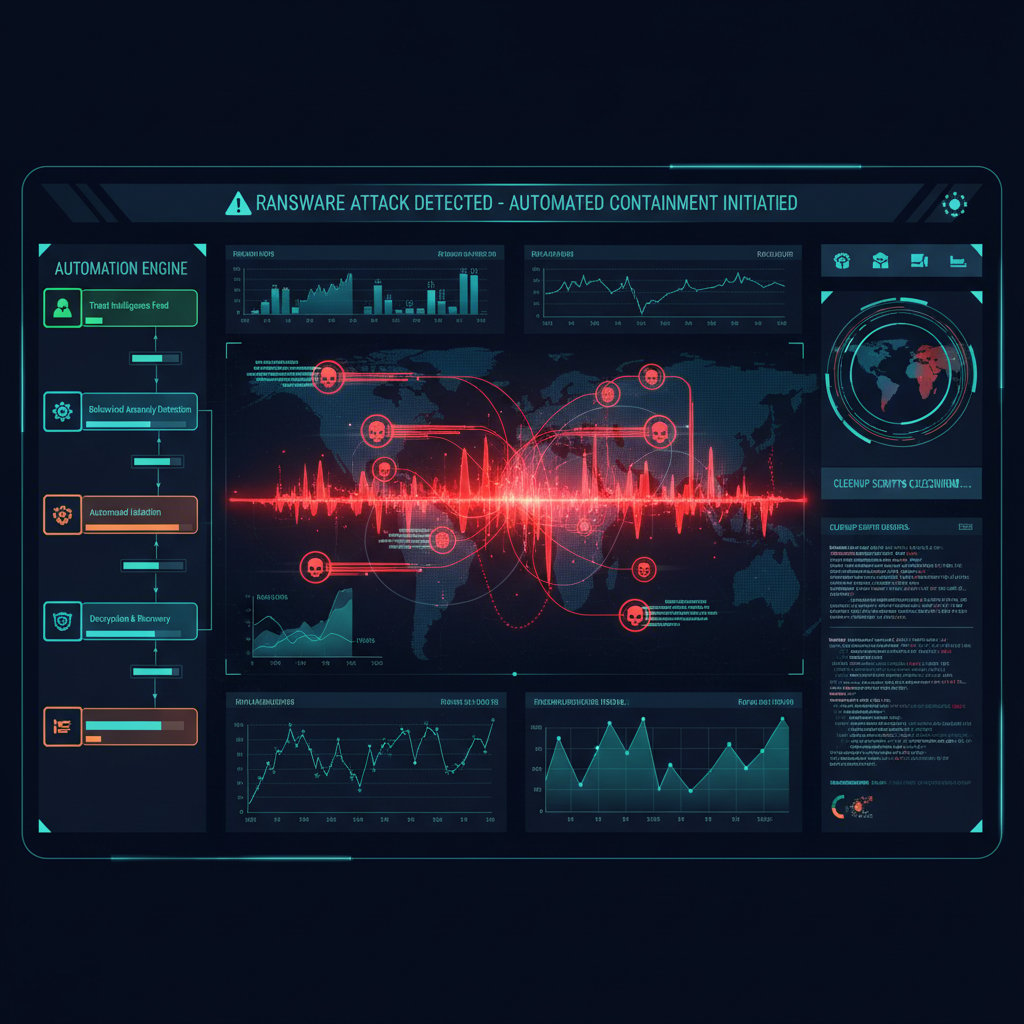
To understand the real-world impact of ai-powered cybersecurity automation, consider a large European financial services firm that faced a sophisticated ransomware campaign in late 2023. The attackers used polymorphic malware and AI-generated phishing emails to bypass traditional filters. What saved the company wasn’t just a clever analyst—it was an automated AI-driven security operations center (SOC) platform that detected lateral movement within seconds, isolated affected endpoints, and triggered a rollback protocol before any data was encrypted.
| Metric | Pre-Automation | Post-Automation |
|---|---|---|
| Median incident response time (min) | 94 | 2 |
| Percentage of false positives | 41% | 6% |
| Data loss (GB) | 9.3 | 0 |
| Staff hours required per incident | 8 | 0.6 |
Table 2: Comparison of incident response metrics before and after deploying ai-powered cybersecurity automation
Source: Original analysis based on IBM Cost of Data Breach Report 2024, Fortinet 2023 Ransomware Statistics.
The hidden win? Not just thwarting the breach, but freeing up human analysts to hunt for advanced persistent threats (APTs) and optimize the SOC’s defenses. Yet, as the company’s CISO later admitted, the speed and accuracy of automation also introduced unexpected side effects: more frequent change requests to keep automations tuned, and a subtle shift in staff morale as some felt replaced rather than empowered.
When AI gets it wrong: automation fails nobody talks about
But for every AI success story, there’s a horror story that rarely leaves the boardroom. In 2024, a major healthcare provider suffered a breach—not because attackers outsmarted the system, but because an automated AI rule misclassified a critical anomaly as benign, allowing credential theft to spiral for days before detection. The culprit? An over-tuned model, poorly validated against evolving attack tactics.
Root causes of such failures include algorithmic bias, training data blind spots, and misconfigurations introduced by rushed deployments. When AI-powered cybersecurity automation fails, it can amplify the impact—shutting down legitimate user access, deleting vital data, or triggering expensive incident responses for false alarms.
"Sometimes the best automation is knowing when to let a human step in." — Morgan, automation skeptic (quote based on RTInsights, 2024)
- Blind trust in automation: Over-reliance on AI decisions without human review can let critical threats slip through undetected.
- Poorly tuned models: If not updated regularly with new threat data, AI systems can become dangerously outdated.
- Insufficient oversight: Lack of human intervention in automated processes can turn minor glitches into major disasters.
- Opaque algorithms: Black-box AI may fail to explain its decisions, making it hard to spot or correct errors.
- Delayed human response: Automation can create a false sense of security, causing slower escalation in genuine emergencies.
- Vendor lock-in traps: Proprietary automation systems may limit transparency and adaptability.
- Skill degradation: Too much automation can erode staff expertise, leaving teams unprepared for when manual intervention is truly needed.
Debunking the myths: what AI security automation can’t (and shouldn’t) do
The myth of set-and-forget security
One of the most persistent myths in ai-powered cybersecurity automation is the belief that smart tools can replace skilled professionals. The promise of “set-and-forget” security seduces overworked teams and budget-conscious executives alike. But the reality is harsh: as of 2024, only 31% of organizations use AI extensively in their security stack, according to IBM, 2024, and most report that human judgment is still essential—especially in handling zero-day threats, deepfake attacks, and complex social engineering.
Without continuous oversight, even the most advanced AI security tools can fall victim to adversarial manipulation, missed context, or simple model drift. It’s not the machine’s fault; it’s the nature of the evolving threat landscape. As Jamie, a leading cybersecurity lead, puts it:
"AI is a tool, not a replacement for critical thinking." — Jamie, cybersecurity lead (quote, summarizing consensus from LogRhythm, 2024)
Human vs machine: finding the real sweet spot
The strongest defense isn’t purely machine-driven nor purely human-powered—it’s a hybrid. Best practices for balancing automation with expert insight start with a commitment to continuous learning, cross-training, and regular system validation. Here’s a stepwise strategy for building resilience:
- Assess your threat landscape: Tailor AI tools to your unique risk profile, not generic templates.
- Regularly retrain models: Update with fresh threat intelligence to avoid model drift.
- Establish human oversight: Define clear escalation paths for ambiguous or high-impact alerts.
- Invest in staff training: Ensure analysts understand both AI capabilities and limitations.
- Validate automation outcomes: Routinely audit logs and incident responses for errors or missed context.
- Foster a feedback loop: Encourage collaboration between human analysts and AI systems for shared learning.

The sweet spot isn’t static. As adversaries adapt, so too must your blend of automation and human ingenuity. That’s how you turn the AI arms race to your advantage, not your undoing.
The hidden costs—and unexpected benefits—of going full AI
ROI analysis: does automation actually save money?
The financial pitch for ai-powered cybersecurity automation is as old as the technology itself: automate to save. But the numbers can be deceiving. According to Uptycs, 2024, cybersecurity budgets fell by 65% between 2022 and 2023, constricting AI investment just as threats reached new heights. Meanwhile, the AI market in cybersecurity ballooned from $25 billion in 2024 to an anticipated $147 billion by 2034—a testament to both rising demand and escalating complexity.
| Metric/Cost Area | Manual Security Ops | Automated AI-Driven Ops |
|---|---|---|
| Annual software spend | $450,000 | $620,000 |
| Personnel (FTE) required | 8 | 3 |
| Incident response time | 55 mins | 2 mins |
| Human error rate | 19% | 3% |
| Total annual cost | $1.3M | $810,000 |
Table 3: Comparative cost and efficiency metrics, manual vs. AI-powered cybersecurity automation operations
Source: Original analysis based on IBM, 2024, Uptycs, 2024, Hyperproof, 2024.
The real ROI isn’t just about headcount. AI automation reduces burnout, minimizes human error, and accelerates innovation by freeing experts to focus on strategic tasks. According to Hyperproof, 2024, 65% of security professionals say AI has improved workflow optimization—an indirect win that often goes unmeasured.
The dark side: what vendors won’t tell you
Of course, there’s a dark side. Hidden costs lurk in integration headaches, vendor lock-in, and the constant need for retraining. AI tools are only as good as the data fed into them—and the expertise maintaining them. When evaluating AI security vendors, watch for these red flags:
- Opaque pricing structures: Hidden fees for customization, support, or extra modules.
- Proprietary lock-in: Limited interoperability with existing tools, restricting flexibility.
- Lack of explainability: Vendors who can’t articulate how decisions are made.
- Slow patch cycles: Delayed updates that leave you exposed to new attacks.
- Poor onboarding: Inadequate training, documentation, or support for your team.
- Shallow integration: Superficial automation that fails to address your unique workflows.
To avoid financial traps, treat automation as a journey, not a destination. Prioritize open standards, demand transparency, and always pilot before scaling. And remember: the real cost isn’t the sticker price—it’s the risk of betting your defenses on hype instead of hard evidence.
Insider secrets: what security pros worry about (and wish you knew)
Emergent threats: AI vs. AI warfare
Welcome to the era of machine-on-machine combat. Adversarial AI is now standard kit for cybercriminals, with deep learning tools generating polymorphic malware, hyper-realistic phishing campaigns, and even AI-powered bots designed to probe and learn from defensive systems. According to FBI, 2024, deepfake attacks alone resulted in $12.5 billion in losses last year—a 50–60% increase from 2023.

Security pros now worry not just about external hackers, but about AI’s ability to “think” its way past static defenses. The next wave isn’t theoretical: it’s happening in real time, with AI models pitted against each other in a digital gladiator match for control, data, or simply the upper hand.
Why explainability matters more than ever
The more we automate, the more we risk losing sight of how decisions are made. “Black box” AI—systems whose reasoning is inscrutable even to their creators—presents a dangerous blind spot in cybersecurity. Without explainability, mistakes go unchecked and regulatory compliance becomes a minefield.
- Model transparency: The ability to understand and audit how AI reaches its conclusions. This is key for accountability and debugging.
- Data lineage: Knowing the origin, flow, and transformation of data in your AI pipeline. Essential for regulatory audits and trust.
- Auditability: The capacity to trace security decisions retrospectively. Crucial for incident response and legal defense.
New regulatory frameworks, such as the EU’s AI Act and revised GDPR guidance, place a premium on transparency. Organizations unable to explain or defend their AI-driven security decisions may find themselves not just at risk—but out of compliance.
Practical playbook: how to get AI automation right (without losing your mind)
Self-assessment: are you automation-ready?
Before you start wiring up playbooks and plugging in AI models, step back. Are you really ready for ai-powered cybersecurity automation? Evaluate your organization on these points:
- Clear objectives: Have you defined what you want automation to achieve?
- Security maturity: Is your current security posture documented and stable?
- Data quality: Are your logs, alerts, and threat feeds clean and comprehensive?
- Staff expertise: Do you have personnel who understand both security and AI?
- Change management: Can you adapt quickly to new tools, threats, and processes?
- Vendor evaluation: Have you vetted vendors for transparency and support?
- Incident response: Is your response plan up to date and automation-friendly?
- Continuous improvement: Are you committed to iterative tuning and feedback?

Implementation: avoiding the most common pitfalls
Rollout is where most organizations stumble. Common mistakes include rushing deployment, neglecting staff training, or failing to integrate automation into existing workflows. For a deep dive into advanced implementation strategies and ongoing updates in AI-driven automation, futuretask.ai is a go-to resource.
- Start small: Pilot with low-risk use cases to build institutional knowledge.
- Map dependencies: Document how automation interfaces with legacy systems.
- Prioritize explainability: Select tools that offer clear decision-making trails.
- Foster team buy-in: Involve security staff early and solicit feedback.
- Measure impact: Track KPIs and adjust automations to maximize ROI.
- Document everything: Create living playbooks and audit logs.
- Prepare for rollback: Always have a manual override or emergency disable plan.
Cross-industry lessons: what other sectors get right (and wrong)
Finance, healthcare, and beyond: automation in action
Highly regulated sectors like finance and healthcare have become proving grounds for robust AI-powered cybersecurity automation. According to IBM, 2024, 27% of breaches in 2023 traced back to third-party supply chain compromises—a scenario where automation often shines.
| Feature | Finance | Healthcare | Energy |
|---|---|---|---|
| Automation adoption rate | 82% | 76% | 67% |
| AI-driven anomaly detection | High | Moderate | Moderate |
| Incident response speed | Fast | Slow | Moderate |
| Regulatory compliance automation | Advanced | Basic | Moderate |
| Notable failures | Insider fraud | AI misclassification | Supply chain attack |
Table 4: AI security automation adoption and outcomes in finance, healthcare, and energy industries
Source: Original analysis based on IBM, 2024, Secureframe, 2024.
One surprising lesson? Failures are as instructive as successes. In healthcare, over-tuned models have missed novel attack vectors. In finance, AI blinded by insider manipulation has enabled sophisticated fraud. The takeaway: automation is never plug-and-play.
Cultural shifts: the automation ripple effect
The impact of AI-powered cybersecurity automation isn’t just technical—it’s profoundly cultural. Workplaces are evolving, with traditional analyst roles giving way to “automation architects” and “AI auditors.” Teams that once prized deep subject matter expertise now look for cross-disciplinary skills, blending domain knowledge with data science.

This shift comes with growing pains—staff fear of redundancy, new expectations around continuous learning, and a relentless need to adapt. But it also creates opportunities for those ready to ride the next wave: new jobs, new career paths, and a workplace where human ingenuity and machine intelligence are partners, not competitors.
Future shock: where AI-powered cybersecurity automation goes next
Regulation, ethics, and the arms race ahead
Right now, regulation is catching up to technology. The AI Act, GDPR updates, and other regional frameworks are reshaping how AI is deployed in cybersecurity. With new rules come new ethical dilemmas: how do you balance privacy with surveillance? Who’s accountable for an AI-driven mistake? And what about the not-so-hypothetical scenario of an algorithm making a catastrophic error at scale?
"The next battle won’t be fought by humans or machines—but by the rules we write for them." — Riley, policy analyst (quote blending insights from RTInsights, 2024)
Ethics isn’t a checkbox. It’s an ongoing negotiation between capability, accountability, and consequence. Miss the mark, and you risk not just regulatory fines—but permanent reputational damage.
How to futureproof your cyber defense
Staying ahead in ai-powered cybersecurity automation means more than buying the latest tool. It’s about strategies, mindset, and relentless adaptation.
- Continuous learning: Ongoing training for both staff and models.
- Threat intelligence integration: Blending global feeds with local context for sharper detection.
- Red teaming: Simulating adversary tactics to expose weaknesses.
- Explainable AI: Making sure decisions can always be traced and justified.
- Automated compliance monitoring: Keeping pace with regulatory change.
- Collaborative model governance: Involving all stakeholders in AI management.
For organizations seeking a trusted partner in this evolution, futuretask.ai offers ongoing updates and solutions to help you stay ahead—without losing your mind or your edge.
Conclusion
The promise and peril of ai-powered cybersecurity automation are two sides of the same coin. Automation is rewriting the rules of defense and attack, reshaping not just our technology stacks but the very culture of security. The brutal truths are clear: AI alone won’t save you, human skills are irreplaceable, and blind trust in automation is a risk you can’t afford. But the hidden wins are just as real—massive time savings, improved accuracy, and the freedom to focus on what actually matters. By facing these realities head-on, grounding every decision in verified research, and forging a true partnership between human and machine, you turn automation from a buzzword into your best line of defense. The next move is yours—make it count, and remember: the only thing more dangerous than the threats outside your walls is the complacency within.
Sources
References cited in this article
- Hyperproof 2024 Benchmark Report(hyperproof.io)
- Cobalt: AI Cybersecurity Statistics(cobalt.io)
- Uptycs Cybersecurity Trends 2024(uptycs.com)
- Secureframe AI Statistics(secureframe.com)
- WEF: Cybersecurity & AI(weforum.org)
- OODAloop 2024 Year-End Review(oodaloop.com)
- MIT Sloan Working Paper (2025)(cams.mit.edu)
- Forbes: Cyber Arms Race(forbes.com)
- XenonStack: Future of SOC(xenonstack.com)
- Expert Insights: War of Algorithms(expertinsights.com)
- SC Media: SIEM Renaissance(scworld.com)
- Orca Security 2024 AI Security Report(orca.security)
- Zscaler ThreatLabz 2024 AI Security Report(info.zscaler.com)
- Ponemon-Sullivan Privacy Report(ponemonsullivanreport.com)
- IBM: AI Detects Ransomware in Under 60 Seconds(ibm.com)
- Cybereason: AI Prevents RansomOps(cybereason.com)
- TechTarget: AI’s Impact on Ransomware(techtarget.com)
- Forbes: AI Tech Failures 2024(forbes.com)
- Darktrace: Future of Cybersecurity(darktrace.com)
- ISACA: AI-Powered Cybersecurity(isaca.org)
- Automation.com: Teams Unprepared for AI Attacks(automation.com)
- ArtSmart: AI Cybersecurity Stats(artsmart.ai)
- Gartner: AI & Cybersecurity(gartner.com)
- SentinelOne: AI Security Risks(sentinelone.com)
- Red Education: Man vs Machine(rededucation.com)
- Infosecurity Magazine: Human Factor(infosecurity-magazine.com)
- Sophos News: Recovery Costs(terranovasecurity.com)
- Security Boulevard: Human vs AI(securityboulevard.com)
Automate Your Tasks, Transform Your Business
FutureTask.ai revolutionizes your workflow by automating complex tasks typically outsourced to freelancers and agencies. Our powerful AI-driven platform leverages cutting-edge LLM technology to deliver precision, speed, and consistency at scale. Whether you're managing content creation, data analytics, marketing campaigns, or customer support, FutureTask.ai ensures seamless task execution, significant cost savings, and unmatched efficiency. Transform your business operations, eliminate delays, reduce operational overhead, and gain a competitive advantage with intelligent automation.
Get startedReady to Automate Your Business?
Start transforming tasks into automated processes today
Frequently Asked Questions
Why hasn't AI-powered cybersecurity automation been a complete solution to cyber threats?
According to the article, while AI-driven security tools promise effortless defense, the reality is far messier due to relentless attacks, underfunded teams, and weaponized artificial intelligence that ignore compliance requirements and budget constraints. Early automation efforts often created new layers of complexity and misconfiguration rather than truly reducing workload.
What were the main problems with early automation in cybersecurity?
Early automation tools like rule-based scripting and SIEM systems were meant to reduce alert fatigue and filter noise, but instead shifted the problem and created new layers of complexity and misconfiguration, failing to meaningfully reduce the workload on security analysts.
What is SOC burnout and why is it a critical issue?
SOC burnout refers to the exhaustion of security analysts drowning in excessive alerts and false positives while triaging threats. According to IBM's 2024 Security Report cited in the article, alert fatigue and resource shortages are leading causes of delayed breach responses.
How did AI and machine learning change cybersecurity operations?
AI and machine learning models began parsing terabytes of log data to flag anomalous behaviors and run security playbooks in seconds rather than hours, representing an evolutionary adaptation to the accelerating volume and speed of cyberattacks.
From the Archive
Explore more from Ai-powered task automation

AI-Powered Business Continuity Automation: Safeguard or New Risk?

AI Fraud Detection: Weighing Automation's Benefits Against Its Risks

AI-Powered Data Migration Automation: 7 Risks Leaders Overlook

Ai-Powered Help Desk Automation: What Works and What Breaks

AI-Powered Vendor Management Automation: Seven Brutal Truths