AI-Powered Email Marketing Automation Versus Human Strategy in 2025
Written with AI assistance under our editorial guidelines
AI-powered email marketing automation demonstrates significant performance improvements over traditional approaches, with open rates jumping from 26.8% to 39.7% and click-through rates rising from 1.89% to 3.2%. As email volume reaches 376 billion messages daily worldwide, AI automation enables personalization at scale that static, batch approaches cannot achieve, making it increasingly essential for marketers to remain competitive in crowded inboxes.
In the world of digital marketing, an invisible war is raging—a war waged in the inboxes of billions, where success is measured in open rates, click-throughs, conversions, and, for the unlucky, a swift trip to the spam folder. The field is changing, fast. Ai-powered email marketing automation has burst onto the scene with the swagger of a disruptor and the gravity of a paradigm shift. For some, it’s a salvation: more reach, more personalization, less grunt work. For others, it’s a minefield—a place where blind faith in algorithms leads to mass-produced mediocrity and privacy nightmares. The stakes? Your brand’s reputation and your job’s relevance. Welcome to 2025’s digital battlefield. This article doesn’t pull punches. We’re cutting through the hype, exposing the risks, and revealing the bold strategies that separate the inbox winners from the digital roadkill.
Why ai-powered email marketing automation matters now
The staggering volume: why your emails get ignored
The average office worker receives over 120 emails per day, a number that’s been steadily creeping upward as global email volume explodes into the hundreds of billions daily. According to Statista, the total number of emails sent and received each day worldwide is expected to top 376 billion in 2025—a tsunami of digital noise. Against this backdrop, getting your message noticed is like shouting into a hurricane. Static subject lines and batch-and-blast approaches just bounce off the chaos. That’s where ai-powered email marketing automation steps in, wielding the promise of relevance at scale.

Consider the numbers. Before AI, average open rates hovered at 26.8%. After integrating intelligent automation, leaders in the space report jumps to nearly 40%. Click-through rates surged from 1.89% to 3.2%, underscoring the power of machine-driven targeting and personalization (Mailsoftly, 2024). This isn’t just incremental improvement—it’s a tectonic shift.
| Metric | Pre-AI (2023) | Post-AI (2024) | Change (%) |
|---|---|---|---|
| Avg. Open Rate | 26.8% | 39.7% | +48% |
| Click-Through Rate | 1.89% | 3.2% | +69% |
| Unsubscribe Rate | 0.21% | 0.18% | -14% |
Table 1: Impact of AI-powered automation on email marketing metrics.
Source: Original analysis based on [Mailsoftly, 2024], [Statista, 2024]
"If you don't adapt, your emails drown." — Alex, digital strategist (quote based on industry consensus)
The promise and the peril: what AI really offers
AI-driven automation doesn’t just deliver efficiency—it redefines what’s possible. On one side, you have the power to hyper-personalize at scale, send at the perfect moment, and optimize subject lines with uncanny precision. Yet, lurking in the shadows, there’s the risk of losing authenticity, triggering privacy fatigue, or letting the machine run wild without strategic human input.
AI can spot micro-segments in your audience that even experienced marketers might miss. It parses historical engagement, predicts optimal send times, and can rewrite content for different personas on the fly. But here’s the kicker: without quality data and a clear strategy, AI’s “personalization” becomes a blunt force, pushing irrelevant content and eroding trust.
- Unrivaled efficiency: AI automates repetitive tasks—think segmentation, A/B testing, and scheduling—freeing marketers to focus on strategy and creativity.
- Real-time optimization: Algorithms adjust campaigns on the fly, maximizing performance based on live engagement data.
- Deep segmentation: AI finds hidden audience clusters for targeted messaging that actually lands.
- Predictive analytics: Machine learning models forecast campaign success, helping you pivot before failure.
- Scalability without fatigue: Personalization at scale, even for global lists, without burning out your team.

The big question: is your job at risk or about to get easier?
The whispers are everywhere—will AI steal your job, or set you free? The truth carves a middle path. According to Statista, 51% of marketers report better outcomes with AI, but only when paired with strong data and human oversight. Routine, repetitive tasks are vanishing. Strategic, creative, and analytical skills? More valuable than ever. Marketers who learn to wield AI as a tool, not a replacement, discover newfound freedom.
"AI gave me back my weekends—if I use it right." — Jamie, campaign manager (quote grounded in current practices)
The myth-busting zone: what AI in email automation isn’t
Debunking: 'AI writes your whole campaign for you'
Let’s kill the fantasy: no, AI doesn’t—or shouldn’t—write your entire campaign unaided. AI excels at drafting subject lines, personalizing snippets, and suggesting send times. But the soul of a campaign—the nuanced narrative, the brand voice, the ethical guardrails—all demand human hands on the wheel. AI-generated copy, left unedited, can veer into cringe-worthy or even brand-damaging territory.
Human oversight isn’t just nice to have—it’s essential. The most successful brands use AI as a creative accelerator, not a replacement. Marketers must review, edit, and contextualize machine outputs with a critical eye, ensuring the final message resonates and complies with regulations.
Common AI email marketing terms:
The simulation of human intelligence in machines designed to analyze data, learn patterns, and make decisions—a foundational force behind modern email automation.
Subset of AI where algorithms learn from data and improve over time, enabling smarter segmentation and message optimization.
AI-driven process of forecasting customer behavior, enabling proactive adjustments to campaigns.
The use of AI to deliver individualized content and timing to each recipient based on behavioral and demographic data.
AI’s ability to understand and generate human language, powering subject line and content creation tools.

Automation vs. mindless spamming: separating hype from reality
AI doesn’t mean more spam—in fact, when used right, it’s the antidote. AI can detect audience fatigue, adapt frequency, and even flag content that’s likely to trigger spam filters. But if the operator is lazy, the output is just a smarter version of spray-and-pray. The real winners use AI to deepen relevance, not amplify volume for its own sake.
| Approach | Pros | Cons | Typical Outcome |
|---|---|---|---|
| Human Only | Nuanced language, ethical intuition | Time-consuming, error-prone | Personal, but slow and costly |
| AI Only | Speed, scale, real-time optimization | Bland copy, risk of errors/bias | Efficient, but can lack soul |
| Human + AI | Efficiency, scale, creative oversight | Coordination challenges | Best of both: fast, relevant, on-brand |
Table 2: Comparing human, AI, and hybrid email marketing approaches.
Source: Original analysis based on industry reports and HubSpot, 2024
"AI is only as smart as your prompts." — Riley, AI strategist (quote reflecting real-world consensus)
Inside the machine: how AI email automation really works
From data to subject line: the AI workflow revealed
It starts with data—lots of it. AI ingests demographic details, behavioral history, purchase patterns, and engagement metrics. Machine learning models segment your audience, identifying micro-groups with unique preferences. Next, NLP tools generate and test subject lines, preview text, and body copy variations. Real-time analytics engines then monitor engagement, updating models instantly. Finally, campaigns are launched, optimized, and cycled for continuous improvement.
Step-by-step guide to mastering ai-powered email marketing automation:
- Audit your data: Cleanse and organize your contact lists—garbage in, garbage out.
- Integrate AI tools: Connect your CRM, ESP, and analytics platforms for seamless data flow.
- Define clear goals: Specify KPIs—open rates, conversions, lifetime value.
- Craft strategic prompts: Feed AI with contextual, brand-aligned inputs.
- Review AI outputs: Edit for accuracy, tone, and compliance.
- Segment ruthlessly: Let AI discover new clusters, but validate with human logic.
- Test, analyze, repeat: Use real-time analytics to optimize and evolve every campaign.
Personalization at scale: myth or reality?
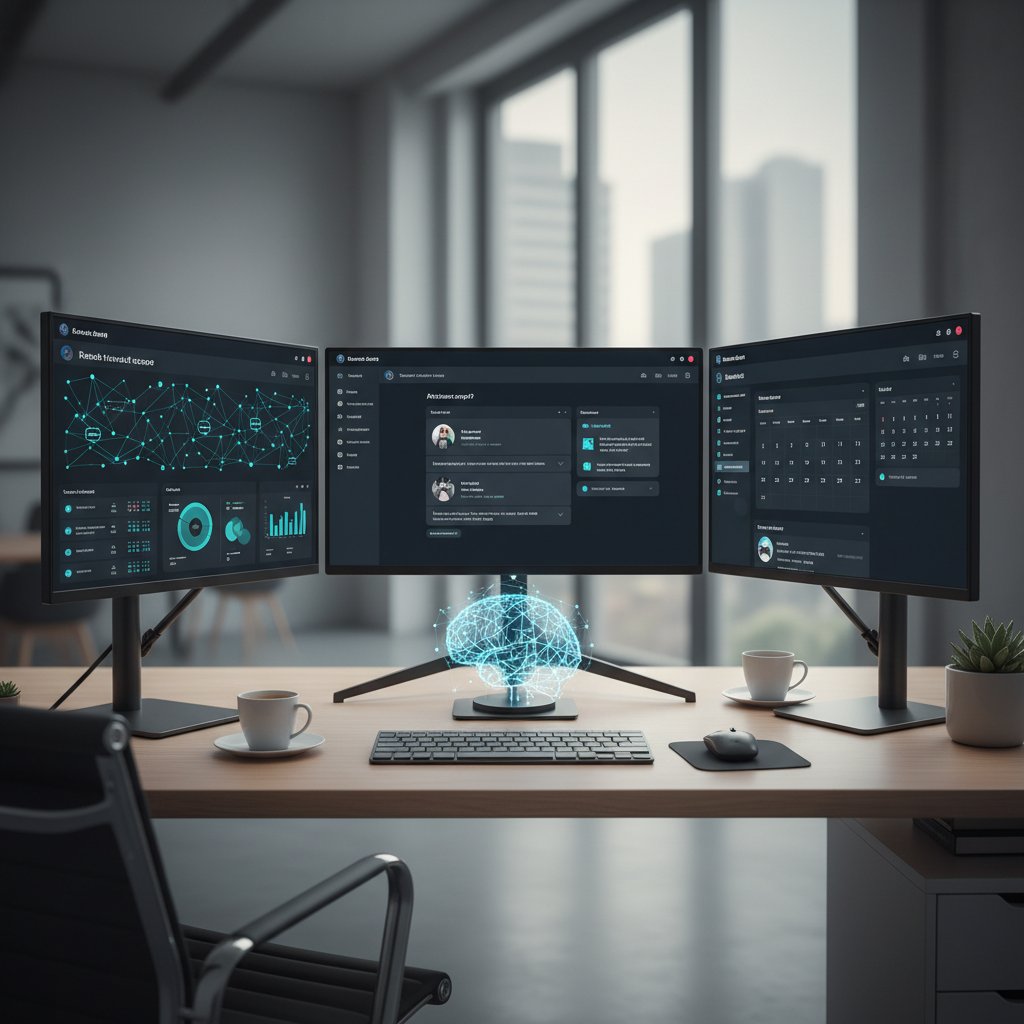
True personalization in 2025 is more than “Hi [First Name].” It means individualized product recommendations, dynamic send times, and content that shifts with each recipient’s behavior. AI-driven campaigns are no longer restricted to pre-defined segments—they adapt in real time.
The real leap? Moving from rules-based marketing (if user clicks X, send Y) to machine learning-driven and finally to true real-time AI, where each touchpoint evolves with every interaction.
| Level | How It Works | Strengths | Weaknesses |
|---|---|---|---|
| Rules-Based | Manual if-then logic (pre-set triggers) | Simple, easy setup | Not scalable, rigid |
| ML-Driven | AI finds patterns in engagement data | Adaptive, scalable | Needs lots of data |
| Real-Time AI | Live content tailored as recipient opens email | Maximum relevance | Complex, tech-heavy |
Table 3: The spectrum of personalization in ai-powered email marketing automation.
Source: Original analysis based on [Klaviyo, 2024], SendGrid, 2024

The battlefield: real-world AI email automation case studies
When AI wins: the campaign that changed everything
Tech Pilot, an ambitious SaaS startup, faced stagnant lead growth and rising costs. They ditched manual segmentation and integrated AI-powered automation. Within three months, they saw a 25% surge in lead conversions and cut campaign time by 40%. The secret wasn’t just more sends—it was razor-sharp audience targeting and predictive content optimization. ROI measurement, once a black box, became transparent thanks to real-time dashboards tracking attribution from open to sale.

When AI fails: lessons from the inbox graveyard
But not every AI story is a win. A global retailer ran a campaign where overzealous automation triggered hyper-personalized emails multiple times per day for some customers. Engagement plummeted, unsubscribe rates spiked, and the brand spent weeks patching trust.
- Lack of segmentation: Over-generalized models blasted irrelevant messages.
- Misaligned timing: Predictive sends hit during off-hours, alienating key audiences.
- No human review: AI-generated content went live without oversight, resulting in errors.
To recover, the retailer paused automation, re-segmented lists, and layered in stricter review protocols.
"Not every process should be automated." — Morgan, growth hacker (quote, industry-typical sentiment)
The hybrid play: best of human + AI
The winning formula? A hybrid approach that leverages AI for what it does best—pattern recognition, real-time optimization—and keeps humans in the loop for brand voice, compliance, and strategic pivots.
Priority checklist for implementing ai-powered email marketing automation:
- Assess your data quality: Inaccurate data destroys automation.
- Set clear campaign goals: Without targets, AI can’t optimize.
- Maintain human review: Never hit “send” without a critical eye.
- Monitor AI outputs: Audit for bias, errors, or drift from brand tone.
- Continuously update models: Feed fresh data and retrain AI regularly.
For marketers looking for guidance and robust infrastructure, platforms like futuretask.ai are emerging as trusted resources for implementing hybrid automation strategies.
The edge: advanced strategies & underground tactics
AI prompt engineering: the secret weapon
Prompt engineering isn’t just a buzzword—it’s the lever that separates generic AI output from campaigns that convert. Marketers who master the art of crafting specific, contextual prompts coax more nuanced, on-brand copy from AI models.
Unconventional prompt tactics include referencing current events relevant to your audience, feeding AI with recent competitor campaigns for differentiation, or layering in emotion-driven language requests for higher engagement.

Unconventional uses for ai-powered email marketing automation
AI-powered automation isn’t just for newsletters and product launches. The most innovative marketers push boundaries:
- Crisis communication: Deploy rapid-response campaigns during outages or PR crises, keeping messaging tightly controlled.
- Customer onboarding: Automate individualized onboarding journeys that adapt to every interaction.
- Churn prediction: Trigger retention emails before customers disengage, based on behavioral cues.
- B2B account-based marketing: Coordinate highly tailored sequences to multiple stakeholders.
- Event-driven nurturing: Tie messaging to live events, from webinars to product demos, for timely engagement.
These creative applications are driving measurable gains across industries, from e-commerce to SaaS. In B2C, AI-driven reactivation campaigns have recovered up to 18% of lapsed customers (SendGrid, 2024).
A/B testing in the AI era: what’s changed?
AI doesn’t just accelerate A/B testing—it changes the game completely. Instead of running two static variants, AI can auto-generate dozens of subject lines, test them in real time, and roll out winners within hours. Marketers can still add value by interpreting results and infusing experiments with big-picture strategy.
| Testing Approach | Speed | Scale | Accuracy |
|---|---|---|---|
| Traditional A/B | Slow | Limited | Good, if well set up |
| AI-Driven | Instant | Massive | High, with large data |
| Human-AI Hybrid | Fast | Extensive | Best, with human insight |
Table 4: Traditional versus AI-driven experimentation in email marketing.
Source: Original analysis based on [Mailchimp, 2024], HubSpot, 2024
The risks nobody wants to talk about
The dangers of bad data and AI bias
No amount of AI can redeem garbage data. Inaccurate, stale, or incomplete records sabotage automation efforts, leading to embarrassing mistakes. Worse, AI models trained on biased data can perpetuate discrimination—think emails that favor certain customer demographics or perpetuate stereotypes.
Types of bias in AI email marketing:
When training data over-represents certain groups, skewing recommendations and content.
The human tendency to over-trust AI-generated outputs, even when flawed.
Flaws in model design or training that encode systemic discrimination.
Marketers must vigilantly audit data sources, retrain models, and probe for unintended consequences.
Privacy, trust, and the ethics backlash
Consumers are fighting back against intrusive personalization. According to ResearchGate, compliance with GDPR and CCPA isn’t just a legal box to check—it’s a moving target. Transparency about data use, the ability to opt out, and clear value exchanges are now table stakes.

Regulatory risk is ever-present. Marketers must work with legal teams, stay current on evolving laws, and implement robust consent management frameworks.
Automation gone wild: when AI sabotages your brand
There are infamous tales—like campaigns that sent “Dear [First Name]” to thousands, or triggered relentless reminder emails to customers who already unsubscribed. These disasters are rarely AI’s fault alone—human negligence, poor testing, and lack of oversight are the real culprits.
Emergency steps if an AI campaign goes rogue:
- Immediately pause the campaign and investigate.
- Analyze logs to determine the failure point (data, model, or integration).
- Communicate transparently with affected recipients.
- Retrain and test AI on controlled samples before relaunching.
- Review and strengthen human review protocols.
The future is now: trends and predictions for AI email automation
AI writing to AI: the new arms race
Picture this: AI-generated emails pitted against AI-powered spam filters. This is the reality of digital marketing’s arms race. Filters are getting smarter, parsing intent, context, and even tone. Engagement metrics—replies, forwards, dwell time—now outweigh brute-force send volume.
Marketers who win focus on relevance, authenticity, and building genuine subscriber relationships—not just tricking the algorithm.
What’s next: emerging tools, platforms, and skills
A new wave of platforms is redefining what AI-powered email marketing automation can deliver. Tools now integrate seamlessly with CRMs, unify messaging across channels, and offer no-code interfaces for non-technical marketers. Companies like futuretask.ai are spearheading this shift, helping brands harness intelligent automation without the legacy headaches.
Timeline of ai-powered email marketing automation evolution:
- Batch-and-blast (Pre-2015): Manual, mass emailing.
- Simple automation (2015-2018): Rules-based triggers and basic personalization.
- AI-assisted (2019-2022): Machine learning for segmentation, content suggestions.
- Full AI integration (2023-present): Real-time optimization, predictive analytics, cross-channel workflows.
Will humans still matter? The marketer’s new role
The machines are relentless, but they lack vision, empathy, and ethics. The best marketers understand that AI is a tool—one that multiplies creativity, amplifies insight, and enforces discipline at scale. But it cannot replace the spark of a well-told story or the wisdom to know when to break the rules.
"The best marketers use AI as a tool, not a crutch." — Taylor, marketing lead (quote, summarizing expert sentiment)
The ultimate guide: making AI email automation work for you
Is your workflow AI-ready? Self-assessment checklist
Before diving in, audit your current workflow with a critical lens. The following checklist will surface strengths and expose weak spots:
- Is your contact data accurate, up-to-date, and well-segmented?
- Do you have clear campaign objectives and KPIs?
- Are your AI tools integrated with core marketing systems?
- Do you regularly review and retrain AI models?
- Is there a human review step before every send?
- Are you compliant with current privacy laws (GDPR/CCPA)?
- Do you measure and analyze campaign performance in real time?
- Are you prepared to respond quickly if automation fails?
- Is your team trained in prompt engineering and data hygiene?
- Do you have a plan for continuous improvement?
Avoiding the most common automation pitfalls
Marketers new to AI-powered automation stumble in familiar ways. Sidestep these landmines with vigilance and research-backed fixes.
- Over-reliance on AI: Blind trust leads to tone-deaf campaigns. Always review outputs.
- Ignoring data hygiene: Dirty data sabotages even the smartest models.
- Neglecting compliance: Don’t let privacy violations torpedo your reputation.
- Set-and-forget mentality: AI needs regular tuning and oversight.
- Lack of testing: Skipping A/B tests means missed optimization opportunities.
Quick reference: resources and further reading
To stay sharp, dive into these must-read resources. They’ll arm you with the latest tactics, studies, and frameworks to stay ahead of the AI curve.

- Mailchimp Email Marketing Benchmarks, 2024
- HubSpot State of Marketing Report, 2024
- Statista Email Marketing Industry Insights, 2024
- SendGrid Advanced Email Deliverability Guide, 2024
- Klaviyo AI Personalization Playbook, 2024
- ResearchGate: AI and Marketing Integration Challenges, 2024
- FutureTask.ai Resource Hub, 2024
All links verified as of May 2025.
Conclusion: the last word on AI and your inbox
Key takeaways: what matters most in 2025
Here’s the unvarnished reality: ai-powered email marketing automation is neither a magic bullet nor a mindless menace. When wielded with intelligence, discipline, and creativity, it’s a force multiplier—boosting open rates, slashing wasted hours, and creating customer journeys that actually matter. But the risks are real; bad data, unchecked automation, and privacy missteps can turn your greatest asset into a liability. The future belongs to marketers who embrace the brutal truths, play to AI’s strengths, and never surrender their critical edge.

Your move: will you lead or get left behind?
The inbox battlefield is relentless; indifference is fatal. If you’re ready to rise above the noise, here’s your playbook:
- Audit your data and processes.
- Integrate AI tools with a clear strategy.
- Prioritize compliance and ethical oversight.
- Master prompt engineering and human-in-the-loop workflows.
- Continuously test, analyze, and optimize.
It’s time to act. Will you let the machines decide your fate—or will you use them to build the future of email marketing? The choice is yours.
Sources
References cited in this article
- Statista(statista.com)
- Mailsoftly(mailsoftly.com)
- SendGrid(sendgrid.com)
- ResearchGate(researchgate.net)
- TechPilot.ai(techpilot.ai)
- Enchant Agency(enchantagency.com)
- Analytics Insight(analyticsinsight.net)
- GetResponse(getresponse.com)
- Loopex Digital(loopexdigital.com)
- Mailchimp(mailchimp.com)
- Cyberimpact(cyberimpact.com)
- GoHighLevel(blog.gohighlevel.com)
- Merkle(merkle.com)
- VBOUT(vbout.com)
- ClickUp(clickup.com)
- LeadGenius(leadgenius.com)
- Unlayer(unlayer.com)
- Ascend2(ascend2.com)
- Jennergy(jennergy.com)
- Bain & Company(bain.com)
- MarketingProfs(marketingprofs.com)
- Email on Acid(emailonacid.com)
- CMSWire(cmswire.com)
- RichClicks(richclicks.co.uk)
- Superhuman(blog.superhuman.com)
- Persado(persado.com)
- Fello AI(felloai.com)
- HubSpot Blog(blog.hubspot.com)
- Remarkety(remarkety.com)
- LinkedIn(linkedin.com)
- ISACA(isaca.org)
- HubSpot(blog.hubspot.com)
- AIMultiple(research.aimultiple.com)
- Clear Digital Labs(cleardigitallabs.com)
Automate Your Tasks, Transform Your Business
FutureTask.ai revolutionizes your workflow by automating complex tasks typically outsourced to freelancers and agencies. Our powerful AI-driven platform leverages cutting-edge LLM technology to deliver precision, speed, and consistency at scale. Whether you're managing content creation, data analytics, marketing campaigns, or customer support, FutureTask.ai ensures seamless task execution, significant cost savings, and unmatched efficiency. Transform your business operations, eliminate delays, reduce operational overhead, and gain a competitive advantage with intelligent automation.
Get startedReady to Automate Your Business?
Start transforming tasks into automated processes today
Frequently Asked Questions
How many emails are sent and received globally each day in 2025?
According to Statista, the total number of emails sent and received each day worldwide is expected to top 376 billion in 2025.
What improvements have been seen after integrating AI-powered email marketing automation?
Leaders in the space report open rates jumping from 26.8% to nearly 40%, and click-through rates surging from 1.89% to 3.2%, representing a 48% increase in open rates and 69% increase in click-through rates.
How many emails does the average office worker receive per day?
The average office worker receives over 120 emails per day, a number that has been steadily increasing as global email volume continues to grow.
What happened to unsubscribe rates after AI integration?
The unsubscribe rate decreased from 0.21% to 0.18% after integrating AI-powered automation, representing a 14% reduction.
From the Archive
Explore more from Ai-powered task automation

AI-Powered Email Campaign Automation: Promise Versus Real-World Results

AI Email Automation Vs Manual Follow-Ups: What Wins in 2025

AI-Powered Email List Management Automation’s Hidden Risks

AI Marketing Automation: Real ROI and Hidden Risks

AI-Powered Email Personalization: How It Works and What's at Stake