Ai-Powered Internal Communication Automation: Cure or New Disease?
Written with AI assistance under our editorial guidelines
AI-powered internal communication automation creates a paradox: while it promises to streamline workplace information flow, it often worsens the problem by generating excessive noise. Over 95% of business communications now involve AI, yet employees report feeling overwhelmed by irrelevant automated messages, with nearly half ignoring internal communications entirely. The technology risks burying critical information and eroding productivity rather than improving authentic workplace connection.
Internal communication is at a breaking point, and everyone knows it—even if nobody wants to face the mess head-on. In 2025, ai-powered internal communication automation isn’t just a trendy buzzword—it’s a fundamental rewrite of how information flows, trust is built, and workplace culture is either strengthened or shattered. With inboxes exploding with AI-generated chatter, and leaders desperately clinging to the illusion of “open communication,” the gulf between intention and reality grows wider every day. According to research from Poppulo and Exploding Topics, over 95% of business communications now involve AI in some form, but the consequences—ranging from information overload to authenticity crises—are far from the utopian promise. As hybrid and remote work redefine the office, new rules, risks, and brutal truths emerge. This article rips the bandage off, revealing the gritty realities, hidden costs, and actionable wins of AI-driven internal comms. If you think AI-powered automation will simply “fix” broken workflows or make everyone happier, you’re in for a wake-up call. Welcome to the inconvenient revolution.
Why internal communication is broken (and AI smells blood)
The silent crisis inside your inbox
Step inside the average knowledge worker’s digital workspace, and you’ll witness a battlefield: unread emails piling up, pinging chatbots simulating “engagement,” and a parade of AI-crafted memos that sound more like PR than conversation. This is not a bug—it’s the new default. According to Poppulo’s 2025 internal comms trends, employees report feeling “overwhelmed and disengaged” by the relentless flow of automated messages, many of which are irrelevant or even factually off-base. The irony? AI, intended to streamline and clarify, often amplifies the chaos, burying critical information beneath a landslide of noise.
It’s not just about annoyance. Information overload erodes concentration, productivity, and even mental health. Employees are forced to wade through an ocean of digital debris, hoping to spot the few messages that genuinely matter. This silent crisis is both a technical and cultural failure—and AI, for all its promise, is sometimes making things worse before making them better.

The data is damning: nearly half of employees admit they “ignore most internal messages” because they assume them to be irrelevant or duplicative. Meanwhile, leadership often remains blissfully ignorant, equating “sent” with “received.” As the deluge grows, so does the risk of critical updates going unseen, compliance failures, and ultimately, a disengaged workforce that tunes out—regardless of who’s speaking.
How broken comms cripple culture and profits
The consequences of broken internal comms aren’t confined to annoyance. Miscommunication has a ripple effect on culture, productivity, and the bottom line. According to a 2024 Axios HQ survey, only 14% of employees feel truly aligned with business goals—versus 44% of leaders who think alignment is high. This disconnect isn’t just a matter of perception; it’s a measurable drag on performance and innovation.
| Impact Area | Symptom | Business Consequence |
|---|---|---|
| Information Overload | Employees disengage, ignore updates | Missed deadlines, compliance risks |
| Lack of Personalization | Generic messages, low relevance | Low morale, increased turnover |
| Siloed Communication | Frontline staff excluded | Operational blind spots, slow response |
| Culture Erosion | Loss of trust, authenticity questioned | Lower engagement, weak loyalty |
| Tech Fatigue | Too many tools, fractured channels | Wasted investment, process delays |
Table 1: The real costs of broken internal communication. Source: Original analysis based on Poppulo, 2025, Axios HQ, 2024
What’s particularly insidious is how these issues compound over time. A disengaged team doesn’t just misread a memo—they lose the thread of shared purpose. Teams in silos make redundant efforts or miss urgent problems. And when authenticity is sacrificed for efficiency, trust crumbles—no AI algorithm can fix that.
Unchecked, this spiral becomes a self-fulfilling prophecy: leaders push out more automated updates, employees tune out further, and the gap widens until culture itself feels artificial and transactional.
The myth of the open channel
“Open communication” is the sacred cow of modern organizations, but the truth is uglier. Most so-called “open channels” are neither truly open nor effective in surfacing real concerns. According to Psico Smart, even with advanced AI-powered feedback tools, frontline workers are often left out, stuck in “information silos” while office staff reap the benefits of new tech.
"The core challenge is not the lack of channels, but a lack of genuine connection. AI can amplify voices, but it also risks amplifying noise." — Internal Communication Expert, Poppulo, 2025
In reality, the myth of openness often conceals a more uncomfortable truth: superficial listening and performative engagement. AI can only do so much if the organizational intent isn’t there. Without trust and clarity, even the most advanced automation is just a louder megaphone for the same old problems.
The birth of ai-powered internal communication automation
From memos to machine learning: a brief timeline
Internal communication has always been a shape-shifter, evolving from dusty paper memos to digital chat apps. But the last five years have seen a radical acceleration, as AI moved from the fringes to the very core of workplace messaging.
- Pre-2015: Email reigns; intranets and digital bulletin boards supplement.
- 2015–2020: Chat apps and cloud collaboration tools disrupt email’s dominance.
- 2020–2022: Pandemic forces remote work, exposing cracks in communication.
- 2022–2024: AI-powered tools emerge—automating messaging, analyzing sentiment, and customizing content.
- 2025: AI is not optional; it’s the backbone of most internal comms platforms.
| Era | Dominant Medium | Key Pain Point | Solution Introduced |
|---|---|---|---|
| Paper Age | Memos, notices | Slowness, loss | N/A |
| Email Era | Email, Intranets | Overload, silos | Search/filter functions |
| Chat App Boom | Slack, Teams, etc. | Fragmentation, noise | Channel curation |
| AI Automation | AI-powered platforms | Relevance, authenticity | Contextual prioritization |
Table 2: Timeline of internal communication evolution. Source: Original analysis based on Poppulo, 2025, Exploding Topics, 2025
The “automation” of internal comms is about far more than replacing humans with bots. It’s a reimagining of intent, context, and culture—sometimes for the better, sometimes for the worse.
Why ‘automation’ doesn’t mean what you think
When leaders talk about automation, the subtext is often “do more with less.” But in the world of internal communication, this mindset is dangerously simplistic. Automation doesn’t just mimic human effort at speed; it transforms the very nature of messaging, trust, and collaboration.
On the surface, automated comms sound like efficiency: fewer manual broadcasts, personalized updates, real-time insights. But beneath, automation is a double-edged sword. It can create echo chambers, amplify bias, or strip away nuance—especially if the “automation” is treated as a black box.
Key definitions:
The delegation of repetitive internal communication tasks to intelligent systems that analyze, generate, and route content based on context and intent, rather than simple rule-based logic.
A machine learning process that detects and interprets the emotional tone of employee feedback or communications, helping leaders gauge real-time morale and engagement.
The use of AI to tailor content to individual employees’ roles, locations, and preferences—supposedly increasing relevance but also risking filter bubbles.
What changed in 2025?
The leap in 2025 is not about fancier tech—it’s about necessity. Hybrid and remote work went from an emergency adaptation to a permanent fixture. Suddenly, the stakes of internal communication changed: organic, spontaneous interactions evaporated, replaced by scheduled Zooms and “urgent” Teams messages.
Two major shifts occurred: first, the sheer scale of automated messaging exploded. Second, the expectations for true connection, transparency, and authenticity became non-negotiable. Organizations that cling to old methods risk irrelevance.

According to Exploding Topics, more than 95% of businesses now use AI for at least some aspect of their internal communication. The question isn’t “if,” but “how well”—and whether the technology serves people, or the other way around.
How AI really works under the hood
Parsing chaos: intent detection and contextual prioritization
AI-driven internal comms are more than just glorified autoresponders. Modern systems use natural language processing to analyze every incoming message, detect intent, and prioritize what should reach whom, and when. This doesn’t just reduce noise—it can surface urgent issues, flag sentiment shifts, and route feedback to the right decision-makers.
Key technologies:
Uses machine learning to classify messages by urgency, topic, and required action, reducing the flood of irrelevant notifications.
Algorithms that weigh message content, sender-recipient relationship, and timing to decide what’s truly important—often outperforming human judgment.
The result is a digital triage system, where real emergencies rise to the top, and boilerplate announcements fade into the background. The promise: more signal, less noise. The risk: false positives, missed context, or over-prioritization of “managerial” voices.
Why large language models are game-changers
Large language models (LLMs) like GPT-4 have redefined what’s possible in internal communication automation. Unlike older, rules-based bots, LLMs “understand” nuance, intent, and even humor—at least, most of the time.
They enable:
- Dynamic content generation that mimics human tone and adapts to company culture.
- Real-time translation and localization, breaking down global communication barriers.
- Hyper-personalized messaging, where each employee receives updates in their “voice,” not just their language.
But LLMs are not infallible. They hallucinate, make factual errors, and sometimes reinforce unconscious biases present in training data. According to the PRSA, “the challenge is not just technical accuracy, but maintaining authenticity in a world awash with synthetic media” (PRSA, 2025).

The real superpower of LLMs isn’t speed—it’s context. When deployed responsibly, they can bridge the gap between information and understanding in ways that no static FAQ ever could.
The new architecture: platforms, APIs, and orchestration
Modern internal communication stacks are sprawling ecosystems, not monolithic apps. AI-powered automation relies on seamless orchestration—connecting HR, project management, and collaboration tools via APIs.
| Layer | Function | Example Tools/Services |
|---|---|---|
| Messaging | Distribution of updates | Slack, Teams, Email |
| Orchestration Layer | Routing, prioritizing, scheduling | Internal APIs, Workflows |
| AI/ML Layer | Content generation/analysis | LLMs, Sentiment Engines |
| Analytics & Feedback | Tracking engagement/sentiment | Poppulo, Psico Smart |
Table 3: Anatomy of a modern AI-powered internal comms stack. Source: Original analysis based on Poppulo, 2025, Psico Smart, 2025
The upshot? Successful automation demands integration, data hygiene, and a willingness to evolve—one bot at a time.
Real-world wins (and failures): case studies from the edge
Startups that scaled without losing their voice
Not every company gets crushed by the automation wave. Some startups have managed to scale internal comms without erasing their unique voice. Take, for example, a fast-growing fintech firm that used AI-powered tools to automate onboarding, feedback loops, and cross-team updates. By carefully curating templates, requiring human review for sensitive content, and empowering employees to personalize automated messages, they saw engagement rates jump by 30% in less than a year.
Another key: transparency about when a message is AI-generated versus human-crafted. Employees responded positively to clarity, not just efficiency.
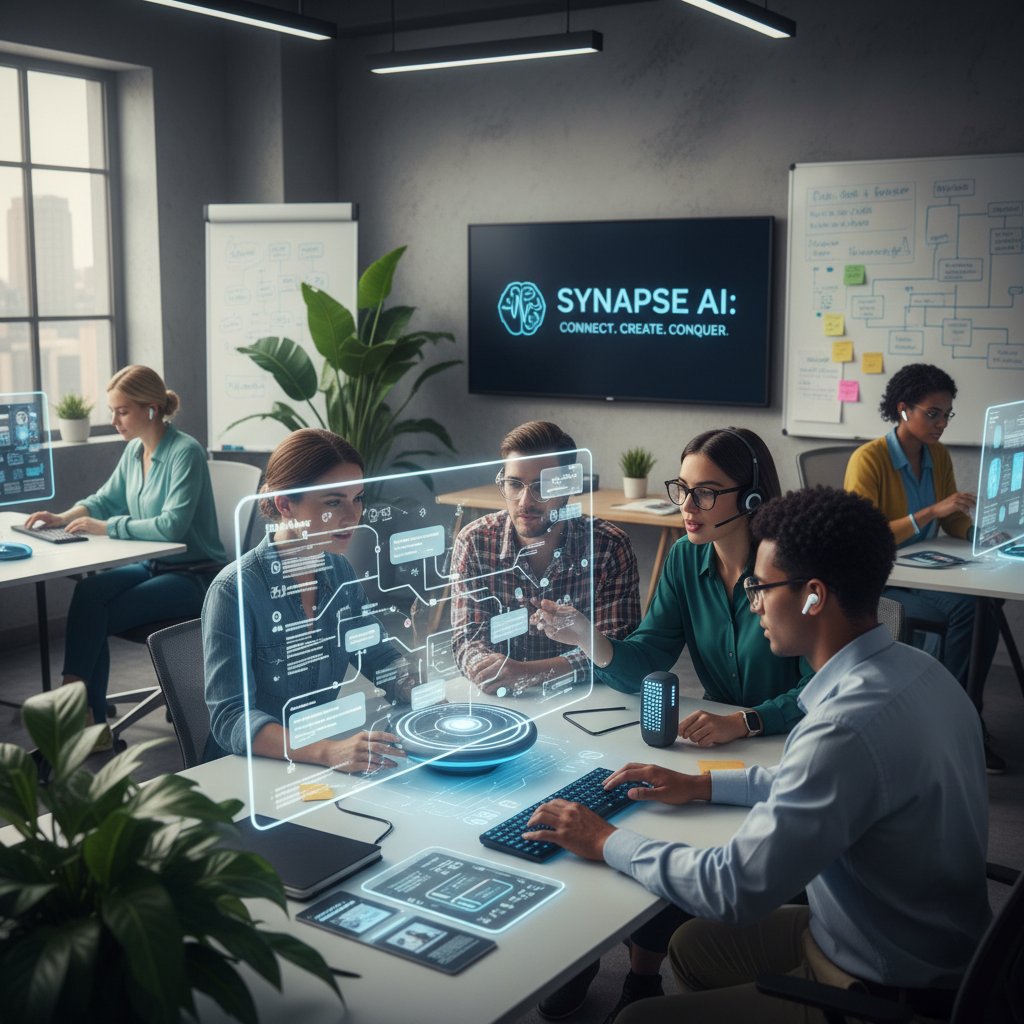
These wins aren’t magic—they’re the result of intentional design, strong cultural foundations, and a refusal to treat automation as a “set-it-and-forget-it” solution.
Legacy giants: can old dogs learn AI tricks?
Large, traditional organizations face different challenges: layers of bureaucracy, entrenched habits, and siloed tech stacks. Some have stumbled—deploying AI chatbots that spew generic updates, only to watch employee trust nosedive.
But others have adapted, using phased rollouts, feedback-driven content improvements, and transparent change management. According to Poppulo, leading firms now use AI not just to cut costs, but to elevate the strategic value of comms—freeing up teams to focus on high-impact storytelling and leadership alignment.
"AI can't fix broken trust, but it can give you the time and data to rebuild it—if you're willing to listen." — Communication Strategy Director, Poppulo, 2025
For old dogs, learning new tricks isn’t about technology—it’s about humility and willpower.
Remote-first, remote-burned: automating trust
Remote-first companies are the canaries in the AI comms coal mine. While automation is essential to scale across time zones, it’s also where things can go sideways fast.
Consider these real-world pain points:
-
Bots sending “urgent” alerts at 2 a.m. in employees’ local time zones, causing anxiety and resentment.
-
Automated pulse surveys generating more “feedback fatigue” than insight.
-
Over-personalized messaging that leaves workers feeling micro-managed, not empowered.
-
Human oversight: Every automated workflow needs a human checkpoint, especially for sensitive or ambiguous cases.
-
Clear escalation paths: Employees should always know how to reach a real person.
-
Continuous feedback: Automation must adapt to shifting cultural norms—not just technical metrics.
The lesson? Trust isn’t automated—it’s earned, one thoughtful (sometimes human) message at a time.
The good, the bad, and the dystopian: what AI changes in workplace culture
Dehumanization or superhuman connection?
AI in internal communication is a paradox engine: it risks erasing the human touch, yet can also amplify empathy and inclusion when wielded wisely. According to Psico Smart, AI-powered sentiment analysis increases employee satisfaction by up to 20% when paired with genuine follow-up actions—not just automated “thank you” notes.
The best implementations use AI to surface unspoken concerns, bridge geographic divides, and deliver hyper-relevant information. The worst implementations leave workers talking to soulless bots, questioning whether anyone is actually listening.

The line between dehumanization and “superhuman” connection isn’t technical—it’s ethical and cultural. It depends on intent, transparency, and a relentless focus on real needs, not vanity metrics.
Surveillance, privacy, and the new digital panopticon
With great automation comes great surveillance risk. AI-powered comms platforms can (and often do) track message opens, sentiment, even emotional “micro-expressions” in video calls. The intent is often benevolent—finding blind spots, preventing burnout—but the result can feel like a digital panopticon.
Privacy concerns are no longer theoretical. Employees want to know: Who sees my feedback? How is my data used? Are my offhand jokes fueling the next algorithmic “pattern”?
"Transparency builds trust. Explain what’s being measured, why, and how it benefits the team—not just management." — Data Ethics Analyst, PRSA, 2025
The companies that get this right treat privacy not as a compliance checkbox, but as a fundamental value. They give employees real choices and real reassurances.
When automation backfires (and how to fix it)
Not all automation is created equal. When poorly designed, AI-powered comms can:
-
Alienate employees with robotic language and tone-deaf messaging.
-
Reinforce silos by personalizing messages to the point of echo chambers.
-
Overwhelm teams with irrelevant “insights” and constant feedback loops.
-
Damage trust when mistakes are blamed on “the system” instead of acknowledged and fixed.
-
Build in escalation paths for error correction.
-
Conduct regular audits to detect bias and blind spots.
-
Involve employees in system design and evaluation.
-
Provide opt-outs or human override options.
-
Document and communicate changes transparently.
The fix isn’t less automation—it’s smarter, more human-centered design.
Myths, mistakes, and the (ugly) truth behind the hype
Five lies AI vendors keep telling your HR team
Not all that glitters is AI gold. Here are the top vendor myths—debunked by real-world experience:
- “Plug-and-play” means you’re live in a day. (Reality: integration and training are complex and ongoing.)
- “100% accuracy” in intent detection. (False positives and missed nuance are still common.)
- “AI reduces headcount.” (The best systems elevate comms teams to more strategic roles, not eliminate them.)
- “Universal personalization drives engagement.” (Over-personalization can alienate or confuse.)
- “Bias-free algorithms.” (Training data and context still matter—a lot.)
The truth? AI is a tool, not a magic wand. Success depends on leadership, culture, and continuous evolution—not vendor promises.
Why ‘plug-and-play’ is a fairy tale
One of the most damaging myths is that AI-powered internal comms is “set-it-and-forget-it.” In reality, rollout is an iterative process involving integration, training, and cultural adaptation.
"Real transformation happens when you empower people to shape the technology—not the other way around." — Change Management Lead, Poppulo, 2025
Organizations that skip this step see quick wins followed by sharp drop-offs in engagement.
The hidden costs no one budgets for
AI-powered automation isn’t just a line item on a tech budget. It brings invisible costs—some technical, some cultural.
| Hidden Cost | Description | Potential Impact |
|---|---|---|
| Data integration | Cleaning, mapping, and syncing systems | Delays, technical debt |
| Change management | Training, support, and cultural adaptation | Resistance, morale dips |
| Ethics and compliance | Bias detection, privacy audits | Legal, reputational risk |
| Ongoing maintenance | Model updates, error correction | Unexpected expenditures |
Table 4: Hidden costs of internal communication automation. Source: Original analysis based on Poppulo, 2025, Exploding Topics, 2025
Ignoring these costs isn’t just naive—it’s dangerous. As any ops manager will tell you, what’s not measured doesn’t just go away.
Mastering ai-powered internal communication automation: a no-BS roadmap
Step-by-step guide to implementation (without wrecking morale)
Rolling out AI automation is a marathon, not a sprint. Here’s a field-tested process:
- Audit your current comms landscape: Map existing channels, pain points, and success stories.
- Engage employees early: Gather feedback, set expectations, and address concerns up front.
- Start small, iterate fast: Pilot with a single team or workflow before scaling.
- Prioritize transparency: Flag AI-generated messages and explain “the why” behind automation.
- Measure what matters: Track engagement, sentiment, and trust—not just message volume.
- Adapt and evolve: Use feedback to refine workflows, not just technical parameters.
This approach respects the complexity of both people and technology. It minimizes disruption while maximizing buy-in.
Red flags and dealbreakers: what to watch for
Implementing AI-powered comms? Watch out for:
-
Lack of clear ownership for automation projects.
-
Vendors who dodge questions about bias or privacy.
-
“Black box” algorithms with no explainability.
-
Automation that increases, rather than reduces, noise.
-
No escalation path for human intervention.
-
If you spot these red flags, pause and reassess—before trust and dollars evaporate.
Comms culture audit: is your team ready?
How do you know if your organization is ready for AI-powered internal communication automation? Here’s a quick audit:
- Does leadership model transparent, authentic communication?
- Are employees empowered to give feedback—and see it acted upon?
- Is your data clean, consistent, and accessible across systems?
- Are accountability and escalation paths clear?
- Is there an appetite for continuous improvement, not just flashy tech?

If you tick most of these boxes, you’re ahead of the curve. If not, focus on the fundamentals before chasing the latest AI features.
What’s next? The bleeding edge and beyond
Emerging frontiers: emotion AI, voice interfaces, and more
The next evolution in internal comms isn’t just smarter text—it’s richer, more human-like interaction. Emotion AI is already analyzing tone, facial cues, and engagement in real-time. Voice-based interfaces are breaking down accessibility barriers and making updates frictionless.

As these tools mature, the boundary between “digital” and “human” gets blurrier. The risk and reward? More meaningful, authentic connection—or deeper surveillance and digital fatigue.
Cross-industry mashups: what we can steal from elsewhere
Internal comms leaders are learning from other sectors:
- Healthcare: Patient-centric communication and feedback loops.
- Retail: Personalized, real-time notifications at scale.
- Fintech: Automated compliance alerts and sentiment-driven support.
- Entertainment: Story-driven engagement and adaptive content.
Borrowing these best practices requires adaptation—not blind imitation.
The payoff? A more resilient, adaptable communication culture that’s ready for whatever comes next.
Will AI ever understand ‘office politics’?
Let’s be blunt: AI is great at parsing data, less so at decoding hidden agendas and power plays. Office politics thrives on subtext, history, and context that’s hard to codify.
"No algorithm can replace lived experience and human judgment. AI can flag anomalies, but real leadership means reading between the lines." — Organizational Psychologist, Psico Smart, 2025
So far, the best systems augment—not replace—human insight. The more organizations recognize this, the stronger their culture becomes.
Conclusion: rethinking what it means to communicate at work
The paradox of progress: human vs. machine
Ai-powered internal communication automation is not a silver bullet—it’s an amplifier. It makes good cultures better and broken ones worse. According to recent research, the organizations that thrive are the ones that treat AI as a tool for connection, not a crutch for disengagement.

The paradox? Progress often means returning to basics: empathy, trust, and shared meaning. The machines can handle the rest.
Your next move: taking control in the AI era
Ready to get real about AI automation? Here’s your playbook:
- Face the brutal truths: Acknowledge what’s broken and what’s working.
- Choose intent over hype: Deploy AI where it matters, not where it’s trendy.
- Design for humans: Prioritize clarity, transparency, and feedback loops.
- Measure and adapt: Focus on outcomes, not outputs.
- Stay vigilant: Keep privacy, ethics, and trust at the core.
The inconvenient revolution is here. Embrace it with eyes open—or risk being left behind. For those serious about transforming their workflows, resources like futuretask.ai offer a launching pad for intelligent, adaptive automation grounded in real-world results—not just promises.
Sources
References cited in this article
- Poppulo: Internal Communication Trends 2025(poppulo.com)
- Exploding Topics: AI Statistics 2025(explodingtopics.com)
- Psico Smart: Impact of AI in Internal Communication(psico-smart.com)
- PRSA: How AI Will Revolutionize Comms in 2025(prsa.org)
- Axios HQ 2024 Report(axioshq.com)
- IoIC: AI Ethics in Internal Communication(ioic.org.uk)
- Unily: 2024 Internal Comms Strategy(unily.com)
- HBR: Overhauling Internal Communications(hbr.org)
- G2: Global State of Internal Communications 2023(images.g2crowd.com)
- Poppulo: 2024 Trends(poppulo.com)
- Grammarly: AI History(grammarly.com)
- Oak Engage: Future of Internal Comms(oak.com)
- LumApps(lumapps.com)
- Cerkl: AI in Internal Communications(cerkl.com)
- LumApps: AI in Corporate Communication(lumapps.com)
- Redmarker: Automation vs AI(redmarker.ai)
- ContextSDK: Intent Detection(contextsdk.com)
- ResearchGate: Intent Recognition Pipeline(researchgate.net)
- Powell Software: AI in Internal Communications(powell-software.com)
- Poppulo: AI-Powered Communication Guide(poppulo.com)
- Psico Smart: Case Studies(psico-smart.com)
- Workai: 2023 Achievements(workai.com)
- Vorecol: AI Tools in Remote Work(vorecol.com)
- Interact Software: 2024 Trends(interactsoftware.com)
- Haiilo: AI in Internal Communications(blog.haiilo.com)
- ThinkBink: AI Mistakes(thinkbink.com)
- Forbes: AI Myths(forbes.com)
- FTC: AI-Related Misleading Claims(mintz.com)
- Reuters: FTC Actions(reuters.com)
- ScienceDirect: AI in Internal Communication(sciencedirect.com)
- Oxean Cross: AI Challenges(oxeancross.com)
- Sparrow Connected: Hidden Costs(sparrowconnected.com)
- IBM: Cost of a Data Breach 2024(veza.com)
- Scalefocus: Cost of AI Implementation(scalefocus.com)
Automate Your Tasks, Transform Your Business
FutureTask.ai revolutionizes your workflow by automating complex tasks typically outsourced to freelancers and agencies. Our powerful AI-driven platform leverages cutting-edge LLM technology to deliver precision, speed, and consistency at scale. Whether you're managing content creation, data analytics, marketing campaigns, or customer support, FutureTask.ai ensures seamless task execution, significant cost savings, and unmatched efficiency. Transform your business operations, eliminate delays, reduce operational overhead, and gain a competitive advantage with intelligent automation.
Get startedReady to Automate Your Business?
Start transforming tasks into automated processes today
Frequently Asked Questions
What percentage of business communications now involve AI?
According to research from Poppulo and Exploding Topics, over 95% of business communications now involve AI in some form.
What are the main problems employees experience with AI-powered internal communication?
Employees report feeling overwhelmed and disengaged by the relentless flow of automated messages, many of which are irrelevant or factually incorrect. Additionally, nearly half of employees admit they ignore most internal messages because they assume them to be irrelevant or duplicative.
How does information overload from AI-generated messages affect employees?
Information overload erodes concentration, productivity, and even mental health, as employees are forced to wade through digital debris hoping to spot messages that genuinely matter. This also increases the risk of critical updates going unseen.
Is AI-powered internal communication automation solving the broken communication problem?
No—while AI-powered automation was intended to streamline and clarify communication, it often amplifies chaos and buries critical information beneath a landslide of noise, sometimes making things worse before making them better.
From the Archive
Explore more from Ai-powered task automation

Ai-Powered Workflow Optimization: What Succeeds and What Fails

AI-Powered Business Continuity Automation: Safeguard or New Risk?

AI Workflow Automation: Where Companies Actually Stand in 2024

AI-Automated Customer Communications: Where ROI and Risks Collide

Ai-Powered Remote Work Task Management That Actually Works