AI-Powered Financial Reporting in 2025: Power, Risks, and Reality
Written with AI assistance under our editorial guidelines
By 2026, AI-powered financial reporting automates tedious reconciliation tasks and anomaly detection that once consumed CFO time during budget closes. With 97% of financial leaders planning to increase AI use in reporting within three years, these tools address traditional pain points like manual data entry errors, lengthy closing processes, and regulatory compliance challenges, offering faster, more accurate financial reporting at scale.
It’s 2:37 a.m. The CFO is hunched over the glow of a triple-monitor setup, jaw tight, eyes tracing a sea of numbers that just won’t add up. Deadlines loom like wolves. The budget close is a mess—again. But this time, something new flickers across the screens. AI-driven reconciliation kicks in, unearthing the rogue decimal, correcting the anomaly in seconds. A sigh. Relief. The numbers align, and the crisis fades into the digital ether. This isn’t a scene from a sci-fi script; it’s the new battlefield in finance, where ai-powered financial reporting is no longer a luxury but an existential necessity. In 2025, finance is being rewritten—brutally, beautifully, and with stakes higher than ever. Here are the truths, the wins, and what nobody tells you before your next boardroom showdown.
Why ai-powered financial reporting is rewriting the rules
The late-night crisis: a scene from the front lines
Picture the archetype: the exhausted finance chief, mid-crunch, sweating over month-end reports that just won’t reconcile. Manual processes have always left room for error, exposing companies to risk—sometimes, disaster. But with ai-powered financial reporting, that nightmare changes. Recent real-world accounts, as reported by multiple CFOs, highlight AI-driven platforms that catch discrepancies in real time, flagging anomalies and automating the tedious grind of data reconciliation. No more frantic all-nighters fueled by spreadsheets and dread; instead, AI parses reams of transactions, cross-references entries, and delivers clarity at the speed of thought.

This is not just about working faster—it's about working smarter, with fewer errors, and with the kind of insight that can make or break a quarter. According to DFIN’s 2025 research, 97% of financial leaders now plan to increase AI use in reporting within three years, signaling a seismic shift away from legacy, error-prone methods (DFIN, 2025). The front lines have moved, and whoever masters these tools first gains a very real strategic edge.
Traditional pain points: what AI is trying to fix
Let’s not sugarcoat it: the old world of financial reporting is brutal. Manual data entry eats away at hours and morale. Closing the books drags on for days, sometimes weeks, with error risks lurking in every cell. According to EY (2025), persistent data privacy and regulatory compliance headaches plague every close, while integration with legacy systems is often a nightmare (EY, 2025). Human fatigue breeds mistakes, and those mistakes cost—reputation, money, sometimes careers.
But those who look deeper see that ai-powered financial reporting doesn’t just patch symptoms. It goes after the root causes of these pain points. Here are some hidden benefits that even experts rarely advertise:
- Silent automation of reconciliation: AI catches manual entry errors, duplicate transactions, and missing invoices long before humans spot them.
- Speed kills (the old way): Report generation that once took days now happens in minutes, freeing experts for real analysis.
- Transparency like never before: AI-driven audit trails provide a clear, timestamped path, boosting trust with auditors and stakeholders.
- Cost savings beyond headcount: Reducing manual processes cuts consulting spend and slashes overtime.
- Smarter fraud detection: Machine learning flags suspicious patterns, reducing headline-making disasters.
- Real-time regulatory monitoring: AI adapts to new compliance rules on the fly, minimizing nasty surprises.
- Dynamic, living KPIs: AI updates dashboards in real time, keeping leadership in the loop, not in the dark.
These benefits are more than marketing hype—they’re documented outcomes in organizations that have gone all in. According to Decimal’s 2025 report, real-time insights have become the backbone of better decision-making for finance leaders (Decimal, 2025).
The promise vs. the reality: hype, hope, and hard facts
But let’s get real—there’s plenty of snake oil swirling around the AI-in-finance conversation. Vendors promise the moon: zero errors, no headcount, instant compliance. Users, burned by IT fads of the past, are skeptical. Who’s right? The answer is messy but essential. According to ExplodingTopics (2025), 40% of executives say that advanced AI remains expensive to implement, and human experts are still crucial to keep those systems in check (ExplodingTopics, 2025). AI can accelerate, but it can also introduce errors if left unsupervised. Overreliance can blind companies to the nuanced context that only experienced humans catch.
"People think AI will make us obsolete, but it actually made my job more strategic." — Jamie
The brutal truth: AI is not a silver bullet, but it’s already separating winners from laggards. The hype is real—but so are the hard-earned gains.
The untold history of AI in finance
From spreadsheets to smart systems: a timeline
Every revolution has a backstory. AI in financial reporting didn’t emerge overnight. It’s a journey paved with crashed spreadsheets, desperate hacks, and occasional strokes of genius.
- Early 1980s: Lotus 1-2-3 brings spreadsheet automation to business.
- 1990s: Excel dominates, but remains manual and error-prone.
- Late 1990s: ERP systems (like SAP/Oracle) start automating parts of close cycles.
- Early 2000s: Rule-based RPA (robotic process automation) enters the scene.
- 2010s: Cloud-based reporting platforms offer real-time collaboration.
- 2020-2022: NLP and OCR allow AI to process unstructured data (PDFs, emails).
- 2023: Large Language Models (LLMs) turbocharge analytics, automating narrative reporting and dynamic KPIs.
- 2024-2025: AI-powered platforms like Vena Copilot enable natural language queries and adaptive risk detection.
| Year | Breakthrough | Impact on Financial Reporting |
|---|---|---|
| 1983 | Lotus 1-2-3 | First mass spreadsheet automation |
| 1995 | Excel becomes standard | Universal, but manual, errors persist |
| 2000 | ERP deployment | Partial process integration |
| 2005 | RPA (Robotic Process Automation) | Automated repetitive tasks |
| 2015 | Cloud reporting tools | Real-time, multi-user access |
| 2021 | NLP/OCR maturity | AI extracts insights from docs |
| 2023 | LLM-powered analytics | Narrative, dynamic KPIs, risk profiles |
| 2025 | AI-native platforms | Fully adaptive, real-time insights |
Table 1: Timeline of key breakthroughs in ai-powered financial reporting
Source: Original analysis based on DFIN, EY, Vena, 2025.
The ghosts in the machine: early failures and lessons
Not every AI tale in finance is a victory lap. Early rollouts often flopped—badly. In 2018, a global bank’s automated reporting engine went haywire, misclassifying over 20% of its expense categories due to poorly trained models and unclean data. The fallout? Restatements, regulatory scrutiny, and a costly “black box” audit. Similar stories echo from retail giants and regional insurers. The lesson: AI doesn’t fix broken processes; it reveals and sometimes amplifies them.
"We thought automation would solve everything, but it exposed our broken processes." — Morgan
The takeaway is harsh: successful AI deployments demand clean data, clear processes, and a human backstop ready to intervene when the algorithm stumbles.
What 'ai-powered' really means in financial reporting
Under the hood: the tech stack demystified
What makes ai-powered financial reporting tick? It’s a cocktail of technologies, each transforming a different pain point:
- NLP (Natural Language Processing): Reads and summarizes thousands of invoices, emails, and contracts, extracting context from messy, unstructured data (ResearchGate).
- OCR (Optical Character Recognition): Digitizes paper statements and receipts for seamless integration into digital workflows.
- RPA (Robotic Process Automation): Automates mundane, repetitive tasks—think copying data between formats or systems.
- LLMs (Large Language Models): Analyze data trends, automate narrative reports, and answer “what-if” queries on the fly.
- Predictive analytics: Forecasts trends, detects anomalies, and flags risks before they become disasters.
- Real-time dashboards: Visualize key metrics, updating instantly as new data pours in.
Key AI terms and their impact:
The AI that understands human language—emails, contracts, and more. Makes unstructured data reportable, enabling lightning-fast extraction of insights.
Translates scanned documents into machine-readable data, slashing manual entry time and boosting accuracy.
Mimics human actions in software, automating repetitive tasks with digital “robots.” Reduces tedium and cost.
A neural network trained on vast text datasets, generating human-like language and analysis. Turns raw data into readable, actionable reports—no analyst bottleneck required.
Uses statistical and AI models to forecast future outcomes, based on real-time and historical data. Vital for risk management and scenario planning.
Always-updated visualizations powered by AI, keeping finance leaders in sync with the business pulse at all times.
More than automation: the human in the loop
Here’s the myth: AI means full automation, with humans put out to pasture. The reality is more nuanced, and frankly, more interesting. AI excels at crunching data at superhuman speed, but finance is a game of nuance, context, and judgment. Human expertise remains crucial—especially for interpreting edge cases, making ethical calls, and spotting when AI’s outputs just don’t pass the sniff test. According to DFIN (2025), AI can introduce errors if not properly overseen, making skilled professionals even more valuable—not less.
This shift redefines finance careers: less number-crunching, more strategic insight, more “what does this mean?” than “what are the numbers?” Upskilling is the new baseline, not a bonus. Finance pros fluent in AI tools—those who can ask the right questions and sense-check the answers—find themselves in prime positions as the landscape evolves.
AI vs. human: who’s really in control?
Let’s not get poetic about the “AI takeover.” AI brings speed, scale, and consistency, but human judgment wins in ambiguous, high-stakes moments. The trick is knowing when to trust the algorithm, and when to step in.
Red flags when deploying AI in finance:
- Blind trust in “black box” models with no transparency.
- Overreliance on automation, ignoring the need for human review.
- Poor data hygiene—garbage in, garbage out.
- Regulatory gaps that AI can’t navigate on its own.
- Lack of domain expertise among AI development teams.
- Failure to document decisions and interventions.
The smartest organizations pair AI’s strengths with seasoned human oversight, leveraging both for an unbeatable combination.
The state of ai-powered financial reporting in 2025
Adoption rates, leaders, and laggards
The numbers speak loudly: according to DFIN, 97% of financial leaders plan to increase AI use in the next three years (DFIN, 2025). Adoption is highest in banking, fintech, and global enterprise, with e-commerce and healthcare accelerating fast. Sectors like manufacturing and public sector lag, often hamstrung by legacy tech and risk aversion.
| Industry | AI Adoption Rate | ROI Improvement | Top Pain Points |
|---|---|---|---|
| Banking/Finance | 78% | 30%+ | Data privacy, cost |
| E-commerce | 65% | 25% | Integration, speed |
| Healthcare | 59% | 22% | Compliance, accuracy |
| Manufacturing | 37% | 18% | Legacy systems |
| Public Sector | 29% | 15% | Regulations, inertia |
Table 2: Market and industry analysis for ai-powered financial reporting, 2025
Source: Original analysis based on DFIN, Decimal, EY, 2025.
What’s new, what’s next: 2025’s breakthroughs and risks
2025 is the year of real-time everything. LLMs now power predictive analytics that not only flag risks but surface actionable insights as events unfold. Quantum computing is on the horizon for ultra-fast reconciliation, though mainstream adoption remains limited by cost and complexity. Meanwhile, the risks are evolving: algorithmic bias, shadow IT, and AI’s tendency to hallucinate or “invent” data remain stark challenges. According to BCG, transparency issues persist, with some AI models remaining “black boxes” even to their creators (BCG, 2025).
Organizations are responding with AI governance frameworks, mandatory human oversight, and a renewed focus on explainable AI. But the wild west effect persists: new vulnerabilities surface as fast as they’re patched.
Regulation, compliance, and the wild west effect
Regulatory bodies are scrambling to keep up. Europe’s AI Act, the SEC’s evolving disclosure rules, and Asia’s data sovereignty laws are in constant flux. There are gray areas—especially around algorithmic transparency and cross-border data flows. Ethical landmines abound, from privacy violations to unintentional bias in lending or credit models.
"Regulators are always two steps behind the tech." — Alex
Smart companies don’t wait for the law to catch up—they build compliance into their AI from day one, making their systems explainable and auditable.
AI in action: real-world case studies and cautionary tales
How leaders are using AI for a competitive edge
Consider a global retail enterprise that automated its financial close with AI-powered reporting tools. The result? They slashed report generation time by 60%, saved millions in consulting fees, and reallocated talent from grunt work to core strategy. According to DFIN, organizations leveraging AI for reporting see not only speed but also accuracy and insight gains, enabling them to pivot faster in volatile markets (DFIN, 2025).

When AI goes wrong: public failures and private disasters
But not every story is a win. In 2023, a fintech startup’s AI misclassified revenue streams, triggering a public restatement and regulatory probe. A major insurer’s automated reporting system once overlooked a fraudulent claims ring for months—machine learning flagged the pattern, but nobody was watching the alerts.
Red flags and cautionary signs:
- Lack of clear accountability for AI outputs.
- Ignoring model drift—AI “learning” the wrong lessons.
- Failure to test with real-world, messy data.
- Overlooking data privacy in third-party AI integrations.
- Rolling out AI without robust change management or upskilling plans.
Ignoring these warning signs is an open invitation to disaster.
Surprising applications: AI where you least expect it
AI-powered financial reporting isn’t just for banks or tech giants. ESG funds use it to validate carbon-reduction claims in real time. Nonprofits automate grant reporting, freeing up precious staff to focus on mission, not paperwork. Creative industries—music labels, film studios—deploy AI to track royalties and detect revenue leaks.
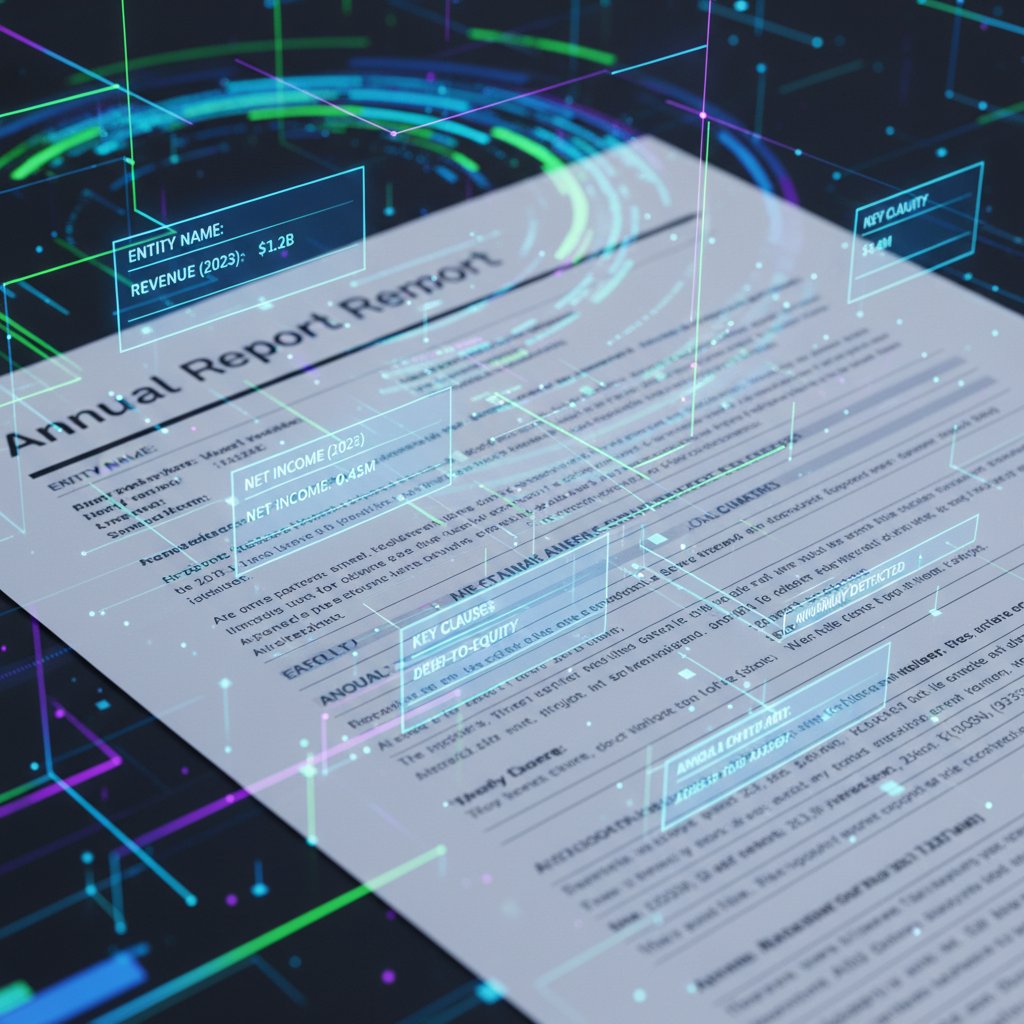
The message: if your organization deals in numbers, AI-powered reporting has a role—often where you least expect it.
Debunking myths and exposing the dark side
Five common myths about ai-powered financial reporting
- “AI makes finance jobs obsolete.” False. AI automates grunt work, but demand for strategic thinking and oversight grows.
- “AI is plug-and-play.” Not even close. Customization, integration, and data cleansing are huge lifts.
- “AI guarantees accuracy.” Only if fed clean data and managed by skilled humans.
- “AI is too expensive for SMBs.” Costs are dropping, and scalable platforms like futuretask.ai level the playing field for smaller players.
- “Regulation is a non-issue.” The legal landscape is changing fast; non-compliance can be fatal.
Hidden costs, risks, and ethical dilemmas
The sticker price of AI is just the start. Data privacy compliance, algorithmic bias mitigation, and the need for skilled oversight add real and sometimes hidden costs. According to EY (2025), almost every major financial organization struggles with regulatory complexity and talent shortages (EY, 2025).
| Cost Item | Traditional Reporting | AI-Powered Reporting |
|---|---|---|
| Manual labor | High | Low |
| Tech investment | Low | Medium-High |
| Data compliance/oversight | Medium | High |
| Error risk | Medium-High | Low |
| Talent/training | Low | Medium-High |
| Flexibility | Low | High |
Table 3: Cost-benefit analysis comparing traditional and AI-powered financial reporting, including hidden expenses
Source: Original analysis based on EY, DFIN, 2025
Job loss or job evolution? The workforce impact
The most persistent fear—job loss—is not unfounded, but it’s often misunderstood. While rote data-entry roles are shrinking, demand for finance pros who can interpret AI outputs, ensure compliance, and drive strategic value is surging. According to Zeni.ai (2025), the talent shortage in AI-finance expertise is now a top barrier to adoption (Zeni.ai, 2025). Upskilling is not optional; it’s the new baseline for relevance.
Priority checklist for upskilling in an AI-powered finance world:
- Learn the basics of AI and machine learning.
- Get fluent in data visualization and dashboard tools.
- Master new regulatory frameworks (GDPR, AI Act, etc.).
- Build expertise in data hygiene and governance.
- Develop critical thinking for evaluating AI outputs.
- Collaborate across IT, compliance, and business units.
- Stay agile—adapt to new tools as they emerge.
How to actually implement AI in your financial reporting
Readiness checklist: is your organization prepared?
- Assess your current processes: Identify manual choke points and data bottlenecks.
- Map your data landscape: Audit for completeness, cleanliness, and accessibility.
- Set clear objectives: Define what success looks like—speed, accuracy, compliance.
- Secure executive buy-in: Without leadership support, transformation stalls.
- Choose the right pilot project: Start small—think one report, not a total overhaul.
- Select scalable, transparent AI tools: Prioritize explainability and integration.
- Invest in training and upskilling: Bring teams along for the ride.
- Embed governance and compliance checks: Build controls into every step.
- Measure, iterate, improve: Use KPIs to guide continuous optimization.
- Scale up thoughtfully: Expand only after proven success, not before.
Choosing the right tools and platforms
Selecting ai-powered financial reporting tools is not just a procurement exercise; it’s a strategic decision. Evaluate for seamless integration with your existing stack, transparency in AI decision-making, and strong vendor support. Solutions like futuretask.ai are designed with scalability and usability in mind, enabling organizations to automate responsibly and adapt as needs evolve.
Measuring ROI: what success really looks like
ROI for AI in financial reporting isn’t just about cost savings. It’s about speed, accuracy, compliance, and the ability to make smarter decisions faster. Key KPIs include close-cycle duration, manual error rates, audit findings, and business agility.
| Solution | Automation Scope | Transparency | Integration | Support | Scalability |
|---|---|---|---|---|---|
| Solution A | High | Medium | High | High | High |
| Solution B | Medium | High | Medium | Medium | Medium |
| Solution C | Low | High | Low | Low | Low |
Table 4: Feature matrix comparing top AI-powered financial reporting solutions (anonymized)
Source: Original analysis based on vendor documentation and user reviews, 2025
Expert insights and contrarian viewpoints
What finance leaders are getting wrong
For every organization that rockets ahead with AI, many stumble over the basics: poor data hygiene, overambitious scope, or blind faith in the technology “fixing” deeper process issues. As industry veterans warn, even the best AI is only as good as its underlying data.
"AI is only as good as your data—and most companies are still in the dark ages." — Taylor
The most common misstep? Rushing to deploy flashy AI tools without investing in foundational process and data clean-up.
Voices from the trenches: user experiences
Mid-level accountants, controllers, and analysts are living the AI revolution up close. The stories are complex: more time spent on analysis and less on grunt work, but also the challenge of trusting outputs from a system they didn’t build. Some are skeptical, others inspired—but all agree that the shift is real, and irreversible.

The future: where AI and finance collide next
The next wave? AI-driven scenario modeling, automated ESG assurance, and hyper-personalized dashboards for every business unit. But unconventional uses are already emerging:
- Detecting charity fraud in nonprofit financials.
- Music royalty tracking in real time.
- Automated grant reporting for NGOs.
- Real-time compliance for decentralized finance projects.
- Dynamic cost allocation in creative agencies.
- Risk scoring for micro-lenders in emerging markets.
The AI-finance collision is creating entirely new roles—hybrid technologists, compliance architects, algorithm auditors—and plenty of new risks.
Your next move: adapting before you’re disrupted
Key takeaways: what matters most in 2025
Ai-powered financial reporting isn’t a futuristic buzzword—it’s the new baseline. The brutal truths: AI can be expensive, integration is never easy, and human oversight is essential. But the hidden wins—speed, accuracy, transparency, and real-time insight—are rewriting the rules of finance for those bold enough to adapt. As the landscape shifts, it’s the organizations who balance cutting-edge technology with seasoned judgment that come out ahead.

Start now: actionable steps for every finance leader
- Conduct an honest audit of current reporting processes.
- Identify quick wins for automation—don’t try to do everything at once.
- Choose AI tools with transparent outputs and proven track records.
- Get buy-in from both finance and IT leadership.
- Upskill your teams; invest in data literacy and AI basics.
- Build compliance and governance into every AI workflow.
- Develop clear KPIs to track progress and ROI.
- Foster a culture of experimentation, learning from both wins and failures.
The big question: will you lead, follow, or get left behind?
Here’s the punchline: the future of finance is being decided now, in every late-night close, every audit scramble, every boardroom debate. The era of ai-powered financial reporting is here—full of promise, peril, and the kind of high-stakes drama that defines real progress. The only question left is whether you’ll shape that future or be shaped by it. For those ready to automate responsibly, platforms like futuretask.ai stand ready—not as replacements, but as partners for those determined to lead from the front.
Sources
References cited in this article
- DFIN(dfinsolutions.com)
- Decimal(decimal.com)
- BCG(web-assets.bcg.com)
- Vena(venasolutions.com)
- ExplodingTopics(explodingtopics.com)
- Xoriant(xoriant.com)
- ResearchGate(researchgate.net)
- Medium(medium.com)
- DigitalDefynd(digitaldefynd.com)
- Forbes(forbes.com)
- KPMG(kpmg.com)
- Medium(medium.com)
- Redress Compliance(redresscompliance.com)
- Euromoney(euromoneythoughtleadership.com)
- MIT LFE(lfe.mit.edu)
- SAP(sap.com)
- LeewayHertz(leewayhertz.com)
- Younium(younium.com)
- Vena(venasolutions.com)
- SmartDev(smartdev.com)
- Citizens Bank(citizensbank.com)
- NVIDIA(nvidia.com)
- Vention(ventionteams.com)
- EZ-XBRL(ez-xbrl.com)
- World Economic Forum(weforum.org)
- Fintech Global(fintech.global)
- Debevoise(debevoise.com)
- EY(ey.com)
- UK Finance(ukfinance.org.uk)
- CEPR(cepr.org)
- LinkedIn(linkedin.com)
- WJARR(wjarr.co.in)
- Solvexia(solvexia.com)
- DigitalDefynd(digitaldefynd.com)
Automate Your Tasks, Transform Your Business
FutureTask.ai revolutionizes your workflow by automating complex tasks typically outsourced to freelancers and agencies. Our powerful AI-driven platform leverages cutting-edge LLM technology to deliver precision, speed, and consistency at scale. Whether you're managing content creation, data analytics, marketing campaigns, or customer support, FutureTask.ai ensures seamless task execution, significant cost savings, and unmatched efficiency. Transform your business operations, eliminate delays, reduce operational overhead, and gain a competitive advantage with intelligent automation.
Get startedReady to Automate Your Business?
Start transforming tasks into automated processes today
Frequently Asked Questions
What specific problem does AI-powered financial reporting solve for CFOs?
AI-powered financial reporting automates data reconciliation and catches discrepancies in real time, eliminating manual errors and the need for late-night crisis management. According to CFO accounts, AI platforms flag anomalies and cross-reference transaction entries automatically, reducing the time spent on tedious reconciliation work.
What percentage of financial leaders plan to increase AI use in reporting?
According to DFIN's 2025 research, 97% of financial leaders plan to increase AI use in reporting within three years, signaling a major shift away from legacy, error-prone methods.
What are the main challenges with traditional financial reporting that AI aims to address?
Traditional financial reporting suffers from manual data entry errors, slow book closings that take days or weeks, data privacy and regulatory compliance issues, and integration difficulties with legacy systems, according to EY's 2025 research.
Is AI-powered financial reporting still a luxury or a necessity in 2026?
According to the article, AI-powered financial reporting is no longer a luxury but an existential necessity in 2026, with finance leaders who master these tools gaining a strategic edge.
From the Archive
Explore more from Ai-powered task automation

Ai-Powered Expense Reporting Automation: Costs and Benefits

Financial Reporting Automation: When to Trust Machines with Your Numbers

How AI Financial Forecasting Automation Changes Finance Strategy

Financial Report Accuracy Automation: Separating Hype From Reality

Ai-Powered Financial Analysis: Who Wins This Power Shift?