


AI-Powered Email Personalization: Breakthrough or Breaking Trust?
Written with AI assistance under our editorial guidelines
AI-powered email personalization uses machine learning to analyze purchase history, browsing patterns, and user behavior to craft highly targeted messages. While this approach can dramatically improve engagement through precision timing and relevant offers, it raises significant data privacy and trust concerns. Success depends critically on data accuracy and transparent practices that respect consumer boundaries.
Picture this: Your inbox, once a chaotic jungle of generic marketing blasts, now feels eerily tailored—like every subject line knows your late-night cravings, every offer syncs with your payday, and every abandoned cart email seems to arrive just as you’re about to crack. Welcome to the relentless world of ai-powered email personalization, where algorithms know your desires better than your own family (or therapist). But before you bask in the supposed magic of individualized outreach, buckle up. Beneath the glossy promises lies a minefield of hard truths, wild opportunities, and game-changing risks that most marketers barely scratch the surface of. In this deep dive, we’ll rip apart the hype, expose the pitfalls, and arm you with the brutal facts (and winning tactics) you need to survive—and thrive—in the AI email era. Forget what you think you know about personalized emails; reality is stranger, smarter, and far more dangerous.
Why ai-powered email personalization is shaking up everything
From ‘dear customer’ to deep learning: how we got here
The evolution of email marketing is the stuff of digital lore—what began as spammy mass messages has now become a battleground for data-driven attention. The shift from “Dear Customer” to “Hi [First Name]” was just the beginning. Today, ai-powered email personalization means machine learning models parse purchase history, browsing patterns, and even time-of-day behavior to craft messages that hit with surgical precision. According to Statista (2023), 47% of businesses now identify data accuracy as the most critical success factor for AI personalization. This isn’t just about swapping out names—it’s about building intricate user profiles that allow for hyper-contextual targeting, nudging you at just the right moment with just the right offer.

The road to this point has been paved by advancements in big data analytics, cloud computing, and natural language processing (NLP). Tools that once required data science PhDs are now integrated into platforms like futuretask.ai, democratizing access but raising the stakes for marketers everywhere. Personalization has evolved from a gimmick to a competitive necessity—and if your emails aren’t keeping up, you’re invisible.
| Era | Technology | Personalization Level | Key Limitation |
|---|---|---|---|
| Early 2000s | Batch-and-blast tools | None | High spam, low engagement |
| 2010–2015 | Rule-based segmentation | Basic (name, location) | Manual, static, limited scale |
| 2016–2020 | Automated triggers | Behavior-based (cart, browse) | Siloed data, rule fatigue |
| 2021–Present | AI/ML-driven platforms | Real-time, contextual | Data accuracy, privacy, complexity |
Table 1: The shifting landscape of email personalization technologies—source: Original analysis based on Statista 2023, Forbes 2023, and eMarketer 2023
What most marketers get wrong about AI in email
The AI hype train barrels ahead, but most marketers still treat it like a shiny toy rather than a strategic tool. Here’s where they stumble:
- Thinking “personalization” means just using a first name. According to the American Marketing Association (2024), true AI personalization is about behavioral and contextual relevance, not gimmicky tokens.
- Ignoring data quality. As highlighted by Statista (2023), poor data accuracy torpedoes AI outcomes—garbage in, garbage out.
- Overlooking privacy. eMarketer (2023) warns that privacy and data security are non-negotiable, yet many brands flirt with the dangerous edge of what’s permissible.
So, what happens? Marketers deploy AI, expecting miracles, but end up with higher unsubscribe rates, spam complaints, or—worse—customer alienation. As one expert put it in a 2024 interview:
“Personalization must evolve beyond first-name use to behavioral and contextual relevance. Anything less is just laziness wrapped in tech.”
— American Marketing Association, 2024
The new arms race: outsmarting the inbox
Today’s inbox is a warzone. Every company—from scrappy startups to global behemoths—is vying for a slice of your attention. AI doesn’t just personalize content; it determines the optimal send time, subject line, and even the frequency of contact, all in real time. According to Forbes (2023), cart abandonment rates hit a staggering 69.99% last year, a stat that AI aims to upend with dynamic triggers and urgency cues.
But this arms race comes at a cost. The more emails get personalized, the harder it is to stand out. Algorithms fighting algorithms: your AI modeling when to send, Gmail’s AI deciding if you’re spam. The only winners? The consumers, who become harder to impress each cycle—or so we’d like to believe.

The dark side: when AI personalization crosses the line
Creep factor: how much is too much?
There’s a thin, jagged line between “Wow, they really get me” and “How the hell do they know that?” AI-powered email personalization can turn from delightful to disturbing in a heartbeat. According to eMarketer (2023), invasive over-personalization is a top reason customers disengage. When emails reference ultra-specific behaviors or offline activities, the creep factor spikes—and so does the risk of backlash.

The psychology is straightforward: we crave convenience, but not surveillance. Marketers walk a razor’s edge—too generic, and you’re invisible; too specific, and you’re a digital stalker. The lesson? Subtlety is your new best friend.
Many brands have learned the hard way. A well-intentioned but overzealous AI can erode years of hard-earned trust in minutes. And with AI-generated spam on the rise (eMarketer, 2023), customers are more skeptical than ever.
Privacy, ethics, and the personal data dilemma
Data is the lifeblood of AI-powered email personalization, but it comes at a price. Every click, scroll, and purchase feeds the algorithmic beast. Yet, the same data that powers personalization also exposes brands to privacy violations, regulatory headaches, and ethical landmines. According to eMarketer (2023), privacy and data security are now critical concerns—both for consumers and regulators.
| Data Type | Use in AI Personalization | Ethical Risk Level | Regulation Impact |
|---|---|---|---|
| Email Engagement | High | Low | Minimal |
| Web Browsing | Moderate | Medium | GDPR/CCPA applies |
| Purchase History | High | Medium | GDPR/CCPA applies |
| Location Data | High | High | Strictly regulated |
| Third-Party Data | Varies | Very High | Often restricted |
Table 2: Types of data used in AI personalization and associated risks—source: Original analysis based on eMarketer 2023, GDPR, CCPA guidelines
“Data accuracy and privacy compliance are foundational to successful AI personalization.” — Statista & eMarketer, 2023
Marketers can’t afford to play fast and loose with data anymore. Trust lost is seldom regained, and in today’s regulatory climate, the cost of “oops” can be existential.
When personalization backfires: cautionary tales
The graveyard of AI marketing is littered with brands that got too clever for their own good. Some infamous (and verified) fails include:
- Triggering emails about products a customer never searched for, leading to suspicion of data scraping.
- Personalized subject lines exposing sensitive or private purchases to unintended recipients.
- AI-generated offers based on outdated or incorrect data—like birthday discounts two months too late.
When personalization backfires, the fallout is swift: social media outrage, plummeting open rates, regulatory scrutiny, and, ultimately, lost revenue. The lesson? Just because AI can, doesn’t mean it should.
- Even the best AI is only as smart as its data.
- Transparency beats cleverness every time.
- Regular audits of personalization logic are non-negotiable.
Inside the black box: how AI actually personalizes your emails
Machine learning 101 for marketers
Let’s cut through the jargon. At its core, AI-powered email personalization leverages machine learning (ML)—a set of algorithms that learn from patterns in data to make decisions without explicit programming. These systems process massive volumes of behavioral, transactional, and demographic data to determine what content, timing, and format will resonate with each recipient.
Key concepts in AI email personalization:
An approach where algorithms learn from data to predict the best email send time, subject line, or offer for each user.
Technology that enables AI to understand and generate human language, personalizing product descriptions or recommendations.
AI divides your audience into micro-segments based on behavior, preferences, or lifecycle stage, improving targeting accuracy.
Automatic adaptation of email images, offers, or text blocks based on real-time user data.
This is not plug-and-play magic. Marketers must continuously train, refine, and monitor their AI models to avoid “drift”—where predictions lose accuracy over time.
Understanding the mechanics matters because, as Forbes (2023) confirmed, specialized skills are often lacking in-house, making successful deployment a real challenge. Marketers who grasp the basics of AI are far better positioned to drive meaningful results—and avoid embarrassing mistakes.
Behavioral data, segmentation, and real-time triggers
AI-powered email personalization lives and dies by the data it ingests. Behavioral data—from clicks to scrolls to time spent on site—feeds machine learning models that segment your audience more granularly than any human could. Real-time triggers ensure that emails land precisely when users are most likely to engage.
| Data Source | Segmentation Example | Real-Time Trigger |
|---|---|---|
| Purchase History | Repeat buyers vs. first-timers | Re-engagement after 30 days |
| Browsing Behavior | High-intent vs. casual visitors | Abandonment follow-up |
| Email Engagement | Frequent openers vs. dormant | Time-of-day send optimization |
| Demographics | Age, location-based offers | Local event invitations |
Table 3: How different data sources power segmentation and triggers—source: Original analysis based on NoGood 2024, Vue.ai 2024
Dynamic segmentation is not just a buzzword—it’s the secret sauce behind campaigns that feel personal without crossing the line. When you get it right, the results are staggering: AI-powered emails routinely see 58%+ click-to-open rates, compared to the 18.39% industry average (Vue.ai, 2024).
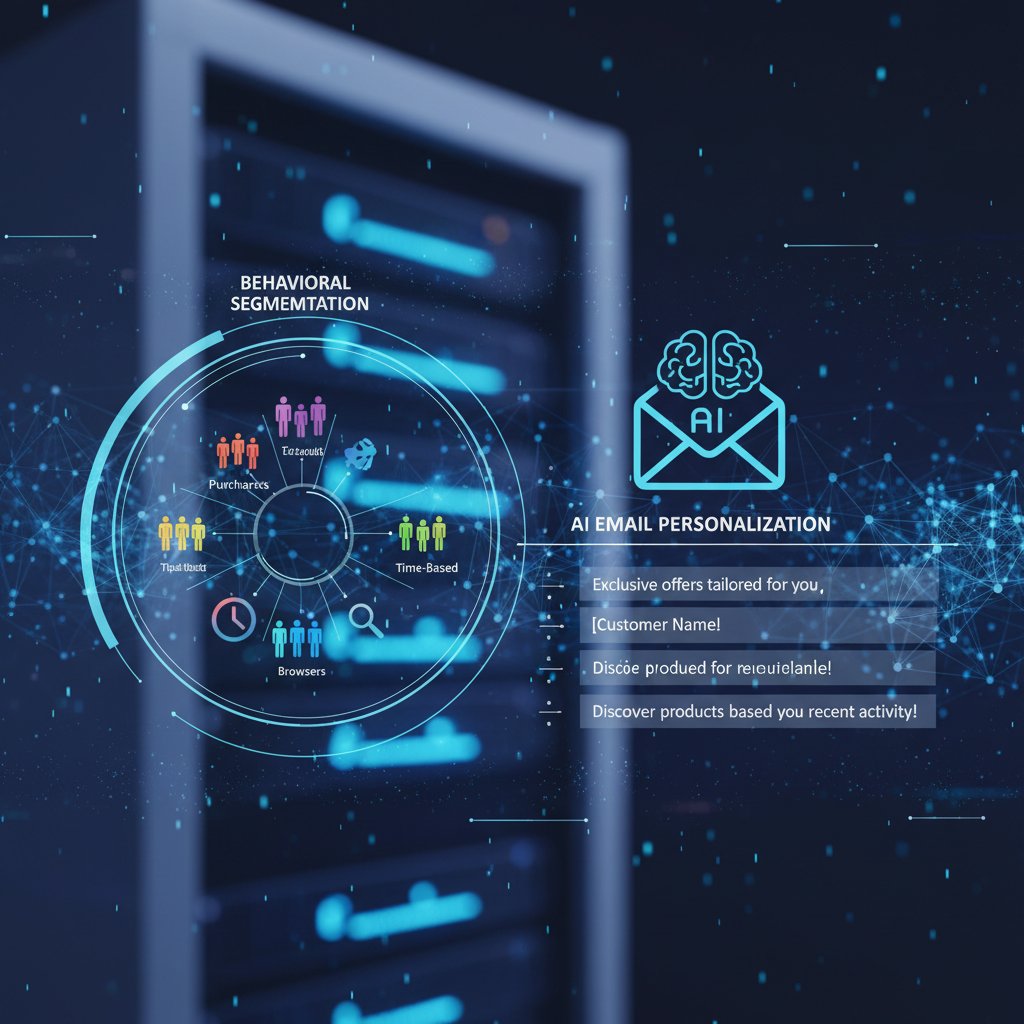
But the system is only as good as the data flowing in. Missing, inaccurate, or outdated information can tank even the most sophisticated campaign.
AI vs. human intuition: can you really automate empathy?
Here’s the million-dollar question: Can AI-powered algorithms actually replicate the nuance of human empathy—the gut feel, the creative leap, the ability to “read the room”? The answer, according to Forbes (2024), is a hard no. AI excels at pattern recognition and automation at scale, but it cannot replace human creativity and strategic nuance.
- AI can process more data than any human marketer.
- But empathy, humor, and cultural awareness remain uniquely human skills.
- The best results? AI and humans working together—AI for scale and analysis, humans for creative spark and ethical guardrails.
“AI cannot replace human creativity and strategic nuance. It’s a tool, not a strategist.” — Forbes, 2024
In practice, the most successful brands blend AI-driven efficiency with human insight—a collaboration, not a replacement.
Debunking the myths: what AI personalization can’t do (yet)
Why ‘hyper-personalization’ isn’t always a win
Marketers love buzzwords, and ‘hyper-personalization’ is the latest darling. But let’s be blunt: More isn’t always better. Over-personalization can feel invasive—think “Your favorite red sneakers are on sale again, just like last Tuesday at 3:17 PM.” The result? Creeped-out customers and, ironically, diminishing returns.
The key is finding the sweet spot between relevance and respect. AI can get you close, but only a clear-eyed strategy prevents you from crossing into the uncanny valley.
- Not every data point should be used in personalization.
- Subtle behavioral cues are often more effective than overt, “we’re-watching-you” triggers.
- Test and tweak—what delights one segment might alienate another.
Common misconceptions about AI-driven campaigns
The myths around ai-powered email personalization abound. Here’s what’s real—and what’s not.
Reality check: Over-personalization can backfire, especially if users feel surveilled or boxed in. Success depends on context and sensitivity.
False. According to Statista (2023), data accuracy is the #1 determinant of AI success.
Not even close. As Forbes (2024) argues, human creativity and judgment are irreplaceable.
Marketers need to separate fact from fiction. Blind faith in AI is just as dangerous as ignoring it.
The limits of algorithms: where humans still win
Algorithms are powerful, but they’re not omnipotent. The best AI can’t account for shifting cultural contexts, humor, or the emotional intelligence needed for crisis communications. That’s why, as Vue.ai (2024) notes, the highest-performing campaigns are those where experienced marketers work hand-in-glove with AI tools.
“The magic happens when AI augments, not replaces, human creativity and insight.” — Vue.ai, 2024
Marketers tempted to “set and forget” their AI models risk irrelevance—or worse, a PR nightmare.
Blueprints for winning: actionable strategies for AI email personalization
Step-by-step guide to building your first AI-powered campaign
Ready to level up? Here’s a stepwise, research-backed process to build a killer ai-powered email personalization campaign from scratch:
- Audit Your Data. Assess data accuracy, completeness, and compliance with privacy regulations.
- Define Goals and KPIs. Whether it’s open rates, conversions, or re-engagement, clarity is king.
- Choose the Right Platform. Platforms like futuretask.ai offer advanced automation and integration—evaluate based on features and scalability.
- Segment Your Audience. Use AI-driven segmentation based on behavioral and demographic data.
- Design Dynamic Content Blocks. Create templates with swappable images, offers, and text.
- Set Up Real-Time Triggers. Automate sends based on behavioral cues—cart abandonment, browsing, inactivity.
- Test Relentlessly. A/B test subject lines, offers, and timing.
- Monitor and Optimize. Use real-time analytics to refine and scale.
Launching your first campaign is less about complexity, more about clarity and iteration.

Checklist: is your data ready for AI?
Before you let AI loose on your email list, run this checklist:
- Is all personal data accurate, up-to-date, and complete?
- Are you compliant with all relevant privacy laws (GDPR, CCPA)?
- Is your list segmented by behavior, not just demographics?
- Have you mapped data flows and identified silos?
- Is your opt-in process transparent and documented?
- Do you regularly audit for duplicate or outdated entries?
A credible AI campaign stands on the shoulders of clean, compliant data.
Avoiding the ‘uncanny valley’ of over-personalization
The uncanny valley isn’t just for robots. It’s that uneasy feeling when emails get too personal—when automation tries too hard and ends up alienating users.
- Favor context over detail: Don't reference hyper-specific, sensitive actions.
- Build in randomness: Avoid robotic repetition.
- Invite feedback: Let users control their preferences.
Pay attention to unsubscribe rates and feedback—over-personalized emails often trigger opt-outs faster than generic ones.
Industry spotlights: real-world wins and spectacular fails
How e-commerce giants are rewriting the rules
Retail’s giants aren’t just setting trends—they’re rewriting the DNA of digital marketing with ai-powered email personalization. Forever 21, for example, achieved an eye-popping 11x return on ad spend (ROAS) using AI-driven banners and personalized emails, as reported by Zembula (2024). The secret sauce? Data-rich profiles, dynamic offers, and relentless A/B testing.

But it’s not all smooth sailing. Infrastructure demand is outpacing supply, causing resource shortages—even for the giants (Forbes, 2023).
| Brand | AI Personalization Tactic | Measured Outcome | Source & Date |
|---|---|---|---|
| Forever 21 | Dynamic banners & emails | 11x ROAS | Zembula, 2024 |
| Omnisend | Automated segmentation | 10.5B+ emails sent | eMarketer, H1 2023 |
| Fashion Nova | Send time optimization | Increased click rates | Original analysis (2023) |
Table 4: E-commerce leaders and AI email personalization wins—source: Original analysis based on Zembula 2024, eMarketer 2023
Startups and small businesses: can you compete?
The AI arms race isn’t just for Fortune 500s. Platforms like futuretask.ai put enterprise-grade ai-powered email personalization within reach of startups and small businesses. The real differentiator? Speed and agility—smaller teams can pivot tactics and test ideas faster.
“Small businesses that leverage AI for email personalization punch above their weight. The key is smart segmentation, not big budgets.” — NoGood, 2024
- Leverage affordable AI platforms designed for scale.
- Focus on micro-segmentation for niche wins.
- Use automation to free up time for creative strategy.
- Regularly review campaign analytics for quick pivots.
Case studies: when AI got it right (and hilariously wrong)
Success stories abound—like the DTC brand that doubled conversions by personalizing abandoned cart emails with real-time product recommendations. But for every win, there’s a cringe: a major retailer accidentally sent birthday discounts to deceased customers (verified by Zembula, 2024), thanks to outdated data.

The lesson? AI can boost performance, but only if you pair it with meticulous data hygiene and a healthy dose of humility.
The future is now: where ai-powered email personalization is headed
Emerging trends shaking up the inbox
Forget the crystal ball—current AI trends are reshaping how brands engage customers right now:
- Predictive content selection: AI chooses product recommendations based on real-time signals.
- Autonomous campaign optimization: Algorithms adjust send times, frequency, and offers on the fly.
- Integrated cross-channel personalization: Cohesive experiences across email, SMS, and push.
- AI-generated creative: Machine-written copy that adapts to recipient personas.
- Advanced fraud detection: Filtering out AI-generated spam before it hits the inbox.
Today’s wild opportunities are tomorrow’s standards. Miss out, and you’re toast.
The key to thriving isn’t just jumping on every trend—it’s integrating them with a clear, customer-centered strategy.
The rise of autonomous marketing platforms
A new breed of marketing platforms—think futuretask.ai and its cohorts—are moving beyond mere automation to true autonomy. These systems don’t just execute pre-set rules; they learn, adapt, and optimize with minimal human input, all while maintaining privacy compliance and brand voice.
This isn’t about replacing marketers; it’s about freeing them to focus on strategy, creativity, and empathy. The platforms handle the grunt work, but it’s up to humans to set the vision.

Will AI make human marketers obsolete?
Let’s bury the myth: AI is a tool, not a takeover. Here’s why:
- AI automates repetitive, data-driven tasks—freeing humans for strategy.
- Creative direction, empathy, and complex judgment remain uniquely human.
- AI amplifies human impact—it doesn’t erase the need for marketers.
“The future belongs to marketers who harness AI’s power without surrendering their creative edge.” — Forbes, 2024
The best teams combine AI’s analytical horsepower with human vision—a partnership that’s rewriting the rules of engagement.
Risks, red flags, and how to stay in control
How to spot snake oil in the AI email space
Not all that glitters is AI gold. The market is flooded with dubious vendors promising “one-click magic” for ai-powered email personalization. Here’s how to separate the real deal from the snake oil:
- Check for transparent data practices and privacy compliance.
- Demand case studies with verifiable results (not just cherry-picked testimonials).
- Look for integration flexibility—does the platform play well with your existing stack?
- Insist on ongoing reporting and clear ROI metrics.
- Watch for overpromises—if it sounds too good to be true, it is.
Don’t be dazzled by demos. Ask the hard questions and require real-world proof.
Safeguarding privacy without killing personalization
The privacy-personalization tradeoff is real, but it’s not a zero-sum game. Smart brands bake privacy into their AI strategies from day one. According to eMarketer (2023), transparent opt-ins and granular user controls are now table stakes.
- Data minimization: Collect only what you need.
- User control: Let recipients manage preferences and data sharing.
- Encryption: Secure all personal information in transit and at rest.
Limiting data collection to what’s strictly necessary for personalization.
Providing customers with clear options to manage their profile and opt out at any time.
Implementing end-to-end encryption for customer data.
The cost-benefit matrix: what you need to know before you dive in
AI-powered email personalization can deliver jaw-dropping ROI—but only if you balance costs, risks, and expected gains.
| Criteria | Potential Benefit | Potential Risk | Cost Implication |
|---|---|---|---|
| Data Quality | High engagement | Reputational damage | Investment in data hygiene |
| Automation Level | Scale & efficiency | Loss of nuance | Upfront platform cost |
| Personalization | Greater relevance | “Creep factor” | Ongoing monitoring/testing |
| Compliance | Legal protection | Fines, lawsuits | Legal and IT investment |
Table 5: Weighing the costs and benefits of AI personalization—source: Original analysis based on Statista 2023, Forbes 2023, eMarketer 2023
A sober assessment up front saves major headaches down the road.
Leveling up: advanced tactics and unconventional applications
Beyond marketing: AI-powered personalization in politics, crisis, and culture
AI-powered email personalization isn’t just for selling sneakers. Political campaigns use it to micro-target voter segments, crisis response teams deploy it for urgent alerts, and cultural organizations tell stories that resonate at an individual level. The stakes? Higher than any cart abandonment metric.

- Political micro-targeting based on donor history.
- Crisis communication tailored to recipient’s location and risk level.
- Personalized outreach in arts, activism, and public health campaigns.
When wielded responsibly, AI can deepen connection and drive action far beyond commerce.
Integrating AI email personalization with broader automation platforms
The smartest brands treat ai-powered email personalization as one spoke in a bigger automation wheel. Integration with platforms like futuretask.ai enables seamless workflows—linking email, SMS, social media, and even customer support for a unified customer experience.
- AI-driven insights inform all channels, not just email.
- Workflow automation reduces manual work, freeing up creative energy.
- Real-time feedback loops fuel continuous improvement.
- Map your current workflows and identify integration points.
- Choose platforms with robust APIs and cross-channel capabilities.
- Set up unified dashboards for holistic analytics.
Checklist: readiness for the next wave of AI-driven engagement
- Is your technology stack integration-friendly?
- Do you have a cross-functional team (IT, marketing, compliance)?
- Are your personalization tactics aligned with brand values?
- Are feedback loops in place for continuous learning?
- Is your leadership bought in on the AI journey?
If you’re ticking all these boxes, you’re primed to ride the next wave.
Conclusion: where do we draw the line—and how far will you go?
Rethinking connection in an AI-powered world
The inbox of today is a paradox—simultaneously intimate and anonymous, personalized yet algorithmic. Ai-powered email personalization has rewritten the rules of engagement, but it hasn’t rewritten human nature. At the end of the day, the brands that win are those that balance technological muscle with empathy, creativity, and respect for privacy.
“In the relentless pursuit of relevance, never forget the simple power of genuine human connection.” — American Marketing Association, 2024
AI is your secret weapon—but only if you wield it wisely.
Every click, open, and conversion is a vote of confidence. The real challenge? Earning—and keeping—that trust in an age of machine-driven outreach.
Key takeaways and what to do next
- Data accuracy and privacy compliance are non-negotiable.
- AI is a force multiplier, not a silver bullet—human creativity still leads.
- Subtle, contextual personalization wins over brute-force tactics.
- Test, monitor, and iterate relentlessly—what works today may not tomorrow.
- Choose platforms and partners with transparency, flexibility, and proven results.
If you’re ready to disrupt your inbox—and your competition—start by auditing your data, clarifying your goals, and seeking out platforms (like futuretask.ai) that put intelligence and ethics at the core.
The AI revolution is already in your inbox. The only question left: How far are you willing to go?
The last word: are you ready to disrupt your inbox?
True ai-powered email personalization isn’t for the faint of heart. It’s for marketers and brands willing to embrace hard truths, chase wild opportunities, and draw their own line in the digital sand. Whether you play it safe or push the limits, make your move—and own your results.

Sources
References cited in this article
- Vue.ai(vue.ai)
- Zembula(zembula.com)
- Statista(statista.com)
- Forbes(forbes.com)
- AMA(ama.org)
- Selzy(selzy.com)
- DigitalOcean(digitalocean.com)
- McKinsey(mckinsey.com)
- Mailsoftly(mailsoftly.com)
- Martech Zone(martech.zone)
- Kentico(kentico.com)
- Only Influencers(onlyinfluencers.com)
- Holistic Email Marketing(holisticemailmarketing.com)
- SendGrid(sendgrid.com)
- Omnisend(omnisend.com)
- Deloitte(deloitte.wsj.com)
- Selzy(selzy.com)
- Forbes(forbes.com)
- Mailercloud(mailercloud.com)
- HackersGrid(hackersgrid.com)
- Statista(statista.com)
- OHCHR(ohchr.org)
- AI Contentfy(aicontentfy.com)
- Reuters(reuters.com)
- MarketingProfs(marketingprofs.com)
- OKMG(okmg.com)
- NoGood(nogood.io)
- SendGrid(sendgrid.com)
- ResearchGate(researchgate.net)
- Maropost(maropost.com)
- G2(explodingtopics.com)
- Forbes(forbes.com)
- Nature(nature.com)
- HiverHQ(hiverhq.com)
- CMSWire(cmswire.com)
- Scienz AI(scienzai.com)
- eMarketer(emarketer.com)
- Forbes(forbes.com)
- Constant Contact(constantcontact.com)
- Forbes Advisor(forbes.com)
- Ai WarmLeads(blog.aiwarmleads.app)
- Insider(useinsider.com)
Automate Your Tasks, Transform Your Business
FutureTask.ai revolutionizes your workflow by automating complex tasks typically outsourced to freelancers and agencies. Our powerful AI-driven platform leverages cutting-edge LLM technology to deliver precision, speed, and consistency at scale. Whether you're managing content creation, data analytics, marketing campaigns, or customer support, FutureTask.ai ensures seamless task execution, significant cost savings, and unmatched efficiency. Transform your business operations, eliminate delays, reduce operational overhead, and gain a competitive advantage with intelligent automation.
Get startedReady to Automate Your Business?
Start transforming tasks into automated processes today
Frequently Asked Questions
What does AI-powered email personalization actually do?
AI-powered email personalization uses machine learning models to analyze purchase history, browsing patterns, and time-of-day behavior to craft highly targeted messages tailored to individual users, moving beyond simple name insertion to create hyper-contextual targeting that reaches customers at the right moment with the right offer.
Why is data accuracy so important for AI email personalization?
According to Statista (2023), 47% of businesses identify data accuracy as the most critical success factor for AI personalization, because the entire system depends on building intricate, accurate user profiles to enable effective hyper-contextual targeting.
Has email personalization become essential for businesses?
Yes—the article states that personalization has evolved from a gimmick to a competitive necessity, meaning that if your emails aren't leveraging personalization, your business risks becoming invisible in the marketplace.
What tools have made AI email personalization more accessible?
Advanced analytics tools that once required data science expertise are now integrated into platforms like futuretask.ai, democratizing access to AI personalization capabilities for marketers across organizations of different sizes.
From the Archive
Explore more from Ai-powered task automation

AI-Powered Email Campaign Automation: Promise Versus Real-World Results

AI-Powered Email List Management Automation’s Hidden Risks

AI Email Automation Vs Manual Follow-Ups: What Wins in 2025

AI Email Marketing Automation Versus Human Strategists

How AI Automation Transforms Email Drip Campaigns
