


Ai-Powered Employee Performance Tracking: Productivity or Control?
Written with AI assistance under our editorial guidelines
AI-powered employee performance tracking systems now monitor employees continuously through keystroke tracking, response times, and project velocity metrics. While companies claim this improves productivity, critics argue it represents pervasive workplace surveillance that raises concerns about privacy, fairness, and employee autonomy in hybrid work environments.
Think your work is just between you and your boss? Not anymore. In 2025, AI-powered employee performance tracking has quietly invaded every digital corner of the workplace—from your keystrokes to your coffee breaks—turning the myth of the annual review into a living, breathing, always-on algorithmic judge. Sure, it’s sold as productivity’s best friend, but behind the marketing gloss lies a system bristling with power, risk, and the kind of objectivity that makes people sweat. Whether you’re a leader, an HR pro, or someone grinding away in the hybrid trenches, this isn’t the “future of work”—it’s the present, and it’s shaping your reputation, your opportunities, and your sanity. Dive into the secrets, the surveillance, the saviors, and the traps of AI-powered employee performance tracking: here are the seven truths HR can’t ignore.
Why ai-powered employee performance tracking is everywhere now
The rise from punch clocks to algorithms
Forget the nostalgia of punch clocks and sign-in sheets—the age of AI has shattered any illusion that tracking performance is a passive, periodic ritual. In today’s landscape, performance management has become an arms race powered by data, algorithms, and a relentless drive for efficiency. Where managers once relied on quarterly gut checks and Excel-driven scorecards, modern HR teams now deploy AI-powered employee performance tracking systems that monitor everything from project completion velocity to Slack response times.
According to McKinsey’s research, a staggering 70% of HR executives acknowledge that AI has profoundly improved the employee experience. The shift isn’t just technological—it’s cultural. AI systems like those from Workday, IBM Watson, and Google have made data-driven, real-time feedback not only possible but expected. This marks a sharp break from the static, annual review process, with AI now continuously analyzing, benchmarking, and sometimes even nudging employees toward “optimal” behaviors.
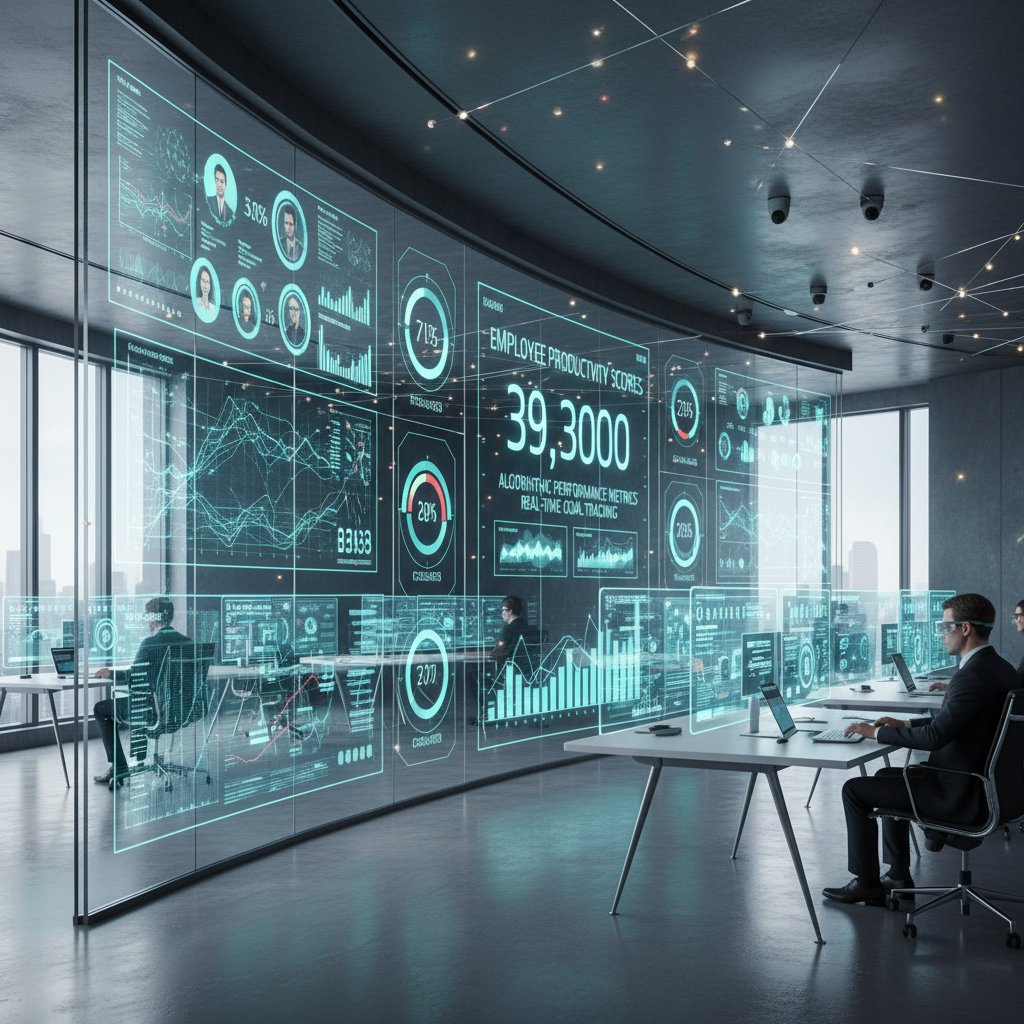
The result? Employees live in a world where every action—productive or not—feeds the insatiable hunger of workplace analytics. In this context, the punch clock seems almost romantic. Now, the algorithm never sleeps.
| Era | Main Tracking Method | HR’s Focus | Employee Experience |
|---|---|---|---|
| 1980s–1990s | Punch clocks, paper logs | Manual timekeeping | Low surveillance, subjective |
| 2000s | Digital spreadsheets, badge scans | Basic reporting | Some automation, generic |
| 2010s | Performance management software | Goal alignment, reviews | Mixed feedback, delays |
| 2020s–2025 | AI-driven analytics, real-time data | Continuous optimization | High monitoring, real-time |
Table 1: Evolution of employee performance tracking methods. Source: Original analysis based on McKinsey, Deloitte, AIHR Institute.
Who’s pushing the trend—and why
The push for AI-powered employee performance tracking is coming from all directions, but especially from senior HR leaders and C-suite executives desperate for an edge in the productivity wars. According to Deloitte’s 2024 report, 74% of employers now prioritize new ways to measure performance beyond simple productivity, focusing on more holistic value indicators. For them, AI isn’t a “nice to have”—it’s a competitive weapon, a way to cut through the noise of hybrid and remote work and to surface the “real” differences between top and average performers.
Yet it’s not just a management play. The explosion of hybrid and remote work post-pandemic means that old models of performance measurement—relying on managers’ memory or watercooler “feel”—have lost their authority. Employees themselves are asking for more objective, transparent assessment methods, even if they’re wary of what that means in practice.
What’s driving this trend? Two words: risk and reward. Companies want to reduce flight risk, spot burnout before it erupts, and ensure that their investment in talent translates into measurable business outcomes. AI offers the seductive promise of objectivity, scalability, and actionable insights—if you trust the algorithms.
"AI is no longer a futuristic concept in HR; it's now a necessity for any organization looking to understand and optimize workforce performance in real time." — AIHR Institute, 2023
Big numbers: how many workers are under the lens?
The scale of this transformation is hard to overstate. As of 2024, Microsoft found that 75% of employees use AI in their daily work. But that’s not the whole story: 45% of those same employees worry that AI might one day replace them, highlighting the deep ambivalence—and power dynamics—at play. Meanwhile, Deloitte confirms that most major HR and employee experience platforms adopted AI between 2023 and 2024, embedding real-time analytics into the DNA of everyday work.
| Statistic | Value | Source |
|---|---|---|
| Employees using AI at work (2024) | 75% | Microsoft Worklab |
| HR leaders seeing AI improve employee experience | 70% | McKinsey |
| Employees worried about AI replacing jobs (2024) | 45% | Microsoft Worklab |
| Employers prioritizing new performance measures | 74% | Deloitte UK |
Table 2: Key statistics on AI adoption and perception in employee performance tracking. Source: Original analysis based on Microsoft, McKinsey, Deloitte.
How ai actually tracks employee performance (and where it fails)
Data sources: what’s really being measured?
Open your laptop at 9:00 a.m., and you’re feeding the system—whether you realize it or not. AI-powered employee performance tracking doesn’t just count emails or time on Zoom. Today’s systems aggregate an ocean of data: task completion rates, keystroke patterns, project management tool updates, chat analytics, even biometric signals where legal. The granularity is shocking.
According to Forbes, these platforms harness APIs and integrations to pull data from every app you touch: Asana, Slack, GitHub, Salesforce, and more. The goal isn’t just to tally hours or clicks—it’s to map patterns of productivity, collaboration, and even sentiment, sometimes down to the minute. That’s a major leap from legacy performance reviews.

The dark side? The lines between measurement and surveillance are blurry. Not everything that can be measured should be, and the hunger for data sometimes crosses into the territory of privacy invasion.
Inside the black box: algorithmic assessment explained
What actually happens to all that data? It disappears into what many call “the black box”—complex algorithms that analyze, benchmark, and predict. AI-driven assessments typically score employees based on customizable metrics: output quality, collaboration index, response time, innovation (measured by unique contributions or code commits), and adherence to deadlines.
But here’s the problem: even the most advanced AI can only see what it’s programmed to see. The promise of objectivity often collides with the messy realities of human work. According to the AIHR Institute, these systems can flag high performers overlooked by managers—but they can just as easily misclassify outliers or penalize creative workflows that don’t fit the mold.
Key steps in a typical AI-driven assessment:
- Data ingestion from workplace tools and devices.
- Feature extraction—identifying relevant patterns (e.g., task completion speed).
- Scoring and benchmarking against peers or company standards.
- Generating feedback, risk alerts, or performance nudges, sometimes in real time.
| Metric Tracked | Data Source | Typical Use Case | Known Limitations |
|---|---|---|---|
| Task completion times | Project management software | Time management, efficiency | Ignores task complexity |
| Email/chat frequency | Communication apps (Slack, Teams) | Collaboration, responsiveness | Penalizes deep work |
| Code commits | Dev platforms (GitHub, GitLab) | Innovation, output | Doesn’t measure quality |
| Customer feedback | CRM, survey tools | Service quality, engagement | Can be gamed or biased |
| Biometric data | Wearables (optional, rare) | Wellness, fatigue detection | Major privacy concerns |
Table 3: Common metrics tracked by AI-powered employee performance tools. Source: Original analysis based on AIHR Institute, Forbes.
Blind spots: what ai still can’t see
Despite the hype, AI tracking systems are deeply flawed in some areas. No matter how much data they crunch, they can’t capture the full story of human work:
- Context: AI can’t see why you took longer on a task—maybe it was more complex, or maybe you were mentoring a colleague.
- Soft skills: Reading between the lines, resolving conflict, or inspiring a team—all notoriously hard for algorithms to measure.
- Ethics and creativity: AI can’t judge the nuance of ethical decision-making or the spark of true innovation.
- Personal struggles: Health issues, family emergencies, or mental health challenges—often invisible to the system.
The “objectivity” promised by AI is only as good as the data and assumptions it’s built on. When AI fails to see the big picture, people pay the price.
The human cost: productivity, paranoia, and power dynamics
Motivation or surveillance? The psychological impact
Let’s talk about the human side. For many, AI-powered employee performance tracking feels like a double-edged sword—more feedback, more clarity, but also more pressure. The promise is motivation through transparency, but studies show a different reality for some: heightened anxiety, burnout, and a sense that you’re never off the clock.
According to InformationWeek, transparency and communication are critical: poorly implemented systems breed resentment, not productivity. As algorithms pump out scores and nudges, employees may feel like they’re being watched by an unblinking digital eye—one that never accounts for context or intent.

"Employees increasingly feel that AI doesn’t simply measure their work—it judges them, often without room for context or conversation." — InformationWeek, 2023
Trust issues: employees speak out
The perception gap between management and the rank-and-file is real. While leadership touts the “objectivity” and fairness of AI-powered employee performance tracking, employees raise critical questions: Who owns my data? Can I challenge a low score? What if the system is wrong?
According to Microsoft’s 2024 Worklab, nearly half of employees worry about AI replacing them, and a similar proportion distrusts fully automated reviews. Anonymous feedback from workers on platforms like Glassdoor paint a picture of both opportunity and fear: some appreciate more frequent feedback; others feel like lab rats in a digital experiment.
- Lack of recourse: Many systems offer little in the way of appeal or human review for algorithmic decisions.
- Opaque criteria: Employees often don’t know how scores are calculated or what data is being used.
- Culture of suspicion: Over-monitoring breeds a culture of mistrust, lowering morale and increasing turnover risk.
When ai tracking backfires
The horror stories are real, too. In some organizations, AI-driven systems have backfired spectacularly—flagging loyal employees as “flight risks,” penalizing unconventional but high-impact work, or even automating warnings that should have come with a human touch.
One memorable case: a global retailer implemented an AI-powered system to track warehouse “pick rates”—only to find productivity nosedived as workers gamed the system, skipping safety checks to boost their numbers. According to Forbes, such failures highlight the danger of measuring what’s easy instead of what truly matters.
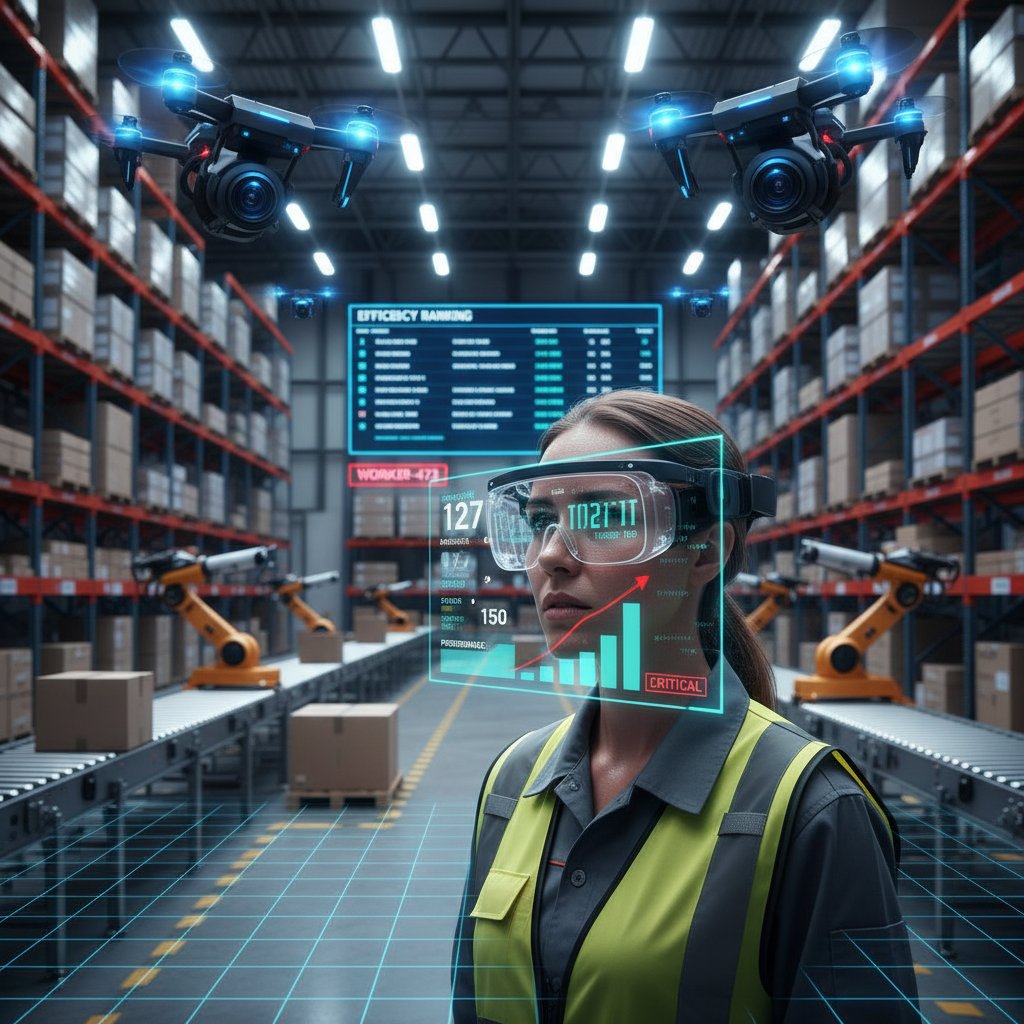
The lesson? Technology amplifies both strengths and weaknesses. When AI is wielded without empathy or oversight, it can destroy the very productivity and trust it seeks to improve.
Debunking the myths: is ai tracking really objective?
Algorithmic bias: the ugly truth
Let’s get real—AI is only as objective as the data it’s fed and the people who build it. Bias creeps in through flawed datasets, historical inequities, and unchecked assumptions coded into the algorithms. According to extensive analysis by Deloitte and others, AI-powered employee performance tracking systems have already been shown to perpetuate biases based on race, gender, and even work style.
| Source of Bias | Example Impact | Solution/Recommended Action |
|---|---|---|
| Historical data | Biases baked into past performance reviews | Use diverse, recent datasets |
| Simplistic metrics | Penalizes creative/outlier workflows | Customize, validate metrics |
| Lack of context | Ignores personal or health challenges | Human review layer is essential |
| Opaque algorithms | Employees can’t challenge unfair results | Transparent criteria, explanations |
Table 4: Common sources of bias in AI-powered employee tracking. Source: Original analysis based on Deloitte, Forbes, AIHR Institute.
Common misconceptions HR still believes
Despite mounting evidence, some stubborn myths persist in HR circles:
It isn’t. Algorithms reflect the biases and blind spots of their creators and data.
Not always. Too much data can obscure what’s truly important and introduce noise.
Some do, but many experience feedback fatigue or feel micromanaged by relentless AI nudges.
Only if the system is genuinely understandable and employees can challenge errors.
Case study: when ai gets it wrong
Consider the now-infamous case at a major tech company (details anonymized for NDA reasons): their AI flagged a highly valued project manager as “underperforming” due to low email volume and infrequent check-ins. The reality? She was running cross-functional teams in silent mode, resolving crisis after crisis in real time—work the AI couldn’t see. After her resignation, exit interviews revealed the flaw. The company has since added human review panels to all AI-generated performance flags.

"Even the most advanced AI can’t fully grasp the nuance of how people create value at work. Context will always matter." — Deloitte UK, 2024
The best (and worst) real-world applications
From warehouses to creative agencies: who’s using what
There’s no one-size-fits-all for AI-powered employee performance tracking. Warehouses and call centers have embraced real-time, task-based tracking, sometimes at the expense of morale. Creative agencies and consultancies focus more on collaboration and innovation metrics, often blending AI with peer review.

- Warehouses: Real-time pick/pack rates, safety compliance, fatigue detection.
- Customer service: Call duration, sentiment analysis, first-contact resolution.
- Tech firms: Code commits, pull requests, cross-team collaboration indices.
- Consulting/creative: Innovation scores, project impact, peer recognition.
Success stories and spectacular failures
Success? IBM Watson’s AI-driven performance management system reportedly increased productivity by flagging skill gaps early and recommending personalized learning paths. Google’s data-driven approach to project teams has surfaced “unseen” high performers. On the flip side, Amazon’s infamous “Time off Task” system faced backlash for penalizing bathroom breaks and led to severe employee pushback.
| Company | AI Application | Result | Outcome |
|---|---|---|---|
| IBM | Skill gap analysis, upskilling | Higher productivity | Success |
| Project team analytics | More accurate performance | Success | |
| Amazon | Warehouse productivity tracking | Increased burnout, backlash | Failure |
| Global retailer | Warehouse pick-rate tracking | System gaming, safety risk | Failure |
Table 5: Selected success and failure cases in AI-powered employee tracking. Source: Original analysis based on Forbes, Deloitte, AIHR Institute.
How futuretask.ai fits into the landscape
Enter FutureTask.ai—a platform at the vanguard of AI-powered task automation and employee analytics. While some tools narrowly focus on tracking, FutureTask.ai positions itself as a holistic solution that blends automation, deep analytics, and adaptive learning. The platform aims to deliver actionable insights without falling into the surveillance trap, emphasizing precision, consistency, and seamless integration with existing workflows.
What sets FutureTask.ai apart is its focus on supporting strategic, high-value activities—content creation, data analysis, marketing optimization—by automating the mundane and surfacing meaningful metrics. In a landscape flooded with “productivity” tools, FutureTask.ai’s approach is about enabling better work, not just more of it. For organizations navigating the minefield of performance tracking, that matters.
Step-by-step: how to implement ai-powered performance tracking (without ruining morale)
Prepping your team for the future
Rolling out AI-powered employee performance tracking isn’t just a technical project—it’s an organizational transformation. The key? Transparent communication and genuine partnership with employees. Here’s how smart companies do it:
- Start with open dialogue: Clearly explain the purpose and goals of AI tracking. Address concerns head-on, and invite honest feedback.
- Co-design the system: Involve employees in choosing metrics and designing dashboards. Make sure the system reflects real work, not just management fantasy.
- Pilot, then scale: Test on a small group, gather feedback, and adjust before full deployment.
- Build in oversight: Establish human review for flagged issues and provide clear recourse for disputes.
- Celebrate wins, learn from failures: Share stories of positive impact, but also openly discuss mistakes and course corrections.
Choosing your system: what matters and why
The market is crowded, but not all platforms are created equal. Select your system based on:
- Integration capabilities: Can it pull data from all your key tools—without creating silos?
- Customization: Does it allow you to adjust metrics to fit your culture and goals?
- Transparency: Are the algorithms and criteria explainable to non-technical users?
- Employee controls: Can users see, edit, or contest their data?
- Compliance and privacy: Is it built with local and global regulations in mind?
| Feature | Why it Matters | What to Look For |
|---|---|---|
| Integration | Prevents data silos, saves time | Native APIs, broad compatibility |
| Customization | Reflects your unique work culture | Flexible metrics, dashboard tools |
| Transparency | Builds trust, eases adoption | Clear explanations, audit trails |
| Employee controls | Empowers users, reduces disputes | Self-service portals, feedback |
| Compliance | Avoids legal headaches | GDPR, CCPA-ready, strong security |
Table 6: What to prioritize when choosing an AI performance tracking system. Source: Original analysis based on Deloitte, AIHR Institute.
Pitfalls to avoid (from privacy to transparency)
The road is littered with failed AI rollouts. Avoid these classic mistakes:
- Rolling out without buy-in: Skip the communication step, and you’ll face revolt.
- Over-monitoring: More data isn’t always better—focus on actionable insights.
- Ignoring privacy: Mishandling sensitive data can land you in legal hot water.
- Zero transparency: Opaque systems breed suspicion and lower morale.
- Relying solely on AI: Always include a human layer for context and appeals.
Hidden costs, legal landmines, and how to dodge them
The price you didn’t see on the sales deck
AI-powered employee performance tracking isn’t just a one-time software bill. Hidden costs lurk everywhere: integration headaches, chronic employee churn if morale tanks, legal fees when privacy goes sideways, and the ongoing expense of refining algorithms. According to Deloitte, total cost of ownership often exceeds initial projections by 30%–50% once these “soft” costs are factored in.
But there’s also the intangible: trust capital. Lose it, and you may never get it back.
| Category | Potential Hidden Cost | Explanation |
|---|---|---|
| Integration | IT consulting, customization | Adapting legacy systems |
| Employee turnover | Churn, rehiring, lost knowledge | Poor rollout drives resignations |
| Legal/compliance | Fines, settlements | Privacy violations, wrongful term. |
| Ongoing management | Data scientists, AI tuning | Algorithms need regular updates |
Table 7: Hidden costs of AI-powered employee performance tracking. Source: Original analysis based on Deloitte and Forbes.
Navigating privacy, consent, and compliance
Privacy isn’t optional—it’s law. GDPR, CCPA, and a host of local regulations impose strict requirements on employee data. Violations can cost millions and destroy reputations.
Build privacy controls into your system from day one. Limit data collection to what’s genuinely necessary.
Secure explicit, informed consent before collecting or analyzing personal data.
Employees must have a clear path to view, contest, or correct their data.
Only collect what you need. Delete or anonymize old data promptly.
Checklist: risk-proof your AI rollout
A robust AI-powered employee performance tracking rollout should follow a rigorous risk assessment:
- Audit your data flows: Map every source, destination, and processing logic.
- Conduct a privacy impact assessment: Identify high-risk data and sensitive fields.
- Vet your vendors: Require security certifications and compliance evidence.
- Train your team: Ensure everyone understands their rights and responsibilities.
- Establish recourse: Create transparent mechanisms for appeals and error correction.
The future: what’s next for ai-powered employee tracking?
Emerging trends and new tech on the horizon
AI-powered employee performance tracking is evolving rapidly, with new capabilities constantly coming online. Current trends include:
- Proactive engagement management: AI now flags burnout and disengagement risk before it’s visible to managers.
- Automatic skill-matching: Real-time analysis of skills gaps, with customized recommendations for upskilling.
- Integration with wellness tools: Linking productivity data with wellness programs for a holistic view.
- Voice and sentiment analysis: Deeper, more nuanced data sources for performance and well-being.

- AI-powered coaching platforms tailored to individual work styles
- Cross-functional analytics to spot hidden high performers
- Transparent, employee-controlled dashboards for data visibility
- Blending machine learning with human judgment for final decisions
The cultural shift: will AI tracking change how we judge ‘good work’?
The rise of AI-powered employee performance tracking is forcing organizations to rethink what “good work” really means. It’s not just about output—it’s about impact, collaboration, adaptability, and ethical behavior. The most advanced systems now recognize and reward these subtler attributes, but only if leadership is willing to move beyond “easy” metrics.
"The biggest shift is cultural—AI challenges us to value what truly matters in work, not just what’s easiest to count." — AIHR Institute, 2023
Should you trust the machines? Final takeaways
So, should you trust the machines? Only as far as you can see into their black boxes—and only if you balance their insights with human judgment. The best organizations treat AI-powered employee performance tracking as a tool, not a judge. Use it to surface hidden trends, diagnose issues early, and support growth, but never hand over all control.
In the end, the power—and the risk—lies not in the technology itself, but in how it’s wielded. Stay vigilant, stay human, and use AI to elevate, not eradicate, the soul of your workplace.

Quick reference: ai-powered employee performance tracking at a glance
Pros, cons, and essential questions
AI-powered employee performance tracking isn’t black and white. Here’s a cheat sheet for those weighing the trade-offs:
- Pros: Real-time insights, objective metrics, scalable feedback, early detection of risk, skills gap analysis, continuous improvement.
- Cons: Potential for bias, privacy risks, culture of surveillance, over-reliance on quantifiable outputs, hidden costs.
| Key Question | Why It Matters | Best Practice |
|---|---|---|
| What data is being collected? | Privacy, trust | Publish data maps, seek consent |
| How are metrics chosen? | Relevance, fairness | Co-create with employees |
| Can employees contest results? | Due process, accuracy | Build in appeals |
| Is human oversight included? | Error correction, trust | Don’t go full auto |
| Are cultural values reflected? | Alignment, morale | Customize for context |
Table 8: Essential questions for AI-powered employee performance tracking. Source: Original analysis based on Deloitte, Microsoft Worklab, AIHR Institute.
Your action plan: getting started today
- Map your current processes: Know what data you have and what matters most for your organization.
- Engage your team: Bring employees into the conversation early.
- Research your options: Compare platforms, focusing on integration, transparency, and compliance.
- Pilot and iterate: Start small, gather feedback, and refine your system.
- Build in recourse: Ensure every employee can challenge, correct, or clarify algorithmic decisions.
- Monitor and improve: Make ongoing reviews—and dialogue—a pillar, not an afterthought.
Conclusion
AI-powered employee performance tracking is not science fiction—it’s your current reality, reshaping the fabric of work in 2025. The benefits are real: smarter feedback, sharper insights, tighter alignment with business goals. But so are the risks: hidden bias, surveillance culture, privacy landmines, and the ever-present danger of mistaking numbers for wisdom.
The only way forward? Approach AI with eyes wide open. Demand transparency, defend your values, and remember that the best workplaces use technology to empower—not diminish—the people inside them. Platforms like FutureTask.ai offer tools, but the responsibility to wield them wisely is all yours. In this new era, your performance isn’t just a line on a spreadsheet—it’s a living narrative shaped by data, by culture, and by your ability to challenge the status quo.
For more insights on AI-powered automation, productivity, and future-of-work trends, explore futuretask.ai—where innovation meets accountability.
Sources
References cited in this article
- AIHR Institute(aihr-institute.com)
- Microsoft Worklab(microsoft.com)
- Deloitte UK(deloitte.com)
- Forbes(forbes.com)
- Allwork.Space(allwork.space)
- ClearBox Consulting(clearbox.co.uk)
- Pesto.tech(pesto.tech)
- Grandview Research(grandviewresearch.com)
- AIPRM(aiprm.com)
- Microsoft Worklab(microsoft.com)
- Owl Labs(resources.owllabs.com)
- IT Pro(itpro.com)
- Cornell Chronicle(news.cornell.edu)
- Betterworks(betterworks.com)
- HR Dive(hrdive.com)
- Ada Lovelace Institute(adalovelaceinstitute.org)
- PYMNTS(pymnts.com)
- Forbes(forbes.com)
- McKinsey(mckinsey.com)
- Emerald Insight(emerald.com)
- Macorva(macorva.com)
- Phys.org(phys.org)
- Tech.co(tech.co)
- Virtasant(virtasant.com)
- Neuroflash(neuroflash.com)
- EquityHR(equityhr.com)
- InformationWeek(informationweek.com)
- Workplace Privacy Report(workplaceprivacyreport.com)
- The Employer Report(theemployerreport.com)
- Business Law Today(businesslawtoday.org)
Automate Your Tasks, Transform Your Business
FutureTask.ai revolutionizes your workflow by automating complex tasks typically outsourced to freelancers and agencies. Our powerful AI-driven platform leverages cutting-edge LLM technology to deliver precision, speed, and consistency at scale. Whether you're managing content creation, data analytics, marketing campaigns, or customer support, FutureTask.ai ensures seamless task execution, significant cost savings, and unmatched efficiency. Transform your business operations, eliminate delays, reduce operational overhead, and gain a competitive advantage with intelligent automation.
Get startedReady to Automate Your Business?
Start transforming tasks into automated processes today
Frequently Asked Questions
What types of employee activities are AI-powered performance tracking systems monitoring?
AI-powered performance tracking systems monitor a wide range of digital workplace activities, including keystrokes, coffee breaks, project completion velocity, and Slack response times, creating a comprehensive picture of employee behavior throughout the workday.
According to the article, what do HR executives say about AI's impact on the employee experience?
According to McKinsey's research cited in the article, 70% of HR executives acknowledge that AI has profoundly improved the employee experience, though the article suggests this view may overlook concerns about surveillance and control.
How has employee performance tracking changed from the past to the present?
Performance tracking has evolved from periodic methods like punch clocks and sign-in sheets, plus quarterly reviews and Excel scorecards, to continuous AI-powered systems that provide real-time feedback and constant algorithmic analysis of employee behavior.
Which major companies have developed AI performance tracking systems mentioned in the article?
The article mentions AI systems from Workday, IBM Watson, and Google as examples of modern performance tracking tools that have made data-driven, real-time feedback possible and expected in workplaces.
From the Archive
Explore more from Ai-powered task automation

How AI-Powered Employee Evaluations Are Reshaping Performance Reviews

Ai-Powered Productivity Tracking: Tool for Focus or New Anxiety?

Ai-Powered Time Tracking: Productivity Boost or New Surveillance?

Automating Performance Reviews with Ai: Trust, Bias and the 2026 Test

How AI-Powered Workforce Management Automation Is Reshaping Organizations
