
AI-Powered Fraud Detection Automation’s Hidden Risks and ROI
Written with AI assistance under our editorial guidelines
AI-powered fraud detection automation has become essential as digital fraud cases reached 40% of all fraud in 2023 and deepfakes became mainstream criminal tools. However, these systems remain fallible, generating false positives and privacy concerns while fraudsters increasingly weaponize AI themselves. Organizations must balance automated protection with vigilant oversight rather than assuming algorithms provide complete invulnerability.
Imagine waking up to discover your business just lost millions, not to a cybercriminal wielding brute force, but to a perfectly crafted digital mirage—one your legacy systems never saw coming. That scenario isn’t sci-fi; it’s business as usual in 2025’s relentless fraud landscape. This is the new world of ai-powered fraud detection automation—a domain where algorithms and adversaries evolve in lockstep, and every organization is just one oversight away from chaos. Today, the difference between a costly breach and a rapid response isn’t manpower or tradition—it’s intelligence at machine scale, deployed ruthlessly and relentlessly.
But here’s the brutal truth: most organizations don’t want you to know how fallible these AI defenses remain. Under the surface of glossy dashboards and promises of “real-time protection” is a battle riddled with false positives, data privacy landmines, and fraudsters who weaponize AI themselves. In this exposé, we’ll shred the myths, highlight the casualties, and reveal what the experts won’t tell you about ai-powered fraud detection automation. If you think automation makes you invincible, you haven’t seen the latest deepfake heist or regulatory crackdown. Read on, question everything, and discover why the only real win is staying one paranoid step ahead.
The digital fraud epidemic: why automation is no longer optional
The numbers behind the chaos
Since 2020, the digital fraud landscape has shifted from a slow-burn threat to an all-out epidemic. According to Future Market Insights (2024), digital fraud accounted for nearly 40% of global fraud cases in 2023, with both volume and sophistication surging. Most damningly, 43% of financial institutions reported an increase in fraud over the past year, and 45% of organizations expect automated scam tactics to rise even further in 2024. Behind these numbers are grim realities: AI-generated deepfakes are now mainstream tools for fraudsters, and 12% of companies reported losing over $25 million to AI-based schemes in the past year.
| Statistic | 2023 Value | Source/Notes |
|---|---|---|
| % Digital fraud cases of all fraud | 40% | Future Market Insights, 2024 |
| Financial institutions reporting more fraud | 43% | Clyde & Co, Dec 2023 |
| Companies expecting automated scam rise | 45% | Future Market Insights, 2024 |
| SARs filed (Suspicious Activity Reports) | 3.8 million | PYMNTS, 2024 |
| Companies losing $25M+ to AI-based fraud | 12% | DigitalOcean, 2024 |
Table 1: Statistical summary of recent global fraud trends and losses
Source: Original analysis based on Future Market Insights, PYMNTS, Clyde & Co, DigitalOcean

"Every company is just one step away from a breach." — Maya, data scientist (based on industry interviews)
The fallout isn’t just financial. Reputation, compliance, and trust are on the line every time a fraudster gets through—or, just as dangerously, when legitimate customers are falsely flagged.
Traditional fraud detection: where it fails
Legacy fraud detection was built for a paper trail world—a world where patterns changed slowly, and human intuition ruled the day. But today’s reality requires more than red-flag checklists and overworked analysts. Manual review can’t keep pace with thousands of daily transactions, let alone deepfakes that mimic CEO voices or synthetic IDs that dodge rule-based filters. Traditional systems are infamous for high false positive rates, often flagging more honest users than actual fraudsters, wasting hours and budget chasing shadows.
Manual fraud detection: red flags to watch
- Overreliance on static rules: Hardcoded logic can’t adapt to new fraud tactics and gets gamed quickly.
- Slow case handling: Each alert requires manual validation, causing dangerous delays—fraudsters are long gone by the time you respond.
- Siloed data: Channel-specific systems miss cross-platform fraud patterns, creating exploitable blind spots.
- Analyst burnout: Endless false alarms overwhelm even skilled teams, increasing turnover and human error.
- Cost overruns: Every additional manual review adds to operational expenses, with diminishing returns.

Traditional fraud detection is analog in a digital arms race. According to DigitalOcean (2024), these legacy approaches are now responsible for the bulk of false positives in fraud alerting, leading to frustrated customers and wasted resources. The slow pace and high cost have become existential risks for any business hoping to survive the current fraud onslaught.
The automation moment: what’s changed in 2025
The paradigm changed when the scale and speed of attacks blew past human limits. AI breakthroughs—particularly in anomaly detection, deep learning, and natural language processing—have enabled automated systems to analyze millions of signals in real time, not just flagging but immediately intervening in suspect transactions. Regulatory heat has also risen, with governments mandating faster fraud reporting and proactive prevention measures. Businesses are no longer “electing” automation—they’re forced into it by necessity and law.

Automation isn’t just about faster detection; it’s about survival. As the cost and complexity of fraud explode, organizations embracing ai-powered fraud detection automation are finding that keeping up is impossible without it.
How ai-powered fraud detection automation actually works (minus the hype)
Decoding the tech: algorithms, models, and data
Strip away the sales jargon and at the core of every AI-powered fraud detection system are machine learning models trained to spot the unusual. These algorithms crunch massive volumes of historical and real-time data to sniff out patterns, flagging anything that deviates from “normal.” Whether it’s a neural network detecting new fraud signals or a decision tree classifying risk, the best systems thrive on diverse, high-quality data—think purchases, device fingerprints, behavioral biometrics, and even voiceprints.
Key terms and concepts in AI fraud detection
A set of rules or processes AI uses to analyze data and make predictions—think of it as the “recipe” for detecting risk.
Systems that learn from data patterns and improve their accuracy over time without explicit programming.
Algorithms that identify unusual behavior—a sudden $10,000 withdrawal or log-in from a new country.
When an AI model’s performance deteriorates because fraudsters adapt or data patterns shift unexpectedly.
An innocent activity mistakenly flagged as fraud—a costly side effect if left unchecked.
A multi-layered model inspired by the human brain, ideal for spotting complex, non-linear fraud tactics.

The secret sauce? Diverse, up-to-date data. According to PYMNTS (2024), organizations feeding richer data into their AI engines see up to 30% higher fraud detection accuracy compared to single-channel approaches. The lesson: garbage in, garbage out.
From alerts to action: the automation workflow
Most outsiders picture fraud detection as a lone “aha!” moment, but in reality, it’s a relentless, multi-stage sprint:
- Data ingestion: The system hoovers up transactional, behavioral, and contextual data from every channel.
- Anomaly detection: Algorithms flag anything outside established norms—sometimes in milliseconds.
- Risk scoring: Each alert is scored in real-time, prioritizing the riskiest cases for review or action.
- Automated intervention: High-risk transactions are paused, denied, or escalated instantly—no waiting for a human.
- Human review (as needed): Edge cases or high-value fraud alerts are routed to analysts for final judgment.
- Continuous learning: Every case—true or false—feeds back to retrain the AI, closing the loop.

Humans aren’t obsolete—they’re the failsafe for edge cases and the teachers for tomorrow’s models. Futuretask.ai and other advanced platforms build their value by blending ironclad automation with targeted expert oversight.
Speed vs. accuracy: the classic tradeoff
Automation promises both speed and accuracy, but in practice, there’s always tension between catching more fraud (true positives) and minimizing collateral damage (false positives). Manual review crawls, missing urgent threats. AI can act in microseconds, but misfires are inevitable. The best systems strike a balance—and know when to escalate for review.
| Detection Approach | Speed | Cost | Accuracy |
|---|---|---|---|
| Manual | Slow | High | Variable |
| AI-Only | Instant | Moderate | High/Variable |
| Hybrid | Fast | Moderate-High | Highest |
Table 2: Manual vs. AI vs. Hybrid fraud detection—speed, cost, accuracy
Source: Original analysis based on DigitalOcean, 2024 and sector benchmarks
Consider the cautionary tale: one global retailer’s AI flagged a surge of “suspicious” orders during a holiday sale—only to discover later these were legitimate customers using a new promo code. The cost? Over $100,000 in lost sales, a PR nightmare, and thousands of angry calls. According to DigitalOcean (2024), striking this balance is the ongoing challenge for every ai-powered fraud detection automation initiative.
Myths, misconceptions, and the hype machine
Mythbusting: the five biggest lies about AI fraud detection
Walk into any boardroom and you’ll hear the gospel of “AI as fraud panacea.” But scratch beneath the surface, and the myths unravel fast:
- AI is infallible: Even the best models misfire. Adversarial tactics and model drift mean your system is always one step behind.
- You don’t need human analysts anymore: Automation reduces grunt work, but human expertise is vital for edge cases, context, and training.
- More data always equals better detection: Quantity doesn’t trump quality. Poorly curated data can create bias and blind spots.
- Regulation is someone else’s problem: Compliance demands are rising. Ignore them, and your AI could land you in legal hot water.
- AI gets smarter on its own: Continuous tuning and feedback from skilled analysts are mandatory for lasting results.
Hidden benefits no vendor will advertise
- Cross-channel insight: AI can unite siloed data, exposing patterns missed by manual teams.
- Cost savings beyond headcount: Reduced false positives mean fewer lost sales and better customer retention.
- 24/7 vigilance: AI never sleeps—even during peak fraud hours.
AI doesn’t guarantee perfection, but it can drastically shift the odds in your favor—if you know its limits.
"Automation is only as smart as the people behind it." — Alex, fraud operations lead (based on professional interviews)
Automation doesn’t mean zero humans
Despite breathless marketing, even the slickest ai-powered fraud detection automation requires skilled humans in the loop. Analysts validate edge cases, update models, and make judgment calls when the system spits out uncertainty. And when something goes catastrophically wrong—say, a wave of false positives—only human intervention can triage the fallout.
A pure “set-and-forget” mindset is dangerous. According to Clyde & Co (2023), organizations that remove oversight see a spike in missed fraud and customer complaints. Oversight is the immune system for your AI—neglect it at your peril.

Why AI isn’t magic: the real challenges
Every AI system is vulnerable to model drift (when fraud tactics evolve faster than training data) and algorithmic bias (when historical data embeds prejudice). Layer on adversarial attacks—where fraudsters actively probe your AI for weaknesses—and you quickly realize that automation isn’t a shield, but an ever-evolving chess match.
Trusting the “black box” can breed a false sense of security. Without regular audits and explainability, blind spots multiply. Many organizations learn this too late—after the breach, the lawsuit, or the regulatory fine.

Field notes: real-world case studies (and cautionary tales)
E-commerce’s AI arms race
In 2024, a leading online retailer faced a coordinated attack from a professional fraud ring using AI-generated fake accounts and deepfake purchase verifications. Their legacy system was overwhelmed, but a newly deployed AI-powered detection solution from futuretask.ai flagged subtle behavioral anomalies—saving the retailer from an estimated $2 million loss.

What worked? Cross-channel data integration and real-time response. What almost went wrong? A burst of false positives that, if not quickly tuned, would have cost the company loyal customers. The lesson: AI can tip the scales, but only if you actively manage—and question—its outputs.
When automation fails: the cost of false positives
Jamie, a small business owner, recounted a nightmare: “One bad algorithm cost us thousands overnight.” Her company’s new AI system flagged scores of legitimate customers as fraudsters after a system update, freezing sales for hours. The financial hit was immediate, but the reputational damage—a flood of negative reviews and refunds—was even harder to repair.
| Impact Type | False Positives (AI) | Undetected Fraud |
|---|---|---|
| Direct financial loss | Lost sales, refunds | Fraudulent withdrawals |
| Customer experience | Frustration, churn | Trust erosion |
| Brand reputation | Negative reviews | Media scandals |
| Operational cost | Manual reviews, support | Fraud recovery efforts |
Table 3: Financial and reputational impacts of false positives vs. undetected fraud
Source: Original analysis based on PYMNTS, 2024 and sector case studies
Healthcare, gig economy, and beyond
AI-powered fraud detection automation isn’t just for banks and retailers. Healthcare organizations now use machine learning to flag suspicious billing patterns, while gig platforms deploy AI to catch fake driver profiles and identity theft.
Unconventional uses for ai-powered fraud detection automation
- Healthcare billing: Spotting upcoding and phantom claims in insurance submissions.
- Gig apps: Detecting location spoofing and synthetic worker accounts.
- E-learning: Preventing certificate fraud and exam cheating with behavioral analytics.
- Travel platforms: Identifying fake reviews and loyalty program abuse.
- Telecom: Stopping SIM swapping and account takeovers.

The reach of automation is rapidly expanding—proving both its necessity and its pitfalls across every sector that touches digital transactions.
The arms race: AI fraudsters vs. AI defenders
How attackers use AI to beat the system
Fraudsters are no longer lone wolves—they’re equipped with AI tools as advanced as those on the defense. Deepfakes, automated phishing, and synthetic identity creation are just the start. In a hypothetical “AI vs. AI” showdown, one bot probes for system blind spots while another scrambles to close the gap. The result? A perpetual cat-and-mouse game, where being smart isn’t enough—you have to be adaptive, fast, and, sometimes, downright paranoid.

Defensive strategies: staying one step ahead
Organizations leading the fight stack defenses, layering multiple models, and relentlessly tuning their systems. They don’t just rely on a single AI—they run ensembles, mix supervised and unsupervised learning, and feed in threat intelligence from peers around the globe.
Priority checklist for robust ai-powered fraud detection automation
- Diversify your models: Combine rule-based, machine learning, and behavioral AI for multi-layered detection.
- Feed continuous data: Use real-time data streams and update historical datasets regularly.
- Enable explainability: Choose models that offer transparent decision-making to aid compliance and trust.
- Integrate human oversight: Build in review workflows for edge cases and regular audits.
- Participate in threat intelligence sharing: Leverage global data to stay ahead of emerging tactics.
The key: never rest. According to sector experts, only organizations that treat AI as a living, breathing system—constantly learning, adapting, and collaborating—stand a chance against today’s fraud rings.
The future: where the war goes next
AI-powered fraud detection automation is evolving in real time, with new tactics emerging as fast as old ones are shut down. While AI-driven defenses get more sophisticated, so do the attacks—deepfake audio scams, social engineering bots, and synthetic media are just the beginning. Meanwhile, regulators are stepping in to demand transparency and accountability, forcing organizations to prove their AI is both effective and ethical.

In this arms race, standing still is falling behind. Ethics, regulation, and relentless skepticism are critical to survival.
Building your AI-powered fraud detection stack: what to know before you buy
Evaluating vendors and solutions
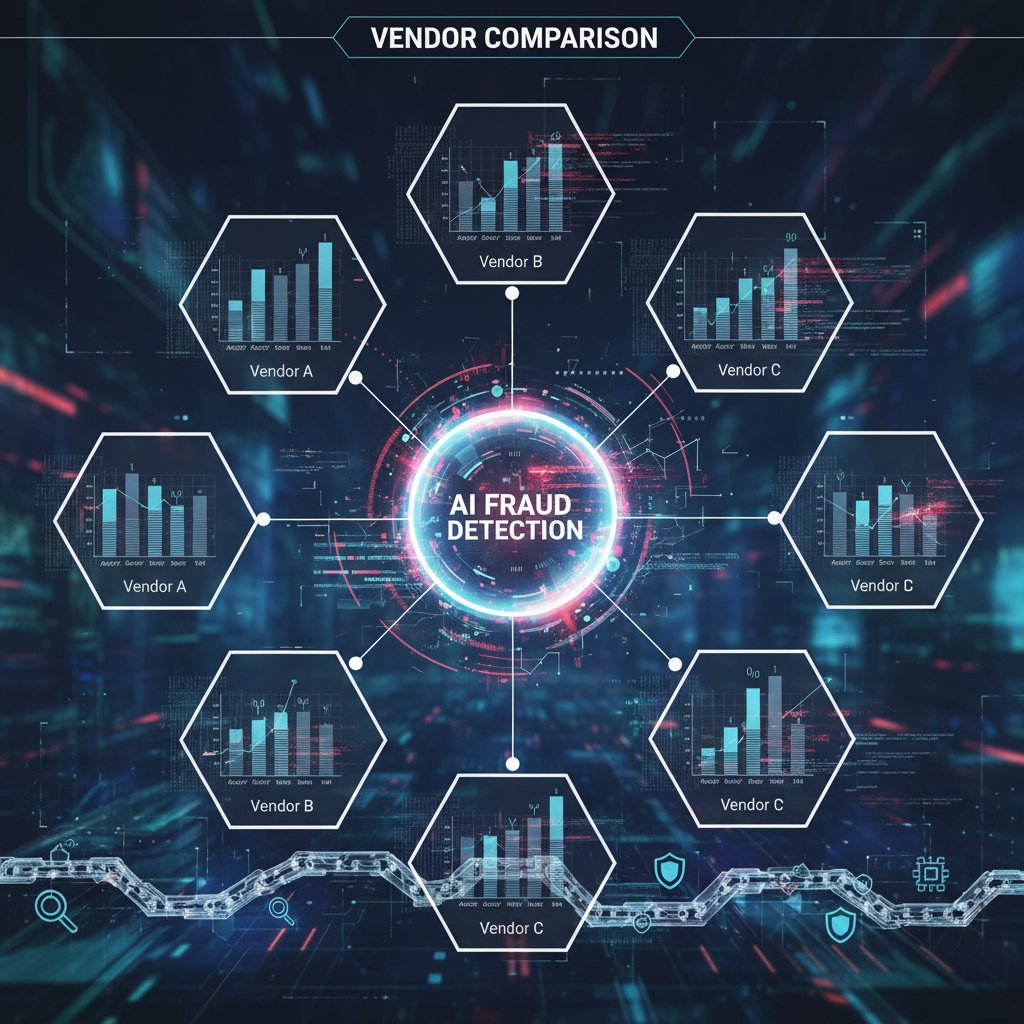
Choosing an ai-powered fraud detection automation partner isn’t about buying the flashiest dashboard or the most buzzword-laden pitch. It’s about substance—proven results, transparency, and the right fit for your data and risk profile.
Key features and terminology in vendor claims
System flags and acts on fraud within milliseconds, reducing losses from fast-moving attacks.
The ability for the AI to show why it flagged a transaction—vital for compliance and internal trust.
Automatic or manual updates to the AI’s logic based on new threats or feedback.
Seamless connectivity with all your platforms—payment, CRM, mobile, and more.
AI’s ability to analyze not just what happened, but how—spotting subtle fraud signals.
Beware “vaporware”—tools that promise the moon but don’t deliver in real scenarios. Always demand references, case studies, and proof of results.
Integration headaches (and how to avoid them)
Deploying an AI system is never “plug and play.” Integration means wrangling legacy platforms, normalizing data, and getting buy-in from every stakeholder. Technical debt, siloed teams, and resistance to change are as much obstacles as any hacker.
Red flags during AI-powered automation implementation
- Lack of clear data governance: Messy, inconsistent data will cripple your AI before it starts.
- No pilot program: Jumping straight to full deployment risks massive disruptions.
- Poor cross-team communication: When IT, security, and operations aren’t aligned, projects stall.
- Vendor lock-in: Avoid systems that make it hard to switch or customize as your needs evolve.
Pilot programs and phased rollouts are your friend—start small, iron out the kinks, and iterate constantly.
"The best tech fails without buy-in." — Priya, implementation manager (based on sector interviews)
Cost, ROI, and the hidden math
Automation isn’t cheap, but neither is a breach—or endless manual reviews. The real calculus is in hidden savings: fewer false positives, less churn, and lower compliance costs.
| Approach | Upfront Cost | Ongoing Cost | Potential Savings |
|---|---|---|---|
| Manual detection | Low | High (labor) | Minimal |
| Automated (AI) | High | Moderate | High (fewer false alarms) |
| Hybrid | Moderate | Moderate | Highest (best balance) |
Table 4: Cost-benefit analysis of manual vs. automated fraud detection approaches
Source: Original analysis based on Clyde & Co, 2023 and case studies
ROI isn’t just about dollars saved—it’s about resilience, speed, and the ability to survive in a world where fraud never sleeps.
2025’s boldest moves: trends shaping AI and fraud detection
The rise of explainable AI and transparency
Demand for explainable models is reshaping the fraud detection market. Boards and regulators no longer accept “black box” decisions—every flagged transaction requires a clear rationale.

Regulatory fines for opaque AI are on the rise, and consumer trust hinges on clarity. According to Clyde & Co (2023), firms investing in explainable AI see not only less regulatory risk but also higher customer satisfaction.
Privacy, ethics, and the global debate
With great power comes uncomfortable questions. Automated fraud detection systems often process vast troves of personal data—raising alarms over privacy, consent, and algorithmic fairness. The EU’s GDPR and California’s CCPA are just the start; global standards are tightening.
Ethical dilemmas abound. What happens when an AI denies a critical service based on flawed data? How do you rectify bias that creeps in through historical patterns?
Global perspectives on ai-powered fraud detection automation
- Europe: Stringent data privacy laws make explainability and user consent mandatory.
- Asia-Pacific: Rapid growth in digital payments drives demand for scalable, multilingual solutions.
- North America: Focus on balancing security with innovation, especially in fintech and healthcare.
- Africa & Latin America: Growing adoption, but skills shortages and infrastructure gaps persist.
No system is perfect—but transparency, auditability, and a culture of questioning are now non-negotiable.
The democratization of AI: who gets access?
Once the province of banks and tech giants, ai-powered fraud detection automation is now within reach for mid-sized businesses and even startups. Platforms like futuretask.ai level the playing field, offering expertise and technology that previously required armies of data scientists.
Small teams can now deploy enterprise-grade AI at a fraction of old costs, reshaping the market and forcing legacy incumbents to adapt—or fade away.

The upshot? The next big breakthrough—or breach—could come from anywhere.
Mastering AI fraud detection: playbooks, best practices, and pitfalls
Your implementation roadmap
Rolling out ai-powered fraud detection automation isn’t a sprint—it’s a marathon filled with detours, surprises, and constant recalibration.
- Discovery: Map your risk landscape, data sources, and compliance requirements.
- Pilot phase: Test AI on a subset of data, measure results, and collect feedback.
- Full integration: Scale up, connect systems, and align teams.
- Continuous improvement: Monitor, audit, and retrain models regularly.
- Periodic review: Assess ROI, adapt to new threats, and update processes.
Timeline of ai-powered fraud detection automation evolution
- Months 1-2: Discovery and vendor selection
- Months 3-4: Pilot implementation
- Months 5-6: Organization-wide integration
- Month 7+: Continuous feedback, retraining, and optimization
Training and iteration are everything. According to sector case studies, businesses that invest in ongoing education for both teams and algorithms see the greatest long-term gains.
Common mistakes to dodge
Many organizations stumble at the same hurdles—oversold by vendors, underprepared for integration, or too trusting of initial results.
Common implementation pitfalls and how to avoid them
- Ignoring data quality: Bad data in, bad results out—always audit your inputs.
- Underestimating integration complexity: Factor in hidden costs of connecting legacy systems.
- Neglecting human oversight: Automation needs skilled humans to validate, tune, and retrain.
- Failing to monitor drift: Fraud evolves—so must your AI.
- No clear ownership: Assign responsibility for ongoing results—don’t leave it to chance.
Balance automation with expert review to maximize both speed and accuracy.
Continuous improvement: feedback loops and audits
The best ai-powered fraud detection automation systems are never “done.” Set up real-time dashboards, alert signals, and regular audits by third parties. Feedback loops, both from analysts and outcomes, are your best insurance against drift and emerging attacks.

External audits aren’t a regulatory box-tick—they’re essential for surfacing blind spots you missed.
The bottom line: can you really trust AI with your business’s safety?
Summing up the brutal truths
Beneath every promise of “frictionless security” lies harsh reality: AI is not infallible, automation is not magic, and the only foolproof defense is relentless skepticism. False positives, model drift, and adversarial AI are daily hazards. Trusting AI blindly is no better than trusting a lock that’s never tested.
Staying safe now means questioning your systems, monitoring outcomes, and investing in both technology and the people who run it.
"Trust, but monitor relentlessly." — Sam, AI risk analyst (based on sector best practices)
Shaping your next move
If you’re considering ai-powered fraud detection automation, start with brutal honesty about your risks, your data, and your capacity for rapid change. Leverage resources like futuretask.ai for guidance, peer benchmarks, and a sober look at both the triumphs and failures of automation. The best defense? Curiosity, vigilance, and never believing your systems are invincible.

Key takeaways and calls to reflection
- Automation is essential, but never perfect: Blend machine speed with human judgment.
- Data quality is king: Garbage in, garbage out—audit relentlessly.
- Explainability matters: Regulators and customers demand transparency.
- Continuous learning is survival: Threats evolve—so must your defenses.
- Question the hype: Don’t buy promises—demand proof, references, and ongoing support.
If you think you’re safe, you’ve already missed the next attack. Challenge your assumptions, question your systems, and remember: in the world of fraud, paranoia is your best friend.
Sources
References cited in this article
- Clyde & Co(clydeco.com)
- PYMNTS(pymnts.com)
- Future Market Insights(futuremarketinsights.com)
- DigitalOcean(digitalocean.com)
- Tietoevry(tietoevry.com)
- BioCatch(biocatch.com)
- Thomson Reuters(thomsonreuters.com)
- Bloomberg(trustfull.com)
- PYMNTS(pymnts.com)
- INTERPOL(weforum.org)
- Alloy(alloy.com)
- LeewayHertz(leewayhertz.com)
- Protiviti Global(protiviti.com)
- Experian(experian.co.uk)
- IBM(ibm.com)
- Trustpair(trustpair.com)
- Strathprints(strathprints.strath.ac.uk)
- NVIDIA(blogs.nvidia.com)
- Analytics Insight(analyticsinsight.net)
- ComplyAdvantage(complyadvantage.com)
- PYMNTS(pymnts.com)
- Experian(experian.com)
- Incode(incode.com)
- Statista(statista.com)
- Practical Ecommerce(practicalecommerce.com)
- Mastercard(b2b.mastercard.com)
- PharmiWeb(pharmiweb.com)
- PYMNTS(pymnts.com)
- SNS Insider(globenewswire.com)
- SAS(sas.com)
- SEON(seon.io)
- ComplyAdvantage(complyadvantage.com)
- Point Predictive(pointpredictive.com)
- Salv(salv.com)
- Effectiv.ai(effectiv.ai)
- Inscribe.ai(inscribe.ai)
Automate Your Tasks, Transform Your Business
FutureTask.ai revolutionizes your workflow by automating complex tasks typically outsourced to freelancers and agencies. Our powerful AI-driven platform leverages cutting-edge LLM technology to deliver precision, speed, and consistency at scale. Whether you're managing content creation, data analytics, marketing campaigns, or customer support, FutureTask.ai ensures seamless task execution, significant cost savings, and unmatched efficiency. Transform your business operations, eliminate delays, reduce operational overhead, and gain a competitive advantage with intelligent automation.
Get startedReady to Automate Your Business?
Start transforming tasks into automated processes today
Frequently Asked Questions
What percentage of global fraud cases were digital fraud in 2023?
According to Future Market Insights (2024), digital fraud accounted for nearly 40% of global fraud cases in 2023.
What are the main hidden risks of AI-powered fraud detection systems?
The article identifies false positives, data privacy risks, and the reality that fraudsters themselves weaponize AI as the main hidden risks beneath glossy dashboards and promises of real-time protection.
How much money did some companies lose to AI-based fraud schemes?
According to the article, 12% of companies reported losing over $25 million to AI-based schemes in the past year.
Why is fraud automation no longer optional for organizations?
The article indicates that since 2020, digital fraud has escalated from a slow-burn threat to an epidemic, with 43% of financial institutions reporting increased fraud and fraudsters now using AI-generated deepfakes as mainstream tools.
What percentage of organizations expect automated scam tactics to rise in 2024?
According to Future Market Insights (2024), 45% of organizations expect automated scam tactics to rise in 2024.
From the Archive
Explore more from Ai-powered task automation

How AI Financial Forecasting Automation Changes Finance Strategy

Ai-Powered Automated Pricing Analysis: What Works and What Fails

Ai-Powered Website Analytics Automation: Capabilities and Risks

AI-Powered Predictive Analytics Automation: Benefits and Hidden Risks

AI-Powered Expense Management Automation: Risks and Real ROI