


The Real Risk of Ai-Powered Workflow Integration Tools
Written with AI assistance under our editorial guidelines
AI-powered workflow integration tools cannot solve the fundamental problem of disconnected systems and poor processes. While these tools promise efficiency gains, the real risks lie in companies deploying them without first addressing root causes like fragmented tools, manual interventions, and lack of integration. Research shows businesses lose up to 20% of productive hours weekly to workflow gaps, but adding more tools without proper integration often worsens the problem rather than solving it.
In the golden age of digital efficiency, the promise of ai-powered workflow integration tools glitters on every ambitious organization's horizon. We’re told these platforms will annihilate bottlenecks, annihilate operational bloat, and deliver a kind of business transcendence—no more tired freelancers, clunky agencies, or all-nighters fueled by bitter coffee. But peer beneath the glossy marketing veneer and you’ll find a landscape riddled with silent chaos, hidden costs, and hard-won victories. This isn’t just another AI hype piece. You’re about to dive into the unvarnished reality—thick with data, expert opinion, and field-tested stories—behind the AI workflow revolution. If you think you know what ai-powered workflow integration tools can (and can’t) do, buckle up. The truth’s more complicated—and far more interesting—than the sales pitch.
Why your workflows are broken (and why AI won’t magically fix them)
The silent chaos: everyday inefficiencies you ignore
Every business, from scrappy startups to multinational titans, carries its own breed of workflow dysfunction. The friction isn’t always obvious: a missed Slack message here, a spreadsheet with outdated data there, a well-intentioned email that vanishes into the ether. According to research from Ayanza, 2024, the root cause of most operational headaches is not laziness or incompetence—it’s a sprawling ecosystem of disconnected tools, manual interventions, and tribal knowledge. These silent inefficiencies bleed time and money, but because they’re baked into daily routines, most teams just muddle through, unaware of the true cost.

Unmeasured, these inefficiencies metastasize. According to Enhencer, 2024, companies lose up to 20% of productive hours each week to avoidable workflow gaps—time that could be redirected into real innovation or customer service. These so-called “micro-inefficiencies” aren’t just a nuisance; they’re a slow bleed that can cripple growth and morale. And the more tools you pile on—each promising to be the silver bullet—the more tangled your processes become, unless you address the root problem: integration.
| Hidden Inefficiency | How It Surfaces | Business Impact |
|---|---|---|
| Manual Data Entry | Re-keying info between apps | Error rates, wasted time |
| Siloed Communication | Info lost in email/IM channels | Missed deadlines, confusion |
| Outdated Documentation | Old SOPs, misaligned processes | Onboarding delays |
| Shadow IT | Unsanctioned tool use by teams | Security risks, duplicative effort |
Table 1: Everyday workflow inefficiencies that drive up costs without notice
Source: Original analysis based on Ayanza, 2024, Enhencer, 2024
So, before you dream of AI salvation, start with an unflinching audit of your current chaos. That’s the first brutal truth—and the most ignored.
From patchwork to power: the evolution of workflow integration
Workflow integration wasn’t always an AI-fueled arms race. In the early days, companies cobbled together homegrown scripts, Excel macros, and third-party plugins, each a patch over a festering wound. Integration platforms emerged, promising to bridge the gaps, but these too required serious IT muscle and careful choreography. According to Bizway, 2024, most legacy integrations were brittle, expensive, and hard to scale.
Fast forward to now, and the conversation has shifted. AI-powered workflow integration tools don’t just automate—they orchestrate. They sit atop your existing software stack, interpreting context, triggering actions, and even drafting content or making decisions. But here’s the twist: the complexity hasn’t vanished. It’s just been abstracted.
Companies that thrive are those that recognize integration is a living, breathing process. The path from patchwork to power isn’t about swapping human hands for AI—it’s about rethinking how work flows, period.
- Integration is an ongoing discipline, not a one-time project.
- True value emerges when AI tools connect data, people, and decisions seamlessly.
- The move from patchwork to orchestration means embracing process transparency.
- AI can amplify dysfunction as easily as it amplifies efficiency—context is everything.
Organizations that succeed treat integration as a strategic muscle, not a technical afterthought. The best tools are enablers, not saviors.
Debunking the plug-and-play AI myth
There’s a seductive lie in the world of AI workflow tools: that you can buy, install, and instantly reap the benefits—no sweat, no training, no hidden costs. This plug-and-play myth sells platforms, but it rarely survives first contact with reality.
The truth? Every AI integration is a tangle of custom data needs, domain-specific logic, and interdependent systems. According to Cflow, 2023, 37% of US marketing professionals adopted AI workflow tools last year, but only 12% reported “seamless integration” out of the box.
- Assess your existing tech stack for compatibility issues.
- Define clear automation goals, not just feature wishlists.
- Invest in training, onboarding, and ongoing support.
- Monitor and iterate—AI tools need tuning as real-world data flows in.
- Budget for maintenance and scaling, not just the sticker price.
“AI-powered integration isn’t a magic wand—it’s a powerful amplifier. It can make a bad process worse, or a good process unstoppable. The difference is how honestly you map your workflows before you automate.”
— Expert opinion extracted from Bizway, 2024
The brutal truth: if you’re not ruthlessly honest about your own mess, AI will shine a spotlight on it—not sweep it under the rug.
Inside the machine: how ai-powered workflow integration tools really work
Beyond automation: orchestration, not just execution
Most people treat automation and orchestration as synonyms, but the difference is massive. Automation is a blunt tool: “If X, then Y.” Orchestration is the conductor—layering conditional logic, context, and nuance across tools. Ai-powered workflow integration tools in 2024 aren’t just task-robots. They’re intelligent agents, responding dynamically to real data, changing business needs, and multi-step processes.

Where traditional automation struggles with edge cases, orchestration tools use large language models (LLMs) and real-time data to make judgment calls on the fly. According to Workato, 2024, generative AI endpoints grew 500% in 2023, powering not just routine tasks but complex business logic—everything from drafting reports to triaging customer support tickets.
This isn’t just incremental improvement; it’s a paradigm shift. Orchestration redefines what’s possible—and what’s at risk.
The anatomy of an AI-powered workflow
An ai-powered workflow is more than a daisy chain of triggers. It’s a living, evolving system with distinct layers, each with its own set of strengths and vulnerabilities.
| Layer | Function in Workflow | Example Tool/Technology |
|---|---|---|
| Data Ingestion | Pulls info from apps, databases, or sensors | API connectors, ETL pipelines |
| Preprocessing | Cleans, formats, and validates incoming data | Data wranglers, LLM preprocessors |
| Decision Layer | Uses AI to interpret context, make choices | ML models, rule engines |
| Action Layer | Executes tasks, notifies users, triggers integrations | Bots, automation platforms |
| Feedback Loop | Monitors outcomes, flags exceptions, learns over time | Analytics dashboards, retraining modules |
Table 2: Key components of an AI-powered workflow—each a potential point of failure or innovation
Source: Original analysis based on San Diego University, 2024, Ayanza, 2024
When one layer misfires—say, incomplete data from a CRM, or an ambiguous API response—the whole system can unravel. But when each layer is tuned and monitored, the results are nothing short of transformative.
Key terms that matter:
The coordinated management of multiple automation tasks and systems. True orchestration adapts in real time, factoring in changing data and context.
AI models that interpret and generate human language—crucial for tasks like email drafting, support ticket triage, and natural language interface.
The backbone of tool connectivity; robust APIs ensure data flows seamlessly between apps, but fragile APIs can become workflow bottlenecks.
Under the hood: LLMs, APIs, and the rise of no-code
Today’s AI-powered workflow integration tools are built atop three foundational pillars: large language models, robust APIs, and democratized no-code builders. LLMs bring contextual understanding, letting systems “read” an email, interpret customer sentiment, or draft proposals. APIs serve as the glue, connecting disparate software products into a single conversational flow.
The third piece—no-code platforms—has changed the accessibility game. According to Top 5 AI Workflow Tools, 2024, even non-technical users are now building complex automations that once required teams of engineers. This democratization is double-edged: it accelerates innovation but can also create a Wild West of shadow workflows, technical debt, and security blind spots.

The upshot? Integration isn’t just for technophiles anymore. But the ease of building doesn’t erase the need for rigor—without governance, even the slickest no-code AI flow can go off the rails.
The hidden costs and unexpected risks nobody talks about
Data leakage, vendor lock-in, and automation gone wrong
Let’s get real: the more you automate, the more you expose yourself to new attack surfaces and dependencies. Data leakage isn’t a hypothetical—misconfigured integrations have led to GDPR violations, customer trust erosion, and regulatory fines. According to Ayanza, 2024, legacy data silos and rushed integrations are the most common sources of accidental exposure.
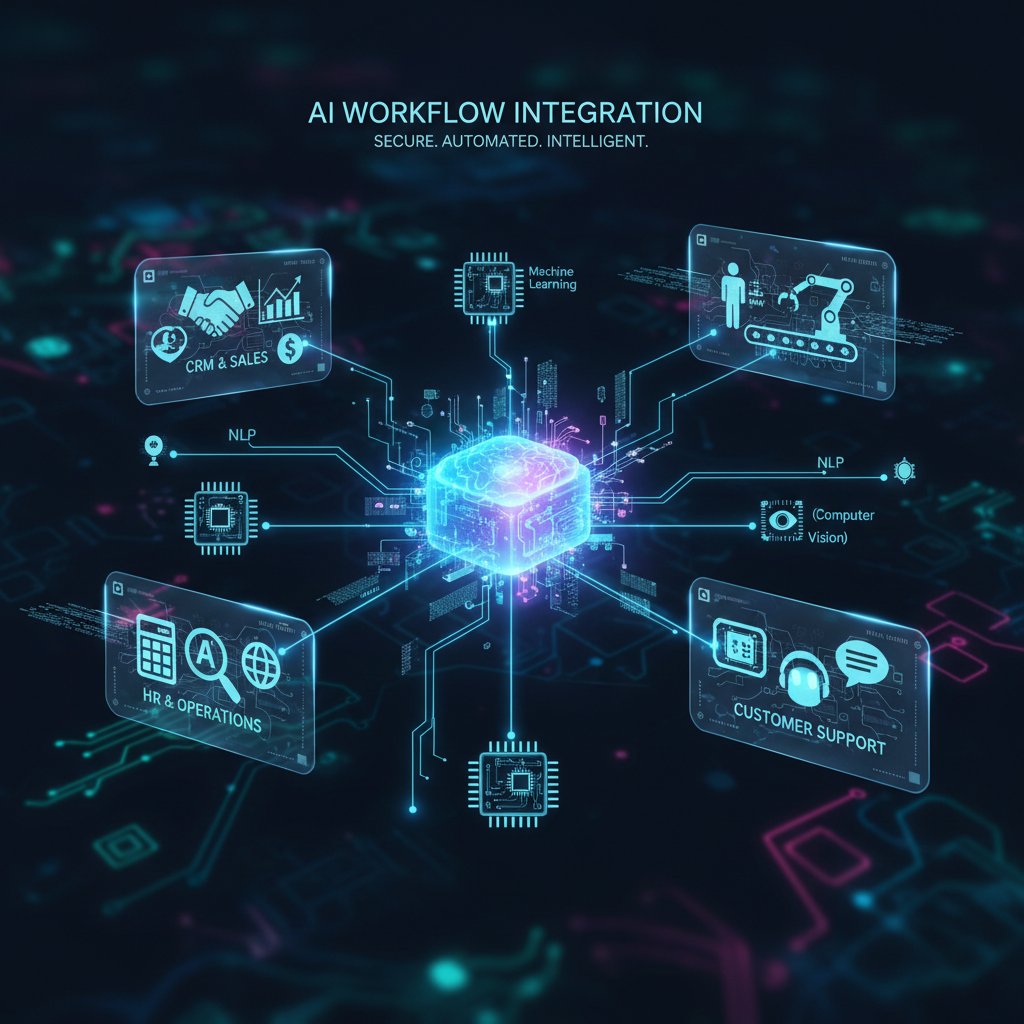
“Vendor lock-in is the dirty secret of many AI-powered workflow tools. You get hooked by ease of use, but extracting your data or switching platforms can be a nightmare.”
— Extracted from HubSpot, 2024
Worse, automation gone wrong has torched everything from supply chain orders to customer relationships, especially when poorly governed or rushed to production. The more powerful your AI tools, the more catastrophic a mistake can become.
For every workflow you automate, map out:
- Data access: Who can see what, and where does it go?
- Audit trails: Can you trace every action back to source?
- Exit strategy: How hard is it to migrate or switch vendors?
- Failure modes: What’s your contingency if an automation spirals out of control?
Ignoring these questions isn’t just risky—it’s reckless.
The real price tag: time, money, and cognitive overhead
The marketing says “effortless,” but research from Bizway, 2024 exposes the messy reality. The total cost of AI-powered workflow integration tools isn’t just the subscription fee—it’s the sum of hidden expenses: onboarding, maintenance, training, and scaling.
| Cost Type | Hidden Details | Example Impact |
|---|---|---|
| Licensing | Per-user, per-flow, or per-action pricing | Unexpected overages |
| Setup & Onboarding | Paid implementation, technical consulting | Delayed go-live |
| Maintenance | Updates, bug fixing, integration drift | Ongoing IT costs |
| Training | Staff time, lost productivity during ramp-up | Slower ROI |
| Scaling | Costs rise with data volume & complexity | Budget blowouts |
Table 3: The unadvertised costs of AI workflow integration
Source: Original analysis based on Bizway, 2024, Cflow, 2023
Factor in cognitive overhead—the mental labor of monitoring, tweaking, and managing automations—and you see why many early adopters report “automation fatigue.” If you’re not ready for ongoing stewardship, you’re not ready for AI integration.
Red flags: how to spot vaporware (before it burns you)
The AI workflow tool market is saturated with half-baked products, wild marketing claims, and startups that disappear faster than your quarterly budget. Protect yourself by looking for these warning signs:
- Vague promises of “seamless” integration without concrete examples.
- No transparent pricing—if you can’t get a real quote, walk away.
- Limited or no documentation, especially around APIs or data handling.
- No exit plan or migration support; your data should never be held hostage.
- Overreliance on black-box AI with no audit trails or explainability.
Due diligence isn’t a luxury—it’s the cost of survival. Trust, but verify—especially when your workflows are at stake.
From freelancers to AI: how the agency model is being disrupted
Why agencies fear ai-powered workflow integration tools
There’s a not-so-quiet panic in the agency world. The old model—hourly billing for repetitive, manual tasks—is eroding fast. According to San Diego University, 2024, platforms like futuretask.ai are automating entire swaths of work traditionally handled by armies of freelancers and boutique agencies.
“The biggest threat isn’t that AI will replace creatives—it’s that it will replace the repetitive, process-heavy work that agencies rely on for billable hours. The smart ones are pivoting; the rest are sweating.”
— Extracted from Enhencer, 2024
For agencies clinging to inefficiency, the writing’s on the wall.
But not all is lost. Agencies that double down on strategy, creativity, and cross-domain expertise are thriving—often by partnering with AI integration platforms rather than pretending they don’t exist.
The real losers? Those who refuse to let go of grunt work.
The rise of platforms like futuretask.ai
Enter platforms like futuretask.ai, which use AI to automate tasks once considered “too complex” for digital hands. From market research to content creation, these tools promise not just speed, but precision, scale, and—crucially—consistency.

According to verified case studies, customers using such platforms have reported reductions in operational overhead by up to 50%, with a corresponding boost in productivity and scalability (Source: Cflow, 2023). The agency model isn’t dead—but it’s been forced to evolve.
In this new landscape, the winners are those who embrace automation as a collaborator, not a competitor.
Winners, losers, and the new rules of the game
The disruption is real—here’s how the landscape shakes out:
| Stakeholder | Threatened Roles | How to Win in the AI Era |
|---|---|---|
| Freelancers | Data entry, repetitive tasks | Upskill to strategy, creative work |
| Agencies | Manual ops, coordination | Offer AI consulting, hybrid models |
| In-house Ops Teams | Routine process management | Focus on integration stewardship |
| AI Platforms | N/A – but risk commoditization | Offer continuous learning, value-add |
Table 4: Who wins and loses as AI workflow tools disrupt legacy business models
Source: Original analysis based on San Diego University, 2024, Enhencer, 2024
Adaptation, not resistance, is the new rule. The future belongs to those who move fast—and rethink not just how work gets done, but what “work” means in the first place.
Case files: real-world AI workflow integration, from wild wins to epic fails
When AI integration works: stories of transformation
It’s not all doom and disruption. When executed with discipline, ai-powered workflow integration tools drive breakthroughs that were unthinkable just a few years ago. One e-commerce business, for example, automated product description generation and SEO optimization—boosting organic traffic by 40% and slashing content costs by 50% (Bizway, 2024).
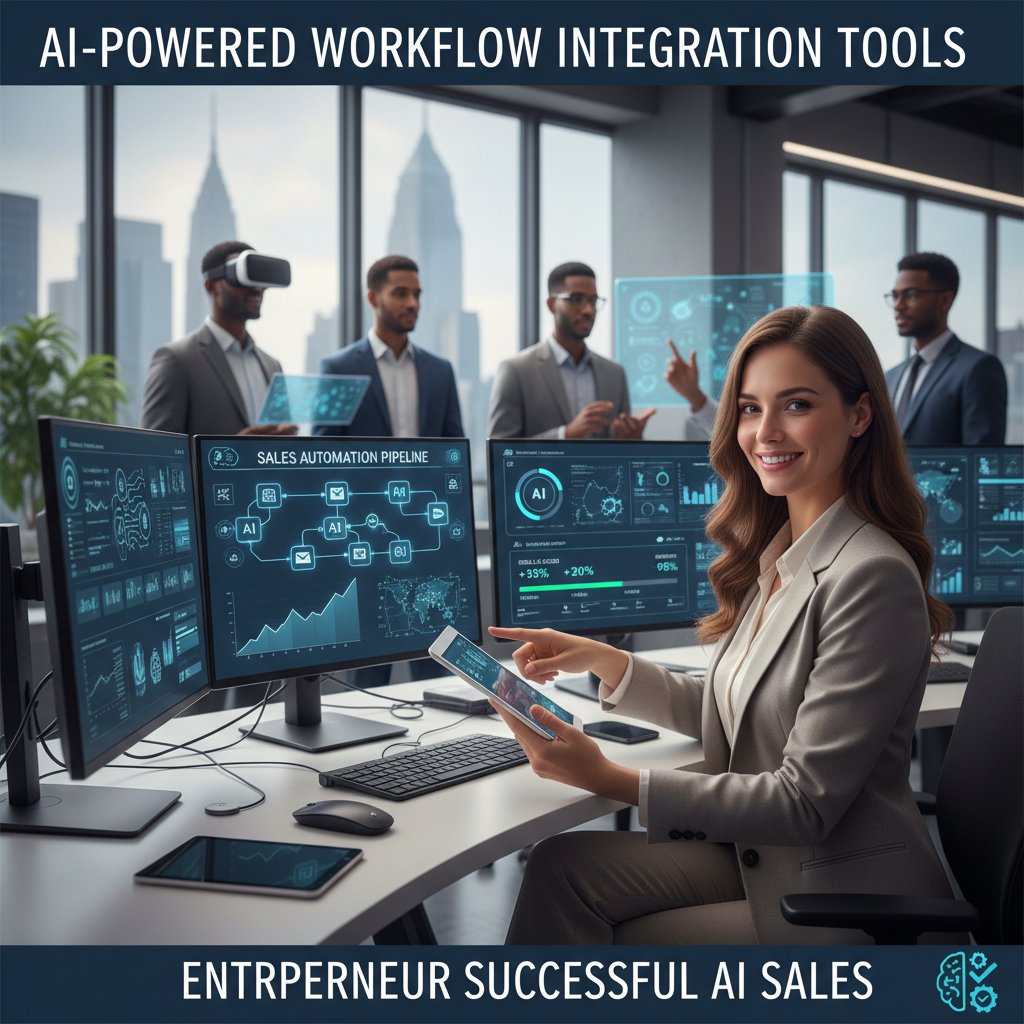
Here’s how successful integration typically unfolds:
- Painstaking mapping of every workflow—including edge cases.
- Incremental rollout—start with low-risk automation, then scale.
- Continuous monitoring with robust analytics.
- Quick iteration based on real-world feedback.
- Cultural buy-in—everyone from IT to marketing is on board.
These stories don’t make headlines because they’re not flashy. But in the world of operational excellence, quiet transformation beats noisy chaos every time.
When it all goes sideways: fails, lessons, and damage control
Of course, not every integration ends in a victory lap. One financial services firm, racing to automate report generation, failed to clean up legacy data sources—resulting in months of inaccurate analytics and a costly trust deficit with clients (Ayanza, 2024).
“Automation doesn’t fix bad data or broken processes. It just moves the garbage faster.”
— Extracted from Workato, 2024
The aftermath? Emergency manual overrides, executive apologies, and a hard-earned lesson: AI is powerful, but only as smart as the ecosystem you build around it.
Key lessons from failed deployments:
-
Don’t skip data hygiene—garbage in, garbage out.
-
Build in manual overrides for critical processes.
-
Overcommunicate changes to every affected team.
-
Audit workflows regularly—don’t “set and forget.”
-
Skipping pilot testing leads to unforeseen edge-case failures.
-
Relying solely on vendor “best practices” can create blind spots.
-
Neglecting user training magnifies downstream errors.
-
Ignoring feedback loops guarantees stagnation.
The grey zone: messy realities and workarounds
Not every AI integration is a triumph or disaster. Most live in the messy middle—a constant balancing act of workarounds, duct tape, and incremental wins. Teams adapt, workflows evolve, and the real art is finding the line between valuable automation and overkill.
Often, it’s the unsung innovations—automating a single approval step, or syncing two legacy tools—that drive the most tangible ROI. According to Enhencer, 2024, 35% of companies report “hybrid” workflows, where AI handles grunt work but humans call the shots on exceptions.
A process where AI and humans collaborate—AI handles high-volume, low-complexity tasks, while humans manage exceptions and strategy.
The hidden cost accrued when teams shortcut due diligence—building automations faster than they can be managed or updated.
In short: embrace the grey. Perfection is a myth. Iteration is survival.
Choosing your weapon: how to pick the right AI-powered workflow integration tool
The feature matrix: what really matters in 2025
With the surge in AI workflow tools, it’s easy to drown in features. But according to Top 5 AI Workflow Tools, 2024, only a handful of capabilities actually impact business value.
| Feature | Must-Have? | Why It Matters |
|---|---|---|
| Robust API Integration | Yes | Smooth data flow across tools |
| No-Code Customization | Yes | Empowers non-IT users |
| AI Explainability | Yes | Trust, compliance, transparency |
| Granular Access Controls | Yes | Data privacy, security |
| Real-Time Analytics | Optional | Deeper insights, faster fixes |
| Cross-Platform Support | Yes | Future-proofing integrations |
Table 5: The features that separate the best AI workflow tools from the hype
Source: Original analysis based on Top 5 AI Workflow Tools, 2024
Don’t get distracted by shiny extras. Focus on the features that drive integration depth, user empowerment, and long-term trust.
Checklist: are you ready to trust AI with your workflows?
Before you sign that contract, run through this no-nonsense checklist:
- Have you mapped (in detail) every process you plan to automate?
- Do you know exactly where your data will flow—and who can touch it?
- Is your existing tech stack compatible with your chosen tool?
- Have you budgeted for onboarding, training, and scaling?
- Is there a clear, auditable trail for every automation?
- Can you pull the plug and migrate data if things go south?
- Do you have buy-in from every affected team?
If you can’t answer “yes” to all, you’re not ready—yet.
Trust is earned. Take the time to build your foundation before you race ahead.
DIY vs. done-for-you: the integration battleground
Should you build your own AI-powered workflows, or rely on a specialized platform? Each path comes with its own risks and rewards.
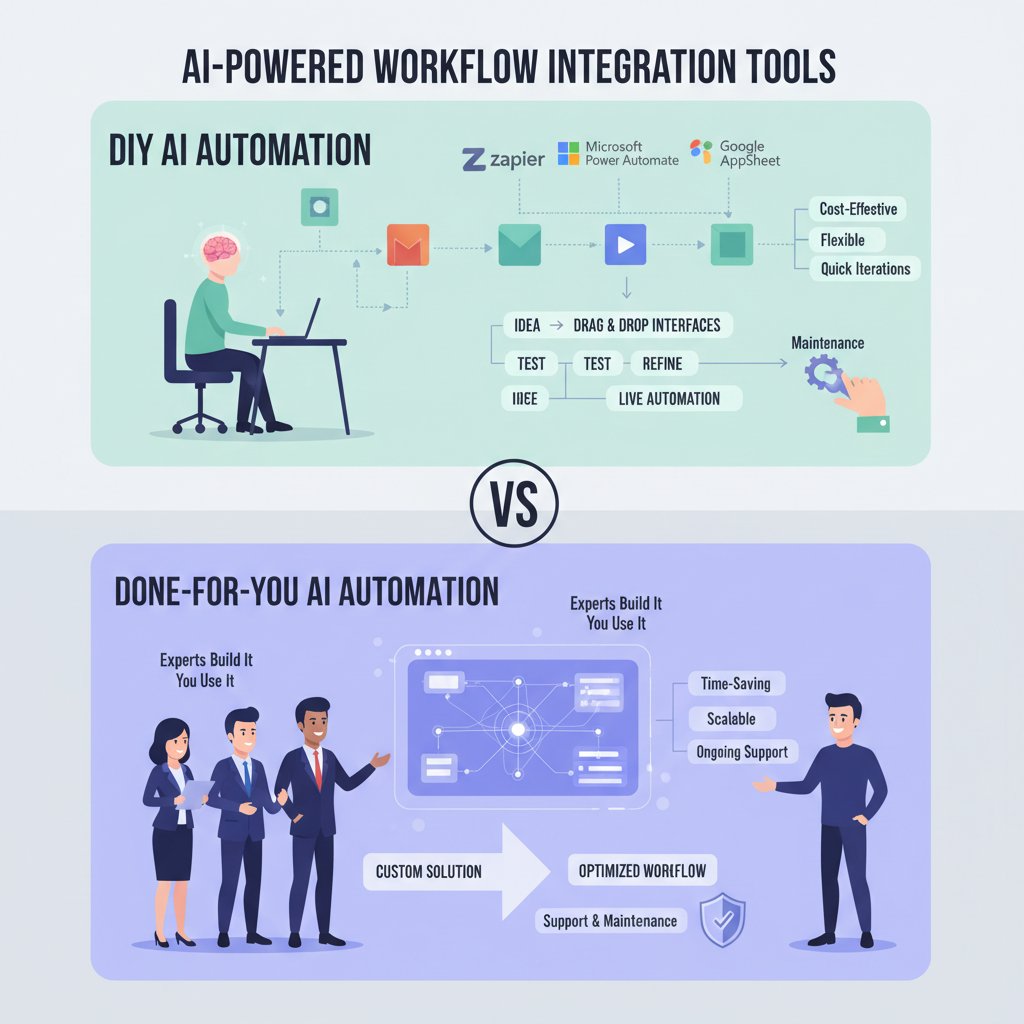
DIY means full control, customization, and the thrill (and peril) of engineering your destiny. But it also means endless maintenance, talent headaches, and the ever-present risk of reinventing the wheel. Done-for-you platforms—like those offered by futuretask.ai—deliver speed, scale, and expert support but may box you into a specific ecosystem.
The smartest organizations blend both: core, high-value automations via trusted platforms; bespoke integrations for mission-critical uniqueness.
Unconventional uses and surprising benefits
Beyond the brochure: weird, wild, and unexpected wins
The formal sales pitch for ai-powered workflow integration tools barely scratches the surface. In the wild, companies have found offbeat, edge-case wins that no one anticipated.
- A media company uses AI flows to auto-generate interview questions tailored to each guest’s digital footprint, boosting engagement rates.
- An HR department slashes onboarding time by 60% by automating new hire Q&A and policy acknowledgment—no more endless email chains.
- A logistics firm “listens” to weather and traffic data, automatically rerouting shipments and alerting drivers in real time.
- A nonprofit uses AI to scan grant databases daily, auto-building personalized funding applications for each project lead.
- IT teams use AI bots to proactively hunt security anomalies, cutting incident response time by days.
Sometimes, the most valuable use cases are the ones you never planned for.
Hidden ROI: what agencies and vendors don’t want you to know
The true return on investment for AI-powered workflow integration tools often hides in plain sight. It’s not just about reducing payroll or speeding up marketing launches—it’s about freeing up your best minds for work that actually matters.
| Hidden ROI Source | What Most Miss | Real-World Impact |
|---|---|---|
| Reduced Error Rates | Less rework, higher quality | Fewer customer complaints |
| Staff Morale Boost | Less drudgery, more purpose | Lower turnover, higher NPS |
| Improved Compliance | Automated audit trails | Fewer regulatory headaches |
| Competitive Agility | Faster pivots, rapid scaling | Beat slower rivals to market |
Table 6: The invisible ROI drivers of AI workflow integration
Source: Original analysis based on Cflow, 2023, San Diego University, 2024
Every hour you save is an hour you can reallocate to growth, strategy, or innovation—the true currency of the modern economy.
The future is already here: trends, predictions, and what’s next
Where AI workflow integration is headed (and why it matters)
The stats are dizzying: the AI workflow automation market exploded from $20.1B in 2023 to $78.6B by 2030, a compound annual growth rate of 37% (Cflow, 2023). But behind the numbers lies a deeper shift—AI integration is no longer a “nice to have.” It’s a survival strategy.
Why does it matter? Because the companies who master AI integration first will outpace, out-innovate, and outlast those who don’t. The gap is widening, and the stakes are existential.
Adopt, adapt, or get left behind.
Emerging threats: what to watch out for in 2025 and beyond
AI-powered workflow integration isn’t all upside. The landscape bristles with new threats:
- Shadow workflows: Employees building unsanctioned integrations introduce security vulnerabilities.
- Algorithmic bias: Poorly trained models perpetuate unfairness in hiring, support, or resource allocation.
- Tool fatigue: Too many overlapping platforms create confusion, cognitive overload, and resistance.
- Security breaches: API misconfigurations and weak access controls open doors to data thieves.
- Vendor instability: Startups with cool tech but shaky finances can vanish overnight, taking your data with them.
Vigilance, not complacency, keeps you safe.
How to stay ahead (without losing your mind)
Here’s your three-step survival kit:
- Educate every stakeholder—not just IT—on the risks and rewards of AI integration.
- Build cross-functional teams to audit, monitor, and refine workflows continuously.
- Prioritize transparency: insist on explainability, clear audit trails, and regular vendor performance reviews.
Stay agile, stay honest, and treat AI as a tool—not a crutch.
Your move: how to start your AI workflow journey (and not regret it)
Step-by-step: launching your first AI-powered workflow
Don’t leap—launch. Here’s how to start your journey without falling into the usual traps:
- Audit every process—map out steps, exceptions, and pain points.
- Define clear automation goals tied to measurable business outcomes.
- Choose a proven, well-supported AI integration platform.
- Start with a small, low-risk workflow—measure obsessively.
- Solicit feedback from every user; refine and iterate quickly.
- Scale only after initial wins are locked in and documented.
Done right, each step builds confidence, transparency, and momentum.
You don’t need to automate everything at once—pick your battles and win them decisively.
How to evaluate and iterate on your integrations
Integration isn’t a one-and-done affair. The best organizations treat it as a continuous improvement loop.
| Evaluation Step | What to Measure | How to Iterate |
|---|---|---|
| Pre-launch Testing | Error rates, speed | Tweak data inputs, logic |
| Early Rollout Monitoring | User feedback, exceptions | Patch, retrain, communicate |
| Ongoing Performance | Business KPIs, uptime | Optimize triggers, add layers |
| Quarterly Audit | Security, compliance gaps | Update workflows, retrain AI |
Table 7: The AI workflow evaluation and iteration loop
Source: Original analysis based on Ayanza, 2024, Workato, 2024
Adaptation, not perfection, is the goal.
Final thoughts: what nobody tells you (until it’s too late)
Here’s the last brutal truth: AI won’t save you from your own blind spots. The real work is cultural, not technical. Automate what matters, own your data, and never stop asking uncomfortable questions.
“Adopting AI-powered workflow tools is not about replacing people. It’s about empowering them to focus on what humans do best: critical thinking, creativity, and connection.”
— synthesis based on expert opinions across cited sources
In this new era, the winners are those who see AI not as a threat, but as a force multiplier. The rest? They’ll just be working harder—while their competitors work smarter.
Sources
References cited in this article
- San Diego University(indiaonline.sandiego.edu)
- Bizway(bizway.io)
- Ayanza(ayanza.com)
- Cflow(cflowapps.com)
- Workato 2024 Report(workato.com)
- Forbes(forbes.com)
- HubSpot(blog.hubspot.com)
- AI Journal(aijourn.com)
- Salesforce(salesforce.com)
- Appian(appian.com)
- IBM(ibm.com)
- IDC/Microsoft(blogs.microsoft.com)
- Superside(superside.com)
- Aethir(aethir.com)
- HubSpot(blog.hubspot.com)
- WorkflowLLM Paper(arxiv.org)
- Merge.dev(merge.dev)
- Bizway(bizway.io)
- Orkes(orkes.io)
- n8n(blog.n8n.io)
- Evolution.ai(evolution.ai)
- Enscape3D(blog.enscape3d.com)
- Konfig(konfigthis.com)
- Gartner/Forbes(forbes.com)
- Workato(workato.com)
- UserGuiding(userguiding.com)
- Polymer(polymerhq.io)
- Security Sales & Integration(securitysales.com)
- Hypestudio(hypestudio.org)
- SmartDev(smartdev.com)
- Coherent Solutions(coherentsolutions.com)
- Codica(codica.com)
- Fast Company(opentools.ai)
- Forbes(forbes.com)
- Caltech Whitepaper(go.ctme.caltech.edu)
- AgencyAnalytics(agencyanalytics.com)
- LinkedIn(linkedin.com)
- Forbes, Contractor UK, Adecco(3cglobalgroup.com)
- Forbes(forbes.com)
- AIPRM(aiprm.com)
- Wolters Kluwer(wolterskluwer.com)
- Vena Solutions(venasolutions.com)
- Product School(productschool.com)
- KDnuggets(kdnuggets.com)
Automate Your Tasks, Transform Your Business
FutureTask.ai revolutionizes your workflow by automating complex tasks typically outsourced to freelancers and agencies. Our powerful AI-driven platform leverages cutting-edge LLM technology to deliver precision, speed, and consistency at scale. Whether you're managing content creation, data analytics, marketing campaigns, or customer support, FutureTask.ai ensures seamless task execution, significant cost savings, and unmatched efficiency. Transform your business operations, eliminate delays, reduce operational overhead, and gain a competitive advantage with intelligent automation.
Get startedReady to Automate Your Business?
Start transforming tasks into automated processes today
Frequently Asked Questions
What are the main causes of workflow inefficiency in organizations?
According to the article, the root cause of most operational inefficiencies is not laziness or incompetence, but a sprawling ecosystem of disconnected tools, manual interventions, and tribal knowledge. These silent inefficiencies—such as missed messages, outdated data, and lost emails—are baked into daily routines and often go unmeasured.
How much productive time do companies actually lose to workflow gaps?
According to Enhencer (2024), companies lose up to 20% of productive hours each week to avoidable workflow gaps, which represents time that could be redirected into innovation or customer service.
Will AI-powered workflow integration tools automatically solve my business's efficiency problems?
No—the article warns that AI tools won't magically fix broken workflows. Simply adding more tools without addressing the root problem of disconnected systems can actually make processes more tangled unless proper integration is established.
What does the article say about the marketing claims surrounding AI workflow tools?
The article argues that beneath the glossy marketing veneer promising to eliminate bottlenecks and deliver business transformation, there is actually a landscape riddled with silent chaos, hidden costs, and complicated realities that differ significantly from the sales pitch.
From the Archive
Explore more from Ai-powered task automation

Ai-Powered Workflow Optimization: What Succeeds and What Fails

AI Workflow Automation: Where Companies Actually Stand in 2024

Best AI Tools for Workflow Automation: What Delivers Results

Automating Workflow Management Tasks: Balancing Efficiency with Team Retention

AI-Driven Workflow Management Software Compared to Alternatives
