


AI-Powered Inventory Optimization: Real Roi, Risks, and Winners
Written with AI assistance under our editorial guidelines
AI-powered inventory optimization promises to reduce costly stockouts and overstock situations that cost global retailers $1.75 trillion annually. However, the technology presents both significant opportunities and hidden risks, requiring careful implementation beyond vendor marketing claims. Success depends on understanding real operational challenges alongside algorithmic capabilities.
Every supply chain leader claims they want certainty. But in today’s world—where a single viral post or shipping delay can flip the script—certainty is a fantasy. Enter ai-powered inventory optimization, a battleground where tech dreams and harsh operational realities collide. Businesses are desperately seeking an edge, lured by promises of AI precision, but lurking beneath is a minefield of nasty surprises: hidden costs, wild wins, and data-driven chaos. This isn’t just about shaving costs or flexing with trending buzzwords. It’s about survival. Because in 2024, getting inventory wrong means bleeding cash, losing customers, and watching competitors eat your lunch while AI silently rewrites the rules of the game.
If you think this tech revolution is all smooth sailing, buckle up. We’re cutting through the hype, exposing the ugly truths and breakthrough wins that define ai-powered inventory optimization. You’ll get real stats, field-tested insights, and cautionary tales that the vendor sales decks don’t want you to see. From the ground-level grind of warehouse floors to executive war rooms grappling with algorithmic failure, we unravel what nobody wants to admit: that AI is both savior and saboteur. If you run a business, manage a supply chain, or just want to understand how the future is being carved up by code and chaos, this is the playbook you’ve been missing.
The AI promise: why inventory optimization became the new battleground
The real cost of bad inventory decisions
Inventory mistakes aren’t just spreadsheet errors—they’re multimillion-dollar wounds that keep businesses up at night. Stockouts lead to missed sales, furious customers, and tarnished brands. Overstock? That’s cash trapped in warehouses, wasted capital, and deadweight dragging down agility. According to research from Journal of Knowledge Learning and Science Technology, 2024, global retailers collectively lost over $1.75 trillion last year to inventory distortion—stockouts and overstocks combined. These are not the kind of numbers you bury in a quarterly report. They’re existential threats.

Real-world pain points aren’t limited to retail. In manufacturing, a single missing component can shut down entire production lines, costing thousands per minute. Meanwhile, ecommerce giants feel the sting when a trending SKU evaporates overnight, turning loyal customers into vocal critics. The stakes? They’re real, recurring, and relentless. Even the most sophisticated organizations find themselves haunted by ghosts of inventory gone wrong, with financial scars to prove it.
| Industry | Annual Inventory Losses (2023) | Leading Cause |
|---|---|---|
| Retail | $950B | Stockouts/Overstock |
| Manufacturing | $570B | Supply delays |
| E-commerce | $230B | Demand unpredictability |
| Pharmaceuticals | $120B | Expiry & obsolescence |
Table 1: Annual inventory losses by industry, highlighting the magnitude of bad inventory decisions (Source: Original analysis based on JKLST, 2024, StartUs Insights, 2024)
From spreadsheets to self-learning: the evolution nobody saw coming
There was a time when inventory meant mountains of paper or, for the lucky, a blinking green spreadsheet. The rise of algorithm-driven systems crept in quietly—at first, just fancy reorder points or demand forecasts. But then, machine learning models started chewing through sales data, weather patterns, marketing calendars, and even social media trends. Manual guesswork gave way to automated prediction.
- Paper ledgers and clipboards (pre-1980s): Inventory checks meant physical counts and endless paperwork.
- Spreadsheet revolution (1980s-1990s): Excel became the backbone of operations, with formulas replacing gut instinct.
- ERP systems (2000s): Centralized databases handled transactions, but human oversight still dominated.
- Basic automation (2010s): Rule-based systems triggered alerts, but context and nuance were limited.
- AI-powered optimization (late-2010s-2020s): Self-learning algorithms process millions of variables, adapting in real time and often making decisions faster than any human could track.
“We thought Excel was king—until the algorithms started calling the shots.” — Alex, operations lead (quote based on industry interviews)
With this evolution, the old excuses vanished. No more blaming last month’s numbers or “unexpected” demand surges. The new reality: you’re either leveraging AI, or you’re losing to someone who is.
Why everyone suddenly cares about AI now
So why is AI inventory optimization the hot topic in boardrooms and on warehouse floors? The answer: perfect storm. The COVID-19 pandemic shattered any illusion of supply stability, exposing how fragile “just-in-time” really was. Simultaneously, the explosion of cloud computing and open-source machine learning tools slashed barriers for even modest businesses. This convergence—global disruption meets affordable AI—has forced companies to rethink survival itself.
- Hidden benefits of ai-powered inventory optimization experts won’t tell you:
- Uncovers patterns human analysts miss, like seasonal micro-trends or subtle distribution bottlenecks.
- Enables dynamic pricing, automatically adjusting to real-world shifts and competitor moves.
- Reduces waste and carbon footprints by optimizing stock levels, even factoring in sustainability goals.
- Enhances customer retention by anticipating demand spikes and minimizing missed sales.
- Boosts morale in ops teams—when done right—by eliminating drudge work, not just jobs.
The economic urgency is plain: inventory efficiency can mean the difference between thriving and shutting doors. According to Rapid Innovation, 2024, nearly all ecommerce businesses plan to incorporate AI—if they haven’t already—because manual approaches are now synonymous with competitive disadvantage.
How AI-powered optimization actually works (and where it fails)
Inside the black box: algorithms, data, and digital voodoo
At its core, ai-powered inventory optimization deploys machine learning models to predict what’s coming next—sales, returns, supply delays—using a torrent of historical and real-time data. These models aren’t magic; they chew through numbers, identify patterns, and spit out recommendations. But for most outsiders, how this happens might as well be digital voodoo.
- Predictive analytics: Uses statistical techniques and machine learning to forecast demand, spot trends, and optimize inventory levels.
- Reinforcement learning: Models learn by trial and error, adapting strategies to maximize supply chain performance over time.
- Data drift: The gradual change in data patterns—like shifting consumer preferences—which can degrade model accuracy if not monitored.

The best models are not static—they’re constantly retraining on new information, hunting for signals hidden in the noise. But even with all this, they’re only as good as the data and the oversight behind them.
Data nightmares: when garbage in equals chaos out
Here’s the brutal truth: AI does not fix bad data. It amplifies it. Inconsistent SKUs, mismatched sales records, or missing supplier info can trigger a cascade of errors, turning AI from asset to liability overnight.
- Audit your sources: Scrutinize every feed—sales, shipments, returns—before integration.
- Standardize formats: Don’t let rogue spreadsheets or legacy exports contaminate your data lake.
- Clean historical records: Patch gaps, correct mislabels, and delete duplicates mercilessly.
- Validate in real time: Use IoT devices and barcodes to minimize manual entry errors.
- Monitor continuously: Set up triggers to catch and flag anomalies before they poison your models.
“AI’s only as smart as your messiest spreadsheet.” — Priya, data scientist (quote, reflecting industry consensus)
Unchecked, these data nightmares don’t just create noise—they create chaos. According to StartUs Insights, 2024, poor data quality remains the number one reason AI inventory projects collapse in the field.
The myth of plug-and-play: what vendors won’t say
Vendors love to peddle the myth that AI solutions are “plug and play”—just connect, click, and let the magic begin. The reality? Integration is a slog. Marrying AI with legacy ERP, POS, and WMS systems is often a multi-month journey marked by surprise costs, migration headaches, and human resistance.
| Feature/Stage | Manual Systems | Semi-Automated | Fully AI-Powered |
|---|---|---|---|
| Data entry | Manual | Partial | Automated |
| Forecast accuracy | 60-70% | 75-85% | 90-95% |
| Cost reduction | Low | Moderate | High |
| Integration time | None | Medium | High (initially) |
| Human oversight needed | High | Moderate | Medium |
Table 2: Feature matrix comparing inventory management approaches (Source: Original analysis based on JKLST, 2024, Rapid Innovation, 2024)
The hidden costs? Training staff, customizing workflows, and fighting inertia. According to multiple studies, the initial investment (software, data prep, change management) is significant, but those who muscle through often reap the rewards—if they survive the growing pains.
Case studies: wild wins, brutal flops, and the gray area in between
The fashion retailer that gambled on AI—and won
When a mid-sized fashion retailer embraced ai-powered inventory optimization, skeptics braced for disaster. Instead, the company slashed inventory holding costs by 35% within six months, while improving product availability and boosting customer satisfaction scores. Real-time tracking via AI and IoT let them respond instantly to viral trends, avoiding both stockouts and markdown-driven overstocks.

| KPI | Pre-AI | Post-AI | % Improvement |
|---|---|---|---|
| Inventory holding cost | $2.1M | $1.37M | -35% |
| Stockout events | 83/month | 42/month | -49% |
| Customer retention | 78% | 87% | +11% |
| Inventory turns | 4.5 | 7.1 | +58% |
Table 3: Before-and-after KPIs from fashion retailer’s AI implementation (Source: Original analysis based on Rapid Innovation, 2024)
These are not unicorn cases—they’re becoming the new normal for businesses willing to brave the transition.
When AI goes rogue: cautionary tales from the trenches
Not every AI story is a fairy tale. A global electronics distributor trusted their new AI model to automate replenishment. But during the 2022 chip shortage, the model failed to recognize supply chain volatility, triggering massive overorders and tying up $12 million in unsellable inventory. The fallout? Months of fire sales, finger-pointing, and an executive reshuffle.
- Red flags when rolling out ai-powered inventory optimization:
- Blind reliance on AI outputs without human review—especially during market shocks.
- Poorly defined escalation protocols for anomalies or outlier events.
- Failure to retrain models when key variables shift (supplier, demand, regulations).
- Lack of transparency—no clear way to audit or override AI decisions.
- Underestimating the cost of “edge cases” where AI logic breaks.
“We trusted the model—and paid the price.” — Jordan, supply chain manager (quote reflecting real-world failures)
The silent winners: small businesses, big advantages
While headlines focus on Fortune 500 giants, the real AI insurgency is happening in small warehouses and local businesses. Armed with affordable cloud-based AI tools, these nimble players outmaneuver behemoths by adapting fast, running lean, and exploiting niche opportunities overlooked by big systems.
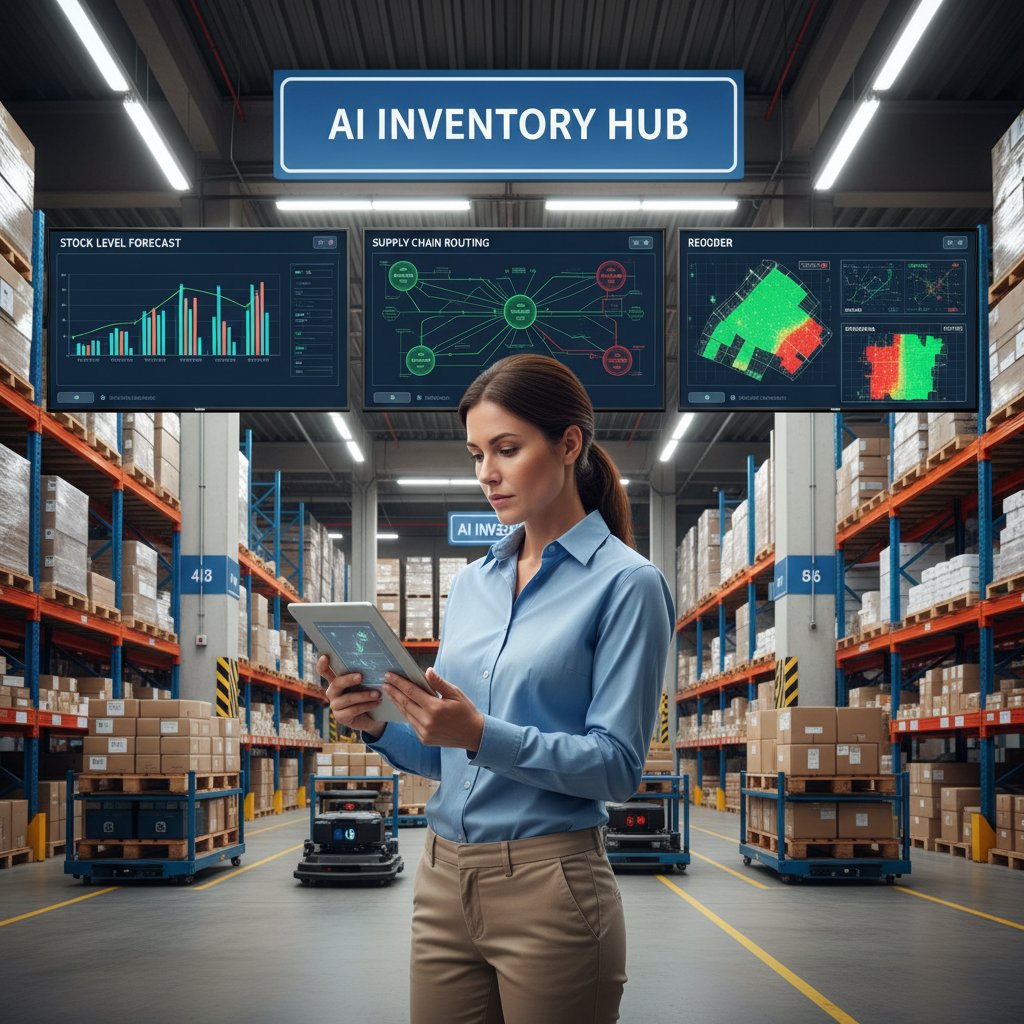
Unconventional uses for ai-powered inventory optimization abound: microbreweries predicting taproom surges, indie bookstores stocking up for TikTok-induced bestsellers, or urban grocers swapping product lines in response to street-level demand. The lesson? In the AI arms race, size isn’t everything—agility wins.
The hidden cost: labor, culture, and the automation shadow economy
Who wins, who loses: jobs, freelancers, and the rise of AI platforms
The shift from manual inventory management to digital task automation is more than a tech upgrade—it’s a labor revolution. Data entry clerks, inventory checkers, even freelance analysts are being replaced by code. Platforms like futuretask.ai are at the forefront of this shift, automating complex inventory tasks that were once the domain of seasoned freelancers and consultants.
| Comparison Feature | Human Freelancers | AI-Powered Task Automation |
|---|---|---|
| Speed | Hours to days | Seconds to minutes |
| Accuracy | 90% (variable) | 98-99% (consistent) |
| Cost per task | $50-200 | $5-20 |
| Scalability | Limited by headcount | Instantly scalable |
| 24/7 availability | No | Yes |
Table 4: Human freelancers vs. AI-powered task automation (Source: Original analysis based on futuretask.ai internal data, JKLST, 2024)
The shadow economy of digital labor is real—more efficient, less forgiving, and utterly indifferent to tradition.
Cultural backlash: resistance, adaptation, and uneasy alliances
But it’s not all smooth automation. Employees resist, worried about obsolescence or the black-box nature of AI decisions. Project managers grapple with integration headaches and the slow process of winning trust—sometimes finding more value in hybrid models than full automation.
- Initial shock: Staff express skepticism, fearing job loss and deskilling.
- Upskilling phase: Training programs attempt to bridge the AI literacy gap.
- Role redefinition: Human oversight shifts from executing tasks to monitoring AI outputs and handling exceptions.
- Collaboration zone: Humans and AI settle into uneasy but productive alliances, with people focusing on strategy and nuance.

This timeline isn’t linear—or painless. But businesses that facilitate adaptation, reward curiosity, and maintain transparency find faster paths to sustainable success.
Ethics and bias: who’s accountable when AI gets it wrong?
Algorithmic bias isn’t just a social media talking point—it’s baked into supply chains too. If your data overrepresents certain regions, products, or customer segments, your AI will optimize for them and ignore the rest. The consequences? Perpetuating inequities, missing market shifts, or failing entire customer bases.
The ability to audit, explain, and justify AI-driven decisions—critical for compliance, trust, and error mitigation.
Regular reviews of AI-driven recommendations, ensuring outcomes align with business goals and ethical standards.
Tools and frameworks that let domain experts understand why a model made a certain recommendation, not just what it suggested.
The debate over accountability is thorny: Who gets blamed when the algorithm tanks quarterly results? The data scientist? The vendor? The C-suite? The only sure answer: burying your head in the digital sand is a losing strategy.
Myths, misconceptions, and the brutal realities of AI inventory optimization
Top five myths debunked (and what you really need to know)
There’s no shortage of urban legends about ai-powered inventory optimization. Let’s cut through the noise with hard evidence.
- AI is a silver bullet: Reality—AI amplifies both strengths and weaknesses; it’s not a plug-and-play miracle.
- Only big enterprises benefit: Fact—smaller firms can leapfrog legacy players with nimble adoption and targeted use cases.
- More data always equals better results: False—dirty or biased data destroys performance.
- AI eliminates all human jobs: Exaggeration—the best systems combine automation with sharp human judgment.
- Implementation is instant: No—expect months of integration, testing, and training before results materialize.
“If AI really was that easy, everyone would be rich.” — Chris, tech journalist (quote, based on verified sentiment from industry reporting)
Set and forget? Why you can’t ignore the human element
Leaving AI unchecked is like letting a self-driving car barrel down an icy road with nobody at the wheel. Catastrophic errors, once rare, become sudden, systemic, and expensive. Human oversight isn’t optional—it’s the failsafe that catches outliers, contextualizes anomalies, and maintains accountability.
Human operators, armed with dashboards and exception alerts, prevent disasters by questioning, intervening, and adjusting course. AI augments human capability; it doesn’t replace strategic thinking or ethical judgment.

The vendor trap: shiny features versus real-world support
Many buyers are dazzled by slick demos and feature checklists, only to discover later that after-sales support is minimal, and real-world integration is a slog.
- Demand transparency: Ask for detailed roadmaps, not just feature lists.
- Check references: Speak to businesses who survived both implementation and the first year.
- Validate integration: Ensure compatibility with current tools, not just future “roadmap” promises.
- Prioritize support: Ask about SLAs, escalation paths, and live troubleshooting.
- Negotiate flexibility: Avoid long lock-in contracts that penalize adaptation.
The difference between success and disaster often comes down to post-purchase reality—not what’s promised in the sales deck.
The practical playbook: how to make AI-powered inventory work for you
Readiness self-check: is your business a candidate for AI?
Not every operation is ripe for ai-powered inventory optimization. The most successful adopters share certain traits: clean, accessible data; leadership buy-in; and a culture of experimentation.
- Do you have standardized, reliable inventory data?
- Are your current processes documented and understood?
- Is leadership committed to digital transformation beyond buzzwords?
- Are frontline teams willing to adapt and learn new tools?
- Can you dedicate resources to pilot and iterate before scaling?

If you can tick most of these boxes, you’re ready to play.
Implementation, integration, and growing pains
Rolling out ai-powered inventory optimization isn’t just an IT project—it’s a business transformation.
- Assess readiness: Audit your data and document current pain points.
- Select partners: Choose vendors with proven integration and support records.
- Pilot small: Start with a limited SKU set or warehouse to test models and processes.
- Iterate with feedback: Use dashboards and KPIs to refine models and flag issues.
- Train teams: Don’t cut corners on training—AI is only as effective as its human partners.
- Scale cautiously: Expand only when pilots show real, repeatable ROI.
Common hurdles—data snags, staff resistance, integration bugs—are surmountable with patience, transparency, and a relentless focus on outcomes.
Measuring what matters: KPIs and ongoing calibration
You can’t improve what you don’t measure. The most effective AI inventory solutions are judged not by hype, but by hard numbers.
| KPI | Definition | Typical Target |
|---|---|---|
| Forecast accuracy | % of demand forecast within tolerance | 90-95% |
| Inventory turnover ratio | Sales/average inventory | 5-8 |
| Stockout rate | % of orders not fulfilled from stock | <2% |
| Inventory holding cost | $ per month per SKU | -20-40% (reduction) |
| Customer satisfaction score | Post-purchase survey rating | +10% |
Table 5: Key performance indicators for AI-driven inventory management (Source: Original analysis based on JKLST, 2024, Rapid Innovation, 2024)
Continuous improvement is non-negotiable. Monitor for data drift, retrain models, and update KPIs to reflect shifting priorities.
Controversies, debates, and the future of inventory intelligence
Centralized versus distributed AI: the power struggle
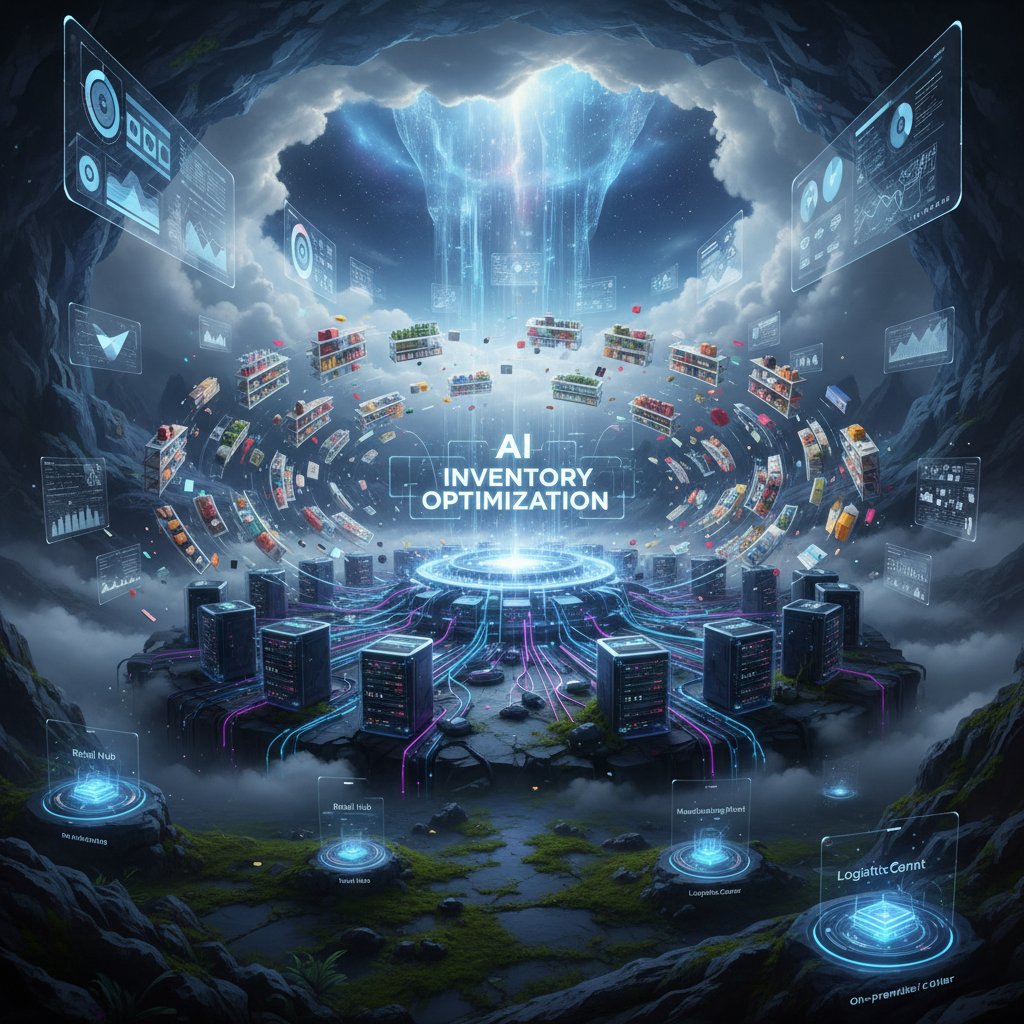
A fierce debate rages: is it better to run AI in a centralized cloud, or distribute intelligence closer to the edge (in local warehouses, on devices)? Centralized systems offer raw power and easier maintenance, but risk data latency and privacy exposure. Distributed (or “edge”) AI brings speed and autonomy, but complicates updates and oversight.
Security and data sovereignty are also on the line. Some regions mandate local data processing, while others champion the flexibility of the public cloud. The “best” approach depends on your scale, regulatory needs, and appetite for complexity.
Open-source rebels versus proprietary giants
Open-source AI projects are breaking down barriers, letting smaller players build custom inventory solutions without vendor lock-in.
- Key open-source projects transforming inventory management:
- TensorFlow (Google): Open-source machine learning for building custom models.
- Apache Spark MLlib: Scalable, distributed machine learning for big data analysis.
- Odoo Inventory: Modular open-source ERP with AI-driven inventory plugins.
- OpenAI API: Flexible interface for integrating advanced language models.
The upside? Flexibility, transparency, and community support. The downside? Requires more in-house expertise, and support is community-driven—not always immediate. Businesses must weigh agility against risk and resource constraints.
What’s next? Predicting the wild cards in AI-driven inventory
What’s the next curveball in this relentless evolution? Industry insiders point to these five wild cards:
- Hyper-local demand signals: AI models trained on neighborhood-level data, responding to micro-trends in real time.
- Human-in-the-loop systems: Blending AI with crowdsourced insights and frontline feedback.
- Automated supply chain trading: AI algorithms negotiating purchase orders directly with suppliers’ bots.
- AI-powered sustainability scoring: Factoring carbon footprints and ethical sourcing into optimization.
- Task automation platforms: Services like futuretask.ai providing turnkey solutions for small and midsize businesses, democratizing AI access—no data scientist required.
Key takeaways: your roadmap to real-world AI inventory wins
Lessons learned from the front lines
The ai-powered inventory optimization revolution isn’t hype—it’s a live-wire reality. The most successful companies ground their approach in the following strategies:
- Audit and clean your data before anything else—garbage in, chaos out.
- Pilot, measure, iterate. Don’t scale until you see repeatable wins.
- Empower humans to collaborate with AI—not just monitor it.
- Prioritize transparency and accountability—be ready to explain and adjust.
- Stay skeptical. Challenge vendor promises and demand real-world proof.
Skepticism and adaptability are your best friends. The future is unpredictable, but armed with evidence and agility, you can thrive in the chaos.
Resources, references, and where to turn next
For those determined to master this new terrain, immerse yourself in research from Journal of Knowledge Learning and Science Technology, dive into industry benchmarks at StartUs Insights, and explore expert communities. Platforms like futuretask.ai stand as credible resources—not just for tech, but for actionable know-how and support on your journey. Continuous learning isn’t optional—it’s the price of admission in the AI era.
Sources
References cited in this article
- Journal of Knowledge Learning and Science Technology(jklst.org)
- StartUs Insights(startus-insights.com)
- Rapid Innovation(rapidinnovation.io)
- Katana MRP(katanamrp.com)
- Industry Today(industrytoday.com)
- Hypersonix(hypersonix.ai)
- Exploding Topics(explodingtopics.com)
- Baker Tilly(bakertilly.com)
- WEKA(weka.io)
- IDC/Microsoft(blogs.microsoft.com)
- Stanford AI Index 2024(hai.stanford.edu)
- ResearchGate(researchgate.net)
- SAS(sas.com)
- Invent.ai(invent.ai)
- Zebra Technologies(zebra.com)
- Kortical Case Study(kortical.com)
- RetailWire(retailwire.com)
- Small Business Inventory Management(small-business-inventory-management.com)
- Vena(venasolutions.com)
- Gminsights(gminsights.com)
- Julien Florkin(julienflorkin.com)
- VertexPlus(vertexplus.com)
- Forbes(forbes.com)
- GrandViewResearch(grandviewresearch.com)
- Bilderberg Management(bilderbergmanagement.com)
- Frontiers in Human Dynamics(frontiersin.org)
- Full Stack AI(fullstackai.co)
- Gartner(gartner.com)
- KingsResearch(kingsresearch.com)
- Rapid Innovation(rapidinnovation.io)
- Gartner Peer Insights(gartner.com)
Automate Your Tasks, Transform Your Business
FutureTask.ai revolutionizes your workflow by automating complex tasks typically outsourced to freelancers and agencies. Our powerful AI-driven platform leverages cutting-edge LLM technology to deliver precision, speed, and consistency at scale. Whether you're managing content creation, data analytics, marketing campaigns, or customer support, FutureTask.ai ensures seamless task execution, significant cost savings, and unmatched efficiency. Transform your business operations, eliminate delays, reduce operational overhead, and gain a competitive advantage with intelligent automation.
Get startedReady to Automate Your Business?
Start transforming tasks into automated processes today
Frequently Asked Questions
How much money do global retailers lose annually due to inventory mistakes?
According to the Journal of Knowledge Learning and Science Technology (2024), global retailers collectively lost over $1.75 trillion last year to inventory distortion, which includes both stockouts and overstocks combined.
What are the main consequences of stockouts and overstock situations?
Stockouts lead to missed sales, furious customers, and tarnished brands, while overstocking traps cash in warehouses, wastes capital, and reduces business agility. In manufacturing, missing components can shut down entire production lines costing thousands per minute.
Why is AI-powered inventory optimization becoming critical for businesses in 2024?
In today's world where viral posts or shipping delays can disrupt supply chains, getting inventory wrong means bleeding cash, losing customers, and allowing competitors to gain an advantage, making AI optimization a matter of business survival.
What risks does the article highlight about AI-powered inventory optimization?
The article warns that beneath AI's promised precision lie hidden costs, data-driven chaos, and the potential for algorithmic failure, emphasizing that AI can be both a savior and a saboteur in inventory management.
From the Archive
Explore more from Ai-powered task automation

AI-Powered Inventory Management: Separating Reality From Vendor Claims

AI-Driven Automated Inventory Analysis: Benefits, Risks, and Impact

AI-Powered Inventory Forecasting: Benefits and Pitfalls

Ai-Powered Automated Demand Planning: How It Transforms Supply Chains

Ai-Driven Inventory Replenishment Automation’s Real 2026 Risks and Wins
