


AI-Powered Lead Generation Automation: What Works in Practice and What Fails
Written with AI assistance under our editorial guidelines
AI-powered lead generation automation shows real promise by handling data analysis and personalizing outreach at scale, but many implementations fail due to poor strategy or unrealistic expectations. Success requires understanding that AI augments rather than replaces human judgment, and organizations must align technology with solid sales fundamentals and compliance practices to achieve genuine results.
The promise of ai-powered lead generation automation in 2025 is as seductive as it is misunderstood. For every slick pitch about “end-to-end AI sales,” there’s a graveyard of failed implementations, lackluster results, and sales teams quietly wondering what went wrong. This isn’t just another glowing article about so-called AI revolutions. Here, we’ll cut through the hype and expose the uncomfortable truths: what works, what tanks, and how businesses are actually using AI to rewire their pipelines—sometimes with spectacular wins, sometimes with spectacular flops. If you’re looking to outsmart the noise, sidestep the snake oil, and build a lead engine that doesn’t burn cash or trust, buckle up. This is the brutal, data-backed reality of automated lead generation in 2025.
Why manual lead generation is dying (and nobody wants to admit it)
The pain points of old-school prospecting
There’s a reason seasoned salespeople groan at the mention of “prospecting hours.” Manual lead generation—cold emails, cold calls, spreadsheet hell—was never glamorous, but in 2025, it’s downright brutal. Each morning starts the same: wrestling with lists scraped from outdated databases, firing off hundreds of template emails, and logging each action with the hope that someone, anyone, will bite. But the grind doesn’t just steal time—it erodes morale, creativity, and, eventually, your team’s edge.

The hidden costs of manual lead gen nobody talks about:
- Invisible burnout: Churn rises as staff tire of repetitive, low-reward tasks, draining your most valuable sales assets.
- Data decay: Lead lists age quickly, and manual updates are a losing battle against bad phone numbers and dead emails.
- Opportunity costs: Time spent on low-probability prospects means high-value leads languish, uncontacted.
- Inconsistent messaging: Manual outreach often results in off-brand, disjointed communication across the team.
- Compliance risks: GDPR, CCPA, and other privacy regulations are easy to overlook—until a spreadsheet leaks.
- Untracked ROI: Without automation, tracking which manual efforts actually convert is nearly impossible.
How AI is rewriting the playbook
When AI enters the sales org, it doesn’t just automate tasks—it reshapes how teams think about targeting, qualifying, and engaging prospects. The shift isn’t subtle. Suddenly, algorithms sift through oceans of data, surfacing leads matched to intricate buyer profiles, while automated systems personalize outreach at scale. The result? Less grunt work, more strategic moves, and a new focus on the leads that matter.
"AI didn't just make us faster—it made us rethink who we target." — Amir, AI strategist
| Manual Lead Generation | AI-Powered Lead Generation | |
|---|---|---|
| Time to qualify (per lead) | 30-45 minutes | 2-5 minutes |
| Cost per lead | $25-$50 | $8-$20 |
| Lead volume (weekly) | 50-100 | 500-1200 |
| Conversion rate | 1-3% | 2-6% (varies by industry) |
| Data accuracy | 60-70% | 85-95% |
| Personalization | Low (manual) | High (automated/hybrid) |
| Compliance risk | High | Moderate (if managed properly) |
Table 1: Comparison of manual vs. AI-powered lead generation in 2025. Source: Original analysis based on Leadspicker, 2025, Fifty Five and Five, 2025.
Why most teams still cling to old habits
If AI is so effective, why do so many sales orgs still cling to spreadsheets and cold calls? The answer is as much psychological as it is procedural. Old habits die hard in sales, where process changes are often seen as threats—not opportunities. According to research from Fifty Five and Five, 2025, most teams cite fear of job loss, workflow upheaval, and skepticism about AI’s ability to “understand” their niche markets.
- Fear of losing control: Sales leaders worry automation means letting go of the reins—and their intuition.
- Job security concerns: Reps fear being replaced, not realizing AI often makes their roles more strategic.
- Lack of internal expertise: Many orgs simply don’t have the data or AI-savvy people to guide adoption.
- Change fatigue: Previous tech rollouts (CRM, marketing automation) often disappointed, breeding cynicism.
- Perceived impersonal touch: Some believe only humans can build the trust needed for high-value deals.
- Budget inertia: Investments in legacy tools or sunk costs in agency relationships make switching hard.
Decoding ai-powered lead generation automation: what it really means in 2025
Definitions and demystification
In 2025, “ai-powered lead generation automation” refers to the fusion of artificial intelligence and advanced software that identifies, qualifies, and nurtures sales prospects with minimal human input. But under the buzzwords lies a dense web of concepts, each with its own quirks and pitfalls.
Key AI lead gen terms:
- AI-powered lead generation: Software that uses algorithms, machine learning, and natural language processing (NLP) to discover and evaluate sales prospects.
- Lead scoring AI: Automated systems that assign a value to leads based on likelihood of conversion using data points like engagement, firmographics, and intent.
- Automated outreach: AI-driven tools that personalize and schedule emails, messages, or calls to leads, adjusting content based on response patterns.
- LLMs (Large Language Models): AI engines (like GPT-4 and beyond) that generate human-like messages, screen leads, and even simulate nuanced conversations.
- Hybrid lead gen: A workflow where AI handles the grunt work, but humans step in for complex or high-value interactions.
How LLMs and advanced algorithms actually work
At the heart of modern AI lead generation are LLMs and sophisticated data-crunching machines. These algorithms ingest terabytes of data—website behavior, social media signals, CRM records, and more—to spot subtle buying signals. In plain English: the AI hunts for patterns humans would miss, ranking leads on everything from company size to cryptic engagement cues.
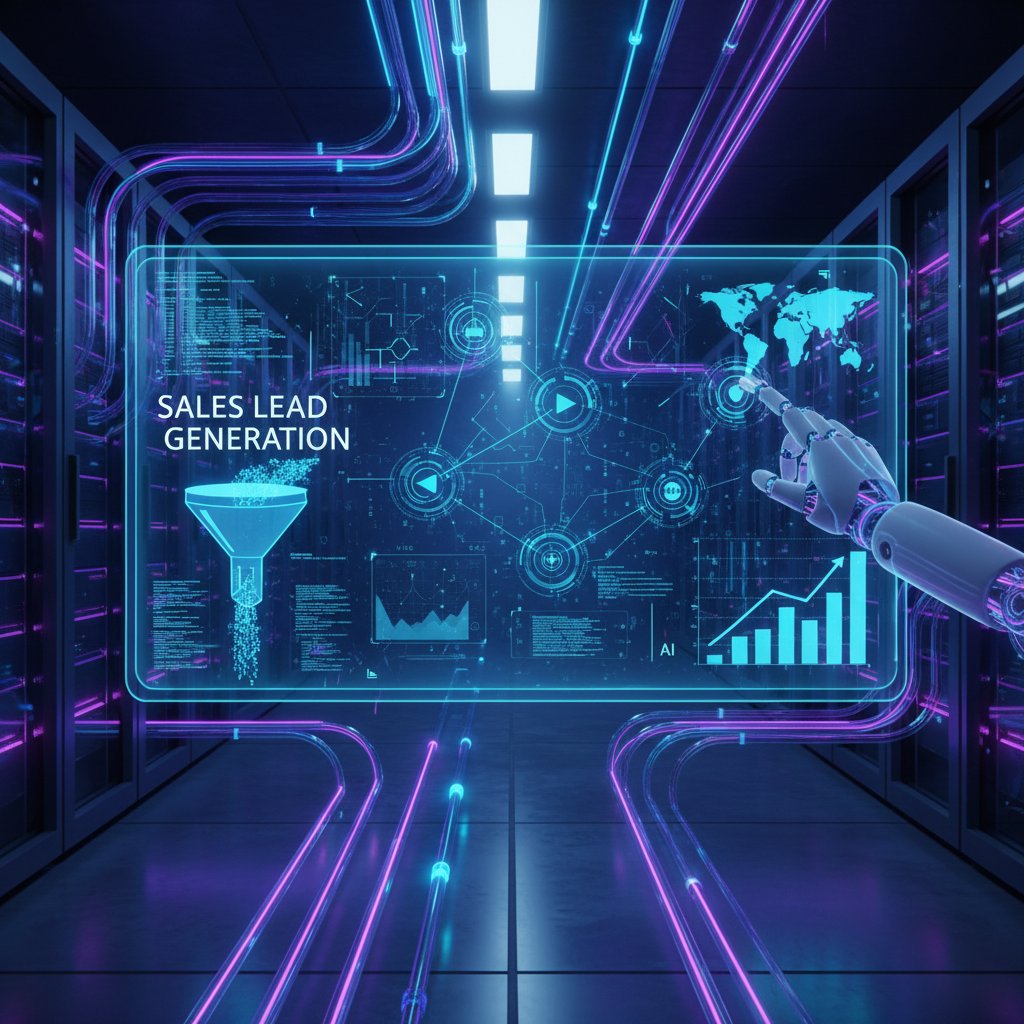
The best systems don’t just automate—they adapt. “Learning” from each campaign, they tweak targeting, update scoring models, and even rewrite outreach scripts. But even the smartest LLM can’t (yet) replace the human touch needed for nuanced, strategic conversations.
The rise of hybrid models (AI + human expertise)
Despite all the automation, the industry’s sharpest players know pure AI isn’t a silver bullet. The most successful lead gen teams—especially in B2B and complex sales—blend automation with human intuition. AI sorts, scores, and initiates contact. Human reps build rapport, close deals, and catch the subtleties an algorithm might miss.
"You need a human in the loop, or you’re just automating mediocrity." — Jade, sales ops leader
It’s not just about efficiency—it’s about trust. Algorithms can find prospects, but only people can build relationships that last beyond the first demo.
The state of ai-powered lead generation automation: hype vs. reality
AI promises vs. real-world adoption
The marketing pitch is irresistible: plug in AI, turn on the lead tap, and watch revenue soar. But the real world is messier. According to Leadspicker, 2025, adoption rates for AI-powered lead generation tools in B2B are up 60% year-on-year, but satisfaction rates lag far behind, especially when it comes to lead quality and post-sale conversions.
| Year | AI Lead Gen Adoption (%) | Team Satisfaction (%) |
|---|---|---|
| 2024 | 32 | 47 |
| 2025 | 51 | 54 |
Table 2: AI-powered lead generation adoption and satisfaction rates, 2024-2025. Source: Leadspicker, 2025.
Common myths debunked
Despite progress, myths cling like static. Let’s torch the biggest ones, backed by research and hard-won experience:
- “AI finds all the right leads.” Reality: AI boosts volume but often needs tuning for quality—data hygiene is everything.
- “AI saves jobs.” Mixed. Many roles shift to strategy or analysis, but some repetitive jobs disappear.
- “Hyperpersonalization is automatic.” Not quite. 98% of marketers say it’s vital, but AI still needs solid input to avoid tone-deaf outreach.
- “AI SDRs are better than humans.” False for now. In nuanced B2B engagement, humans still outshine bots in empathy and improvisation.
- “AI is plug-and-play.” It’s not. Integration, data quality, and ongoing tuning are required.
- “Automated outreach is always efficient.” Only if messaging is authentic—otherwise, it’s digital spam.
- “AI ensures compliance.” AI can help, but privacy rules shift fast—manual checks are still needed.
The new risks: algorithmic bias, fake leads, and more
The AI arms race isn’t without casualties. Companies report growing pains including algorithmic biases (certain profiles get over-prioritized), and a surge of “deep fake” leads—profiles that look real but evaporate on contact. The very speed and scale that AI brings can also multiply the cost of mistakes.

Navigating these risks requires constant vigilance: regular audits, diverse training data, and good old-fashioned gut checks.
Who’s really winning with ai-powered lead generation automation?
Case study: the agency that fired its SDRs
One notable agency—let’s call them “Velocity Digital”—made headlines when it replaced its entire SDR (Sales Development Rep) team with an AI-driven stack. Within months, meeting volume spiked by 2.5x, and operational costs dropped by 35%. But the celebrations were short-lived. Without human oversight, lead quality tanked, demos converted at a lower rate, and client churn quietly crept up. After a painful quarter, the agency re-hired a smaller, more strategic team to work alongside the AI, finding a new equilibrium: fewer human hours, but better outcomes.

Surprising industries cashing in on AI lead gen
While SaaS and e-commerce are obvious adopters, AI-powered lead generation automation is quietly disrupting some unexpected sectors:
- Healthcare: Automating appointment outreach, targeting high-value patients, and scheduling follow-ups.
- Legal services: Mining court filings and public records to identify litigation-prone companies.
- Construction: Identifying high-potential bids based on real-time permit data.
- Education: Segmenting and nurturing prospective students across channels.
- Real estate: Predicting which property owners are most likely to sell based on behavioral signals.
- Non-profits: Identifying high-propensity donors and customizing asks for greater impact.
What early adopters regret (and what they’d do differently)
The scars of early adoption run deep. Many teams confess they underestimated the work involved in data prep, overhyped what AI could do, or chose tools that dazzled in demos but fizzled in practice.
"We chased shiny tools and paid the price—now we focus on fit, not flash." — Noah, founder
Real winners start small, iterate, and focus on integration—not just automation.
The anatomy of a successful ai-powered lead generation automation stack
Must-have features in 2025
The AI lead gen market is awash with tools, but only a few deliver true value. What separates real solutions from vaporware? Research from Copy.ai, 2025 and Botpress, 2025 highlights these core capabilities:
| Feature | Essential for Success | Nice-to-Have | Red Flag if Missing |
|---|---|---|---|
| Hyper-personalization | ✔️ | ❌ | |
| CRM integration | ✔️ | ❌ | |
| Real-time data syncing | ✔️ | ❌ | |
| Customizable workflows | ✔️ | ❌ | |
| Compliance controls | ✔️ | ❌ | |
| Multi-channel outreach | ✔️ | ❌ | |
| Transparent reporting | ✔️ | ❌ | |
| Continuous model tuning | ✔️ | ❌ | |
| Native LLM support | ✔️ | ❌ |
Table 3: Feature matrix—core capabilities of successful AI lead gen solutions. Source: Original analysis based on Copy.ai, 2025, Botpress, 2025.
How to spot snake oil in the AI lead gen market
New “AI” tools spring up daily, but not all are what they claim. Watch out for these warning signs:
- Black box algorithms: No explanation of how leads are found or scored.
- No CRM integration: Forces you into yet another siloed system.
- Stale data sources: Relies on outdated databases or web scraping.
- No compliance features: Ignores privacy, GDPR, or CCPA controls.
- No human override: Lacks the ability to manually vet or correct AI output.
- Overpromised results: Claims of 10x ROI with zero effort.
- No model updates: Fails to learn from past campaigns.
- Vague pricing: Hides costs or locks you into long-term contracts.
Integrating with your existing workflow
AI lead gen shouldn’t exist in a vacuum. The most effective stacks weave seamlessly into your existing CRM, sales enablement, and analytics tools. Integration is more than API checkboxes—it’s about ensuring data flows, reporting is unified, and your team isn’t forced to work in silos.

Smart teams don’t rip and replace—they layer AI atop proven human processes, driving adoption and results.
Step-by-step: how to implement ai-powered lead generation automation (without losing your mind)
Assessing your readiness
Before plugging in an AI tool, step back: is your team ready for it? Success depends as much on mindset and process as on technology.
- Evaluate current process: How manual is your lead gen? Where are the bottlenecks?
- Audit data quality: Are your CRM records clean, current, and complete?
- Define clear goals: Lead volume, quality, conversion rate—what matters most?
- Gauge team buy-in: Who’s excited, who’s skeptical, and why?
- Budget realistically: Factor in not just software costs, but training and integration.
- Identify integration points: Map where AI will plug into your existing stack.
- Plan for compliance: Ensure data privacy and regulatory needs are covered.
Building your AI-powered workflow
Ready to automate? Here’s a practical roadmap, distilled from real-world deployments:
- Map your ideal customer profile (ICP) and buyer personas.
- Select a trusted AI lead gen tool—prioritize proven results and integration.
- Cleanse and enrich your CRM data for quality input.
- Configure lead scoring rules and outreach sequences.
- Pilot with a small segment—measure initial outcomes closely.
- Gather feedback from both sales and marketing teams.
- Refine messaging and targeting based on AI insights.
- Scale up gradually, monitoring performance and data integrity.
- Continuously retrain models with new data and outcomes.
- Document lessons learned and share wins organization-wide.
Avoiding common implementation fails
Even with the best intentions, AI rollouts often trip up on the basics. The most common culprits? Overlooking data quality, underestimating change resistance, and failing to assign clear ownership for ongoing tuning.

Don’t expect perfection out of the gate—iterate, measure, and keep the lines of communication wide open.
Inside the black box: how AI actually finds and qualifies your leads
Data sources and privacy realities
Where does the magic begin? AI lead gen tools pull from a dizzying array of data: public business registries, company websites, social media profiles, buying intent signals, and—crucially—your own CRM and marketing engagement stats. But with great data comes great responsibility.
- Not all data is equal: Outdated or scraped lists can poison your pipeline.
- Data privacy is non-negotiable: GDPR, CCPA, and evolving global standards demand rigorous compliance.
- Transparency matters: Know what data your AI uses and how it’s processed.
- Consent is critical: Ensure all outreach complies with opt-in/opt-out rules.
- Audit trails required: Document every automated touchpoint for peace of mind (and legal cover).
The scoring game: how AI ranks your prospects
The heart of AI lead gen is predictive scoring—ranking prospects by their likelihood to convert. Here’s how it works (in plain English): the software tallies up signals—company size, recent funding, engagement with your site, even sentiment in email replies—to assign a “score.” High scorers get immediate attention; low scorers get nurtured or dropped. The best systems explain their logic, enabling constant improvement.

What happens when the AI gets it wrong
No system is perfect. Even advanced AI occasionally hallucinates—surfacing leads that make no sense.
"One week, our AI flagged a dog-walking service as our top B2B prospect." — Leah, growth lead
When (not if) these moments happen, use them as teachable moments: retrain the model, adjust input data, and always leave room for human sanity checks.
The new rules: best practices and brutal lessons from the field
What the experts say (2025 edition)
The consensus among AI sales pros is clear: automation is here to stay, but it’s only as smart as the data, people, and processes behind it.
- Prioritize data quality: Garbage in still means garbage out, no matter how shiny the AI.
- Blend AI with human insight: Let algorithms do the heavy lifting, then step in for nuance.
- Iterate rapidly: The best teams treat AI as a living system—constantly tuning and retraining.
- Hyper-personalize or get ignored: One-size-fits-all templates collect digital dust.
- Monitor compliance religiously: Regulations change—your AI needs to keep up.
- Track ROI with rigor: Tie every lead back to source, outcome, and spend.
- Educate your team: Demystify AI so everyone knows how (and why) it works.
- Lean on trusted partners: Don’t go it alone—tap into expertise from leaders like futuretask.ai.
Pitfalls to avoid as automation evolves
Scaling AI-powered lead gen is fraught with traps. Here’s how to dodge the biggest ones:
- Skipping the data audit stage.
- Buying tools based on hype, not fit.
- Ignoring user feedback after rollout.
- Letting AI run unsupervised for too long.
- Neglecting compliance as you scale.
- Over-personalizing to the point of creepiness.
- Failing to retrain models regularly.
- Measuring activity, not outcomes.
- Assuming AI will “work itself out.”
Why some teams are quietly switching back to hybrid
As the dust settles, a growing number of teams are moving away from pure automation toward thoughtful hybrid models—where AI handles volume, humans own value. The reason? Trust, adaptability, and the realization that in the messy world of sales, no algorithm can fully replace intuition and relationship-building.

Looking forward: what ai-powered lead generation automation means for your business, your team, and your future
Will AI kill or create sales jobs?
Neither narrative tells the whole story. Yes, rote SDR roles are shrinking, but new, more strategic jobs are exploding.
- AI workflow architects: Design, tune, and monitor lead gen systems.
- Data strategists: Ensure data quality, compliance, and effective integration.
- Personalization specialists: Craft hyper-targeted messaging at scale.
- Sales enablement pros: Train teams to blend AI and human skills.
- Compliance officers: Oversee privacy and AI ethics.
- Analyst-hybrids: Use AI insights to drive strategic decisions.
How to futureproof your lead generation strategy
Staying ahead in 2025’s fast-moving sales landscape means proactive moves:
- Audit your full sales pipeline for automation opportunities.
- Invest in data hygiene, not just new tools.
- Train your team on AI basics—and best practices.
- Pilot small, measure everything, and scale what works.
- Blend AI with human creativity for outreach that lands.
- Stay current on compliance—don’t assume your AI vendor does it for you.
- Continuously monitor, retrain, and iterate your stack.
When to call in the pros (and why futuretask.ai is worth a look)
Sometimes, the stakes are too high for DIY. If your pipeline is complex, your data is messy, or you’re navigating high-risk compliance scenarios, bringing in an expert partner makes sense. Platforms like futuretask.ai bring deep experience, robust automation frameworks, and ongoing support, helping you sidestep common pitfalls and unlock the full value of ai-powered lead generation automation.

Conclusion
AI-powered lead generation automation isn’t a silver bullet, nor is it the apocalypse for sales teams. It’s a complex, evolving toolkit—one that demands transparency, relentless tuning, and a sharp eye for both risks and opportunities. The real winners in 2025 blend AI efficiency with human empathy, obsess over data quality, and never stop iterating. Ignore the hype and focus on fit, integration, and compliance, and you’ll not only survive the automation wave—you’ll ride it to real, measurable wins. Want an edge? Dive into trusted resources, leverage proven partners like futuretask.ai, and keep learning. In an era where the only constant is change, that’s the ultimate lead.
Sources
References cited in this article
- Lead Automation: Generation Strategies for 2025(leadspicker.com)
- AI Lead Generation: The Ultimate Guide for 2025 - Fifty Five and Five(blog.fiftyfiveandfive.com)
- Step-by-Step Guide to AI Lead Generation (2025)(botpress.com)
- AI for Lead Generation: Copy.ai(copy.ai)
- Forbes: Why B2B Lead Generation Is Dying(forbes.com)
- Escape the Sinking Ship: OutboundAIPRO(outboundaipro.com)
- Reddit: r/LeadGeneration(reddit.com)
- B2B Power Hour: Old School Prospecting(b2bpowerhour.com)
- Teamleader: Modern Sales Techniques(teamleader.eu)
- Sopro: Prospecting Guide(sopro.io)
- Outreach.io: AI Lead Generation(outreach.io)
- Chief Learning Officer: Old Habits(chieflearningofficer.com)
- UserGems: Lead Generation Challenges(usergems.com)
- LinkedIn: Why Old Methods Fail(linkedin.com)
- Scalii: 2025 Guide(scalii.com)
- eWeek: AI Lead Generation Software(eweek.com)
- IBM: AI for Lead Generation(ibm.com)
- Hurix: LLMs in Sales & Marketing(hurix.com)
- Medium: Automate Sales Lead Generation Using LLMs(medium.com)
- MGG Digital: Hybrid Approach(mggdigital.com)
- Forbes: Hybrid Workforce(forbes.com)
- Stanford HAI: Collaborative Agents(hai.stanford.edu)
- Smartlead: AI Lead Generation Software(smartlead.ai)
- PwC: 2025 AI Predictions(pwc.com)
- Cognition: Lead Gen Myths Debunked(cognition-solutions.com)
- LinkedIn: Myths about AI Lead Gen(linkedin.com)
- Gartner: AI Myths Debunked(gartner.com)
- Bardeen: Best AI Lead Generation Tools(bardeen.ai)
- Cience: AI for Lead Generation(cience.com)
- OneShot.ai: Agency vs. Specialist(oneshot.ai)
- Dashly: AI SDR Case Study(dashly.io)
- SalesForge: AI Sales Agent Review(salesforge.ai)
- AI Bees: Lead Generation Tools(ai-bees.io)
- Relevance AI: Revenue Leader's Guide(relevanceai.com)
Automate Your Tasks, Transform Your Business
FutureTask.ai revolutionizes your workflow by automating complex tasks typically outsourced to freelancers and agencies. Our powerful AI-driven platform leverages cutting-edge LLM technology to deliver precision, speed, and consistency at scale. Whether you're managing content creation, data analytics, marketing campaigns, or customer support, FutureTask.ai ensures seamless task execution, significant cost savings, and unmatched efficiency. Transform your business operations, eliminate delays, reduce operational overhead, and gain a competitive advantage with intelligent automation.
Get startedReady to Automate Your Business?
Start transforming tasks into automated processes today
Frequently Asked Questions
What are the main pain points of manual lead generation mentioned in the article?
The article identifies six key pain points: invisible burnout and staff churn from repetitive tasks, data decay as lead lists quickly become outdated, opportunity costs from focusing on low-probability prospects, inconsistent messaging across the team, compliance risks with GDPR and CCPA regulations, and untracked ROI making it difficult to measure which efforts actually convert.
Does the article suggest that AI-powered lead generation always delivers spectacular results?
No, the article explicitly states there is a "graveyard of failed implementations, lackluster results" and acknowledges that businesses experience "sometimes spectacular wins, sometimes spectacular flops" with AI automation, emphasizing the need to cut through hype and understand the reality.
How does the article describe AI's impact on sales organizations?
According to the article, when AI enters the sales organization, it doesn't just automate tasks but reshapes how teams approach targeting, qualifying, and engaging prospects—algorithms sift through large datasets to surface leads matched to buyer profiles while automated systems personalize outreach.
From the Archive
Explore more from Ai-powered task automation

AI-Powered Lead Nurturing: Separating Results From Hype

How Automating Lead Tracking with AI Reshapes Sales Operations

AI-Driven Sales Automation: What Actually Works

AI-Powered Sales Forecasting Automation: Results Vs. Promises

AI-Powered Automated Lead Scoring in B2B Sales


