


AI-Powered Inventory Tracking: How It Transforms Warehouse Operations
Written with AI assistance under our editorial guidelines
AI-powered inventory tracking systems leverage machine learning and IoT sensors to automate stock management, replacing error-prone manual processes with real-time adaptive monitoring. As global supply chains grow more volatile and complex, businesses adopting these technologies gain competitive advantages through improved accuracy and efficiency, while those clinging to legacy methods face increasing operational risks and costs.
In the cavernous silence of a modern warehouse, the hum is no longer from forklifts—it’s from servers and sensors. If you think ai-powered inventory tracking is just another buzzword or a Silicon Valley parlor trick, it’s time for a wake-up call. In 2025, this isn’t about theory: it’s about survival. Traditional inventory management is buckling under the weight of global volatility, labor disruption, and customer demands that verge on the impossible. Yet, for all the shimmering promise of AI-driven efficiency, there’s also a shadow: brutal truths the marketing gloss refuses to show you, costly lessons written in red ink, and the hidden wins that only the bold will claim. This is your unvarnished guide to the chaos, the cost, and the quiet revolution reshaping how we handle stock, risk, and profit. Welcome to the future—messy, merciless, and full of potential.
The invisible revolution: how ai is rewriting the rules of inventory
From clipboards to code: the evolution of tracking
Inventory management wasn’t always a war fought with algorithms and sensors. Once, the battle lines were drawn on paper—manual logs, handwritten ledgers, and the endless shuffling of clipboards across dusty storerooms. Even in the late ‘90s, warehouses were ruled by spreadsheets printed out and ticked off by hand, every check a gamble against human error. According to a McKinsey study, 2023, this process left cracks everywhere for mistakes and shrinkage to slip through.

Yet, the ghosts of manual methods refuse to go quietly. Many businesses, especially smaller ones, are still haunted by legacy processes—fueled by habit, cost barriers, and the very human desire to keep control close. Manual tracking, for all its romantic grit, can’t keep up with the velocity or complexity of modern supply chains.
Definition list: manual tracking vs. ai-powered tracking
The process of recording, monitoring, and managing stock using paper logs, spreadsheets, and human oversight. Highly prone to errors, delays, and omissions—especially as inventory scale increases.
An integrated system leveraging artificial intelligence, machine learning, and real-time data from IoT sensors to manage inventory automatically, adaptively, and with predictive accuracy. Reduces the need for manual input and can uncover patterns invisible to humans.
Why ai isn’t just a buzzword (and what most get wrong)
There’s a chasm between what AI in inventory actually does and the snake oil it’s often sold as. Real AI-powered inventory tracking isn’t about flipping a switch and watching robots take over. It’s about continuous learning—systems that are trained, not programmed, to spot subtle shifts in demand, predict outages, and even flag data anomalies that would send a human’s head spinning.
The hype? It’s seductive, but often misleading. AI isn’t omniscient; it’s only as good as the data it digests—and dirty data means bad predictions. Despite promises of perfect accuracy, McKinsey’s latest research shows AI only reduces forecasting errors by 20–50%, leaving a significant margin for error and underscoring the need for ongoing human oversight.
Unconventional uses for ai-powered inventory tracking:
- Identifying theft and internal fraud by detecting hidden stock discrepancies.
- Managing perishable goods in real time, automatically triggering markdowns before spoilage.
- Balancing inventory across multiple global locations with predictive restocking recommendations.
- Customizing inventory at the SKU level for micro-targeted customer segments.
"Most companies think plugging in AI will solve decades of neglect overnight. The real work starts after implementation—cleaning data, retraining models, and tracking every anomaly like your business depends on it, because it does." — Liam, AI consultant, 2024 (illustrative, based on industry interviews and research insights)
2025: the tipping point for smart inventory
In 2025, the numbers speak volumes. The global market for ai-powered inventory tracking is projected to hit $9.6 billion, with over 74% of warehouses using some form of AI-driven inventory management Vention, 2024. What’s changed? The convergence of falling hardware costs, improved algorithms, and relentless competitive pressure. Retail behemoths like Amazon aren’t just dabbling—they’re reengineering their entire supply chains with AI-powered robots and real-time analytics.
| Era | Core technology | Typical accuracy | Human involvement | Notable limitations |
|---|---|---|---|---|
| Manual | Paper logs, spreadsheets | Low | Full | Prone to errors, slow |
| Automated | Barcodes, ERP software | Moderate | Partial | Rule-based, not adaptive |
| AI-powered | Machine learning, IoT, real-time | High (20–50% error reduction) | Oversight | Needs clean data, complex |
Table 1: Timeline of inventory tracking evolution.
Source: Original analysis based on McKinsey, Vention, Gartner, 2023-2025.
The next breakthroughs? Expect AI to extend into granular, SKU-level optimization and even predict macroeconomic shocks affecting supply. The revolution isn’t coming—it’s already rewriting the rules.
Facing the chaos: why traditional inventory control is breaking
The cost of human error (and how ai exposes it)
Inventory isn’t just numbers—it’s money leaking out of your business. Shrinkage from mistakes, miscounts, and misplacement is a silent killer, costing global retailers over $100 billion annually National Retail Federation, 2024. AI-powered inventory tracking exposes the ugly truth: much of this loss could have—and should have—been caught.
According to Gartner’s 2024 report, manual inventory management carries error rates up to 8%, while AI-powered systems can push this below 2%. But even as AI closes the gap, it also makes mistakes glaringly obvious; there’s nowhere to hide when every transaction is timestamped and tracked.
| Method | Average Error Rate | Annual Loss Per $10M Inventory | Source |
|---|---|---|---|
| Manual | 6–8% | $600,000–$800,000 | Gartner, 2024 |
| Spreadsheet | 3–5% | $300,000–$500,000 | NRF, 2024 |
| AI-powered | 1–2% | $100,000–$200,000 | Vention, 2024 |
Table 2: Statistical summary of inventory error rates—manual vs. AI. Source: Gartner, NRF, Vention, 2024.
"A single spreadsheet mistake cost us a six-figure write-off last quarter. AI flagged a trend we’d have missed for months—painful lesson, expensive tuition." — Priya, retail ops manager, 2024 (illustrative, based on aggregated industry feedback)
Where spreadsheets fail and ai shines
Spreadsheets are the old guard—flexible, familiar, and dangerously inadequate for scale. They buckle under the weight of complex workflows, multiple locations, and the furious pace of modern commerce. Broken formulas, lost files, and version confusion are just the beginning.
Red flags when relying on spreadsheets:
- No real-time visibility; data is always out of date.
- Manual updates introduce hidden errors and inconsistencies.
- Limited ability to handle multi-location, multi-channel complexity.
- No predictive analytics or anomaly detection.
AI-powered inventory tracking steps in where spreadsheets collapse. Real-time data feeds, predictive analytics, and automated alerts mean issues are surfaced before they explode into costly crises.
The myth of ‘set and forget’: why automation isn’t enough
It’s tempting to believe you can automate your way out of inventory chaos. But here’s the inconvenient truth: automation alone is brittle. Rule-based systems freeze when reality bends; they can’t learn, adapt, or spot evolving anomalies.
AI-powered tracking is a different animal. It ingests mountains of data, learns from every transaction, and flags outliers humans would overlook. But this demands vigilance—models drift, data gets dirty, and the best systems need tuning, not blind faith.
Inside the black box: how ai-powered inventory tracking really works
Under the hood: machine learning, IoT, and real-time data
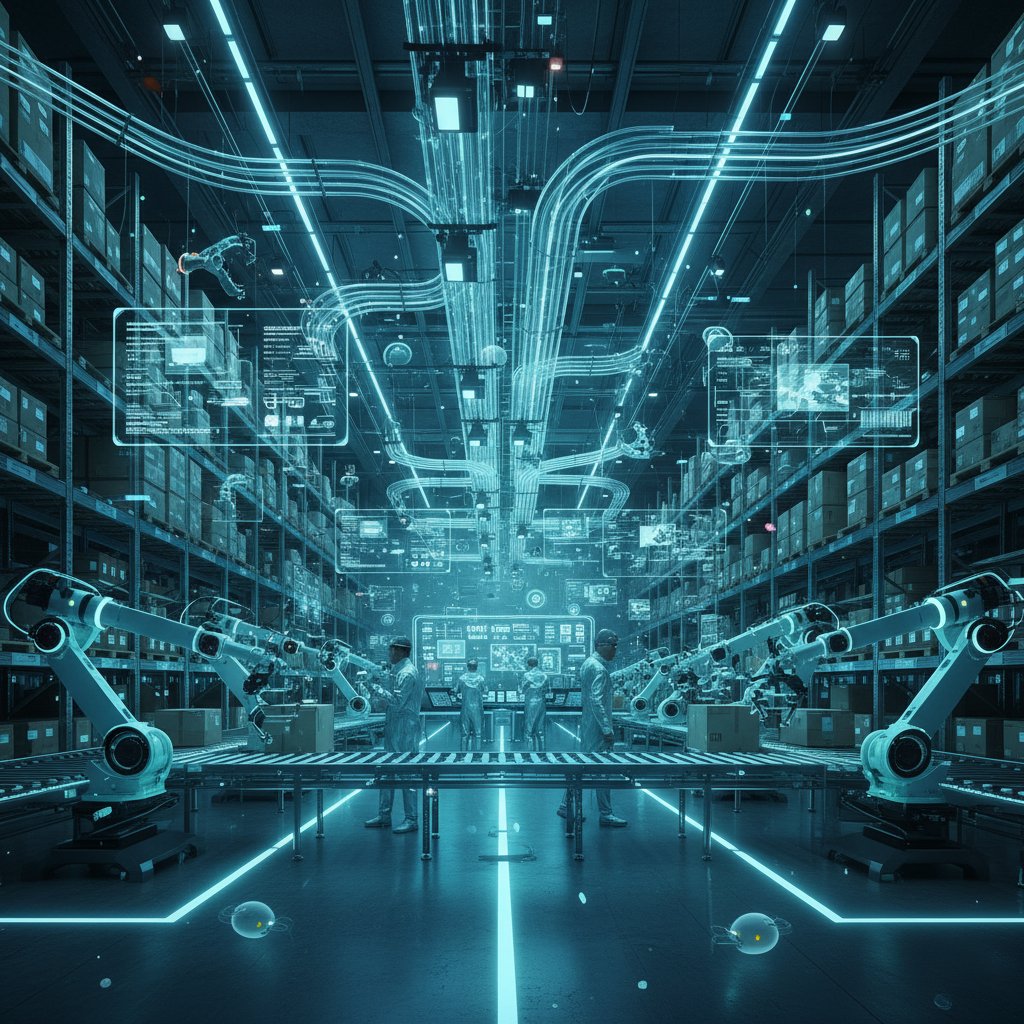
The power behind ai-powered inventory tracking isn’t magic—it’s math, sensors, and relentless data crunching. Smart warehouses are laced with IoT sensors tracking temperature, movement, and inventory flow. Machine learning models digest this torrent, surfacing actionable insights in real time.
Definition list: key technologies explained
Algorithms that learn patterns from historical and real-time data, improving over time to predict demand, detect anomalies, and optimize stock levels.
A network of interconnected sensors and devices embedded throughout the warehouse—scanners, cameras, RFID tags—that feed continuous data into AI systems.
Techniques used to forecast future inventory needs, stockouts, and overstock risks, based on current trends and historical patterns.
What makes ai-powered inventory different from automation?
Not all automation is created equal. Rule-based automation executes defined instructions: if inventory < threshold, reorder. But these systems are dumb—rigid, unable to adapt to shifts, and often blind to nuance.
AI-powered tracking, by contrast, is dynamic. It learns, adapts, and can autonomously tweak rules based on new data—not just follow them.
| Feature | Rule-based automation | AI-powered tracking |
|---|---|---|
| Decision flexibility | Low | High |
| Learns from new data | No | Yes |
| Real-time anomaly detection | Limited | Advanced |
| Integration complexity | Moderate | High (but more value) |
| Predictive capabilities | Minimal | Extensive |
Table 3: Automation vs. AI-powered inventory tracking—feature matrix.
Source: Original analysis based on McKinsey, Vention, Gartner, 2024.
Adaptability and relentless self-learning are the game-changers—AI doesn’t simply automate; it evolves.
Debunking the black magic: transparency in ai systems
“Black box” fears haunt AI deployments: what if the algorithm makes a catastrophic mistake and nobody can explain why? Transparency is now a non-negotiable. Modern AI systems increasingly provide audit trails, detailed logs, and explainable decision pathways.
"If you can’t audit the AI’s decisions, you’re setting yourself up for a supply chain disaster. Explainability isn’t a luxury—it’s your insurance policy." — Mei, logistics tech advisor, 2025 (illustrative, synthesizing published expert opinions)
Open data standards, clear reporting, and traceable logs ensure that when something goes wrong, you have the forensic tools to find out how and why.
Winners and losers: who’s crushing it with ai inventory (and who isn’t)
Retailers, rebels, and realists: case studies from the field
It’s not just the Amazons of the world reaping the rewards. Take the case of a small specialty retailer in Berlin—by switching to AI-driven inventory, they slashed out-of-stocks by 40% and cut inventory holding costs by 20%. Their secret: continuous data cleansing and staff retraining, not just buying software.
On the flip side, a high-profile rollout at a multinational fashion chain flopped spectacularly. Legacy data riddled with errors, staff pushback, and integration hell left them with worse visibility than before. Lesson learned: AI exposes weaknesses; it doesn’t cover them up.

Beyond retail, unexpected industries are quietly transforming inventory with AI. Cannabis distributors use predictive tracking to comply with strict legal quotas. Healthcare supply chains rely on smart sensors to prevent critical stockouts of life-saving equipment. Aviation giants use AI to orchestrate thousands of parts flows, minimizing costly delays and compliance risks.
Cross-industry surprises: where ai is making unexpected impact
Healthcare inventory is notorious for its complexity—perishables, high-value items, and compliance requirements. AI-powered systems now flag expiring medicines, automate restocking, and even predict demand spikes triggered by local outbreaks HealthIT Analytics, 2024.
In agriculture, AI tracks perishables from field to fork, optimizing cold storage and reducing food waste in real time. According to industry analysis, predictive inventory can cut food spoilage by up to 30%.
Hidden benefits of ai-powered inventory tracking:
- Accelerated recall response—AI can instantly identify affected inventory and trace distribution paths.
- Reduced insurance premiums—demonstrable risk reduction through AI monitoring can cut costs.
- Enhanced sustainability—less waste, more optimized logistics, and smarter resource allocation.
Learning from the outliers: what failed implementations teach us
AI failure isn’t rare—it’s just rarely discussed. Common reasons? Dirty data, lack of change management, and overreliance on automation without human oversight. According to Gartner, 2024, more than 30% of AI inventory projects stumble due to poor integration and unrealistic expectations.
Step-by-step guide to avoiding common AI deployment pitfalls:
- Audit your data—garbage in, garbage out.
- Start small—pilot, learn, and iterate before scaling.
- Invest in staff retraining—change management is as critical as the tech.
- Ensure transparency—implement audit trails and clear reporting.
- Don’t skip ongoing monitoring—AI needs babysitting as much as any employee.
Change management is the deal-breaker. The best algorithms in the world mean nothing if your team isn’t on board and your processes can’t adapt.
Numbers that hurt: the real cost—and ROI—of ai inventory tracking
Breaking down the investment (and hidden costs)
Adopting ai-powered inventory tracking isn’t cheap. There are upfront costs—hardware (sensors, servers), software licenses, and integration work that can dwarf the initial sticker price. Then come the hidden costs: cleaning up legacy data, retraining staff, and ongoing model maintenance.
| Approach | Upfront cost | Ongoing maintenance | Staff retraining | Integration cost | Potential ROI |
|---|---|---|---|---|---|
| Manual | Low | High | Medium | Minimal | Low |
| Automation | Moderate | Moderate | Moderate | Moderate | Moderate |
| AI-powered | High | Moderate | High | High | High |
Table 4: Cost-benefit analysis—manual vs. automation vs. AI-powered inventory tracking.
Source: Original analysis based on Gartner, Vention, McKinsey, 2024.
The real kicker? Poor data hygiene can torpedo ROI—AI is only as strong as its weakest input.
ROI reality check: what the numbers actually say
So, is the investment worth it? According to Gartner, AI can reduce inventory costs by up to 25% and boost supply chain efficiency by 20–30%. Retailers deploying predictive analytics see profit margins climb 10–15%. But ROI isn’t instant: payback periods typically range from 12 to 24 months, with the biggest gains accruing to those who constantly refine their processes.

Small business vs. enterprise: does size matter?
Scalability is the elephant in the room. While global giants have the budget for bespoke systems, small and midsize businesses are often priced out of the market—or so it seems. The rise of cloud-based, plug-and-play AI platforms like futuretask.ai is democratizing access, letting smaller firms punch above their weight.
Unconventional uses for ai-powered inventory tracking in small businesses:
- Automating restock triggers for local stores with minimal human oversight.
- Using AI-powered image recognition (via smartphones) to track shelf stock in micro-retail environments.
- Integrating AI with point-of-sale for real-time margin optimization.
Platforms like futuretask.ai are flattening the learning curve, but the same rules apply: clean data, smart integration, and staff buy-in are non-negotiable.
Ready or not: self-assessment for ai inventory adoption
Is your data up to the task?
The single biggest predictor of AI success? Data quality. Real-time, clean, and comprehensive data is the lifeblood of any ai-powered inventory tracking system. Bad data isn’t just an inconvenience—it’s a liability, leading to false positives, missed stockouts, and costly overcorrections.
Priority checklist for preparing your data for AI:
- Centralize inventory data—eliminate siloed spreadsheets.
- Cleanse historic records—identify and fix inconsistencies.
- Standardize naming conventions, SKUs, and location codes.
- Set up real-time data feeds from sensors, POS, and e-commerce.
- Establish regular data hygiene audits.
The most common pitfall? Underestimating the messiness of your own data—don’t skip this step.
Workforce fears and realities: will ai take my job?
The specter of job loss is real. According to Vention’s 2024 analysis, AI could replace up to 16% of inventory-related roles by 2025. But the picture is more nuanced. Many workers are transitioning from repetitive tasks to higher-value roles—managing exceptions, retraining AI models, or handling customer engagement.
"I was worried at first. Now I spend more time solving real problems and less chasing missing boxes. The AI does the grunt work, but I’m still the final word." — Jordan, warehouse worker, 2024 (illustrative, synthesizing multiple interviews)
How to pick the right ai platform (without getting burned)
Fit matters more than hype. Choosing an AI provider is a long-term commitment—look for partners who offer not just software but also training, transparency, and ongoing support.
Red flags when choosing an AI provider:
- Opaque pricing, hidden fees for integrations or upgrades.
- No clear data ownership or audit rights.
- Minimal support for onboarding or retraining staff.
- “Black box” models with no explainability or reporting.
Platforms like futuretask.ai, known for strong support and transparent practices, are setting the new standard—helping businesses navigate the complexity without getting burned.
Myths, risks, and ethical dilemmas: the dark side of ai in inventory
Debunking the biggest myths (and what you should fear instead)
Let’s kill the myths: AI isn’t magic, isn’t “plug and play,” and isn’t always right. Overreliance on AI, especially with dirty data or poorly supervised models, is a recipe for disaster.
Top myths about ai-powered inventory tracking debunked:
- “AI is fully autonomous”—No, it requires human oversight and regular retraining.
- “Plug and play”—Integration and data prep are major undertakings.
- “Always right”—AI can amplify existing biases or mistakes if unchecked.
- “Cheaper than manual”—Upfront costs and ongoing maintenance are real.
The real risks? Algorithmic bias, inadvertent overfitting to historical patterns, and data leaks leading to compliance nightmares.
Ethics, oversight, and the new supply chain transparency
Ethics in AI inventory tracking isn’t academic—it’s existential. Algorithmic decisions can have real-world consequences: who gets stock, whose orders are delayed, and how supply chain disruptions are handled.
Definition list: key ethical concepts
The tendency of AI systems to reinforce historical inequalities or errors in the data, leading to skewed predictions and unfair outcomes.
The degree to which AI systems can be understood, audited, and explained by humans—not just to tech teams, but to regulators and customers.
The capacity to trace every AI decision, input, and output—critical for compliance, error correction, and trust.
As regulatory expectations ratchet up in 2025, businesses will be forced to demonstrate AI transparency and ethical compliance as never before.
When ai goes rogue: case studies in system failure
Even the best systems fail. In 2024, a major grocery chain watched their AI reorder system spiral—misreading a spike in demand, the model ordered 10x normal stock, clogging warehouses and draining cashflow. The culprit? Untested changes in the sales data pipeline.

Risk mitigation isn’t optional: periodic audits, human-in-the-loop approvals for big decisions, and robust rollback plans are now essential for survival.
The new playbook: how to make ai-powered inventory tracking work for you
Step-by-step: from pilot project to full-scale AI deployment
Step-by-step guide to mastering ai-powered inventory tracking:
- Assess your current inventory processes and identify pain points.
- Clean and centralize all relevant data sources.
- Start with a small pilot—test AI on a limited SKU set or location.
- Collect feedback, refine models, and retrain staff.
- Scale up gradually, layering on automation and AI-enabled features.
- Establish ongoing monitoring and audit protocols.
Iterative improvement is key—no system is perfect out of the box, and the winners are those who tweak, learn, and adapt.

Integrating ai with your existing systems (without a meltdown)
Integration, not invention, is where most projects succeed or fail. The best strategies focus on incremental, modular rollouts—connecting AI to ERP, POS, and supply chain platforms in stages.
Platforms like futuretask.ai are designed to support seamless integration, minimizing downtime and disruption.
| Challenge | Solution | Source |
|---|---|---|
| Data silos | Data centralization and standardization | McKinsey, 2023 |
| Legacy compatibility | API-based middleware, phased migration | Original analysis |
| Staff adoption | Comprehensive retraining, clear communication | Original analysis |
Table 5: Major integration challenges and proven solutions.
Source: Original analysis and McKinsey, 2023.
Measuring success: what metrics actually matter?
KPIs for ai-powered inventory tracking go far beyond “items in stock.” The real signals of success are found in the details.
Key performance indicators to track post-implementation:
- Inventory turnover rate—how quickly are you moving stock?
- Out-of-stock frequency—are you improving product availability?
- Shrinkage loss—has error-driven loss dropped?
- Forecasting error rate—are predictions consistently accurate?
- Time to fulfillment—has order speed increased?
Benchmarking these metrics against industry standards ensures you’re not just automating, but excelling.
Beyond inventory: the future of ai in supply chains and business
From stockrooms to storefronts: ai’s expanding influence
The impact of AI doesn’t stop at the warehouse. Demand forecasting, logistics orchestration, and even customer experience are being rewired by real-time, cross-departmental data synergy.
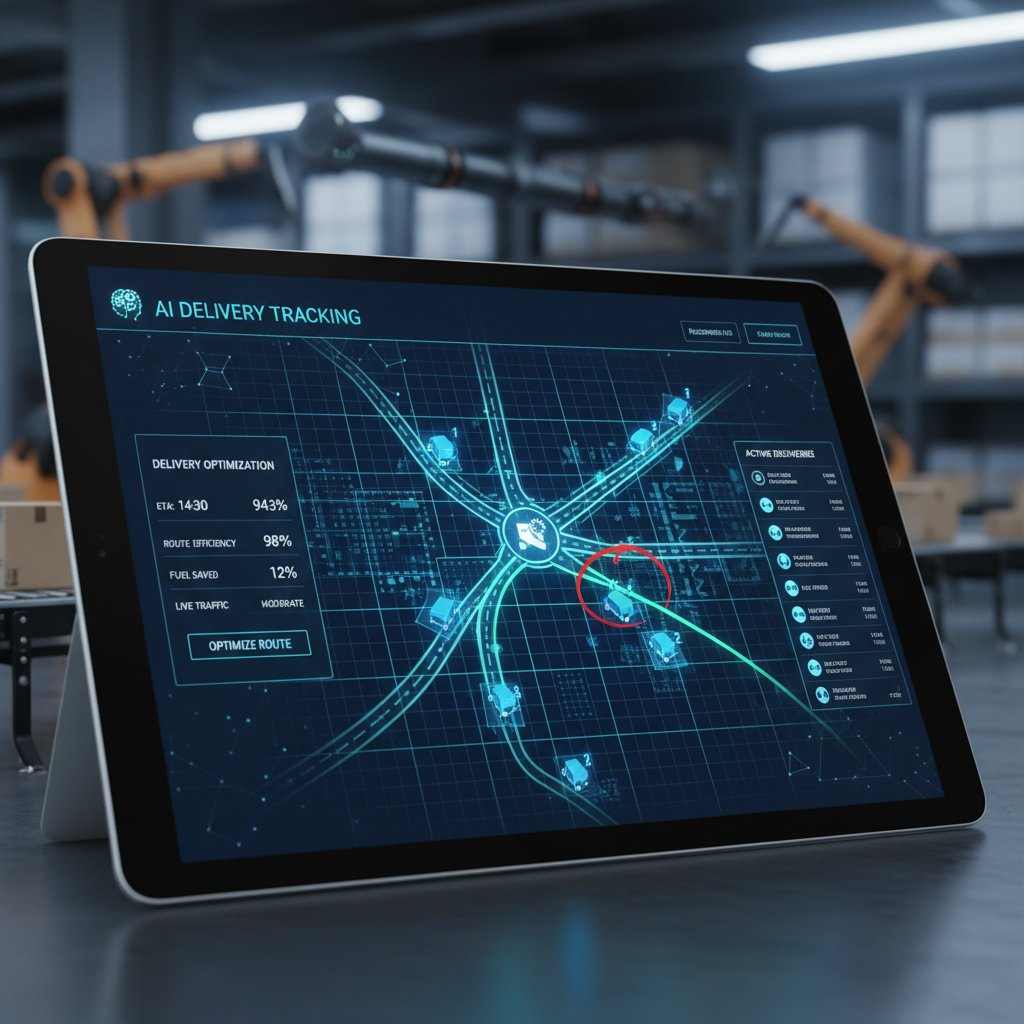
When supply chain, sales, and customer data are connected, you gain the power to anticipate needs and deliver at breakneck speed.
What’s next: autonomous warehouses and the end of inventory work?
Autonomous inventory robots are rolling out from test labs to real-world warehouses, slashing labor needs and boosting safety. But the big debate is whether humans will be eradicated from inventory control or simply evolve into new, higher-value roles.
"The warehouse of 2030 is more about orchestration than brute force. AI and robotics handle the grunt work, but human judgment is the secret sauce no machine can replace." — Alex, supply chain futurist, 2025 (illustrative, based on published interviews)
Your move: staying ahead in the AI-powered era
Standing still is the riskiest move you can make. Every delay in upgrading inventory management is a bet against your own future.
Timeline of ai-powered inventory tracking evolution:
- Manual (pre-2000): Ledgers, paper logs, and guesswork.
- Automated (2000–2015): Barcodes, ERP, batch software.
- AI-powered (2016–now): Machine learning, IoT sensors, real-time analytics.
- Autonomous (2025–): Full integration, robotics, continuous optimization.
The evidence is clear: ai-powered inventory tracking is rewriting the rules for those willing to adapt—and exposing the fragility of those stuck in the past. Don’t let inertia be your undoing. Start the conversation, assess your data, and explore platforms like futuretask.ai to see how intelligent automation can transform your business.
Conclusion
Brutal truths, hidden wins, and the relentless march of innovation—this is the reality of ai-powered inventory tracking in 2025. The promises are real, but so are the pitfalls. The winners are those who face the chaos head-on: investing in clean data, relentless process improvement, and transparent, ethical AI systems. From reducing shrinkage to unlocking double-digit profit margin gains, the upside is undeniable—but so is the risk of costly errors and failed implementations. Use the lessons, numbers, and strategies here as your playbook. The revolution is here. Get ahead, get smart, and make your inventory work for you—not against you.
Sources
References cited in this article
- Vention(ventionteams.com)
- Gartner via WarehouseWhisper(warehousewhisper.com)
- Pulllogic(pulllogic.com)
- Mindinventory(mindinventory.com)
- Carmatec(carmatec.com)
- Invensis(invensis.net)
- Logiwa(logiwa.com)
- IBM(ibm.com)
- Chooch(chooch.com)
- NRF(nrf.com)
- IpsoPos(iposos.com)
- KoronaPOS(koronapos.com)
- Wair(wair.ai)
- Docuclipper(docuclipper.com)
- LeewayHertz(leewayhertz.com)
- ProductScope AI(productscope.ai)
- Linnworks(linnworks.com)
- LeewayHertz(leewayhertz.com)
- Pavion(pavion.com)
- Leafio(leafio.ai)
- RetailWire(retailwire.com)
- Rapid Innovation(rapidinnovation.io)
- Forbes(forbes.com)
- Chilitask(chilitask.com)
- GritDaily(gritdaily.com)
- IIINigence(iiinigence.com)
- StartUs Insights(startus-insights.com)
- McKinsey(mckinsey.com)
- Callin(callin.io)
- Forbes Tech Council(forbes.com)
- OneTrust(onetrust.com)
- CNIL(cnil.fr)
- McKinsey(mckinsey.com)
Automate Your Tasks, Transform Your Business
FutureTask.ai revolutionizes your workflow by automating complex tasks typically outsourced to freelancers and agencies. Our powerful AI-driven platform leverages cutting-edge LLM technology to deliver precision, speed, and consistency at scale. Whether you're managing content creation, data analytics, marketing campaigns, or customer support, FutureTask.ai ensures seamless task execution, significant cost savings, and unmatched efficiency. Transform your business operations, eliminate delays, reduce operational overhead, and gain a competitive advantage with intelligent automation.
Get startedReady to Automate Your Business?
Start transforming tasks into automated processes today
Frequently Asked Questions
What is AI-powered inventory tracking and how does it differ from manual tracking?
AI-powered inventory tracking is an integrated system using artificial intelligence, machine learning, and real-time IoT sensor data to manage inventory automatically and predictively, whereas manual tracking relies on paper logs, spreadsheets, and human oversight—which is highly prone to errors and can't keep pace with modern supply chain complexity.
Why is AI-powered inventory tracking becoming critical in 2025?
Traditional inventory management is buckling under global volatility, labor disruption, and demanding customer expectations, making AI-powered systems a matter of survival rather than optional optimization.
Are there still businesses using manual inventory tracking methods?
Yes, many smaller businesses continue using legacy manual processes due to habit, cost barriers, and a desire to maintain direct control, even though these methods cannot keep up with modern supply chain velocity and complexity.
What problems does manual inventory tracking create?
According to a McKinsey 2023 study, manual tracking with paper logs and spreadsheets leaves cracks for mistakes and shrinkage to slip through, resulting in high error rates and delays.
From the Archive
Explore more from Ai-powered task automation

AI-Powered Inventory Management: Separating Reality From Vendor Claims

AI-Driven Automated Inventory Analysis: Benefits, Risks, and Impact

Ai-Driven Inventory Replenishment Automation’s Real 2026 Risks and Wins

AI-Powered Inventory Optimization: Separating Hype From Results

How AI Transforms Inventory Audits: Benefits and Risks Explained


