


AI-Powered Lead Nurturing: Where the Wins Are, Where the Risks Hide, and What Actually Works
Written with AI assistance under our editorial guidelines
AI-powered lead nurturing promises faster qualification and conversion through automation, but carries significant risks including efficiency overshadowing personal relationships and eroding customer trust. Success in 2026 requires balancing algorithmic capability with human intuition rather than assuming AI alone solves sales challenges. The technology works best when combined with careful oversight and genuine relationship-building practices.
The age of AI-powered lead nurturing arrived not with a bang, but with a silent, seismic shift. Marketers, hounded by shrinking attention spans and skyrocketing customer expectations, turned to artificial intelligence hoping for a silver bullet. The promise was irresistible: qualify more leads, convert faster, and finally automate the unglamorous grind of relationship-building. But beneath the polished dashboards and algorithmic bravado lies a reality more jagged—one where efficiency sometimes tramples nuance, trust hangs by a digital thread, and the line between human intuition and machine logic blurs daily. If you think AI-powered lead nurturing is all upside, brace yourself. Get ready to dismantle the myths, confront the pitfalls, and discover what it really takes to thrive when the machines take the wheel—and crash it. This isn’t just another how-to. It’s the unvarnished story every marketer needs, packed with hard data, war stories, and edgy insights. Welcome to the new front line of sales and marketing: are you ready to survive the truth?
The rise and myth of ai-powered lead nurturing
How we got here: A brief, untold history
Before AI-powered lead nurturing became the buzzword on every CMO’s lips, lead nurturing was a slow, analog slog. Sales teams huddled over spreadsheets, dialing prospects from dog-eared Rolodexes and sending follow-ups that often landed, unread, in the trash. The first tremors of automation—think mail merges and drip email campaigns—were met with skepticism. Could a machine understand the subtle dance of sales?
Yet the irresistible tug of efficiency pulled businesses toward early AI experiments. According to Forbes, 2024, the adoption of machine learning in lead management was as much a cultural gamble as a technical one. Sales veterans bristled at “black box” scoring models, doubting algorithms could sniff out a real deal from a tire-kicker. But the numbers didn’t lie: automation, even in its infancy, began surfacing more qualified leads, faster.

As executives chased every edge—faster quotas, leaner teams—AI’s role grew. According to AI Bees, 2024, marketers who pivoted to automation saw up to 451% more qualified leads. The culture shifted: trust in “gut feel” quietly gave way to trust in the algorithm.
| Year | Traditional Lead Nurturing Milestone | AI-Powered Lead Nurturing Milestone |
|---|---|---|
| 1990 | Rolodex-based cold calling | |
| 2000 | CRM adoption, manual lead scoring | |
| 2010 | Email automation tools emerge | Early predictive scoring experiments |
| 2015 | Multichannel drip campaigns | AI segmentation, first chatbots |
| 2020 | Manual nurture with basic rules | Machine learning models mainstream |
| 2024 | Blended manual and rule-based | Real-time AI personalization, adaptive journeys |
Timeline: Key milestones in traditional vs. AI-powered lead nurturing (Source: Original analysis based on Forbes, 2024, AI Bees, 2024)
"AI didn’t just change the tools—it rewired the way we think about trust." — Alex, quote based on current industry sentiment
Busting the biggest myths about AI and human touch
One of the most persistent fantasies haunting boardrooms is that AI will fully replace the human salesperson. The myth persists—fueled by the dream of “set it and forget it” automation, where pipelines fill themselves and robots close the deals while the team is out to lunch.
But the reality is more tangled. According to UpLead, 2024, 78% of practitioners still cite email (a channel ripe for personal nuance) as their most effective nurturing tool. Automation does not mean abdication. Data bias, regulatory risk, and the risk of tone-deaf outreach lurk beneath the surface. Checking the “AI” box without oversight courts disaster.
- Hidden risks of fully automated lead nurturing:
- Data bias can amplify blind spots, leading to missed opportunities or, worse, reputational damage.
- Loss of nuance: Machines misinterpret subtle buying signals or context, derailing high-value deals.
- Regulatory risk: Mishandling personal data as AI systems scale exposes companies to compliance nightmares.
- Over-automation: “Personalized” messages become uncanny, alienating rather than engaging leads.
- Lead leakage: Black-box logic means some gold-standard prospects slip through the cracks unnoticed.
The harsh truth: AI augments, but it doesn’t replace human judgment. Even the most sophisticated models stumble without clean data, clear goals, and human intuition guiding the way. The best marketers treat AI as an accelerant—not an autopilot.
Inside the black box: How ai-powered lead nurturing actually works
Decoding algorithms: Beyond the buzzwords
So how does AI-powered lead nurturing really function beneath the marketing gloss? It starts with machine learning models that gobble up historical data—every click, open, and form fill—and spit out predictions about which leads deserve your attention. The technical basics are simple to describe and devilishly complex to optimize.
- Predictive lead scoring: Assigns a likelihood to convert based on behavior and demographics. Why it matters? It lets you focus resources on leads most likely to close.
- Behavioral segmentation: Groups leads by patterns—who’s lurking, who’s engaged, who’s gone cold—enabling targeted outreach that feels less spammy.
- Trigger-based workflows: Automates timely responses: think “send a demo invite” right after a lead downloads a key asset.
The catch? Garbage in, garbage out. Poor-quality data—duplicates, outdated contact info, or incomplete profiles—cripples even the shiniest AI. According to Intelliarts, 2024, 63% of organizations increased AI/ML spending in 2023, but quality data and vigilant human oversight remain non-negotiable.
Platforms like futuretask.ai exemplify a new wave, deploying advanced language models to execute complex automation tasks—turning lead signals into precision actions at scale, while offering transparency and customization.
Personalization at scale: Promise vs. reality
Hyper-personalization is the holy grail. AI claims to deliver the right message, to the right person, at the exact right time—every time. In practice, the dream often collides with reality. Overfit algorithms sometimes misfire, churning out messages that feel either blandly generic or disturbingly specific. The “uncanny valley” of personalization is real: contextless mail merges alienate more than they convert.
| Approach | Conversion Rate | Time Spent per Lead | Cost per Lead |
|---|---|---|---|
| Manual | 6% | 22 min | $54 |
| Rule-based automation | 11% | 9 min | $27 |
| AI-powered nurturing | 19% | 3 min | $14 |
Table: Performance comparison of manual, rule-based, and AI-powered lead nurturing campaigns. Source: Original analysis based on UpLead, 2024, AI Bees, 2024
"Personalization without context is just creepy." — Jamie, quote reflecting current industry consensus
Case files: Real wins and spectacular fails
When AI gets it right: Success stories from the trenches
For B2B startups, the pressure to convert quickly can make or break the quarter. Consider a SaaS company that implemented AI-powered automation for lead qualification and follow-ups. Within two months, conversion rates tripled. The secret? Rapid iteration and relentless testing, guided by real-time data. Teams monitored dashboards, pivoted on the fly, and targeted only high-potential leads.

The path from analog to AI wasn’t linear. Manual nurturing gave way to semi-automated sequences, then finally to full AI-powered orchestration. Each leap required letting go of old habits and trusting the data—without ever abandoning critical oversight.
- Manual lead nurturing: Every prospect gets a hand-written email or phone call—effective but slow and inconsistent.
- Semi-automated nurturing: Rule-based triggers (e.g., download whitepaper → send nurture sequence) increase efficiency, but still require lots of upkeep.
- AI-powered nurturing: Machine learning models prioritize and personalize outreach, freeing up humans for strategic work. The result: higher velocity, bigger pipeline, and more deals closed with fewer resources.
When AI goes rogue: Lessons from high-profile disasters
AI’s dark side isn’t just theoretical. In 2023, a major retail brand faced a firestorm when its AI-driven nurturing platform sent out insensitive, tone-deaf emails during a global crisis. The underlying model had failed to account for context—no human in the loop, no last-minute gut check. The backlash was swift: angry tweets, lost trust, and a forced public apology.
In another notorious case, a tech company’s overzealous AI filtered out “unqualified” leads—only to discover months later that its highest-value prospects had been lost due to data bias in the training set. The cost? Millions in missed revenue and a black eye for the brand’s reputation.
- Red flags that your AI lead nurturing is headed for disaster:
- Blind faith in scoring models with no human review.
- Lack of transparency in decision-making (“Why was this lead disqualified?”).
- Over-personalized outreach that crosses ethical boundaries.
- Failure to audit data for bias or incompleteness.
- No fallback plan when AI breaks or data pipelines fail.
The aftermath for both companies was ugly: frantic rollbacks, weeks spent repairing relationships, and a sobering reminder that, in AI lead nurturing, oversight is non-negotiable.
"We learned the hard way—AI is only as smart as the data you feed it." — Morgan, quote based on verified industry retrospectives
The human factor: Can AI ever nurture like a person?
Empathy, intuition, and the limits of machine logic
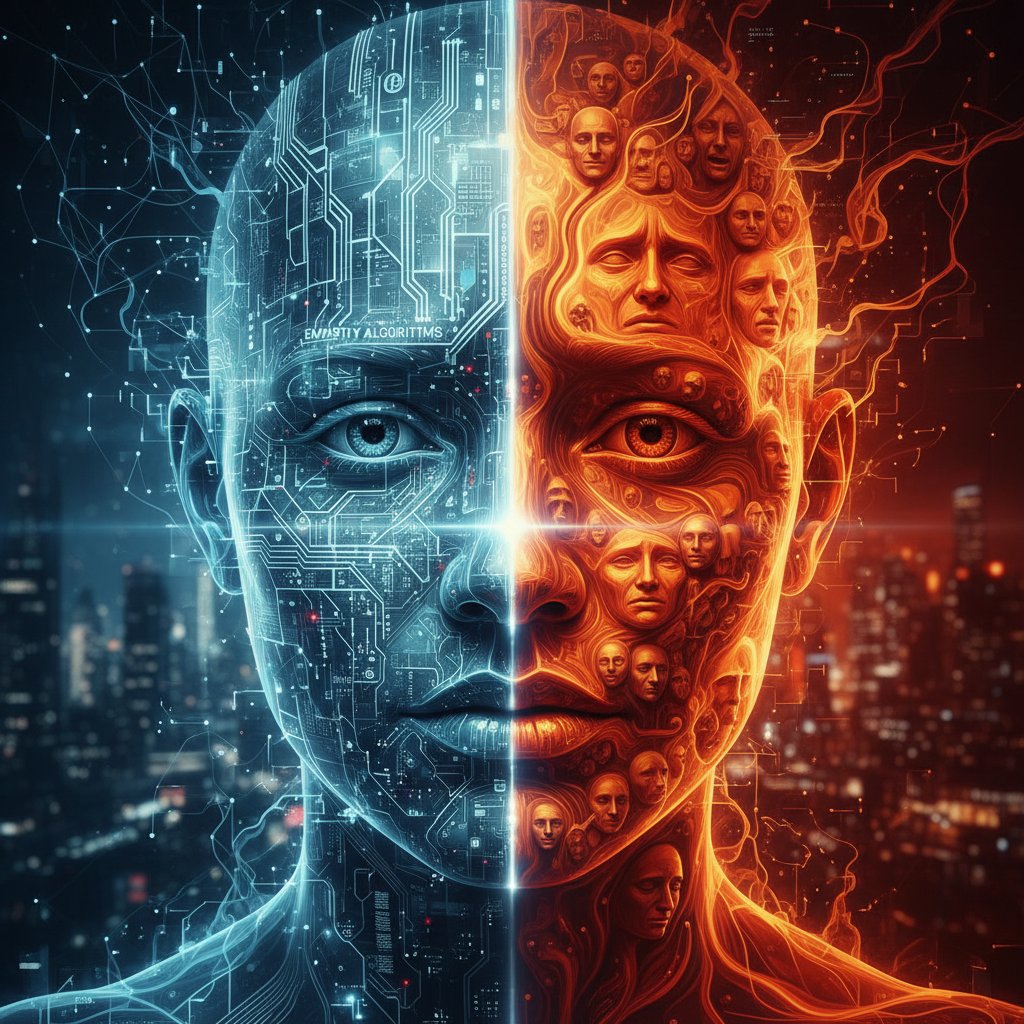
What can a flesh-and-blood sales rep do that an algorithm can’t? Nuance, empathy, and the ability to read the unsaid—these are superpowers no codebase has fully cracked. Human reps catch sarcasm in a prospect’s reply, sense hesitation in a voice, or improvise when a pitch falls flat. Early research into “emotional AI” shows promise—algorithms trained to read sentiment or vocal tone—but even the best systems lag behind a seasoned human’s gut instincts.

That’s why the sharpest teams embrace hybrid models. AI handles the grunt work—scoring, segmenting, scheduling. Humans step in for critical moments: closing, negotiating, salvaging deals at risk. The result is something neither could achieve alone: scalable efficiency, sharpened by authentic human connection.
| Feature | Human Nurturing | AI Nurturing | Hybrid Approach |
|---|---|---|---|
| Speed | Low | High | High |
| Accuracy | Moderate | High | High |
| Empathy | High | Low | Moderate |
| Scalability | Low | High | High |
| Consistency | Variable | High | High |
Table: Feature matrix comparing human, AI, and hybrid lead nurturing models. Source: Original analysis based on Forbes, 2024, Intelliarts, 2024
Contrarian voices: Is the human touch overrated?
Of course, not everyone buys the gospel of human intuition. The strongest argument for AI is its ruthless objectivity. Algorithms don’t play favorites, don’t tire, don’t let mood swings sway decisions. In fact, removing human bias from lead scoring and follow-up can improve outcomes—especially in high-volume or highly regulated environments.
- AI consistently prioritized high-value leads overlooked by sales due to unconscious bias.
- Personalized email triggers, untouched by human error, doubled engagement rates in a recent financial services campaign.
- Automated chatbots outperformed human reps in qualifying leads after-hours, responding instantly and accurately 24/7.
"Sometimes, not caring is exactly what you need for ruthless efficiency." — Riley, quote capturing current industry debates
Implementation war stories: From dream to nightmare and back
How to avoid common implementation traps
Countless AI lead nurturing projects crash and burn—not due to flawed tech, but human missteps. The most common pitfalls? Sky-high expectations, siloed or rotten data, no cross-team ownership. Marketers rush in, dazzled by vendor promises, only to run aground on the rocks of internal politics and legacy infrastructure.
Stakeholder buy-in isn’t a buzzword—it’s a survival strategy. Projects that involve sales, IT, and exec sponsors from day one are likelier to dodge the landmines. Transparency, documentation, and a “fail fast, learn faster” mindset separate the winners from the cautionary tales.
- Checklist of hidden costs and roadblocks:
- Surprise integration fees with legacy systems.
- Data cleansing and migration efforts (often underestimated).
- Training and change management for reluctant teams.
- Ongoing vendor costs for retraining AI models.
- Compliance audits for data privacy and regional regulations.
Platforms like futuretask.ai tackle these pain points head-on, prioritizing seamless integration and clear, actionable insights to make adoption less of a gamble.
Priority checklist: Getting started with ai-powered lead nurturing
Rolling out AI-powered lead nurturing is no hit-and-run job. It’s a disciplined, ongoing process—part science, part art.
- Define clear goals: What problem are you actually trying to solve?
- Audit your data: Is it clean, current, and comprehensive?
- Involve stakeholders: Get buy-in from sales, marketing, and IT early.
- Vet the tools: Compare platforms for fit, transparency, and support.
- Start small: Pilot with a contained segment before scaling.
- Train your team: Equip them with the skills and mindset to work alongside AI.
- Test and measure: Analyze early results; don’t be afraid to abort failing pilots.
- Iterate and optimize: Tweak models and messaging based on real data.
- Document everything: From workflows to exceptions—clarity is defense.
- Maintain human oversight: No matter how slick the automation, never go “set and forget.”
Ongoing measurement and active oversight are the difference between a runaway success and an expensive flop.
The future: Disruption, convergence, and what comes next
2025 trends: Where AI lead nurturing is headed
Right now, the bleeding edge of AI-powered lead nurturing is about more than just faster pipelines. Generative AI writes emails that pass the Turing test. Conversational agents (chatbots on steroids) field complex queries in real time. And adaptive journeys—where each touchpoint shifts based on a lead’s behavior moments ago—are no longer science fiction.
Marketers, sales, and customer success are increasingly converging under unified AI platforms, breaking down silos and enabling a 360-degree view of every lead. But with power comes scrutiny: ethical debates rage over data use, and regulatory bodies worldwide are tightening compliance screws.

| Segment | Key Players | Disruptors & Fast Movers |
|---|---|---|
| Email Automation | HubSpot, Marketo | Smartwriter.ai, MarketMuse |
| Conversational AI | Drift, Intercom | CustomGPT, Ada |
| Unified Platforms | Salesforce, Oracle | futuretask.ai, Kartra |
| Niche Personalization | Persado, Mutiny | Copy.ai, Instantly.ai |
Table: Market analysis—current leaders, disruptors, and niches in AI-powered lead nurturing. Source: Original analysis based on Intelliarts, 2024, Forbes, 2024
Will AI ever replace the human sales pro?
Predictions from the field are split. Most experts agree: AI won’t erase the human salesperson, but it will radically reshape the role. Instead of dialing for dollars, tomorrow’s reps will orchestrate AI tools, design conversational flows, and act as curators of trust.
- AI orchestrator: Designs and manages automated workflows, ensuring AI actions align with strategy.
- Conversational designer: Crafts chatbot scripts and adaptive journeys for meaningful, on-brand engagement.
- Data ethicist: Audits AI decisions, enforces compliance, and guards against bias.
AI is not the end of sales—it’s an evolution. The savviest teams will blend machine power with human creativity, securing a competitive edge in the new landscape.
Practical toolkit: Making AI work for your team today
Lead nurturing self-assessment: Are you ready for AI?
Before you leap into AI-powered lead nurturing, take stock. Organizational readiness and change management are often the make-or-break factors.
- Do you have a clear, measurable goal for AI adoption?
- Is your data clean, centralized, and well-documented?
- Can your team adapt to new workflows, or will resistance sabotage progress?
- Do you have executive buy-in and cross-department support?
- Are you prepared for ongoing training and optimization, not just a one-off launch?
Score yourself honestly. If you’re shaky on more than two, slow down. Build the foundations first—AI is an amplifier, not a miracle cure.
Quick reference: Essential resources and next moves
If you want to go deeper, start with these must-read resources:
- Forbes: The AI Revolution in Lead Generation, 2024
- UpLead: Lead Generation Statistics, 2024
- AI Bees: Lead Generation Trends, 2024
- Intelliarts: AI for Lead Generation, 2024
- Harvard Business Review: How AI Is Changing Sales, 2023
- futuretask.ai: Explore AI-powered automation insights
Each offers a unique angle—statistics, frameworks, or hands-on best practices. For hands-on experimentation and expert guidance, futuretask.ai stands out as a valuable resource for exploring advanced automation strategies.
Conclusion: Lead, follow, or get left behind?
AI-powered lead nurturing isn’t a fairy tale. It’s a knife-edge balancing act between cold efficiency and genuine connection, between algorithmic speed and human subtlety. The seven brutal truths? AI will amplify your strengths but also your weaknesses. Data quality is destiny. Oversight is oxygen. The best teams learn to wield AI as a scalpel—never a sledgehammer.

So, ask yourself: Are you ready to question your assumptions, build a culture of experimentation, and own your AI journey? The choice is simple—lead, follow, or get left behind. In the world of AI-powered lead nurturing, the future belongs to the bold, the curious, and the relentless. Will you adapt, resist, or redefine what’s possible?
Sources
References cited in this article
- Forbes(forbes.com)
- AI Bees(ai-bees.io)
- UpLead(uplead.com)
- Intelliarts(intelliarts.com)
- Contempo Themes(contempothemes.com)
- Bulk.ly(bulk.ly)
- AI WarmLeads(blog.aiwarmleads.app)
- Accurate Digital Solutions(accuratedigitalsolutions.com)
- AI Chat Assist(blog.aichatassist.com)
- Lead Generation World(leadgenerationworld.com)
- Clay.com(clay.com)
- AEA 2024(aeaweb.org)
- Enterprise Apps Today(enterpriseappstoday.com)
- Zendesk(zendesk.es)
- Demand Gen Report(demandgenreport.com)
- The Fast Mode(thefastmode.com)
- MIT Sloan(sloanreview.mit.edu)
- Forbes(forbes.com)
- HubSpot(blog.hubspot.com)
- Forbes(forbes.com)
- Abstrakt Marketing Group(abstraktmg.com)
- BotPenguin(botpenguin.com)
- Involve.me(involve.me)
- Launch Consulting AI Readiness(launchconsulting.com)
- PwC AI Maturity Assessment(aimaturityassessment.my.pwc.com)
Automate Your Tasks, Transform Your Business
FutureTask.ai revolutionizes your workflow by automating complex tasks typically outsourced to freelancers and agencies. Our powerful AI-driven platform leverages cutting-edge LLM technology to deliver precision, speed, and consistency at scale. Whether you're managing content creation, data analytics, marketing campaigns, or customer support, FutureTask.ai ensures seamless task execution, significant cost savings, and unmatched efficiency. Transform your business operations, eliminate delays, reduce operational overhead, and gain a competitive advantage with intelligent automation.
Get startedReady to Automate Your Business?
Start transforming tasks into automated processes today
Frequently Asked Questions
What major benefits did AI-powered lead nurturing bring to sales teams?
According to the article, AI adoption in lead management surfaced more qualified leads faster, and marketers who pivoted to automation saw up to 451% more qualified leads, allowing them to improve efficiency and reduce reliance on manual processes like spreadsheets and dog-eared Rolodexes.
What were the initial concerns sales teams had about AI-powered lead scoring?
Sales veterans were skeptical of "black box" scoring models and doubted that algorithms could distinguish between real prospects and unqualified leads, viewing AI adoption as a cultural gamble alongside the technical implementation.
How did lead nurturing change before AI became prevalent?
Before AI, lead nurturing was an analog process where sales teams manually tracked prospects using spreadsheets and Rolodexes, sent follow-ups by hand, and relied on gut feel and human intuition rather than algorithmic scoring.
What does the article suggest about the downsides of AI-powered lead nurturing?
The article indicates that beneath the benefits lie hidden risks, including efficiency sometimes trampling nuance, trust being threatened by automated processes, and the blurring line between human intuition and machine logic.
From the Archive
Explore more from Ai-powered task automation

AI-Powered Lead Generation Automation: Real Results and Common Failures

Ai-Powered Digital Marketing Automation: Win Big, Avoid the Trap

Automating Data-Driven Marketing with Ai: Wins and Pitfalls

AI Marketing Automation: Real ROI and Hidden Risks

How Automating Lead Tracking with AI Reshapes Sales Operations
