AI-Powered Workforce Scheduling Automation’s Hidden Tradeoff
Written with AI assistance under our editorial guidelines
AI-powered workforce scheduling automation promises efficiency and precision by replacing manual, error-prone methods that cause costly overtime, scheduling conflicts, and staff burnout. However, the technology presents hidden tradeoffs that leaders often overlook, creating a complex power struggle between operational gains and potential risks that require careful consideration before implementation.
In offices, hospitals, warehouses, and shops around the globe, a quiet revolution is rewriting how we work: ai-powered workforce scheduling automation. The buzz is relentless—promises of fewer headaches, zero chaos, clockwork precision. But beneath the sleek dashboards and vendor hype lies a paradox that most leaders ignore at their peril. According to recent findings, 81% of businesses are racing to implement AI in workforce development by 2027, yet stories of spectacular successes and equally spectacular failures are everywhere (AIPRM, 2024). This article shreds the veneer, exposing the real impacts, the hidden risks, and the urgent truths no one else will tell you. Whether you’re an HR director drowning in overtime, a gig worker caught in a scheduling algorithm’s crosshairs, or a founder hunting the edge, read on. AI-powered workforce scheduling automation isn’t just a trend—it’s the frontline of a power struggle shaping the future of work, now.
The chaos of old-school scheduling: Why the status quo failed
A day in scheduling hell: Real-world meltdown
It’s 2:00 a.m. Your phone explodes with texts—two workers sick, one caught in traffic, a key shift suddenly unmanned. The schedule you painstakingly crafted is unraveling, and the domino effect will slam profits, morale, and maybe your career. This is not a nightmare, but daily reality for countless managers clinging to manual scheduling methods. Jamie, a frontline manager, sums it up bitterly:
"You think you’re in control—until the phone rings at 2 a.m." — Jamie, Operations Manager

The emotional toll is brutal: anxiety, burnout, a creeping sense of futility. Financially, manual scheduling bleeds organizations through overtime, understaffing penalties, and missed opportunities. Real-world data from Howard County Public Schools in 2023-2024 revealed driver shortages topping 20%, directly tied to rigid, outdated scheduling systems. The story is the same from logistics to healthcare—when schedules break down, so does everything else.
Manual methods: Hidden costs and silent breakdowns
Spreadsheets, whiteboards, frantic messages—these relics carry a cost that few budget for. Errors creep in quietly, leading to accidental double-bookings, chronic overtime, and demoralized staff. In 2023, organizations relying on manual scheduling reported significantly higher absenteeism and a 29% drop in productivity compared to those using automated solutions (McKinsey, 2024). Here’s how the numbers stack up:
| Scheduling Type | Speed | Cost | Error Rate | Employee Satisfaction |
|---|---|---|---|---|
| Manual (Spreadsheets) | Slow | High | High | Low |
| Rule-based Automation | Moderate | Medium | Medium | Moderate |
| AI/LLM-driven (2024) | Fast | Low | Low | High |
Table: Manual vs AI vs LLM-driven scheduling — Source: Original analysis based on McKinsey, 2024, AIPRM, 2024, and Bain & Company, 2024
Every overlooked shift or overtime mistake silently chips away at employee trust. Historically, entire quarters have been derailed by preventable scheduling failures—missed deadlines, lost clients, even lawsuits stemming from overwork or discrimination. The lesson: What you can’t see in manual systems can hurt you the most.
Why resistance to automation persists
Despite the carnage, not every organization is ready to swap whiteboards for AI. The reasons run deep—fear of job loss, distrust of “black box” algorithms, nostalgia for hands-on control. Organizational inertia can be a powerful drag, fueled by myths and half-truths perpetuated by outdated management playbooks.
- Job displacement fears: Many believe AI will instantly cut jobs, ignoring new roles in monitoring and optimization.
- Loss of control: Managers worry about surrendering authority to algorithms.
- Data quality anxieties: Garbage in, garbage out—bad data can sabotage even the best AI.
- Change fatigue: Teams already battered by digital “transformation” hesitate to embrace another overhaul.
- Unclear ROI: Leaders struggle to quantify the short-term payback of automation.
- Vendor overhype: Marketing buzzwords muddy what AI actually delivers.
- Cultural mismatch: AI can feel alien in industries steeped in tradition.
The reality? Most fears are based on misconceptions—real AI-powered scheduling doesn’t erase jobs, it changes them. But the shift demands brutal honesty about risks, a willingness to rethink roles, and a clear-eyed view of both the promise and peril of automation.
Decoding ai-powered workforce scheduling automation: The engine under the hood
How AI really makes the schedule
Forget the sci-fi imagery. At its core, AI-powered scheduling relies on a potent mix of large language models (LLMs), optimization algorithms, and reinforcement learning. These aren’t just buzzwords—they’re the gears turning the scheduling revolution.
- Reinforcement learning: AI “learns” which schedules work best by trial and error, constantly adapting to new patterns. In scheduling, this means the system can optimize for fewer callouts or higher engagement, not just fill slots.
- LLM-powered scheduling: Large language models like those used at futuretask.ai can interpret messy, real-world requests (“I can’t work evenings this week”) and factor them in, replacing rigid rule engines with contextual intelligence.
- Shift optimization: Algorithms balance hundreds of constraints—labor laws, skills, preferences, business targets—to find the sweet spot for both worker and company.

What sets true AI-powered scheduling automation apart is its relentless learning and adaptability. It doesn’t just automate—it orchestrates.
Not all 'AI' is created equal: Hype vs reality
Marketing teams love to slap “AI” on any tool that automates a process, but there’s a canyon between rule-based systems and true AI-driven solutions. Dana, an industry insider, nails the distinction:
"If it’s just a spreadsheet with macros, that’s not AI." — Dana, Tech Lead
Rule-based tools follow static if-then logic; AI-driven scheduling, by contrast, adapts, reasons, and even explains its decisions—if designed right. Here’s how they compare:
| Feature | Manual Scheduling | Rule-based Automation | AI-driven Scheduling |
|---|---|---|---|
| Adaptability | Low | Medium | High |
| Transparency | High | Medium | Variable |
| Bias Risk | Human bias | Coded bias | Algorithmic bias |
| User Learning Curve | Low | Medium | Medium-High |
Table: Feature matrix — Source: Original analysis based on Bain & Company, 2024, Forbes, 2024
The bottom line? If your “AI” still requires you to manually tweak every shift, you’re not riding the real wave.
The new breed: LLM-driven platforms and what sets them apart
The arrival of LLMs—think GPT-class engines—has unleashed a new breed of workforce automation. Tools like those at futuretask.ai are redefining what’s possible. Instead of rigid templates, LLMs process natural language, understand context, and flex scheduling around real human needs—not just company objectives.
Context-awareness means the system knows if you’re a single parent who can’t take night shifts, or if operational needs spike during holidays. Language understanding enables seamless integration with Slack, email, or even voice commands. And flexibility? LLM-powered platforms can adapt to new policies, business pivots, and local labor nuances—sometimes in real time.

The LLM era isn’t just an upgrade; it’s a paradigm shift—one where adaptability and empathy are no longer optional, but baked into the code.
The human equation: What automation really means for workers
Surveillance or salvation? The double-edged sword of AI scheduling
AI-powered scheduling can be a tool for empowerment—or a mechanism for control. Implemented thoughtfully, it liberates workers from grueling, last-minute scrambles. Abused, it can spawn a digital panopticon where every move is tracked, every preference ignored.
To seize the upside and dodge the pitfalls, organizations need a plan. Here’s a step-by-step guide to mastering AI-powered workforce scheduling:
- Audit existing processes: Map your current scheduling pain points and inefficiencies.
- Set clear objectives: Define what you want AI to achieve—cost savings, flexibility, engagement.
- Involve workers early: Gather input and address anxieties up front.
- Clean your data: Bad data torpedoes good AI—invest in quality.
- Pilot intelligently: Test with a small group, refine, then scale.
- Establish transparency: Make AI decisions explainable to users and managers alike.
- Monitor for bias: Regularly audit for unintended discrimination or unfairness.
- Iterate and optimize: Treat deployment as an ongoing process, not a one-and-done fix.
Privacy, transparency, and consent must be non-negotiable. Without them, even the best AI-powered workforce scheduling automation can turn into a Trojan horse for distrust.
Ghost shifts, bias, and other hidden dangers
When algorithms rule schedules, old problems don’t vanish—they mutate. Bias can slip in via skewed training data, leading to “ghost shifts” (schedules no one is actually told about) or consistent under-scheduling of certain demographics.
"The system said I was scheduled, but no one told me." — Alex, Warehouse Associate
Algorithmic bias is not a myth. According to Forbes, 2024, surfacing and correcting bias requires active monitoring, feedback loops, and a willingness to intervene when numbers don’t add up. Not every platform is built to handle this—choose vendors who can demonstrate real bias mitigation strategies, not just claims.
The upside: Less burnout, more balance—if you get it right
Get it right, and AI-powered workforce scheduling automation delivers what manual methods never could: predictability, fairness, and a shot at work-life balance. Companies deploying AI scheduling reported a 67% reduction in job delays and a 29% boost in productivity (McKinsey, 2024). The hidden benefits are rarely advertised:
- Proactive shift fills: AI can flag gaps before they become crises, securing replacements early.
- Reduced burnout: Smarter shift allocation means fewer last-minute scrambles.
- Improved engagement: Workers with more predictable schedules report higher job satisfaction.
- Fairer treatment: AI can enforce equity in shift distribution, reducing favoritism.
- Lower turnover: Happier teams stick around longer—a huge savings in recruiting costs.
- Faster onboarding: AI-powered systems can learn and adapt to new employees rapidly.
- Greater compliance: Automated checks for labor law violations cut legal risk.
- Data-driven insights: Trends, bottlenecks, and opportunities emerge from the data automatically.

When organizations center the human, not just the numbers, AI-powered scheduling becomes a catalyst for engagement, not just efficiency.
Industry deep dive: Who’s winning—and who’s not
Retail, healthcare, and the gig economy: Real case studies
Consider the high-stress world of hospitals. Johns Hopkins switched to AI-powered scheduling in key departments in 2023, slashing shift conflicts and overtime costs while boosting nurse satisfaction (McKinsey, 2024). In retail, a national chain battling chronic absenteeism transitioned to LLM-driven platforms, transforming chaos into a streamlined operation with real-time shift swaps and predictive staffing.

But the gig economy faces unique dilemmas. Workers often juggle multiple apps, each with its own opaque algorithm. When platforms deploy AI without transparency, workers are left guessing—sometimes scheduled for “ghost shifts” they never see, or penalized by performance metrics they can’t access.
Where AI scheduling backfired: Lessons from the field
It’s not all success stories. In one infamous retail case, an AI scheduling tool optimized for cost savings so aggressively that workers had shifts slashed with no warning—triggering a wave of resignations, a PR firestorm, and an expensive rollback to manual methods. Here’s what went wrong, and how recovery played out:
| Issue | Impact | Resolution | Key Learning |
|---|---|---|---|
| Over-optimization | Mass resignations | Human-in-the-loop review | Balance efficiency with empathy |
| Opaque algorithms | Worker distrust | Transparency initiatives | Explain AI decisions clearly |
| Ignored feedback | Policy backlash | Employee councils formed | Build feedback channels early |
Table: Common pitfalls and recovery strategies — Source: Original analysis based on Forbes, 2024
Expert commentary consistently warns: Resilience in automation means expecting, and quickly correcting, what the algorithm misses.
The global spread: Who’s adopting, who’s hesitating, and why
Adoption rates for ai-powered workforce scheduling automation vary wildly. North America and Western Europe lead, with over 70% of large enterprises piloting or deploying AI scheduling by late 2024 (AIPRM, 2024). Asia’s manufacturing sector is catching up, while public sectors in many regions lag, stymied by regulatory and cultural hurdles.

Regulatory skepticism, especially around data privacy and labor protections, slows rollout. Meanwhile, economic downturns can both accelerate (cost pressure) and stall (change aversion) AI adoption. The cultural equation matters: open dialogue and regulatory clarity drive success, while top-down mandates meet resistance.
Beyond the buzz: Myths, misconceptions, and the uncomfortable truths
The biggest myths about AI workforce automation
Let’s torch the most stubborn myths:
- “AI replaces managers.” Reality: It shifts their focus to higher-level decision making.
- “Automation is always unbiased.” Algorithms inherit biases from their creators and data.
- “Every ‘AI’ system is smart.” Many tools are rule-based, not adaptive.
- “It’s plug-and-play.” True AI scheduling demands careful setup and ongoing oversight.
- “Workers hate automation.” Surveys show many prefer AI if it increases fairness and flexibility.
- “Legal risk is eliminated.” If AI misapplies labor laws, liability can skyrocket.
Some unconventional uses for ai-powered workforce scheduling automation:
- Coordinating cross-border project teams for global campaigns.
- Managing last-minute event staff for live entertainment.
- Balancing volunteer shifts in nonprofits.
- Synchronizing hybrid office/remote shift patterns.
- Preemptively flagging burnout risk based on shift histories.
- Aggregating gig worker schedules across multiple platforms.
AI is powerful, but not magic. It can’t fix broken business models or force culture change overnight.
What no one’s telling you: The real risks
Security remains a lurking threat. A compromised scheduling system can leak sensitive employee data or sabotage operations. Data integrity—ensuring schedules are accurate and permissions respected—can’t be assumed. System failures, while rare, can create instant chaos.
When shopping for solutions, savvy buyers ask the hard questions about reliability, transparency, and support. Consult resources like futuretask.ai for industry landscape guidance, but always probe beneath the sales pitch.
"Trust, but verify—especially when your business is on the line." — Taylor, CIO
How to spot ‘AI-washing’ in the market
Vendors know the power of the AI label. But how do you separate real AI from marketing spin?
- Demand technical documentation: Insist on specifics about algorithms and data sources.
- Test adaptability: See if the system really learns from feedback.
- Evaluate transparency: Can users trace and understand scheduling decisions?
- Inspect training data: Biases start here—ask tough questions.
- Assess vendor support: AI needs ongoing tuning—can the vendor deliver?
- Check compliance: Are labor laws, privacy, and industry standards built in?
- Review security protocols: Is your data safe, encrypted, and auditable?
- Pilot, don’t just demo: Test on real scheduling scenarios.
- Solicit user feedback: Workers should have a voice from day one.
- Expect continuous improvement: Does the solution evolve or stagnate?
Hold vendors—and your own team—accountable. AI-washing is real, but so is real AI.
The implementation gauntlet: From pilot to full-scale deployment
Step one: Assessing readiness (and resistance)
Change management is everything. Before unleashing AI, organizations must gauge readiness—culturally and technically. Here’s a checklist to see if you’re ready for ai-powered scheduling:
- Leadership alignment: Is executive buy-in clear?
- Data quality: Are records up-to-date and accurate?
- IT infrastructure: Can current systems support integration?
- Policy clarity: Are rules, constraints, and exceptions documented?
- Worker engagement: Is there a plan to involve employees early?
- Bias awareness: Are safeguards and audits in place?
- Feedback channels: Can users flag issues easily?
- Continuous learning: Is there a culture of ongoing optimization?
If you score “no” on more than two, hit pause and fix the gaps.
Rolling out: Avoiding the most common snafus
Pilot, pilot, pilot. The most successful deployments start small, gather feedback, and stage rollouts—never flipping the switch overnight. Integration with HRIS or ERP systems is critical; failing to sync data leads to chaos.
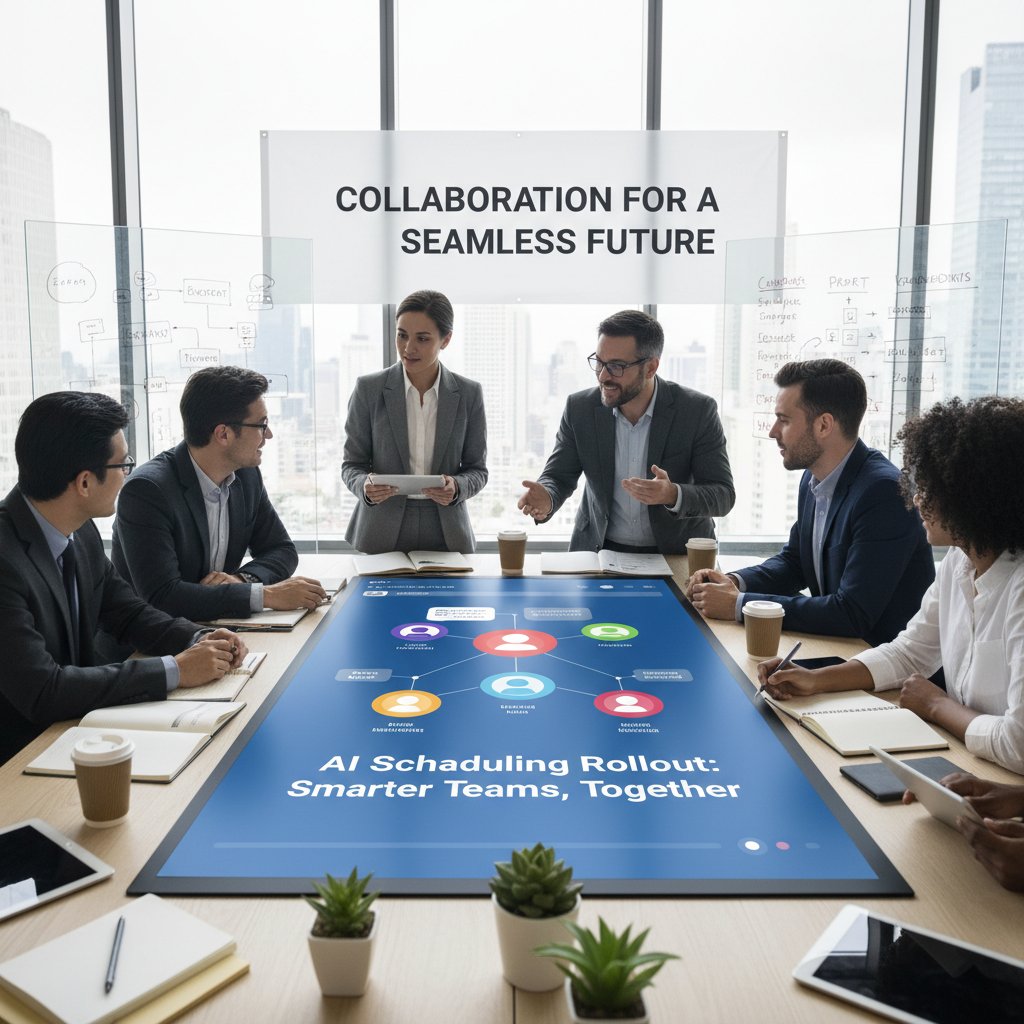
Collaboration between IT and HR unlocks smoother adoption. Keep communication lines wide open. Expect snafus—what matters is speed and transparency in fixing them.
Measuring what matters: KPIs for success
What gets measured gets managed. Key KPIs for AI-powered workforce scheduling include:
| Metric | Definition | Why it matters | How to measure |
|---|---|---|---|
| Schedule accuracy | % of shifts filled as planned | Ensures reliability | Compare planned vs. actual |
| Employee satisfaction | Worker ratings of schedules | Drives retention, morale | Surveys, turnover rates |
| Absenteeism | Missed/late shifts as % of total | Flags engagement and process gaps | Attendance tracking |
| Cost savings | Reduction in labor spend vs. baseline | Justifies ROI | Financial reports |
| Compliance rate | Adherence to labor laws, policies | Reduces legal risk | Audit logs, incident reports |
Table: Top 5 KPIs — Source: Original analysis based on AIPRM, 2024, Forbes, 2024
Iterate relentlessly—continuous improvement is not optional, it’s survival.
Into the future: Where AI scheduling is headed next
From automation to orchestration: The rise of self-managing teams
The next wave isn’t just automating; it’s orchestrating. Autonomous teams—enabled by AI—can negotiate shifts, swap priorities, and self-balance workloads. The AI acts as referee, not just scheduler, enabling workplace democracy unheard of a decade ago.

The boundaries between HR tech, workplace democracy, and AI ethics are blurring. But one fact remains: those who embrace orchestration, not just automation, will define the future of work.
AI meets labor law: The legal and ethical frontier
As AI takes the wheel, legal scrutiny intensifies. Regulations on predictive scheduling, algorithmic transparency, and data privacy are rewriting compliance playbooks.
- Predictive scheduling laws: Mandate advance notice of shifts, penalties for late changes.
- Algorithmic transparency: Requires companies to explain how scheduling decisions are made.
Staying ahead demands constant vigilance—a task for leaders, not just lawyers. Proactive compliance is now table stakes, not a luxury.
What’s next for LLMs and workforce automation?
LLMs are evolving at breakneck speed, learning to absorb not just text, but voice, video, and behavioral data. For workforce automation, this means smarter, more human-centric scheduling—and the rise of platforms capable of negotiating with, not just for, humans.

The next five years will see a collision of technology, ethics, and economics. Those who prepare—grounded in facts, not hype—will thrive.
Making it real: Actionable strategies for your organization
First steps: Building your business case
To win buy-in, leaders must make a hard-nosed case for AI-powered workforce scheduling automation. Start with pain points—quantify missed shifts, overtime, churn. Layer in case studies: E-commerce companies have seen a 40% traffic bump and 50% content production cost reduction using AI (futuretask.ai). Here’s a timeline of evolution:
- 2000s: Basic spreadsheet scheduling.
- 2010: Rule-based automation gains ground.
- 2015: Early machine learning enters workforce tools.
- 2019: Cloud-based scheduling platforms go mainstream.
- 2022: AI/LLM integration starts disrupting the market.
- 2023: LLM-powered solutions like futuretask.ai scale globally.
- 2024: 81% of businesses plan AI-enhanced workforce management (AIPRM, 2024).
Benchmarks and case studies resonate with CFOs and skeptics alike.
Choosing the right solution: Questions to ask
Choosing a scheduling platform isn’t just about features—it’s about trust, transparency, and fit. Ask:
- Will it integrate seamlessly with your HRIS, payroll, and communication tools?
- Can it explain scheduling decisions to both managers and staff?
- How does it handle bias and data drift?
- What support is available for rollout and ongoing tuning?
- How is sensitive employee data protected?
For deeper insights, industry resources like futuretask.ai offer a bird’s-eye view of the market and emerging best practices.

Don’t settle for one-size-fits-all—your workforce is unique.
From concept to impact: Ensuring long-term success
Initial rollout is just the beginning. To sustain gains:
- Ongoing training: Systems evolve—so should users.
- Frequent feedback: Listen to frontline experience, not just dashboards.
- Regular audits: Root out bias, errors, and compliance gaps.
- Adapt policies: Scheduling rules should match changing needs.
- Encourage experimentation: Let teams try new workflows, learn, and adapt.
- Celebrate wins: Recognize both human and algorithmic contributions.
Sustained success flows from a culture of continuous improvement, not a one-off tech deployment.
Conclusion: The new power (and peril) of AI-run schedules
In the new world of ai-powered workforce scheduling automation, the stakes are raw: Efficiency versus empathy, control versus complexity. It’s a revolution where algorithms can empower or disempower, liberate or surveil—and the outcome is in our hands. For leaders and teams, the challenge isn’t just adopting new tools, but asking tough questions about what kind of workplace we want to build.
As you weigh the leap, remember: The tools are only as wise as the people who wield them. Are you ready to question the status quo, demand transparency, and put humans at the center of your automation journey? The clock is ticking—choose your future.
Sources
References cited in this article
- AIPRM AI in the Workplace Statistics 2024(aiprm.com)
- Forbes: HR Strategies for AI(forbes.com)
- Bain Automation Scorecard 2024(bain.com)
- McKinsey on AI in Travel & Logistics(mckinsey.com)
- LLCBuddy Employee Scheduling Statistics 2024(llcbuddy.com)
- School Transportation News Case Study(stnonline.com)
- UConn CEPARE Research Brief(cepare.media.uconn.edu)
- Makeshift AI Staff Scheduling(blog.makeshift.ca)
- BizBot Top AI Tools 2024(bizbot.com)
- Skedulo AI Scheduling(skedulo.com)
- Flowlance AI Scheduling(flowlance.com)
- MIT Sloan AI Trends 2024(sloanreview.mit.edu)
- Bardeen: Job Automation(bardeen.ai)
- Workato 2024 Automation Index(workato.com)
- McKinsey Future of Work(mckinsey.com)
- Nature: Ethical Concerns in Algorithmic Decision-Making(nature.com)
- Stanford Encyclopedia of Philosophy: Ethics of AI(plato.stanford.edu)
- IBM: AI Ethics(ibm.com)
- Fortune: AI Job Market Winners and Losers(fortune.com)
- Bullhorn GRID 2024(bullhorn.com)
- Visual Capitalist: Debunking AI Myths(visualcapitalist.com)
- Forbes: AI Careers 2024(forbes.com)
- Deloitte: State of GenAI in the Enterprise(www2.deloitte.com)
- SEMrush AI Statistics 2024(semrush.com)
- IBM AI Trends 2024(ibm.com)
- LinkedIn: Top AI Predictions 2024(linkedin.com)
- Forbes: 8 AI Tools for Project Managers(forbes.com)
- Reclaim.ai(reclaim.ai)
- SHRM: DOL Guidance on AI(shrm.org)
- Morgan Lewis: AI in the Workplace(morganlewis.com)
- Rapid Innovation: AI in Retail(rapidinnovation.io)
- Dialzara Implementation Guide(dialzara.com)
Automate Your Tasks, Transform Your Business
FutureTask.ai revolutionizes your workflow by automating complex tasks typically outsourced to freelancers and agencies. Our powerful AI-driven platform leverages cutting-edge LLM technology to deliver precision, speed, and consistency at scale. Whether you're managing content creation, data analytics, marketing campaigns, or customer support, FutureTask.ai ensures seamless task execution, significant cost savings, and unmatched efficiency. Transform your business operations, eliminate delays, reduce operational overhead, and gain a competitive advantage with intelligent automation.
Get startedReady to Automate Your Business?
Start transforming tasks into automated processes today
Frequently Asked Questions
What percentage of businesses plan to implement AI in workforce development by 2027?
According to recent findings cited in the article, 81% of businesses are racing to implement AI in workforce development by 2027.
What real-world example of scheduling failure is mentioned in the article?
Howard County Public Schools experienced driver shortages topping 20% in 2023-2024, which was directly tied to rigid, outdated scheduling systems.
How much did productivity drop in organizations using manual scheduling compared to automated solutions?
In 2023, organizations relying on manual scheduling reported a 29% drop in productivity compared to those using automated solutions.
What are examples of problems caused by manual scheduling methods?
Manual scheduling methods lead to accidental double-bookings, chronic overtime, demoralized staff, higher absenteeism, and financial losses through overtime and understaffing penalties.
What is the main paradox described in the article about AI-powered workforce scheduling?
While 81% of businesses are implementing AI in workforce development with promises of efficiency and precision, the article notes there are equally spectacular failures alongside successes, and hidden risks beneath the vendor hype that leaders often ignore.
From the Archive
Explore more from Ai-powered task automation

How Automated Scheduling Using AI Reshapes Work

How AI-Powered Workforce Management Automation Is Reshaping Organizations

AI-Powered Task Scheduling: What the Trade-Offs Really Are

How AI-Powered Content Scheduling Is Disrupting Workflows

AI-Powered Scheduling for Remote Teams: Benefits and Risks